Born in Fengyi of Pei Commandery as the eldest son of Liu Bang and Lu Zhi; spent his youth farming in the countryside.
210 BCE–188 BCE
Historical figure
Liu Ying (刘盈)
刘盈
Liu Ying (210 BC – September 26, 188 BC), native of Fengyi in Pei Commandery, was the eldest legitimate son of Emperor Gaozu (Liu Bang) and Empress Lu Zhi. He reigned as the second emperor of the Western Han dynasty from 195 BC to 188 BC, known by his posthumous title Emperor Xiaohui. Enduring perilous hardships during his childhood throughout the Chu-Han Contention, he was saved by carriage driver Xiaohou Ying during the…
210 BCE–188 BCEWestern Han (西汉)
PROFILE
Liu Ying (210 BC – September 26, 188 BC), native of Fengyi in Pei Commandery, was the eldest legitimate son of Emperor Gaozu (Liu Bang) and Empress Lu Zhi. He reigned as the second emperor of the Western Han dynasty from 195 BC to 188 BC, known by his posthumous title Emperor Xiaohui. Enduring perilous hardships during his childhood throughout the Chu-Han Contention, he was saved by carriage driver Xiaohou Ying during the catastrophic defeat at the Battle of Pengcheng. Invested as Crown Prince of the King of Han in 205 BC and imperial crown prince upon the founding of the dynasty, he faced potential deposition when Gaozu favored Lady Qi son, Prince Ruyi of Zhao. Through the strategic advice of Zhang Liang, Empress Lu enlisted the Four Whiteheads of Mount Shang, securing his succession. Upon ascending the throne in 195 BC, Liu Ying adopted the Daoist philosophy of non-action and minimal intervention, pursuing a policy of popular recuperation. Retaining Chancellor Cao Can under the doctrine of following established precedents, he lowered agricultural taxes, remitted land levies, and formally repealed the draconian Qin ban on private book ownership, as well as collective punishment laws. He also oversaw the extensive construction of the massive defensive walls surrounding Chang'an, establishing the architectural and geopolitical foundation of the imperial metropolis. Endowed with a gentle and compassionate disposition, Liu Ying made desperate efforts to protect his half-brother Liu Ruyi from palace vengeance, yet the young prince was ultimately poisoned by Empress Dowager Lu. When Empress Lu mutilated Lady Qi into a human swine and forced Liu Ying to witness the horror, the emperor collapsed in psychological trauma, protesting that such cruelty was beyond human decency and that he could no longer govern the empire. Succumbing to despair, he withdrew from state affairs and died in Weiyang Palace in 188 BC at age twenty-three.
- Aliases
- Emperor Hui of Han (汉惠帝、孝惠皇帝)
- Posthumous Name
- Emperor Hui of Han (孝惠皇帝)
- Historical Period
- Western Han (西汉初年(楚汉相争及文景前夕))
- Dynasty / Regime
- Han Dynasty (汉朝(西汉))
- Historical Identity
- Emperor, Western Han (西汉第二位皇帝、政治家)
- Ancestral Home / Birthplace
- Historical Native Place (沛郡丰邑(今江苏省徐州市丰县))
- Date of Birth
- 210 BCE (前210年)
- Date of Death
- 9/26/188 BCE (前188年9月26日)
- Era Names
- Regnal Eras (汉初无年号(史称孝惠元年至七年))
- Highest Office
- Emperor of Western Han (西汉皇帝)
- Major Offices Held
- Crown Prince, Emperor of Western Han (汉王太子、皇太子、西汉皇帝)
- Age at Death
- 23 (23岁)
LIFE TIMELINE
Peril at Pengcheng
Following the rout at Pengcheng, rescued from enemy cavalry by Xiaohou Ying; created Crown Prince in Yueyang.
Investiture in Eastern Palace
Following Liu Bang imperial coronation, formally installed as Imperial Crown Prince of the Han dynasty.
Succession Crisis
Gaozu sought to elevate Liu Ruyi; Zhou Chang protested in court, and the Four Whiteheads of Mount Shang secured his position.
Accession to the Throne
Gaozu passed away; Liu Ying ascended the imperial throne in the fifth month, honoring Lu Zhi as Empress Dowager.
Trauma of Human Swine
Empress Lu poisoned Liu Ruyi and mutilated Lady Qi; traumatized by the horror, Liu Ying withdrew from public governance.
Repeal of Book Ban
Formally abolished the Qin statute banning private ownership of classical literature, liberating intellectual culture.
Passing at Weiyang
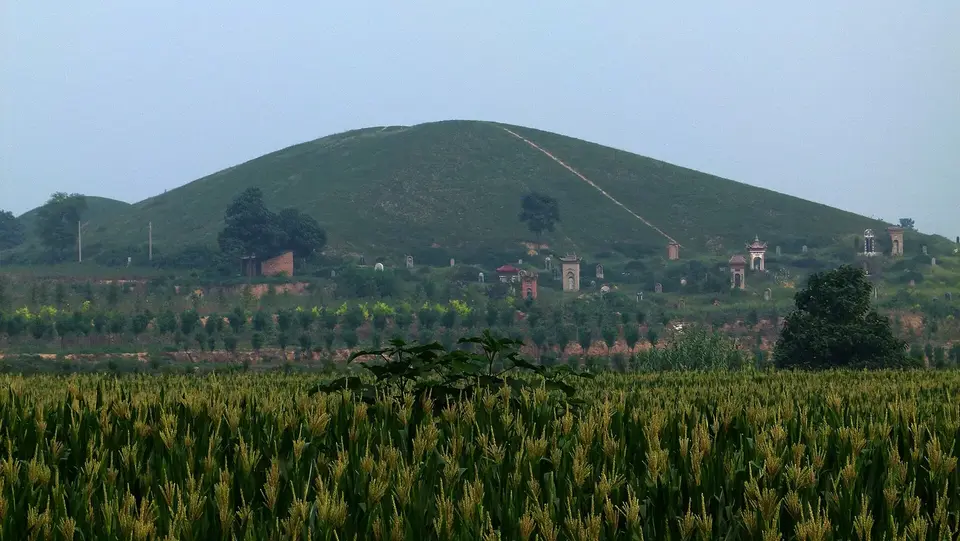
Died of illness in Weiyang Palace in the eighth month at age twenty-three; interred in the Anling Mausoleum.
Relationship graph
BIOGRAPHY
Life and Career
Perilous Youth and Succession Turmoil
Liu Ying was born in 210 BC while his father Liu Bang was serving as a humble precinct magistrate of the Sishui River. Living an austere rural existence, Liu Ying laboured alongside his mother Lu Zhi and his sister Princess Yuan of Lu in the fields. Traditional folklore records that an itinerant physiognomist passed by seeking water, predicting that Lu Zhi would achieve supreme earthly nobility on account of the divine countenance of her young son. Although embellished by later chroniclers, these narratives illustrate the early expectations placed upon Liu Ying as the eldest legitimate heir of the household.
In the fourth month of 205 BC, Liu Bang marshaled a coalition of fifty-six thousand troops to attack Xiang Yu at Pengcheng, suffering a catastrophic defeat. Fleeing in panic, Liu Bang encountered Liu Ying and his sister on the road and pulled them into his fleeing carriage. With Chu elite cavalry in close pursuit, Liu Bang repeatedly kicked the terrified children out of the carriage to lighten the load. Each time, chariot driver Xiaohou Ying leapt down, gathered the weeping children into his arms, and placed them back in the carriage, defying Liu Bang furious threats to execute him and ultimately delivering the children safely to Fengyi.
In the sixth month of that year, Liu Bang invested six-year-old Liu Ying as Crown Prince of the King of Han at Yueyang, assigning him to garrison Guanzhong. In 202 BC, upon ascending the imperial throne, Liu Bang named Liu Ying Imperial Crown Prince. As he matured, Liu Ying displayed a gentle, benevolent, and scholarly temperament. However, Gaozu, who prized military toughness, repeatedly lamented that Liu Ying was overly compliant and did not resemble him. Meanwhile, Lady Qi son Liu Ruyi was clever and spirited, prompting Gaozu to openly consider replacing the crown prince.
The traumatic flight from Pengcheng left an indelible scar upon the young prince psyche. At five years old, being repeatedly discarded by his own father on a swaying war wagon bred an instinctive aversion to ruthless dynastic conflict. The selfless devotion of Xiaohou Ying demonstrated the virtue of loyalty, reinforcing Liu Ying innate compassion toward family members and subordinates throughout his subsequent reign.
During his years in the Eastern Palace at Yueyang, Liu Ying was educated under the guidance of Xiao He, absorbing Confucian moral philosophy. While Liu Bang fought protracted campaigns against Xiang Yu, civil logistics and ancestral sacrifices in Guanzhong were administered in the prince name. Witnessing the immense sacrifices of local families who transported grain to the front lines, Liu Ying developed a profound respect for agrarian livelihood, establishing his future commitment to non-action governance.
In 197 BC, Gaozu formally raised the issue of succession in court, proposing to depose Liu Ying in favor of Liu Ruyi. Imperial Censor Zhou Chang mounted a passionate defense, stammering with indignation that he would never obey an unrighteous decree. Although Gaozu dismissed court with a laugh, Lady Qi persistent entreaties kept the succession in jeopardy. In desperation, Empress Lu consulted strategist Zhang Liang, who advised inviting the Four Whiteheads of Mount Shang, revered hermits who had spurned Gaozu summons, to serve as tutors to the crown prince. Seeing these eminent scholars standing in deferential attendance behind Liu Ying, Gaozu abandoned his plans, acknowledging that the prince wings had grown too strong to be clipped.
Gaozu open favoritism toward Lady Qi subjected the Eastern Palace to constant dread. Yet throughout this ordeal, Liu Ying harbored no malice or rivalry toward his half-brother Liu Ruyi, consistently treating him with familial deference. His genuine filial devotion and moral rectitude won the admiration of founding marshals and ministers, ensuring unyielding institutional support for his legitimate status.
The emergence of the Four Whiteheads of Mount Shang demonstrated the deep yearning of classical scholars for an enlightened and benevolent ruler. These octogenarian masters had rejected imperial summons from Gaozu, yet willingly descended from their secluded mountains to shield the gentle crown prince. When Gaozu observed their silver hair and dignified presence, he realized that public opinion and scholarly legitimacy had coalesced around Liu Ying, confirming that dynastic continuity could not be altered.
Imperial Accession and Non-Action Governance
On June 1, 195 BC, Emperor Gaozu died in Changle Palace. On June 23, seventeen-year-old Liu Ying ascended the imperial throne as Emperor Hui, honoring his mother Lu Zhi as Empress Dowager. Having endured decades of warfare, the empire was devastated: fields lay abandoned, populations had plummeted, and state resources were so depleted that the founding emperor had been unable to procure four matched carriage horses. Confronted with widespread poverty, Emperor Hui adopted the Daoist principle of non-action and minimal intervention as supreme imperial policy.
Upon accession, Liu Ying preserved the institutional framework established by Xiao He and Cao Can. When Xiao He lay dying in 193 BC, Emperor Hui visited his bedside to consult on a successor, and Xiao He firmly recommended Cao Can. As chancellor, Cao Can strictly adhered to all preexisting statutes, spending his days entertaining guests and drinking wine. Confused by this apparent negligence, Emperor Hui summoned Cao Can to inquire about his conduct. Cao Can bowed and asked whether the emperor considered himself equal to Gaozu; Hui replied that he dared not compare himself. Cao Can then asked whether Hui considered him superior to Xiao He, to which Hui conceded that he was not. Cao Can smiled and noted that since Gaozu and Xiao He had settled the laws clearly, all they needed to do was maintain them diligently. Hui recognized the wisdom of this principle, historically commemorated as following the rules of Cao.
Guided by this policy of non-action, the central court refrained from administrative meddling in agrarian life. Emperor Hui issued imperial edicts reducing agricultural taxes from one-fifteenth to one-thirtieth of the harvest, while granting tax exemptions to the elderly and vulnerable. Because governmental decrees were simple and predictable, displaced refugees returned to clear fallow fields, and the agricultural heartlands of Guanzhong and the Central Plains experienced widespread economic revival, establishing the material prosperity of the early Han dynasty.
Reforming Legal Statutes and Constructing Chang'an
Emperor Hui reign made lasting contributions to Chinese intellectual and legal history. Following the Qin dynasty suppression of scholarship, draconian book-ban statutes remained in force, punishing private possession of classical texts with extermination of three lineages. In 191 BC, Emperor Hui issued an edict abolishing the ban on classical books. This historic reform removed the legal shackles that had suppressed Confucian and philosophical scholarship for three decades, allowing buried classical texts to resurface and stimulating the development of Han classical learning.
In jurisprudence, Emperor Hui abolished statutes punishing seditious speech and ended the extermination of three lineages, forbidding magistrates from implicating innocent relatives. He proclaimed repeated amnesties, releasing convicts to return to farming, and ordered every county to establish community elders to instruct the populace in moral virtue. Under his guidance, imperial law shifted from Qin severity toward Confucian benevolence, earning the gratitude of scholars and commoners alike.
Concurrently, Emperor Hui initiated the monumental construction of the defensive ramparts of Chang'an. Under Gaozu, only the Weiyang and Changle palaces had been constructed, leaving the capital without outer fortifications. Beginning in his first year, Emperor Hui mobilized hundreds of thousands of laborers over five years to erect a massive rammed-earth wall measuring over twenty miles in circumference and thirty-five feet in height, pierced by twelve monumental gates, transforming Chang'an into an impregnable metropolis.
In foreign diplomacy, Emperor Hui exhibited remarkable pragmatism. When Modu Chanyu of the Xiongnu sent an insulting letter to Empress Dowager Lu, hot-headed general Fan Kuai boasted that he could devastate the northern steppes with a hundred thousand troops. Emperor Hui and statesman Ji Bu firmly rebuked this recklessness, recalling the disaster at Baideng and urging caution. Hui maintained the peace-marriage policy, sending imperial kinswomen and gifts of silk to preserve peace along the northern border.
In dealing with imperial princes, Emperor Hui displayed exceptional familial warmth. When Liu Fei, Prince Daohui of Qi and eldest son of Gaozu, arrived in the capital, Emperor Hui insisted on seating his elder brother in the place of honor during a private family banquet. When Empress Lu attempted to poison Liu Fei in retaliation, Emperor Hui intervened to protect his brother, helping him escape safely back to his fief. His commitment to familial harmony stood as a rare beacon of virtue amid early Han court brutality.
The construction of Chang'an walls stood as a masterclass in ancient engineering and civic management. Throughout the multi-year effort, Emperor Hui visited construction sites along the Wei River, ensuring that laborers received grain rations and forbidding overseers from resorting to corporal punishment. Through well-organized logistics, the massive defensive perimeter was completed without sparking domestic rebellion, securing the heart of the empire.
In fiscal management, Emperor Hui implemented practical policies to stabilize grain supplies. He rewarded merchants who transported grain into Guanzhong with honorary titles and corvée exemptions, swiftly filling imperial granaries. He also unified coinage standards and standardized marketplace weights and measures, checking price manipulation and fostering steady commercial recovery across northern and southern river basins.
The Trauma of the Human Swine and Tragic Demise
Despite his benevolent rule, Emperor Hui was powerless against the murderous intrigues of his mother. Consumed by lingering hatred toward Lady Qi and Liu Ruyi, Empress Dowager Lu resolved to destroy them upon Gaozu death. She imprisoned Lady Qi in the palace mills and summoned young Liu Ruyi to the capital. Aware of his mother murderous intent, Emperor Hui personally met the boy outside the city gates, taking him into his own living quarters where they shared food and lodging day and night to shield him from assassination.
In the twelfth month of 194 BC, Emperor Hui went out at dawn for an early winter hunt. Because the young prince was too exhausted to rise, Hui departed alone, assuming that a brief absence would be harmless. Waiting for this opportunity, Empress Lu dispatched assassins with poisoned wine, forcing it down Liu Ruyi throat. When the emperor returned, his young brother lay dead upon the couch. Overcome with grief, Liu Ying wept bitterly, blaming himself for failing to protect the child.
Empress Lu cruelty reached its climax when she had Lady Qi limbs severed, her eyes gouged out, her ears deafened with sulfur, and her voice destroyed with poison, casting her into a pit as a human swine. Days later, she summoned Emperor Hui to view the mutilated victim. When the horrified emperor realized that the groaning figure was Lady Qi, he suffered a complete psychological collapse, weeping uncontrollably and falling into a severe fever that confined him to bed for over a year.
From his sickbed, Emperor Hui sent a message of agonized protest to his mother, declaring that such cruelty was beyond human decency and that as her son, he could never again rule the empire. Shattered by this ordeal, he completely abandoned the administration of the state, seeking refuge in palace indulgence and alcohol to numb his trauma. On September 26, 188 BC, Emperor Hui died in Weiyang Palace at the age of twenty-three. He was interred in the Anling Mausoleum with the posthumous title Emperor Xiaohui.
Major Achievements
Practicing Non-Action and Laying the Groundwork for Wen-Jing Prosperity
Emperor Hui most significant historical contribution lay in his steadfast implementation of Daoist non-action governance. Confronted by the desolation left by the Qin collapse, he restrained court extravagance and reduced taxation, minimizing state extraction from rural communities. By strictly adhering to established laws through the doctrine of following the rules of Cao, he provided social stability that allowed agrarian families to rebuild their lives without disruptive policy shifts.
Over his seven-year reign, agriculture rebounded, populations multiplied, and local granaries were replenished. The social tensions of the Qin-Han transition eased, and displaced populations put down deep roots. Emperor Hui policies provided the indispensable material and administrative foundation for the subsequent golden age celebrated as the Rule of Wen and Jing.
Abolishing Draconian Laws and Liberating Scholarship
In legal and cultural reform, Emperor Hui repeal of the Qin ban on classical literature stands as a monumental landmark in Chinese civilization. By removing the legal penalties against private study, he enabled ancient Confucian classics, historical treatises, and philosophical discourses to reemerge into public light. Without this decisive reform, texts like the Shangshu preserved by Master Fu would have been permanently lost to posterity.
His abolition of collective family executions and laws against seditious speech signaled the humane evolution of the imperial Chinese legal system. By replacing Qin legalism with Confucian benevolence, he won the hearts of the scholarly class and established legal precedents that guided imperial jurisprudence for the next two millennia.
In moral education, Emperor Hui promoted filial piety and community virtue. He instituted the appointment of three elders in every county, granting them quarterly subsidies of meat and wine to instruct local villages in harmonious conduct. Under his moral influence, civil litigation declined, reflecting the tranquil and orderly atmosphere of early Han society.
Tragic Abdication of Power and the Rise of the Lu Clan
Emperor Hui tragic flaw was his excessive gentleness and lack of political ruthlessness. In the brutal arena of imperial dynastic politics, his benevolence proved insufficient against the calculating cruelty of Empress Dowager Lu. Although he sought to shield Liu Ruyi, his lack of preemptive resolve led to the prince murder. Following the horror of the human swine, his retreat into alcohol surrendered supreme imperial power to his mother.
This abdication cleared the way for Empress Lu autocracy, leading to the purging of the Liu clan and the unlawful enfeoffment of the Lu family. Ending his life in grief at twenty-three, Emperor Hui remains one of the most tragic and deeply sympathetic monarchs in Chinese imperial history, remembered as a virtuous prince crushed by the ruthless demands of imperial rule.
Interpersonal Relationships
- Father: Emperor Gaozu of Han (Liu Bang)
- Mother: Empress Lu Zhi (Empress Dowager Lu, Regent of Western Han)
- Sister: Princess Yuan of Lu (married Zhang Ao, Prince of Zhao)
- Half-Brothers: Liu Fei (Prince Daohui of Qi), Liu Ruyi (Prince Yin of Zhao), Emperor Wen of Han (Liu Heng), Liu Hui (Prince Gong of Zhao), Liu You (Prince You of Zhao), Liu Chang (Prince Li of Huainan), Liu Jian (Prince Ling of Yan)
- Spouse: Empress Xiaohui (Lady Zhang, daughter of Princess Yuan of Lu and niece of Emperor Hui)
- Sons: Former Young Emperor (Liu Gong), Later Young Emperor (Liu Hong), Liu Qiang (Prince of Huaiyang), Liu Buyi (Prince of Hengshan), Liu Tai (Prince of Liang), Liu Wu (Prince of Huaiyang)
- Chancellors: Xiao He, Cao Can
- Senior Ministers: Zhou Chang (Imperial Censor), Zhang Liang (Marquis of Liu), Chen Ping, Zhou Bo
- Tragic Victims: Lady Qi, Prince Yin of Zhao (Liu Ruyi)
Historical Evaluations
- Sima Qian, Records of the Grand Historian (Shi Ji): In the reigns of Emperor Xiaohui and Empress Dowager Lu, the common people were freed from the bitter warfare of the Warring States. Both sovereign and ministers sought repose in non-action. Emperor Hui reigned with folded arms while the empress dowager directed statecraft from the inner chambers; the realm remained tranquil, punishments were rarely invoked, and crimes were few. The populace applied themselves to farming, and food and clothing multiplied.
- Ban Gu, Book of Han (Han Shu): Emperor Xiaohui was naturally endowed with benevolence and filial devotion. Encountering the cruel tyranny of Empress Lu, he withdrew into seclusion, unable to rectify the court—how sorrowful indeed! Yet he repealed the book-ban statute, raised the walls of Chang'an, abolished laws against seditious speech, mitigated punishments, reduced agricultural levies, and enriched the people, proving himself truly a humane and virtuous ruler!
Related Entries
- Emperor Gaozu of Han
- Lu Zhi
- Cao Can Follows Xiao He's Precedents
- Repeal of the Book Ban
- Han Dynasty Chang'an City
FIGURES ASSOCIATED WITH THIS DYNASTY
Bibliography
- Sima Qian, Records of the Grand Historian (Shi Ji), Volume 9, Basic Annals of Empress Dowager Lu
- Sima Qian, Records of the Grand Historian (Shi Ji), Volume 55, Hereditary House of the Marquis of Liu
- Ban Gu, Book of Han (Han Shu), Volume 2, Annals of Emperor Hui