Joining Liu Bang
Joined Liu Bang as a Personal Attendant at Yongqiu, defeating Qin forces at Chengwu and Gangli and receiving the rank of Seventh Grandee.
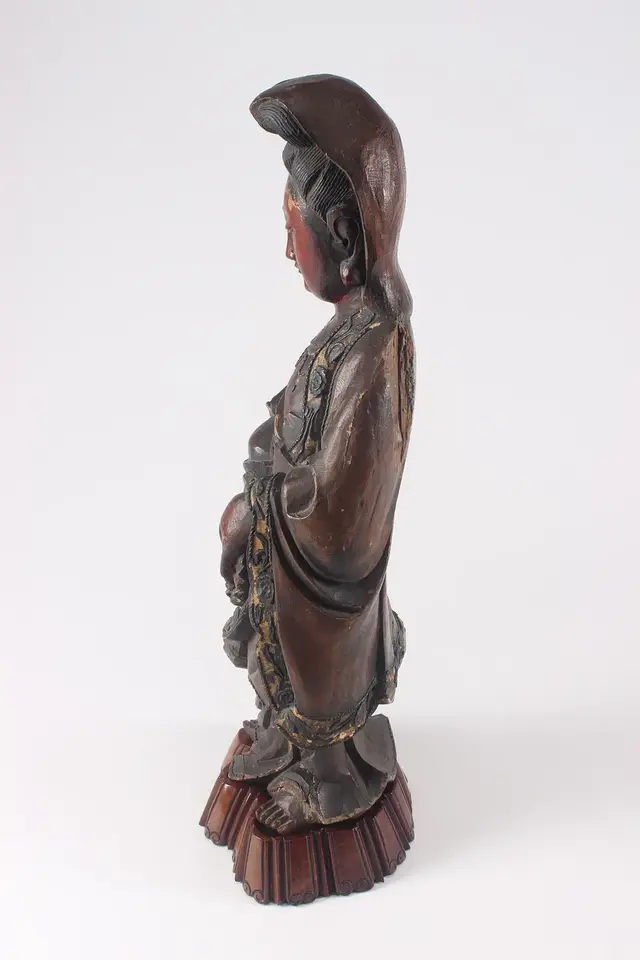
250 BCE–176 BCE
灌婴
Guan Ying (灌婴, died 176 BCE), a native of Suiyang County in Dang Commandery (modern Suiyang District, Shangqiu, Henan), was a founding general, premier cavalry commander, and statesman of the Western Han (西汉) who was enfeoffed as Marquis of Yingyin (颍阴侯), rose to Grand Commandant and Grand Councilor (丞相), and received the posthumous title "Marquis Yi." In his early years Guan Ying earned his living as a silk merchant in…
Guan Ying (灌婴, died 176 BCE), a native of Suiyang County in Dang Commandery (modern Suiyang District, Shangqiu, Henan), was a founding general, premier cavalry commander, and statesman of the Western Han (西汉) who was enfeoffed as Marquis of Yingyin (颍阴侯), rose to Grand Commandant and Grand Councilor (丞相), and received the posthumous title "Marquis Yi." In his early years Guan Ying earned his living as a silk merchant in Suiyang. In the 2nd year of Qin Er Shi (208 BCE), when Liu Bang's insurgent forces reached Yongqiu, Guan Ying joined him as a Personal Attendant (zhongjuan). Fighting with fierce valor across Chengwu, Gangli, Bonan, Quyu, Yangwu, Luoyang, and Nanyang before entering the Wu Pass and routing the Qin army at Lantian, he was successively awarded the aristocratic ranks of Seventh Grandee, Holder of Silk (Lord Xuanling), and Holder of the Jade Baton (Lord Changwen). During the Chu-Han Contention, he accompanied Liu Bang in pacifying the Three Qins and defeated Long Ju south of Dingtao, receiving the title of Marquis Changwen. After the Han defeat at Pengcheng in 205 BCE, Liu Bang organized an elite corps of Palace Gentleman cavalry at Xingyang and appointed the young, battle-tested Guan Ying as Grand Palace Grandee in overall command, assisted by former Qin cavalrymen Li Bi and Luo Jia as Left and Right Colonels, routing the Chu cavalry east of Xingyang. Thereafter Guan Ying raided behind Chu lines to sever their grain route and, as Imperial Counselor, led his cavalry eastward under Han Xin to crush Qi forces at Lixia and Linzi, slay the Chu commander Long Ju and capture Zhou Lan at Gaomi, and sweep across Huaibei, Guangling, and Pengcheng. Following the Battle of Gaixia in 202 BCE, he pursued Xiang Yu to Dongcheng—where five of his troopers slew Xiang Yu—and crossed the Yangtze River to pacify Wu, Yuzhang, and Kuaiji commanderies. Enfeoffed as Marquis of Yingyin after the founding of the Han Empire, he served as General of Chariots and Cavalry in suppressing the rebellions of Zang Tu, Xin (King of Han), Chen Xi, and Ying Bu. After Empress Lü's death in 180 BCE, he held his army at Xingyang in concert with Zhou Bo and Chen Ping to overthrow the Lü clan and enthrone Emperor Wen, subsequently serving as Grand Commandant and Grand Councilor until his death in 176 BCE.
Joined Liu Bang as a Personal Attendant at Yongqiu, defeating Qin forces at Chengwu and Gangli and receiving the rank of Seventh Grandee.
Fought through Nanyang, the Wu Pass, and Lantian to Bashang, receiving the title Lord Changwen; appointed Gentleman of the Palace and Palace Receptionist under Liu Bang and helped pacify the Three Qins.
Defeated Long Ju south of Dingtao and became Marquis Changwen; appointed Grand Palace Grandee at Xingyang with Li Bi and Luo Jia as Left and Right Colonels, routing Chu cavalry east of Xingyang.
Led cavalry raids behind Chu lines to cut the grain route from Yangwu to Xiangyi, defeated Xiang Guan at Lu, and was promoted to Imperial Counselor at Aocang.
Led cavalry under Han Xin to take Lixia and Linzi and slay Long Ju at Gaomi; crossed the Huai River to pacify Guangling and turned north to capture Xiapi and Pengcheng.
Pursued Xiang Yu from Gaixia to Dongcheng, where five of his men slew Xiang Yu; crossed the Yangtze to pacify Wu, Yuzhang, and Kuaiji commanderies, and campaigned against Zang Tu in autumn.
Accompanied Liu Bang to arrest Han Xin at Chen and was enfeoffed as Marquis of Yingyin; campaigned against King Xin of Han and the Xiongnu in Dai and Pingcheng.
Commanded chariots and cavalry in crushing Chen Xi's chancellor Hou Chang and the rebellious King of Huainan Ying Bu, having his fief fixed at 5,000 households in Yingyin.
Sent by Lü Lu to block the King of Qi, halted his army at Xingyang to ally with Zhou Bo and Chen Ping in eliminating the Lü clan, enthroned Emperor Wen, and became Grand Commandant.
Succeeded Zhou Bo as Grand Councilor and led 85,000 cavalry north to repel a major Xiongnu incursion into Beidi and Shang commanderies.
Died in office as Grand Councilor in the 12th month and was posthumously canonized as Marquis Yi.
Guan Ying was born in Suiyang County, Dang Commandery (modern Suiyang District, Shangqiu, Henan), and worked in his youth as a seller of silk fabrics in Suiyang. In the 2nd year of Qin Er Shi (208 BCE), when Liu Bang, Duke of Pei, led his anti-Qin insurgent force to the walls of Yongqiu shortly after the Qin general Zhang Han defeated and killed Xiang Liang, Liu Bang withdrew to Dang Commandery and Guan Ying joined his retinue as a Personal Attendant (zhongjuan). Accompanying Liu Bang, he defeated the forces of the Commandery Commandant of Dong Commandery at Chengwu and routed the Qin garrison at Gangli, earning the seventh-grade aristocratic rank of qidaifu for his ferocity in combat.
Continuing westward with Liu Bang, Guan Ying fought fiercely against Qin armies at Bonan (south of Suiyang), Kaifeng, and Quyu (east of Zhongmu), receiving the rank of zhibo (Holder of Silk) and the title Lord Xuanling. He then campaigned from west of Yangwu to Luoyang, routing Qin forces north of Shixiang, severing the Yellow River ferries to the north, and marching south to defeat the troops of Grand Administrator Lü Yi of Nanyang east of Yangcheng, pacifying Nanyang Commandery. Entering the Wu Pass into the Qin heartland, he fought with distinction in the final victory at Lantian and advanced to Bashang, for which he was awarded the high Chu rank of zhigui (Holder of the Jade Baton) and the title Lord Changwen.
When Liu Bang was made King of Han in the 1st month of the 1st year of Han (206 BCE), he appointed Guan Ying as a Gentleman of the Palace (langzhong) during the march into Hanzhong, promoting him in the 10th month to Palace Receptionist (zhongyezhe). Returning eastward with Liu Bang to conquer the Three Qins in Guanzhong, Guan Ying helped capture Yueyang, forcing Sima Xin, King of Sai, to surrender; he then joined the siege of Zhang Han at Feiqiu and marched east out of the Linjin Pass to compel the surrender of Sima Ang, King of Yin, pacifying the Henei region. South of Dingtao, he fought a pitched battle against Xiang Yu's general Long Ju and the Wei chancellor Xiang Tuo, routing their forces and receiving enfeoffment as a full marquis (liehou) under the title Marquis Changwen, with a fief at Pingxiang in Du County.
In the 2nd year of Han (205 BCE), Guan Ying followed Liu Bang in taking Dang County and occupying the Chu capital of Pengcheng. After Xiang Yu's counterattack shattered the Han army, Guan Ying retreated westward with Liu Bang to camp at Yongqiu. When the former Qin generals Wang Wu and Shentu rebelled, Guan Ying accompanied Liu Bang in crushing them, capturing Waihuang, and regrouping at Xingyang.
At Xingyang, Xiang Yu's main army pressed the Han defenses hard with large numbers of elite Chu cavalry. When Liu Bang sought a commander to lead the Han cavalry, his officers unanimously recommended the former Qin horsemen Li Bi and Luo Jia of Chongquan, who were then serving as colonels. When Liu Bang prepared to appoint them, Li Bi and Luo Jia declined, saying, "Your servants were formerly subjects of Qin, and we fear the army will not trust us; we beg Your Majesty to appoint a trusted attendant from your own side who excels in horsemanship to command us, and we will serve as his deputies." Although Guan Ying was still young, he had proven his dauntless courage in battle after battle. Liu Bang therefore appointed Guan Ying as Grand Palace Grandee (zhongdafu) in command of the Palace Gentleman cavalry, with Li Bi and Luo Jia as Left and Right Colonels. Leading the Han horsemen east of Xingyang, Guan Ying clashed head-on with the Chu cavalry and won a decisive victory, establishing the mobile striking force of the Han army.
Following the victory east of Xingyang, Guan Ying received orders from Liu Bang to lead an independent cavalry column deep into the Chu rear, severing the Chu grain supply corridor stretching from Yangwu to Xiangyi. Beneath the walls of Lu County he routed Xiang Yu's general Xiang Guan, his troopers slaying one Chu Right Marshal and one cavalry general; he next defeated the rebel Lord of Zhe, Wang Wu, camping west of Yan where his men slew five Loufan sharpshooter commanders and one lianyin minister; and at Baima he crushed Wang Wu's detached commander Huan Ying, killing a commandant. Crossing the Yellow River southward with his cavalry, Guan Ying escorted Liu Bang safely to Luoyang, rode north to Handan to welcome Chancellor Han Xin's army, and upon returning to Aocang was promoted to Imperial Counselor (yushi dafu).
In the 3rd and 4th years of Han (204–203 BCE), Guan Ying led his Palace Gentleman cavalry eastward under the overall command of Han Xin to campaign against the Kingdom of Qi. At Lixia (modern Jinan, Shandong) he shattered the defending Qi army, his soldiers capturing the Qi General of Chariots and Cavalry Hua Wushang along with forty-six officers, and pressed on to compel the surrender of the Qi capital Linzi and capture Acting Chancellor Tian Guang. Pursuing Qi Chancellor Tian Heng to Ying and Bo counties, Guan Ying routed the Qi cavalry, captured both cities, and defeated the Qi general Tian Xi at Qiancheng, where his troopers decapitated Tian Xi.
When Xiang Yu dispatched his top general Long Ju and the Lord of Liu, Xuan, with a large army to rescue Qi, Guan Ying marched east with Han Xin to confront them at Gaomi along the Wei River. In the ensuing battle, soldiers under Guan Ying's command slew Long Ju in action and captured one Right Marshal, one lianyin, and ten Loufan commanders, while Guan Ying personally captured the deputy general Zhou Lan alive. After Qi was pacified and Han Xin proclaimed himself King of Qi, Guan Ying led a detached force south to northern Lu, defeating the Chu general Gong Gao; sweeping southward, he routed the Grand Administrator of Xue Commandery, personally captured a cavalry general, stormed Fuyang, advanced past Xiaxiang to Tong, Qulü, and Xu counties, and crossed the Huai River to accept the surrender of all cities in Huainan as far as Guangling.
When Xiang Yu sent Xiang Sheng, the Duke of Xue, and the Duke of Tan to retake Huaibei, Guan Ying recrossed the Huai River northward, routed Xiang Sheng and the Duke of Tan at Xiapi, slew the Duke of Xue, and captured Xiapi. Crushing the Chu cavalry at Pingyang, he forced the surrender of the Chu capital Pengcheng itself, capturing the Chu Pillar of State Xiang Tuo and subduing the counties of Liu, Xue, Pei, Zan, Xiao, and Xiang. Turning west against Ku and Qiao counties, he captured the Chu deputy general Zhou Lan a second time before rejoining Liu Bang at Yixiang. Fighting alongside Liu Bang beneath Chen County, he routed Xiang Yu's forces and received an additional fief of 2,500 households.
In the 12th month of the 5th year of Han (early 202 BCE), after Xiang Yu broke out of the encirclement at Gaixia and fled south, Guan Ying—acting as Imperial Counselor—led a fast column of chariots and cavalry in relentless pursuit as far as Dongcheng County (southeast of modern Dingyuan, Anhui), where he shattered Xiang Yu's last remnant force. Five cavalrymen under Guan Ying's command (Wang Yi, Yang Xi, Lü Matong, Lü Sheng, and Yang Wu) jointly slew Xiang Yu and divided his body on the banks of the Wu River, all five receiving marquisates. Guan Ying accepted the surrender of one Left Marshal, one Right Marshal, and 12,000 Chu soldiers along with all their officers, taking Dongcheng and Liyang. Immediately crossing the Yangtze River southward, he defeated and captured the Grand Administrator of Wu Commandery beneath Wu, pacifying the southeastern commanderies of Wu, Yuzhang, and Kuaiji (where he established the walled garrison at Yuzhang that became the city of Nanchang) before returning north to pacify fifty-two counties in Huaibei.
After Liu Bang ascended the throne as Emperor Gaozu of Han, he increased Guan Ying's fief by 3,000 households. In the autumn of the 5th year of Han (202 BCE), Guan Ying served as General of Chariots and Cavalry (cheqi jiangjun) in Emperor Gaozu's campaign to crush the rebellious King of Yan, Zang Tu. The following year (201 BCE), he accompanied the emperor to Chen to arrest Han Xin, King of Chu, and upon returning to court was formally invested by split tally as hereditary Marquis of Yingyin with a fief of 2,500 households. In 201–200 BCE, campaigning with Emperor Gaozu against the defector Xin, King of Han, in Dai, Guan Ying forced the surrender of six counties north of Loufan, slew the Left Chancellor of Dai, defeated Xiongnu cavalry north of Wuquan and beneath Jinyang, and took unified command of the chariots and cavalry of Yan, Zhao, Qi, Liang, and Chu to rout Xiongnu horsemen at Shashi before enduring the siege of Pingcheng and returning to Dongyuan.
During Chen Xi's rebellion in 197 BCE, Guan Ying attacked and destroyed the army of Chen Xi's chancellor Hou Chang beneath Quni, his men killing Hou Chang and five special generals and securing Quni, Lunu, Shangquyang, Anguo, Anping, and Dongyuan. When Ying Bu (Qing Bu), King of Huainan, rebelled in the 11th year of Han (196 BCE), Guan Ying led the vanguard as General of Chariots and Cavalry, routing Ying Bu's detached commander at Xiang County and successively smashing the armies of Ying Bu's Upper Pillar of State, Grand Marshal, and general Fei Zhu, personally capturing a Left Marshal and pursuing the defeated rebels to the Huai River. Upon the suppression of Ying Bu, Emperor Gaozu fixed Guan Ying's fief at 5,000 households in Yingyin. Across the founding wars, Guan Ying independently routed sixteen enemy armies, forced the surrender of forty-six cities, pacified one kingdom, two commanderies, and fifty-two counties, and captured two generals, one Pillar of State, one chancellor, and ten 2,000-bushel officials.
Following Emperor Gaozu's death in 195 BCE, Guan Ying served Emperor Hui and Empress Dowager Lü at court as Marquis of Yingyin. When Empress Dowager Lü died in the 7th month of the 8th year of her reign (180 BCE), her nephews Lü Chan and Lü Lu controlled the Northern and Southern Armies in Chang'an and plotted to usurp the throne. Learning of the plot, Liu Xiang, King Ai of Qi, raised troops in Shandong and marched west to punish the Lü princes. Alarmed, Upper General Lü Lu appointed the veteran Guan Ying as Commander-in-Chief to lead an imperial army east against Qi.
Upon reaching the strategic hub of Xingyang, Guan Ying realized that defeating the King of Qi would leave the Lü faction unchallenged in the capital. He therefore entered into secret consultations with Grand Commandant Zhou Bo (Marquis of Jiang) and Chancellor Chen Ping, halting his army at Xingyang and sending word to the King of Qi to hold his positions on the border until the Lü clan was overthrown from within. In the 9th month, after Zhou Bo, Chen Ping, and Liu Zhang seized control of the capital garrisons and exterminated the Lü clan, the King of Qi disbanded his troops and Guan Ying marched back from Xingyang to Chang'an, joining Zhou Bo and Chen Ping in welcoming Liu Heng, King of Dai, to ascend the throne as Emperor Wen of Han. Rewarding his crucial support, Emperor Wen increased Guan Ying's fief by 3,000 households, granted him a thousand catties of gold, and appointed him Grand Commandant (taiwei).
In the 3rd year of the Qianyuan era of Emperor Wen (177 BCE), when Zhou Bo resigned as chancellor to return to his marquisate, Emperor Wen appointed Guan Ying as Grand Councilor (chengxiang) and abolished the post of Grand Commandant. In the 5th month of that same year, the Xiongnu Wise King of the Right launched a massive raid into Beidi and Shang commanderies; Emperor Wen ordered Grand Councilor Guan Ying to lead 85,000 cavalry north to drive out the invaders. After the Xiongnu withdrew beyond the frontier, Liu Xingju, King of Jibei, rebelled in Shandong, and the emperor recalled Guan Ying's army to the capital. Slightly more than a year later, in the 12th month of the 4th year of Emperor Wen (early 176 BCE), Guan Ying died in office as Grand Councilor and was canonized as "Marquis Yi," succeeded in his marquisate by his son Guan A (Marquis Ping of Yingyin).
FIGURES ASSOCIATED WITH THIS DYNASTY