Birth into Han Nobility
Born into an illustrious ministerial clan in the state of Han; his grandfather and father served five consecutive Han monarchs as chancellors.
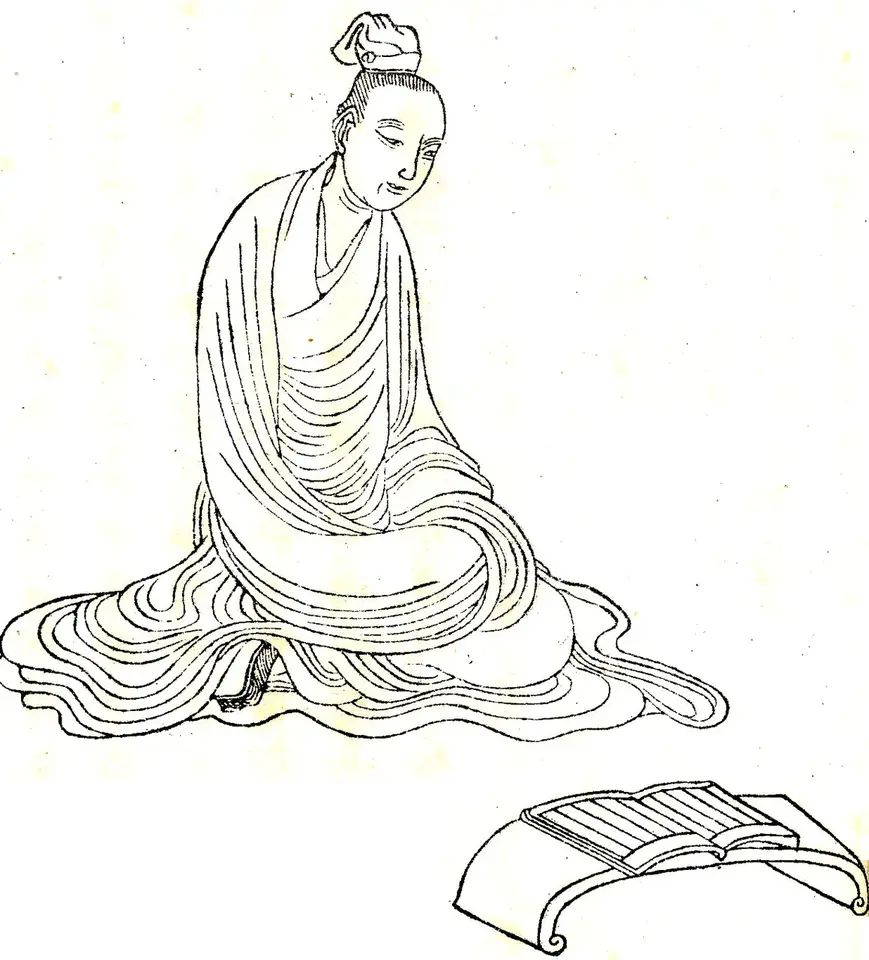
250 BCE–186 BCE
张良
Zhang Liang (张良, c. 250–186 BCE), courtesy name Zifang (子房), a native of Chengfu in Yingchuan Commandery (modern-day Jia County, Henan), was an eminent grand strategist, statesman, and founding counselor of the Western Han dynasty. Celebrated alongside Xiao He and Han Xin as one of the "Three Heroes of Early Han," he is revered throughout Chinese history as the "Sage of Strategy" (Mousheng). Born into an aristocratic…
Zhang Liang (张良, c. 250–186 BCE), courtesy name Zifang (子房), a native of Chengfu in Yingchuan Commandery (modern-day Jia County, Henan), was an eminent grand strategist, statesman, and founding counselor of the Western Han dynasty. Celebrated alongside Xiao He and Han Xin as one of the "Three Heroes of Early Han," he is revered throughout Chinese history as the "Sage of Strategy" (Mousheng). Born into an aristocratic family whose forebears served five generations of kings of the state of Han as chancellors, Zhang Liang dedicated his youth to avenging his conquered homeland. He liquidated his entire fortune to commission a Herculean warrior who hurled a massive iron sledgehammer at Qin Shi Huang's imperial carriage at Bolangsha, narrowly missing the monarch. Escaping to Xiapi, he met the hermit master Huangshi Gong on an earthen bridge, enduring three moral trials to receive the sacred treatise Grand Duke's Art of War. Following the eruption of the anti-Qin rebellions, he allied with Liu Bang, finding in him an enlightened sovereign. During the Chu-Han Contention, Zhang Liang functioned as the supreme architect of victory: counseling the retreat to Bashang and the Three Articles of Law upon capturing Xianyang; engineering Liu Bang's escape from the perilous Hongmen Banquet; advising the burning of the plank roads into Hanzhong to deceive Xiang Yu; designing the grand geopolitical strategy at Xiayi that united Han Xin, Peng Yue, and Ying Bu; utilizing dinner chopsticks to definitively refute the revival of ancient feudal enfeoffment; treading on Liu Bang's foot to persuade him to invest Han Xin as King of Qi; and orchestrating the land distributions that concentrated allied armies at Gaixia. After the founding of the Han Empire, Zhang Liang counseled the enfeoffment of former rival Yong Chi to avert a military mutiny, championed the establishment of the imperial capital at Chang'an, and secured Crown Prince Liu Ying's succession by enlisting the Four Whiteheads of Mount Shang. Embodying the Daoist ideal of effortless withdrawal after supreme merit, he declined a vast fief of thirty thousand households, requesting only the modest district of Liu where he had first encountered Liu Bang, and spent his final years practicing fasting and meditation from public life, posthumously honored as Marquis Wencheng.
Born into an illustrious ministerial clan in the state of Han; his grandfather and father served five consecutive Han monarchs as chancellors.
Qin conquered the state of Han; Zhang Liang sold his ancestral estate and gathered resources to seek an assassin to destroy the Qin empire.
Commissioned a warrior wielding a one-hundred-and-twenty-catty iron hammer to attack Qin Shi Huang's procession; hit the escort carriage and fled into hiding at Xiapi.
Encountered Huangshi Gong on the bridge at Xiapi; fetched his slipper three times and received the Grand Duke's Art of War to master the arts of statecraft.
Gathered one hundred volunteers; met Liu Bang near Mangdang Mountain and recognized him as a ruler destined by Heaven, entering his inner counsel.
Advised Liu Bang to capture Wuguan through psychological deception; persuaded him to seal the imperial palaces and institute the Three Articles of Law at Bashang.
Arranged an alliance with Xiang Bo on the eve of the Hongmen Banquet; summoned Fan Kuai to save Liu Bang and offered jade tokens to Xiang Yu.
Escorted Liu Bang to Hanzhong; advised him to burn the mountain gallery roads behind him to convince Xiang Yu that Han had no eastward ambitions.
Following the catastrophe at Pengcheng, designed the grand strategy at Xiayi: coordinate Han Xin, Peng Yue, and Ying Bu to encircle Western Chu.
Refuted Li Yiji's proposal to re-enfeoff the descendants of the Six States using table chopsticks to enumerate eight fatal flaws, preserving imperial centralization.
When Han Xin requested the title of Acting King of Qi, stepped on Liu Bang's foot under the table, prompting the monarch to grant full royal investiture.
Advised Liu Bang to grant vast eastern territories to Han Xin and Peng Yue, assembling the allied armies that crushed Xiang Yu at Gaixia.
Declined Gaozu's offer of thirty thousand households in Qi, choosing only the district of Liu where he had first met Liu Bang, becoming Marquis of Liu.
Refuted the general preference for Luoyang, demonstrating the geographic and economic invulnerability of Guanzhong and securing Chang'an as capital.
Advised Empress Lu to invite the revered hermits known as the Four Whiteheads of Mount Shang to attend Crown Prince Liu Ying, stabilizing the imperial succession.
Practiced Daoist fasting and breath cultivation in retirement; passed away at age sixty-five and was interred at Mount Gucheng with the posthumous title Marquis Wencheng.
Zhang Liang was born around 250 BCE in Chengfu, Yingchuan Commandery (modern-day Jia County, Henan Province, with alternative traditions pointing to Chengfu in Bozhou, Anhui). He descended from the preeminent ministerial lineage of the state of Han during the Warring States period. His grandfather, Zhang Kaidi, served as Chancellor under King Zhao, King Xuanhui, and King Xiang; his father, Zhang Ping, served as Chancellor under King Xi and King Daohui. This distinguished record of five generations of ancestral chancellors endowed the family with immense aristocratic prestige, vast landed estates, and hundreds of retainers.
In 230 BCE, Qin General Neishi Teng launched a sudden invasion that captured the Han capital of Yangdi and took King An prisoner, bringing an end to the state of Han. The destruction of his ancestral realm ignited an unquenchable flame of vengeance within the young Zhang Liang. Although he was too young to have held high ministerial office, he made an extraordinary resolution: when his younger brother died, he refused to provide a lavish funeral, instead liquidating his entire ancestral patrimony and freeing three hundred servants to amass resources for an assassination of the King of Qin.
In 218 BCE, while traveling through Huaiyang, Zhang Liang recruited an anonymous warrior of immense physical strength. Zhang Liang commissioned the forging of an iron sledgehammer weighing one hundred and twenty catties (approximately thirty kilograms) and obtained secret intelligence that Qin Shi Huang would traverse Bolangsha (east of modern Yuanyang County, Henan) during his third imperial progress. Zhang Liang and the assassin concealed themselves among the dense reeds of the sand dunes. When the imperial cavalcade entered the valley amidst billowing dust and ironclad guards, the warrior hurled the iron hammer toward the emperor's carriage. The impact shattered the ornate carriage into splinters. However, because Qin Shi Huang traveled with identical escort carriages to foil assassins, the missile struck a secondary wagon, leaving the emperor unharmed. Infuriated, Qin Shi Huang ordered a nationwide manhunt for ten days. Displaying consummate composure, Zhang Liang altered his name and fled east to Xiapi (in northern Jiangsu), vanishing into obscurity.
While living under an assumed identity in Xiapi, Zhang Liang cultivated connections with local outlaws and scholars. Around 209 BCE, he experienced a mystical encounter on the earthen bridge (Yiqiao) outside the town that transformed his life.
Walking across the bridge at daybreak, Zhang Liang encountered an elderly man in coarse hemp garments sitting on the stone balustrade (known to posterity as Huangshi Gong, the Old Master of the Yellow Stone). As Zhang Liang approached, the old man deliberately slipped off his rough shoe, let it fall into the muddy ditch below, and barked rudely: "Boy! Go down and fetch my shoe!" Shocked by this unprovoked insolence, the young aristocrat felt a surge of fury and reached for his sword. But observing the elder's frail age, he suppressed his anger, climbed down the slippery bank, retrieved the mud-spattered shoe, and returned to the bridge.
The old man extended his bare foot and commanded: "Put it on me!" Having retrieved the footwear, Zhang Liang knelt upon the stones and carefully fastened the sandal onto the elder's foot. The old man laughed aloud, rose, and walked away without looking back. Astonished, Zhang Liang watched him walk a li before the elder returned, smiling: "You can indeed be taught! Meet me here on this bridge at dawn five days from now!" Zhang Liang bowed in assent.
Five days later, when Zhang Liang arrived at dawn, the old man was already sitting upon the bridge. He rebuked Zhang Liang: "What right have you to keep an elder waiting? Return, and come earlier five days hence!" On the second occasion, Zhang Liang arrived at the first crow of the rooster, but found the elder already seated, who angrily dismissed him again. On the third occasion, Zhang Liang arrived at midnight and waited in the darkness. Before long, the old man appeared. Seeing the youth waiting patiently in the cold, he was overjoyed: "This is how it should be!" Reaching into his robes, the elder presented a scroll wrapped in silk, declaring: "Read this treatise, and you shall become the teacher of kings! Thirteen years from now, visit me at the foot of Mount Gucheng in Jibei; the yellow stone at the base of the peak is me!" The old man vanished into the mist. At sunrise, Zhang Liang examined the text, finding it to be the Grand Duke's Art of War (Taigong Bingfa), attributed to Jiang Ziya. Immersing himself in the work for years, Zhang Liang mastered the principles of warfare, deception, and political mastery.
In autumn 209 BCE, Chen Sheng and Wu Guang ignited the anti-Qin uprising at Dazexiang. Seizing the opportunity, Zhang Liang assembled a force of one hundred young volunteers in Xiapi to challenge Qin rule, intending to march north to join Jing Ju, who had proclaimed himself commander in Chu.
Along the road between Liu County and Mangdang Mountain, Zhang Liang encountered Liu Bang, who had recently raised an army in Pei County. Liu Bang commanded several thousand troops and possessed an open, magnanimous demeanor. Halting his horses, Zhang Liang conversed with Liu Bang within his tent. When Zhang Liang tested the military doctrines of the Grand Duke's Art of War, the unlettered Liu Bang grasped the subtle principles immediately, adopting his tactical suggestions with enthusiasm. Conversely, when Zhang Liang discussed these concepts with other commanders, they dismissed them as impractical abstractions.
Struck by Liu Bang's intuitive comprehension, Zhang Liang sighed in wonder: "The Governor of Pei is truly endowed with talents from Heaven!" Recognizing that Liu Bang was the destined sovereign who could restore the realm, Zhang Liang abandoned his intention to join Jing Ju and merged his force into Liu Bang's army, accepting the role of strategic advisor.
In spring 208 BCE, Xiang Liang convened the insurgent lords at Xue County. Although dedicated to Liu Bang, Zhang Liang maintained deep loyalty toward his ancestral state of Han. He advised Xiang Liang: "You have enthroned King Huai of Chu, but among the princes of Han, Prince Han Cheng is the most virtuous. Enthroning him will win the devotion of the Han populace." Xiang Liang agreed, investing Han Cheng as King of Han and appointing Zhang Liang as Minister of Works (Shentu). Zhang Liang led a small force into Yingchuan to wage guerrilla warfare against Qin outposts, but struggled against superior Qin counter-attacks.
In summer 207 BCE, authorized by King Huai's covenant that whoever first conquered Guanzhong would rule as its king, Liu Bang marched west through Yingchuan. Zhang Liang joined him with his detachments, guiding the advance. When Liu Bang prepared to bypass the heavily fortified city of Nanyang at Wan, Zhang Liang cautioned: "Wan is a mighty stronghold with deep granaries. If we bypass it, the garrison will attack our rear while Qin armies block our front—this is a fatal course!" Liu Bang reversed his march by night, surrounded Wan, and accepted the surrender of the governor, incorporating his troops without bloodshed.
Approaching the formidable Wuguan Pass, Qin defenders blocked the road. Zhang Liang noted: "The Qin commander is the son of an urban butcher; men of trade are easily swayed by profit." He directed Liu Bang to deploy thousands of banners across the mountain ridges to simulate a vast host, while sending envoys with lavish gifts of gold and jade to bribe the Qin general. The commander agreed to surrender; but observing that his soldiers hesitated, Zhang Liang urged an immediate strike: "The general wishes to yield, but his troops are doubtful. Launch a surprise attack while they are unready!" Han forces stormed the pass, routing the defenders and breaking through to the Lantian plains. In October 207 BCE, the third Qin emperor, Ziying, surrendered at the roadside, marking the collapse of the Qin dynasty.
Upon capturing Xianyang, Liu Bang entered the opulent Epang Palace. Overwhelmed by the gold, silk, and imperial concubines, Liu Bang prepared to take up residence within the imperial halls. General Fan Kuai remonstrated in vain.
Zhang Liang entered the palace and delivered a stern rebuke: "Qin was tyrannical, which is why you have arrived here. To deliver the world from tyranny, one must wear plain garments of mourning! Entering Qin and indulging in its pleasures is truly 'aiding King Zhou in his wickedness.' Bitter medicine cures the illness, and honest counsel benefits the conduct; I urge you to heed Fan Kuai's words!" Liu Bang awoke from his stupor, ordered the palaces sealed, secured the treasuries, and withdrew his troops to the encampment at Bashang. Convening local elders, Liu Bang abolished all Qin penal statutes, establishing the Three Articles of Law: murder punished by death, injury and theft compensated. The people of Guanzhong were overjoyed, giving their hearts entirely to Liu Bang.
However, learning of the fall of the capital, Xiang Yu marched his coalition of four hundred thousand troops through Hangu Pass, encamping at Hongmen with the intention of crushing Liu Bang's one hundred thousand men the following dawn. That night, Xiang Yu's uncle, Xiang Bo, an old friend whom Zhang Liang had sheltered from murder charges years earlier, galloped to Bashang to urge Zhang Liang to flee.
Zhang Liang refused to abandon his sovereign: "I came escorting the King of Han; to desert him in his hour of peril is dishonorable!" Zhang Liang introduced Xiang Bo to Liu Bang. Under Zhang Liang's direction, Liu Bang treated Xiang Bo with deep reverence, pledged an alliance through a future marriage of their children, and swore that he had preserved Xianyang's treasuries solely for Xiang Yu's arrival. Xiang Bo promised to intercede, instructing Liu Bang to apologize in person at Hongmen the following morning.
At the historic Hongmen Banquet, Xiang Yu's advisor Fan Zeng ordered Xiang Zhuang to perform a sword dance to assassinate Liu Bang. Xiang Bo rose to counter the dance, shielding Liu Bang with his body. Seeing the mortal danger, Zhang Liang slipped out to the camp gates and summoned Fan Kuai, who burst into the banquet hall armed with sword and shield, glaring at Xiang Yu and recounting Liu Bang's loyalty. Exploiting the momentary distraction, Zhang Liang signaled Liu Bang to withdraw on the pretext of visiting the latrine, escorting him along mountain paths back to Bashang. Zhang Liang returned to the banquet hall alone, presenting a pair of white jade discs to Xiang Yu and two jade cups to Fan Zeng, stating that Liu Bang had departed due to drunkenness. Fan Zeng smashed the jade cups with his sword, warning: "Fools cannot plan together; the one who strips the empire from Xiang Yu will surely be Liu Bang!" Through supreme courage and tactical poise, Zhang Liang preserved the Han cause.
Following the banquet, Xiang Yu proclaimed himself Hegemon-King of Western Chu, partitioning the empire and exiling Liu Bang to the remote mountain territories of Bashu and Hanzhong. To contain Han, he created the Three Qins, placing former Qin generals Zhang Han, Sima Xin, and Dong Yi across Guanzhong. Concurrently, Xiang Yu detained King Han Cheng, preventing Zhang Liang from returning to his homeland.
In April 206 BCE, as Liu Bang's disheartened army marched into Hanzhong, Zhang Liang escorted him as far as the mountain pass of Baozhong. Taking his leave, Zhang Liang offered a crucial piece of strategic advice: "After crossing the pass, burn the hundreds of li of wooden gallery roads behind you!" Liu Bang questioned the measure, and Zhang Liang explained: "By destroying the plank roads, you demonstrate to Xiang Yu and the world that you have no intention of returning east, calming his suspicions; furthermore, it prevents the Three Qins from launching surprise raids into Hanzhong." Liu Bang set fire to the mountain roads.
Returning to Xiang Yu's court, Zhang Liang showed the warlord reports of the burned roads, while presenting dispatches showing that Tian Rong was raising rebellion in Qi. Convinced that Liu Bang was trapped in the west, Xiang Yu turned his attention toward Qi. This strategic deception granted Han Xin several months of uninterrupted preparation, enabling the famous campaign to openly repair the plank roads while secretly crossing at Chencang, reconquering Guanzhong in a single stroke.
In April 205 BCE, Liu Bang's five hundred and sixty thousand coalition soldiers seized Pengcheng while Xiang Yu was fighting in Qi. Xiang Yu returned with thirty thousand elite cavalry, routing the coalition along the Sui River. Liu Bang escaped with a handful of riders to Xiayi, his cause seemingly lost.
Sitting in a damaged cottage at Xiayi, Liu Bang despaired: "I abandon all claims to the lands east of the passes! Whoever can help me crush Chu, I will grant him the eastern provinces! Who is capable of this task?" Zhang Liang stepped forward to unveil the historic Strategy of Xiayi.
Zhang Liang analyzed: "Xiang Yu is brutal and suspicious, and his generals live in fear; victory depends upon three commanders. First, King Ying Bu of Jiujiang is Chu's fiercest general, but he and Xiang Yu harbor growing enmity; send an envoy to turn him, and he will revolt. Second, Peng Yue conducts guerrilla warfare in Wei; promise him a kingdom, and he will cut Chu's grain arteries. Third, General Han Xin is capable of independent operations; entrust him with northern legions to conquer Zhao, Yan, and Qi. If Your Majesty cedes the eastern territories to these three men, Xiang Yu will be trapped in a triangle of fire, and the realm can be won!"
Liu Bang embraced the plan, dispatching Sui He to recruit Ying Bu, confirming Peng Yue's command in Liang, and authorizing Han Xin to open the northern front. This strategic synthesis united Xiao He's supply lines, Han Xin's military genius, Peng Yue's guerrilla tactics, and Ying Bu's shock cavalry under Zhang Liang's overarching design, establishing the coalition that doomed Western Chu.
In winter 204 BCE, Chu and Han were locked in an exhausting war of attrition at Xingyang. With supply lines disrupted, Liu Bang was desperate. Scholar Li Yiji proposed a plan: "In antiquity, King Tang of Shang and King Wu of Zhou enfeoffed the descendants of fallen dynasties to win hearts. If Your Majesty carves royal seals and restores the royal houses of the Six States, their princes and subjects will be so grateful that they will bow before Han, and Xiang Yu will be isolated!" Delighted, Liu Bang ordered royal seals engraved and prepared to dispatch Li Yiji.
At that moment, Zhang Liang entered the tent while Liu Bang was eating breakfast. Showing him the plan, Liu Bang boasted: "Zifang, look! A scholar has provided me with a scheme to weaken Chu!"
Hearing the proposal, Zhang Liang turned pale: "Who planned this for Your Majesty? Your enterprise is ruined!" Taking the bamboo chopsticks (Zhu) from Liu Bang's table to serve as counters, Zhang Liang laid out eight decisive refutations: "First, King Wu enfeoffed the Shang heirs because he held Zhou's life in his hands; can Your Majesty execute Xiang Yu today? (No, that is one chopstick); Second, King Wu honored the virtuous and opened the granaries to feed the poor; can Your Majesty open treasuries to feed the realm? (No, two chopsticks); Third, King Wu disbanded his armies and pastured his warhorses at Mount Hua; can you disband your legions today? (No, three chopsticks); Fourth, the brave men who left their homes to follow you through blood and arrows did so in the hope of earning a foot of land for themselves! If you restore the Six States, every soldier will return home to serve his ancestral prince—with whom will Your Majesty conquer the empire? (No, four chopsticks); Fifth, with Chu still formidable, the restored princes will submit to Xiang Yu out of fear, and how will you command them? (No, five chopsticks)!"
Zhang Liang concluded that restoring feudal states was political suicide. Terrified, Liu Bang spat out his food in horror and cursed: "That foolish scholar nearly destroyed my enterprise!" He ordered the newly carved seals thrown into the furnace. This intervention preserved the momentum of centralized imperial unification against reactionary feudalism.
In February 203 BCE, having destroyed Long Ju's army along the Wei River, Han Xin sent an envoy to Guangwu requesting permission to be appointed Acting King of Qi. Trapped and wounded by Chu arrows, Liu Bang flew into a rage, cursing: "I am trapped here day and night awaiting his rescue, yet he demands to be king!"
Standing behind the throne, Zhang Liang recognized that alienating Han Xin would drive his thirty thousand veteran troops into an alliance with Chu. He stepped firmly upon Liu Bang's foot under the table, while Chen Ping whispered: "We cannot prevent him from taking kingship; bestow it willingly, lest he turn against us!" Realizing his peril, Liu Bang altered his tone seamlessly: "When a real man conquers states, he becomes a true king; why settle for an acting one!" He sent Zhang Liang to invest Han Xin as King of Qi, ensuring the northern army remained loyal.
In late 202 BCE, Liu Bang broke the Treaty of Honggou to pursue Xiang Yu, but suffered a sharp defeat at Guling when Han Xin and Peng Yue failed to arrive. Panic-stricken, Liu Bang asked Zhang Liang: "The princes have violated the covenant; what should I do?" Zhang Liang replied: "Chu is nearly beaten, but no land has been formally granted to Han Xin and Peng Yue. Promise them that all lands from Chen to the sea belong to Han Xin, and lands from Suiyang to Gucheng belong to Peng Yue. They will march at once!" Liu Bang issued the charters. Enticed by these territorial guarantees, Han Xin and Peng Yue concentrated over sixty thousand troops at Gaixia, joining Liu Bang to execute the Tenfold Ambush that annihilated Western Chu and ended the war.
In February 202 BCE, Liu Bang ascended the imperial throne as Emperor Gaozu. At the grand victory banquet in Luoyang, the emperor declared: "In planning strategies within the tent to achieve victory a thousand li away, I cannot match Zifang!" He granted Zhang Liang an unprecedented imperial reward: "Choose for yourself thirty thousand households anywhere in the fertile lands of Qi as your personal fief!"
Aware of the ancient proverb that high merit brings peril, Zhang Liang declined: "I began as a commoner in Xiapi. That Your Majesty employed my humble counsel was a matter of fortune. Now that the empire is pacified, to be honored with an ordinary marquisate is the pinnacle for a commoner; I dare not accept thirty thousand households. When I first met Your Majesty, it was at Liu County; grant me only the district of Liu, and I shall be content." The emperor consented, creating him Marquis of Liu.
Soon afterward, Emperor Gaozu rewarded twenty senior ministers, while dozens of remaining generals disputed merits without resolution. One day, looking from the covered walkways of the palace, the emperor observed officers gathered on the sandy riverbanks, whispering in small groups. The emperor asked: "What are they discussing?" Zhang Liang replied: "They are plotting rebellion!" The emperor asked: "The empire is newly won; why should they rebel?" Zhang Liang explained: "Your Majesty rose from humble origins, and the lands you have granted went to old companions from Pei, while those you executed were personal enemies. The officers fear that the realm lacks enough land to reward everyone, and they dread that you will unearth old grievances to execute them—thus they conspire together."
The emperor asked for a remedy. Zhang Liang inquired: "Who is the officer whom Your Majesty detests most, and whom all the generals know you hate?" The emperor answered: "Yong Chi! He betrayed me repeatedly, yet his battle merits were so great that I could not bear to execute him." Zhang Liang advised: "Enfeoff Yong Chi immediately! When the generals see that your bitterest enemy receives a marquisate, everyone will feel safe." The emperor hosted a banquet that evening, creating Yong Chi Marquis of Shifang and ordering the chancellors to finalize rewards. Relieved, the officers celebrated: "If even Yong Chi is made a marquis, none of us need fear!" A potential military mutiny was dispelled without shedding a single drop of blood.
In 200 BCE, debate erupted over the location of the imperial capital. The emperor favored Luoyang, and most courtiers, natives of the eastern provinces, praised Luoyang's central position and ancient Zhou heritage. Only a common conscript soldier named Lou Jing urged moving the capital west to Guanzhong, enduring mockery from the court.
Emperor Gaozu consulted the Marquis of Liu. Zhang Liang delivered his celebrated geopolitical defense of Guanzhong: "Though Luoyang possesses natural fortresses, its territory is narrow, no more than several hundred li, surrounded by hostile approaches on all four sides. Conversely, Guanzhong is flanked by the Hangu Pass on the east and the mountains of Long and Shu on the west, commanding thousands of li of fertile plains. It draws on the agricultural wealth of Bashu in the south and the horse pastures of the northern steppe, defended on three sides while maintaining an offensive gateway to dominate the east. When the empire is peaceful, grain can be shipped down the Yellow River; when unrest occurs, armies can sweep eastward with the current. It is truly an impregnable fortress of a thousand li—a Land of Heavenly Abundance (Tianfu zhi Guo)! Lou Jing's counsel is correct!" Convinced, Emperor Gaozu mounted his imperial carriage that very day, moving the capital to Chang'an and securing the geopolitical anchor of the Han dynasty.
In his final years, Emperor Gaozu favored Concubine Qi, planning to depose Crown Prince Liu Ying in favor of her young son, Prince Ruyi of Zhao. Desperate, Empress Lu sent her brother Lu Ze to force Zhang Liang to intervene. Zhang Liang cautioned: "This is a domestic matter of the sovereign; how can words alter his heart?" Yet knowing that deposing the prince would incite civil war, he designed an astute strategy: "There are four revered scholars whom His Majesty has sought for years without success: Master Dongyuan, Master Luli, Qiliji, and Master Xiahuang, known as the Four Whiteheads of Mount Shang (Shangshan Sihao). If the Crown Prince sends a humble embassy with lavish gifts, inviting them to serve as his advisors, His Majesty will be astonished to see them at court." Empress Lu carried out the plan.
During an imperial banquet in 196 BCE, Emperor Gaozu noticed four octogenarian scholars with snow-white beards standing attentively behind the Crown Prince. Inquiring into their names, the emperor was shocked: "I sought you for years, yet you avoided me; why do you now follow my son?" The Four Whiteheads replied: "The Crown Prince is renowned for filial piety and virtue; the scholars of the empire are eager to serve him, and so we have come." After they retired, the emperor called Concubine Qi, singing mournfully: "The Great Swan soars across the four seas; its wings are fully grown, and it cannot be brought down!" The succession was stabilized, averting dynastic crisis.
Following the pacification of the realm, Han Xin was executed in the Bell Chamber, Peng Yue was minced into meat paste, and Ying Bu was destroyed in rebellion. Having mastered the Daoist truth that "when the work is done and fame achieved, to withdraw is the Way of Heaven," Zhang Liang took active steps to preserve his life.
He declared: "My ancestors served five generations of kings of Han. When Han fell, I did not spare ten thousand pieces of gold to seek vengeance at Bolangsha, shaking the empire. Now, using my tongue as a counselor to the Son of Heaven, I am enfeoffed as a marquis of ten thousand households—this is the supreme summit for a commoner. I wish only to cast aside worldly affairs and follow Master Red Pine (Chisongzi) into transcendence." He closed his gates, severed ties with politics, and practiced Daoist breath meditation, abstaining from all grain.
Following Emperor Gaozu's death, Empress Lu, deeply grateful for his preservation of her son, visited his residence. Seeing him emaciated from fasting, she urged: "Human life is brief, like a white steed passing a crevice; why torment yourself so!" She compelled him to take wine and meat. Zhang Liang complied out of courtesy, but remained in strict seclusion. Under Emperor Hui, he held the honorary post of Grand Tutor, offering no political opinions.
In 186 BCE (2nd year of Empress Lu), Zhang Liang passed away peacefully at his estate at age sixty-five. He was awarded the posthumous title Marquis Wencheng. In accordance with his final testament, he was interred at the foot of Mount Gucheng beside the yellow stone that Huangshi Gong had promised him decades earlier. Through supreme strategic intellect, unyielding moral poise, and philosophical detachment, Zhang Liang achieved the rarest triumph in Chinese political history: colossal founding merit combined with a peaceful death in his bed.
Zhang Liang is revered throughout Chinese history as the "Sage of Strategy" (Mousheng), his intellectual contributions serving as the foundation of Liu Bang's victory over Western Chu. Emperor Gaozu's celebrated praise—"In planning strategies within the tent to achieve victory a thousand li away, I cannot match Zifang"—defined his role as the premier grand strategic architect of Chinese antiquity.
Unlike field commanders who focused on tactical maneuvering or chancellors who managed logistical supply, Zhang Liang operated at the apex of geopolitical policy. From the grand design at Xiayi that created a three-front encirclement of Chu, to the strategic deception of burning the plank roads, to the timely resolution of the royal investiture of Qi, his decisions transformed the balance of power at every pivotal juncture. His strategy was characterized by effortless subtlety, prioritizing long-term political equilibrium over immediate battlefield glory.
Throughout the birth of the Han Empire, Zhang Liang intervened repeatedly to prevent disastrous errors that would have doomed the dynasty.
His famous refutation of the restoration of the Six States—using table chopsticks to dismantle Li Yiji's feudal proposal—prevented the fragmentation of China into warring feudal principalities, safeguarding the centralized imperial structure. At the Hongmen Banquet, his coolheaded diplomacy averted the destruction of the Han vanguard; at Luoyang, his recommendation to enfeoff his bitterest enemy Yong Chi diffused an armed mutiny among the general staff; and his enlistment of the Four Whiteheads preserved the imperial heir without bloodshed. In every crisis, he possessed the rare capacity to identify the single decisive pivot that averted catastrophe.
Zhang Liang's strategic vision laid the institutional and geopolitical foundations of the early Han Empire.
In the debate over the imperial capital, his geopolitical analysis of Guanzhong as an impregnable natural fortress possessing water transport access and agricultural wealth convinced Liu Bang to establish Chang'an as the capital. This decision linked the central government with the Silk Road and the northern frontier, anchoring Chinese civilization along the Yellow River basin for centuries.
Beyond statecraft, Zhang Liang made monumental contributions to Chinese military philosophy and canonical literature.
Following the unification, Emperor Gaozu commissioned Zhang Liang and Han Xin to collect, edit, and standardize the scattered military treatises of the pre-Qin period. Reviewing one hundred and eighty-two treatises, they codified them into thirty-five canonical texts, establishing the classical fourfold division of military thought: Strategists (Bing Quanmou), Tacticians (Bing Xingshi), Yin-Yang Specialists, and Technologists. In the Book of Han, Ban Gu celebrated Zhang Liang as a supreme master of the Strategist school, ensuring the survival of the philosophical lineage of Jiang Ziya and Sunzi.
In Chinese intellectual history, Zhang Liang is celebrated as the ultimate exemplar of the Daoist statesman who achieved supreme worldly success without succumbing to worldly corruption.
Amidst the violent purges of the early Han dynasty, while Han Xin, Peng Yue, and Ying Bu were destroyed, Zhang Liang preserved his life and reputation through voluntary renunciation. Declining thirty thousand households to accept only the modest district of Liu, he retired into seclusion to study fasting and meditation. His ability to advance when duty called and retreat when success was won established him across two millennia as the timeless paragon of ministerial wisdom.
Descending from five generations of chancellors of the state of Han, Zhang Liang channeled his ancestral devotion into the overthrow of Qin tyranny.
Drawing upon the teachings of Huangshi Gong, he combined strategic foresight with Daoist principles of yielding and non-contention.
His calm diplomacy and coordination with Xiang Bo and Fan Kuai saved Liu Bang from mortal peril at Hongmen.
His Xiayi plan united Peng Yue, Ying Bu, and Han Xin into a coordinated strategic encirclement that brought down Western Chu.
By counseling the immediate enfeoffment of Yong Chi, he defused unrest among the founding generals without bloodshed.
By inviting the Four Whiteheads of Mount Shang to attend Crown Prince Liu Ying, he preserved the lawful succession without open confrontation.
Revered by emperors and literati from Liu Bang to Su Shi, Zhang Liang became the enduring cultural ideal of the wise counselor in Chinese history.
His encounters at Bolangsha and Xiapi Bridge inspired centuries of classical poetry and historical essays.
Emperor Gaozu of Han (Liu Bang) delivered the definitive evaluation of Zhang Liang at the Luoyang Southern Palace: "In planning strategies within the tent to achieve victory a thousand li away, I cannot match Zifang; in governing the state, comforting the people, and ensuring endless grain supplies, I cannot match Xiao He; in leading millions of soldiers to win every battle and conquer every fortress, I cannot match Han Xin. These three are all heroes of men. I was able to employ them, and that is how I won the world!"
Sima Qian recorded in the Records of the Grand Historian: "I imagined the Marquis of Liu as a towering, imposing figure; yet when I saw his portrait, his features were as delicate and refined as a beautiful woman. Confucius said: 'If one judges men by appearance, one loses Ziyu.' Scholars often deny the existence of spirits, yet the story of the elder conferring the book on the bridge is wondrous indeed! The King of Han encountered mortal perils repeatedly, and the Marquis of Liu was always there to deliver him—can this be called anything other than the design of Heaven? He sought vengeance for Han, served Liu Bang, established an imperial realm, and achieved enduring fame while preserving his life—how noble!"
Cao Cao praised his chief counselor Xun Yu: "He is my modern Zifang!"
Tang dynasty poet Li Bai composed in Remembrance of the Past at Xiapi Bridge: "Before Zifang roared like a tiger, he spent his estate without thought of family. Finding a warrior by the sea, he struck Qin at Bolangsha. Though the vengeance for Han was thwarted, heaven and earth shook. Hiding in obscurity at Xiapi—who can say this was not supreme courage? Today I walk upon this earthen bridge, gazing into the past and venerating his heroic spirit!"
Song dynasty master Su Shi analyzed his composure in On the Marquis of Liu: "Those who were called heroes in antiquity possessed fortitude surpassing ordinary men. When common men are insulted, they draw their swords and fight—this is not true courage. The supreme courage under Heaven belongs to those who face sudden peril without shock, and endure unprovoked insult without anger, for their inner purpose is vast and their ambitions reach far into the distance. Viewing Gaozu's victory and Xiang Yu's ruin, the difference lay solely between who could endure and who could not. Zhang Liang's supreme courage was born of this endurance."
Ming-Qing philosopher Wang Fuzhi concluded in Reading the Comprehensive Mirror for Aid in Government: "At the founding of the Han, the wisdom of Zifang surpassed all other ministers. Knowing Heaven's mandate belonged to Han, he bent his pride to serve Gaozu; knowing Gaozu's suspicious nature, he retired to follow Master Red Pine. Complete in wisdom and courage, protecting his life through graceful detachment—since the Three Dynasties of antiquity, he stands alone."
FIGURES ASSOCIATED WITH THIS DYNASTY