Zhao Gou ascended the throne at Yingtian Prefecture, establishing the Southern Song.
1127 CE–1279 CE
Southern Song
Unified dynasty南宋
The Southern Song (1127, the first year of the Jianyan era, to 1279, the second year of the Xiangxing era) was the later phase of the Song dynasty after the imperial court moved south. Together with the Northern Song, it is known as the “Two Song.” It lasted about 152 years and had nine emperors: Gaozong, Xiaozong, Guangzong, Ningzong, Lizong, Duzong, Emperor Gong, Duanzong, and Emperor Bing. Lin'an (present-day Hangzhou, Zhejiang) served as its de facto capital. In 1127 (Jingkang 2), Jin…
1127 CE–1279 CECapital · See entry
ERA OVERVIEW
The Southern Song (1127, the first year of the Jianyan era, to 1279, the second year of the Xiangxing era) was the later phase of the Song dynasty after the imperial court moved south. Together with the Northern Song, it is known as the “Two Song.” It lasted about 152 years and had nine emperors: Gaozong, Xiaozong, Guangzong, Ningzong, Lizong, Duzong, Emperor Gong, Duanzong, and Emperor Bing. Lin'an (present-day Hangzhou, Zhejiang) served as its de facto capital. In 1127 (Jingkang 2), Jin forces captured Bianjing (present-day Kaifeng) and carried Emperors Huizong and Qinzong north, bringing the Northern Song to an end. On the first day of the fifth lunar month of the same year (12 June 1127), Prince Kang Zhao Gou ascended the throne at Nanjing, Yingtian Prefecture (present-day Shangqiu, Henan), adopted the Jianyan era name, and became Emperor Gaozong of Song; the Southern Song thus began. The court then moved repeatedly southward and established its capital at Lin'an in 1138 (Shaoxing 8). After the Treaty of Shaoxing in 1141, the Southern Song and Jin were separated in the east by the Huai River and in the west by Dasan Pass, and the Southern Song remained for a long period south of the Qinling–Huai line. During this period, the economy and culture of Jiangnan continued to flourish, maritime trade, urban commerce, and Neo-Confucian learning all developed greatly. In 1234 (Duanping 1), the Song and Mongols jointly destroyed Jin, but after the Song advance into Luoyang during the Duanping era, the Song broke with the Mongols and Mongol armies moved south. Following the defeat in the Xiangyang–Fancheng campaign during the Xianchun era, Yuan forces captured Lin'an in 1276 (Deyou 2). Southern Song remnants then enthroned child rulers and fought through Fujian and Guangdong. In 1279 (Xiangxing 2), after defeat in the Battle of Yashan, Lu Xiufu carried Emperor Bing into the sea, and the Southern Song ended.
Time span1127 CE–1279 CE
CapitalSee entry
ERA TIMELINE
During the Song–Jin wars, the defensive line in Jiangnan gradually took shape.
Following battles including Yancheng, the Southern Song’s orientation toward peace negotiations strengthened.
The Treaty of Shaoxing established the Song–Jin confrontation.
Around the Battle of Caishi, the Jin invasion southward was checked.
Emperor Xiaozong of Song ascended the throne and began preparing a northern expedition.
The Kaixi Northern Expedition failed.
Song and Mongols jointly destroyed Jin, creating a new frontier pressure.
Lin'an fell.
The Southern Song ended after the Battle of Yashan.
FULL ENTRY
Overview
The Southern Song (1127, the first year of the Jianyan era, to 1279, the second year of the Xiangxing era) was the later phase of the Song dynasty after the imperial court moved south. Together with the Northern Song, it is known as the “Two Song.” It lasted about 152 years and had nine emperors: Gaozong, Xiaozong, Guangzong, Ningzong, Lizong, Duzong, Emperor Gong, Duanzong, and Emperor Bing. Lin'an (present-day Hangzhou, Zhejiang) served as its de facto capital. In 1127 (Jingkang 2), Jin forces captured Bianjing (present-day Kaifeng) and carried Emperors Huizong and Qinzong north, bringing the Northern Song to an end. On the first day of the fifth lunar month of the same year (12 June 1127), Prince Kang Zhao Gou ascended the throne at Nanjing, Yingtian Prefecture (present-day Shangqiu, Henan), adopted the Jianyan era name, and became Emperor Gaozong of Song; the Southern Song thus began. The court then moved repeatedly southward and established its capital at Lin'an in 1138 (Shaoxing 8). After the Treaty of Shaoxing in 1141, the Southern Song and Jin were separated in the east by the Huai River and in the west by Dasan Pass, and the Southern Song remained for a long period south of the Qinling–Huai line. During this period, the economy and culture of Jiangnan continued to flourish, maritime trade, urban commerce, and Neo-Confucian learning all developed greatly. In 1234 (Duanping 1), the Song and Mongols jointly destroyed Jin, but after the Song advance into Luoyang during the Duanping era, the Song broke with the Mongols and Mongol armies moved south. Following the defeat in the Xiangyang–Fancheng campaign during the Xianchun era, Yuan forces captured Lin'an in 1276 (Deyou 2). Southern Song remnants then enthroned child rulers and fought through Fujian and Guangdong. In 1279 (Xiangxing 2), after defeat in the Battle of Yashan, Lu Xiufu carried Emperor Bing into the sea, and the Southern Song ended.
Historical Development
In 1127 (Jingkang 2), Jin destroyed the Northern Song, and Prince Kang Zhao Gou ascended the throne at Nanjing, Yingtian Prefecture, reestablishing the Song court and marking the beginning of the Southern Song. During the Jianyan years (1127–1130), Emperor Gaozong fled southward before Jin forces, moving through Yangzhou and Jiankang. In 1129 (Jianyan 3), Miao Fu and Liu Zhengyan launched the Miao–Liu Rebellion, deposed Gaozong, and installed his son Zhao Fu, but the rebellion was soon suppressed. In 1137 (Shaoxing 7), the Song general Li Qiong of the Huainan western forces, formerly under Liu Guangshi, led tens of thousands of troops to defect to Jin in what is known as the Huaixi Mutiny. The Song court’s suspicion and restraint of military commanders deepened thereafter, and its anti-Jin posture became more conservative. In 1138 (Shaoxing 8), Lin'an was formally established as the capital. During this period, Zong Ze defended Bianjing and Han Shizhong distinguished himself in the Battle of Huangtiandang (1130), where he intercepted Jin forces. Gaozong first employed and later dismissed pro-war officials such as Li Gang and appointed Qin Gui to negotiate peace with Jin.
In 1141 (Shaoxing 11), Song and Jin concluded the Treaty of Shaoxing. The Southern Song acknowledged Jin suzerainty and paid annual tribute, while the two states established the Huai River–Dasan Pass line as their boundary, creating a long-term north–south confrontation and stabilizing the Southern Song’s position in Jiangnan. In the early period, commanders such as Yue Fei, Han Shizhong, and Zhang Jun repeatedly distinguished themselves in wars against Jin. Yue Fei in particular advanced in northern campaigns as far as Zhuxianzhen but was ultimately executed by Gaozong and Qin Gui on the charge commonly summarized as “groundless” in the twelfth lunar month of Shaoxing 11, corresponding to early 1142. During the reign of Emperor Xiaozong (1162–1189), the Longxing Northern Expedition of 1163 failed, after which the dynasty again pursued peace and focused on domestic government. The resulting “Qiandao–Chunxi governance,” often called the “Qiandao and Chunxi flourishing era,” saw the economy and culture of Jiangnan reach a high point.
In 1206 (Kaixi 2), the powerful minister Han Tuozhou launched the Kaixi Northern Expedition. By 1207 (Kaixi 3), the campaign had failed after setbacks on multiple fronts and the rebellion of Wu Xi. In 1208 (Jiading 1), the Song–Jin Peace Treaty of Jiading Era was concluded. Shi Miyuan subsequently dominated court politics for an extended period. In 1234 (Duanping 1), after the Song and Mongols jointly destroyed Jin, Song forces advanced into Luoyang during the Duanping era in an attempt to recover the three former capitals of Eastern Capital, Western Capital, and Nanjing. The expedition soon collapsed because the forces advanced in isolation and supply lines failed. Song and Mongols then broke with one another, and Mongol armies moved south. This became a major turning point from strength toward decline.
During the Baoyou and Kaiqing eras (1253–1259), Möngke Khan launched a large-scale invasion of the Song. Mongol forces were checked at Diaoyu Fortress in Hezhou, Sichuan, and by riverine naval forces, producing a prolonged military stalemate. From Xianchun 4 to 9 (1268–1273), Yuan forces—after the Mongols adopted the state name Great Yuan in 1271—maintained a long siege of Xiangyang and Fancheng. The two cities eventually fell, and the Southern Song defensive line along the middle Yangtze collapsed. Yuan armies then advanced downriver. In 1275 (Deyou 1), Song forces suffered a major defeat at the Battle of Dingjiazhou. In 1276 (Deyou 2), Yuan forces captured Lin'an; Emperor Gong surrendered, and the Southern Song capital fell.
After the fall of Lin'an, Lu Xiufu, Zhang Shijie, Wen Tianxiang, and others enthroned Prince Yi Zhao Shi, who became Emperor Duanzong, and Prince Wei Zhao Bing, the two child rulers collectively known as the “Two Princes.” They continued resistance to Yuan along the coasts of Fujian and Guangdong. In 1278 (Jingyan 3), Zhao Shi died of illness, and Zhao Bing succeeded him, adopting the Xiangxing era name. In 1279 (Xiangxing 2), Yuan and Song naval forces fought the final battle at Yashan in the area of present-day Xinhui, Guangdong. The Song fleet was defeated. Lu Xiufu carried the young emperor Zhao Bing into the sea and died with him, while Zhang Shijie later died when his vessel was wrecked at sea. The Southern Song ended.
Politics and Institutions
The Southern Song continued and modified the central governmental structure inherited from the Northern Song. The Secretariat, Chancellery, and Bureau of Military Affairs divided responsibility for civil and military affairs, while fiscal authority formerly concentrated in the State Finance Commission was redistributed into the Ministry of Revenue and other agencies; this institutional development is often described in terms of two central offices and three fiscal agencies. The group of chief councilors and executive officials dominated court government. The censorial and remonstrance organs, together with investigating censors, supervised officials. Locally, administration operated through circuits, prefectures or superior prefectures, and counties. Circuit-level supervisory offices included military, transport-fiscal, judicial, and granary commissions, which separately handled military affairs, finance, justice, and storage in order to divide authority. To meet wartime expenses, the government repeatedly adjusted institutions and policies. The land-survey system was used to verify acreage and regularize taxation. In 1263 (Jingding 4), during the reign of Emperor Lizong, Jia Sidao introduced the Public Fields Law to raise military revenue. It continued into the reign of Emperor Duzong and was gradually abolished by 1267 (Xianchun 3). In currency, the court issued paper currencies including the Southeast huizi, Huguang huizi, and Lianghuai jiaozi, which circulated alongside copper cash and represented an important phase in the early history of paper money in China. The imperial examination system and civil-official government remained fundamental to dynastic administration.
Military and Diplomacy
The Southern Song reorganized the imperial armies and stationed major garrison forces in strategic areas of the Yangtze, Huai, Sichuan, and Hubei regions, including large commands at places such as Ezhou and Jiankang. It also maintained the Palace Command, Imperial Cavalry Command, and Imperial Infantry Command, while the Bureau of Military Affairs directed mobilization. To meet northern enemies, the dynasty developed riverine and coastal naval forces and established command structures along the Yangtze and coast. In Sichuan, it relied on mountainous terrain to construct a fortified defense system against the Mongols, with Diaoyu Fortress in Hezhou as a leading example; this network long obstructed major Mongol forces. Diplomatically, after the Jianyan southward move, the Southern Song negotiated repeatedly with Jin, concluding the Shaoxing and Longxing peace agreements and the Song–Jin Peace Treaty of Jiading Era and accepting tributary obligations in exchange for security. After the Mongols rose, the Southern Song temporarily joined them in destroying Jin and then entered a prolonged war with the Mongol/Yuan state. Its diplomacy repeatedly shifted between peace and war according to relative strength.
Economy and Commerce
The Southern Song economy was especially prosperous and has often been summarized as “wealthy despite its southern position.” Lin'an (Hangzhou) had a very large urban population and dense commercial activity and was one of the world’s most prosperous cities of the time. Maritime trade flourished through ports such as Quanzhou, Mingzhou, and Guangzhou, with commercial links extending across the South China Sea and Indian Ocean. Revenue from the Maritime Trade Office became an important source of state income. Handicraft production, including silk and cotton textiles, ceramics such as Longquan and Jingdezhen wares, papermaking, printing, and shipbuilding, developed strongly, supported by paper money and copper-cash circulation. Agriculture became more intensive; polders and double-cropping of rice and wheat spread in Jiangnan. The southward shift of China’s economic and demographic center was largely completed during this period. These developments illustrate the high level of Southern Song economic and commercial activity despite its geopolitical constraints.
Culture and Society
The Southern Song was a high point of cultural and intellectual development. Neo-Confucian learning, building on the Northern Song Cheng brothers, was synthesized by Zhu Xi, who taught at academies including White Deer Grotto Academy. Debates such as the Goose Lake Debate between Zhu Xi and Lu Jiuyuan were major events in intellectual history. Song ci poetry reached a high point, with writers including Xin Qiji, Li Qingzhao, Lu You, and Jiang Kui. Lu You, Yang Wanli, Fan Chengda, and You Mao were collectively known as the “Four Great Poets of the Southern Song Restoration.” The expansion of printing and the imperial examination system encouraged education and urban culture, while entertainment quarters and performance venues were widespread in Lin'an. In technology, the use of the compass in navigation, gunpowder and firearms, and movable-type printing continued to develop. Society placed high value on literary culture, and the refined pursuits of scholars coexisted with strong expressions of concern for the state under conditions of political division.
Key Figures
The Southern Song had nine emperors: Emperor Gaozong Zhao Gou—founder after the southward move, who established the capital at Lin'an and later abdicated in favor of Xiaozong; Emperor Xiaozong Zhao Shen—an energetic ruler who launched the Longxing Northern Expedition; Emperor Guangzong Zhao Dun—ruler during the Shaoxi era, whose illness contributed to failures in government; Emperor Ningzong Zhao Kuo—under whose reign the Kaixi Northern Expedition occurred and the Song–Jin Peace Treaty of Jiading Era was concluded, while politics was repeatedly dominated by powerful ministers; Emperor Lizong Zhao Yun—who pursued the “Duanping reforms” early in his reign and later trusted Jia Sidao; Emperor Duzong Zhao Qi—ruler during the Xianchun era as state affairs declined; Emperor Gong Zhao Xian—who surrendered to Yuan in Deyou 2; Emperor Duanzong Zhao Shi—enthroned during flight through Fujian and Guangdong and who died in Jingyan 3; and Emperor Bing Zhao Bing—last ruler, enthroned during the Xiangxing era and killed at Yashan. Important ministers and commanders included Yue Fei—an anti-Jin general whose northern offensive reached Zhuxianzhen before he was executed on the “groundless” charge; Han Shizhong—an anti-Jin general distinguished at Huangtiandang; Zhang Jun—one of the leading Restoration-era commanders; Han Tuozhou—the powerful minister who launched the Kaixi Northern Expedition; Shi Miyuan—who dominated government for a long period after the Jiading era began; Jia Sidao—the powerful minister who oversaw implementation of the Public Fields Law; Wen Tianxiang—a loyalist minister of the final Southern Song who continued to call for resistance after the fall of Lin'an and later faced death calmly; Lu Xiufu—who carried the emperor into the sea at Yashan; Zhang Shijie—the principal naval commander in the final anti-Yuan resistance; and Zhu Xi—the major synthesizer of Neo-Confucianism. Xin Qiji, Li Qingzhao, and Lu You were also noted poets and ci writers, many of whose works expressed concern for the state.
Rulers and Governing Core
Zhao Gou, Zhao Shen, Zhao Dun, Zhao Kuo, Zhao Yun, Zhao Qi, Zhao Xian, Zhao Shi, Zhao Bing.
> This section describes the rulers’ positions in the evolution of the polity; full individual biographies are carried by the corresponding person entities.
Historical Assessment and Legacy
“Contemporaries” deeply lamented the death of Yue Fei and especially praised the resolve expressed in Wen Tianxiang’s line, “Who since ancient times has escaped death? Let my loyal heart illuminate the annals.” Loyalist figures became spiritual symbols for Southern Song society. “Later generations” of historians often described the Southern Song as a dynasty confined to the south but flourishing in civil culture, viewing it as a key period in the establishment of Jiangnan’s economic and cultural centrality. “Later generations” also highly valued Zhu Xi’s synthesis of Neo-Confucianism and the growth of academy education, regarding these developments as foundational to post-Song intellectual life. Southern Song maritime trade, urban commerce, and literary culture, especially ci poetry, were likewise celebrated. The roughly 150 years of political division enabled the southward movement of Han Chinese civilization and the prosperity of Jiangnan, making the Southern Song an important chapter in the transformation of the Song dynasty and Chinese history. Although “later generations” often regretted its failure to recover the Central Plains, many also recognized that it maintained cultural continuity through civil government and economic strength under conditions of political division.
Rulers
Zhao Gou, Zhao Shen, Zhao Dun, Zhao Kuo, Zhao Yun, Zhao Qi, Zhao Xian, Zhao Shi, Zhao Bing.
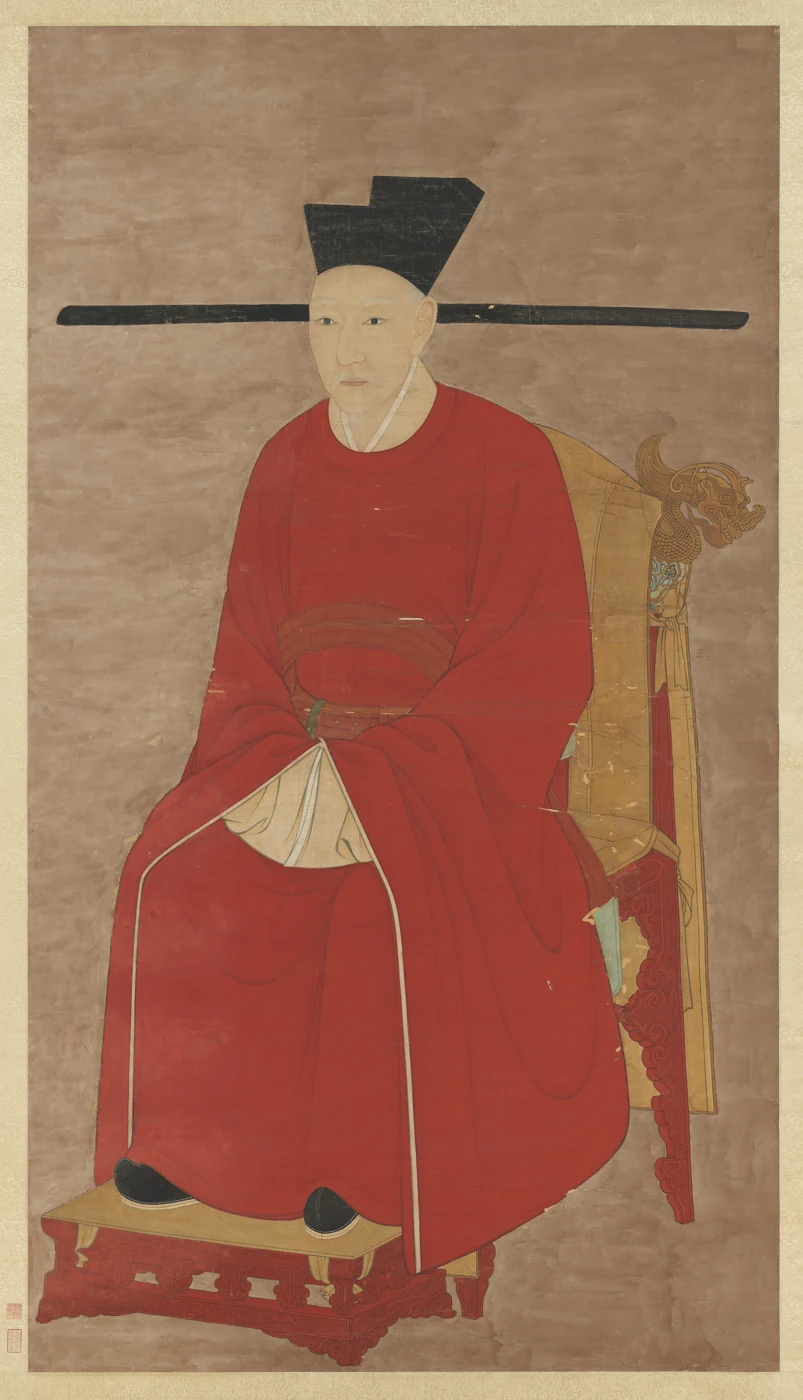 Southern Song
Emperor
Zhao Gou
Emperor Gaozong of Song, Zhao Gou (June 13, 1107, the twenty-first day of the fifth month in the first year of Daguan – November 9, 1187, the yihai day of the tenth month in the fourteenth year of Chunxi), courtesy name Deji and art name Sunzhai, was the tenth emperor of the Song dynasty and the founding emperor of the Southern Song. He reigned from 1127, the first year of Jianyan, to 1162, the thirty-second year of
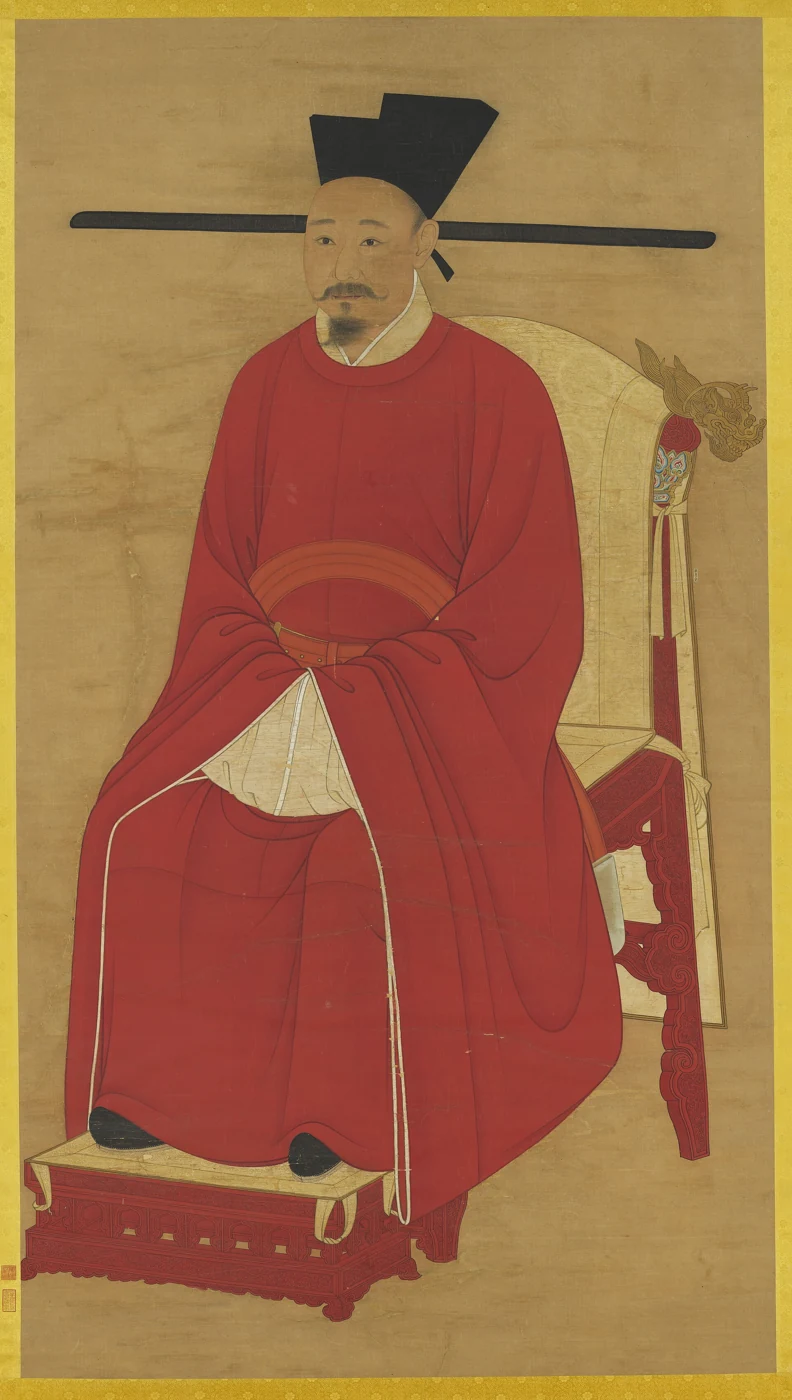 Southern Song
Emperor of the Southern Song
Zhao Shen
Emperor Xiaozong of Song, Zhao Shen (27 November 1127 – 28 June 1194), courtesy name Yuanyong, was the eleventh emperor of the Song dynasty and the second of the Southern Song, reigning from 20 July 1162 to 18 February 1189. Originally named Bocong, he was a seventh-generation descendant of the dynasty's founder Zhao Kuangyin and a son of Zhao Zicheng, Prince of Xiu. He was raised in the palace by Emperor Gaozong fro
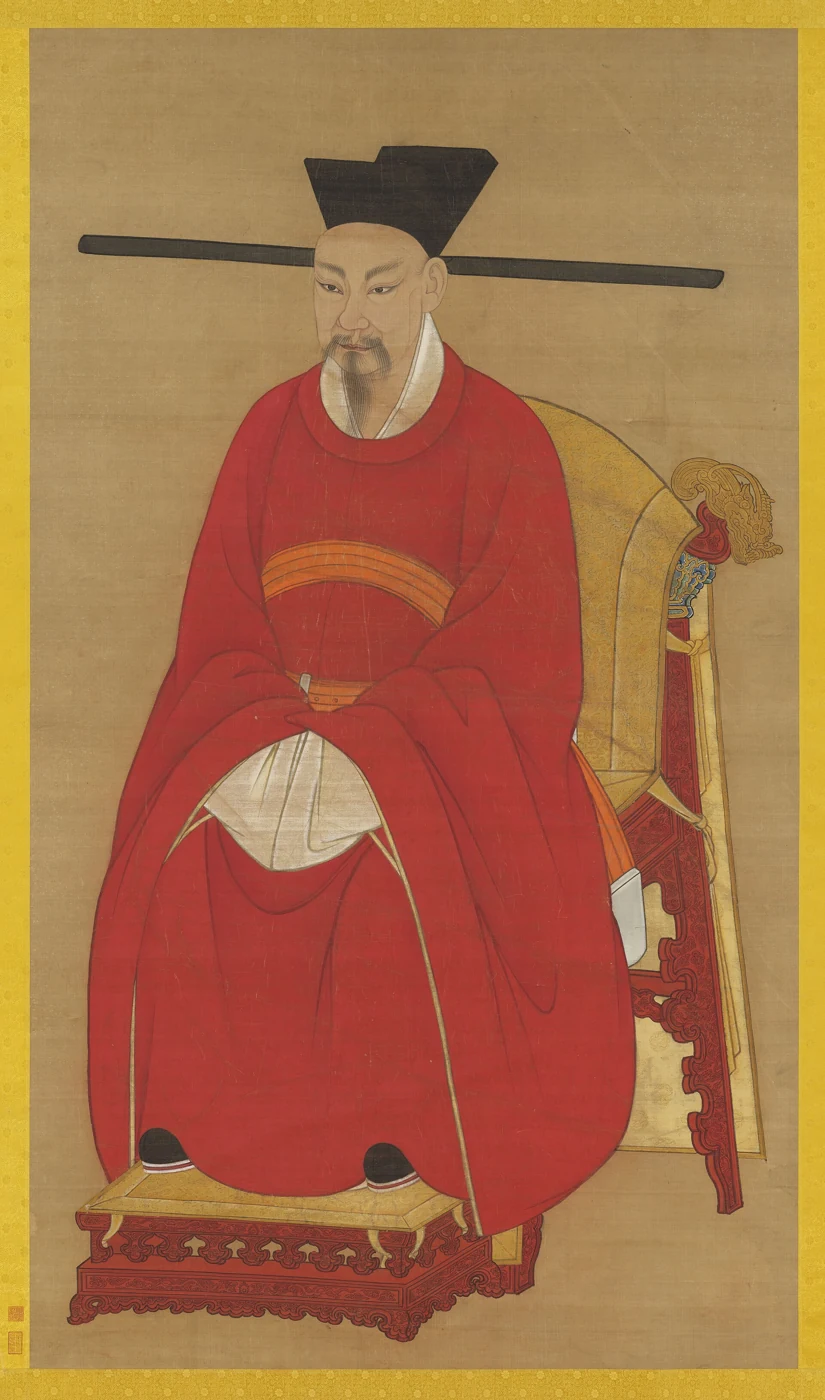 Southern Song
Southern Song emperor
Zhao Yun
Zhao Yun (guihai day of the first lunar month in the first year of the Kaixi era, January 26, 1205–dingmao day of the tenth lunar month in the fifth year of the Jingding era, November 16, 1264), originally named Zhao Yuju and later Zhao Guicheng before adopting the name Zhao Yun on accession, was the fifth emperor of the Southern Song. He was a tenth-generation descendant of Emperor Taizu of Song, Zhao Kuangyin, and
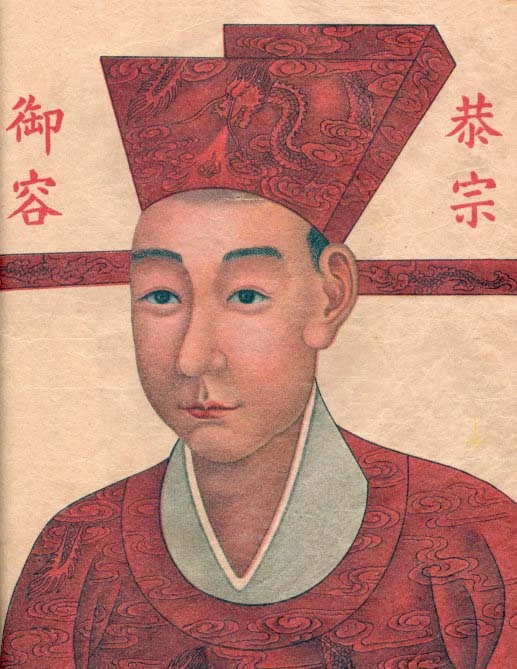 Southern Song
Emperor
Zhao Xian
Emperor Gong of Song, Zhao Xian (1271–1323), was the seventh emperor of the Southern Song. He was the second son of Emperor Duzong of Song, and his mother was Empress Quan. In 1274, the tenth year of the Xianchun era, Emperor Duzong died, and the four-year-old Zhao Xian ascended the throne with the support of the powerful chancellor Jia Sidao; the era name was changed to Deyou. In 1276, the second year of the Deyou e
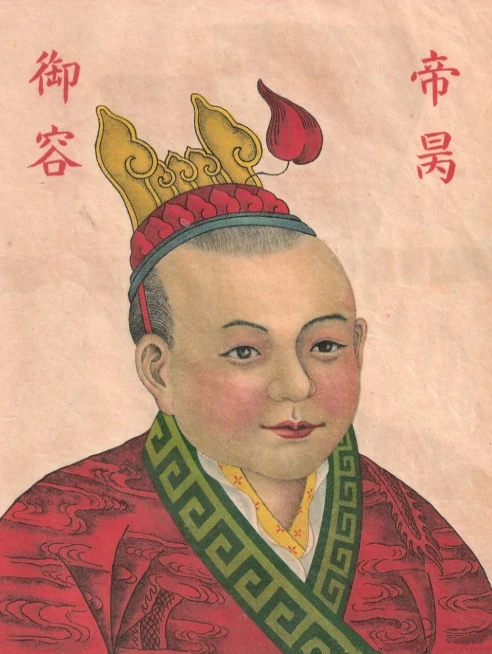 Southern Song
Emperor of the Southern Song
Zhao Bing
Zhao Bing (February 12, 1272 – March 19, 1279) was the seventh son of Zhao Qi, Emperor Duzong of Song, and his mother was Consort Yu. He was the last emperor of the Southern Song. After Lin'an fell in 1276, the second year of the Deyou era, he fled south with his elder brother Zhao Shi, then Prince of Yi, and was enfeoffed as Prince of Wei. In 1278, the third year of the Jingyan era, Zhao Shi died of illness on Gangz
KEY PEOPLE
Jin dynasty
Emperor
Wanyan Aguda
Wanyan Aguda was the founding emperor of the Jin dynasty. He rose against Liao, established Jin, developed the Meng'an Mouke system, and ordered the creation of the Jurchen script.
Jin dynasty
Emperor
Wanyan Chenglin
The last emperor of the Jin dynasty, Wanyan Chenglin was hastily enthroned on the day Caizhou fell and died with the city, having reigned for less than a day.
Southern Song
Historical figure
Lady Guo(empress of Emperor Xiaozong of Song)
Empress Chengmu, a woman of the Guo family from Xiangfu in Kaifeng, was the first wife of Zhao Shen, later Emperor Xiaozong of the Southern Song. Her father was Guo Jian and her grandfather Guo Zhiqing. She married Zhao while he was Prince of Pu'an and received the title Lady of Xianning Commandery. Their four sons were Zhao Qi, Zhao Kai, Zhao Dun, and Zhao Ke. She died in 1156 (twenty-sixth year of Shaoxing), before
 Southern Song
General
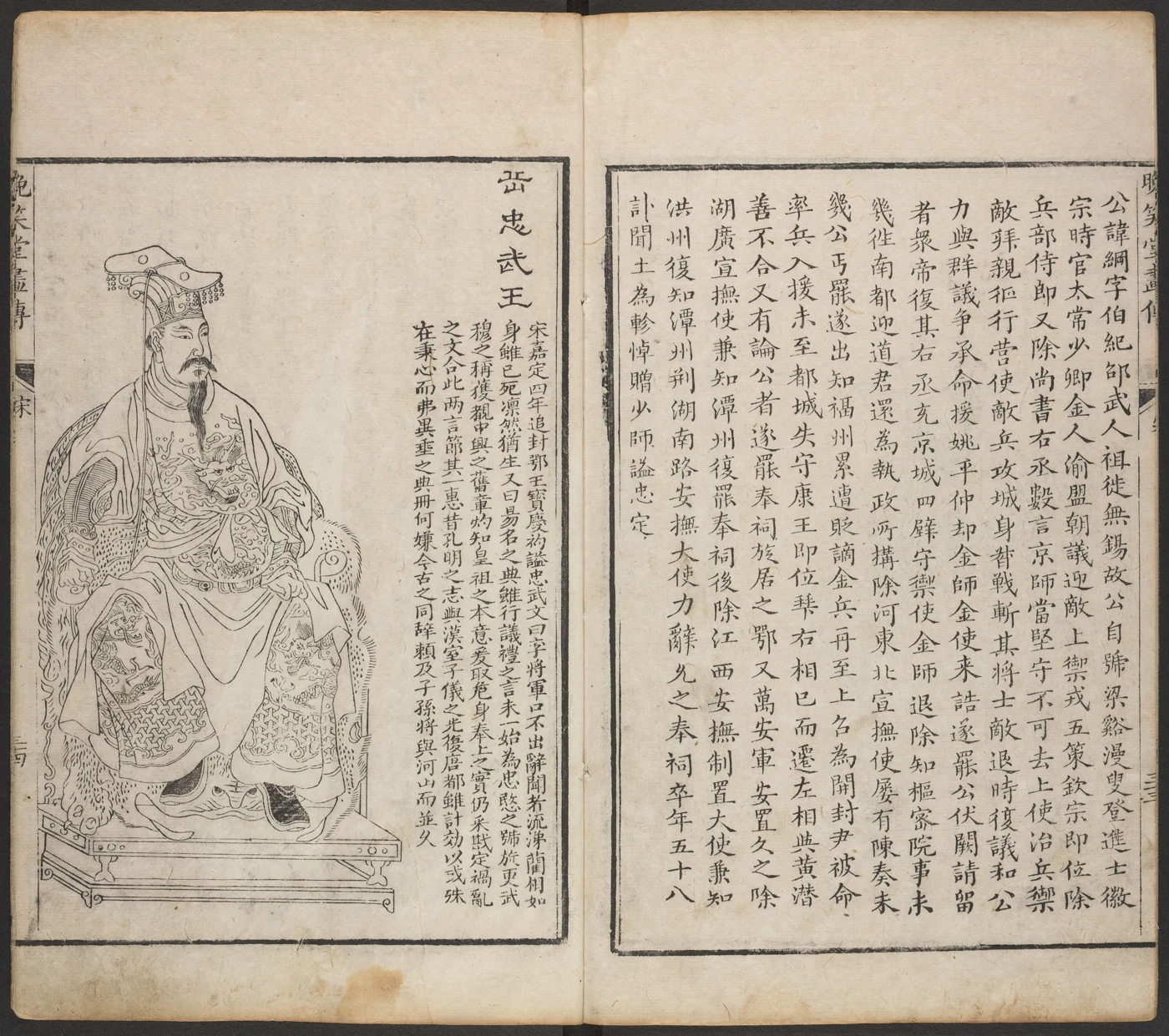
Yue Fei
Yue Fei (March 24, 1103–January 27, 1142), courtesy name Pengju, was a native of Tangyin in Xiangzhou (present-day Tangyin, Henan), with ancestral roots in Dongchang (present-day Liaocheng, Shandong). He was a renowned Southern Song general who fought the Jin, as well as a military commander, strategist, calligrapher, and poet, and is remembered as a national hero. Born into a farming family, Yue entered military ser
 Southern Song
Neo-Confucian philosopher
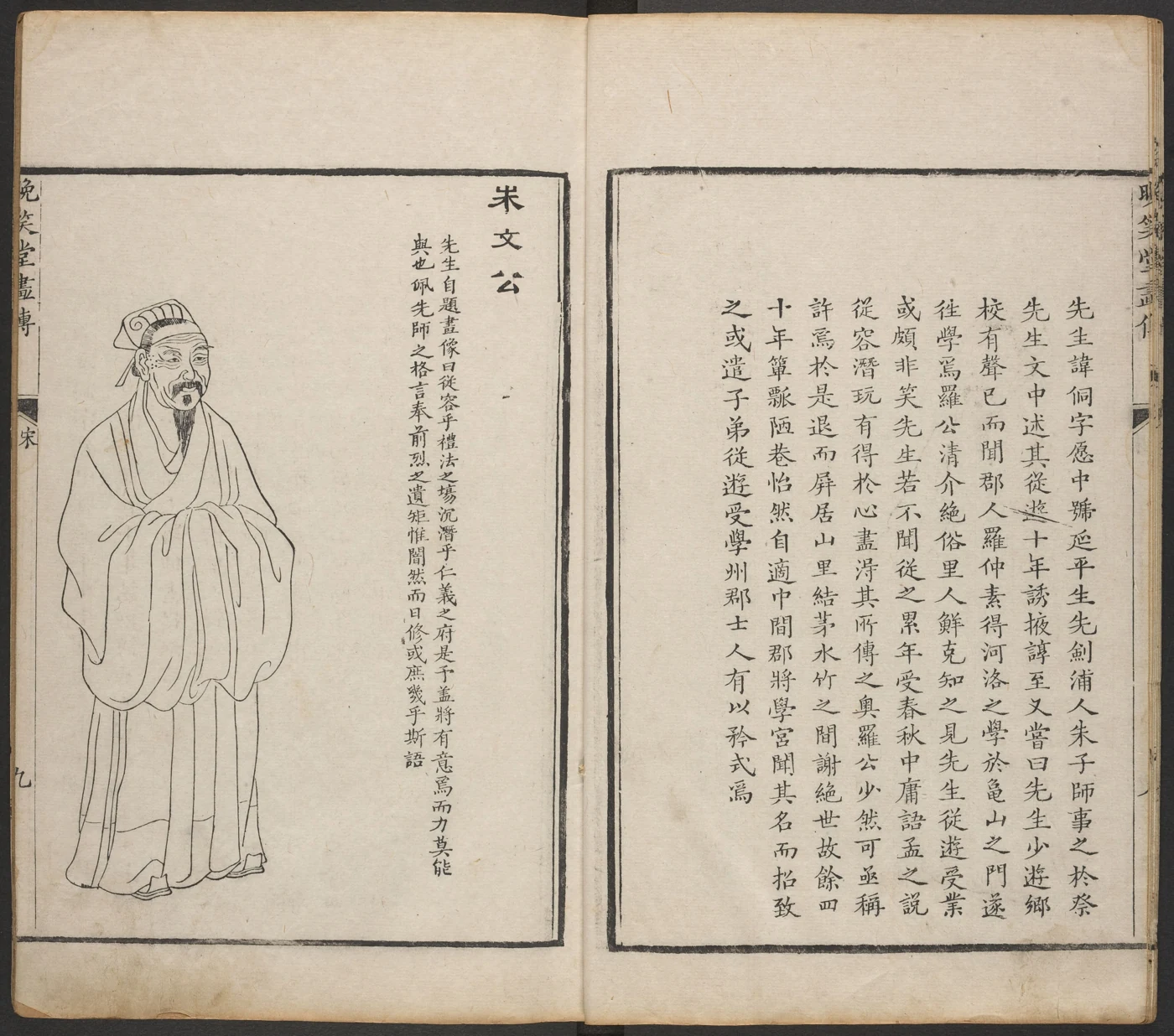
Zhu Xi
Zhu Xi (18 October 1130 – 23 April 1200), courtesy names Yuanhui and Zhonghui, styled Huian and Huweng among others, was born at Youxi in Nanjianzhou to a family of Wuyuan in Huizhou, and became the great synthesizer of Song Neo-Confucianism, as well as a philosopher and educator. A metropolitan graduate of 1148, he held office as registrar of Tong'an in Quanzhou, prefect of Nanjiang, tea and salt commissioner of eas
 Southern Song
Writer and scholar
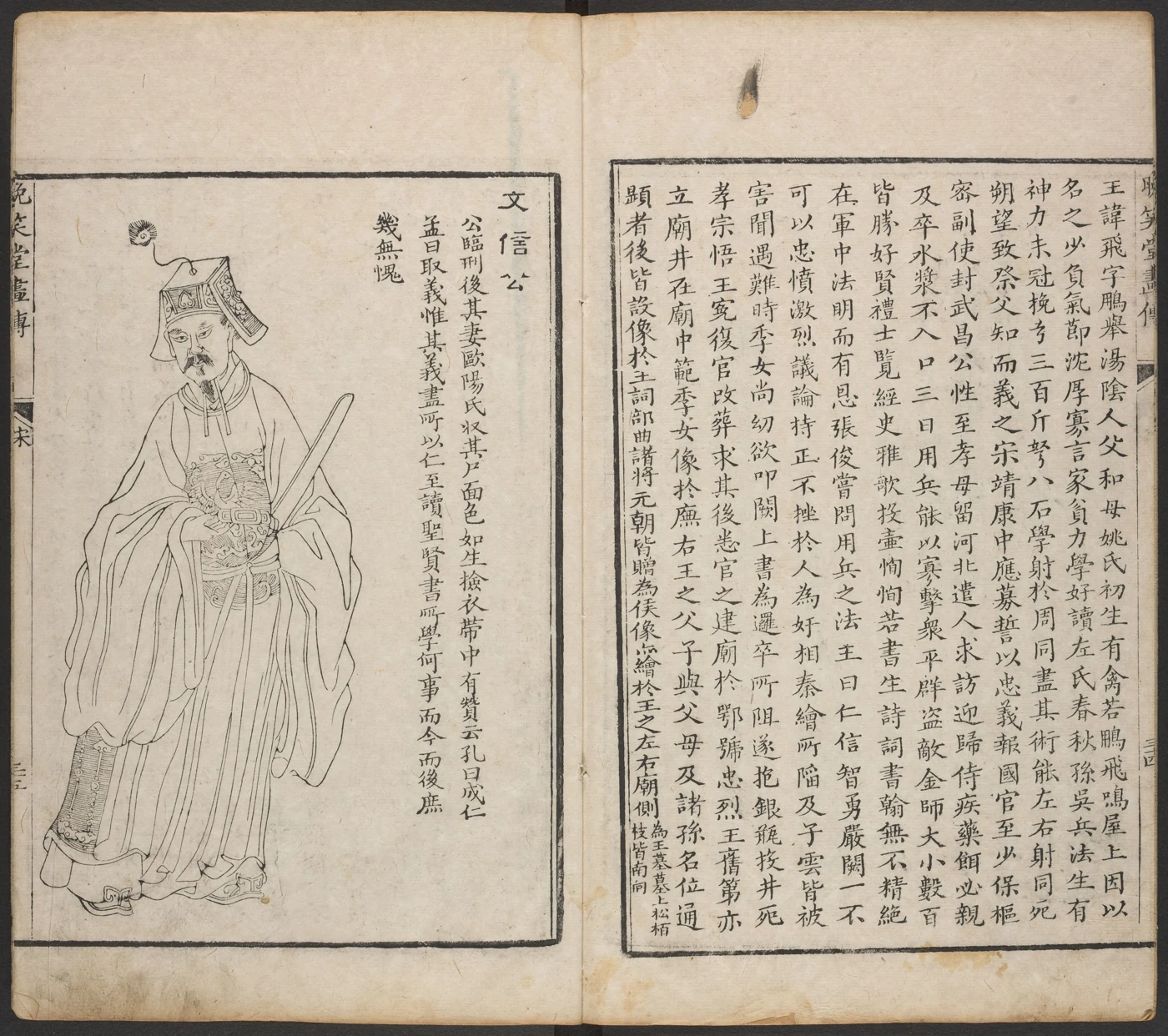
Wen Tianxiang
Wen Tianxiang (June 6, 1236-January 9, 1283), originally named Yunsun, courtesy name Songrui and also Lüshan, and self-styled Fuxiu Daoren and Wenshan, was a native of Luling County, Ji Prefecture, Jiangnan West Circuit (present-day Futian Town, Qingyuan District, Ji'an, Jiangxi). He was a politician and writer of the late Southern Song and, together with Lu Xiufu and Zhang Shijie, was known as one of the "Three Loya
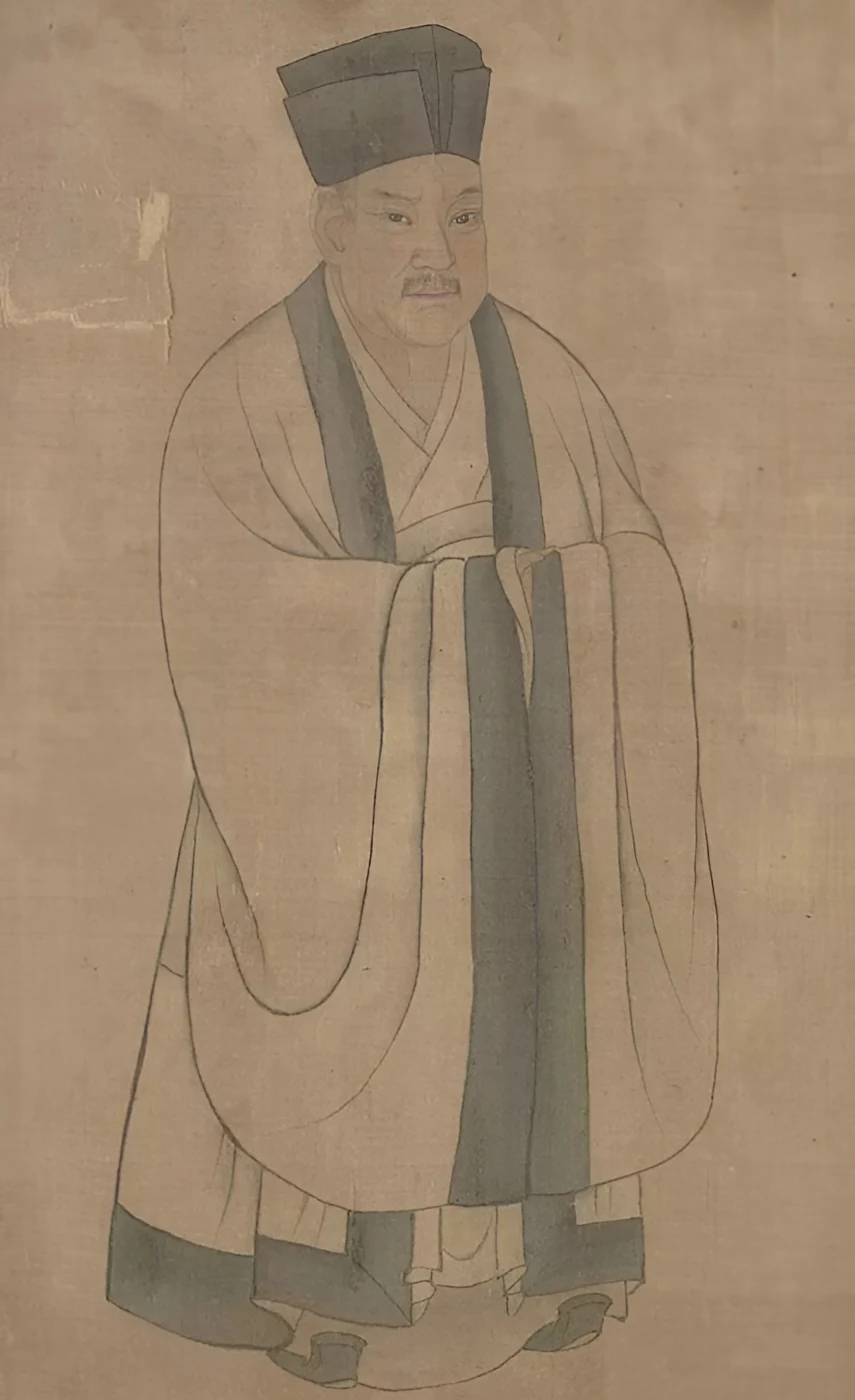 Southern Song
Southern Song Grand Councilor and powerful minister
Qin Gui
Qin Gui (January 17, 1091–November 18, 1155), courtesy name Huizhi, was a native of Jiangning, present-day Nanjing, and was born in Huangzhou, present-day Huanggang in Hubei. A powerful Grand Councilor of the Southern Song, he served twice as chief minister and monopolized the grand councilorship for nineteen years. He strongly advocated a humiliating peace with the Jin dynasty, helped bring about the Treaty of Shaox
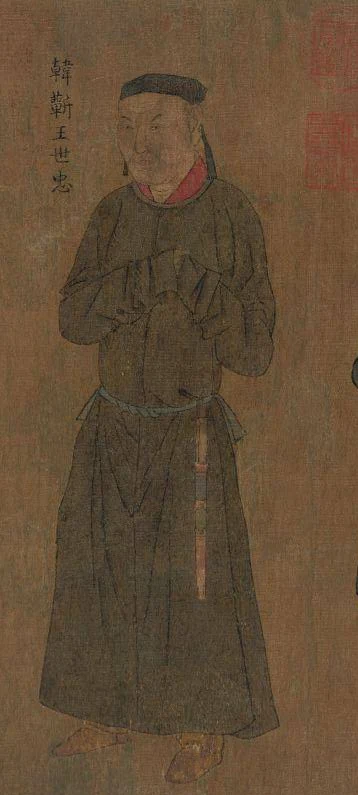 Southern Song
General
Han Shizhong
Han Shizhong (January 26, 1090–September 15, 1151), courtesy name Liangchen and self-styled Qingliang Jushi, was a native of Suide Army in Yan'an Prefecture (present-day Suide County, Yulin, Shaanxi). A renowned general and lyric poet active across the transition from the Northern to the Southern Song, he was grouped with Yue Fei, Zhang Jun, and Liu Guangshi as the “Four Generals of the Restoration.” Born into povert
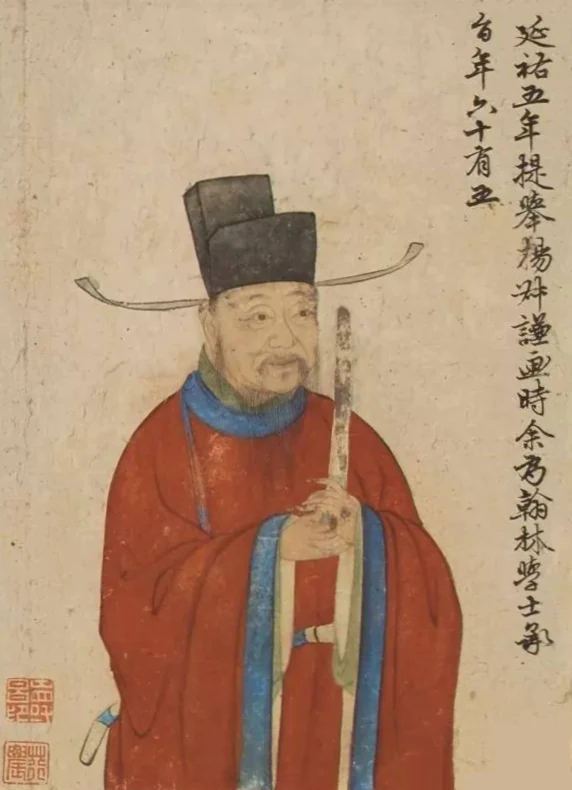 Southern Song
Writer
Zhao Mengfu
Zhao Mengfu (October 22, 1254–July 29, 1322), courtesy name Ziang and art name Songxuedaoren, also known as Shuijinggong Daoren and Oubo and, in middle age, sometimes signing his name Mengfu, was a native of Wuxing in Zhejiang (present-day Huzhou, Zhejiang). He was an official, calligrapher, painter, and writer of the late Southern Song and early Yuan periods, and an eleventh-generation descendant of Emperor Taizu of
Southern Song
Military commander
Liu Zheng
Liu Zheng (1213–1275), courtesy name Wuzhong, traced his ancestry to Fanchuan in Jingzhao (in present-day Chang'an County, Shaanxi) and later moved to Rangcheng in Dengzhou (present-day Dengzhou, Henan). He was a prominent military commander of the late Southern Song and early Yuan periods and one of the founders of the Yuan navy. At the end of the Jin period he joined the Southern Song and served under the renowned
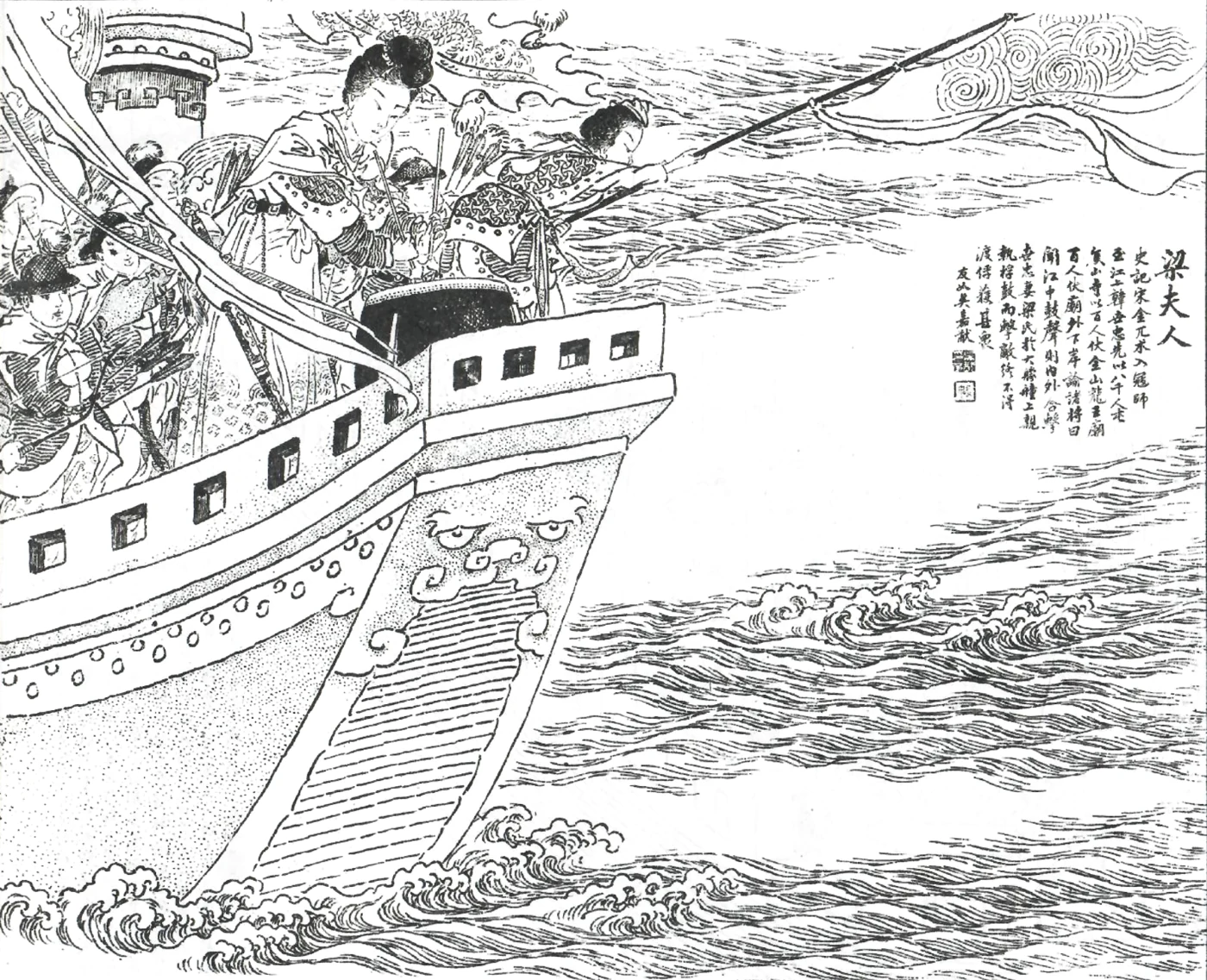 Southern Song
Southern Song commander who resisted Jin
Liang Hongyu
Liang Hongyu was the wife of Han Shizhong. During the Battle of Huangtiandang she personally beat the war drum to support the fighting, later trained troops remembered as a “women’s army,” and was enfeoffed Lady of Anguo.
Southern Song
Historical figure
Zhang Jun
The Chinese source cache identifies this person as a general associated with Tang. This entry preserves the source-backed identity and records the available chronology without adding unsupported claims.
Related entries
Bibliography
- 《宋史》
- 《岳飞传》
- 《续资治通鉴》
- 《建炎以来系年要录》