Born | as the third son of Emperor Xiaozong.
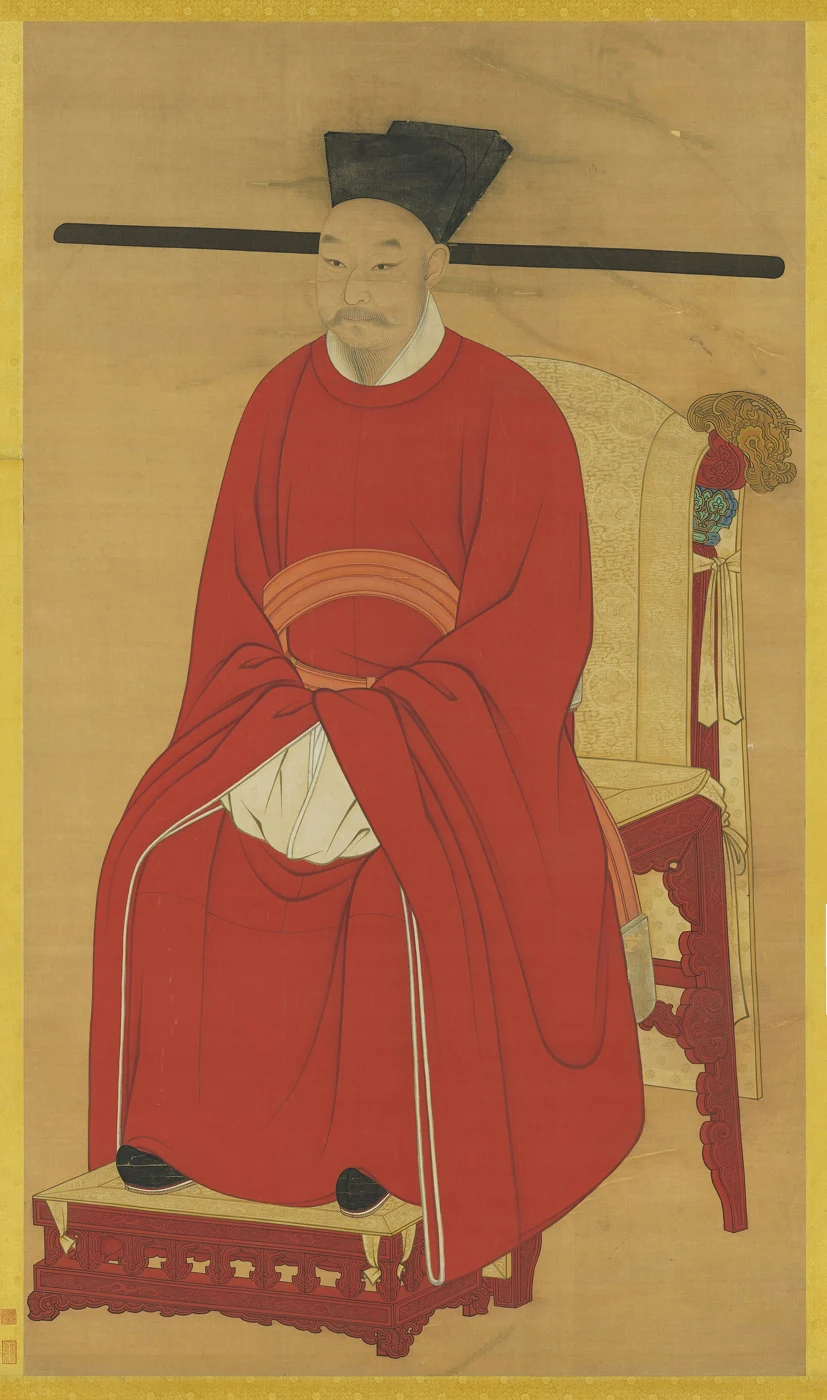
1147 CE–1200 CE
Southern Song emperor
Emperor Guangzong
宋光宗赵惇
Emperor Guangzong, personal name Zhao Dun, was the twelfth Song emperor and the third emperor of the Southern Song. His reign was marked by unstable health, Queen Li Fengniang's influence, conflict with his father Emperor Xiaozong, and the 1194 Shaoxi abdication that placed Ningzong on the throne.
1147 CE–1200 CESouthern Song
PROFILE
Emperor Guangzong, personal name Zhao Dun, was the twelfth Song emperor and the third emperor of the Southern Song. His reign was marked by unstable health, Queen Li Fengniang's influence, conflict with his father Emperor Xiaozong, and the 1194 Shaoxi abdication that placed Ningzong on the throne.
- Courtesy / Art Name
- Unknown
- Era
- Southern Song
- Dynasty
- Southern Song
- Identity
- Southern Song emperor
- Date of Birth
- Not recorded in historical sources
- Date of Death
- Not recorded in historical sources
- Successor
- Emperor Ningzong of Song, Zhao Kuo (son)
- Predecessor
- Emperor Xiaozong of Song, Zhao Shen (father)
- Ethnicity
- Han
- Ancestral Home
- A native of Qiantang county, Lin'an prefecture
- Place of Birth
- A native of Qiantang county, Lin'an prefecture
- Place of Death
- Unknown
- Lifespan
- 54 years
- Major Offices
- See the Biography section
- Peerage
- Prince Gong
- Posthumous Name
- Xundao Xianren Minggong
- Major Achievements
- The twelfth emperor of Song and third of the Southern Song, reigning from 1189 to 1194; temple name Guangzong, with the accumulated posthumous title of the emperor Xundao Xianren Minggong Maode Wenwen Shunwu Shengzhe Cixiao
LIFE TIMELINE
Event | Named crown prince and given charge of Lin'an.
Event | Accepted Xiaozong's abdication and became emperor.
Event | Court decisions increasingly depended on Queen Li Fengniang; the emperor's health worsened.
Event | The palace visit dispute deepened the conflict between Guangzong and Xiaozong.
Event | Unable to conduct the mourning rites for Xiaozong; Zhao Ruyu and Han Tuozhou supported the accession of Ningzong.
Died | in Shoukang Palace and was buried at Yongchong Mausoleum.
Aged twenty-five | In the second month he was made heir apparent and in the fourth month he took charge of the Lin’an prefecture.
The retired emperor’s death | The heir apparent took part in government and directed its affairs.
Aged forty-one #2 | Emperor Gaozong of Song died; Emperor Xiaozong wished to abdicate and ordered the heir apparent to take part in the conduct of affairs.
Abdication of Xiaozong | The era name was changed to Shaoxi and he became Emperor Guangzong of Song.
Aged forty-three #2 | In the second month he received the abdication of Emperor Xiaozong and ascended the throne, changing the era name to Shaoxi the following year.
Empress Li Fengniang | Emperor Guangzong’s mind gave way, bringing on the crisis over his visits to the retired emperor.
Aged forty-six | Affairs of state were largely decided by Empress Li Fengniang, and his illness fluctuated.
Age 47 | The palace visit dispute of 1193 exposed the conflict.
When Xiaozong died in 1194 | When Xiaozong died in 1194, Guangzong was unable to lead the mourning ceremonies.
Age 48 | When Xiaozong died in 1194, Guangzong was unable to lead the mourning ceremonies.
Death | He died at the age of fifty-four, received the posthumous name Xundao Xianren Minggong Maode Wenwen Shunwu Shengzhe Cixiao and was buried in the Yongchong Mausoleum.
Aged fifty-four #2 | On the xinmao day of the eighth month he died in the Palace of Longevity and Health; in the eleventh month he received the posthumous name Xianren Shengzhe Cixiao with the temple name Guangzong, and in the twelfth month he was buried in the Yongchong Mausoleum.
Posthumous name extended | In the eleventh month the posthumous name was extended to Xundao Xianren Minggong Maode Wenwen Shunwu Shengzhe Cixiao.
BIOGRAPHY
Biography
Guangzong inherited the throne after a long period as crown prince. He had experience in the administration of Lin'an, but his relationship with his father was difficult and became more strained after accession. Queen Li Fengniang controlled access to the palace and shaped appointments, while the emperor's mental and physical condition made regular decision-making difficult. The palace visit dispute of 1193 exposed the conflict. Guangzong did not visit the retired Xiaozong as court ritual required, and violence involving a consort intensified the crisis. When Xiaozong died in 1194, Guangzong was unable to lead the mourning ceremonies. Ministers and the grand empress dowager therefore arranged the succession of Jia Prince Zhao Kuo. The event was described as an abdication, but it was also a managed transfer of power that limited the queen's faction. Guangzong lived as a retired emperor for six more years. His reign is short, yet it illuminates the political importance of palace access, family ritual, and the health of a ruler. The institutions of the Southern Song could manage succession, but only after a personal conflict had become a constitutional crisis.
Major Activities
Crown Prince Inquiries and Latent Tensions
Zhao Dun served as Crown Prince for eighteen years before ascending the throne. As recorded in Ye Shaoweng's Recollections of Four Reigns, as his age advanced while serving his father at the Chonghua Palace, he once subtly probed Emperor Xiaozong by noting that someone had offered him black dye for his graying beard, which he had not dared to use. Xiaozong understood the implicit hint regarding the imperial succession and remarked that gray hair showed mature wisdom to the realm, declining to expedite the transfer. This prolonged uncertainty fostered acute suspicion and insecurity that surfaced following his accession.
Court Governance and the Palace Visit Dispute
Upon taking the throne in 1189, Guangzong initially issued edicts soliciting candid advice, reduced labor burdens, and mitigated penal severities. However, his governance was soon paralyzed by escalating mental illness and the aggressive intervention of Empress Li Fengniang, who dominated court appointments and promoted her relatives on an unprecedented scale. Suspecting that Xiaozong favored another grandson for the throne, Guangzong repeatedly refused to pay customary filial visits to the Chonghua Palace. Even when ministers like Xie Shenfu and Chen Fuliang desperately urged him to perform imperial ceremonies, Empress Li physically intervened, pulling the emperor back into the inner chambers.
Political Friction and the Forced Abdication
The confrontation between the inner court and the civil bureaucracy deepened when Guangzong summoned his favored attendant Jiang Teli to Lin'an, prompting Grand Councilor Liu Zheng to temporarily abandon his post in protest. Meanwhile, palace eunuchs distorted everyday occurrences, such as a dropped jade cup and the mocking shouting of palace servants catching chickens in the gardens, aggravating estrangement between the two emperors. In 1194, following Xiaozong's death, Guangzong's complete refusal to preside over the funeral prompted Chancellor Zhao Ruyu, Han Tuozhou, and Grand Empress Dowager Wu to execute the Shaoxi Abdication, installing Zhao Kuo as Emperor Ningzong and placing Guangzong into enforced retirement as retired emperor until his death in 1200.
Personal Relations
- Emperor Xiaozong: father and predecessor with whom he became estranged.
- Queen Li Fengniang: consort whose palace influence shaped his reign.
- Zhao Ruyu and Han Tuozhou: ministers who organized the succession of Ningzong.
- Emperor Ningzong: son who succeeded him.
Historical Assessment
Contemporary and traditional records Southern Song accounts criticize his failure to perform filial and court rituals while recording his illness and the queen's influence. ### Later evaluations Later histories used his reign as a warning about palace factions and the danger of a ruler unable to manage the succession. ### Modern scholarship Modern historians examine the abdication through court procedure, family ritual, and the political management of illness rather than reducing it to a personal moral failure.
FIGURES ASSOCIATED WITH THIS DYNASTY
Bibliography
- History of the Song*, annals of Guangzong.
- Records of the 1194 succession crisis.