Birth | Zhao Bing, the seventh son of Emperor Duzong of Song, was born in Lin'an.
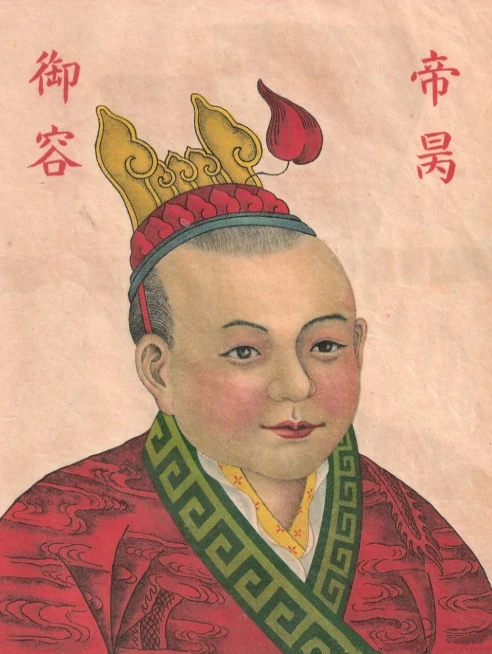
1272 CE–1279 CE
Emperor of the Southern Song
Zhao Bing
赵昺
Zhao Bing (February 12, 1272 – March 19, 1279) was the seventh son of Zhao Qi, Emperor Duzong of Song, and his mother was Consort Yu. He was the last emperor of the Southern Song. After Lin'an fell in 1276, the second year of the Deyou era, he fled south with his elder brother Zhao Shi, then Prince of Yi, and was enfeoffed as Prince of Wei. In 1278, the third year of the Jingyan era, Zhao Shi died of illness on Gangzhou, and…
1272 CE–1279 CESouthern Song
PROFILE
Zhao Bing (February 12, 1272 – March 19, 1279) was the seventh son of Zhao Qi, Emperor Duzong of Song, and his mother was Consort Yu. He was the last emperor of the Southern Song. After Lin'an fell in 1276, the second year of the Deyou era, he fled south with his elder brother Zhao Shi, then Prince of Yi, and was enfeoffed as Prince of Wei. In 1278, the third year of the Jingyan era, Zhao Shi died of illness on Gangzhou, and officials including Lu Xiufu and Zhang Shijie enthroned Zhao Bing and changed the era name to Xiangxing. In 1279, the second year of Xiangxing, the Song forces were defeated in the Battle of Yashan. Lu Xiufu carried Zhao Bing into the sea, where both died, and the Southern Song came to an end. Later generations also referred to him as the Young Emperor of Song, the Xiangxing Emperor, and Emperor Bing.
- Other names
- Emperor Bing; Prince of Wei; Zhao Bing, the last emperor of Song
- Period
- Southern Song
- Dynasty/Polity
- Southern Song
- Identity
- Emperor of the Southern Song
- Ethnicity/People
- Not recorded in historical sources
- Native place
- Not recorded in historical sources
- Date of birth
- February 12, 1272
- Place of birth
- Not recorded in historical sources
- Date of death
- March 19, 1279
- Reign
- 1278–1279
- Predecessor
- Emperor Duanzong of Song (Zhao Shi)
- Successor
- Not applicable (Southern Song fell)
- Era name
- Xiangxing
- Temple name
- Not applicable (no formal temple name)
- Posthumous name
- Not applicable (no formal posthumous name)
- Major achievements
- Last emperor of the Southern Song; reigned for only several months and died at Yashan when Lu Xiufu carried him into the sea after the Song defeat.
LIFE TIMELINE
Age five | Yuan forces captured Lin'an, and Zhao Bing fled south with his mother and his elder brother Zhao Shi.
Age five | Zhao Shi ascended the throne in Fuzhou as Emperor Duanzong of Song, and Zhao Bing was enfeoffed as Prince of Wei.
Age seven | Zhao Shi died of illness on Gangzhou; Zhao Bing was enthroned and the era name was changed to Xiangxing.
Age eight | The Song forces were defeated in the Battle of Yashan, and Lu Xiufu carried Zhao Bing into the sea, where they died.
BIOGRAPHY
Biography
Family background and early years
Zhao Bing was born in 1272, the eighth year of the Xianchun era. He was the seventh son of Zhao Qi, Emperor Duzong of Song, and his birth mother was Consort Yu. During Emperor Duzong's reign, the Southern Song was already in grave danger under mounting Mongol military pressure. In Zhao Bing's childhood, the Southern Song court was dominated by the powerful chancellor Jia Sidao, while military and governmental affairs deteriorated and the treasury was depleted. In 1274, the tenth year of Xianchun, Emperor Duzong died. Zhao Bing's half-brother Zhao Xian succeeded to the throne as Emperor Gong of Song, with Grand Empress Dowager Xie Daoqing acting as regent. By this point, the Southern Song could no longer effectively resist the Yuan advance.
In the first month of 1276, the second year of Deyou, the Yuan commander Bayan led a large army to the outskirts of Lin'an. On the eighteenth day of the first month (February 4), the Southern Song court surrendered, and the five-year-old Emperor Gong of Song and Grand Empress Dowager Xie were taken north as captives. Shortly before Lin'an fell, Zhao Bing and his half-brother Zhao Shi escaped from the city amid the disorder under the protection of their maternal relative Yang Liangjie and court officials Lu Xiufu, Zhang Shijie, Chen Yizhong, Wen Tianxiang, and others. They fled south. Zhao Bing was first enfeoffed as Duke of Yong and later as Prince of Xin and Prince of Guang.
Southward flight and enthronement
After Zhao Bing fled south with the remaining Southern Song forces to Jinhua, Zhao Shi was acclaimed Grand Marshal of All Armies, while Zhao Bing became deputy marshal. In the fifth month of the second year of Deyou, Zhao Shi ascended the throne in Fuzhou as Emperor Duanzong of Song and adopted the era name Jingyan. Zhao Bing was enfeoffed as Prince of Wei. Yuan forces continued to pursue the Southern Song remnant court, forcing Emperor Duanzong's party to move repeatedly southward along the coasts of Fujian and Guangdong.
On the fifteenth day of the fourth month of 1278, the third year of Jingyan (May 8), Emperor Duanzong died of illness on Gangzhou, in present-day Lantau Island, Hong Kong, at the age of eleven. His death left the Southern Song remnant court without a ruler. On the seventeenth day of the fourth month (May 10), Lu Xiufu, Zhang Shijie, and other ministers enthroned Zhao Bing. They continued to honor Consort Yang, Emperor Duanzong's mother, as Empress Dowager. On the first day of the fifth month (May 23), the era name was changed to Xiangxing. In the sixth month, Zhao Bing's court moved to Yashan, at present-day Nanyamen in Xinhui, Guangdong.
The mobile court at Yashan
Zhao Bing was only seven years old when he ascended the throne, and actual government was directed by Lu Xiufu, Zhang Shijie, and other officials. Yashan lies at the southern end of present-day Xinhui District, Jiangmen, Guangdong, near the mouth of the Pearl River, and was a strategically strong position. Zhang Shijie established the mobile court there, built temporary palaces and military camps, and gathered the Southern Song's remaining military forces. Lu Xiufu taught Zhao Bing from Confucian classics such as the Great Learning and the Analects each day and maintained the operations and court rituals of the diminished regime.
In the first month of 1279, the second year of Xiangxing, the Yuan general Zhang Hongfan led land and naval forces against Yashan. The Song commander Zhang Shijie adopted a defensive strategy, chaining the warships together and arranging them in formation at sea. On the sixth day of the second month (March 19), the Battle of Yashan began and the Song forces suffered a crushing defeat. Seeing that the situation was hopeless, Lu Xiufu first compelled his wife to throw herself into the sea and then, carrying Zhao Bing on his back, entered the sea from the rocks at Yashan and died with the emperor. Empress Dowager Yang also drowned herself after hearing the news. The Southern Song thereby came to an end.
Zhao Bing was the third son of Emperor Duzong and the younger brother of the emperors Gong and Duanzong; before his accession he was enfeoffed in turn duke of Yongguo, prince of Xin, prince of Guang and prince of Wei. After Lin'an fell in 1276 and the emperor Gong was carried north, the imperial house and its ministers kept up resistance along the southeast coast, and the prince of Yi, Zhao Shi, took the throne at Fuzhou as Emperor Duanzong. When Duanzong died at Gangzhou in the fourth month of 1278, Zhao Bing was set up by Lu Xiufu, Zhang Shijie and others, taking the throne at Gangzhou in what is now Zhanjiang in Guangdong in the same month, changing the era name to Xiangxing in the fifth month and moving to Yashan, south of modern Xinhui, in the sixth. When Yashan fell in the second month of 1279 he had reigned three hundred and thirteen days, the last emperor of the Southern Song, known to history as the Last Emperor or Emperor Bing.
The battle of Yashan was the last act of the Southern Song. In the first month of 1279 the Yuan commander Zhang Hongfan brought land and water forces against Yashan. The place, a mountain with its back to the sea and a narrow approach, was strong; Zhang Shijie burned the palace quarters and camp on the island and put every man aboard, then drew up more than a thousand ships in formation facing the sea, lashed together with cables, with towers built about them and thick wet mud spread over their sides and long timbers lashed on, placing Zhao Bing's ship in the middle and ordering officers and men to live or die with the fleet. Zhang Hongfan, seeing the Song ships massed and unwieldy, sent small boats filled with brushwood and oil to attack downwind; the wet mud stopped the fire from spreading and the timbers fended off the burning boats, so that the fire attack failed. He then cut the Song water supply and blockaded the mouth of the harbor. Worn by hunger and thirst, the Song forces grew daily worse off; his summons to surrender Zhang Shijie refused.
On the sixth day of the second month of 1279 the final engagement was fought. Zhang Hongfan attacked in four columns, and while the Song were resisting desperately music was heard from his flagship; the Song, thinking the Yuan commanders were feasting, relaxed, and the music proved to be the signal for the general assault. His ship came straight at them, arrows fell like rain, seven Song ships were taken under cover of the volleys, and the rest of the Yuan fleet charged; the sea fight went on from noon until evening. Zhang Shijie, seeing a Song ship strike its flag and cease fighting, and others following, knew the day was lost, gathered his best troops in the center and sent a small boat with a dozen men to bring Zhao Bing out for a breakout. Zhao Bing was then with Lu Xiufu aboard a large ship; the boat's coming he did not trust, and he feared that if the breakout failed the emperor would be taken by the Yuan, so he refused outright. Knowing that neither ruler nor minister could escape, he boarded his own ship, drove his wife into the sea with his sword, put on his court robes, returned to the great ship and bowed to Zhao Bing, weeping, saying that affairs were utterly lost and the emperor should die for the state, that the emperor Gong's removal to the north had already brought the deepest shame upon the realm and that he must not repeat it; Zhao Bing broke into frightened weeping. Lu Xiufu then took the emperor on his back and threw himself into the sea, dying with him, and the more than a hundred thousand soldiers and people with them leapt in after; the Southern Song came formally to an end.
Zhao Bing's death marked the final end of the Southern Song and completed the passage from Song to Yuan. The Song History, compiled under the Yuan, says of the Southern Song loyalists who upheld him against the Yuan that a subject's loyalty to what he serves can come to this, and that it is pitiable indeed — a judgment mingling censure with regret. His end together with more than a hundred thousand people has become a type of loyal devotion for later ages, and many legends cling to Yashan: that when he moved there a storm soaked his dragon robe and the golden dragons on it fastened on the tangerine trees, whose trunks have borne coiling dragon patterns ever since; and that a white pheasant he kept, being intelligent, leapt into the sea with him when the battle was lost, and was called the righteous bird, with a mound raised to it locally. The tomb of the young emperor at Chiwan in Nanshan district, Shenzhen, is the only Southern Song imperial tomb in Guangdong and one of the city's first protected monuments; it was restored in 1984 with funds raised by Zhao clansmen, and its grounds include a statue of Lu Xiufu carrying the emperor into the sea. The Ciyuan temple at Jiangmen in Guangdong and other places likewise keep memorials to Zhao Bing and the resistance of the last Southern Song years.
Major Activities
Final symbol of Southern Song resistance to the Yuan
As the last emperor of the Southern Song, Zhao Bing himself became the final symbolic focus of the surviving Song forces' resistance to the Yuan. After Emperor Duanzong died in 1278, the third year of Jingyan, Lu Xiufu and others enthroned Zhao Bing in an effort to continue the Song dynastic line and sustain resistance. Although Zhao Bing was very young, Lu Xiufu taught him the classics daily during the Yashan mobile court and maintained court ritual and institutions, allowing the Southern Song polity to continue in formal terms.
Battle of Yashan
On the sixth day of the second month of 1279, the second year of Xiangxing, the Yuan commander Zhang Hongfan led his forces into a final battle against the remaining Southern Song army in the waters off Yashan. The Song commander Zhang Shijie linked the warships together in formation and fought a major engagement with the Yuan fleet. The Song army was destroyed. Lu Xiufu carried Zhao Bing into the sea, where both died, and the Southern Song ended. The Battle of Yashan was one of the largest naval battles in Chinese history and marked the end of more than three centuries of Song rule.
Later commemoration and popular belief
After Zhao Bing's death, his remains were said to have drifted to Chiwan in Shenzhen, where monks discovered and buried them. The Tomb of the Young Emperor of Song now stands in Chiwan Village, Nanshan District, Shenzhen. In 1984 it was restored and expanded with funding from the Shekou Industrial Zone and the Hong Kong Zhao Clan Association, and it is a protected cultural heritage site of Shenzhen. Sung Wong Toi Garden in Kowloon City, Hong Kong, commemorates the refuge taken in Hong Kong by the last two Song emperors. In the Linpu area of Fuzhou, local residents converted Emperor Duanzong's temporary palace into Taishan Palace and worshipped Zhao Bing under the title "Second Prince." In Quanzhou folk religion, the figures known as the "Sun and Moon Protectors" have also been identified with Zhao Bing and his brother Zhao Shi.
The organization of the Southern Song refugee court was what allowed Zhao Bing's brief reign to continue at all. After Lin'an surrendered in 1276, the princes of Yi and Guang, Zhao Shi and Zhao Bing, were escorted south by kinsmen and palace officials as far as Fuzhou, where Lu Xiufu, Zhang Shijie and Chen Yizhong set up Zhao Shi as emperor with the era name Jingyan, while Wen Tianxiang opened a headquarters at Nanjianzhou and raised troops in support. In 1277 the Yuan armies entered Fujian and Guangdong in force, the court wandered at sea and was struck by a typhoon at Jing'ao with heavy losses, and Duanzong died at Gangzhou the following year. Under Zhao Bing, Zhang Shijie commanded the forces, Lu Xiufu the edicts and the imperial lectures, and Wen Tianxiang still linked the loyalist bands between Jiangxi and Guangdong — three men carrying military, civil and foreign support between them, the last arrangement of Southern Song resistance.
In military terms Yashan has always been taken as an example of the failure of a fleet drawn up to fight on the defensive. Zhang Shijie lashed more than a thousand ships together with their backs to the mountain and their faces to the sea, meaning to steady the formation and make it easier to command, but at the cost of all mobility: once the water supply was cut and the harbor blocked the whole fleet was helpless, and the Yuan, after three failed fire attacks, turned to severing supplies and attacking in several columns at once and carried the day. The fates of the last loyal ministers became a theme for later ages: Lu Xiufu threw himself into the sea with the emperor; Zhang Shijie, escaping the battle, was drowned when his ship capsized; Wen Tianxiang, defeated and captured, was imprisoned for years without yielding and was executed at Dadu in 1283. After pacifying Jiangnan the Yuan hunted down those who would not submit and also tried to win the gentry by summons to office and remission of service, and southern society settled down within a few years.
The memory of Zhao Bing and its aftermath left a good many concrete remains in Guangdong. At Yashan there were the Ciyuan temple and the Shrine of Great Loyalty, honoring the empress dowager Yang and the ministers who died with the dynasty; the tomb of the young emperor at Chiwan in Shenzhen and the temples about Jiangmen likewise commemorate him and the people who fled with him. After the Song gave way to the Yuan and north and south were unified, Yashan became a symbolic place in later discussion of the dynasty's fall, and the poems, gazetteers and local legends of the Ming and Qing went on telling of the hundred thousand who died together, of the righteous bird and the dragon tangerines — part history, part the projection of later feelings about loyalty and the loss of a state.
Personal Relations
- Father: Zhao Qi, Emperor Duzong of Song, the fifteenth emperor of the Southern Song.
- Mother: Consort Yu, Zhao Bing's birth mother; her later fate is unknown.
- Elder brother: Zhao Shi, Emperor Duanzong of Song, Zhao Bing's half-brother; he ascended the throne in 1276, the first year of Jingyan, and died of illness in 1278, the third year of Jingyan.
- Elder brother: Zhao Xian, Emperor Gong of Song, Zhao Bing's half-brother; he was captured by Yuan forces and taken north in 1276, the second year of Deyou.
- Lu Xiufu: Left Chancellor; after the defeat at Yashan he carried Zhao Bing into the sea, where both died.
- Zhang Shijie: Deputy Military Affairs Commissioner; commander of the Song forces at the Battle of Yashan; drowned after the defeat.
- Wen Tianxiang: Right Chancellor; captured at Haifeng in Guangdong in 1278, the first year of Xiangxing, and later executed at Dadu.
- Chen Yizhong: Southern Song chancellor; directed government under Emperor Duanzong and later left for Champa.
- Yang Liangjie: maternal relative of the imperial house and one of the principal figures who escorted the two princes south.
- Zhang Hongfan: Yuan general and commander of the Yuan forces at the Battle of Yashan.
- Bayan: Yuan commander who captured Lin'an in 1276, the second year of Deyou.
Historical Assessment
Yuan period
The official Yuan history, in the "Annals of the Duke of Ying" in the History of Song, commented on the maritime court of the two late-Song princes: "The signs of Song's fall had been present for more than a day. The mandate had passed elsewhere, and the true ruler governed the age, yet the surviving ministers of Song stubbornly served the two princes and pursued their plans on the sea; they may be said not to have understood Heaven's mandate. Still, for ministers to remain loyal to those they served to such an extent is also a matter for sorrow." Although this judgment was framed from the Yuan court's view of dynastic legitimacy, it also expressed sympathy for the deaths of Lu Xiufu and the other loyalist ministers.
Ming and Qing periods
Ming scholars often evaluated Zhao Bing and the surviving Southern Song ministers in terms of the moral obligations between ruler and subject. The saying "after Yashan there was no China," which later circulated in connection with the site, was in fact a later literati summary rather than a contemporary Song or Yuan statement. The Qing scholar Quan Zuwang, in works such as Account of the Two Princes at the End of the Song, praised the deeds of loyalist ministers such as Lu Xiufu and Zhang Shijie and expressed sympathy for Zhao Bing's death as a child.
Modern period
The modern historian Chen Yinke wrote in his preface to Deng Guangming's study of the History of Song's treatise on official titles: "The culture of the Huaxia people, after several thousand years of development, reached its highest point in the Zhao-Song era. It later declined, but in the end must revive." Although this statement did not directly evaluate Zhao Bing, it reflects scholarly admiration for the cultural achievements of the Song. Zhao Bing's brief life, as the dynasty's last emperor, has been remembered as the final symbol of Southern Song resistance to the Yuan.
FIGURES ASSOCIATED WITH THIS DYNASTY
Bibliography
- History of Song*, vol. 47, "Annals of the Duke of Ying"
- History of Song*, vol. 48, continuation of the "Annals of the Duke of Ying: The Two Princes"
- Toghto et al., History of Song, punctuated edition, Zhonghua Book Company
- Chen Bangzhan, Songshi Jishi Benmo, Zhonghua Book Company
- Bi Yuan, Continuation of the Comprehensive Mirror in Aid of Governance, Zhonghua Book Company