Fanyang | Born in Fanyang; trained in archery and horsemanship, serving initially under Jin-Mongol general Zhang Rou.
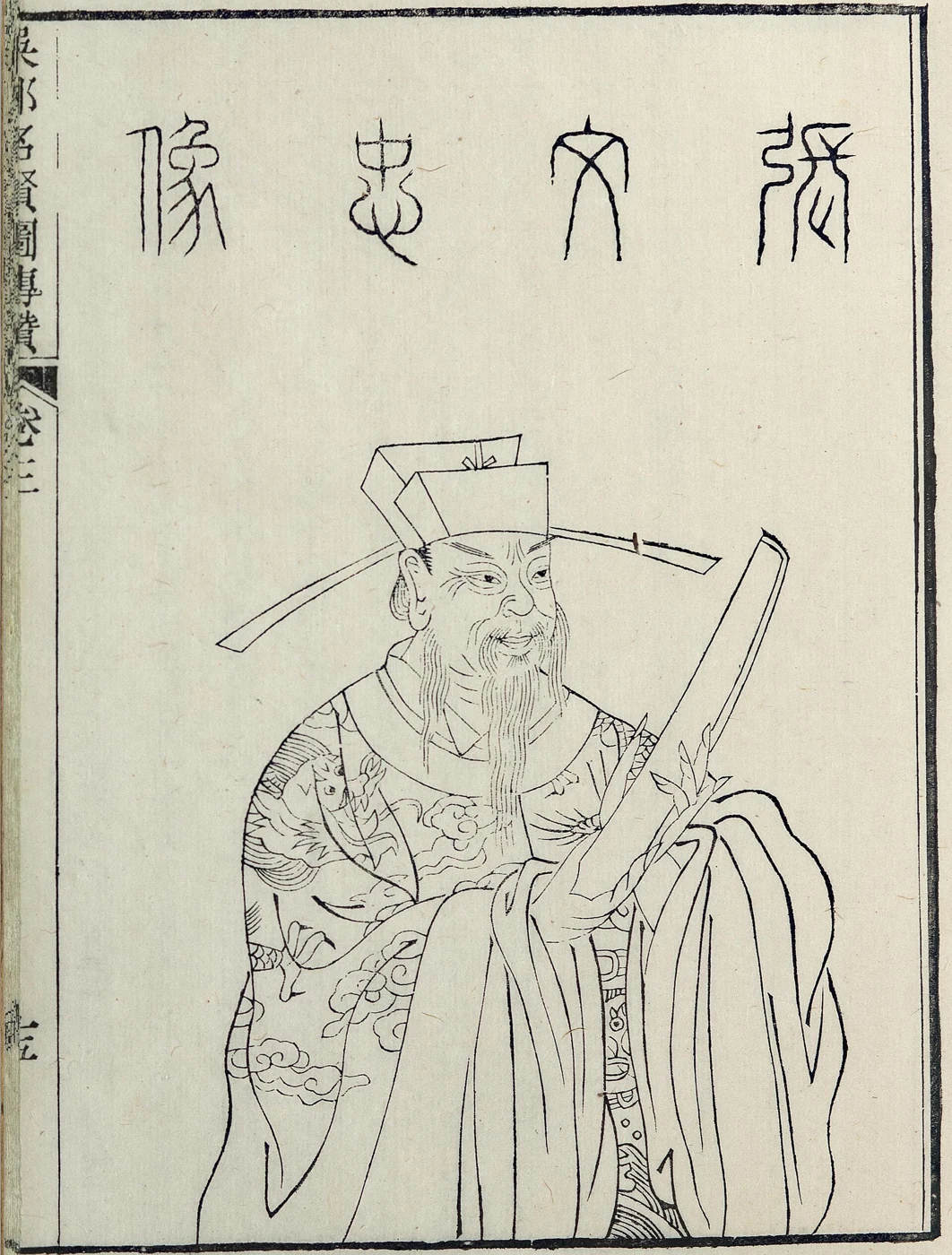
1217 CE–1279 CE
an outstanding general who resisted the Yuan in the late Southern Song
Zhang Shijie
张世杰
Zhang Shijie (died 1279 AD) was a native of Fanyang (modern Zhuozhou, Hebei). He was a paramount loyalist general, naval commander, and national hero in the closing years of the Southern Song Dynasty, commemorated alongside Wen Tianxiang and Lu Xiufu as one of the 'Three Heroes of the Late Song' . Entering Southern Song service in Huainan, he rose through the ranks due to conspicuous bravery, distinguishing himself during the…
1217 CE–1279 CESouthern Song
PROFILE
Zhang Shijie (died 1279 AD) was a native of Fanyang (modern Zhuozhou, Hebei). He was a paramount loyalist general, naval commander, and national hero in the closing years of the Southern Song Dynasty, commemorated alongside Wen Tianxiang and Lu Xiufu as one of the 'Three Heroes of the Late Song' . Entering Southern Song service in Huainan, he rose through the ranks due to conspicuous bravery, distinguishing himself during the Siege of Ezhou and the Battle of Jiaoshan. Following the fall of the capital Lin'an in 1276, Zhang Shijie escorted the young imperial princes Zhao Shi and Zhao Bing to Fuzhou, enthroning them and assuming supreme military leadership as Junior Guardian, Bureau of Military Affairs Commissioner, and Duke of Yue. He orchestrated a dogged naval resistance along the coastlines of Fujian and Guangdong for four years. In 1279, following the cataclysmic defeat at the Battle of Yamen, he broke through enemy cordons; encountering a devastating typhoon off Hailing Island, he burned incense to heaven and drowned in the surging waves, dying a martyr for the fallen dynasty.
- Courtesy / Art Name
- Unknown
- Era
- Ancient times
- Dynasty
- Ancient times
- Identity
- an outstanding general who resisted the Yuan in the late Southern Song
- Date of Birth
- Not recorded in historical sources
- Date of Death
- 1279
- Ethnicity
- Han
- Ancestral Home
- Fanyang
- Place of Birth
- Fanyang (modern Zhuozhou, Hebei)
- Place of Death
- Unknown
- Lifespan
- Unknown
- Major Offices
- Junior Guardian、Vice Commissioner of Military Affairs、Associate Commissioner of the Bureau of Military Affairs、Acting Junior Guardian、Military Commissioner of the Baokang Army
- Peerage
- Duke of Yue
- Major Achievements
- An outstanding general who resisted the Yuan in the late Southern Song, a national hero and supreme military commander, known with Wen Tianxiang and Lu Xiufu as the three outstanding men of the end of Song; in early years he joined the Song army in the Huai south, won repeated merit and served as prefect of Huangzhou and vice commissioner for the defence of the Yangtze
LIFE TIMELINE
Huainan | Fled to Southern Song after a military infraction; enlisted as a junior squad leader under Commander Lü Wende.
Ezhou | Breached Kublai Khan's siege perimeter to reinforce besieged Ezhou, demonstrating fearless assault tactics.
Xiangyang, Huangzhou | Campaigned repeatedly along the Han and Yangtze rivers during the Siege of Xiangfan; promoted to Prefect of Huangzhou.
Jiaoshan, Lin'an | Mobilized volunteer armies to defend Lin'an; chained thousands of warships at the Battle of Jiaoshan, suffering heavy fire-attack losses.
Fuzhou | Escorted imperial princes Zhao Shi and Zhao Bing to Fuzhou, enthroning Zhao Shi as Emperor Duanzong; appointed Military Commissioner.
Quanzhou | Requisitioned commercial merchant vessels in Quanzhou; maritime superintendent Pu Shougeng defected to the Mongols and slaughtered royal clansmen.
Guangzhou, Chaozhou | Led naval counter-offensives along the Guangdong coast, recovering Guangzhou and being created Duke of Yue.
Yamen | Following Duanzong's death, enthroned young Zhao Bing at Gangzhou; relocated headquarters to Yamen, chaining a thousand warships into a floating fortress.
Yamen Sea | Smashed by Yuan general Zhang Hongfan's joint naval offensive; rejected surrender demands conveyed by his own nephew.
Yamen | Song fleet collapsed; Chancellor Lu Xiufu leaped into the sea with the child emperor; Zhang Shijie severed chains to break through with surviving ships.
Hailing Island | Struck by a catastrophic typhoon off Hailing Island; prayed to heaven and drowned in the surging waves at an unconfirmed age.
Age 19 | ### The Maritime Court and Unyielding Struggle In February 1276 AD, Bayan's legions surrounded Lin'an, compelling Grand Empress Dowager Xie and the five-year-old Emperor Gong to surrender.
Age 19 | In May 1276, Zhang Shijie and Lu Xiufu proclaimed eleven-year-old Zhao Shi as Emperor Duanzong at Fuzhou, inaugurating the Jingyan reign era.
Age 19 | ### The Maritime Court and Unyielding Struggle In February 1276 AD, Bayan's legions surrounded Lin'an, compelling Grand Empress Dowager Xie and the five-year-old Emperor Gong to surrender.
Throughout 1277 AD | Throughout 1277 AD, Zhang Shijie maintained vigorous amphibious operations along the southern coast, defeating Yuan admiral Liu Shen and temporarily liberating Guangzhou and surrounding districts.
Age 10 | Throughout 1277 AD, Zhang Shijie maintained vigorous amphibious operations along the southern coast, defeating Yuan admiral Liu Shen and temporarily liberating Guangzhou and surrounding districts.
However | However, the child emperor succumbed to trauma and illness following a shipwreck, dying at Gangzhou in April 1278.
Age 11 | However, the child emperor succumbed to trauma and illness following a shipwreck, dying at Gangzhou in April 1278.
In January 1279 | In January 1279, Yuan supreme commander Zhang Hongfan arrived with elite northern amphibious armies, joined by general Li Heng from Guangzhou, completely blockading Yamen from sea and land.
Zhang Shijie (died 1279 AD) was a native of Fanyang (modern Zhuozhou | Zhang Shijie (died 1279 AD) was a native of Fanyang (modern Zhuozhou, Hebei).
In May 1279 | In May 1279, off the coast of Hailing Island near Yangjiang, the fleet was engulfed by a catastrophic typhoon.
Age 12 | In January 1279, Yuan supreme commander Zhang Hongfan arrived with elite northern amphibious armies, joined by general Li Heng from Guangzhou, completely blockading Yamen from sea and land.
BIOGRAPHY
Biography
Northern Origins and Southern Allegiance Zhang Shijie was born in Fanyang (modern Zhuozhou, Hebei Province) during the turbulent era of the Mongol conquest of northern China. In his early years, he served as a cavalry officer under Zhang Rou, a prominent Jin defector who became a leading commander in the Mongol armed forces. Having committed a military offense carrying capital punishment, Zhang Shijie fled southward across the border to offer his sword to the Southern Song Dynasty. Arriving in Huainan, he was received by Military Commissioner Lü Wende, who recognized the young soldier's imposing courage and martial resolve. Enlisting as a junior officer, Zhang Shijie fought in countless skirmishes against Mongol border columns, consistently leading the vanguard and rising through the officer corps. In 1259 AD (Kaiqing 1), Kublai Khan led a massive army across the Yangtze River, laying tight siege to Ezhou (modern Wuhan, Hubei). Chancellor Jia Sidao directed defense operations from Hanyang amidst desperate circumstances. Leading reinforcements from Chizhou, Lü Wende assigned Zhang Shijie to spearhead the breakthrough. Charging into the teeth of the Mongol river barricades with several thousand shock troops, Zhang Shijie tore open the encirclement, successfully delivering food and men into the citadel. Throughout the hundred-day siege, he repelled repeated assaults. Following the lifting of the siege, the court awarded him the governorship of Huangzhou and Vice-Commissioner of the Yangtze. During the six-year Siege of Xiangfan (1268–1273 AD), Zhang Shijie spearheaded naval sorties up the Han River, fighting pitched engagements against Mongol flotillas to relieve fortified outposts. When Xiangfan ultimately capitulated, opening the heart of the empire to invasion, Zhang Shijie organized rearguard lines along the lower Yangtze. ### The Battle of Jiaoshan and Loyal Defense of the Realm In early 1275 AD (Deyou 1), Mongol Grand Chancellor Bayan drove a combined amphibious force of 200,000 men down the Yangtze. Chancellor Jia Sidao's catastrophic defeat at Dingjiazhou triggered widespread panic, with imperial commanders fleeing or defecting in droves. In response to the Dowager Empress Xie's desperate call to arms, Zhang Shijie emptied the Huangzhou treasuries, enlisted tens of thousands of local volunteers, and marched day and night to defend the capital Lin'an (modern Hangzhou). Deeply moved, the imperial court created him Military Governor of Baokang. In July 1275, the opposing hosts clashed in the momentous Battle of Jiaoshan on the Yangtze River near Zhenjiang. Seeking a decisive confrontation, Zhang Shijie adopted a desperate tactical disposition: he assembled thousands of Song warships, interlocking their hulls with heavy iron cables into a colossal floating fortress anchored in midstream, vowing to hold the river or perish. However, Yuan commanders Ashu and Atahai exploited the Song formation's immobility through coordinated fire attacks. Launching fireships with the river current, supported by shoreline catapults hurling incendiary projectiles, the Yuan forces set the Song flotilla ablaze. Wrapped in smoke and fire, thousands of Song vessels incinerated as the iron chains prevented maneuver. Though Zhang Shijie fought desperately with broadsword in hand, the army was shattered with tens of thousands drowned. Gathering several thousand survivors, Zhang Shijie broke out toward Dinghai (modern Zhenhai, Zhejiang). ### The Maritime Court and Unyielding Struggle In February 1276 AD, Bayan's legions surrounded Lin'an, compelling Grand Empress Dowager Xie and the five-year-old Emperor Gong to surrender. Refusing to yield, Zhang Shijie, Lu Xiufu, and Wen Tianxiang organized the evacuation of the Emperor's half-brothers, Prince of Yi (Zhao Shi) and Prince of Wei (Zhao Bing), smuggling them aboard coastal transports to Wenzhou. In May 1276, Zhang Shijie and Lu Xiufu proclaimed eleven-year-old Zhao Shi as Emperor Duanzong at Fuzhou, inaugurating the Jingyan reign era. The court appointed Zhang Shijie as Military Affairs Commissioner and Duke of Yue, placing supreme command of the mobile maritime resistance in his hands. When Yuan forces stormed into Fujian late that year, Zhang Shijie evacuated the court to Quanzhou. However, Pu Shougeng, the wealthy Arab-descendant Superintendent of Maritime Trade, closed the city gates and secretly pledged loyalty to the Mongols. Desperate for supplies, Zhang Shijie seized several hundred merchant vessels anchored in the harbor to expand his fleet. In retribution, Pu Shougeng massacred over a thousand imperial clan members residing in Quanzhou. Zhang Shijie sailed southward toward Guangdong. Throughout 1277 AD, Zhang Shijie maintained vigorous amphibious operations along the southern coast, defeating Yuan admiral Liu Shen and temporarily liberating Guangzhou and surrounding districts. However, the child emperor succumbed to trauma and illness following a shipwreck, dying at Gangzhou in April 1278. Confronting total demoralization, Zhang Shijie drew his sword and declared: "The late Emperor Duzong still has an heir surviving; how can we abandon the imperial enterprise for the death of one prince!" Joining with Lu Xiufu, he elevated eight-year-old Zhao Bing to the throne at Gangzhou, assuming duties as Chancellor of the Left and Commander-in-Chief. ### The Cataclysm of Yamen and Death in the Waves In June 1278, recognizing that all mainland provinces were lost, Zhang Shijie relocated the imperial court to Yamen (in modern Xinhui, Guangdong), a tidal channel sheltered between rocky islands. Zhang Shijie constructed 3,000 provisional wooden halls and barracks on the cliffs, interlocking over a thousand warships with heavy chains to form an impregnable circular maritime barrier surrounding the young Emperor's dragon flagship. In January 1279, Yuan supreme commander Zhang Hongfan arrived with elite northern amphibious armies, joined by general Li Heng from Guangzhou, completely blockading Yamen from sea and land. Seeking to avoid a bloodbath, Zhang Hongfan sent Zhang Shijie's nephew into the Song camp three times to offer lavish princely titles if he would capitulate. Zhang Shijie rebuked his nephew with icy indignation: > "I know full well that surrender guarantees life and riches, but my honor cannot be compromised! Return and tell Zhang Hongfan: my head may be severed, but a loyal minister of the Great Song will never submit!" On the morning of March 19, 1279, amid dense sea fog and heavy gale winds, the Yuan fleet launched an all-out assault. Taking advantage of the morning and afternoon tides, Yuan warships surrounded the interlocked Song ships, unleashing clouds of arrows and explosive fire-pots. Exhausted, starved, and drinking seawater, the Song soldiers fought hand-to-hand until noon, when the main mast of the command flagship collapsed, sowing panic. Seeing that total destruction was at hand, Chancellor Lu Xiufu strapped the eight-year-old Emperor Zhao Bing to his chest and leaped into the abyss. Hundreds of imperial concubines, civil ministers, and over 100,000 soldiers threw themselves into the churning waters, extinguishing the Southern Song Dynasty. In the final chaos, Zhang Shijie hacked through the iron chains, fighting through the Yuan blockade with sixteen vessels to rescue the Dowager Empress Yang. When Empress Yang learned that the young sovereign had perished, she wept inconsolably and threw herself into the ocean; Zhang Shijie interred her remains upon the shoreline. Collecting his remaining ships, Zhang Shijie attempted to sail southward to Annam (Vietnam) to recruit allies and perpetuate the resistance. In May 1279, off the coast of Hailing Island near Yangjiang, the fleet was engulfed by a catastrophic typhoon. As mountain-high waves broke the masts, retainers begged him to transfer to a skiff. Zhang Shijie refused. Donning his full ceremonial court robes, he stood upon the battered deck, lit incense, and prayed to heaven: > "I have exhausted every ounce of my strength for the house of Zhao! When one sovereign died, I crowned another; now he too is gone. That I survived was only in the hope that the enemy would retreat, so that I might raise another royal scion to preserve the sacrifices. If heaven truly wills the survival of the Song, let this vessel find safe harbor! If heaven's decree has run its course, then capsize this ship; I am ready to be buried in the belly of the sea!" Moments after his prayer, a colossal wave smashed the vessel, plunging Zhang Shijie and his ship into the depths. Local fishermen recovered his body, interring him on Mount Pingzhang on Hailing Island, where his shrine remains an eternal monument to unyielding patriotism.
Major Activities
The Heroic Relief of Ezhou During Kublai Khan's siege of Ezhou in 1259 AD, Zhang Shijie served as the spearhead commander for Lü Wende's relief army. Leading several hundred shock cavalry through the teeth of Mongol artillery and naval cordons, he broke into the fortress, fighting on the ramparts for a hundred days to preserve the central Yangtze defensive line. ### Chained Warships at the Battle of Jiaoshan In 1275 AD, as Bayan's armies closed upon Lin'an, Zhang Shijie mobilized volunteer armies and interlocked thousands of warships across the Yangtze River at Jiaoshan. Though devastated by Yuan fireships and artillery, his heroic stand displayed unmatched tactical courage in defense of the imperial capital. ### Guarding the Maritime Court Across Four Years Following the surrender of Lin'an in 1276, Zhang Shijie refused to abandon the dynasty. Rescuing the young imperial princes, he enthroned Emperor Duanzong and Emperor Bing successively, organizing naval commands along the coasts of Zhejiang, Fujian, and Guangdong, preserving the Song imperial flame in the face of insurmountable odds. ### Martyrdom at Yamen and Hailing Island In the climactic Battle of Yamen in 1279, Zhang Shijie commanded 200,000 soldiers and civilians, rejecting three personal appeals to surrender. Breaking through the blockade, he drowned during a devastating typhoon off Hailing Island after offering his final prayer to heaven, taking his place among the immortal 'Three Heroes of the Late Song'.
Personal Relations
- Imperial Dowager: Empress Dowager Yang (Consort of Emperor Duzong; drowned herself after Yamen)
- The Three Heroes of the Late Song: - Lu Xiufu (Grand Chancellor of the Left, who leaped into the sea with the child emperor) - Wen Tianxiang (Grand Chancellor of the Right, captured at Haifeng)
- Early Military Mentor: Lü Wende (Military Commissioner of Huainan) ### Defectors and Opposing Generals - Treasonous Defector: Pu Shougeng (Superintendent of Maritime Trade at Quanzhou who defected and massacred royal clansmen)
- Yuan Grand Marshals: - Bayan (Grand Chancellor and supreme commander of the southern conquest) - Zhang Hongfan (Yuan Han Army Marshal, commander at Yamen, son of Zhang Rou) - Li Heng (Yuan naval commander at Yamen)
Historical Assessment
Official Dynastic Histories Tuotuo in History of Song (Volume 414):
"Chen Yizhong pursued retreating strategies, while Zhang Shijie occasionally committed tactical errors. Yet Shijie guarded the two young sovereigns through tempest and waves, his dedication to dynastic restoration unbending to the very end. The catastrophe at Jiaoshan and the devastation of Yamen were the decrees of heaven, beyond human remedy. When the typhoon wrecked his ship, he lit incense and prayed to heaven, dying with serene dignity. Truly, he sought righteousness and attained it! His incandescent loyalty places him side-by-side with Wen Tianxiang and Lu Xiufu as the Three Heroes of the Late Song, commanding universal reverence across thousands of years." History of Yuan (Volume 156, Biography of Zhang Hongfan):
"Records Zhang Shijie's answer to the envoys: 'I know full well that surrender guarantees life and riches, but my honor cannot be compromised! I would rather die here than live as an enslaved captive!'" ### Later Tributes - Wang Fuzhi in On the Song Dynasty: "Zhang Shijie traversed the maritime wilderness, suffering a hundred defeats without yielding, his sole aim being the preservation of Zhao rule. His immortal devotion shines beside the sun and moon."
- Koxinga (Zheng Chenggong) in his poems: Revered Zhang Shijie as the ultimate historical model of loyalist maritime resistance.
FIGURES ASSOCIATED WITH THIS DYNASTY
Bibliography
- History of Song (Song Shi*), Volume 414: Biographies 173 (Biography of Zhang Shijie).
- History of Song*, Volume 47: Annals of the Two Young Sovereigns.
- History of Yuan (Yuan Shi*), Volume 156: Biography of Zhang Hongfan.
- Wang Fuzhi, On the Song Dynasty (Song Lun), Volume 14.
- Gu Cheng, History of the Southern Ming, Introduction on the Fall of the Song.