Birth | Born on a boat on the river at Huangzhou (modern Huanggang, Hubei); a chancellor and powerful minister of the Southern Song
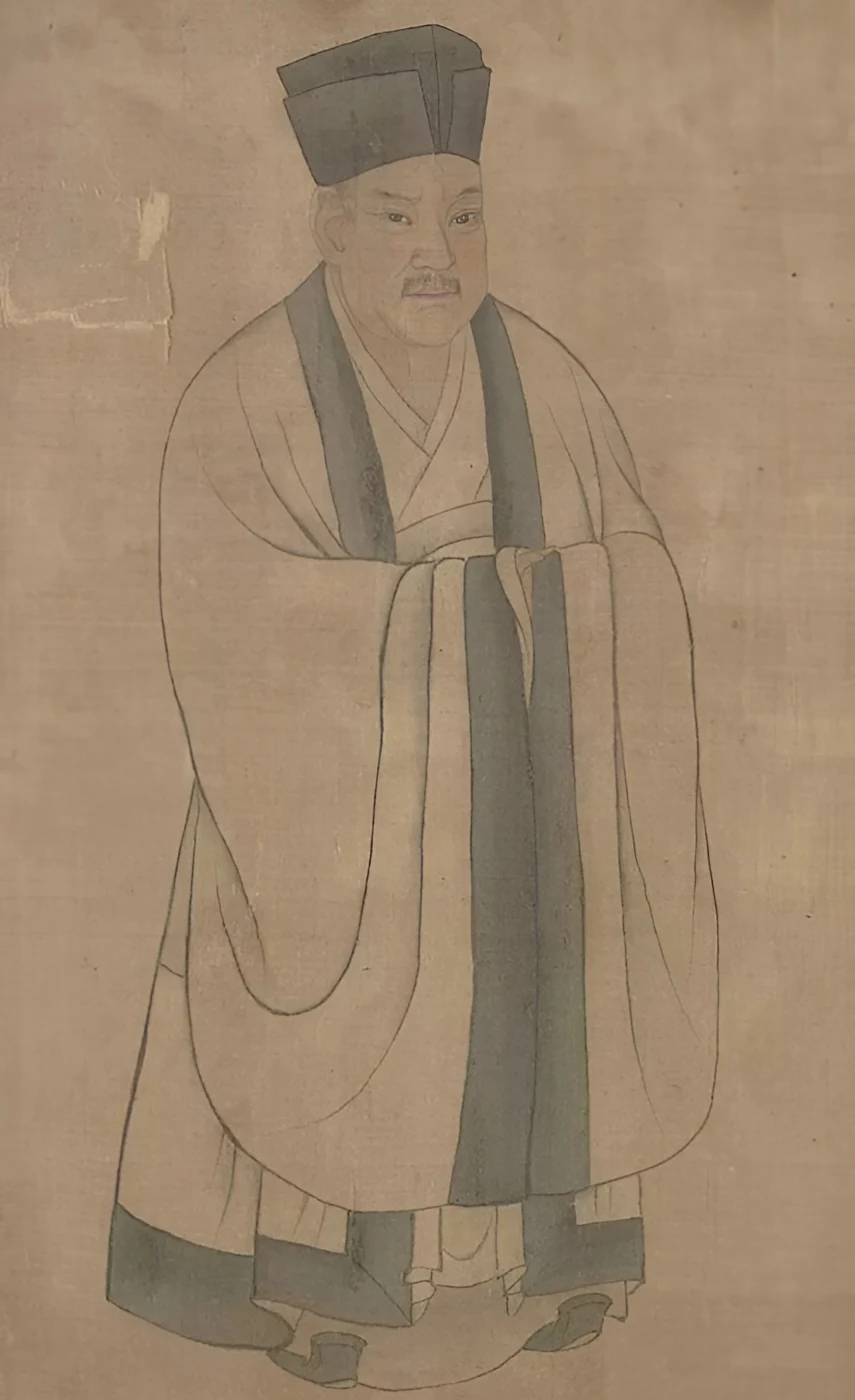
1090 CE–1155 CE
Southern Song Grand Councilor and powerful minister
Qin Gui
秦桧
Qin Gui (January 17, 1091–November 18, 1155), courtesy name Huizhi, was a native of Jiangning, present-day Nanjing, and was born in Huangzhou, present-day Huanggang in Hubei. A powerful Grand Councilor of the Southern Song, he served twice as chief minister and monopolized the grand councilorship for nineteen years. He strongly advocated a humiliating peace with the Jin dynasty, helped bring about the Treaty of Shaoxing, and…
1090 CE–1155 CESouthern Song
PROFILE
Qin Gui (January 17, 1091–November 18, 1155), courtesy name Huizhi, was a native of Jiangning, present-day Nanjing, and was born in Huangzhou, present-day Huanggang in Hubei. A powerful Grand Councilor of the Southern Song, he served twice as chief minister and monopolized the grand councilorship for nineteen years. He strongly advocated a humiliating peace with the Jin dynasty, helped bring about the Treaty of Shaoxing, and played the leading role in framing the anti-Jin general Yue Fei. Later generations commonly regarded him as a treacherous minister and traitor. The Yuan-compiled History of Song placed him in its “Biographies of Treacherous Ministers.”
- Other name
- Courtesy name Huizhi
- Courtesy name
- Huizhi
- Period
- Southern Song
- Date of Birth
- January 17 1091
- Date of Death
- November 18 1155
- Dynasty/Polity
- Southern Song
- Identity
- Southern Song Grand Councilor and powerful minister
- Ethnicity/Ethnic affiliation
- Not recorded in historical sources
- Native place
- Jiangning (present-day Nanjing, Jiangsu)
- Place of birth
- On a boat by the river at Huangzhou (present-day Huanggang, Hubei)
- Place of death
- Not recorded in historical sources
- Highest office
- See Biography and Major Activities
- Major achievements
- Powerful Southern Song Grand Councilor; strongly advocated a submissive peace with Jin; helped conclude the Treaty of Shaoxing and played the leading role in framing Yue Fei; dominated the court under two reigns
LIFE TIMELINE
Passed the jinshi examination and was appointed instructor in Mizhou. | Passed the jinshi examination and was appointed instructor in Mizhou.
Passed the Cixue Jianmao examination and became an instructor at the Imperial Academy. | Passed the Cixue Jianmao examination and became an instructor at the Imperial Academy.
Submitted a memorial setting out four military proposals and was promoted to Censor-in-Chi | Submitted a memorial setting out four military proposals and was promoted to Censor-in-Chief.
Memorialized that the Zhao imperial house should be preserved and was taken north by Jin f | Memorialized that the Zhao imperial house should be preserved and was taken north by Jin forces.
Returned south to Lin'an with his family and became Minister of the Ministry of Rites. | Returned south to Lin'an with his family and became Minister of the Ministry of Rites.
Promoted to Assistant Grand Councilor and in the eighth month became Right Vice Director | Promoted to Assistant Grand Councilor and in the eighth month became Right Vice Director, serving as Grand Councilor for the first time.
Forced out by Lü Yihao and dismissed as Grand Councilor. | Forced out by Lü Yihao and dismissed as Grand Councilor.
Appointed Military Affairs Commissioner. | Appointed Military Affairs Commissioner.
Restored as Grand Councilor and strongly advocated peace negotiations. | Restored as Grand Councilor and strongly advocated peace negotiations.
Helped conclude the Treaty of Shaoxing and framed Yue Fei | Helped conclude the Treaty of Shaoxing and framed Yue Fei, who was imprisoned.
After Yue Fei was killed | After Yue Fei was killed, Qin was additionally appointed Grand Preceptor and enfeoffed as Duke of Wei.
Died of illness | Died of illness; posthumously created Prince of Shen and given the posthumous name Zhongxian.
BIOGRAPHY
Biography
Family Background and Early Life
Qin Gui was born on the twenty-fifth day of the twelfth lunar month of the fifth year of Yuanyou (January 17, 1091), on a boat beside the river at Huangzhou in present-day Huanggang, Hubei. His father Qin Minxue served as magistrate of Yushan County and later of Gu County under Jingjiang Prefecture, present-day Yongfu County in Guangxi. The family was not prominent. In his early years Qin Gui worked as a private tutor and lived on meager fees. Dissatisfied with his circumstances, he once wrote a poem saying that if he could obtain three hundred mu of irrigated fields, he would no longer have to be a “monkey king” among schoolchildren.
In 1115, the fifth year of Zhenghe, Qin passed the jinshi examination and was appointed instructor in Mizhou, in present-day Zhucheng, Shandong. He later passed the Cixue Jianmao examination and became an instructor at the Imperial Academy. During this period his learning brought him notice and he gradually advanced in official life.
The Jingkang Crisis and Captivity in the North
Early in 1126, the first year of Jingkang, Jin armies invaded the south. Qin memorialized that the Song should not appear excessively timid toward Jin. In the eleventh month Jin forces surrounded Bianjing, present-day Kaifeng. Qin submitted four proposals on military affairs: summon all officials for detailed discussion; strengthen the defenses; lodge Jin envoys outside the city; and, at most, cede only the Yanshan circuit. No response was made. He was appointed Vice Director in the Bureau of Operations and soon reassigned to handle affairs under Zhang Bangchang, the commissioner for ceding Hebei territory. Qin believed that this office existed solely to surrender territory in exchange for peace and contradicted his own position, so he submitted three memorials asking to be relieved.
The Northern Song government planned to cede Taiyuan, Zhongshan, and Hejian in order to stop the war. Qin Gui and Cheng Yu were sent as commissioners for the cession and escorted Prince Su, Zhao Shu, to the Jin camp. Jin detained Zhao Shu as a hostage, and Qin and the others returned after reaching Yanjing. On the recommendation of Censor-in-Chief Li Hui and Hanlin Academician Chengzhi Wu Kai, Qin was appointed Investigating Censor of the Palace and then promoted to Left Remonstrator.
In the eleventh month of 1126 Emperor Qinzong of Song summoned officials to Yanhe Hall to discuss policy. Fan Zongyin and about seventy officials agreed to cede territory, while Qin and thirty-five others opposed it. Qin was soon promoted to Censor-in-Chief. In the intercalary eleventh month Bianjing fell, Emperor Qinzong submitted a surrender memorial, and he was detained in the Jin camp.
In the second month of 1127, the second year of Jingkang, Jin commanders ordered that a man of another surname be enthroned. The capital defender Wang Shiyong assembled officials to discuss making Zhang Bangchang emperor. Investigating Censor Ma Shen proposed a joint memorial asking that the Zhao house be preserved. Qin, then Censor-in-Chief, expressed support and a memorial was submitted to the Jin commanders requesting the enthronement of a Zhao ruler; Qin was detained in the Jin camp. According to the Continuation of the Comprehensive Mirror in Aid of Governance, the memorial was written by Ma Shen, Qin merely signed it, and he did so reluctantly.
In the third month of 1127 Zhang Bangchang was installed as emperor of the puppet Chu regime. In the fourth month Qin was taken north with Emperors Huizong and Qinzong, passing through Yanshan and then reaching Hanzhou. After Emperor Huizong learned that Prince Kang, Zhao Gou, had become emperor, he wrote to the Jin commander Nianhan proposing peace and asked Qin to polish the wording. Qin presented Nianhan with generous gifts. Emperor Taizong of Jin, Wanyan Sheng, then assigned Qin to his younger brother Dalai, Wanyan Chang, for service.
Return South and Rise Again
In 1130, the fourth year of Jianyan, Dalai led troops against Shanyang, present-day Huai'an in Jiangsu, and Qin accompanied the army. In the tenth month Qin left the Jin camp with his family, traveled by way of the naval stockade of Lianshui Army, and returned to the temporary capital Lin'an, present-day Hangzhou. After returning to Song territory Qin claimed that he had killed the Jin soldier guarding him, seized a small boat, and escaped. Many court officials doubted this account, but Grand Councilor Fan Zongyin and Military Affairs Bureau official Li Hui, both friendly with Qin, strongly vouched for his loyalty.
At his audience after returning, Qin proposed the formula “the south should remain south and the north north,” a plan for dividing rule between north and south, and presented a draft peace agreement. Emperor Gaozong believed Qin loyal and appointed him Minister of the Ministry of Rites. In the second month of 1131 Qin became Assistant Grand Councilor. After Fan Zongyin was dismissed in the seventh month, Qin declared that he had “two policies capable of startling the realm.” In the eighth month he became Right Vice Director, Grand Councilor, and concurrently head of the Military Affairs Bureau, entering the grand councilorship for the first time.
Dismissal and Restoration
In 1132 Lü Yihao became Grand Councilor for a second time and shared control of government with Qin. Qin secretly sought to take Lü's authority. His associates spread the argument that King Xuan of Zhou had restored his state by strengthening domestic government and resisting external enemies, so the two grand councilors should divide internal and military affairs. Emperor Gaozong ordered Lü to focus on military matters and Qin on civil administration. Qin then proposed creating a Bureau for the Reform of Government and made himself its supervisor. He subsequently impeached Assistant Grand Councilor Zhai Ruwen, causing Zhai's dismissal.
Lü Yihao returned from the military command at Zhenjiang and planned Qin's removal. He installed Huang Guinain as Investigating Censor of the Palace and Liu Fei as Right Remonstrator. Huang accused Qin of single-mindedly advocating peace, undermining recovery of lost territory, forming a faction, monopolizing power, and acting deceitfully. Emperor Gaozong summoned Qi Chongli, a Direct Academician, and showed him Qin's two proposals: to return people of Hebei to Jin and people of the Central Plain to Liu Yu. The emperor remarked: “Qin Gui says that southerners should return south and northerners north. I am a northerner—where am I supposed to return?” In the eighth month of 1132 Qin was dismissed as Grand Councilor and appointed Academician of the Hall of Literary Profundity while being assigned to oversee the Taiping Daoist temple in Jiangzhou.
After Emperor Taizong of Jin died in 1135 and Dalai became dominant at the Jin court, Song and Jin eventually moved toward peace. In the second month Qin was restored as Academician of the Hall for Advancing Governance. In 1137 he became Military Affairs Commissioner. In 1138 he was again appointed Grand Councilor. Thereafter he monopolized the grand councilorship, brought down Zhang Jun and Zhao Ding, and attacked officials who favored continued resistance to Jin.
Monopoly of Power and Later Years
In 1141 Qin encouraged Emperor Gaozong to order the northern-expedition armies to return, helped strip the great generals of their military commands, framed Yue Fei, and brought about the Treaty of Shaoxing. Under the treaty the Southern Song acknowledged vassal status toward Jin, paid tribute, and ceded territory. It also stipulated that the chief minister was not to be removed without cause. Qin thereby secured his long-term position. He was additionally appointed Grand Preceptor and promoted to Duke of Wei.
On the twenty-second day of the tenth lunar month of 1155 (November 18), the twenty-fifth year of Shaoxing, Qin died of illness. He was posthumously made Prince of Shen and given the posthumous name Zhongxian. His adopted son Qin Xi attempted to succeed him as Grand Councilor but failed.
Qin Hui, styled Huizhi, was a native of Jiangning, born at Huangzhou. Of humble origins, he taught in a village school for a meagre fee and, discontented with his lot, wrote the verse that if he could have three hundred mu of paddy he would no longer be king of the monkeys. He passed the presented scholar examination in 1115 and the decree and letters examination in 1123, rising to be censorial investigating commissioner. In 1126, when the Jin besieged Kaifeng and demanded the three garrisons, Qin Hui memorialised on four military matters: that the Jin demands were insatiable and only Yanshan should be granted; that the Jin were treacherous and defence must not be delayed; that all officials should deliberate and the fitting conclusions be entered in the treaty; and that the Jin envoys should be lodged outside the city and not admitted to the palace. Nothing came of it, and he was made a bureau director. When he was later assigned to serve as Zhang Bangchang's agent he objected that the mission was purely to cede territory, contrary to his earlier advice, and three times declined, and was excused. In the eleventh month, when the officials debated at the Yanhe hall, Fan Zongyin and seventy others favoured granting the territory while Qin Hui and thirty-six held out against it; he was shortly made vice censor-in-chief. In the second month of 1127 the Jin sought to set up a man of another surname, and when the officials were summoned to agree to the elevation of Zhang Bangchang none dared answer, until the investigating censor Ma Shen said that as remonstrating officials they could not sit silent and should jointly petition for the preservation of the Zhao house. Qin Hui, as head of the censorate, agreed and memorialised that the rise and fall of a dynasty was a matter of Heaven's decree and could not be decided by the fate of one city, and that Zhang Bangchang had fawned on favourites and ruined the state, so that if land and people were given him the heroes of the realm would rise and destroy him. He refused to sign the petition the others had signed, declaring for a prince of the Zhao house, and the Jin in fury arrested him. Carried north, where Sun Fu and the others kept their integrity, Qin Hui alone bowed to threats and bribes and turned with the wind. The Jin emperor gave him to his brother Talan as a servant, and in the campaigns of 1129 and 1130, when Talan commanded in eastern Huai, Qin Hui is known to have written a letter urging the besieged Chuzhou to surrender - Chuzhou being one of the most glorious defences of the war, its people under Zhao Li holding out with bark and grass roots until the city fell and they fought in the streets, the very women dragging the enemy into the water with them. In the tenth month of 1130 Qin Hui, his wife Lady Wang and their household made their way by sea from the Lianshui naval station back to the imperial headquarters. He claimed to have killed the men set to guard him and seized a boat; but the court doubted him, since he alone had returned of those taken with Sun Fu, and since the journey of two thousand eight hundred li from Yan to Chu across river and sea could hardly be made unremarked, nor could he have brought his wife had the Jin released him. Only the chancellor Fan Zongyin and the privy commissioner Li Hui, his friends, dispelled the doubts and recommended his loyalty. On his first audience he put forward the policy that "if the empire is to be at peace, the south must go to the south and the north to the north," and presented a draft treaty he had written to Talan, the substance being to recognise Jin rule in the north, where the northern gentry would serve the Jin, in exchange for Jin recognition of a Southern Song beyond the Yangzi and an end to the war. Gaozong called him loyal beyond other men and said he could not sleep for joy, and though the court had sent envoys before, it was from Qin Hui that the exclusive pursuit of peace with the Jin began. In the second month of 1131 he was made assistant administrator; in the seventh month Fan Zongyin fell. He had earlier supported Fan's proposal to review the lavish grants since the Chongning and Daguan eras and, seeing the emperor firm, had used it to oust him. The chancellorship standing vacant, Qin Hui let it be known that he had two policies that could shake the world, and when asked why he did not state them replied that without a chancellor they could not be carried out. In the eighth month he became right vice director of the Secretariat and concurrently privy commissioner; in the ninth month Lü Yihao returned as chancellor and, to take the power from him, Qin Hui had his party argue that as King Xuan of Zhou repaired the interior and repelled the exterior and so restored the dynasty, the two chancellors should divide the government between them, so that Lü Yihao established a supervisory headquarters at Zhenjiang, the emperor ruling that Lü should direct the armies and Qin Hui the civil business. In 1132 Qin Hui proposed a bureau for the reform of government with himself at its head and the assistant administrator Zhai Ruwen as his colleague; before long he impeached Zhai for punishing a hall clerk on his own authority, and Zhai was dismissed. The censor Liu Yizhi, Qin's man, argued that King Xuan's internal repair was precisely his external policy and that documents, litigation, appointments and building were not urgent; Zeng Tong told him that a chancellor's business was everything and there was no need for a bureau, and Qin would not hear it. Lü Yihao, returning from the front, plotted his removal, appointing Huang Guinian and Liu Fei as censors and asking Xi Yi how to go about it; the answer was to call him a faction, and to remove first its leader Hu Anguo. In the eighth month the emperor summoned Qi Ch'ungli and showed him Qin Hui's two policies - the exchange of family news between northern and southern gentry, and the return of the men of Shandong and Hebei to the north - remarking that Qin said southerners should go south and northerners north, but that he himself was a northerner and where was he to go; and that Qin had said he would shake the world within months of becoming chancellor, of which nothing had been heard. Qi Ch'ungli wrote the emperor's words into an instruction and circulated it, and men first understood Qin Hui's villainy. Gaozong then removed him from the chancellorship and made him a scholar of the Guanwen hall in nominal charge of a temple in Jiangzhou. In 1135, the Jin emperor having died and Talan favouring peace, he was restored to a nominal academic post; in 1136 he was made prefect of Wenzhou and then of Shaoxing, and given nominal charge of the palace and made deputy for the emperor's absence. In the first month of 1137 He Xian returned from Jin with news of the death of Huizong and the empress, and the emperor, weeping, granted Qin Hui the privy seal with the honours of a chancellor; in the fourth month Wang Lun was sent to Jin to bring back the coffin. In the ninth month Zhang Jun asked to retire and the emperor asked whom he would recommend, and Zhang Jun said that only by working with Qin Hui did one learn his darkness; the emperor therefore used Zhao Ding. Qin Hui, seeing Zhang Jun's ambition and his dissatisfaction with his empty command, stirred him up, and the two together persuaded Gaozong that Yue Fei should not hold too great a military power lest his merit overshadow the throne, so that the emperor at once revoked the orders and Yue Fei's northern campaign came to nothing. When Liu Guangshi was dismissed and the Huai West army left without a good commander, Li Qiong and his fellows mutinied in the eighth month and carried Lü Zhi over to Liu Yu, the whole front of four military regions being left open, and Zhang Jun had to resign. Qin Hui, with the new chancellor Zhao Ding, used Zhang Jun's mistake to attack the war party, moved the headquarters back from Jiankang to Lin'an and ended the preparations for the northern campaign. In the fifth month of 1138 the Jin sent Wuling Simou and others to discuss peace with Wang Lun. Wei Gong, appointed to entertain them, declined, and when Qin Hui asked why he opposed peace Wei Gong set out the enemy's situation, Qin Hui replying that he judged the enemy by wisdom while Qin treated them with sincerity, and Wei Gong answering that he feared the enemy would not treat the chancellor with sincerity; Qin Hui then appointed another. In the tenth month, at an audience of the chief ministers, Qin Hui stayed behind alone and said that the officials feared consequences and wavered, that they were not fit to decide great matters, and that if the emperor was resolved on peace he should deal with it only with himself and admit no other; the emperor said he trusted him alone. Qin Hui asked him to think for three days more, and did so three times, and only then produced a document for the decision, excluding the other ministers. Zhao Ding soon asked to retire and was sent out as prefect of Shaoxing, and with him gone Qin Hui held the government alone and was resolved on peace. In the eleventh month the emperor ordered the attendants and censors to deliberate, and Zhang Tao, Yan Dunfu, Wei Gong, Zeng Kai, Li Mixun, Yin Tun and others all declared it impossible. Gou Long Ruyuan urged Qin Hui to select censors to destroy such talk, and Qin Hui made him vice censor-in-chief to impeach Hu Quan first; upright men of the court left one after another. Hu Quan memorialised asking for the heads of Qin Hui and Wang Lun, and the whole court was in uproar; Qin Hui pretended to intercede and in the end had Hu Quan sent in chains to Zhaozhou. Feng Shixing, summoned to audience, said peace could not be believed and was banished. In 1139 the Jin returned the old territory of Henan and Shaanxi, and Wang Lun was sent to receive it and the coffin. The emperor declared that he had inherited the foundation of Taizu and Taizong and could not accept enfeeffment from the Jin; the scholars Hu Ting, Zhu Song and others memorialised strongly against peace. It was arranged that Qin Hui should receive the letter as if acting for the sovereign, and in the third month Wang Lun received the territory. Zhang Jun, at Yongzhou, memorialised that the precedent of Shi Jin and Liu Yu should be remembered, and Yue Fei and others hinted their dissent in congratulatory memorials; Wang Yingchen, Fan Guangyuan and Han Xun all said the Jin could not be trusted, and Qin Hui demoted them all. In the seventh month Wuzhu killed Zongpan and Talan, and detained Wang Lun at Zhongshan; when Han Shizhong asked to strike while the enemy was off guard, Qin Hui cited the Spring and Autumn rule against attacking in mourning, which agreed with the emperor's wish, and the plan was dropped. In the fifth month of 1140 the Jin broke the treaty and invaded in four columns, Henan falling; the emperor at last reproached Wuzhu in an edict, and the censor Wang Ciwen argued that the policy had never had a single author and that a change of circumstances would mean a change of chancellor, so that Gaozong confirmed Qin Hui, whose position was thus secured for eighteen years. In the sixth month Qin Hui memorialised that the peace had changed and that he supported the punitive campaign, but nothing came of it. When Zhang Jun took Bozhou, Wang Sheng Haizhou, Yue Fei Yancheng, nearly capturing Wuzhu, Zhang Jun was victorious at Changan and Han Shizhong at Jiakou, all the generals winning, Qin Hui insisted on the recall; in the ninth month Yue Fei was ordered back, his army in disorder as it heard the order, and Huaining, Cai and Zheng fell again to the Jin. In 1141 Wuzhu invaded again, taking Shouchun and entering Luzhou, and though the generals won repeatedly and Yang Yizhong beat him at Zhegao, Qin Hui suddenly ordered Yang Yizhong and Zhang Jun to withdraw, whereupon Han Shizhong halted at Haozhou and Liu Qi abandoned Shouchun, and no more campaigns were made. In the fourth month Han Shizhong, Zhang Jun and Yue Fei were summoned to court, Han and Zhang made privy commissioners and Yue Fei vice commissioner, Qin Hui meaning to take all military power into his own hands. In the sixth month he was enfeoffed Duke of Qing. In the ninth month Wuzhu sought peace, and Qin Hui proposed the Huai river as the boundary and the cession of Tang and Deng. In the tenth month Yue Fei and Zhang Xian were thrown into the grand court of justice under He Zhu and Zhou Sanwei; in the eleventh month the treaty was sworn, drawing the boundary along the middle of the Huai, ceding Tang and Deng, paying silver and silk yearly and resting the armies. In the twelfth month Yue Fei was killed: Qin Hui, since Yue Fei had often said the peace was a mistake and had asked for the settlement of the succession, accused him of having said that he and Taizu had both held a command at thirty, an insult to the throne, and of failing to relieve Huai West when ordered, and had him put to death in prison, with his son Yue Yun and Zhang Xian executed in the market, to the grief of the world. In 1142, the peace concluded, Qin Hui took his revenge on all who had opposed him, banishing Zhao Ding to Chaozhou, Wang Shu to Daozhou and Hu Quan to Xinzhou for ever, and dismissing Zeng Kai, Li Mixun, Zhang Jun and others; he was made grand preceptor, Duke of Wei, and then Duke of Qin and Wei, and his son Qin Xi became a presented scholar. In 1143 he congratulated the emperor on auspicious snow, the practice beginning with him; in 1144 Huang Guinian, Bai E and others were banished and Zhao Ding and Li Guang driven beyond the sea. Wielding power alone for long, he adorned the peace and closed men's mouths. Zeng Dun of Taizhou hailed him as "the sage minister," and clients called him "the primal sage"; he asked that unofficial histories be banned and had his son Qin Xi, as vice director of the palace library, take charge of the state history, presenting five hundred and ninety fascicles of the daily record and writing two thousand words in praise of his father. From his second chancellorship, edicts and memorials touching him from the previous period were altered or burned, so that the daily record and current affairs were much lost and thereafter all records came from Qin Xi's pen, with no public right or wrong left. In 1145 he was given a mansion with music from the palace workshops to lead the way, and the emperor visited his house. In 1146 he established his family temple and was granted sacrificial vessels, the first such grant to a minister or general; when a comet appeared and Zhang Jun memorialised that the state was like a great ulcer, he was stripped of his insignia and banished. In 1150 the guard officer Shi Quan tried to assassinate him on his way to court and was executed, after which he went abroad with fifty soldiers carrying staves. In 1150, too, a private history case was raised, eight court officials being dismissed. In 1152 four great cases of slanderous talk were made. In 1153 he had the emperor's own brush writings in the Qi family retrieved to erase the record of his first dismissal. In 1154 his grandson Qin Xun took first place in the metropolitan and palace examinations, but reading his answers, all the words of Qin Hui and Qin Xi, the emperor raised Zhang Xiaoxiang to first and put Qin Xun third. In the second month of 1155 the prefect of Jingjiang led his officials in verses on the "imperial air of Qin city" flattering Qin Hui, and in the tenth month specialist learning was banned. When Zhao Lingjin recited of Qin Hui's family temple inscription that the blessing of the noble lasts five generations, he was denounced, and the censor accused Zhao Ding's son Zhao Fen of plotting, so that Qin Hui had Zhao Fen accuse himself of treason together with Zhang Jun, Li Guang and Hu Yin, implicating fifty-three worthy men of the time; the case was complete when Qin Hui grew too ill to write. On the twenty-second day he was made Prince of Jiankang and his son Qin Xi junior preceptor, both retiring; that month the emperor visited his house to ask after him, and Qin Hui said nothing but wept, and when Qin Xi asked who should succeed him in the chancellorship the emperor told him it was not his business. That night Qin Hui died at sixty-six, being afterwards made Prince of Shen with the posthumous name Zhongxian. In 1206 his princedom was taken away, his posthumous name changed to the infamous and ugly, and an edict issued condemning his misgovernment of the state.
Major Activities
Political Activity
Qin Gui's political career centered on his advocacy of peace. After returning south he first advanced the formula “the south should remain south and the north north,” advocating acceptance of Jin rule in the north in exchange for the Southern Song's survival in the south. After returning to the grand councilorship in 1138, he brought down pro-war ministers such as Zhang Jun and Zhao Ding and monopolized power. In 1141 he helped conclude the Treaty of Shaoxing, under which the Southern Song acknowledged vassal status, paid tribute, and ceded territory. The agreement also stipulated that the chief minister could not be dismissed without cause, helping secure Qin's long tenure.
Qin also consolidated power by controlling the censorate and remonstrance organs and the examination system. He attacked political opponents, fabricated charges, and gradually reduced the number of officials willing to speak openly. In his later years he also pursued literary inquisitions and persecuted opponents, while court government became increasingly corrupt.
Framing Yue Fei
In 1141 Qin Gui acted in accordance with Emperor Gaozong's wishes to remove military authority from the three great generals Han Shizhong, Zhang Jun, and Yue Fei. He directed Zhang Jun to win over Yue Fei's subordinates Wang Jun and Wang Gui and use them to accuse Yue falsely of rebellion. Yue Fei, Yue Yun, and Zhang Xian were imprisoned. Qin used the charge commonly remembered as “perhaps there is” (mo xu you) to have Yue Fei killed, creating what the source describes as the greatest miscarriage of justice in Southern Song history. The case became the principal basis of Qin's notorious reputation in later memory.
Conduct during the Jingkang Crisis
During the Jingkang crisis Qin had memorialized against ceding territory and supported preserving the Zhao imperial house, displaying a degree of loyalist resolve. After being taken north, however, he gained Wanyan Chang's trust and his attitude toward Jin changed markedly, moving from resistance to advocacy of peace. This transformation became a central point of later controversy.
Literature and Calligraphy
Although notorious in political memory, Qin was learned. He passed the jinshi examination and the Cixue Jianmao examination and was skilled in poetry and prose. His calligraphy also had a reputation. A later tradition even associates him with the development of the “Song typeface” used in printing. His literary achievements, however, were overshadowed by his political reputation and received little celebration in later generations.
Though remembered as the minister of peace, Qin Hui was a man of letters and a calligrapher of note. Tao Zongyi's history of calligraphy records that he could write seal script and that the three characters "Jade Rabbit Spring" cut on the balustrade of the Confucian temple at Nanjing were not without merit; his works were included in the Fengshu collection, but being a traitor of the ages his calligraphy was overshadowed and his pieces cut, effaced and destroyed, only the letters in that collection surviving. He was a connoisseur and collector with a passion for antiques, building the Getian pavilion behind his chancellery as a store and classification for his collection and setting trusted servants to guard it day and night; Fan Zhongyan's essay on Boyi and Shuqi, inscribed by his hand, was once in Qin Hui's collection with verses appended. In 1145 the emperor granted him a mansion at Wangxian bridge with ten thousand taels and bolts of silver and silk and a thousand lengths of silk. In the display and acquisition of power he left a long record. Under his long chancellorship officials were long left unpromoted, some for ten years, while his partisans were raised at once, and from his sole chancellorship to his death he changed twenty-eight members of the executive. Provincial officials on arrival at court were expected to bring treasures, several tens of thousands of strings being needed for an appointment, and at the yearly birthday of the twelfth month the prefectures sent gifts and incense to the value of several hundred thousand; his storehouses exceeded the imperial treasury several times over, and whatever the court lacked his mansion possessed. He took bribes openly and his wealth rivalled the state's, foreign treasures still arriving at his door at his death. His partisans, to flatter the enemy and satisfy themselves, wrung the people dry and multiplied levies until the realm was famished and the treasury bare. To prevent criticism he blocked men's mouths and blinded the emperor, so that all who spoke either praised his virtue or denounced others, and those who wished to speak, fearing to give offence, discussed only such matters as gilded ornaments and the banning of deer-ribbed caps. When bandits rose in Quzhou he sent a thousand men under Xin Li without informing the emperor, and when the Prince of Jinan told the emperor of it, Qin Hui, having traced the leak, memorialised that the prince, being in mourning for the Prince of Xiu, should not receive his stipend, cutting it by two hundred strings a month. His methods of managing men could be shrewd: when a scholar forged a letter in his name and presented it to the prefect of Yangzhou, and the forgery was discovered and the man sent to him, Qin Hui gave him an official qualification instead of punishment, saying that a man bold enough to forge his letter was no ordinary person and that if not tied to office by a qualification he might go over to the enemy. He indulged denunciation and the great cases of slanderous words, in which men were ruined for a phrase or a verse; a student who wrote on a wall a tag from the story of King Fuchai forgetting his vengeance was prosecuted, and when at a family banquet an actor, on a ring falling from the cap of a player dressed as a minor official, made the pun that "the two sages' ring" had fallen behind him - the joke being that Qin Hui, seated in his grand councillor's chair, had put the return of the two captive emperors out of mind - Qin Hui had all the players thrown into prison. Many stories about him were handed down. It was said that hesitating to kill Yue Fei he took counsel with his wife Wang under the eastern window, and that she told him to catch a tiger was easy but to let one go hard, whence the phrase "the affair of the eastern window" for a secret brought to light. His wife's kin had many collaborators with the Jin; a concubine of his, driven out by Lady Wang after conceiving, married into the Lin family of Xianyou and bore Lin Yifei, his natural son, whom Lady Wang forbade him to acknowledge or to surname Qin, while his adopted son Qin Xi was in fact the natural son of Wang Huan by a maid, disowned and taken into the household. Because Qin Hui let his scarf fall while leaning back in a chair at the abstention hall, the prefect of the capital, Wu Yuan, had forty chair-backs of lotus-leaf pattern made to flatter him, after which all the chief ministers and attendants had them, and the "grand councillor pattern" chair passed into common use. When word of Yue Fei's death reached the people, a Lin'an food seller kneaded two dough figures in the likeness of Qin Hui and his wife, twisted them together and fried them in oil, and the crowds bought them to vent their anger; the shop later simplified the process into two twisted strips of dough, and so the fried dough stick came into being. He was buried south-west of Nanjing at Mulong town, the stele over his tomb left blank, it is said because no one would write for him; in 1485 the tomb was plundered and vast quantities of gold and silver taken, and the officials, hating Qin Hui, deliberately lightened the robbers' sentence. After the case of Yue Fei was fully cleared, kneeling images of Qin Hui and his wife appeared throughout the country, at least seven sets surviving, and the hatred of his memory passed into proverb.
Personal Relations
- Qin Minxue: father; served as magistrate of Yushan County and of Gu County under Jingjiang Prefecture.
- Lady Wang: wife; several members of her family surrendered to Jin.
- Qin Xi: adopted son; originally the son of Qin Gui's wife's elder brother Wang Huan and adopted into Qin's line.
- You Zuo: once assessed Qin Gui as a talented man and compared him to Xun Wenruo.
- Hu Anguo: strongly recommended Qin Gui and regarded him as more capable than Zhang Jun and others.
- Emperor Gaozong of Song, Zhao Gou: Qin's principal imperial supporter; the two jointly drove the peace policy.
- Emperor Qinzong of Song, Zhao Huan: ruler during the Jingkang crisis.
- Fan Zongyin: Grand Councilor who strongly vouched for Qin's loyalty.
- Li Hui: Military Affairs Bureau official on friendly terms with Qin.
- Lü Yihao: Grand Councilor who struggled with Qin for power and eventually forced his first dismissal.
- Zhai Ruwen: Assistant Grand Councilor impeached by Qin and removed from office.
- Yue Fei: anti-Jin general framed and killed under Qin's direction.
- Zhang Jun: pro-war minister brought down by Qin.
- Zhao Ding: pro-war Grand Councilor pushed aside by Qin.
- Huang Guinian: Investigating Censor of the Palace who impeached Qin for advocating peace and monopolizing power.
Historical Assessment
Song Dynasty / Contemporary Views
- Emperor Gaozong of Song said: “Gui is exceptionally sincere and loyal; I was so pleased to obtain him that I could not sleep,” according to the History of Song, “Biography of Qin Gui.”
- Huang Guinian impeached Qin for “single-mindedly advocating peace, undermining recovery, forming a faction and monopolizing power, and being sinister and deceitful,” according to the History of Song.
- You Zuo said Qin was “a talented man, comparable to Xun Wenruo,” according to the History of Song.
Song and Yuan Periods
- Zhu Xi said: “Qin Gui's crimes reach to Heaven above and cannot be redeemed,” in Classified Conversations of Master Zhu.
- The Yuan-compiled History of Song placed Qin Gui in the “Biographies of Treacherous Ministers” and judged him a treacherous minister.
- Wen Tianxiang wrote: “The traitor Gui misled the state; ten thousand deaths would still be too light,” in the Wenshan Collection.
Ming and Qing Periods
- Lang Ying's Ming work Qixiu Leigao records Qin's early verse about wishing for three hundred mu of irrigated fields so that he would not have to be a “monkey king,” using it to mock his humble early circumstances.
- Yu Qian of the Ming wrote: “Though the traitor Gui is dead, his bones still stink,” in the Collected Works of Yu Zhongsu.
- Wang Fuzhi of the Qing wrote: “Qin Gui's treachery has no equal through the ages,” in On the Song.
Modern and Contemporary Views
- Modern historians commonly regard Qin Gui as a representative of the peace faction in the early Southern Song. His policy of accommodation objectively helped maintain the Southern Song regime in the south, but, according to the source, did so at the cost of Yue Fei's death and inflicted serious damage on ideals of national integrity.
- Deng Guangming's Biography of Yue Fei discusses in detail Qin's framing of Yue Fei and regards Qin as directly responsible for Yue's death.
- Wang Zengyu's Biography of Qin Gui systematically studies Qin's life and argues that the essence of his accommodation policy was the preservation of his own political power.
FIGURES ASSOCIATED WITH THIS DYNASTY
Bibliography
- History of Song, “Biography of Qin Gui”