Imperial Lineage
Born in Wuxing as an eleventh-generation scion of Song Taizu, endowed with dazzling intellect.
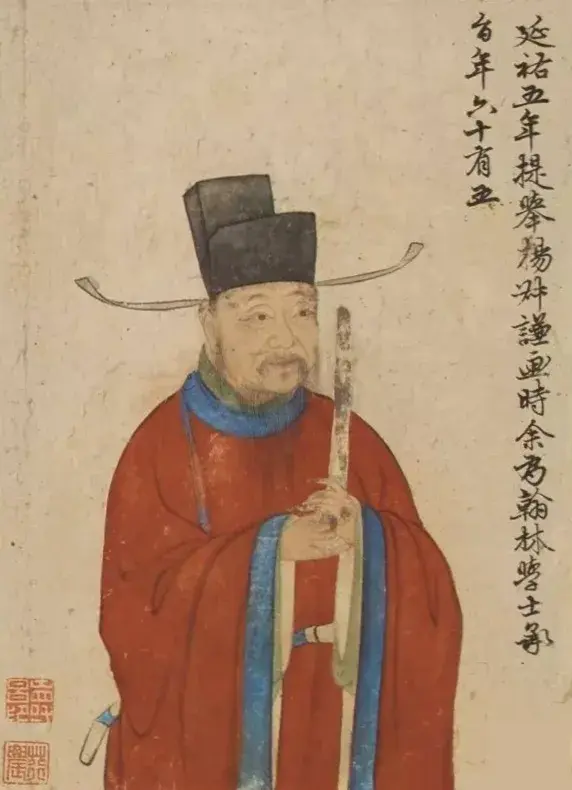
1254 CE–1322 CE
赵孟頫
Zhao Mengfu (1254–1322 AD), courtesy name Zi'ang, sobriquet Songxue Daoren, was a native of Wuxing, Huzhou (present-day Huzhou, Zhejiang Province). An eleventh-generation direct descendant of Emperor Taizu of Song, he was the paramount literary master, calligrapher, and painter of the Yuan Dynasty. Serving at the pinnacle of court scholarship as Grand Academician of the Hanlin Academy and Grand Master for Glorious Happiness,…
Zhao Mengfu (1254–1322 AD), courtesy name Zi'ang, sobriquet Songxue Daoren, was a native of Wuxing, Huzhou (present-day Huzhou, Zhejiang Province). An eleventh-generation direct descendant of Emperor Taizu of Song, he was the paramount literary master, calligrapher, and painter of the Yuan Dynasty. Serving at the pinnacle of court scholarship as Grand Academician of the Hanlin Academy and Grand Master for Glorious Happiness, he was posthumously created Duke of Wei and canonized with the title "Wenmin". Following the fall of the Southern Song in 1276 AD, Zhao lived in secluded scholarly retirement. In 1286 AD, when Kublai Khan dispatched envoys to recruit southern scholars, the censor Cheng Jufu recommended Zhao. Upon receiving Zhao in Dadu, Kublai Khan was struck by his transcendent elegance, praising him as "a true immortal among men" and appointing him Director in the Ministry of War. Zhao served under five Yuan emperors, gaining the profound admiration of Emperor Renzong. Leveraging his imperial favor, he tirelessly protected Jiangnan scholars and promoted Han cultural institutions within the Mongol court. Artistically, Zhao revolutionized Chinese culture: in painting, he rejected the delicate superficiality of late Song academy painting by championing archaic simplicity and the principle that "calligraphy and painting share the same origin," creating masterpieces like Autumn Colors on the Qiao and Hua Mountains and Water Village; in calligraphy, he mastered classical Jin and Tang models, formulating the elegant, balanced "Zhao style" and ranking alongside Ouyang Xun, Yan Zhenqing, and Liu Gongquan as one of the Four Masters of Regular Script. Passing away in 1322 AD at age sixty-nine, Zhao remains a towering bridge in traditional Chinese aesthetics.
Born in Wuxing as an eleventh-generation scion of Song Taizu, endowed with dazzling intellect.
Following his father's death, dedicated himself to classics and historical calligraphy at his mother's urging.
Withdrew into private scholarship in Wuxing after the fall of Lin'an, forming the Eight Talents of Wuxing.
Recommended by Cheng Jufu to Kublai Khan, who extolled him as an immortal and appointed him to the Ministry of War.
Advised fiscal moderation in Jiangnan and opposed the oppressive extortions of the grand minister Sangha.
Served as Vice Commissioner of Jinan Route, governing with clemency and painting Autumn Colors on the Qiao and Hua Mountains.
Appointed Supervisor of Confucian Studies for Jiangzhe, fostering regional academies and cultivating scholars for a decade.
Recalled to the capital by Emperor Wuzong and lavishly honored by the cultured Emperor Renzong.
Appointed Grand Academician of the Hanlin Academy and Drafter of Imperial Edicts, attaining the highest civil ministerial rank.
Died at his residence in Huzhou at age sixty-nine; Emperor Yingzong posthumously ennobled him as Duke of Wei, canonized Wenmin.
Zhao Mengfu was born into the prestigious imperial lineage of the Song Dynasty, being a direct descendant of Prince Zhao Defang, the son of founding Emperor Taizu. His father, Zhao Yuxun, served as Vice Minister of Revenue and Prefect of Lin'an, assembling a magnificent family collection of antique bronzes, historical stele rubbings, and ancient scrolls. Zhao Mengfu displayed brilliant precocity, reading ancient histories at glance and receiving an imperial protective appointment at fourteen.
Following his father's demise in 1265 AD, the Southern Song collapsed into military terminal decay. His mother, Lady Li, sternly admonished him: "The Song realm is nearing its end. If you do not master the six classical arts and Confucian canons, how will you preserve our family name?" Zhao devoted his youth to ascetic scholarship, analyzing ancient texts and copying historical masterworks of calligraphers Zhong Yao and Wang Xizhi. In 1276 AD, when the Yuan armies captured Lin'an and Empress Dowager Xie surrendered, Zhao retired into seclusion in his hometown of Wuxing. Joining Qian Xuan and other literati as the "Eight Talents of Wuxing," he dedicated a decade to pure scholarship and painting.
In 1286 AD, Kublai Khan dispatched Vice Censor-in-Chief Cheng Jufu to Jiangnan to recruit reclusive scholars of the conquered southern realm. Cheng placed Zhao Mengfu first among his nominations, hailing his unmatched erudition and moral bearing. Recognizing the duty to preserve Chinese civilization within the newly unified Mongol realm, Zhao accepted the imperial summons to Dadu.
In 1287 AD, Zhao was received in audience by Kublai Khan. Tall, dignified, and radiating classical poise, Zhao's appearance caused the Mongol monarch to gasp in astonishment to his courtiers: "This man is truly an immortal among mortals!" Kublai broke court precedent by appointing him Director in the Ministry of War. In the imperial capital, Zhao stood against corrupt excesses. He openly confronted the rapacious Tibetan-backed chancellor Sangha, pleading against extortionate taxation in Jiangnan, and offered expert counsel on monetary stabilization. In 1292 AD, Zhao was transferred as Vice Commissioner of Jinan Route. Governing with Confucian benevolence, he cleared false criminal convictions and lightened peasant corvee duties. During his leisure, he explored the landscapes of Shandong, executing his historic colored landscape masterpiece, Autumn Colors on the Qiao and Hua Mountains, for his friend Zhou Mi.
In 1295 AD, Zhao was summoned back to Dadu to assist in drafting the Veritable Records of Emperor Shizu. However, weary of factional friction between Mongol nobles and southern civil servants, he requested leave on medical grounds to return south. In 1299 AD, Emperor Chengzong appointed him Supervisor of Confucian Studies for Jiangzhe. For ten years in the Yangtze delta, Zhao oversaw regional examinations, renovated Confucian academies, and protected young southern scholars from arbitrary administrative persecution, ensuring that Confucian learning flourished across the south.
In 1310 AD, Emperor Wuzong recalled Zhao to court as Academician Reader in the Hanlin Academy. The accession of Emperor Renzong in 1311 AD brought Zhao's career to its imperial summit. Renzong, deeply enamored of classical Chinese letters, regarded Zhao with supreme esteem, famously declaring: "The Tang had Li Bai, the Song had Su Shi, and our dynasty possesses Zhao Zi'ang; these three are peerless geniuses across a thousand years!" Renzong frequently engaged Zhao in intimate discussions on dynastic history and administrative ethics. In 1316 AD, Renzong elevated Zhao to Grand Academician of the Hanlin Academy, Grand Master for Glorious Happiness, and Drafter of Imperial Edicts, reaching the highest scholarly office in the empire. Zhao used his immense standing to promote the restoration of the imperial civil examinations and advocate Confucian statecraft.
While Zhao Mengfu attained distinction as a statesman, his transcendent contributions to Chinese civilization lie in his comprehensive revolution of the visual arts, establishing the aesthetic paradigm for the subsequent six centuries.
In painting, Zhao dismantled the decadent, decorative tendencies of late Southern Song academy painting. He championed a radical return to antiquity, asserting: "In painting, the paramount virtue is archaic elegance; without antiquity, exceptional technical skill is of no avail." Furthermore, he formulated the revolutionary aesthetic tenet of "the common origin of calligraphy and painting," stating that rocks should be painted like flying-white script and trees like seal script. Masterworks such as Autumn Colors on the Qiao and Hua Mountains, Water Village, and Autumn Suburbs with Drinking Horses demonstrated an unprecedented fusion of dry brushwork, serene spatial harmony, and poetic literati spirit, laying the foundation for Yuan literati painting and directly nurturing the "Four Great Masters of Yuan"—Huang Gongwang, Wu Zhen, Ni Zan, and his grandson Wang Meng.
In calligraphy, Zhao attained unrivaled mastery across regular, running, cursive, clerical, and seal scripts. He revived the classical vigor of the Wei and Jin dynasties, purifying Chinese calligraphy of excessive mannerism. His regular and running scripts featured architectural balance, round fluid strokes, and internal tensile strength, creating the celebrated "Zhao style." His calligraphic monuments, including the Danba Tablet, Ode to the Goddess of the Luo River, and Record of Miaoyan Temple, became universal pedagogical models throughout the Ming and Qing dynasties. Zhao was revered alongside Ouyang Xun, Yan Zhenqing, and Liu Gongquan as one of the Four Masters of Regular Script.
In 1321 AD, grieving the loss of his gifted wife Guan Daosheng and suffering from advanced age, Zhao retired to Huzhou. On July 30, 1322 AD, he passed away at his home in Wuxing at the age of sixty-nine. Emperor Yingzong granted him the title Duke of Wei and canonized him as "Wenmin". Though later Neo-Confucian moralists sometimes questioned his decision as a Song royal prince to serve the Mongol Yuan, Zhao Mengfu's heroic preservation of Han cultural continuity and his supreme artistic triumphs established him as an immortal giant of Chinese civilization.
Recruited by Cheng Jufu in 1286 AD, Zhao Mengfu traveled to Dadu where Kublai Khan hailed him as an "immortal among men."
At court, he opposed Sangha's fiscal abuses and advocated sound paper currency administration and tax relief.
As Supervisor of Confucian Studies in Jiangzhe, he protected southern scholars and revitalized local academies.
Honored by Emperor Renzong as the equal of Li Bai and Su Shi, he rose to Grand Academician of the Hanlin Academy.
His artistic theories of returning to antiquity and uniting calligraphic brushwork with painting transformed Chinese landscape art.
Mastering seal, clerical, regular, running, and cursive scripts, he established the "Zhao style" and stood among the Four Masters of Regular Script.
FIGURES ASSOCIATED WITH THIS DYNASTY