Biography
Family Background and Early Years
Tao Kan came from a family of modest means. His father Tao Dan had served as General Who Displays Martial Might under Eastern Wu, but the family had already declined. After Western Jin conquered Wu, the Tao family moved to Xunyang County in Lujiang Commandery. Tao lost his father while young, and the family was poor; his mother, Lady Zhan, supported the household by weaving. Later tradition praised her for her virtue and skill in educating her son and counted her, together with the mothers of Mencius and Yue Fei, among exemplary mothers of antiquity.
Tao’s early employment included service as a “fish-weir clerk” in Xunyang, a minor official responsible for fisheries. On one occasion, Fan Kui, a recommended man of Poyang Commandery, passed through Tao’s home during days of heavy snow and ice. The household had little with which to entertain him. Lady Zhan cut off her long hair and sold it for wig-making, using the money to buy wine and food; Fan and even his attendants were treated generously. When Fan departed, Tao escorted him for more than a hundred *li*. Fan asked whether Tao wished to seek office at the commandery seat. Tao answered that he did but lacked anyone to recommend him. Fan therefore visited Zhang Kui, administrator of Lujiang, and praised Tao highly. Zhang appointed Tao as commandery inspector and concurrently magistrate of Zongyang, where Tao became known for his ability.
During this period Tao met Zhou Fang, then an official in Anyang County. The two became close friends at their first meeting and later became related through the marriage of their children. Through Zhou’s recommendation, Tao was appointed registrar of Lujiang Commandery. When Zhang Kui’s wife became ill and a physician had to be fetched from several hundred *li* away in severe winter weather, other officials hesitated. Tao alone volunteered, arguing that serving one’s lord was like serving one’s father, and that the lord’s wife should be treated like one’s own mother. His colleagues admired his sense of duty. Wan Si, administrator of Changsha Commandery, was similarly impressed by Tao and predicted that he would “ultimately achieve a great name,” instructing his son to befriend him.
Zhang Kui later recommended Tao as a Filial and Incorrupt candidate. After reaching Luoyang, Tao repeatedly sought an audience with the prominent official Zhang Hua. Zhang at first regarded him as a man from a remote region and paid little attention, but Tao remained composed each time. After finally speaking with him, Zhang was greatly impressed, and Tao obtained appointment as a Gentleman of the Palace. At the time, General Who Calms the Waves Sun Xiu was from the royal house of Eastern Wu, and northern aristocrats were reluctant to serve on his staff. Because Tao himself came from a low-status southern family, Sun recruited him as a retainer. Tao later served in posts including magistrate of Wugang County in Shaoling Commandery, but left office after falling out with his administrator.
Rising to Prominence: Suppressing the Zhang Chang and Chen Min Rebellions
At the end of Western Jin, the War of the Eight Princes plunged the realm into disorder. In 303 (Tai’an 2), Zhang Chang, identified in the Chinese source as a leader among the Yi peoples of Yiyang, gathered followers and rose in rebellion in Jiangxia. Within little more than a month his forces reportedly reached thirty thousand, occupied Jiangxia Commandery, and controlled much of Jing, Jiang, and Yang provinces. The court appointed Liu Hong as Colonel of the Southern Man and governor of Jing Province to suppress the uprising. Liu immediately made Tao Kan chief clerk to the Colonel of the Southern Man and chief military supervisor, sending him as an advance commander toward Xiangyang. Tao repeatedly fought Zhang Chang’s forces in Jingling Commandery, defeated them, and according to the source killed tens of thousands over the course of the campaign. Zhang fled and his followers surrendered, restoring Jing Province to government control. After the campaign Liu Hong told Tao that Yang Hu had once predicted Liu would eventually reach Yang’s own rank, and that from what Liu now saw, Tao would surely succeed him in turn. Tao was enfeoffed as Marquis of Dongxiang with a fief of one thousand households.
In 305 (Yongxing 2), governor of Yang Province Chen Min took advantage of turmoil in the north to seize Yang Province and sent his younger brother Chen Hui westward along the Yangtze toward Wuchang, seeking to establish an independent regime in the south. Liu Hong appointed Tao administrator of Jiangxia and General Who Spreads Martial Might and ordered him to resist. Tao arranged full official ceremonial equipment and brought his mother Lady Zhan to his government residence, which people in his home region regarded as an honor. Hu Huai, an official in the commandery, tried to sow suspicion by telling Liu Hong that Tao and Chen Min were from the same region and that Tao might harbor disloyal intentions. Liu nevertheless trusted Tao’s loyalty and ability. When Tao heard of the accusation, he sent his son Tao Hong and nephew Tao Zhen to Liu as hostages to demonstrate his loyalty. Liu instead appointed them staff officers, gave them gifts, and sent them back; he also made Tao a military supervisor and ordered him to fight Chen Hui in cooperation with the other armies. Tao converted transport boats into warships. When someone objected, he replied that there was nothing wrong with using government boats to fight government rebels. He defeated Chen Hui wherever they met and, together with Pi Chu, Zhang Guang, and Miao Guang, defeated Chen Min’s general Qian Duan at Changqi. Tao maintained strict military discipline and distributed all captured goods among the soldiers, keeping no private share for himself.
Governing Wuchang and Suppressing Du Tao
Liu Hong died in Jing Province in 306 (Guangxi 1). Not long afterward Tao left office to mourn his mother. When the mourning period ended, he was appointed to the staff of Sima Yue, Prince of Donghai. Hua Yi, governor of Jiang Province, memorialized recommending Tao as General Who Displays Martial Might and stationed him at Xiakou. Hua Yi and Sima Rui, Prince of Langye, were on poor terms. Tao’s nephew Tao Zhen foresaw danger and went east to join Sima Rui. Sima Rui was pleased, appointed Tao Zhen to his staff, and added the title General Who Displays Awe to Tao Kan. Tao thereafter broke with Hua Yi.
In 311 (Yongjia 5), Sima Rui ordered Wang Dun to lead Gan Zhuo, Zhou Fang, and others against Hua Yi. After Hua was defeated and killed, Tao was promoted to General Who Soars Like a Dragon and administrator of Wuchang. Famine was severe and bandits from the hills frequently intercepted and robbed boats on the Yangtze. Tao ordered some of his officers to disguise themselves as merchants and use boats as bait. Several robbers were captured and revealed under questioning that they served Sima Yang, Prince of Xiyang. Tao sent troops to force Sima Yang to hand over the offenders and himself arrayed troops at Diaotai as support. Sima Yang had no choice but to bind and surrender twenty men, whom Tao executed. River and land traffic thereafter became secure. Refugees arrived in large numbers; Tao used his own resources to help them settle and also established a market east of the commandery for trade with local non-Han communities, from which substantial revenue was collected.
In 313 (Jianxing 1), Jing Province governor Zhou Yi was besieged by Du Tao at Xunshui. Tao sent his officer Zhu Si to relieve him, forcing Du Tao back to Lingkou. Tao judged that Du would attempt an overland surprise attack on Wuchang and marched continuously for three days and nights to lay ambushes around the city. Du did indeed attack; Tao ordered Zhu Si’s concealed troops to strike, inflicting a major defeat, capturing extensive supplies, and causing heavy casualties. Tao sent staff officer Wang Gong to report the victory to Wang Dun. Wang Dun remarked that without Marquis Tao, Jing Province would have been lost. Wang Gong then argued that in a time of crisis Jing Province could not be governed without “Tao Longxiang.” Wang Dun agreed and memorialized to appoint Tao Bearer of the Imperial Tally, General Who Pacifies the Distant, Colonel of the Southern Man, and governor of Jing Province, with authority over Xiyang, Jiangxia, Wuchang, and other commanderies.
Tao continued fighting Du Tao. Staff officer Wang Gong and Du Zeng rebelled and attacked Tao’s forces. Tao failed in an assault on Du Zeng at Shicheng and was misled by his subordinate Zhang Yi; in 314 (Jianxing 2) he was defeated, and enemy hooks caught his vessel. He escaped only after Zhu Si fought desperately. Tao was dismissed because of the defeat, but Wang Dun memorialized that he should continue to discharge his duties without formal rank and remain involved in the campaign. Tao advanced with Zhou Fang and others toward Xiangcheng and sent commandant Yang Ju to defeat Du Tao. Later Du Tao’s general Wang Zhen led three thousand men out through the Wuling River. Tao sent Zheng Pan and Tao Yan to seize Baling by night and heavily defeat Wang. Tao then persuaded Wang Zhen to surrender on the battlefield, after which Du Tao fled. Tao advanced on Changsha, captured the enemy commanders Mao Bao, Gao Bao, and Liang Kan, and finally suppressed Du Tao’s rebellion.
Governing Guangzhou: A Period of Restraint
Tao’s military success against Du Tao aroused the suspicion of the powerful Wang Dun. When Tao returned to Jiangling to take leave, Wang detained him, transferred him to be governor of Guangzhou and General of the Household Who Pacifies Yue, and installed Wang Yi instead as governor of Jing Province. Tao’s troops petitioned for him to remain, but Wang Dun refused. Tao’s subordinates Zheng Pan and Ma Jun even welcomed Du Zeng and resisted Wang Yi. Wang Dun assumed that Tao had instigated them and planned to kill Tao at a farewell banquet, but Mei Tao and Chen Ban argued that Zhou Fang was linked to Tao by marriage and would react strongly. Wang therefore abandoned the plan. As soon as the banquet ended, Tao departed for Guangzhou that same day to avoid further danger.
After arriving in Guangzhou, the rebel Du Hong sent an envoy pretending to surrender. Tao saw through the deception and built stone-throwing machines in preparation. When Du Hong approached with troops and found Tao ready, he withdrew; Tao pursued and defeated him decisively and later captured several of Du’s associates. Tao’s reputation spread throughout Guangzhou, and he was enfeoffed as Marquis of Chaisang. Early in the Taixing era he was promoted to General Who Pacifies the South and soon received additional command over military affairs in Jiao Province.
In 322 (Yongchang 1), Wang Dun raised troops under the pretext of attacking Liu Wei and others. Tao was additionally given the post of governor of Jiang Province, then soon transferred to a military command and the governorship of Xiang Province. He sent Gao Bao with troops against Wang Dun. After Wang captured Jiankang and took control of the government, Tao was restored to his former posts and additionally made a Cavalier in Regular Attendance. Later, when Jiao Province governor Wang Liang was besieged by Liang Shuo’s rebels at Longbian, Tao sent Gao Bao to rescue him, but the city had already fallen and Wang Liang was dead. Tao was then additionally appointed governor of Jiao Province and promoted to General Who Conquers the South with authority to open an office on the model of the Three Excellencies.
Returning to Jing Province: Effective Governance
In 324 (Taining 2), Wang Dun was defeated and died. Tao was appointed commander of military affairs in Jing, Yong, Yi, and Liang provinces, additionally Colonel Protecting the Southern Man, General Who Conquers the West, and governor of Jing Province. When the people of Jing heard that Tao would govern them again, they celebrated among themselves.
Tao achieved notable results in the administration of Jing Province. During a famine, when many were starving, he had grain purchased at harvest time and released it onto the market during scarcity, which pleased officials and commoners alike. He was frugal and practical. On one occasion, after government shipbuilding left many bamboo roots, bamboo tips, and wood shavings, Tao ordered them stored, puzzling others. When snow later melted and the roads became muddy, he had the wood shavings spread on the ground to prevent people from slipping. On another occasion, military shipbuilding required bamboo pegs, and Tao brought out the stored bamboo roots and tips for that use. This became the source of the well-known anecdote about “bamboo ends and wood shavings.”
The Su Jun Rebellion: Turning the Crisis Around
In 327 (Xianhe 2), the powerful imperial relative Yu Liang attempted to summon Su Jun to serve as Minister of Agriculture in order to remove him from his troops. Su refused and joined Zu Yue in rebellion. The next year Su captured Jiankang and took control of the court. Tao’s son Tao Zhan was killed in the turmoil. General Who Pacifies the South Wen Jiao sent envoys to Jing Province asking Tao to raise troops in support of the emperor and proposed Tao as leader of the alliance. Tao, still resentful that he had not been appointed one of Emperor Cheng’s regents, initially refused on the ground that he was an external frontier commander and should not exceed his sphere of authority. Only after repeated appeals from Wen did he agree, sending the military supervisor Gong Deng with troops to support him.
Soon after the campaign was formally launched, however, Tao changed his mind and recalled Gong Deng. Wen Jiao wrote an earnest letter setting out the consequences of advance or retreat and invoked the death of Tao’s son to stir his anger. Wang Qianqi and Tao’s wife Lady Gong also urged him to support Wen. Tao finally decided to lead the army in person.
In the fifth lunar month, Tao joined Yu Liang and Wen Jiao in advancing on Jiankang and assembled at Shitou. Many hoped to defeat Su Jun in a single battle, but Tao believed Su’s forces were at full strength and should not be confronted recklessly; he advocated a prolonged struggle and the use of strategy. Fighting went back and forth without decisive result. Li Gen, a subordinate of Xi Jian, proposed building Baishi Fort at Chapu. Tao accepted the suggestion and had it constructed in a single night, alarming Su Jun’s army. As Wen Jiao’s force remained in stalemate and supplies ran short, Tao angrily blamed Wen and the others for taking the field too readily, refused at first to lend grain, and threatened to withdraw to Jing Province. General Mao Bao remonstrated and persuaded him to change his mind, after which Tao supplied Wen with fifty thousand *shi* of military grain. Mao Bao soon burned Su Jun’s stores at Jurong and Hushu, creating a severe supply crisis for the rebels.
Later Su Jun’s generals Zhang Jian and Han Huang attacked Daye Fort, held by Guo Mo. Tao intended to rescue it, but chief clerk Yin Xian argued that Tao’s troops excelled in naval rather than land combat and should instead attack Shitou; success there would automatically relieve Daye Fort. Tao therefore led his fleet against Shitou. After seeing his subordinate Kuang Xiao win a battle, Su Jun personally rode north with only a few horsemen to charge the enemy. He was defeated, and at Dongling, near Baimupi, his horse was stopped by an obstacle; Su was attacked, fell from the horse, and was killed. His followers collapsed after learning of his death. Tao and the other forces continued against Shitou and by the following year had eliminated or accepted the surrender of Su Jun’s remaining forces and rescued Emperor Cheng.
Later Years: High Office and Death
After the Su Jun Rebellion was suppressed, Tao was promoted to Palace Attendant and Grand Commandant, placed in command of military affairs in Jiao, Guang, Ning, Jing, Yi, Yong, and Liang provinces, and enfeoffed as Duke of Changsha Commandery, while remaining based in Jing Province.
In the twelfth lunar month of 329 (Xianhe 4), Guo Mo falsely claimed imperial authorization when he killed Liu Yin, governor of Jiang Province. Wang Dao tolerated Guo because of his military reputation and even allowed him to assume the governorship. Tao instead mobilized troops and memorialized the court requesting permission to punish him. The next year Guo fared poorly against Tao’s forces and withdrew into Xunyang city. After a two-month standoff, Guo’s subordinate Song Hou bound Guo, Guo’s father and sons, and Zhang Chou and surrendered them. Tao executed Guo and sent his head to the capital. He was then given additional command over Jiang Province and concurrently served as governor.
In 332 (Xianhe 7), Tao sent his son Tao Bin and Southern General of the Household Huan Xuan to defeat the Later Zhao general Guo Jing at Fancheng. He sent Tao Zhen and Li Yang, administrator of Jingling, to break through Xinye and recover Xiangyang. For these successes Tao was promoted to Grand General and granted the ceremonial privileges of entering court wearing sword and shoes, not having to hasten in the emperor’s presence, and being addressed without his personal name. Tao declined these honors. In old age he did not seek a role in court politics and repeatedly requested retirement, remaining only because his subordinates earnestly urged him to stay.
In 334 (Xianhe 9), gravely ill, Tao submitted a memorial requesting retirement and entrusted subsequent affairs to his Right Major Sima Wang Qianqi. He then boarded a vessel for Changsha but died on the way at Fanxi, aged seventy-six. He received the posthumous title Duke Huan. The court posthumously granted him the office of Grand Marshal and offered sacrifice with the full *tailao* set. His subordinates carved a stone monument west of Wuchang and painted his image. In his final instructions Tao ordered that he be buried twenty *li* south of the city of the Changsha fief.
His Family and Early Years
Tao Kan, courtesy name Shixing, by another account Shixing written with a different character, was a man of Poyang county in Poyang commandery by origin, who afterwards moved to Xunyang county in Lujiang commandery. He came of a poor house in the south, and his early career was hard with little office. Once Fan Kui, a filial and incorrupt man of Poyang, passed by Tao Kan's house in a spell of ice and snow, and Tao Kan had nothing to entertain a guest with; and his mother, the lady Zhan, cut off her own long hair and sold it to be made into false hair, and so got wine and food, at which the guest drank and feasted with the greatest joy, and even the servants were entertained beyond their hopes. When Fan Kui took his leave Tao Kan escorted him more than a hundred li; and Fan Kui asked whether he would like an office in the commandery, and Tao Kan said he would, but was kept back by the want of an introduction. And Fan Kui went to see the governor of Lujiang, Zhang Kui, and praised Tao Kan to the skies.
Office in Lujiang and His Recommendation as Filial and Incorrupt
Zhang Kui made Tao Kan a postal inspector with charge of the magistracy of Zongyang, and he had a name for ability and was made a master of records. When the circuit inspector came to the commandery meaning to find fault and punish him, Tao Kan shut the gate and kept his clerks in order, and told the inspector that if their commandery had done wrong they should be dealt with by the clear law and straight rule and should not be pressed so, and that if the matter were not handled by the rites he too could meet it; and the inspector went away. When Zhang Kui's wife fell ill and a physician was to be fetched from several hundred li away in cold and snow, and all the officers were unwilling, Tao Kan alone said that one served one's father in order to serve one's lord, and that the lady of the house was as a mother, and how could there be a parent's illness and no whole heart; and he asked to go, at which all admired his righteousness. The governor of Changsha, Wan Si, passing through Lujiang, saw Tao Kan and was delighted with him in his heart, saying that he would yet be greatly famed, and had his son make friends with him before he went. Afterwards Zhang Kui recommended Tao Kan to the court as filial and incorrupt. Coming to Luoyang to answer the summons, he several times visited Zhang Hua; and Zhang Hua at first, because he was a man from afar, did not much receive him, but Tao Kan went each time with no sign of displeasure, and Zhang Hua, speaking with him afterwards, thought him strange and made him a gentleman of the interior. The general of the waves Sun Xiu, being a branch of a fallen house of no distinguished standing, so that the gentlemen of the Middle Kingdom were ashamed to be his subordinates, called Tao Kan because he was of a poor official house to be his retainer. At that time Yang Zhuo, chief of the interior of the kingdom of Yuzhang, was the man to whom the local judgement turned, and Tao Kan went to him, and Yang Zhuo said that the Changes held firm correctness sufficient for affairs, and that Tao Shixing was such a man; and he rode with him to see the palace gentleman Gu Rong, who thought him most extraordinary; and when the gentleman of personnel Wen Ya asked Yang Zhuo how he came to ride with a petty man, Yang Zhuo said that this man was no common vessel. When the master of the secretariat Yue Guang wished to gather the scholars of Jing and Yang, the keeper of the arsenal Huang Qing presented Tao Kan to him, and when some objected, Huang Qing said that this man would go far and there was no doubt of it; and Huang Qing, afterwards a clerk of personnel, recommended Tao Kan to fill the magistracy of Wugang. Having a grudge against the governor Lü Yue, he abandoned office and returned and became a petty rectifier of the commandery.
Under Liu Hong in Jingzhou
In the troubles of the eight princes Tao Kan, by his own ability, was much employed by the inspector of Jingzhou, Liu Hong. Liu Hong sent the southern barbarian chief of secretaries Tao Kan as grand protector, the military adviser Kuai Heng as protector of the righteous army and the gate commander Pi Chu as commander of battles, to occupy Xiangyang; and Zhang Chang, gathering his army, invested Wan and beat Zhao Xiang's troops, so that Liu Hong fell back to Liang, while Tao Kan and Pi Chu broke Zhang Chang in battle after battle, beheading several tens of thousands, and when he came to his post Zhang Chang fled in fear and all his men surrendered, and the land of Jing was pacified. In the rebellion of Chen Min, Liu Hong made Tao Kan governor of Jiangxia and gave him the title of general of the soaring hawk. Tao Kan prepared a stately escort and brought his mother to the official residence, which was the glory of the district. Chen Min sent his brother Chen Hui to raid Wuchang, and Tao Kan led troops against him; but the internal historian of Sui commandery, Hu Huai, slandered him to Liu Hong, saying that Tao Kan had ties of home with Chen Min and now held a great commandery and led strong troops, and that if he had other designs Jingzhou would lose its eastern gate; and Liu Hong answered that Tao Kan was loyal and able and that he had known him long, and that he would certainly not do so. Tao Kan, hearing of it, sent his son Tao Hong and his brother's son Tao Zhen to Liu Hong as hostages to strengthen his confidence; and Liu Hong made them military advisers, gave them gifts and sent them back to Jiangxia, saying that their honoured uncle was going out to war and their grandmother was old, and that they should go home, for even common men in their dealings do not betray the heart, how much less a great man; and he added to Tao Kan the office of protector and had him join his forces with the other armies against Chen Hui. Tao Kan used transport ships as warships, and when some said this could not be done, he said that to use government boats against government rebels was a thing that could well be done. He fought Chen Hui and beat him many times, and joined forces with Pi Chu and others. His army was orderly and stern, and whatever was taken in war he shared with the soldiers, keeping nothing himself.
The Pacification of Hua Yi and Du Tao
After his mourning ended Tao Kan took service in the military affairs of the prince of Donghai, Sima Yue. Hua Yi, inspector of Jiangzhou, memorialised to make Tao Kan general of martial majesty and stationed him at Xiakou, with Tao Zhen as military adviser. Hua Yi and the Yuan emperor Sima Rui being on bad terms, Tao Zhen feared trouble and came back to Tao Kan on the plea of illness, telling him that Hua Yanxia had the will to care for the realm but not much ability, and was at odds with the prince of Langya, so that disaster would soon come; and Tao Kan, in great anger, sent Tao Zhen back to Hua Yi, but Tao Zhen took the chance to go east to Sima Rui. Sima Rui, seeing him, was much pleased, made him a military adviser and added to Tao Kan the title of general of manifest majesty with the red banner, curved canopy, light carriage and drums, and Tao Kan thereupon broke with Hua Yi. Presently Tao Kan was made general of the soaring dragon and governor of Wuchang. At that time there was famine in the realm, and the mountain barbarians often cut the river and plundered the boats; and Tao Kan had his officers masquerade as merchant ships to lure them, and the robbers came as expected, and several were taken alive, and on questioning proved to be followers of Sima Yang, prince of Xiyang. Tao Kan sent troops to press Sima Yang to give up the robbers and drew up his army at the fishing terrace in support, and Sima Yang had twenty of his men bound and sent out, whom Tao Kan beheaded, and from then the roads by water and land were clear. The fugitives who returned came in an endless stream, and Tao Kan spent all his means to help them settle, and set up a market east of the commandery to trade with the barbarians, from which he drew great profit. At that time Zhou Yi was inspector of Jingzhou, first stationed at the Xunshui city, and when the rebels plundered his people, Tao Kan sent his officer Zhu Si to their relief and the rebels fell back on Lengkou. Tao Kan judged that Du Tao would surely come by land against Wuchang, and so marched swiftly by a short road for three days and nights and lay in ambush about Wuchang; and Du Tao came as he had thought, and Tao Kan had Zhu Si lead the ambush in a head-on blow and broke him utterly, taking much baggage and killing many, and Du Tao's beaten troops fell back on Changsha. Tao Kan sent his military adviser Wang Gong to report the victory to Wang Dun, who said that but for the marquis Tao Jingzhou would have been lost, and Wang Gong said that their province being in trouble none but Tao the soaring dragon could govern it; and Wang Dun agreeing, memorialised to make Tao Kan holder of the tally, general of distant tranquillity, colonel of the southern barbarians and inspector of Jingzhou, holding Xiyang, Jiangxia and Wuchang, stationed at Dunkou and afterwards moving to the Mian river. The rebel Wang Chong styled himself inspector of Jingzhou and held Jiangling; and Wang Gong, returning to Jingling, forged Tao Kan's order making Du Zeng commander of the van, marched and beheaded Wang Chong and brought all his men to surrender; but Tao Kan summoning Du Zeng and he not coming, Wang Gong, fearing punishment for the forged order, rose with Du Zeng, attacked Tao Kan's protector Zheng Pan at Dunyang and beat him, and beat Zhu Si at the mouth of the Mian. Tao Kan meant to fall back into the Yun region, but his officer Zhang Yi, being of two minds, deceived him into not moving; and presently the rebel army came and Tao Kan was badly beaten, the rebels hooking his ship, so that he had to leap into a small boat, and only Zhu Si's hard fighting saved him; and Zhang Yi went over to the rebels and Tao Kan was removed from office, though Wang Dun memorialised to let him hold office in white. Afterwards Tao Kan with Zhou Fang marched into Xiang and, sending the commandant Yang Ju as van, beat Du Tao heavily and camped west of the city; and his staff went to Wang Dun to plead for him, and Wang Dun memorialised to restore his office. Later, when Tao Kan and Du Tao stood off each other, Du Tao's officer Wang Gong with three thousand picked troops went out by the Wuling river, lured the five streams barbarians and with the fleet cut the government's transport, marching straight on Wuchang; and Tao Kan sent Zheng Pan and the general of the waves Tao Yan by night to Baling, and their hidden troops fell on the unprepared enemy and broke them, beheading more than a thousand and taking more than ten thousand prisoners, so that Wang Gong fled back to Xiang city. Faction grew among the rebels and Du Tao, suspecting Zhang Yi, killed him, at which the men grew the more fearful and surrendered in greater numbers. Wang Gong came out to challenge again, and Tao Kan called to him from afar that Du Tao was a petty clerk of Yizhou who had stolen the treasury money and had not gone to mourn his father's death, and asked how he, a fine man, came to follow him, and whether there was ever a rebel who grew white-headed. Wang Gong had first sat with his foot across his saddle in insolence, but when Tao Kan had spoken he put his foot down and sat upright with a meek look and word; and Tao Kan, knowing he could be moved, sent to persuade him again and cut off his hair as a pledge, and Wang Gong came over. Du Tao fled, and Tao Kan took Changsha and carried off his officers Mao Bao, Gao Bao and Liang Kan.
Wang Dun's Jealousy and the Moving of Bricks at Guangzhou
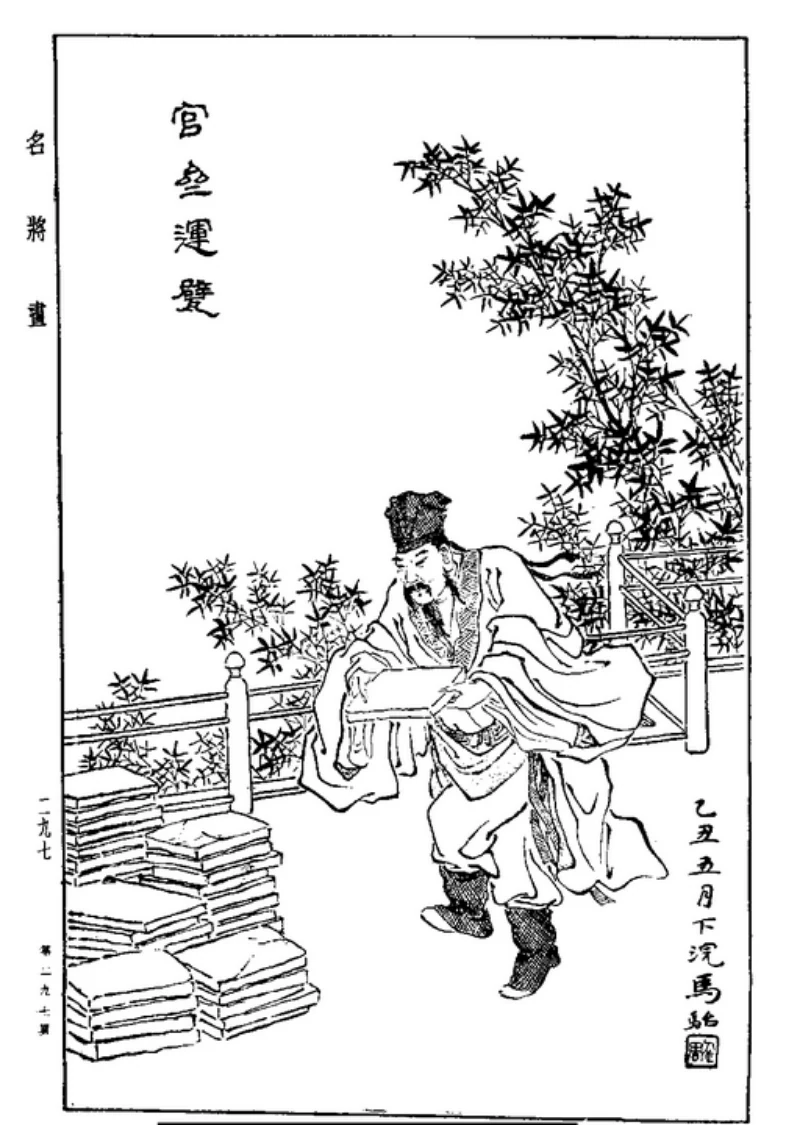
Wang Dun deeply begrudged Tao Kan's merit. When Tao Kan was about to return to Jiangling he wished to take leave of Wang Dun, and Huangfu Fanghui and Zhu Si and others advised against it, but he would not listen; and Wang Dun indeed kept him and would not let him go, transferring him to be inspector of Guangzhou and general of the pacified Yue, and made Wang Yi inspector of Jingzhou. Tao Kan's officers and men begged Wang Dun to keep him and Wang Dun in anger refused. Tao Kan's officers Zheng Pan, Su Wen and Ma Jun, unwilling to go south, went west to welcome Du Zeng against Wang Yi; and Wang Dun, thinking Zheng Pan did so by Tao Kan's will, put on armour and took up a weapon meaning to kill Tao Kan, but went out and back several times without deciding. Tao Kan said gravely that the commissioner was of heroic decisiveness and should decide the realm's affairs, and asked why he could not decide here; and he rose and went to the privy. And the adviser Mei Tao and the chief secretary Chen Ban told Wang Dun that Zhou Fang was Tao Kan's connexion by marriage, as the right hand to the left, and asked how one could cut off another's left hand and the right not answer; and Wang Dun's mind was turned, and he spread a great feast to see Tao Kan off. Tao Kan set out by night, and Wang Dun took his son Tao Zhan as military adviser. When Tao Kan reached Yuzhang and saw Zhou Fang he wept and said that but for him as outside support he would hardly have escaped, and he went on to Shixing. Earlier the men of Guangzhou had turned against the inspector Guo Ne and welcomed Wang Ji of Changsha as inspector; and Wang Ji sent envoys to Wang Dun asking for Jiaozhou, which Wang Dun granted while Wang Ji did not set out; and when Du Hong held Linhe and asked leave to surrender through Wang Ji, he urged Du Hong to take Guangzhou, and Du Hong plotted rebellion with Wen Shao and the Jiaozhou scholar Liu Shen. Some advised Tao Kan to stay at Shixing and watch the situation, but he would not, going straight to Guangzhou. Du Hong sent envoys feigning surrender, and Tao Kan, seeing the trick, first set up stone-throwing engines at Fengkou; and presently Du Hong came with light troops, and knowing Tao Kan prepared, withdrew, and Tao Kan pursued and broke him, taking Liu Shen at Xiaogui; and he sent his officer Xu Gao against Wang Ji, beheaded him and sent his head to the capital. His officers all asked to follow up the victory against Wen Shao, and Tao Kan laughed and said that his fame was now established and there was no need to send troops, for a single sheet of paper would serve; and he wrote to proclaim it, and Wen Shao fled in fear and was taken at Shixing. For this Tao Kan was enfeoffed as marquis of Chaisang with four thousand households. At Guangzhou, in his leisure, Tao Kan would carry a hundred bricks from his study to the outside in the morning and carry them back in the evening; and when asked why, he answered that he was working for the recovery of the central plains and feared that too much ease and comfort would unfit him for the task. When Wang Dun rose in rebellion, a decree made Tao Kan inspector of Jiangzhou in his own office, and presently commander and inspector of Xiangzhou; and when Wang Dun had his will he restored Tao Kan to his proper office and added the rank of cavalier attendant in ordinary. When the inspector of Jiaozhou, Wang Liang, was overthrown by the rebel Liang Shuo, Tao Kan sent his officer Gao Bao to attack and destroy him, beheading Liang Shuo and sending his head to the capital, and Tao Kan was given Jiaozhou. Reckoning his services, his second son Tao Xia was enfeoffed as marquis of the pavilion of Duding and he was advanced to the title of general of the southern expedition with the honours of the three excellencies.
His Second Governorship of Jingzhou
After Wang Dun's rebellion was put down Emperor Ming, on the one hand weakening the power of the Wang and raising the great clans of Jiangdong and balancing the émigré and the native houses, on the other transferred the offices of Jing, Xiang and two other provinces so that the frontier commands should check one another; and by this plan Tao Kan was made commander of the military affairs of Jing, Xiang, Yong and Liang and inspector of Jingzhou. Afterwards Tao Kan sent his son Tao Bin with the southern household general Huan Xuan west against Fancheng, routing Guo Jing, a general of Shi Le, and had his brother's son Tao Zhen with the governor of Jingling, Li Yang, break Xinye and so pacify Xiangyang, and he was made grand general with leave to wear his sword and shoes in the hall, to enter the court without hastening and to be announced without his name. When some proposed dividing the troops to hold the city of Zhu on the north bank of Wuchang, Tao Kan gave no answer, and when the talk would not cease he crossed the river hunting and told his officers that the river was the true defence, that Zhu, lying north of the river with nothing to lean on within and the barbarians beyond, would only draw the enemy, and would not help Jiangnan, and that Wu had held it with thirty thousand men; and his officers understood. Afterwards the inspector of Jingzhou, Yu Liang, garrisoned it with ten thousand picked troops, and in the fifth year of Xiankang the Later Zhao attacked and the isolated city fell.
The Rebellion of Su Jun and His Leadership of the League
At the end of the second year of Xianhe, provoked again and again by Yu Liang, Su Jun, the internal historian of Liyang, joined with the general of the west Zu Yue at Shouyang and rose in rebellion, entering Jiankang early the next year, and Tao Kan's son Tao Zhan was killed by the rebels. Yu Liang fled to Jiangzhou and joined Wen Jiao, and together they invited the strongest of the commanders, Tao Kan, to send troops. At first, when Emperor Ming died, Tao Kan had not been among those charged with the testament, and took it deeply to heart, and answered Wen Jiao that he was a general of the frontier and dared not overstep his place. Wen Jiao insisted and urged him as leader of the league, and Tao Kan sent his protector Gong Deng with troops to join Wen Jiao, but quickly recalled Gong Deng. Wen Jiao wrote to him that in advancing he would be a loyal minister of the great Jin and share the merit of Huan and Wen, and in turning back would as a loving father wipe away the grief for his son; and Wang Qianqi pointed out that if Su Jun had his way there would be no place for Tao Kan in the whole wide realm; and Tao Kan's wife, the lady Gong, urged him strongly to go. So Tao Kan resolved to march, and without waiting for his son's funeral put on armour and went aboard, travelling day and night down the river. In the fifth month of the third year of Xianhe Tao Kan with his host reached Xunyang and joined Wen Jiao and Yu Liang and others at Shitou, forty thousand soldiers with banners stretching seven hundred li, the sound of gongs and drums shaking all about. The armies wished to fight at once, but Tao Kan held that the rebels were too strong to be met head-on and that they should be taken by time and stratagem; and their battles winning nothing, the officers asked to build a rampart at Chapu, and the officer Li Gen proposed to build one at Baishi. Tao Kan would not, saying that if the rampart were not finished Li Gen would answer for it; and Li Gen said that Chapu was low and south of the water, while Baishi was steep, sheer and strong and could hold several thousand men, and the rebels could not easily attack it, which was the way to destroy them; and Tao Kan laughed and called him a good general and followed his plan, building it by night and finishing by dawn, at which the rebels were greatly startled. Afterwards when the rebels attacked the Daye rampart Tao Kan would go to its relief, and the chief secretary Yin Xian said that if they sent relief to Daye they could not beat Su Jun in foot fighting and the great matter would be lost, whereas if they attacked Shitou quickly Su Jun must go to its relief and Daye would be freed of itself; and Tao Kan followed him, and Su Jun indeed abandoned Daye for Shitou; and the armies fought Su Jun east of Chenling, and Peng Shi, an officer of Li Yang the protector and governor of Jingling, killed Su Jun in the field and the rebels broke utterly, and Su Jun's brother Su Yi gathered the remnant, and Tao Kan with the other armies killed Su Yi at Shitou. At that time Wen Jiao's army ran out of food and had to borrow of Tao Kan, and Tao Kan in a rage meant to withdraw to Jingzhou, but Mao Bao came in person to him and by taking troops to land and cut the rebels' supplies held him for a time; and Li Yang, governor of Jingling, told him that if the great matter failed he would not be able to eat his rice however much he had, and Tao Kan gave Wen Jiao fifty thousand shi of rice; and afterwards Mao Bao burnt Su Jun's stores at Jurong and Hushu, and the rebels went short of food and Tao Kan gave up the thought of going back. So the rebellion of Su Jun was put down at last by the cooperation of many, and the government of Eastern Jin, in peril, was restored to peace, after which Jiangnan kept its peace for more than seventy years.
The Killing of Guo Mo, His Last Years and Death
In the first month of the fifth year of Xianhe the general of the rear Guo Mo, forging a decree, killed the general of the south Liu Yin and took Jiangzhou, and Tao Kan, hearing of it, shook out his sleeves and rose, saying that this must be a forgery, and would at once lead troops against him. Guo Mo sent envoys with singing girls and a hundred bolts of silk to Tao Kan and wrote out the inner decree and presented it to him, and Tao Kan's staff mostly urged him to wait for the decree before marching; but Tao Kan said sternly that the emperor was young and the decrees did not come from his own breast, that Liu Yin was honoured by the court and though perhaps not fit for his post, why should he be put to death at random, and that Guo Mo, brave as he was, plundered wherever he went, and now that great troubles were newly over and the net of the law was loose, meant to take the occasion to run riot; and he sent envoys with a memorial and wrote to Wang Dao that if Guo Mo killed a governor and was made a governor, would he be made chancellor for killing a chancellor. Wang Dao answered that Guo Mo held the upper reaches with ships ready to his hand, and so they had borne with him and let him have the place while the court quietly made ready, and that when Tao Kan's army arrived they would come at the wind, which was the way to nurture strength in obscurity and settle great matters; and Tao Kan laughed and said that this was nurturing a rebel in obscurity. Guo Mo, learning that Tao Kan was coming, meant to go south and hold Yuzhang, but Tao Kan's army arriving he fought without success and held the city, heaping rice into ramparts to show he had plenty; and Tao Kan raised an earthen hill against him. In the third month Yu Liang's army reached Penkou and the armies gathered; and in the fifth month Guo Mo's officer Song Hou bound Guo Mo and his son and came out to surrender, and Tao Kan beheaded Guo Mo before the camp gate and sent his head to Jiankang, forty of his party dying. Guo Mo in the central plains had many times fought Shi Le and his men, who feared his valour, and hearing that Tao Kan had taken him without bloodshed they feared Tao Kan the more; and Feng Tie, an officer of Su Jun who had killed Tao Kan's son, fled to Shi Le and was made a frontier commander, and Tao Kan told Shi Le the truth of it and Shi Le had him killed. By decree Tao Kan was made commander of Jiangzhou and its inspector, with two chief secretaries, a master of horse, four attendants and twelve clerks added; and he went back to Baling and moved his headquarters to Wuchang. In his later years Tao Kan stood greatly in fear of fullness and would not take part in the court's power, and many times wished to retire to his fief, his officers pressing him to stay; and in the sixth month of the seventh year of Xianhe, gravely ill, he again memorialised to resign, saying that he had been born and bred poor and of small beginnings, and that he had received the extraordinary grace of several reigns and the discernment of the emperor; that having a beginning one must have an end, and being near eighty and at the height of the offices of a subject he had nothing to regret at his death, but that the emperor being still young, the remnant rebels unpunished and the imperial tombs not restored, his breast was full of indignation; and that he had lately thought his span might be a little prolonged, and had meant to pacify Li Xiong in the west and swallow Shi Jilong in the north, and had therefore sent Guanqiu Ao to Badong and given Xiangyang to Huan Xuan, and that his great plan being unaccomplished he was now parted from it forever; and he recommended Wang Dao, Xi Jian and Yu Liang as men to whom the state might be entrusted. He sent the chief secretary of the left, Yin Xian, to hand back the tally, banner, pennon, curved canopy, the sable and cicada of the palace attendant, the seal of grand commandant and the seals and tallies of the inspectors of Jing and Jiangzhou. Before leaving Jingzhou he had the military stores, weapons, cattle, horses, boats and ships all entered in registers, the storehouses sealed and locked by his own hand; and he entrusted his after-affairs to the master of horse of the right, Wang Qianqi, with the rank of protector over the civil and military officers. He went out in his carriage to the ferry and aboard ship to return to Changsha, and turning to Wang Qianqi he said that an old man's lingering was all the fault of such men as they; and the next day he died at Fanxi at seventy-six. By his testament they buried him twenty li south of Changsha, and his old subordinates set up a stone and made a portrait of him west of Wuchang. Emperor Cheng, hearing of his death, decreed to give him posthumously the rank of grand commander of horse and the honey seal and sacrifices of the great sacrifice, and gave him the posthumous name Huan.