Age one | Born at Xinye to Liu Bei’s concubine Lady Gan
207 CE–271 CE
Emperor
Liu Shan
刘禅
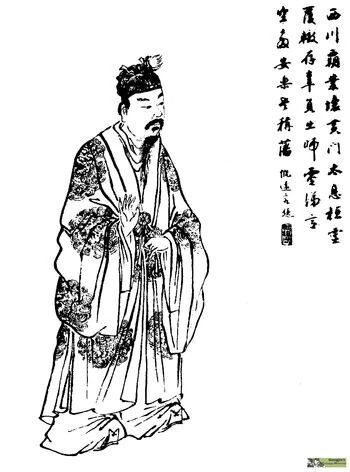
Liu Shan (207–271), courtesy name Gongsi and childhood name Adou, was the son of Liu Bei, Emperor Zhaolie of Shu Han, and the last emperor of Shu Han, reigning from 223 to 263. He is conventionally called the Later Ruler of Shu Han, and Chen Shou’s Records of the Three Kingdoms refers to him as the Later Ruler. The later Han-Zhao regime posthumously honored him as Emperor Xiaohuai. Liu Shan reigned for forty-one years, the…
207 CE–271 CEShu Han
PROFILE
Liu Shan (207–271), courtesy name Gongsi and childhood name Adou, was the son of Liu Bei, Emperor Zhaolie of Shu Han, and the last emperor of Shu Han, reigning from 223 to 263. He is conventionally called the Later Ruler of Shu Han, and Chen Shou’s Records of the Three Kingdoms refers to him as the Later Ruler. The later Han-Zhao regime posthumously honored him as Emperor Xiaohuai. Liu Shan reigned for forty-one years, the longest reign of any ruler during the Three Kingdoms period. His government is commonly divided by the death of Zhuge Liang in 234. In the earlier period he trusted the regent Zhuge Liang and supported the Northern Expeditions; in the later period he favored the eunuch Huang Hao and court government deteriorated. In 263, the sixth year of Jingyao, the Wei general Deng Ai reached Chengdu. Liu Shan followed Qiao Zhou’s advice and surrendered, ending Shu Han. He was moved to Luoyang and enfeoffed as Duke of Anle, giving rise to the story that he was “so happy here that he did not miss Shu.” He died in Luoyang in 271, the seventh year of Taishi, aged sixty-five.
- Also known as
- Later Ruler of Shu Han; courtesy name Gongsi
- Courtesy name
- Gongsi
- Period
- Shu Han
- Date of Birth
- 207
- Date of Death
- 271
- Dynasty / polity
- Shu Han
- Identity
- Emperor
- Ethnicity / ethnic affiliation
- Not reliably established by existing sources
- Ancestral home
- Not reliably established by historical sources
- Place of birth
- Unknown
- Reign
- 223–263
- Era name
- Not reliably established by historical sources
- Temple name
- Not reliably recorded in historical sources
- Posthumous name
- Not reliably recorded in historical sources
- Major achievements
- Son of Liu Bei and last emperor of Shu Han; initially relied on Zhuge Liang, later favored Huang Hao; surrendered to Wei when the state fell and became associated with the saying “so happy here that he did not miss Shu.”
- Predecessor
- Liu Bei, Emperor Zhaolie of Shu Han
- Successor
- None; Shu Han ended in 263
LIFE TIMELINE
Age two | Survived the disaster at Changban through Zhao Yun’s protection
Age five | Lady Sun tried to take him back to Wu; Zhang Fei and Zhao Yun intercepted her at the river and recovered him
Age thirteen | Liu Bei declared himself King of Hanzhong and made Liu Shan crown prince of the kingdom
Age fifteen | Liu Bei proclaimed himself emperor and made Liu Shan imperial crown prince
Age seventeen | Liu Bei died at Yong'an; Liu Shan succeeded and adopted the Jianxing era
Age nineteen | Zhuge Liang pacified Nanzhong
Age twenty-one | Zhuge Liang submitted the Memorial on Dispatching the Troops and stationed his army in Hanzhong
Age twenty-eight | Zhuge Liang died at Wuzhang Plains; Liu Shan wore mourning dress and grieved for three days
Age thirty-two | Jiang Wan was stationed in Hanzhong; Liu Shan began to take personal charge of state affairs
Age forty | Jiang Wan and Dong Yun died in succession; Chen Zhi and Huang Hao increasingly gained favor
Age forty-seven | Fei Yi was assassinated; Jiang Wei began to dominate military and civil affairs
Age forty-eight | Appointed Jiang Wei to command military affairs inside and outside the court
Age fifty-six | Jiang Wei, fearing political persecution, stationed his army and farmed at Tazhong
Age fifty-seven | Deng Ai crossed Yinping by a surprise route; Liu Shan surrendered and Shu Han fell
Age fifty-eight | Moved with his household to Luoyang and was enfeoffed as Duke of Anle
Age sixty-five | Died in Luoyang and received the posthumous title Duke Si
BIOGRAPHY
Biography
Family Background and Early Years Liu Shan was born in 207, the twelfth year of Jian'an, to Liu Bei and Lady Gan. Liu Bei was then stationed at Xinye under Liu Biao and still commanded only a modest force. Lady Gan had entered Liu Bei’s household while he was at Xiaopei and accompanied him through years of wandering. Liu Bei was nearing fifty when Liu Shan was born and therefore particularly valued his son. Liu Shan’s childhood was unstable. In 208, the thirteenth year of Jian'an, Cao Cao advanced south into Jingzhou. Liu Bei fled south with civilians and was overtaken at Changban near Dangyang by Cao Chun’s Tiger and Leopard Cavalry. In the emergency, Liu Bei abandoned his family and escaped with only Zhang Fei, Zhao Yun, and several dozen horsemen. Zhao Yun found Liu Shan and Lady Gan amid the confusion, carried the young child, protected his mother, and fought his way out. The Records of the Three Kingdoms, “Biography of Zhao Yun,” explicitly states that Zhao Yun carried the weak child who was later the Later Ruler and protected Lady Gan, the Later Ruler’s mother, and that both survived. In 211, the sixteenth year of Jian'an, Liu Bei entered Yizhou at Liu Zhang’s invitation. Sun Quan sent men to escort his younger sister Lady Sun back to Wu. Lady Sun attempted to take the five-year-old Liu Shan with her, but Zhang Fei and Zhao Yun deployed troops to intercept her at the river and recovered him. The event is recorded in the Separate Biography of Zhao Yun and in Pei Songzhi’s annotations quoting the Chronicles of Han and Jin. Liu Shan thereafter remained in Jingzhou under Zhao Yun’s protection and supervision of household affairs. Liu Bei paid considerable attention to Liu Shan’s education. After proclaiming himself emperor, he had Liu Shan read the Shenzi, Han Feizi, Guanzi, and Six Secret Teachings. Zhuge Liang personally copied texts for his study, while Yin Mo instructed him in the Zuo Commentary. Liu Bei also had him practice archery at Mount She north of Chengdu. In his final edict Liu Bei particularly admonished Liu Shan not to commit evil because it was small and not to neglect good because it was small, adding that only virtue could win people. He also instructed him to read the Book of Han and Book of Rites and to consult the various masters, the Six Secret Teachings, and the Book of Lord Shang in his spare time. ### Accession and Zhuge Liang’s Regency In the fourth lunar month of 223, the third year of Zhangwu, Liu Bei died at Yong'an Palace. In the fifth lunar month, the seventeen-year-old Liu Shan succeeded at Chengdu, adopted Jianxing as the era name, and honored Empress Wu as empress dowager. In accordance with Liu Bei’s final instructions, Zhuge Liang governed as regent, with major and minor affairs alike decided by him. In the same year Liu Shan made Zhang Fei's daughter, Empress Zhang (Liu Shan), his empress. The situation of Shu Han remained unstable at the beginning of Liu Shan’s reign. Zhu Bao, Administrator of Zangke Commandery, rebelled in his commandery, while the local ruler Gao Ding also rose in revolt. Zhuge Liang sent Deng Zhi to Eastern Wu, repaired relations with Sun Quan, and stabilized the external situation. In 225, the third year of Jianxing, Zhuge Liang led a southern expedition, pacified four commanderies, and returned to Chengdu in the twelfth lunar month. From 228, the sixth year of Jianxing, to 234, the twelfth year, Zhuge Liang launched five Northern Expeditions against Cao Wei, with mixed results. Liu Shan supported Zhuge Liang from the rear and, despite occasional differences, generally allowed him broad freedom to act. In 229, the seventh year of Jianxing, Sun Quan proclaimed himself emperor and sent envoys to Chengdu. Shu Han and Eastern Wu renewed their alliance and agreed on a theoretical division of the realm using Hangu Pass as a boundary. Liu Shan accepted the agreement. During Zhuge Liang’s fourth Northern Expedition in 231, the ninth year of Jianxing, Li Ping, who was responsible for transporting provisions, was unable to maintain supplies because of heavy rain. He falsely transmitted an order from Liu Shan recalling Zhuge Liang and afterward submitted a memorial accusing Zhuge Liang of retreating without authorization. Zhuge Liang angrily impeached Li Ping. Liu Shan approved the memorial, stripped Li Ping of office, reduced him to commoner status, and exiled him to Zitong. The source treats the episode as evidence of Liu Shan’s trust in Zhuge Liang. In the first lunar month of 234, the twelfth year of Jianxing, a scandal shook the court. Lady Hu, wife of General of Chariots and Cavalry Liu Yan, entered the palace to offer New Year greetings to the empress dowager and was kept there for more than a month. Liu Yan suspected her of having an affair with Liu Shan, beat her face with his shoes, and divorced her. Lady Hu filed a complaint, Liu Yan was imprisoned, and the judicial authorities argued that a soldier’s shoe was not an implement for beating a wife and a face was not a place for such blows. Liu Yan was eventually executed and his corpse exposed in the marketplace. The custom by which ministers’ wives and mothers entered the palace to offer greetings was thereafter abolished. In the eighth lunar month of the same year, Zhuge Liang died near the Wei River. After his death, Wei Yan and Yang Yi struggled for control and accused one another. Wei Yan fled, was overtaken and killed by Ma Dai, and his three kinship groups were exterminated. Liu Shan consulted Jiang Wan and Dong Yun; both supported Yang Yi and doubted Wei Yan, and Liu Shan followed their view. He then appointed Jiang Wan Director of the Imperial Secretariat and entrusted him with overall state affairs. When Li Miao later submitted a memorial attacking Zhuge Liang, Liu Shan became furious and had him imprisoned and executed. ### Government Under Jiang Wan and Fei Yi After Zhuge Liang’s death, Liu Shan wore plain mourning clothes and grieved for three days, then entrusted state affairs to Jiang Wan. In 235, the thirteenth year of Jianxing, Jiang Wan was promoted to General-in-Chief. In 238, the first year of Yanxi, Liu Shan ordered Jiang Wan to be stationed in Hanzhong, forming a strategic counterpart to Eastern Wu and preparing for a possible northern campaign. From this period Liu Shan began personally handling more state affairs, while Jiang Wan, Fei Yi, Dong Yun, and others pursued policies of recuperation and conserving strength. In 240, the third year of Yanxi, Jiang Wan concluded that Zhuge Liang’s repeated campaigns through the Qinling region had suffered from difficult roads and transportation. He proposed moving east along the Han River to attack Weixing and Shangyong. Court officials opposed the plan. Fei Yi, Jiang Wei, and others argued that a river-borne advance might succeed initially but make retreat difficult and therefore was unsafe. Liu Shan ultimately did not adopt Jiang Wan’s eastern campaign proposal. In 246, the ninth year of Yanxi, Jiang Wan and Dong Yun died in succession and Fei Yi became the leading minister. Fei Yi was conciliatory and favored resting the population, and frequently restrained Jiang Wei’s desire for large Northern Expeditions. In 253, the sixteenth year of Yanxi, Fei Yi was assassinated at the New Year assembly by Guo Xiu, a former Wei officer who had surrendered. Jiang Wei thereafter increasingly dominated military affairs and repeatedly campaigned north. ### Later Reign and Huang Hao’s Political Influence After Fei Yi’s death, Chen Zhi gradually gained power and worked closely with the eunuch Huang Hao. During the Yanxi era, Chen Zhi served as Palace Attendant and acting Director of the Imperial Secretariat. Skilled at accommodating Liu Shan’s preferences, he became highly favored. Huang Hao likewise rose from Yellow Gate Prefect and increasingly interfered in government. After Chen Zhi died in 258, the first year of Jingyao, Huang Hao became Palace Attendant Regular and Commandant of the Imperial Equipage and began manipulating court politics. Jiang Wei strongly resented Huang Hao’s power and once urged Liu Shan to have him executed. Liu Shan replied that Huang Hao was only a minor servant and told Jiang Wei not to concern himself with him. Seeing that Liu Shan would not listen and fearing Huang Hao’s retaliation, Jiang Wei avoided returning to Chengdu and instead stationed his army at Tazhong in the region of present-day Diebu, Gannan, Gansu, where the troops also farmed. In 262, the fifth year of Jingyao, Jiang Wei submitted a memorial reporting that the Wei general Zhong Hui was preparing troops in the Guanzhong region. He recommended sending Zhang Yi and Liao Hua to guard the Yang'an passes and the Yinping bridgehead. Huang Hao consulted spirit mediums who said the enemy would not come. Liu Shan believed them and suppressed Jiang Wei’s memorial, leaving the rest of the court unaware of the warning. ### Fall of Shu and Later Years In 263, the sixth year of Jingyao, the Wei regent Sima Zhao sent Zhong Hui and Deng Ai in separate columns against Shu. Zhong Hui led more than one hundred thousand troops into Hanzhong. Jiang Wei, after fighting Deng Ai unsuccessfully around Tazhong, withdrew to defend Jiange. Deng Ai led an elite force by the unexpected Yinping route, crossed Motian Ridge, took Jiangyou and Fucheng, and defeated the Shu army under Zhuge Zhan at Mianzhu, where Zhuge Zhan was killed. When Deng Ai approached Chengdu, Liu Shan summoned the ministers to discuss what to do. Guanglu Grand Master Qiao Zhou strongly advocated surrender, arguing that Shu Han could no longer resist and that capitulation would preserve lives. Liu Chen, Prince of Beidi, urged fighting from the city walls, but Liu Shan rejected his advice. Liu Chen wept in the temple of Emperor Zhaolie, killed his wife and children, and then committed suicide. In the eleventh lunar month, Liu Shan sent envoys with a letter of surrender to Deng Ai and personally led the crown prince, imperial princes, and more than sixty ministers out in submission, with their hands bound behind them and a coffin carried beside the procession. Shu Han thereby came to an end. Deng Ai, acting under delegated authority, appointed Liu Shan General of Agile Cavalry and ordered him to write to Jiang Wei commanding surrender. When Jiang Wei received Liu Shan’s order at Jiange, his soldiers were so enraged and distressed that they drew their swords and struck stones. Jiang Wei then surrendered to Zhong Hui, later encouraged Zhong Hui’s rebellion, and was killed when the plot failed. After Shu Han fell, Liu Shan was moved to Luoyang, accompanied only by Xi Zheng and palace commandant Zhang Tong. Sima Zhao enfeoffed him as Duke of Anle with a fief of ten thousand households. At a banquet Sima Zhao deliberately ordered music from Shu performed. Former Shu officials wept, but Liu Shan continued smiling as if unconcerned. Sima Zhao asked whether he missed Shu, and Liu Shan replied, “I am happy here and do not miss Shu.” Xi Zheng later instructed him that, if asked again, he should say that his ancestors’ graves lay far away in Long and Shu and that his heart grieved westward every day, and he should assume a sorrowful expression. When Sima Zhao asked again, Liu Shan repeated Xi Zheng’s words. Sima Zhao remarked that the answer sounded exactly like Xi Zheng, and Liu Shan asked in surprise how he knew, causing those present to laugh. The story, from the Chronicles of Han and Jin, is the origin of the phrase “so happy as not to miss Shu.” Liu Shan died in Luoyang in 271, the seventh year of Taishi, aged sixty-five, and received the posthumous title Duke Si. His crown prince Liu Xuan had been killed during Zhong Hui’s Rebellion. Liu Shan favored his sixth son Liu Xun and made him heir to the dukedom of Anle. At the end of the Western Jin, Liu Yuan established the Han-Zhao regime and posthumously honored Liu Shan as Emperor Xiaohuai.
His Elevation as Heir, His Education, and Liu Bei's Testament
In 219, when Liu Bei took the title prince of Hanzhong, he made Liu Shan his heir as prince; and in 221, having taken the imperial title, he made him heir apparent, the patent saying that in the first year of Zhangwu the emperor declared that the heir Shan, the Han mandate being in straits and treacherous ministers having usurped, the altars of state being without a lord, he had by heaven's bright command and the assent of the wise succeeded to the great line, and now made Shan heir apparent to inherit the ancestral temple and guard the altars of state, the chancellor Liang, bearer of the staff of authority, conferring the seals, so that he should reverently attend to his tutors and in doing one thing attain three good results, and should he not strive? In the fourth month of 223 Liu Bei died at the Yongan palace, and in the fifth month Liu Shan succeeded him at Chengdu at seventeen, honouring the empress as empress dowager, proclaiming an amnesty and changing the era, the year being the fourth of Huangchu in Wei. Liu Bei had taken care over his education: he had him read Shen Buhai, Han Fei, Guanzi and the Six Strategies, copied out for him by Zhuge Liang himself, and had Yin Mo teach him the Zuo Commentary — Yin Mo, styled Siqian, of Fu in Zitong, who, finding that Yi province prized the modern-text learning and did not honour the chapter-and-verse tradition, went far afield to Jingzhou to study the ancient learning under Sima Decao and Song Zhongzi, and mastered the classics and histories, specializing in the Zuo Commentary on the Spring and Autumn; and Liu Bei, having taken Yizhou, made him director of studies, and on setting up the heir made him a president to teach the Zuo Commentary to Liu Shan. Liu Bei also had him practise archery at the She mountain north of Chengdu, and in his testament charged him above all that he should not do a small evil because it was small nor fail to do a small good because it was small, for only worth and virtue could win men; and he told him to read the Han History and the Record of Rites and, at leisure, to look through the philosophers and the Six Strategies and the Book of Lord Shang, and added that he had heard that the chancellor had finished one copy each of Shen Buhai, Han Fei, Guanzi and the Six Strategies but that it had been lost on the way before being sent, so that he should seek knowledge for himself. About the time of Liu Bei's death the governor of Hanjia, Huang Yuan, whom Zhuge Liang had never liked, fearing trouble after the emperor's illness, rose with his commandery and burned the town of Linqiong; and Zhuge Liang being away eastward visiting the sick, Chengdu was left weak, so that Huang Yuan feared nothing. Yang Hong at once informed the heir and sent his own guards under the generals Chen Huo and Zheng Chuo against him; and the general opinion being that Huang Yuan, unable to besiege Chengdu, would go by Yuexi to hold Nanzhong, Yang Hong judged that Huang Yuan "is fierce and violent by nature and has no kindness or credit with men, and can do no such thing," and would only go down-river hoping for the emperor's recovery and to come bound to die, or, if worse came, flee to Wu for his life, so that it was enough to intercept him at the Nan'an gorge; and Chen Huo and Zheng Chuo did as he said and took Huang Yuan alive, he having been defeated before Linqiong, carried down the river and bound by his own guards, to be sent to Chengdu and beheaded.
The Southern Campaign, the Oath with Wu, and the Affairs of the Jianxing Years
At the outset of his reign the governor of Zangke, Zhu Bao, rose with his commandery and the barbarian king Gao Ding rebelled, so that the situation was unsettled; and Zhuge Liang sent Deng Zhi on a mission to Wu to restore relations with Sun Quan and steady the outer situation, and in the third month of 225 led the army against the four southern commanderies, all of which were reduced, whereupon Yizhou commandery was renamed Jianning, Yun'nan was formed from parts of Jianning and Yongchang, and Xinggu from parts of Jianning and Zangke, and in the twelfth month Zhuge Liang returned to Chengdu. Between 228 and 234 Zhuge Liang campaigned north five times, and Liu Shan supported him from the rear, generally leaving him a free hand though occasionally differing. In 229 Sun Quan took the imperial title and sent envoys to Chengdu to swear an oath dividing the empire: the Wei provinces of Xu, Yu, You and Qing to Wu, and Bing, Liang, Ji and Yan to Shu, with the territory of Sizhou divided at the Hangu pass. Liu Shan accepted it and sent the commandant of the guards Chen Zhen to congratulate him, Zhuge Liang writing to his brother Zhuge Jin that Chen Zhen's loyal and simple nature grew firmer with age and that his work in praising the east and the west and bringing joy and concord was to be valued; and Chen Zhen, entering Wu, first sent a note to the frontier office and at Wuchang "ascended the altar with Sun Quan and swore the oath, dividing the empire." In the autumn of 230, when Wei sent Sima Yi by Xicheng, Zhang He by Ziwu and Cao Zhen by Xiegu against Hanzhong, Zhuge Liang waited for them at Chenggu and Chiban, and it happened that heavy rain broke the roads and Cao Zhen and the rest withdrew; in the same year Wei Yan broke the Wei governor of Yongzhou, Guo Huai, at Yangxi; and Liu Shan moved the prince of Lu, Liu Yong, to be prince of Ganling and the prince of Liang, Liu Li, to be prince of Anping, both because Lu and Liang lay on the frontier between Wu and Shu. In 231 Zhuge Liang came out again and besieged Qishan, using wooden oxen to carry supplies for the first time, with Wang Ping holding the southern camp; and because he feared the grain would not arrive he sent Li Ping three plans, the best being to cut the enemy's rear, the middle to hold him to a long stand, and the worst to fall back on Huangtu, and when the summer rains came and Li Ping, fearing the transport would fail, wrote advising a withdrawal, Zhuge Liang withdrew on his word in the sixth month, killing Zhang He in the fighting at Qingfeng and returning to Hanzhong in the eighth month. Li Ping then, fearing reproach over the transport, tried to kill the officer in charge, Cen Shu, and asked in alarm why Zhuge Liang had come back, and memorialized Liu Shan that Zhuge Liang had "made a false retreat"; at which Zhuge Liang in anger memorialized to reduce him to a commoner and banish him to Zitong, taking his son Li Feng's troops and making him an assistant in the secretariat to manage the office with the chief of staff Jiang Wan, and Liu Shan approved. In the first month of 234 something occurred that shook the court: the wife of the general of the chariots and cavalry, Liu Yan, Lady Hu, went into the palace to congratulate the empress dowager on the new year, and the empress dowager kept her more than a month; and Liu Yan, suspecting her of an affair with the sovereign, had five hundred soldiers beat her, striking her face with a shoe, and then put her away. Lady Hu brought the matter to the authorities, Liu Yan was imprisoned, and the officers held that "a soldier is not one to beat a wife, nor a face a place to receive a shoe," and he was executed and exposed in the market; and from that time the wives and mothers of ministers were no longer permitted to come to court to congratulate. In the eighth month of the same year Zhuge Liang died by the Wei river and the sovereign mourned in plain garments for three days; Wei Yan and Yang Yi then fought for power and attacked each other, each memorializing that the other had rebelled, the dispatches arriving in one day, and Liu Shan asked Jiang Wan and Dong Yun, who both upheld Yang Yi and doubted Wei Yan, and he followed them; and Wei Yan, his troops dispersed, fled to Hanzhong and was pursued and beheaded by Ma Dai with his kin to the third degree. Afterwards Liu Shan proclaimed an amnesty, made the general of the left Wu Yi general of the chariots and cavalry with the staff of authority over Hanzhong, and made the chief of staff of the chancellor's office, Jiang Wan, president of the Secretariat to direct the affairs of state. Later Li Miao memorialized slandering Zhuge Liang, saying that with Liang now dead the clan was safe and the western barbarians quiet, to the general rejoicing, and Liu Shan in anger imprisoned and killed him.
The Jiang Wan and Fei Yi Years, and His Own Direction of Affairs
Under Jiang Wan and then Fei Yi the state followed a policy of rest and the accumulation of strength. In 238 Liu Shan made Lady Zhang empress, proclaimed an amnesty and changed the era, made his son Liu Xuan heir apparent and Liu Yao prince of Anding, and in the eleventh month sent the general-in-chief Jiang Wan to camp at Hanzhong. In the Yanxi years he also took affairs into his own hands: in the fourteenth year the Di king of Wudu, Fu Jian, asked to submit, and the general Zhang Wei was sent to receive him but did not appear at the appointed time, so that Jiang Wan was much concerned; and Zhang Ni judged that Fu Jian's wish to submit was sincere and could not change, but that "his younger brother is known to be cunning, and the barbarians cannot act together, so there will be a parting of ways, and that is why he is delayed"; and some days later word came that Fu Jian's brother had indeed gone over to Wei with four hundred households, and Fu Jian alone came. About 240 Jiang Wan, thinking that Zhuge Liang had several times marched into the Qin river country over hard roads with difficult transport and never succeeded, planned to build many ships and go east down the Han and Mian to attack Weixing and Shangyong; and Liu Shan summoned the ministers to discuss it, and the general opinion being that to move by water was easy but that a defeat would make withdrawal hard, he sent the president of the Secretariat Fei Yi and the inspector of the central army Jiang Wei to convey this to him. Jiang Wan memorialized in answer that to root out evil and end trouble was his office, that Wei now straddled nine provinces with deep roots and was not easy to clear away, that if east and west joined strength and took him head and tail the provinces might be eaten away piece by piece, that Liangzhou was the key to the barbarian passes and what the enemy prized, that the Qiang and Hu longed for Han, and that Jiang Wei should be made governor of Liangzhou, while he himself would lead the army to support him, and that Fu being connected by land and water on all sides he could come to any emergency, so that if there were trouble in the north-east he could go there easily; and so Jiang Wan went back to camp at Fu. In the sixth month of the ninth year Fei Yi returned to Chengdu and in the eleventh month Jiang Wan died, and Pei Songzhi's note quoting the Brief History of Wei says that "with Wan dead, Shan took the government into his own hands." In 253 Fei Yi was murdered at the New Year assembly by the surrendered Wei officer Guo Xiu, after which Jiang Wei took sole charge of military affairs and campaigned north year after year. While Dong Yun lived he "corrected the sovereign to his face above and reproved Huang Hao below," so that Huang Hao feared him and did no wrong, and "throughout Yun's life Hao's office was no more than a Yellow Gate assistant"; but after Dong Yun's death in the ninth year of Yanxi, Chen Zhi took his place as attendant and joined hands with Huang Hao, who from that time began to take part in government. When Xiahou Ba, fearing that the killing of Cao Shuang and the summoning of Xiahou Xuan would bring disaster on himself, and being at odds with the governor of Yongzhou, Guo Huai, fled to Shu, he lost his way going south by Yinping, wandered in a blind valley, ate his horse when the grain was gone, walked until his feet were broken and lay under a rock; and Shu, hearing of it, sent men to bring him in. When Liu Shan met him he consoled him by saying that his father had met his end in the field and not by his own ancestors' hands, and pointing to his son said that this was a nephew of the Xiahou family, heaping honours on him — the reason being that Xiahou Ba's cousin, at thirteen or fourteen in the fifth year of Jian'an, had been gathering firewood in her district when Zhang Fei took her, and knowing her to be of good family made her his wife, and her daughter became Liu Shan's empress.
His Later Misgovernment, the Fall of the State, and the Surrender
Jiang Wei, detesting Huang Hao's arbitrary power, memorialized asking that he be put to death; and Liu Shan said that "Hao is a running servant, a petty minister; in former days Dong Yun gnashed his teeth at him and I always regretted it — what need have you to mind him?" And Jiang Wei, himself a stranger who had entrusted himself to the state and whose achievements were nothing to boast of, seeing that Huang Hao's branches and leaves were joined, feared to have misspoken and withdrew with modest words; and Liu Shan directed Huang Hao to go and apologize to Jiang Wei, while Jiang Wei, fearing harm, asked to go to Tazhong to grow wheat and so avoid pressure from within. In the autumn of 262 Jiang Wei went out to Houhe, was beaten by the Wei general Deng Ai and fell back on Tazhong, and Huang Hao, in league with the general of the right Yan Yu, plotted to depose Jiang Wei and set up Yan Yu, so that Jiang Wei, in fear, did not dare return to Chengdu. In 262 Jiang Wei memorialized Liu Shan that he had heard that Zhong Hui was drilling troops in Guanzhong and intended an advance, and that Zhang Yi and Liao Hua should be sent with separate commands to guard the Yang'an pass and the Yinping bridgehead against the unforeseen; but Huang Hao, taking the word of a sorcerer, held that the enemy would never come, and persuaded Liu Shan to shelve the matter, so that none of the ministers knew of it. In the summer of 263 Wei raised a great host under the general of the western expedition Deng Ai, the general of the west Zhong Hui and the governor of Yongzhou Zhuge Xu on several roads at once; and Liu Shan sent the generals of the chariots and cavalry of the left and right, Zhang Yi and Liao Hua, and the grand general of the state's support Dong Jue against them, proclaiming an amnesty and changing the era to Yanxing; and in the winter Deng Ai broke the general of the guards Zhuge Zhan at Mianzhu and came to the walls of Chengdu. Liu Shan summoned his ministers, and the grand master of light Qiao Zhou urged surrender; but the prince of Beidi, Liu Chen, said in anger that if reason were exhausted and strength spent and disaster certain, father and son, ruler and minister, should fight with their backs to the wall and die for the altars of state to face the late emperor; and Liu Shan would not take it and sent out the seals, and that day Liu Chen wept in the temple of the emperor Zhaolie, killed his wife and children and then himself, "and none about him but wept." Liu Shan sent Zhang Shao, Qiao Zhou and Deng Liang with the seals and a letter of surrender to Deng Ai, the letter saying that cut off by the Jiang and the Han and having come upon distant times, he had clung to the soil of Shu in a corner, offending against the course of things, and that he now sent the attendant Zhang Shao, the grand master of light Qiao Zhou and the commandant of the imperial son-in-law Deng Liang with the seals to declare his sincerity and submit his fate to judgment, adding that the coffin was at hand and he would not set out the details. Zhang Shao and Deng Liang met Deng Ai at Luoxian, and Deng Ai, delighted with the letter, wrote back at once and sent them home; and reaching the north of the city, Liu Shan, "with the coffin and his hands bound," came to the gate of the camp, and Deng Ai untied him, burned the coffin and invited him in, making him by imperial authority general of the flying cavalry, and the garrisons all laid down their arms at Liu Shan's order, Deng Ai letting him stay in his old palace and going himself to visit him. Deng Ai also "controlled his officers and men so that they plundered nothing, and gathered in and settled the surrendered, restoring them to their former occupations," so that "the men of Shu praised him," and he made Liu Shan acting general of the flying cavalry after the precedent of Deng Yu, the heir apparent commandant of carriages and the princes commandants of the imperial son-in-law, the offices of Shu being given to Wei officials according to rank. In the first month of 264 Deng Ai was arrested, and Zhong Hui entered Chengdu and plotted rebellion with Jiang Wei as his claw; and Jiang Wei meant to use Zhong Hui to kill the Wei generals and then kill Zhong Hui and bury the Wei troops alive to restore Shu, and sent a secret letter to Liu Shan saying that he begged the emperor to bear a few days' shame, for he meant to make the altars of state, though in danger, safe again, and the sun and moon, though hidden, bright once more. Zhong Hui and Jiang Wei rode in the same carriage and sat on the same mat, and Zhong Hui styled himself governor of Yizhou and rebelled; but the empress dowager of Wei dying, Zhong Hui ordered the generals to mourn, meaning to kill them, and half of them having come in, the governor of Nan'an, Hu Lie, and others learned the plot and burned the eastern gate of Chengdu to attack and kill Zhong Hui, Jiang Wei, Zhang Yi and Liu Shan's heir apparent Liu Xuan; and the soldiers plundered for several days before order was restored.
His Move to Luoyang, "Happy Here, No Thought of Shu," and After
After the fall of Shu Liu Shan was moved to Luoyang, and amid the confusion and haste none of the Shu ministers followed him except Xi Zheng and the palace commandant Zhang Tong of Runan, who left their wives and children and attended him alone. In the third month of 264 the Wei emperor, at the court, had the grand master of ceremonies confer on Liu Shan the title duke of Anle, the patent saying that the duke had magnified his virtue and held firmly to the great rectitude, not shrinking from bending his person and tendering allegiance, prizing the love of the people and the preservation of the state, and bending his mind and turning his thoughts, changing as the leopard changes at the right moment, to be for ever a fence and support of Wei; with ten thousand households of revenue, ten thousand bolts of silk, a hundred servants and other things in proportion, and more than fifty of his sons and grandsons made commandants or marquises; and the president of the Secretariat Fan Jian, the attendant Zhang Shao, the grand master of light Qiao Zhou, the secretary Xi Zheng and the palace commandant Zhang Tong were all made marquises. One day Sima Zhao feasted Liu Shan and deliberately had the music of Shu played, at which the old ministers of Shu all wept while Liu Shan laughed and joked as usual; and when Sima Zhao asked whether he thought of Shu, he answered that he was happy there and did not think of Shu. The old minister Xi Zheng afterwards taught him that if asked again he should answer that his ancestors' graves lay far away in Long and Shu, that his heart grieved westward and he thought of them daily, and should look sorrowful; and when Sima Zhao asked again, Liu Shan answered as Xi Zheng had taught, at which Sima Zhao said that the words sounded like Xi Zheng's, and Liu Shan asked in amazement how he knew, so that all about them laughed. The matter comes from the Spring and Autumn of the Han and Jin and is the source of the saying about being happy here and not thinking of Shu. In 271 Liu Shan died at Luoyang at sixty-five with the posthumous name duke Si; his heir apparent Liu Xuan having perished in Zhong Hui's revolt, he favoured his sixth son Liu Xun and made him his successor as duke of Anle. In the twelfth month of the first year of Taishi, in the edict by which Sima Yan took the throne, there is also the provision that one son or brother of the duke of Shanyang, Liu Kang, and of the duke of Anle, Liu Shan, be made commandant of the imperial son-in-law; and at the end of the Western Jin the Xiongnu Liu Yuan, founding the Han-Zhao state, posthumously honoured Liu Shan as emperor Xiaohuai.
Major Activities
His Reign Liu Shan reigned for forty-one years, the longest of any ruler during the Three Kingdoms period. In the earlier years, with Zhuge Liang directing government, Shu Han politics were relatively orderly, the economy developed, and the alliance with Eastern Wu was maintained. After Zhuge Liang’s death, Jiang Wan and Fei Yi successively led the government and continued policies of recuperation. After 254, the seventeenth year of Yanxi, Jiang Wei commanded military affairs inside and outside the court and launched repeated Northern Expeditions, consuming substantial state resources. During Liu Shan’s reign the alliance between Shu Han and Eastern Wu remained generally stable. When Sun Quan proclaimed himself emperor in 229, many Shu officials wanted to sever relations, but Liu Shan sent Chamberlain for the Imperial Insignia Chen Zhen to offer congratulations and renew the alliance, with the two states again declaring a theoretical division of the realm. Envoys continued to travel frequently between them during the Yanxi era. ### “So Happy Here That He Did Not Miss Shu” Liu Shan’s behavior in Luoyang after the fall of Shu Han became one of the central subjects of later judgment. His answer to Sima Zhao—“I am happy here and do not miss Shu”—was widely treated as an example of emotional indifference. Some later scholars, however, interpreted it as a strategy for survival: by appearing foolish and unconcerned, Liu Shan could reduce Sima Zhao’s suspicion and preserve himself. The story first appears in the Chronicles of Han and Jin and was later quoted in Pei Songzhi’s annotations to the Records of the Three Kingdoms. ### Relationship with Zhuge Liang The relationship between Liu Shan and Zhuge Liang was central to Shu Han politics. Liu Bei’s final instructions told Liu Shan to work with the chancellor and “serve him as a father.” After succeeding to the throne, Liu Shan did treat Zhuge Liang as a fatherlike regent and entrusted him with military and political affairs. During Zhuge Liang’s Northern Expeditions, Liu Shan supported logistical supply from the rear. Although the two sometimes differed, Liu Shan generally trusted him. After Zhuge Liang’s death, Liu Shan wore mourning clothes and grieved for three days, and later executed Li Miao for attacking Zhuge Liang in a memorial, which the source treats as evidence of his attachment to the chancellor.
Three Phases of His Forty-One Years, His Management of the Alliance, and the Two Readings of "Happy Here"
Liu Shan reigned forty-one years, the longest of any ruler of the Three Kingdoms, and his reign falls into three phases. The first is the regency of Zhuge Liang: Liu Bei's testament charged him to serve the chancellor as a father, and he did indeed treat him as such and entrusted him with all military and political business; he supported the southern campaign and the five northern campaigns, kept the rear supplied, and generally left a free hand, differing only in such a case as Li Ping's forging of an order and then accusing Zhuge Liang of a false retreat, which he settled by approving the memorial that reduced Li Ping to a commoner. The second is the government of Jiang Wan and Fei Yi: he made Jiang Wan president of the Secretariat to direct affairs and, on the plan to go east down the rivers, adopted the general opinion and sent Fei Yi and Jiang Wei to convey it, so that Jiang Wan went back to camp at Fu; and after Jiang Wan's death the Brief History of Wei says that "Shan took the government into his own hands," after which he with Fei Yi and Dong Yun followed a policy of rest. The third is the period after Fei Yi's murder: Jiang Wei campaigned north year after year while Huang Hao rose from Yellow Gate assistant to regular attendant and commandant of the imperial carriages and took the government in hand, Chen Zhi and Huang Hao joining hands; and once Dong Yun's restraint was gone the court decayed quickly, so that in 262 Jiang Wei's warning about Zhong Hui's troop movements was shelved on the word of a sorcerer and none of the ministers knew of it, which bore directly on the dispositions of the following year.
In relation to Wu the alliance was on the whole steady: when Sun Quan took the imperial title in 229 and most of the Shu ministers urged a breach, Liu Shan instead sent the commandant of the guards Chen Zhen to congratulate him and swore with Wu on the altar a division of the empire — the Wei provinces of Xu, Yu, You and Qing to Wu and Bing, Liang, Ji and Yan to Shu, with Sizhou divided at the Hangu pass; and envoys continued to pass between them through the Yanxi years. This both avoided being attacked on two fronts under Wei's pressure and preserved the claim that Han and the usurper could not stand together. As to his conduct in Luoyang, opinion has always been divided: one view takes "happy here, no thought of Shu" as the mark of a man without heart; the other takes it as the wisdom of self-preservation, by which playing the fool let Sima Zhao relax his guard and allowed him to die in peace — and the fact that he repeated Xi Zheng's prepared answer word for word, without guile, tells rather against his being a schemer. As to the sources, the story comes first from the Spring and Autumn of the Han and Jin and was quoted by Pei Songzhi, and its detail need not correspond point for point with fact; but that Liu Shan was enfeoffed as a duke with ten thousand households and lived out his life in Luoyang, with more than fifty of his descendants enfeoffed, is a result clearly recorded. On the whole he was neither a ruler who could restore his state by his own strength, nor one to be dismissed as merely mediocre over forty-one years: in his first and second phases he continued Zhuge Liang's arrangements, and his failure in the last came of the eunuchs' power, the drain of Jiang Wei's northern campaigns and the question of the succession, until in 263 he surrendered to Wei in the name of loving the people and preserving the state.
Personal Relations
- Liu Bei (father): Emperor Zhaolie of Shu Han; entrusted Liu Shan to Zhuge Liang before death
- Lady Gan (mother): Liu Bei’s concubine; rescued together with Liu Shan during the disaster at Changban
- Empress Wu (principal mother): Liu Bei’s empress; honored by Liu Shan as empress dowager
- Empress Zhang (Liu Shan): daughter of Zhang Fei and empress of Liu Shan
- Liu Yong (younger brother): Prince of Ganling; became estranged from court because of conflict with Huang Hao
- Liu Li (younger brother): Prince of Anping; died young
- Liu Xuan (son): crown prince, killed during Zhong Hui’s Rebellion
- Liu Xun (son): sixth son, favored by Liu Shan and successor as Duke of Anle
- Liu Chen (son): Prince of Beidi; urged resistance and killed himself at the temple of Emperor Zhaolie when his advice was rejected - Zhuge Liang: entrusted with the heir by Liu Bei and regent for twelve years; Liu Shan treated him as a fatherlike chancellor
- Yin Mo: teacher who instructed Liu Shan in the Zuo Commentary
- Xi Zheng: former Shu official who accompanied Liu Shan to Luoyang and coached him on how to answer Sima Zhao - Jiang Wan: principal minister after Zhuge Liang; served as General-in-Chief and Grand Marshal
- Fei Yi: succeeded Jiang Wan as leading minister; favored moderate government and was assassinated
- Jiang Wei: later military commander; launched repeated Northern Expeditions and died during Zhong Hui’s Rebellion
- Dong Yun: Palace Attendant who restrained Huang Hao and remonstrated directly
- Chen Zhi: favored minister who worked closely with Huang Hao
- Huang Hao: eunuch who gained great power in the later reign and contributed to political deterioration
- Qiao Zhou: official who advised surrender and later moved to Luoyang after the fall of Shu - Sima Zhao: Wei regent who made the decision to destroy Shu
- Deng Ai: Wei general who crossed Yinping and forced Liu Shan’s surrender
- Zhong Hui: Wei commander in the conquest of Shu who later rebelled and was killed
Historical Assessment
Shu Han and Contemporary - Zhuge Liang, in a letter to Du Wei, described Liu Shan as naturally benevolent and perceptive and as loving virtue and treating scholars well. Liu Bei’s final edict also quoted Zhuge Liang as saying that Liu Shan’s intelligence and capacity had increased greatly beyond expectations.
- Wang Chong, Administrator of Shu Commandery, called Liu Shan an ordinary ruler and argued that although Zhuge Liang had provided extraordinary ordering ability, the absence of suitable support inside and outside the court made preservation of the state difficult.
- The Wu envoy Xue Xu, after visiting Shu Han, described a ruler who was dim and unaware of his mistakes, ministers who merely sought to avoid blame, a court without frank speech, and countryside people showing signs of hunger.
- Sima Zhao, after seeing Liu Shan display no longing for Shu, remarked that even Zhuge Liang could not have preserved him for long, much less Jiang Wei.
- Li Te, father of the Cheng-Han founder Li Xiong, reportedly exclaimed that Liu Shan had possessed such a land yet surrendered it to others and asked whether this did not reveal mediocrity. ### Wei, Jin, and Northern and Southern Dynasties Period - Chen Shou in the Records of the Three Kingdoms compared Liu Shan to undyed silk, whose character depended on what colored it: with a worthy minister he could follow proper principles, but when misled by a eunuch he became an unenlightened later ruler. Chen Shou also suggested that compared with Sun Hao, Liu Shan handled government and relations with ministers better.
- Sun Sheng described Liu Shan as dim and weak but not suspicious, and not a tyrant of the Jie or Zhou type. Shu Han suffered repeated military defeats under him without collapsing into internal civil war.
- Pei Songzhi, in his annotations to the Records of the Three Kingdoms, called Liu Shan an ordinary and inferior ruler.
- Chang Qu’s Chronicles of Huayang judged that the ruler was not a figure capable of restoring a dynasty.
- Zhang Fan described Liu Shan as weak but without a cruel or malicious heart. ### Tang, Song, Yuan, Ming, and Qing Periods - The Tang writer Zhu Jingze mocked Liu Shan for indulging Huang Hao and placed him among failed rulers alongside the last ruler of Chen.
- The Song writer Chen Shichong criticized Liu Shan as having failed not only his soldiers but even women who had shown greater resolve, referring to his apparent lack of shame in the face of loyal deaths for the state.
- The Yuan scholar Zheng Yu called Liu Shan foolish, dim, and weak, arguing that even one hundred Zhuge Liangs could not have saved him and that after entering Wei he endured humiliation without apparent shame.
- Wang Fuzhi, writing in Du Tongjian Lun at the Ming-Qing transition, argued that Shu Han fell not because it lost natural defenses but because it relied on those defenses while abandoning virtue, planning, and courage.
- The Qing scholar Fang Bao offered a different view in “Discussion of the Later Ruler of Shu Han,” praising Liu Shan for entrusting worthy ministers without wavering and maintaining confidence in Zhuge Liang and those Zhuge Liang recommended.
- The Qing scholar Zhou Shouchang doubted the literal reliability of the “did not miss Shu” story and suggested that Liu Shan may have feigned foolishness to preserve himself. ### Modern Period - Yi Zhongtian, in Pin Sanguo, called Liu Shan a ruler suited to maintaining an inherited state. He strongly criticized Liu Shan’s performance before Sima Zhao as humiliating and lacking dignity, while also acknowledging that Liu Shan was not intellectually disabled.
- Modern assessments remain sharply divided. One line of interpretation treats him as an incompetent ruler who lost his state, while another sees him as a politically perceptive survivor who understood how to preserve his life and clan after defeat.
FIGURES ASSOCIATED WITH THIS DYNASTY
Bibliography
- Chen Shou, Records of the Three Kingdoms, Book of Shu, “Biography of the Later Ruler,” with Pei Songzhi’s annotations
- Chen Shou, Records of the Three Kingdoms, Book of Shu, “Biography of the Former Ruler,” with Pei Songzhi’s annotations
- Chen Shou, Records of the Three Kingdoms, Book of Shu, “Biography of Zhuge Liang,” with Pei Songzhi’s annotations