The Sui was a short-lived dynasty that ended the long division between northern and southern China and restored political unification. Near the end of Northern Zhou, the imperial relative Yang Jian replaced Zhou and founded Sui. In 589, the ninth year of the Kaihuang era, Sui conquered Chen and ended nearly three centuries of division since the late Western Jin. The dynasty established a central government built around the Three Departments and Six Ministries, abolished the Nine-rank system,…
581 CE–618 CECapital · See entry
ERA OVERVIEW
The Sui was a short-lived dynasty that ended the long division between northern and southern China and restored political unification. Near the end of Northern Zhou, the imperial relative Yang Jian replaced Zhou and founded Sui. In 589, the ninth year of the Kaihuang era, Sui conquered Chen and ended nearly three centuries of division since the late Western Jin. The dynasty established a central government built around the Three Departments and Six Ministries, abolished the Nine-rank system, initiated and developed early forms of the imperial examination system, constructed the Grand Canal, built the eastern capital, and carried out major reforms of household registration and taxation. The state briefly became powerful, but Emperor Yang's repeated large-scale projects and heavy mobilization of labor, together with unsuccessful campaigns against Goguryeo, contributed to widespread rebellion. After the incident at Jiangdu, the dynasty ended after two principal reigns and was replaced by Tang.
Time span581 CE–618 CE
CapitalSee entry
ERA TIMELINE
Yang Jian replaced Northern Zhou and fOpen
Yang Jian replaced Northern Zhou and founded the Sui Dynasty.
the Sui continued to adjust the centraOpen
the Sui continued to adjust the central official system and pursue military unification.
Sui destroyed Chen and unified north aOpen
Sui destroyed Chen and unified north and south.
Emperor Yang of Sui ascended the thronOpen
Emperor Yang of Sui ascended the throne and began construction of the eastern capital.
Sui expanded activity in the northwestOpen
Sui expanded activity in the northwest and reached a high point in territorial extent.
the Goguryeo wars and large-scale mobiOpen
the Goguryeo wars and large-scale mobilizations increased social burdens.
Yang Xuangan rebelled and regional resOpen
Yang Xuangan rebelled and regional resistance expanded.
Li Yuan and other forces rebelled and Open
Li Yuan and other forces rebelled and entered Chang'an.
Li Yuan forced Emperor Gong of Sui to Open
Li Yuan forced Emperor Gong of Sui to abdicate and established the Tang Dynasty, ending the Sui central regime.
FULL ENTRY
Overview
The Sui was a short-lived dynasty that ended the long division between northern and southern China and restored political unification. Near the end of Northern Zhou, the imperial relative Yang Jian replaced Zhou and founded Sui. In 589, the ninth year of the Kaihuang era, Sui conquered Chen and ended nearly three centuries of division since the late Western Jin. The dynasty established a central government built around the Three Departments and Six Ministries, abolished the Nine-rank system, initiated and developed early forms of the imperial examination system, constructed the Grand Canal, built the eastern capital, and carried out major reforms of household registration and taxation. The state briefly became powerful, but Emperor Yang's repeated large-scale projects and heavy mobilization of labor, together with unsuccessful campaigns against Goguryeo, contributed to widespread rebellion. After the incident at Jiangdu, the dynasty ended after two principal reigns and was replaced by Tang.
Historical Development
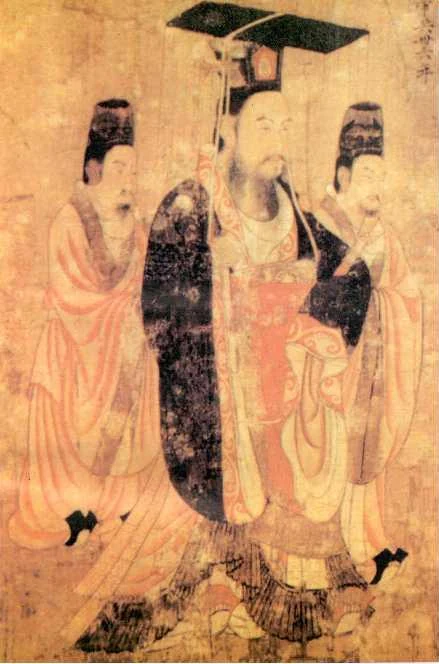
Establishment: Political conditions were unstable near the end of Northern Zhou. In 581, the first year of Dading, Duke of Sui Yang Jian deposed Emperor Jing of Northern Zhou and proclaimed himself emperor, founding the Sui Dynasty as Emperor Wen of Sui. In 589, the ninth year of Kaihuang, Sui armies crossed the Yangtze, captured Jiankang, and destroyed Chen, reunifying north and south.
Height: Under Emperor Wen, the state maintained the equal-field system, implemented the household-registration measure known in the Chinese source as 输籍定样, reduced some burdens inherited from Northern Zhou, lowered labor and tax demands, and greatly increased registered households and state revenue. Government granaries were well stocked, and the period became known as the Kaihuang-era rule. The state was strong, neighboring powers often submitted or maintained tributary relations, and the Turks were at times brought into a subordinate position.
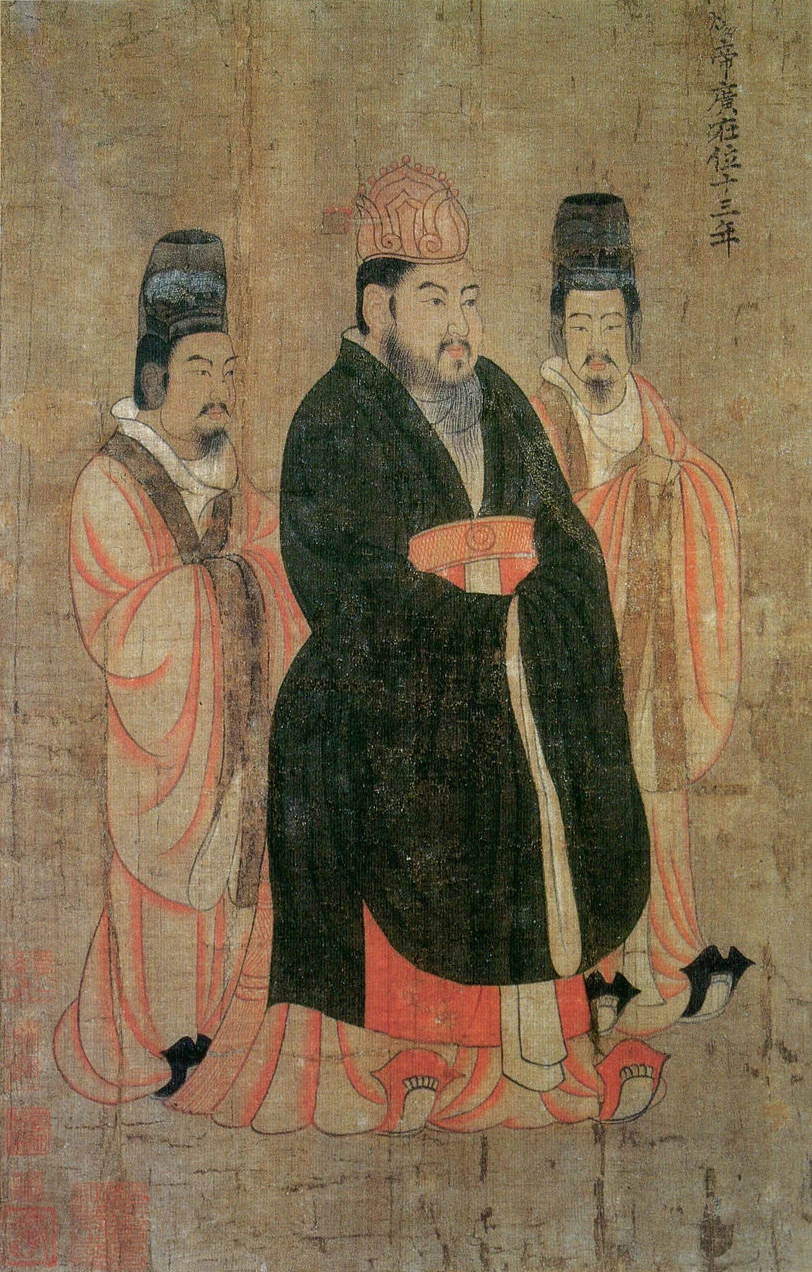
Turning point: Emperor Wen died in 604 and was succeeded by his son Yang Guang, Emperor Yang of Sui. Emperor Yang built the eastern capital at Luoyang, opened the north–south Grand Canal system, and launched three campaigns against Goguryeo. At the same time, imperial tours, extensive construction projects, and frequent mass mobilizations severely strained society. Social tensions rose rapidly and rebellions spread.
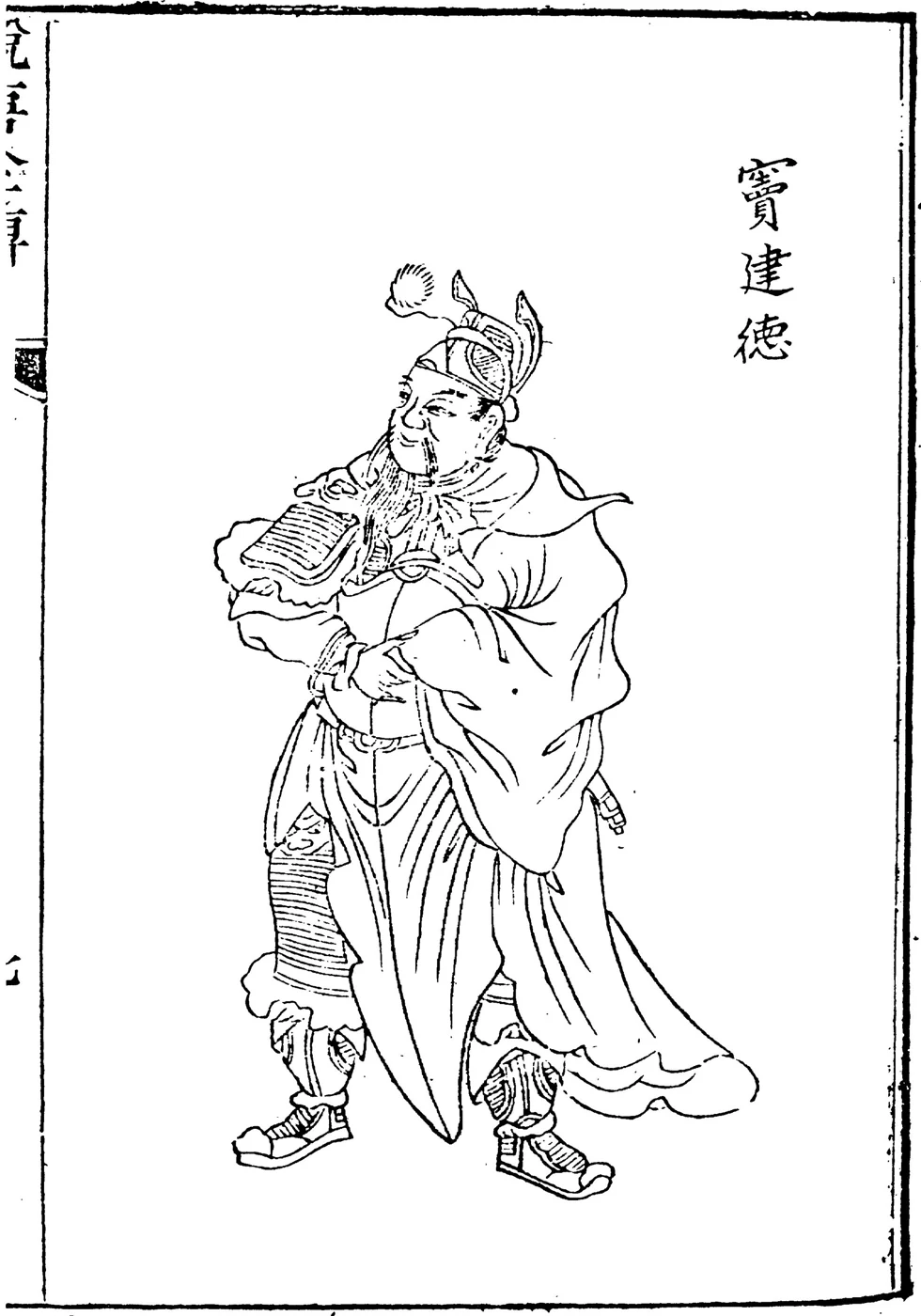
Decline: From around 611, the seventh year of Daye, Wang Bo, Zhai Rang, Dou Jiande, Li Mi, Du Fuwei, and other rebel leaders rose in different regions. The foundations of Sui rule weakened, while Emperor Yang remained at Jiangdu and the court lost effective control over much of the empire.
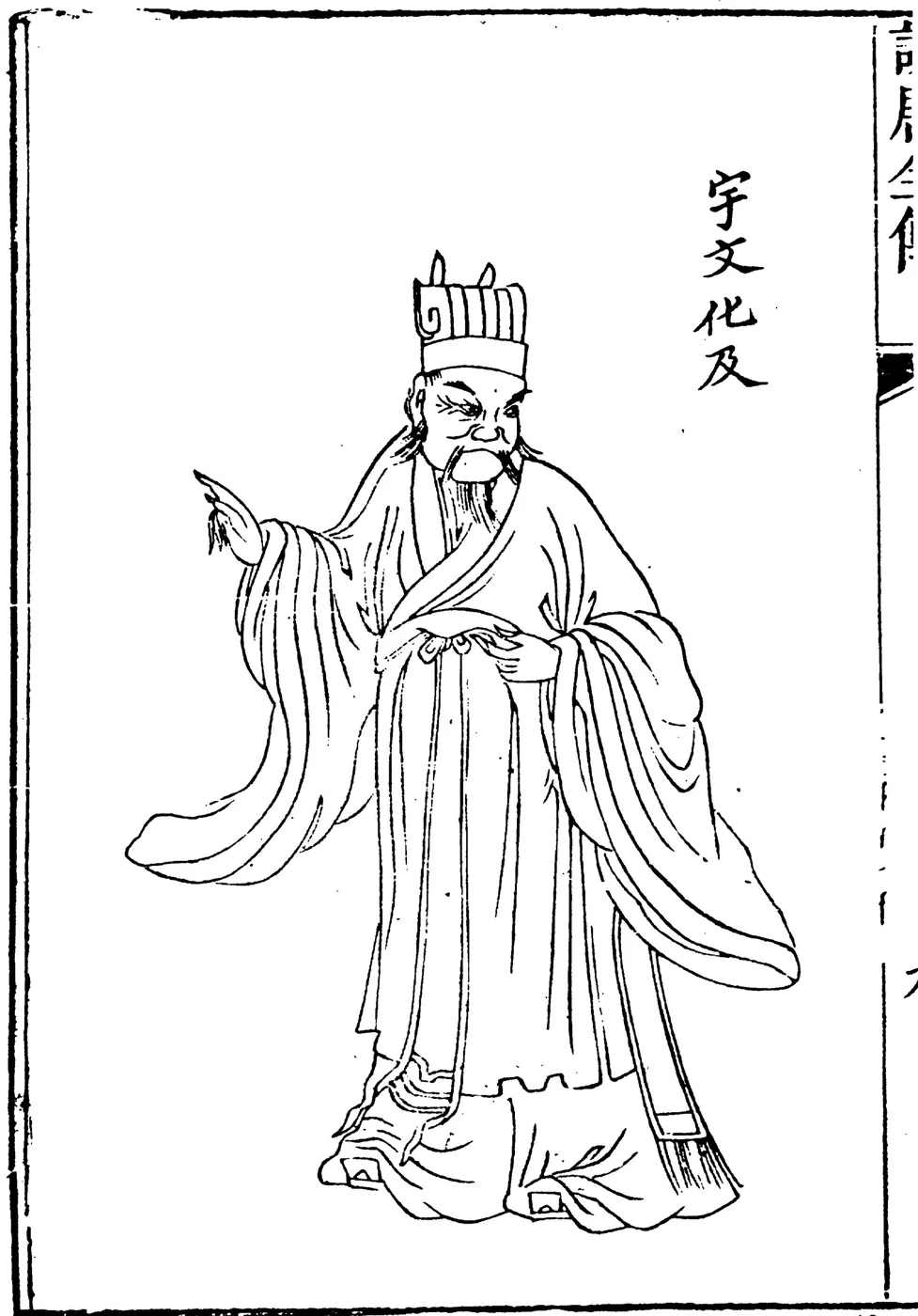
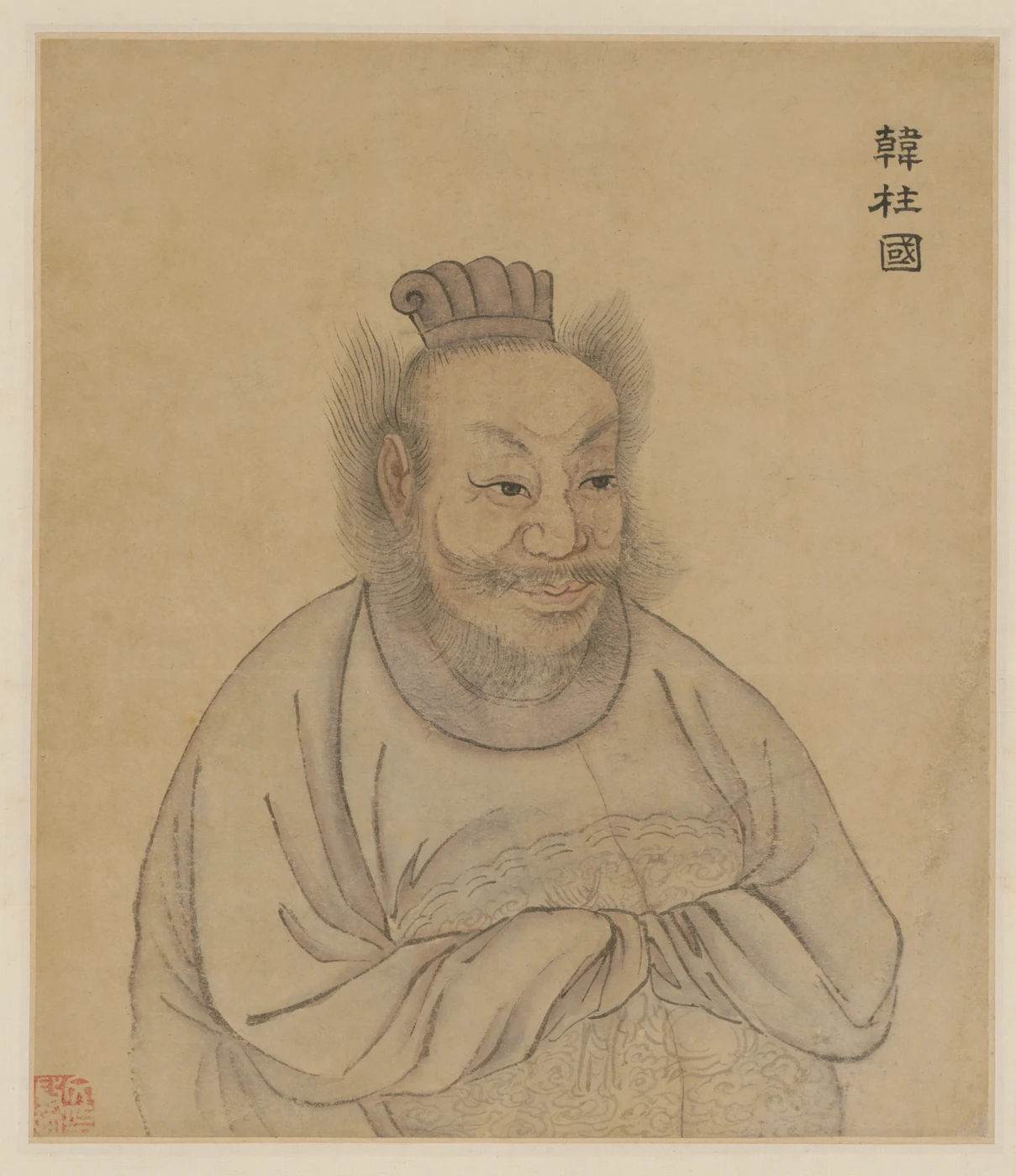
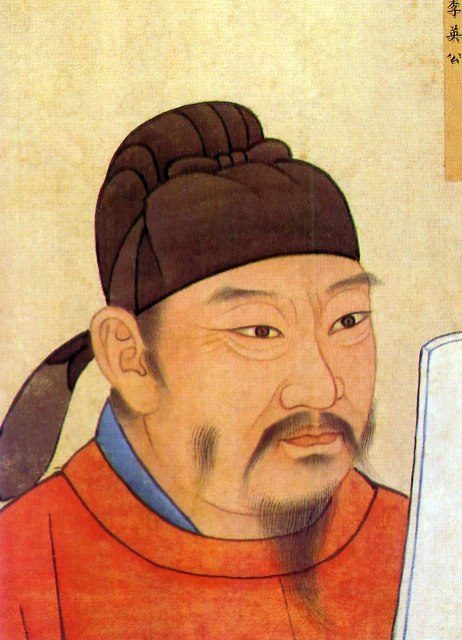
Fall: In 618, the fourteenth year of Daye and the second year of Yining, Yuwen Huaji and others launched a coup at Jiangdu and strangled Emperor Yang. In the same year Li Yuan compelled Emperor Gong of Sui, Yang You, to abdicate and founded the Tang Dynasty. Another Sui claimant, Yang Tong, was proclaimed emperor under the Huangtai title according to one account, but that regime also soon ended. The Sui Dynasty was thereby extinguished.
Politics and Institutions
Central government: The Sui established the Three Departments and Six Ministries as the core of the central administration. The Secretariat, Chancellery, and Department of State Affairs divided responsibilities and provided institutional checks, while the Department of State Affairs supervised the Ministries of Personnel, Revenue, Rites, War, Justice, and Works. This structure was inherited by later dynasties.
Local administration: The dynasty reduced the earlier commandery–prefecture–county structure by abolishing one level and consolidating administrative units, creating a prefecture–county system. Emperor Yang later renamed prefectures as commanderies.
Recruitment: The Sui abolished the Nine-rank system and initiated examination-based recruitment, including the establishment of jinshi and other examination categories, providing an early foundation for the later imperial examination system.
Law: Under Emperor Wen, the *Kaihuang Code* reduced and regularized punishments and established a twelve-section structure that influenced Tang law.
Supervision: The Censorate and other supervisory institutions were used to investigate and discipline officials.
Military and Diplomacy
Early Sui reorganized the Fubing system and linked military service to the equal-field framework. The dynasty defeated and divided the Turks, expanded influence in the Western Regions, and established administrative units there. Repeated campaigns against Goguryeo consumed large amounts of manpower and resources without achieving decisive success and became a major factor in the collapse of the dynasty. Sui also maintained relations with the Turks, Goguryeo, Tuyuhun, states of the Western Regions, and maritime polities.
Economy and Commerce
The dynasty maintained the equal-field system and conducted large-scale household registration through the measure known in the Chinese source as 输籍定样, increasing the number of households and tax resources under state control. Public granaries were established for famine relief. The Grand Canal linked the Jiang-Huai region with the Central Plains, facilitating grain transport and north–south commerce and laying foundations for the economic geography of Tang and later periods. Commercial activity recovered to some degree after political reunification.
Culture and Society
Sui inherited the cultural legacies of the Northern and Southern Dynasties, and northern and southern traditions increasingly merged. The court sponsored the compilation of books, encyclopedic works, and histories, while music, medicine, engineering, and other fields also developed. Buddhism and Daoism remained influential; both Emperor Wen and Emperor Yang sponsored temples and Buddhist cave projects. The beginnings of examination recruitment also created a new route for elite advancement.
Rulers and Governing Core
Yang Jian, Yang Guang, Yang You; late Sui imperial-clan regimes such as that of Yang Tong require separate treatment according to the specific historiographical scope.
> This section explains the place of rulers in the evolution of the polity; complete biographies are carried by the corresponding person entities.
Historical Assessment and Legacy
Contemporary assessment: Emperor Wen was remembered for reunification and comparatively restrained government, and the Kaihuang era was praised. Emperor Yang was condemned by many contemporary and later writers for harsh rule and excessive demands on the population, although this characterization belongs to political and historical narratives rather than a single quoted primary source.
Later historical assessment: Traditional historians often used the Sui's rapid collapse as a warning against excessive mobilization and criticized Emperor Yang's use of labor and resources. At the same time, they recognized the dynasty's achievement in restoring unity. Modern scholarship places greater emphasis on the Sui's role in developing the Three Departments and Six Ministries, the beginnings of the imperial examination system, and the Grand Canal, all of which profoundly shaped Tang and later political, economic, and cultural structures. The dynasty is therefore often regarded as a brief but highly consequential bridge between periods.