Birth in Chang'an | Born into the aristocratic Liaodong Li clan, direct sixth-generation descendant of Western Wei Pillar of State Li Bi.
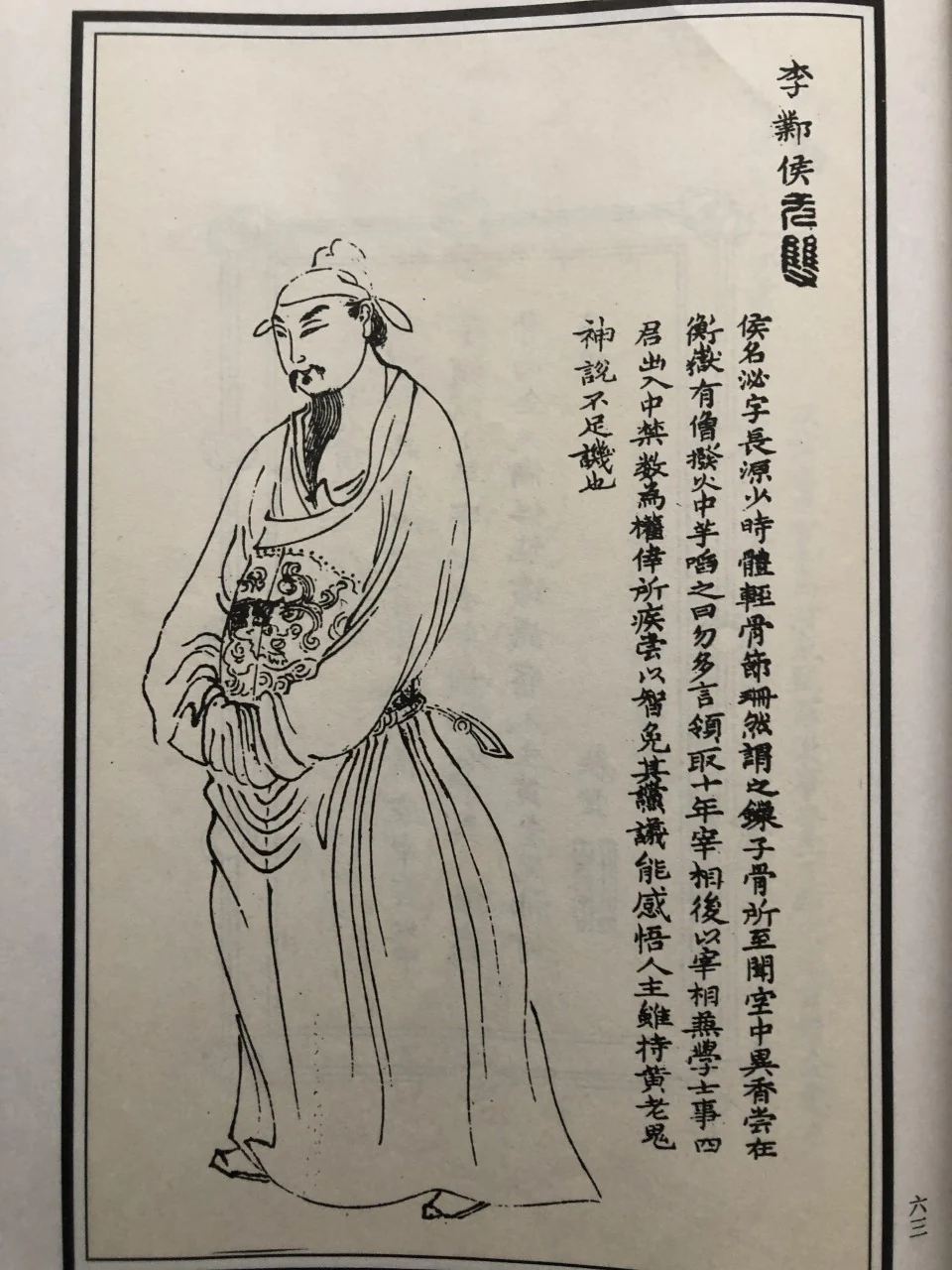
722 CE–789 CE
StatesmanGrand StrategistDaoist ScholarChancellor;Han
Li Mi
李泌
Li Mi (722 – April 1, 789), courtesy name Changyuan, formally the Marquis of Ye (Yehou), was a preeminent statesman, imperial grand strategist, Daoist philosopher, and bibliophile of the middle Tang Dynasty. Serving across the reigns of four emperors—Xuanzong, Suzong, Daizong, and Dezong—he achieved legendary status as a reclusive genius who repeatedly emerged from hermitage during imperial crises to rescue the dynasty, only…
722 CE–789 CETang Dynasty
PROFILE
Li Mi (722 – April 1, 789), courtesy name Changyuan, formally the Marquis of Ye (Yehou), was a preeminent statesman, imperial grand strategist, Daoist philosopher, and bibliophile of the middle Tang Dynasty. Serving across the reigns of four emperors—Xuanzong, Suzong, Daizong, and Dezong—he achieved legendary status as a reclusive genius who repeatedly emerged from hermitage during imperial crises to rescue the dynasty, only to decline highest honors and retreat into the mountains. Recognized as a child prodigy by Emperor Xuanzong and Chancellor Zhang Jiuling at age seven, Li Mi entered Lingwu as a commoner clad in white robes following the catastrophic An Lushan Rebellion. Serving as the primary grand strategist to Emperor Suzong, he devised the overarching operational campaign that recaptured the capitals of Chang'an and Luoyang, laying the foundation for imperial restoration. During the reign of Emperor Dezong, he was appointed Chancellor (Tong Zhongshu Menxia Pingzhangshi) in 787. In this pivotal office, Li Mi orchestrated the 'Zhenyuan Alliance'—a master diplomatic coalition uniting Tang with the Abbasid Caliphate, the Uyghurs, and Nanzhao to encircle and neutralize the menacing Tibetan Empire. Domestically, he defused violent regional mutinies, reconciled rival court factions, preserved the lives of distinguished generals such as Li Sheng and Ma Sui, and courageously shielded Crown Prince Li Song (later Emperor Shunzong) from wrongful disinheritance. Renowned also for engineering the historic Six Wells of West Lake in Hangzhou and accumulating an illustrious private library of over 30,000 volumes, Li Mi stands as one of the most brilliant and principled statesmen in classical Chinese history.
- Historical Era
- Tang Dynasty (High to Mid-Tang);Tang Dynasty
- Identity
- Statesman, Grand Strategist, Daoist Scholar, Chancellor;Han
- Date of Birth
- 722 CE(10th year of Kaiyuan, Emperor Xuanzong of Tang)
- Date of Death
- April 1, 789 CE(2nd day of the 3rd month, 5th year of Zhenyuan, Emperor Dezong of Tang)
- Highest office
- Joint Manager of Affairs with the Secretariat-Chancellery (Chancellor), enfeoffed as Marquis of Ye
- Ancestral Home / Birthplace
- Ancestral home Xiangping, Liaodong (modern Liaoyang); born in Chang'an, Jingzhao;722 (10th year of Kaiyuan, Emperor Xuanzong)
- Place of Birth
- Chang'an, Jingzhao (modern Xi'an, Shaanxi);April 1, 789 (2nd day, 3rd month, 5th year of Zhenyuan, Emperor Dezong)
- Place of Death
- Chang'an, Jingzhao;68
- Noble Title
- Marquis of Ye (Ye County Marquis);The proposed names Gongmin and Wenzhen remain unverified in the the source cache
- Posthumous Honors
- Grand Tutor to the Heir Apparent;Vice Director of Secretariat, Chancellor (Joint Manager of Affairs with Secretariat-Chancellery), Grand Academician of Jixian Hall and Chongwen Pavilion
- Major Achievements
- Grand strategist behind the recovery of Chang'an and Luoyang; architect of the Zhenyuan Alliance against Tubo; engineered Hangzhou's Six Wells; preserved the crown prince; accumulated the Yehou Library of 30,000 volumes
LIFE TIMELINE
Child Prodigy Audience | Summoned before Emperor Xuanzong at age seven; composed an acclaimed impromptu chess poem on 'Square, Round, Motion, and Stillness.'
Provincial Administration | Recalled by Emperor Daizong; served as prefect of Chuzhou and Hangzhou, where he engineered the renowned Six Wells of West Lake to supply fresh water.
Pacifying Regional Mutinies | Appointed Surveillance Commissioner of Shan-Guo during the Zhu Ci rebellion, securing the strategic Yellow River grain transport corridor.
Appointment as Chancellor | Appointed Vice Director of the Secretariat and Chancellor; orchestrated the Zhenyuan Alliance with the Abbasid Caliphate and Uyghurs against Tibet.
Defense of the Crown Prince | Courageously intervened with Emperor Dezong during the Princess Gaoguo witchcraft crisis, successfully safeguarding Crown Prince Li Song from execution.
Passing in Office | Bestowed the ultimate honor of Grand Academician; died at his official residence on April 1 at age sixty-eight; posthumously honored as Grand Tutor to the Heir Apparent.
Hanlin Attendance | Composed grand odes and was appointed Attendant Academician in the Hanlin Academy; subsequently retired to sacred mountains due to Yang Guozhong's jealousy.
Strategic Counsel at Lingwu | Joined Emperor Suzong at Lingwu in commoner robes; formulated the grand strategic plan to exhaust rebel forces and recapture the capitals.
Recognizing Li Mi's peerless executive genius | Recognizing Li Mi's peerless executive genius, Dezong summoned him to the provisional court and, in the sixth month of 787, officially appointed him Vice Director of the Secretariat and Chancellor (Tong Zhongshu Menxia Pingzhangshi), conferring the title of Marquis of Ye.
Retirement to Mount Heng | Following the victorious recovery of Chang'an and Luoyang, declined all ministerial appointments and retreated to Mount Heng to cultivate Daoism.
He passed away peacefully on April 1 | He passed away peacefully on April 1, 789, at the age of sixty-eight.
BIOGRAPHY
Biography
Ancestry and Childhood Genius Li Mi belonged to the prominent Liaodong lineage of the prestigious Li clan, descending directly from Li Bi, one of the Eight Pillar Generals of Western Wei. His father, Li Chengxiu, served as the magistrate of Wufang, while his mother was from the Zhou clan of Runan. From early infancy, Li Mi demonstrated astonishing cognitive faculties. At the tender age of seven, he was already celebrated across the metropolitan capital as a literary prodigy. In 728, Emperor Xuanzong held a scholastic tournament within the imperial palace, gathering eminent masters of Confucianism, Daoism, and Buddhism. When nine-year-old prodigy Yuan Chu dazzled the assembly with brilliant rhetoric, Emperor Xuanzong was informed of the seven-year-old Li Mi. Summoned immediately into the imperial presence, Li Mi entered while Xuanzong was engaged in a game of weiqi (Go) with Chancellor Zhang Yue, Duke of Yan. Xuanzong instructed Zhang Yue to test the child. Zhang suggested an extemporaneous poetic composition based on the philosophical concepts of the chessboard: 'Square, Round, Motion, and Stillness.' Zhang Yue recited: 'Square like a chessboard, round like a chess stone; in motion like playing a move, at rest like awaiting a turn.' Li Mi responded instantaneously without hesitation: 'Square like doing righteous deeds, round like using wise stratagems; in motion like employing operational tactics, at rest like unswerving virtue.' Astounded by the boy's moral depth and profound comprehension, Zhang Yue congratulated the emperor, who embraced the young child and rewarded his family lavishly. Renowned chancellor Zhang Jiuling developed an extraordinary affection for Li Mi, frequently inviting him into his private bedchamber to discuss literature, statecraft, and interpersonal relations, treating the young prodigy as an intellectual peer. ### Ascetic Hermitage and Imperial Summons Endowed with an unconventional temperament and contemptuous of conventional bureaucratic career pathways, Li Mi immersed himself deeply in the classic teachings of the Yijing (Book of Changes) and Laozi's Daoist philosophy. He traveled across sacred peaks, establishing retreats on Mount Song and Mount Hua. During the Tianbao era, Li Mi submitted grand philosophical essays to the imperial court. Emperor Xuanzong recognized his unique intellect and appointed him Attendant Academician in the Hanlin Academy, charging him with tutoring Crown Prince Li Heng (the future Emperor Suzong). However, Li Mi's uncompromising moral integrity and sharp satire against nepotistic ministers provoked the intense hostility of Chancellor Yang Guozhong and the sycophantic cabal. Recognizing the mounting corruption and imminent turbulence facing the realm, Li Mi voluntarily requested permission to withdraw from court, seeking seclusion in the countryside near Yingyang to pursue Daoist longevity arts and strategic studies. ### Sovereign Strategy at Lingwu and Capital Restoration In late 755, the catastrophic An Lushan Rebellion erupted. The rebel hordes overran the imperial heartland, capturing Luoyang and Chang'an. Emperor Xuanzong fled south towards Shu (Sichuan), while Crown Prince Li Heng traveled north to Lingwu, where he was proclaimed Emperor Suzong. Confronted by utter organizational chaos and imperial devastation, Suzong sent urgent couriers across the war-torn empire seeking Li Mi. When Li Mi arrived at Lingwu clad in simple white commoner robes, Emperor Suzong wept with joy, housing Li Mi in his personal quarters and sharing the imperial carriage with him. Suzong proposed conferring the title of Chancellor, but Li Mi resolutely refused, stating: 'Your Majesty treats me as an intimate friend and supreme counselor, which is far more honorable than any bureaucratic office. Grant me leave to serve in plain clothes, and when the capitals are restored, allow me to return to the mountains.' Suzong acquiesced, designating Li Mi as Chief Strategic Advisor and assigning him supreme supervisory authority over the palace secretariat and military deployments. Li Mi formulated the master grand strategy for winning the war. He analyzed that the rebel armies, composed of fierce nomad mercenaries, were primarily driven by material plunder. Li proposed: 'Do not exhaust imperial forces in premature, frontal urban assaults. Order Guo Ziyi to hold Shanxi and Shanxi gorges, pinning down Shi Siming in Hebei; dispatch Li Guangbi to dominate the northern passes, while imperial armies strike across Henan. By launching coordinated, multi-front incursions and avoiding conclusive battles, we will keep the rebel armies constantly marching and countermarching across thousands of miles. Within two years, their forces will be exhausted and their horses starved, allowing our assembled legions to crush them in a single decisive sweep.' Although Suzong periodically deviated from Li's cautious operational counsel out of eagerness to recapture Chang'an quickly, the fundamental framework designed by Li Mi ultimately dictated the collapse of the rebel hegemony and the triumphant liberation of both Chang'an and Luoyang in 757. ### Renunciation of High Office and Retreat to Mount Heng Following the triumphant reclamation of the imperial capitals, general jubilation swept the empire. Suzong offered Li Mi the highest ministerial posts, peerage estates, and gold. True to his ascetic convictions and keenly aware of the poisonous court intrigues brewing between eunuch Li Fuguo and Empress Zhang, Li Mi sought an audience with Suzong. He reiterated his sacred pledge: 'Your Majesty once agreed that when the capitals were restored, you would grant my wish to sleep with my head on the Son of Heaven's knee, and then permit me to leave. I have accomplished my mission.' When Suzong reluctantly conceded, Li Mi rested his head on the emperor's knee for a brief slumber, symbolizing the harmonious communion between sovereign and hermit sage. Thereafter, Li Mi departed from Chang'an, shedding all imperial accoutrements and retiring deep into the southern wilderness of Mount Heng (Nanyue) in modern Hunan, donning Daoist vestments and devoting his days to meditation, reading, and seclusion. ### Recalls under Daizong and Prefectural Achievements Upon the ascension of Emperor Daizong in 762, the new monarch immediately dispatched emissaries to Mount Heng to recall Li Mi. Daizong revered Li Mi from their shared hardships during the rebellion, bestowing upon him residences in the capital. However, powerful and corrupt chancellor Yuan Zai grew intensely fearful of Li Mi's overwhelming moral influence and political acumen. Sensing Yuan Zai's hostility and desiring to avoid destructive political friction, Li Mi requested a provincial transfer. Li was appointed Prefect of Chuzhou and subsequently Prefect of Hangzhou. In Hangzhou, the local population suffered chronically from brackish, saline groundwater due to proximity to the tidal Qiantang River. Demonstrating visionary hydraulic ingenuity, Li Mi surveyed underground aquifers and engineered the famous 'Six Wells of West Lake' (Yongjin, Jiazhao, Baogui, Xiangguo, Baisan, and Xiaosang Wells). He installed vast underground subterranean conduits made of hollowed bamboo and ceramic pipes to siphon fresh, sweet mountain spring water from West Lake directly into densely populated urban wards. This monumental public works project transformed Hangzhou into a flourishing metropolis, providing pure drinking water to countless generations and laying the foundational prosperity of the city for centuries. ### Prime Ministry under Dezong and the Zhenyuan Alliance In 779, Emperor Dezong ascended the throne. When the Jingyuan Mutiny (Zhu Ci rebellion) forced Dezong to flee Chang'an for Fengtian in 783, the dynasty once again faced mortal peril. Li Mi was appointed Surveillance Commissioner of Shan-Guo. He swiftly restored command discipline over mutinous regional garrisons, revitalized the grain transport arteries along the Yellow River, and supplied critical provisions and weapons to the beleaguered imperial court. Recognizing Li Mi's peerless executive genius, Dezong summoned him to the provisional court and, in the sixth month of 787, officially appointed him Vice Director of the Secretariat and Chancellor (Tong Zhongshu Menxia Pingzhangshi), conferring the title of Marquis of Ye. As chief minister during the Zhenyuan era, Li Mi confronted a bankrupt treasury, unruly regional warlords (fanzhen), and massive invasions by the Tibetan Empire (Tubo), which had capitalized on the Tang civil wars to annex vast swathes of western territory. To solve the existential Tibetan threat, Li Mi formulated his most famous diplomatic masterpiece: the 'Zhenyuan Alliance.' Overcoming Emperor Dezong's bitter personal grievances against the Uyghurs, Li Mi persuaded the throne to pursue a grand encirclement policy: 'To neutralize Tubo, we must ally with the Uyghurs to the north, conclude amity with the Abbasid Caliphate (Black-Robed Dashi) and the Indian kingdoms to the west, and restore amicable vassalage with Nanzhao to the south. With these four great powers bound in alliance with our dynasty, Tibet will be surrounded on all four flanks, cutting off its claws and teeth.' Dezong implemented Li Mi's strategy, arranging the marriage of Princess Xian'an to the Uyghur Khagan and receiving diplomatic envoys from the Abbasid Caliphate. This brilliant geopolitical maneuvering completely crippled Tibetan offensive capability, securing the western borders of the Tang Empire. ### Moral Courage and Preserving the Crown Prince Li Mi's final and most courageous act of statesmanship occurred in late 788 during the sensational Princess Gaoguo witchcraft scandal. When Princess Gaoguo (daughter of Emperor Suzong) was accused of consorting with Daoist sorcerers, Emperor Dezong suspected that Crown Prince Li Song (the future Emperor Shunzong) was implicated in treason. Enraged and paranoid, Dezong privately resolved to depose or execute the Crown Prince and install Prince of Shu Li Yi in his place. At the risk of his own life and clan, Li Mi vehemently confronted the emperor in the Hall of Extended Brilliance. For several days, Li Mi stood his ground, weeping and remonstrating: 'Your Majesty must remember the tragic fate of your uncle, Prince of Jianning Li Tan, who was unjustly put to death during Emperor Suzong's reign due to slanderous court intrigue! The Crown Prince is deeply filial and blameless; sacrificing your own son will fracture the dynasty and plunge the empire into civil war.' Confronted by Dezong's incandescent fury and threats of execution, Li Mi replied unflinchingly: 'I am old and ready to die. If my death can awaken Your Majesty and preserve the sacred altars of the Tang Dynasty, I will welcome the executioner's blade.' Moved to tears by Li Mi's saintly incorruptibility and undeniable truth, Dezong relented and embraced the Crown Prince, resolving the explosive dynastic crisis. Exhausted by decades of selfless service and relentless labor, Li Mi fell gravely ill shortly after being granted the highest scholastic title of Grand Academician of Jixian and Chongwen. He passed away peacefully on April 1, 789, at the age of sixty-eight. Dezong went into profound mourning, declaring a suspension of court audiences, posthumously promoting Li Mi to Grand Tutor to the Heir Apparent, and conferring an exceptionally generous funeral allowance.
Major Activities
1. Master Strategic Guidance and Capital Restoration During the darkest days of the An Lushan Rebellion, Li Mi served as Emperor Suzong's supreme military architect. Eschewing reckless frontal engagements, he implemented a protracted attritional strategy that kept rebel legions perpetually marching between Hebei and Henan, denying them strategic consolidation while imperial armies mustered irresistible numerical superiority. His strategic foresight directly orchestrated the recovery of Chang'an and Luoyang in 757, saving the Tang Empire from permanent disintegration. ### 2. The Zhenyuan Alliance: Geopolitical Encirclement of Tibet Recognizing the acute geopolitical threat posed by the expansionist Tibetan Empire, Chancellor Li Mi engineered the 'Zhenyuan Alliance'—one of the most sophisticated grand strategies in world diplomatic history. By allying with the Abbasid Caliphate in Central Asia, restoring harmonious relations with the Uyghur Khaganate, and reincorporating Nanzhao, Li Mi created a formidable diplomatic cordoning system that neutralized Tibet's military adventurism and guaranteed peace across Central Asia. ### 3. Engineering the Six Wells of West Lake During his tenure as Prefect of Hangzhou, Li Mi addressed the severe urban water crisis caused by salinized estuarine groundwater. By constructing an intricate network of underground conduits and six grand stone cisterns fed by fresh West Lake springs, he established the primary municipal water supply system for Hangzhou, fostering economic prosperity and earning the perpetual veneration of the Jiangnan populace. ### 4. Preservation of Imperial Lineage and Pacification of Generals Li Mi consistently intervened to prevent tyrannical bloodletting and maintain dynastic equilibrium. He shielded celebrated loyalist commanders Li Sheng and Ma Sui from paranoid purges, defused dangerous regional military insurrections in Shan-Guo through administrative justice rather than slaughter, and heroically risked imperial execution to protect Crown Prince Li Song from wrongful disinheritance.
Personal Relations
- Imperial Monarchs Served: - Emperor Xuanzong of Tang: Recognized Li Mi's genius in childhood and appointed him to the Hanlin Academy. - Emperor Suzong of Tang: Relied completely on Li Mi's strategic genius at Lingwu, honoring him as an intimate teacher and companion. - Emperor Daizong of Tang: Formed deep bonds with Li during the rebellion and recalled him to imperial service. - Emperor Dezong of Tang: Appointed Li Mi Chancellor during the Zhenyuan era, relying on his diplomatic and domestic leadership.
- Ministers, Generals, and Intellectual Peers: - Zhang Jiuling: Renowned High-Tang Chancellor who mentored Li Mi and treated him as an intellectual peer from childhood. - Zhang Yue: Duke of Yan who administered the legendary 'Square and Round' chess examination. - Guo Ziyi: Supreme military commander who executed Li Mi's grand strategic directives to liberate the two capitals. - Li Sheng and Ma Sui: Foremost generals of the mid-Tang whose lives and honors were shielded by Li Mi from Dezong's paranoia. - Li Mian: Upright chancellor cleared of unjust accusations through Li Mi's judicial intervention.
- Spiritual Mentors: - Chan Master Lancan (Mingzan): Renowned ascetic of Mount Heng who shared roasted sweet potatoes with Li Mi and prophesied his ten-year tenure as Prime Minister.
Historical Assessment
Historical Records and Scholarly Judgment The following are paraphrases of assessments reproduced in the The Old Book of Tang recognizes Li Mi's judgment in advancing and withdrawing, but criticizes his talk of spirits while serving as chancellor. Its assessment combines recognition of his abilities with an unfavorable judgment of his suitability for high office. The New Book of Tang discusses qualities approaching loyalty, independence, and prudence, while questioning his supernatural claims and the reliability of the family biography written by his son. It nevertheless acknowledges his advice to act first against Fanyang and his defense of the crown prince's innocence. The former English statement about Suzong lacking effective assistance at Lingwu belongs to Fan Wenlan's modern assessment, not to this chronicle. Sima Guang credits Li Mi with exceptional strategic intelligence despite his taste for supernatural talk. He regards Li Mi's role in restoring the capitals, refusal of office, and protection of the future Daizong and Shunzong while crown princes as important merits. A separate assessment criticizes his effort to restrain Dezong's desires by enlarging the emperor's private wealth, arguing that this approach could increase those desires. These judgments do not amount to unqualified praise of peerless governance. ### Modern Historiography Fan Wenlan argues that Suzong's political standing after accession did not by itself supply the plans and strength needed to overcome the crisis. Li Mi's arrival at Lingwu provided effective assistance. Fan also stresses his contributions under Suzong, Daizong, and Dezong, and his ability to avoid the dangers of rivalry for fame and profit while continuing to support the dynasty. The source entry cites Chen Yinke's praise of the clarity of Li Mi's proposals concerning Tibet in its discussion of his political activities. This specific judgment does not support the former English attribution of a sweeping endorsement of all his conduct or a complete fusion of Daoist and Confucian ideals. The Chinese section retains additional attributed assessments and differences of opinion. The anecdotal and biographical material formerly mixed into that section has been moved to the biography; its supernatural elements remain identified as stories, rather than confirmed events.
FIGURES ASSOCIATED WITH THIS DYNASTY
Bibliography
- Old Book of Tang*, Volume 130, Biography 80: Biography of Li Mi
- New Book of Tang*, Volume 139, Biography 64: Biography of Li Mi
- Quan Tangwen* (Complete Tang Prose), Volume 381: Works of Li Mi
- Quan Tangshi* (Complete Tang Poetry), Volume 273: Poems of Li Mi