Birth in the Eastern Palace
Born in an auxiliary palace in Chang'an, initially named Li Sisheng, third son of Xuanzong by Noble Consort Yang
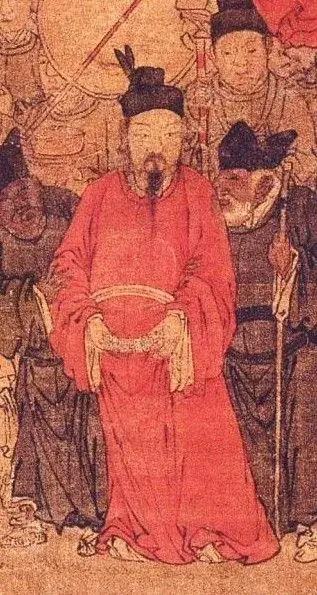
711 CE–762 CE
李亨
Li Heng (李亨, 711–762), originally named Li Sisheng and later successively named Jun, Yu, and Shao before being named Heng in 744, was the grandson of Emperor Ruizong and the third son of Emperor Xuanzong by Empress Yuanxian (née Yang). He was the seventh sovereign of the Tang Dynasty, reigning from 756 to 762. In his youth, he resided within the Ten Princes' Mansions and was invested as Crown Prince in 738 following the…
Li Heng (李亨, 711–762), originally named Li Sisheng and later successively named Jun, Yu, and Shao before being named Heng in 744, was the grandson of Emperor Ruizong and the third son of Emperor Xuanzong by Empress Yuanxian (née Yang). He was the seventh sovereign of the Tang Dynasty, reigning from 756 to 762. In his youth, he resided within the Ten Princes' Mansions and was invested as Crown Prince in 738 following the execution of Crown Prince Li Ying. During his eighteen years as heir apparent, Li Heng suffered relentless political persecution and framing from powerful chancellors Li Linfu and Yang Guozhong, twice being forced to divorce his consorts to survive and developing a deeply patient and guarded character. In 755, the catastrophic An Lushan Rebellion erupted, prompting Emperor Xuanzong to flee toward Sichuan the following summer. During the flight, Li Heng secretly coordinated the Mawei Mutiny at Mawei Courier Station, orchestrating the execution of Chancellor Yang Guozhong and the forced suicide of Consort Yang Guifei, after which he decisively parted ways with his father and marched north. On August 12, 756, Li Heng ascended the imperial throne at Lingwu, adopting the reign era Zhide and honoring Xuanzong as Retired Emperor. He forged an alliance with the Uyghur Khaganate, mobilized Central Asian auxiliary forces, entrusted strategy to hermit advisor Li Mi, and appointed renowned generals Guo Ziyi, Li Guangbi, and Li Siye to launch an all-out counteroffensive. In 757, imperial forces successfully recaptured both Western Capital Chang'an and Eastern Capital Luoyang, halting the rebel advance. However, in his later years, Suzong grew deeply suspicious of his generals; his refusal to name a supreme commander at the Battle of Xiangzhou led to a crushing defeat under eunuch supervisor Yu Chao'en. His court became paralyzed by vicious power struggles between Empress Zhang and eunuch Li Fuguo, culminating in the tragic execution of his courageous son, Prince of Jianning Li Tan. On May 16, 762, Emperor Suzong died amidst a bloody palace coup in Changsheng Hall at the age of fifty-two. He was posthumously honored as Emperor Suzong and interred at Jianling.
Born in an auxiliary palace in Chang'an, initially named Li Sisheng, third son of Xuanzong by Noble Consort Yang
Appointed Grand Protector of Anxi and Commissioner for Western Barbarians, initiating the precedent of royal nominal military posts
Created Prince of Zhong, renamed Jun, and relocated with other princes to the Ten Princes' Mansions under close eunuch surveillance
Served as nominal Grand Marshal of Hebei Circuit; Vice Marshal Li Yi crushed invading Khitan forces, earning Li Heng the title Minister of Works
Following the execution of Prince Li Ying, created Crown Prince on account of his seniority and filial conduct despite Li Linfu's opposition
Framed by Li Linfu over a meeting between his brother-in-law Wei Jian and General Huangfu Weiming; forced to divorce Consort Wei to survive
Slandered again during the Du Youlin treason investigation, leading to the repudiation of Consort Du as Li Heng endured immense political pressure
Rebel forces breached Tong Pass; Li Heng covertly orchestrated the Mawei Mutiny against Yang Guozhong and marched north to Lingwu
Ascended the imperial throne at the South Gate of Lingwu on August 12, adopting the era Zhide and honoring Xuanzong as Retired Emperor
Appointed Prince of Guangping Li Yu and Guo Ziyi to recapture Chang'an and Luoyang; tragically executed Prince Li Tan under false accusations
Nine military commissioners besieged An Qingxu at Xiangzhou, but suffered catastrophic collapse under eunuch supervisor Yu Chao'en
Retired Emperor Xuanzong died; Empress Zhang's plot against the Crown Prince was crushed by Li Fuguo, and Suzong passed away that night
Li Heng was born on October 19, 711, in an auxiliary palace within the Eastern Palace of Chang'an, originally named Li Sisheng. His birth mother, Lady Yang, hailed from the prestigious Hongnong Yang clan; her great-grandfather Yang Shida had served as Chancellor under the Sui Dynasty, and her grand-aunt was the mother of Empress Wu Zetian. At the time of Li Heng's conception, his father, Crown Prince Li Longji, was locked in an intense struggle for survival against Princess Taiping. Fearing that Princess Taiping would use his concubine's pregnancy as a pretext to accuse him of indulging in women and remove him from the succession, Li Longji secretly obtained abortifacient herbs to terminate the pregnancy, but relented at the last moment.
Upon his birth, Lady Yang dared not monopolize the child's care due to her subordinate concubine rank beneath Crown Princess Wang. Because Crown Princess Wang had borne no sons, she took the infant into her personal chambers and raised him with boundless affection, loving him even more dearly than her own flesh and blood. In 712, Li Longji acceded to the throne as Emperor Xuanzong, and the two-year-old Li Heng was enfeoffed as Prince of Shan. In 716, at five years of age, he was named Grand Protector of Anxi and Pacification Commissioner for Western Barbarians, establishing the administrative precedent of Tang princes holding nominal frontier governorships from the capital without proceeding to their posts.
During his formative years, the imperial court reinforced strict protocols regarding royal residences. In 715, Xuanzong created his second son Li Ying as Crown Prince, while Li Heng maintained strict decorum as the third prince. To avoid the destructive factional rivalries of the early Tang, Xuanzong ensured that all princes remained in Chang'an under the tutelage of eminent Confucian scholars rather than governing regional fiefs. Li Heng received instruction in history, ethics, and military command from masters including He Zhizhang, Lu Xiang, Pan Su, and Huangfu Bin, gaining deep classical learning and an enduring reputation for filial piety and composure among his brothers.
In 725, following his grand imperial sacrifices at Mount Tai, Xuanzong erected the expansive Ten Princes' Mansions east of Anguo Temple to isolate his adult sons from outside court officials. Li Heng, then fifteen and titled Prince of Zhong, moved into his designated court within the compound, where imperial eunuchs maintained strict surveillance over all visitors and activities. For thirteen years, Li Heng lived under this cloistered, regimented existence, cultivating an extraordinarily cautious, patient, and self-restrained temperament that concealed his inner thoughts.
Despite his secluded domestic life, Li Heng was assigned nominal military responsibilities. In 727, he was advanced to Prince of Zhong and renamed Li Jun, nominally commanding the Shuofang Circuit and Chanyu Protectorate. In 730, when the Khitan and Xi confederacies invaded the northeast frontier, Xuanzong designated Li Heng as Grand Marshal of Hebei Circuit, with veteran general Prince of Xin'an Li Yi serving as Vice Marshal. Frontline armies scored successive victories, and Li Heng was awarded the honorary rank of Minister of Works in 732, significantly elevating his standing within the imperial family.
In 735, Li Heng's personal name was officially changed to Li Yu. Following the frontier victories, Xuanzong hosted a grand reception at Guangshun Gate, presenting his sons to the civil and military ministers. Retiring from court, Senior Chancellor Zhang Yue praised Prince Li Yu's composure, modesty, and filial devotion, forecasting that he possessed the qualities of an imperial heir. Although Li Yu remained discreetly inside the Ten Princes' Mansions, his growing stature among court ministers set the stage for his emergence as a leading candidate during the impending succession crisis.
In 737, tragedy struck the imperial household. Through conspiratorial machinations orchestrated by the favored Consort Wu and Chief Chancellor Li Linfu, Emperor Xuanzong executed Crown Prince Li Ying, Prince of E Li Yao, and Prince of Guang Li Ju in a single day. Following their execution, Li Linfu lobbied vigorously to have Consort Wu's son, Prince of Shou Li Mao, named heir apparent. However, shaken by remorse over the deaths of his three sons and wary of Consort Wu's political ambitions, Xuanzong hesitated for over a year, growing melancholic and visibly emaciated.
At this critical juncture, imperial eunuch Gao Lishi counseled Xuanzong, advising that elevating the eldest surviving son would silence all court disputes. Xuanzong was deeply persuaded, and on July 23, 738, he officially issued an imperial edict naming the twenty-seven-year-old Prince of Zhong, Li Yu (Li Heng), as Crown Prince. Although elevated to the Eastern Palace, Li Heng was immediately enveloped by the hostility of Li Linfu, who feared retribution should the prince ascend the throne.
During the early Tianbao era, Li Linfu intensified efforts to undermine the Eastern Palace by purging sympathetic officials. He fabricated factional charges against Chancellor Li Shizhi, driving him from office to a provincial exile where he committed suicide, while dozens of distinguished ministers including Wei Bin, Pei Kuan, and Li Qiwu were banished to peripheral garrisons. In 744, Li Yu was renamed Li Heng. Observing the systematic destruction of court allies, Li Heng closed his gates and severed all communications with outside ministers to deny Li Linfu any pretext for attack.
In the first month of 746, General Huangfu Weiming of Hexi arrived in Chang'an to present battle trophies and met with the Crown Prince's brother-in-law, Minister of Justice Wei Jian, at Jinglong Taoist Temple during the Lantern Festival. Li Linfu seized on this meeting, directing Censor Yang Shenjin to accuse Wei Jian and Huangfu Weiming of treasonous collusion to place the Crown Prince on the throne. Xuanzong ordered their arrest and interrogation, while Li Linfu sought to expand the case directly against the heir apparent.
Faced with mortal peril, Li Heng demonstrated cold political pragmatism. Rather than defending his brother-in-law, he submitted a terrified memorial condemning himself and claiming that he and Consort Wei had long been estranged, petitioning for an immediate divorce to prove his loyalty to dynastic law. Touched by his submission, Xuanzong spared Li Heng, but granted the divorce; Consort Wei was forced to shave her head as a Buddhist nun, while Wei Jian and his brothers were subsequently murdered in southern exile.
Misfortune struck again at the close of 746 when Liu Ji accused his father-in-law Du Youlin—father of Li Heng's favored Consort Du—of harboring seditious prophecies against the emperor. Li Linfu seized the investigation, executing esteemed scholars Li Yong and Wang Zeng under the rod in Dalisi prison and attempting to implicate the Eastern Palace. Once again, Li Heng submitted an urgent memorial repudiating Consort Du and expelling her from the palace. The relentless psychological torment turned his hair gray and left lasting emotional scars.
In the wake of these crises, Xuanzong arranged for Li Heng to marry Lady Zhang, a woman of influential aristocratic lineage. In 751, Lady Zhang gave birth to Prince Li Shao. Although Li Linfu died in 752, his successor Yang Guozhong, relying on Consort Yang Guifei's favor, proved even more hostile toward the Crown Prince. Throughout the final years of the Tianbao era, Li Heng lived under suffocating surveillance, maintaining a low profile while quietly cultivating the loyalty of palace guards as the empire drifted toward catastrophe.
In the eleventh month of 755, Military Commissioner An Lushan launched his rebellion from Fanyang under the pretext of overthrowing Yang Guozhong, quickly overrunning Luoyang and advancing west. In the sixth month of 756, Tang general Geshu Han suffered total defeat at Lingbao, and Tong Pass collapsed. On the morning of July 14, Xuanzong abandoned Chang'an without notifying the bureaucracy or public, fleeing toward Sichuan with Consort Yang, Yang Guozhong, Gao Lishi, and several thousand imperial bodyguards.
The fleeing imperial column numbered around three thousand troops, with the rear guard of two thousand elite horsemen, including the Feilong Imperial Guards, placed under Crown Prince Li Heng's direct command. Li Heng's sons, Prince of Guangping Li Yu and Prince of Jianning Li Tan, served as operational commanders. Sweltering under the summer heat and starving on dusty mountain roads, the exhausted guards openly blamed Yang Guozhong's corruption for the catastrophe, creating the ideal atmosphere for a coordinated military strike.
Upon reaching Mawei Courier Station, the simmering mutiny erupted. Li Heng, his sons, and confidant eunuch Li Fuguo had established secret contact with Left Dragon Martial General Chen Xuanli. Capitalizing on a confrontation where Tibetan envoys blocked Yang Guozhong's horse demanding provisions, soldiers shouted that Yang was conspiring with foreign barbarians. The troops mutinied, chasing Yang Guozhong into the western gate, hacking him to pieces, and executing his son Yang Xuan and the Lady of Han.
Following Yang Guozhong's execution, mutinous troops surrounded the imperial quarters, refusing to march until Consort Yang Guifei was put to death. Xuanzong had no choice but to command Gao Lishi to strangle the consort beneath a pear tree in the nearby Buddhist shrine. While the mutiny eradicated the Yang faction, Chen Xuanli immediately reaffirmed his loyalty to Xuanzong, preventing Li Heng from seizing imperial authority on the spot and forcing a political separation between father and son.
As Xuanzong prepared to continue south across the Qinling Mountains into Sichuan, thousands of local elders blocked the highway at Jincheng, weeping and begging the Crown Prince to remain in the north to lead the resistance. Encouraged by his sons Li Yu and Li Tan, Li Heng made the momentous decision to break with his father. Departing the western column with only two thousand loyal guards, Li Heng turned his cavalry north toward the military headquarters of the Shuofang Army at Lingwu.
The northern journey was arduous and perilous. Trekking across barren loess hills, Li Heng's small band was harassed by rebel patrols and frequently ran out of provisions. Passing through Changwu and Xiaoguan, Li Heng personally rallied the local population, swearing an oath to defeat the rebels and restore the dynasty. Shuofang Deputy Commissioner Du Hongjian and Censor Cui Yi welcomed the prince at Pingliang, preparing the ground for his accession.
On August 9, 756, Li Heng arrived safely at Lingwu, where tens of thousands of veteran frontier troops received him with overwhelming fervor. Lingwu possessed formidable fortifications, abundant pastures, and disciplined steppe cavalry. Li Heng assumed military command, distributed rewards to the troops, and restored chain of command across the northwestern borders, creating a solid base for the counteroffensive.
On August 12, 756, supported by his commanders and civilian officials, Li Heng formally mounted the south gate tower of Lingwu to ascend the throne as Emperor Suzong, inaugurating the Zhide reign era. He issued an empire-wide amnesty, abolished regional levies, bestowed the title of Retired Emperor upon Xuanzong in Chengdu, and sent emissaries to notify his father. The ascension at Lingwu provided a unified political symbol for the empire in its darkest hour.
Ascending the throne amidst ruins, Emperor Suzong confronted an existential crisis. Rebel forces occupied the central plains, both capitals had fallen, and imperial revenues had evaporated. In this dire hour, the eminent scholar-recluse Li Mi arrived at Lingwu in response to an imperial summons. Suzong granted him unprecedented trust, sharing his tent and discussing statecraft day and night. Li Mi formulated a grand strategy of harassing the enemy's rear lines and exhausting rebel armies, anchoring Suzong's strategic planning.
Li Mi urged Suzong to bypass the capitals and dispatch Guo Ziyi and Li Guangbi directly from Shanxi to cut off the rebel stronghold at Fanyang, causing rebel armies in the south to collapse without supplies. However, eager to consolidate his imperial legitimacy, Suzong prioritized the immediate liberation of Chang'an and Luoyang. While Suzong diverged from Li Mi's advice on targeting Fanyang, Li Mi remained indispensable in coordinating supplies, troop movements, and high-level appointments.
To overcome severe troop shortages, Suzong pursued an aggressive foreign alliance. He directed Crown Prince Li Yu to form a sworn brotherhood with Prince Yabghu of the Uyghur Khaganate, securing four thousand elite nomadic cavalry alongside allied troops from Anxi, Fergana, and the Abbasid Caliphate. Domestically, he placed Guo Ziyi over the Shuofang Circuit and Li Guangbi over Hedong, ordering them to raid rebel communications across Shanxi and Hebei.
In February 757, Suzong advanced his headquarters to Fengxiang. In September, he appointed Crown Prince Li Yu as Supreme Commander, Guo Ziyi as Vice Commander, and Li Siye as Vanguard, leading one hundred and fifty thousand allied troops to liberate Chang'an. On October 28, the imperial army engaged An Shouzhong's one hundred thousand rebel soldiers north of Xiangji Temple in one of the bloodiest clashes of the war.
At the climax of the battle, vanguard commander Li Siye stripped to the waist and wielded his massive two-handed broadsword, slaying dozens of rebel cavalrymen to rally the wavering frontline. Coordinated with an Uyghur cavalry flank attack, Tang forces shattered the rebel line, killing sixty thousand enemy troops. That night, rebel general Zhang Tongru fled the city, and Crown Prince Li Yu marched triumphantly into Chang'an amidst joyful tears from the populace.
Following the victory, Uyghur Prince Yabghu demanded to plunder Chang'an in accordance with an earlier promise made by Suzong. Crown Prince Li Yu bowed before Yabghu's horse, arguing that sacking Chang'an would cause Luoyang's citizens to fight to the death for the rebels, begging him to delay until Luoyang was reached. Impressed by Li Yu's moral stature, Yabghu agreed to march around the city without plundering, sparing the capital from ruin.
On November 14, imperial armies scored another decisive triumph over rebel general Yan Zhuang at Xindian near Shan County, with Uyghur cavalry outflanking rebel defenses. An Qingxu abandoned Luoyang and fled north to Yecheng, allowing Tang armies to liberate the Eastern Capital. Luoyang elders gathered ten thousand bolts of silk to appease the Uyghurs and halt looting. The recapture of both capitals within a month restored the authority of the Tang Dynasty.
When news of the victories reached Fengxiang, Suzong wept with gratitude and dispatched couriers to escort Retired Emperor Xuanzong back to the capital. In December 757, Xuanzong returned to Chang'an, meeting Suzong at Wangxian Station in an emotional reconciliation. Suzong prostrated himself before his father, who tearfully embraced him and formally transferred imperial authority, solidifying the dynastic transition.
Beneath the glory of recapturing the capitals, factional strife within Suzong's court intensified. Deeply suspicious due to his traumatic years as Crown Prince, Suzong harbored acute paranoia toward both his royal brothers and victorious generals. Early in 757, his courageous third son, Prince of Jianning Li Tan, openly condemned the political meddling of Consort Zhang and eunuch Li Fuguo. Slandered by the duo as plotting against Crown Prince Li Yu, Li Tan was executed on his father's orders, casting a pall over the royal household.
Li Tan's execution terrified Crown Prince Li Yu and prompted strategist Li Mi to resign and retreat to Mount Heng. Suzong's paranoia also crippled his military leadership. In 758, Tang forces mobilized six hundred thousand troops under nine military commissioners to besiege An Qingxu at Yecheng. Fearing that any general would become too powerful, Suzong refused to appoint a supreme commander, assigning eunuch Yu Chao'en as supervisor.
In April 759, rebel general Shi Siming led thirteen myriad troops south from Fanyang to relieve Yecheng. The leaderless Tang armies were thrown into disarray by a sudden sandstorm, resulting in a catastrophic rout. Yu Chao'en deflected blame onto Guo Ziyi, and Suzong stripped Guo of his command, stalling the pacification campaign for years and allowing the rebellion to drag on.
Domestically, Suzong became completely dependent on Empress Zhang and eunuch Li Fuguo, who monopolized imperial administration and established eunuch control over the palace guards. Under their influence, Suzong forcibly relocated Retired Emperor Xuanzong from Xingqing Palace to the Western Palace, exiling loyal attendants Gao Lishi and Chen Xuanli. Xuanzong spent his final years in sorrowful isolation, permanently estranging father and son.
In his final years, Suzong suffered from debilitating paralysis and cardiac distress. Seeking spiritual solace, he changed reign eras to Qianyuan, Shangyuan, and Baoying, indulging in religious rituals while corruption consumed his court. When Retired Emperor Xuanzong died in May 762, Suzong collapsed from grief and shock, falling critically ill.
Fearing retribution once Crown Prince Li Yu ascended the throne, Empress Zhang summoned Prince of Yue Li Xi to depose the heir apparent and assassinate Li Fuguo. However, eunuch Cheng Yuanzhen warned Li Fuguo, who mobilized the Feilong Imperial Guards, executed Li Xi, and arrested the empress. On the night of May 16, 762, hearing the clash of arms inside Changsheng Hall, Emperor Suzong passed away in terror at age fifty-two. He was succeeded by Crown Prince Li Yu (Emperor Daizong) and interred at Jianling.
Emperor Suzong's foremost political achievement lay in decisively dismantling the corrupt autocratic grip of consort clans established during the late Kaiyuan and Tianbao eras. Following the execution of Yang Guozhong during the Mawei Mutiny, his northern march and ascension at Lingwu permanently severed the monopolistic power of consort families, reasserting imperial sovereignty in a moment of existential peril.
During the initial phase of the Lingwu regime, Suzong promoted talented middle- and lower-ranking scholars and Guanzhong elites. Administrators like Du Hongjian and Cui Yi provided institutional continuity, while hermit statesman Li Mi anchored policy formulation. This capable civilian cadre revitalized administrative machinery and mobilized national resistance to preserve the dynasty.
However, Suzong's consolidation of power planted institutional flaws. His unilateral ascension at Lingwu created a tense dual-court dilemma with Retired Emperor Xuanzong. To balance civil chancellors and watch over powerful generals, Suzong relied heavily on eunuchs like Li Fuguo and Yu Chao'en, establishing the precedent of eunuchs commanding imperial guards and supervising regional armies that plagued the Middle and Late Tang dynasties.
Within the central administration, Suzong's reign witnessed the shift of authority from the Outer Court chancellery to the Inner Court. To expedite wartime decrees, he expanded the Hanlin Academy and embryonic Xuanhui Academy, bypassing traditional three-department bureaucratic reviews. While this centralized wartime decision-making, it eroded traditional institutional checks and balances.
In dynastic succession, Suzong's paranoia inflicted severe damage. Scarred by his own years under persecution, he distrusted military princes. The unjust execution of Prince Li Tan and the marginalization of capable sons left the throne isolated, enabling Empress Zhang and eunuch Li Fuguo to manipulate court affairs during his final illness.
Suzong's crowning military legacy was formulating the grand counteroffensive anchored by the veteran Shuofang Army and external alliances with the Uyghurs and Central Asian principalities. Recognizing that imperial border defenses had collapsed, he based his strategy on the multi-ethnic cavalry forces of the Ordos Loop, welding a formidable allied army of one hundred and fifty thousand men capable of confronting the rebel forces.
Operationally, Suzong utilized the talents of mid-Tang generals Guo Ziyi and Li Guangbi. Deploying Guo Ziyi to hold the central corridor while Li Guangbi conducted guerrilla operations across Shanxi and Hebei, imperial armies severed rebel communications with their northern base. The victories at Xiangji Temple and Xindian validated this coordinated dual-front operational doctrine.
Suzong designated Crown Prince Li Yu as Supreme Commander, establishing royal authority over diverse regional factions. Li Yu's diplomatic skill and composure united veteran generals and prevented foreign auxiliaries from pillaging the recovered capitals, preserving civic stability in liberated territories.
Nevertheless, Suzong's strategic impatience prolonged the conflict. Rejecting Li Mi's strategy of bypassing the capitals to destroy Fanyang directly, he prioritized the symbolic recovery of Chang'an and Luoyang, allowing rebel remnants to regroup in Hebei. His refusal to name a supreme commander at the Battle of Xiangzhou resulted in the total collapse of six hundred thousand troops, extending the war for years.
In military organization, Suzong's reign accelerated the dissolution of the traditional fubing militia system and the rise of regional military commissioners (jiedushi). To raise troops, he granted regional commanders sweeping fiscal and civil powers, fostering the decentralized warlordism that characterized the Late Tang and Five Dynasties periods.
Confronted with the collapse of the agrarian tax base across northern China, Suzong initiated vital fiscal and monetary reforms. To fund military operations and allied subsidies, he established specialized Salt and Iron Commissioners, redirecting the empire's fiscal reliance toward the grain transport and salt monopolies of the prosperous Yangtze-Huai River valley, laying the foundation for mid-Tang fiscal recovery.
In monetary policy, Suzong minted high-denomination fiduciary coins, including Qianyuan Zhongbao. While this currency inflation generated immediate revenue, it caused severe price inflation and widespread counterfeiting across Guanzhong, inflicting immense economic hardship on wartime populations and illustrating the hazards of emergency monetary expansion.
To stabilize food supplies, his administration established the Changping granary system and grain purchase programs across southern China under financial administrators like Diwu Qi and Liu Yan. Transporting southern grain to northern armies sustained the empire during its darkest hours and accelerated the south's development as China's economic engine.
Geopolitically, Suzong revised the empire's urban hierarchy by instituting the Five Capitals system. In 760, he designated Jingzhou as the Southern Capital (Jianglingfu), matching its bureaucratic status with the Western Capital Chang'an, Eastern Capital Luoyang, Northern Capital Taiyuan, and Southern Capital Chengdu. This reorganization created a defensive axis along the middle Yangtze, reflecting the southward shift of the empire's strategic center.
The establishment of the Five Capitals provided strategic depth during periods of northern instability. Jiangling and Chengdu served as southern redoubts safeguarding access to southern grain and wealth, ensuring the long-term survival of the Tang state.
The Old Book of Tang (Jiu Tang Shu) praises Emperor Suzong's decisive role in the dynastic restoration at Lingwu while lamenting his susceptibility to inner-palace manipulation: "When the western capital fell into ruin and the imperial carriage fled toward Ba and Shu, had Suzong not unfurled his banners at Shuofang and rallied the loyal and righteous across the realm, how could the ancestral temples have been cleansed and the two capitals recovered so swiftly? Yet his indulgence of Empress Zhang and Li Fuguo tarnished his paternal filiality and left a troubled legacy within the palace." The New Book of Tang (Xin Tang Shu) similarly notes that although Suzong restored the Tang mandate amidst unprecedented catastrophe, his reliance on eunuchs and appeasement of military governors sowed long-term institutional weaknesses.
Later historians such as Sima Guang in the Zizhi Tongjian and Wang Fuzhi in the Du Tongjian Lun evaluated Li Heng's accession at Lingwu from the dual perspectives of wartime necessity and Confucian ritual propriety. While acknowledging that establishing a northern command center at Lingwu was indispensable for mobilizing the Shuofang frontier armies and preventing the complete disintegration of the Tang Empire, commentators criticized his impatience in recapturing the capitals before eradicating the rebel base in Fanyang, as well as his fatal refusal to appoint a unified supreme commander during the Siege of Xiangzhou.
FIGURES ASSOCIATED WITH THIS DYNASTY