Aristocratic Birth
Born into the Hongnong Yang lineage; displayed exceptional literary flair and studied classical statecraft and military strategy.
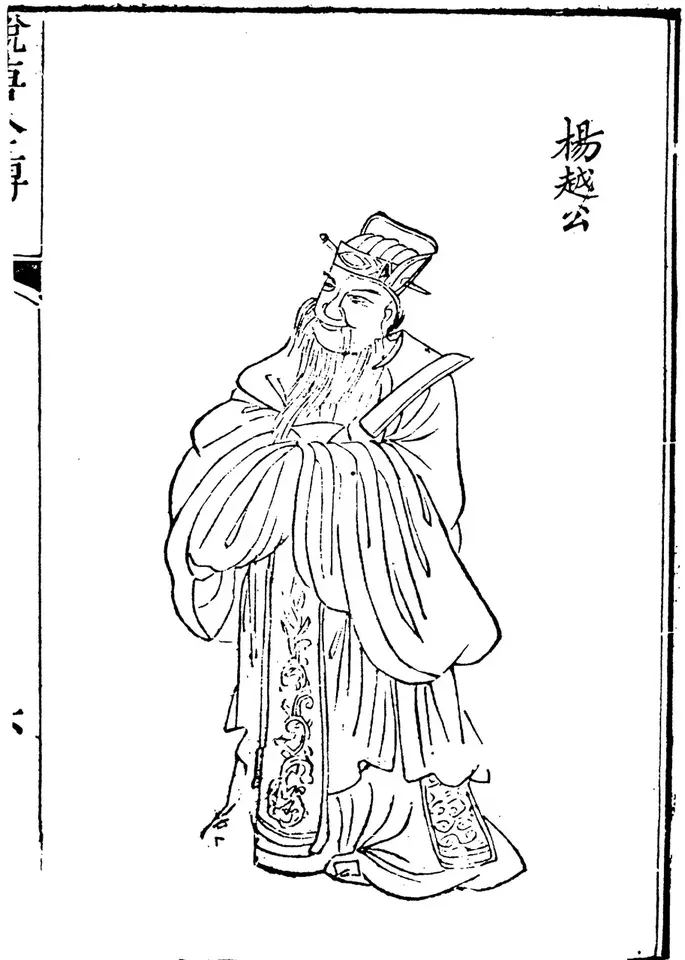
544 CE–606 CE
杨素
Yang Su (544–606 AD), courtesy name Chudao, was a native of Huayin, Hongnong (present-day Huayin, Shaanxi Province). He was a distinguished founding supreme commander, military strategist, Chancellor, and powerful statesman of the Sui Dynasty. Hailing from the eminent Hongnong Yang clan, he attained the supreme ranks of Left Vice Director of the Department of State Affairs and Minister over the Masses, was ennobled as Duke of…
Yang Su (544–606 AD), courtesy name Chudao, was a native of Huayin, Hongnong (present-day Huayin, Shaanxi Province). He was a distinguished founding supreme commander, military strategist, Chancellor, and powerful statesman of the Sui Dynasty. Hailing from the eminent Hongnong Yang clan, he attained the supreme ranks of Left Vice Director of the Department of State Affairs and Minister over the Masses, was ennobled as Duke of Chu, and was posthumously designated "Jingwu". Possessing lofty ambitions and combined civil and military genius, Yang Su gained the personal trust of Yang Jian during the Northern Zhou. Upon the establishment of the Sui Dynasty, he was appointed Censor-in-Chief and vigorously planned the subjugation of the southern Chen dynasty. In 588 AD, as Area Commander-in-Chief of Xinzhou, he directed the construction of hundreds of colossal "Five-Tooth" warships at Yong'an. In early 589 AD, he led naval forces east through the Three Gorges, annihilating Chen fleets at Langweitan and Baisha to conquer Jiangnan without prolonged siege, receiving the title Duke of Yue as premier contributor. In 590 AD, he crushed widespread gentry rebellions across southern China. In 599 AD, abandoning traditional defensive war wagons, he commanded massive cavalry charges to shatter a nomadic host of one hundred thousand under Tardu Khagan on the northern steppes. Yang Su enforced iron discipline, executing retreating troops instantly to forge an invincible army. From 592 AD onward, he served as Right Vice Director alongside Gao Jiong, wielding dominant administrative authority. In later years, he aligned with Prince of Jin Yang Guang to depose Crown Prince Yang Yong. In 604 AD, he secured the imperial palace to install Yang Guang as Emperor Yang, swiftly defeating Prince of Han Yang Liang's subsequent insurrection. He died in 606 AD at age sixty-three. Renowned as a ruthless field marshal and cultured poet, Yang Su was a foundational military architect who unified China by pacifying the south and taming the northern steppes.
Born into the Hongnong Yang lineage; displayed exceptional literary flair and studied classical statecraft and military strategy.
Participated in Emperor Wu's eastern expeditions against Northern Qi; commissioned General of Chariots and Cavalry for frontline heroism.
Appointed Censor-in-Chief by Emperor Wen, serving as chief counselor for the unification of southern China.
Commissioned Area Commander-in-Chief of Xinzhou; designed and built five-story Five-Tooth warships at Yong'an to master the Yangtze gorges.
Commanded the upper Yangtze fleet downstream, winning decisive victories at Langweitan and Baisha; ennobled as Duke of Yue.
Campaigned across thousands of miles over land and rivers, quelling widespread aristocratic insurgencies across Jiangnan.
Discarded defensive wagon camps to launch a massive frontal cavalry offensive against Tardu Khagan, destroying a hundred thousand nomads.
Secured the Renshou Palace to install Yang Guang upon the throne; crushed Yang Liang's armed rebellion in Bingzhou.
Served as Minister over the Masses and Duke of Chu; passed away at age sixty-three with the posthumous title "Jingwu".
Yang Su traced his ancestry to the venerable Hongnong Yang lineage of the central plains. His great-grandfather Yang Zhen had served as Regular Mounted Attendant under the Northern Wei, his grandfather Yang Xuan was General Who Supports the State, and his father Yang Fu served as Regional Inspector of Fenzhou under the Northern Zhou, dying in battle against Northern Qi. Although his family endured temporary hardship in his youth, Yang Su possessed an unconventional spirit and sweeping ambitions, demonstrating remarkable virtuosity in classical prose and poetry alongside deep mastery of Sunzi's tactical principles. During the reign of Emperor Wu of Northern Zhou, Yang Su boldly submitted a memorial to exonerate his late father. Impressed by his articulate courage, Emperor Wu granted him an imperial commission as General of Chariots and Cavalry. Yang Su subsequently fought with distinction in the conquest of Northern Qi.
During the Xuanzheng era, Yang Jian assumed control over the Northern Zhou regency. Discerning Yang Su's exceptional talent, Yang Jian recruited him into his personal retinue, forming an enduring friendship. When Yuchi Jiong launched a rebellion at Xiangzhou in 580 AD to contest Yang Jian's rise, Yang Su served under field marshal Wei Xiaokuan, crushing rebel forces at Wuzhi. For this achievement, he was promoted to Pillar of the State and ennobled as Duke of Linzhen County.
Following the establishment of the Sui Dynasty in 581 AD, Emperor Wen elevated Yang Su to Censor-in-Chief. At that time, the southern Chen dynasty still held the lower Yangtze basin, relying upon the formidable river barrier to defy northern reunification. Yang Su repeatedly urged Emperor Wen to launch a comprehensive naval campaign, demonstrating that the crux of victory lay in building superior naval striking power along the upper reaches of the Yangtze River to control the Three Gorges. Convinced by his strategy, Emperor Wen assigned Yang Su to Yong'an (present-day Fengjie, Chongqing) in 584 AD as Area Commander-in-Chief of Xinzhou.
At Yong'an, Yang Su mobilized local dockyards to construct hundreds of massive warships, most famously the "Five-Tooth" warships. These mammoth vessels rose five stories high, accommodated eight hundred armored marines, and featured six fifty-foot mechanical battering masts designed to shatter enemy vessels in close-quarters river fighting. In the winter of 588 AD, Sui launched a five-hundred-thousand-strong invasion force. Yang Su took command of the upper Yangtze operational wing, directing naval fleets downstream through the treacherous gorges. Chen general Qi Xin entrenched his fleet at the turbulent rapids of Langweitan (present-day Zigui, Hubei).
On the night of January 27, 589 AD, Yang Su dispatched one hundred swift river cutters beneath the cover of thick fog, while his colossal Five-Tooth flagships descended from upstream. Dropping their massive battering beams, the Sui fleet smashed dozens of Chen vessels into kindling, forcing Qi Xin to flee in a single boat. Yang Su pressed downstream, shattering enemy defensive lines at Qiting and taking Baisha. Chen garrisons along the middle river surrendered en masse. By the time Sui land forces under Heruo Bi and Han Qinhu entered Jiankang and captured the Chen emperor, Yang Su had pacified the entirety of the upper and middle Yangtze. Emperor Wen acclaimed Yang Su as the primary naval contributor, promoting him to Area Commander-in-Chief of Jingzhou and elevating him to Duke of Yue.
In 590 AD, discontented southern clans and local gentry rose in widespread open rebellion against Sui tax codes and legal decrees across present-day Zhejiang, Jiangsu, Jiangxi, and Fujian. The rebel ranks swelled to hundreds of thousands, butchering imperial magistrates. Emperor Wen appointed Yang Su as supreme field commander. Operating across rugged wetlands and trackless mountain ranges, Yang Su coordinated combined amphibious and terrestrial strikes. He annihilated rebel leader Gao Zhihui at Jinling, eliminated Shen Xuanwai at Haiyan, and pursued splinter bands deep into the southern forests, engaging in over seven hundred armed actions to bring lasting stability to southern China.
In 599 AD, northern nomads under Tardu Khagan swept past the Great Wall with a formidable force of one hundred thousand mounted warriors. Traditionally, Chinese forces relied upon defensive "war wagon fortresses" with encircled supply carts and entrenched crossbowmen to absorb nomadic cavalry charges. Seeing the approaching host, Yang Su unexpectedly ordered his troops to dismantle the barricades and deploy several tens of thousands of heavy armored cavalry in open formation. Senior officers recoiled in dread, but Yang Su sharply corrected them: "Nomads maneuver at will precisely because our armies bind themselves within wagons! Unless we collide directly with them on horseback, they will never feel true terror!"
When Tardu Khagan observed the Sui army abandoning defensive barricades to face him in the open, he jubilantly charged forward with his entire horde. Yang Su drew his sword to lead the center. The Sui armored heavy cavalry crashed into the enemy like an iron tide, breaking through the nomad lines in a ferocious hand-to-hand melee. The nomad army collapsed in panic. Yang Su pursued them over one hundred li, slaughtering thousands of warriors and capturing tens of thousands of camels and horses, while Tardu Khagan fled wounded into the desert. This devastating triumph shattered the military confidence of the northern nomads, securing the northern frontier for years.
In the central administration, Yang Su served as Right Vice Director of the Department of State Affairs alongside Premier Gao Jiong from 592 AD onward. In military management, Yang Su was terrifyingly unyielding: any officer or rank-and-file soldier who retreated during combat was executed on the spot without mercy, prompting his men to fight with suicidal determination. In civilian court politics, however, Yang Su was consummate in flattery and ruthless machinations. In the late Kaihuang years, Empress Dugu grew alienated from Crown Prince Yang Yong. Seizing upon this discord, Prince of Jin Yang Guang courted Yang Su. Yang Su secretly denounced the Crown Prince before Emperor Wen while lavishing praise upon Yang Guang. Consequently, Yang Yong was stripped of his title in 600 AD, and Yang Guang was invested as heir apparent.
In the seventh month of 604 AD, Emperor Wen fell critically ill at Renshou Palace. Alarmed by rumors of Yang Guang's improper conduct, the dying emperor attempted to recall deposed prince Yang Yong. Yang Su immediately cordoned off the imperial quarters, intercepted private messages, stationed loyal palace guards at every gateway, and enabled Yang Guang to take absolute command of the palace, whereupon Emperor Wen abruptly died. After ascending the throne as Emperor Yang, the newly crowned sovereign faced a thirty-thousand-strong rebellion launched from Bingzhou by his younger brother Yang Liang. Emperor Yang urgently dispatched Yang Su, who executed lightning maneuvers across the Taihang Mountains, defeating Yang Liang's rebel forces at Songshan and forcing his unconditional capitulation.
Following the defeat of Yang Liang, Emperor Yang showered Yang Su with supreme formal honors, appointing him Minister over the Masses and creating him Duke of Chu. However, deeply wary of Yang Su's unassailable martial prestige and ruthless cunning, Emperor Yang gradually stripped him of operational military command. In the autumn of 606 AD, Yang Su became gravely ill. Cognizant that extraordinary ministers who outshine their monarchs rarely die peacefully, Yang Su refused all medicinal treatment, telling his kin: "Why should I crave to prolong my days?" He passed away on August 31, 606 AD, at the age of sixty-three. Emperor Yang granted him the posthumous title "Jingwu". However, in 613 AD, his eldest son Yang Xuangan launched a catastrophic rebellion against Sui rule; upon his defeat, Emperor Yang ordered the extermination of the entire Yang clan and had Yang Su's tomb desecrated and his remains incinerated.
In preparation for the southern campaign, Yang Su oversaw the construction of massive Five-Tooth warships on the upper Yangtze.
Leading the Sui riverine fleet through the Three Gorges, he shattered Chen defenses and helped unify China in 589 AD.
In 590 AD, he campaigned across southern China to quell widespread uprisings and consolidate Sui rule.
In 599 AD, he abandoned defensive wagon formations in favor of direct heavy cavalry charges to rout Tardu Khagan's forces.
In 604 AD, he backed Yang Guang's accession at Renshou Palace and swiftly put down Prince Yang Liang's rebellion in Bingzhou.
FIGURES ASSOCIATED WITH THIS DYNASTY