Birth
Born in Gaoling to the noble Yu family, descended from Western Wei Grand Preceptor Yu Jin
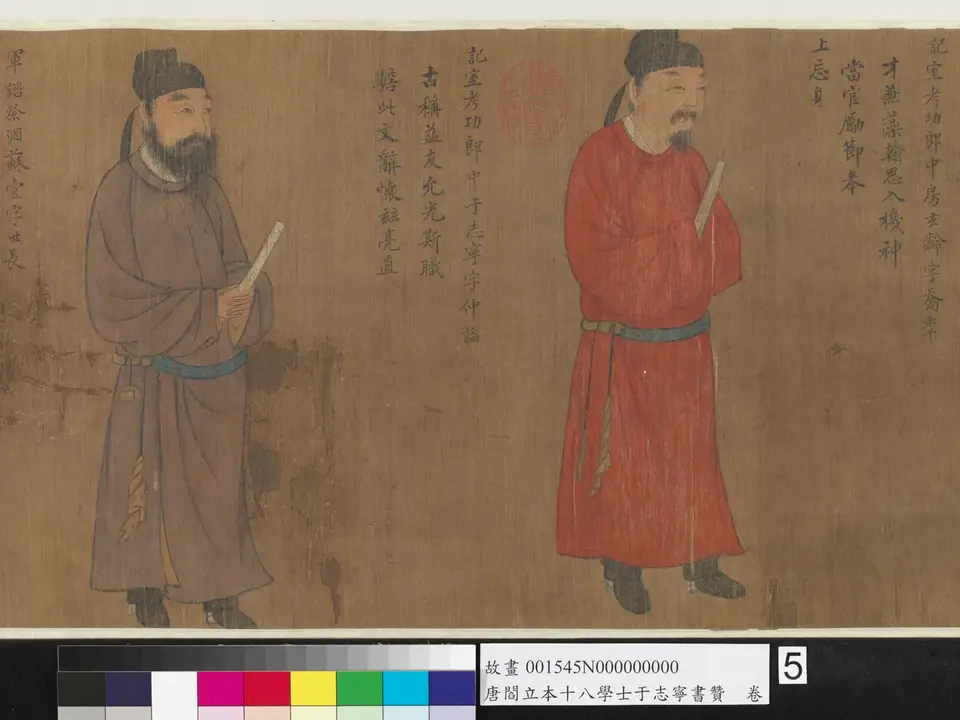
588 CE–665 CE
于志宁
Yu Zhining (于志宁, 588–665), courtesy name Zhongmi, was a native of Gaoling in Yongzhou (modern Gaoling District, Xi'an, Shaanxi Province). He was the great-grandson of Yu Jin, one of the Eight Pillar Generals of Western Wei, and the son of Yu Xuandao, Palace Secretariat Drafter in the Sui Dynasty. He was an eminent chancellor, Confucian scholar, and resolute remonstrator of the early Tang Dynasty, recognized as one of the…
Yu Zhining (于志宁, 588–665), courtesy name Zhongmi, was a native of Gaoling in Yongzhou (modern Gaoling District, Xi'an, Shaanxi Province). He was the great-grandson of Yu Jin, one of the Eight Pillar Generals of Western Wei, and the son of Yu Xuandao, Palace Secretariat Drafter in the Sui Dynasty. He was an eminent chancellor, Confucian scholar, and resolute remonstrator of the early Tang Dynasty, recognized as one of the celebrated Eighteen Scholars of King of Qin's Institute of Literary Studies. Yu Zhining began his bureaucratic career in the late Sui as Magistrate of Guanshi. Amid widespread peasant uprisings in Shandong, he abandoned his post and returned to his hometown. In 617, when Li Yuan launched his uprising in Taiyuan and occupied the Guanzhong basin, Yu pledged allegiance at Changchun Palace. He subsequently served as Secretary of the Weibei Army Headquarters and Senior Retainer of the Tiance Commandery under Li Shimin, joining the Institute of Literary Studies where he aided the Prince of Qin in strategic governance and intellectual statecraft. During the Zhenguan reign of Emperor Taizong, Yu served as Vice Minister of the Secretariat, Palace Attendant, and Supervisor of the Household of Crown Prince Li Chengqian. When Li Chengqian turned toward extravagance, moral laxity, and favor of palace eunuchs, Yu repeatedly submitted fearless memorials, compiling twenty volumes of remonstrations in the Garden of Admonitions (Jian Yuan). Even when Li Chengqian sent assassins against him, he remained steadfast. Following Li Chengqian's deposition, Emperor Taizong commended Yu's integrity and entrusted him to guide the new heir apparent, Li Zhi. Upon the accession of Emperor Gaozong, Yu was elevated to Palace Attendant, Left Senior Servant of the Department of State Affairs, and Chancellor, supervising the compilation of national dynastic histories and being enfeoffed as Duke of Yan. In the heated court factional disputes over the deposition of Empress Wang in favor of Wu Zetian, he maintained prudent silence. In 659, implicated in the political downfall of Zhangsun Wuji, he was demoted to Inspector of Rongzhou and later transferred to Huazhou. He retired in 664 and passed away in 665 at seventy-eight. He was posthumously granted the title of Area Commander of Youzhou and given the posthumous name Ding.
Born in Gaoling to the noble Yu family, descended from Western Wei Grand Preceptor Yu Jin
Resigned as Magistrate of Guanshi amid rural uprisings in Shandong to take refuge in his hometown
Welcomed Li Yuan's army at Changchun Palace and was made Secretary in the Weibei Command
Inducted as Senior Retainer in Tiance Commandery and named one of the Eighteen Scholars by Li Shimin
Elevated to Vice Minister of the Secretariat and created Duke of Liyang Commandery
Appointed Supervisor of the Crown Prince Household; compiled Garden of Admonitions and survived assassination
Spared punishment after Li Chengqian's deposition; transferred to mentor newly designated Crown Prince Li Zhi
Appointed Palace Attendant and Duke of Yan upon Gaozong's enthronement; oversaw state history compilation
Promoted to Left Senior Servant of the Department of State Affairs and Chancellor of the Third Rank
Stripped of chancellorship and banished as Inspector of Rongzhou due to alleged ties to Zhangsun Wuji
Permitted to retire from public office on grounds of advanced age while governing Huazhou
Passed away at his residence in Chang'an at seventy-eight; honored with the posthumous title Ding
Yu Zhining belonged to the prominent Henan Yu lineage, a Sinicized branch of the Xianbei Wanniu'yu aristocratic clan that had wielded political influence since the Northern Wei Dynasty. His great-grandfather, Yu Jin, was one of the premier Eight Pillar Generals and Grand Preceptor of Western Wei, while his father, Yu Xuandao, served the Sui Dynasty as Palace Secretariat Drafter.
Cultivating a profound command of Confucian classics, administrative statutes, and historical chronicles, Yu entered the imperial bureaucracy through hereditary privilege during the Daye era of Emperor Yang, receiving appointment as Magistrate of Guanshi.
As peasant insurrections flared across Shandong toward the close of the Sui reign, civic governance collapsed. Recognizing the futility of holding the besieged county town, Yu resigned his seal of office and retreated to his native Gaoling, devoting himself to scholarship while avoiding the chaos of the civil wars.
In 617, Li Yuan, Duke of Tang, revolted at Taiyuan and marched into the Guanzhong heartland. Yu traveled to Changchun Palace to submit his allegiance. Impressed by his lineage and scholarly reputation, Li Yuan commissioned him as Secretary of the Weibei Route Expeditionary Army under the young prince Li Shimin.
Following the defeat of Wang Shichong and Dou Jiande in 621, Li Shimin founded the Tiance Superior Command. Yu was recruited as Senior Retainer, managing military registers and political drafts. Concurrently, Li Shimin established the Institute of Literary Studies, gathering eighteen eminent intellectuals. Yu was inducted among these Eighteen Scholars, participating in historical deliberations and providing counsel that buttressed the Prince of Qin's ascendancy.
Upon Emperor Taizong's ascension in 626, Yu's administrative career flourished. In 629, he was made Vice Minister of the Secretariat, Senior Grand Master, and Duke of Liyang Commandery. During court debates on ancestral temple rites, ministers urged designating Li Gao, Duke Wuzhao of Western Liang, as the primary dynastic progenitor. Yu argued that Li Gao was unrelated to the foundational creation of the Tang state, persuading Taizong to alter the imperial lineage genealogy.
When Taizong contemplated granting hereditary prefectural appointments to meritorious generals, Yu presented critical arguments exposing the dangers of regional warlord fragmentation, convincing the emperor to revoke the plan.
During the late Zhenguan era, Yu served as Left Advisor and later Supervisor of the Household of Crown Prince Li Chengqian, partnered with remonstrator Zhang Xuansu. As Li Chengqian succumbed to lavish building sprees, debauched parties, and excessive reliance on nomadic Turkic companions, Yu drafted numerous critical memorials. He assembled these essays into twenty scrolls entitled Garden of Admonitions (Jian Yuan), which Taizong lauded with lavish material rewards.
Enraged by these uncompromising lectures, Li Chengqian dispatched trusted assassins, including Zhang Sizheng, to eliminate Yu. When the killers slipped into Yu's bedchamber at night and discovered the scholar sleeping on a plain wooden cot dressed in rustic garments, they were moved by his moral integrity, falling to their knees in respect before departing without harming him.
In 641, Yu requested mourning leave following his mother's death, but Taizong recalled him to service, declaring that the crown prince required disciplined moral mentorship.
In 643, Li Chengqian's treasonous plot collapsed, leading to his demotion and the execution of many household associates. Taizong personally addressed Yu before the court, stating that Yu's consistent remonstrations proved his loyalty, and assigned him as Left Advisor to the new Crown Prince, Li Zhi.
Emperor Taizong passed away in 649, and Li Zhi ascended the throne as Emperor Gaozong. As a senior preceptor and founding veteran, Yu was promoted to Palace Attendant, Duke of Yan, and co-chancellor, collaborating with Zhangsun Wuji and Chu Suiliang while supervising national historiography.
In 651, Yu became Left Senior Servant of the Department of State Affairs and Chancellor of the Third Rank. When Li Hongtai falsely accused Chancellor Zhangsun Wuji of plotting rebellion, Gaozong ordered Hongtai's summary execution. Yu intervened, arguing that capital executions during spring violated celestial seasons and that judicial protocol must be maintained, securing Gaozong's compliance.
Demonstrating personal generosity, when Emperor Taizong earlier gifted him prime imperial farmland, Yu observed that fellow ministers Gao Jifu and Zhang Xingcheng lacked adequate property and petitioned to relinquish the land to them, winning acclaim for his modesty.
In 655, Gaozong resolved to depose Empress Wang and install Consort Wu (Wu Zetian). While Zhangsun Wuji and Chu Suiliang vigorously protested, Yu kept silent during imperial audiences, neither endorsing nor defying the sovereign's will.
Despite his neutrality, imperial favorite Xu Jingzong orchestrated a political purge in 659 targeting the elder statesman faction, indicting Yu for cliquish alignment with Zhangsun Wuji. Gaozong dismissed Yu from the chancellorship and exiled him as Inspector of Rongzhou, later transferring him to Huazhou.
In 664, past the age of seventy-six, Yu petitioned for retirement due to declining health, which the throne granted. In 665, Yu passed away peacefully at his Chang'an residence at seventy-eight. Gaozong posthumously bestowed upon him the rank of Area Commander of Youzhou and the posthumous name Ding. His titles and family estates were restored during the reign of Emperor Zhongzong.
Yu Zhining served as tutor and preceptor to two successive crown princes, Li Chengqian and Li Zhi. Facing assassination plots and imperial anger from Li Chengqian, he maintained Confucian moral instruction and compiled the renowned Garden of Admonitions, providing an enduring standard for Tang dynasty preceptors.
Yu displayed expertise in constitutional norms and ritual propriety. He corrected ancestral genealogical errors regarding Li Gao, dissuaded Taizong from establishing hereditary governorships, and defended season-based judicial procedural laws under Gaozong, fortifying imperial administrative discipline.
As an inaugural scholar of the Institute of Literary Studies and supervisor of national historiography, Yu made substantial contributions to the official compilation of the Book of Sui, the Book of Jin, state administrative statutes, and the Five Classics commentaries, helping standardize early Tang legal and ritual culture.
FIGURES ASSOCIATED WITH THIS DYNASTY