Birth | Eldest son of Sima Yi, born in Wen County, Henei
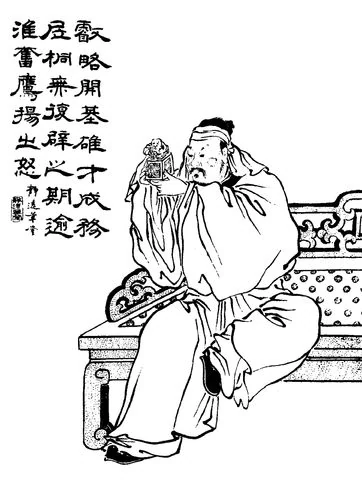
208 CE–255 CE
Powerful Cao Wei official and military strategist
Sima Shi
司马师
Sima Shi (208–March 23, 255), courtesy name Ziyuan, was a native of Wen County in Henei (present-day Wen County, Jiaozuo, Henan). He was a powerful official of Cao Wei during the Three Kingdoms period and one of the founders of the political order that later became the Western Jin dynasty. He was the eldest son of Sima Yi, later honored as Emperor Xuan of Jin, and Empress Xuanmu Zhang Chunhua. After the establishment of the…
208 CE–255 CEWestern Jin
PROFILE
Sima Shi (208–March 23, 255), courtesy name Ziyuan, was a native of Wen County in Henei (present-day Wen County, Jiaozuo, Henan). He was a powerful official of Cao Wei during the Three Kingdoms period and one of the founders of the political order that later became the Western Jin dynasty. He was the eldest son of Sima Yi, later honored as Emperor Xuan of Jin, and Empress Xuanmu Zhang Chunhua. After the establishment of the Western Jin, Sima Shi was posthumously honored as Emperor Jing, with the temple name Shizong.
- Alternate names
- Emperor Jing of Jin; Sima Ziyuan
- Courtesy name
- Ziyuan
- Period
- Western Jin
- Dynasty/Regime
- Western Jin
- Identity
- Powerful Cao Wei official and military strategist
- Ethnicity/Ethnic affiliation
- Not reliably confirmed in existing sources
- Ancestral home
- Wen County, Henei (present-day Wen County, Jiaozuo, Henan)
- Date of birth
- 208
- Place of birth
- Unknown
- Date of death
- March 23, 255
- Place of death
- Unknown
- Highest office
- See Biography and Major Deeds
- Major achievements
- Eldest son of Sima Yi; deposed the Wei emperor Cao Fang and suppressed Guanqiu Jian and Wen Qin's Rebellion; posthumously honored by the Western Jin as Emperor Jing
LIFE TIMELINE
About age thirty | Appointed Regular Mounted Attendant and later Central Protector of the Army; established regulations for selecting officials
Age twenty-seven | Poisoned his first wife Xiahou Hui
Age forty | His mother Zhang Chunhua died; he became known for extreme filial devotion during mourning
Age forty-two | Secretly planned the Incident at the Gaoping Tombs with his father; rewarded as Marquis of Changping Township and appointed General of the Guards
Age forty-four | After Sima Yi's death, served as General-in-Chief Who Pacifies the Army and assisted the government
Age forty-five | Promoted to General-in-Chief; accepted responsibility for the defeat at the Battle of Dongxing
Age forty-six | Defeated Wu Grand Tutor Zhuge Ke at Hefei New City
Age forty-seven | Executed Li Feng, Zhang Ji, and Xiahou Xuan; deposed the Wei emperor Cao Fang and enthroned Cao Mao
Age forty-eight | Personally led the suppression of Guanqiu Jian and Wen Qin's Rebellion and died of illness at Xuchang
BIOGRAPHY
Biography
Family Background and Early Life
Sima Shi was born in 208, the thirteenth year of the Jian'an era, as the eldest son of Sima Yi. The Sima family was a prominent lineage of Wen County in Henei with a Confucian scholarly background; Sima Yi's father Sima Fang had served as Intendant of the Capital. Sima Shi received a strong Confucian education from childhood. He was elegant in bearing, calm and resolute in temperament, and possessed far-reaching strategic ambition. He acquired a strong reputation while still young and associated with celebrated men of the time. According to the Wei Shi Chunqiu, Xiahou Xuan and He Yan were then famous, and Sima Shi was counted among them. He Yan once praised him: “Only one who discerns the subtle can bring the affairs of the world to completion; Sima Ziyuan is such a man.”
Sima Shi first married Xiahou Hui, daughter of Xiahou Shang. Xiahou Hui was the younger sister of Xiahou Xuan, and her mother, Lady Cao, was Princess of Deyang Township and a member of the Cao Wei imperial clan. Xiahou Hui was perceptive and capable and often assisted Sima Shi in planning. According to the Book of Jin, however, she understood that Sima Shi was not loyal to Cao Wei, while Sima Shi was wary of his wife's ties to the Xiahou family. In 234, the second year of the Qinglong era, Sima Shi poisoned Xiahou Hui, ending this political marriage with the Xiahou clan.
Entry into Office and Service as Central Protector of the Army
During the Jingchu era of Cao Wei (237–239), Sima Shi was appointed Regular Mounted Attendant. After several promotions he became Central Protector of the Army, an important office responsible for the imperial guard and the selection of military officers. While serving in this post, Sima Shi established rules for choosing personnel so that recommendations would not exceed a candidate's merit and officials would have less opportunity to practice favoritism. In 247, the eighth year of the Zhengshi era, his mother Zhang Chunhua died. Sima Shi observed mourning for her and became known for exceptional filial devotion.
The Incident at the Gaoping Tombs and Assumption of Power
In 249, the first year of the Jiaping era, Sima Yi launched the Incident at the Gaoping Tombs and eliminated the powerful official Cao Shuang. Before the coup, Sima Yi had planned it only with Sima Shi, without informing Sima Zhao. Not until the night before the operation did Sima Yi tell Sima Zhao. He then secretly sent people to observe the two sons' reactions: Sima Shi slept as soundly as usual, whereas Sima Zhao was so anxious that he remained awake all night. The next morning Sima Shi personally led troops to station at the Sima Gate, secured the capital, maintained order inside and outside the palace, and arrayed the forces with great discipline. Sima Yi remarked, “This son is indeed capable.”
Sima Shi had privately maintained three thousand retainers prepared to die for him. In ordinary times they were dispersed among the population, but on the day of the coup they assembled and played a crucial role, to the surprise of those who did not know where they had come from. After the operation succeeded, Sima Yi replaced Cao Shuang as the dominant holder of Cao Wei's military and political power. Sima Shi was enfeoffed as Marquis of Changping Township with a fief of one thousand households and soon afterward was appointed General of the Guards.
In 251, the third year of the Jiaping era, Wang Ling rebelled and Sima Yi personally led the campaign against him, leaving Sima Shi to guard Luoyang. After Sima Yi's death, court officials invoked the precedent of Yi Yin being succeeded in political authority by his son Yi Zhi. Emperor Cao Fang therefore issued an edict appointing Sima Shi to assist the government as General-in-Chief Who Pacifies the Army, placing the military and political affairs of Wei in his hands.
Control of the Government and External Wars
In 252, the fourth year of the Jiaping era, Sima Shi was promoted to General-in-Chief. In the tenth month of that year, the Wu emperor Sun Quan died. Wei sought to seize the new embankment works established by Eastern Wu. Wang Chang, Guanqiu Jian, and Hu Zun each proposed plans for attacking Wu. Because the generals differed in strategy, Sima Shi ultimately decided on a three-pronged offensive. In the twelfth month, Wei forces attacked Dongxing. Sima Shi appointed Sima Zhao as commander and placed the General Who Attacks the East Hu Zun and General Who Guards the East Zhuge Dan under him, but they were defeated by Zhuge Ke. Wei suffered heavy casualties, and the Wu army captured great quantities of equipment and supplies. Many court officials called for demoting Zhuge Dan and the other participating commanders. Sima Shi instead took responsibility, saying, “I failed to follow Gongxiu's advice, and matters came to this. The fault is mine; what crime have the generals committed?” Sima Zhao, as overall commander, was punished most severely and stripped of his title, while the other officers received no major punishment and merely had their defense assignments exchanged.
In the fifth month of 253, the fifth year of the Jiaping era, Wu Grand Tutor Zhuge Ke led an army of 200,000 to besiege Hefei New City. At court many feared that he would divide his forces to attack the Huai and Si regions and proposed defending the various river outlets. Sima Shi judged that Zhuge Ke, having only recently gained authority in Wu, wished to exploit his current prestige by concentrating his army at Hefei New City in hope of another quick success and therefore would have no spare strength to attack Qingzhou or Xuzhou. Events unfolded as Sima Shi predicted. He sent Sima Fu to supervise 200,000 troops in defense. General Who Guards the East Guanqiu Jian and Yangzhou Inspector Wen Qin asked to fight, but Sima Shi said, “Zhuge Ke's army has advanced lightly and deeply, throwing itself into a desperate position. Its initial edge cannot easily be resisted. Moreover, New City is small but strong, and cannot be taken at once.” He therefore ordered the generals to remain behind high defenses. After several months of stalemate, Zhuge Ke's besieging army was exhausted and had lost more than half its men to death and injury. Sima Shi then ordered Wen Qin to lead elite troops forward and join the defense with the intention of cutting off Zhuge Ke's retreat, while Guanqiu Jian and others prepared to close behind him. Zhuge Ke became afraid and withdrew; Wen Qin pursued and badly defeated the retreating army, reportedly taking more than ten thousand heads.
Deposing and Installing Emperors and the Second Huainan Rebellion
In the second month of 254, the sixth year of the Jiaping era, Emperor Cao Fang, Secretariat Director Li Feng, Grand Master of Splendid Happiness Zhang Ji, and others planned a coup to remove Sima Shi and appoint Minister of Ceremonies Xiahou Xuan as General-in-Chief. The plan was exposed, and Sima Shi executed Li Feng, Zhang Ji, and Xiahou Xuan together with their three kin groups. In the third month, he deposed Empress Zhang, daughter of Zhang Ji. Wei was thrown into turmoil.
Later that year, Sima Shi, suspicious of Cao Fang, joined with senior officials in submitting a memorial to Empress Dowager Guo. They accused the emperor of having reached adulthood without personally governing, indulging in women, neglecting lectures, insulting scholars, and engaging in debauched entertainments with performers, and requested that he be deposed according to the precedent of Huo Guang and reduced to Prince of Qi. Sima Shi originally intended to enthrone Cao Ju, Prince of Pengcheng, but Empress Dowager Guo demanded that Cao Mao, Marquis of Gaogui Township, become emperor. Unable to prevail in the dispute, Sima Shi followed the empress dowager's decision and sent envoys to bring Cao Mao to Luoyang for enthronement. Sima Shi and his brother Sima Zhao continued to hold real power.
In 255, the second year of the Zhengyuan era, General Who Guards the East Guanqiu Jian and Yangzhou Inspector Wen Qin rebelled in protest against Sima Shi's arbitrary deposition and installation of emperors, each sending four sons to Eastern Wu as hostages. Guanqiu Jian and Wen Qin crossed the Huai River and advanced west from Shouchun, halting at Xiang County. Sima Shi ordered Army Inspector Wang Ji to lead the vanguard to Nandun and watch the rebels. He also sent Zhuge Dan with troops from Yuzhou to attack Shouchun and Hu Zun with forces from Qingzhou and Xuzhou to cut off the rebels' route back from Xiang County to Shouchun. Sima Shi personally led the main army and encamped at Ruyang. He further ordered Deng Ai to take more than ten thousand troops from the Taishan commands to Lejia County and deliberately appear weak in order to lure the rebels out. Guanqiu Jian indeed sent Wen Qin against Deng Ai, whereupon Sima Shi led a large cavalry force to strike Wen Qin from the rear and defeated him. When Guanqiu Jian heard the news in Xiang County, he abandoned the city in panic. He fled to Shen County and hid in grass by a river, where local people shot him dead. Wen Qin escaped to Eastern Wu. Members of the Guanqiu and Wen families who remained in Wei were all executed.
Death and Posthumous Honors
In the intercalary first month of 255, the second year of the Zhengyuan era, Wen Qin's son Wen Yang led troops in a raid on Sima Shi's camp. Sima Shi was badly startled. He already suffered from a tumor near one eye that frequently discharged pus, and the shock caused the eye to protrude from its socket, worsening his condition. He eventually died at Xuchang on the xinhai day of the second month (March 23), aged forty-eight. Cao Mao dressed in mourning clothes to pay his respects and granted him the posthumous title Marquis Zhongwu. After Sima Zhao was enfeoffed as Prince of Jin, he posthumously honored Sima Shi as Prince Jing of Jin. When Sima Yan established the Jin dynasty, he elevated Sima Shi to Emperor Jing of Jin, named his tomb Junping, and gave him the temple name Shizong.
Major Activities
Political Activity
After taking power, Sima Shi sought to regularize domestic government. He ordered officials to recommend worthy men, clarify distinctions of seniority, aid the poor and solitary, and resolve neglected administrative matters. Zhuge Dan, Guanqiu Jian, Wang Chang, Chen Tai, and Hu Zun were placed in command of the regional armies; Wang Ji, Zhou Tai, Deng Ai, and Shi Bao administered provinces and commanderies; Lu Yu and Li Feng oversaw personnel selection; Fu Gu and Yu Song participated in planning; and Zhong Hui, Xiahou Xuan, Wang Su, Chen Ben, Meng Kang, Zhao Feng, and Zhang Ji took part in court deliberations. Men from throughout the realm were drawn to his government, and order prevailed at court and among the population. When some people proposed changing institutions, Sima Shi quoted the Book of Odes: “Without conscious knowing or contrivance, follow the pattern of the Sovereign.” He argued that the institutions established by the Three Ancestors should be respected and that, except in military matters, reforms should not be undertaken rashly, thereby maintaining policy continuity.
Sima Shi also made contributions to personnel administration. While serving as Central Protector of the Army, he established regulations for selecting officials so that recommendations could not exceed merit and officials would have less room for favoritism. These measures had a positive influence on military personnel selection in the later Cao Wei period.
Military Achievements
Sima Shi displayed substantial military ability. During the defense of Hefei New City, he correctly judged Zhuge Ke's strategic intentions and adopted a policy of strong fortifications and waiting for the enemy to exhaust itself, ultimately defeating the Wu army and reportedly taking more than ten thousand heads. When suppressing Guanqiu Jian and Wen Qin's Rebellion, he accepted the advice of Wang Su, Fu Gu, and Zhong Hui and personally led the campaign. He deployed Zhuge Dan against Shouchun, Hu Zun to block the rebels' retreat, and Deng Ai to lure the enemy out while he himself commanded the main force at Ruyang. The rebel army was ultimately crushed. These campaigns displayed Sima Shi's calm and deliberate command style.
Deposition and Installation of the Emperor
In 254, the sixth year of the Jiaping era, Sima Shi deposed the Wei emperor Cao Fang and installed Cao Mao, Marquis of Gaogui Township, in his place. This was a decisive step in the Sima family's takeover of the Cao Wei state. Sima Shi joined officials in memorializing Empress Dowager Guo, charging that Cao Fang had reached adulthood without personally governing, had become absorbed in women, abandoned lectures, insulted scholars, and engaged in licentious amusement with performers. They requested that, following the precedent of Huo Guang, Cao Fang be removed from the throne. After the deposition, Sima control over Cao Wei became even more secure.
Relations with Contemporaries
In his youth Sima Shi was ranked together with Xiahou Xuan and He Yan, all three being noted men of the age. He Yan praised Sima Shi as a man who “discerns the subtle and therefore can bring the affairs of the world to completion.” Sima Shi later became a political enemy of Xiahou Xuan and executed him in 254. He maintained a close relationship with his younger brother Sima Zhao; together they assisted their father Sima Yi and later dominated Cao Wei politics. Sima Shi had no son. Sima Yi arranged for Sima Zhao's second son, Sima You, to be adopted as Sima Shi's heir.
Personal Relations
Family
- Sima Yi: Father; later honored as Emperor Xuan of Jin
- Zhang Chunhua: Mother; Empress Xuanmu
- Sima Zhao: Younger brother; Emperor Wen of Jin; Sima Gan: younger brother, Prince of Pingyuan
- Xiahou Hui: First wife; mother of five daughters; poisoned by Sima Shi
- Lady Wu: Later wife, daughter of the Wei General Who Guards the North Wu Zhi; Yang Huiyu: later wife, Empress Jingxian
- Sima You: Adopted son; originally Sima Zhao's second son, adopted as Sima Shi's heir
Teachers and Friends
- He Yan: Ranked with Sima Shi in youth; praised him as one who “discerns the subtle and therefore can bring the affairs of the world to completion”
- Xiahou Xuan: Ranked with Sima Shi in youth; later executed by him in a political struggle
Ruler–Minister Relations
- Cao Fang, emperor of Wei: Deposed by Sima Shi and reduced to Prince of Qi
- Cao Mao, emperor of Wei: Installed by Sima Shi as emperor
Conflicts
- Li Feng and Zhang Ji: Plotted to remove Sima Shi; their plan was exposed and their three kin groups were exterminated
- Guanqiu Jian and Wen Qin: Rose in revolt against Sima Shi; one was killed and the other fled
- Wen Yang: His raid on the camp aggravated Sima Shi's eye illness
Historical Assessment
Wei–Jin and Contemporary Assessments
- He Yan said of Sima Shi: “Only one who discerns the subtle can bring the affairs of the world to completion; Sima Ziyuan is such a man.” (Wei Shi Chunqiu)
- In his proclamation against Sima Shi, Guanqiu Jian accused him: “Shi, as a great minister, should eliminate the state's difficulties; as a son, he should complete his father's work. Yet before the sounds of mourning had ended he stopped his duties. As a minister he was disloyal, and as a son unfilial.” (Records of the Three Kingdoms, Book of Wei, “Biographies of Wang Ling, Guanqiu Jian, Zhuge Dan, Deng Ai, and Zhong Hui”)
- Wen Qin denounced Sima Shi: “Sima Shi commits rebellion that reaches to Heaven, deposing and harming two rulers. Even Jie, Zhou, Wang Mang, and the most wicked men of antiquity are insufficient comparisons.” (Complete Prose of the Three Kingdoms)
- Zhang Ti of Wu assessed Sima Yi and his sons: “From the time Sima Yi and his sons grasped authority, they repeatedly achieved great merit, removed burdensome exactions and spread evenhanded benefits, planned for the people and relieved their distress. The people's allegiance to them had already lasted a long time. Thus during the Three Rebellions in Shouchun the heartland was not disturbed; when Cao Mao died, the four quarters did not move. They crushed strong enemies as if breaking dry branches, resolved dissent as easily as turning the palm, and employed worthy and capable men so that each gave his utmost. If their wisdom and courage did not surpass ordinary men, who could have done this?” (Records of the Three Kingdoms, vol. 48, Book of Wu, “Biographies of the Three Successive Rulers”)
Tang Period
- Yu Shinan wrote: “In youth he possessed reputation and integrity and was highly regarded in his time. The talent to assist a ruler had long been evident in him. When Cao Shuang was executed, his wisdom and strategy were already manifest; when Guanqiu Jian and Wen Qin raised troops, he alone preserved the whole army and defeated them. This is enough to show his extraordinary plans. Although the realm stood divided in three, he remained a subject throughout his life; though his awe-inspiring reputation shook the ruler, he did not outwardly abandon the forms of ministerial service. He returned with his marquisate intact; in this he may be praised.” (Collected Writings Surviving from the Tang, vol. 13)
- Fang Xuanling, in the “Annals of Emperor Jing” of the Book of Jin, commented: “Shizong created the foundation through brilliant strategy, and Taizu completed the enterprise through heroic talent. The traces of serving Yin remained, while the intention to cut down Shang grew ever more distant. With the realm divided into three, their achievements lay within it. Yet when they crossed the passes to dispel turmoil and crossed the Huai to pacify rebellion, the resentments of the Tong Palace were perhaps beyond endurance. If one judges him in the frame of a famous minister and weighs him by the standard of the highest councilors, the Duke of Zhou lingered at this point and Cao Cao found satisfaction on this day. The suspended bells sounded loudly south of Nanyang; the plans of Music Master Zhi faced north here. Magnificent indeed was one who encompassed both Heaven and man! Is it not difficult to become the ruler of emperors?” He further praised: “Shizong succeeded Wen; the state's authority was not yet divided. Three thousand warriors followed him like clouds.”
Song, Yuan, Ming, and Qing Periods
- Hu Sanxing, in his commentary on the Comprehensive Mirror in Aid of Governance, wrote: “Wang Mang, Sima Shi, and Xiao Luan had the same intention. Treacherous men of the state must have wings and supporters. Let those who possess the realm beware!”
- Wang Fuzhi wrote: “What is hateful in powerful ministers is above all their ruthlessness. Brashness is of the same kind as ruthlessness. A heart that restrains nothing can speak without restraint and then act without restraint. Sima Shi, Gao Cheng, Zhu Wen, and Li Maozhen, precisely because they spoke without inhibition, had the means to terrify men's hearts; and the world even marveled, saying, ‘This is the hero's lack of concealment.’”
- Zhao Yi, in Notes on the Twenty-Two Histories, wrote: “When the Wei house had not yet declined, the Sima clan seized the opportunity to steal power, deposed one emperor, killed another, and took the throne. Compared with Cao Cao, their merits and crimes cannot be spoken of in the same terms.”
- Cai Dongfan wrote in Romance of the Later Han: “Because Cao Cao deposed Empress Fu, there came Sima Shi's deposition of Empress Zhang. Cao stopped after deposing the empress and left the deposition of the emperor to his son Cao Pi; Sima Shi alone did both in his own person—first deposing Empress Zhang and then Emperor Fang of Wei. Rebels imitated their predecessors, and the later offense was even worse.”
Modern Assessments
Modern scholars generally regard Sima Shi as one of the key founders of the Western Jin and often consider his political and military abilities superior to those of his younger brother Sima Zhao. His performance in the Incident at the Gaoping Tombs, his command in the defense of Hefei New City, and his decisiveness in suppressing Guanqiu Jian's rebellion all display considerable political and military skill. At the same time, his poisoning of his first wife, execution of political opponents, and deposition of an emperor have frequently drawn criticism in later historiography.
FIGURES ASSOCIATED WITH THIS DYNASTY
Bibliography
- Fang Xuanling et al., Book of Jin, “Annals of Emperor Jing,” Zhonghua Book Company punctuated edition
- Chen Shou, Records of the Three Kingdoms, Book of Wei, Zhonghua Book Company punctuated edition
- Sima Guang, Comprehensive Mirror in Aid of Governance, Zhonghua Book Company punctuated edition
- Zhao Yi, Notes on the Twenty-Two Histories, Zhonghua Book Company
- Wang Fuzhi, Reflections on Reading the Comprehensive Mirror, Zhonghua Book Company