–
Historical figure
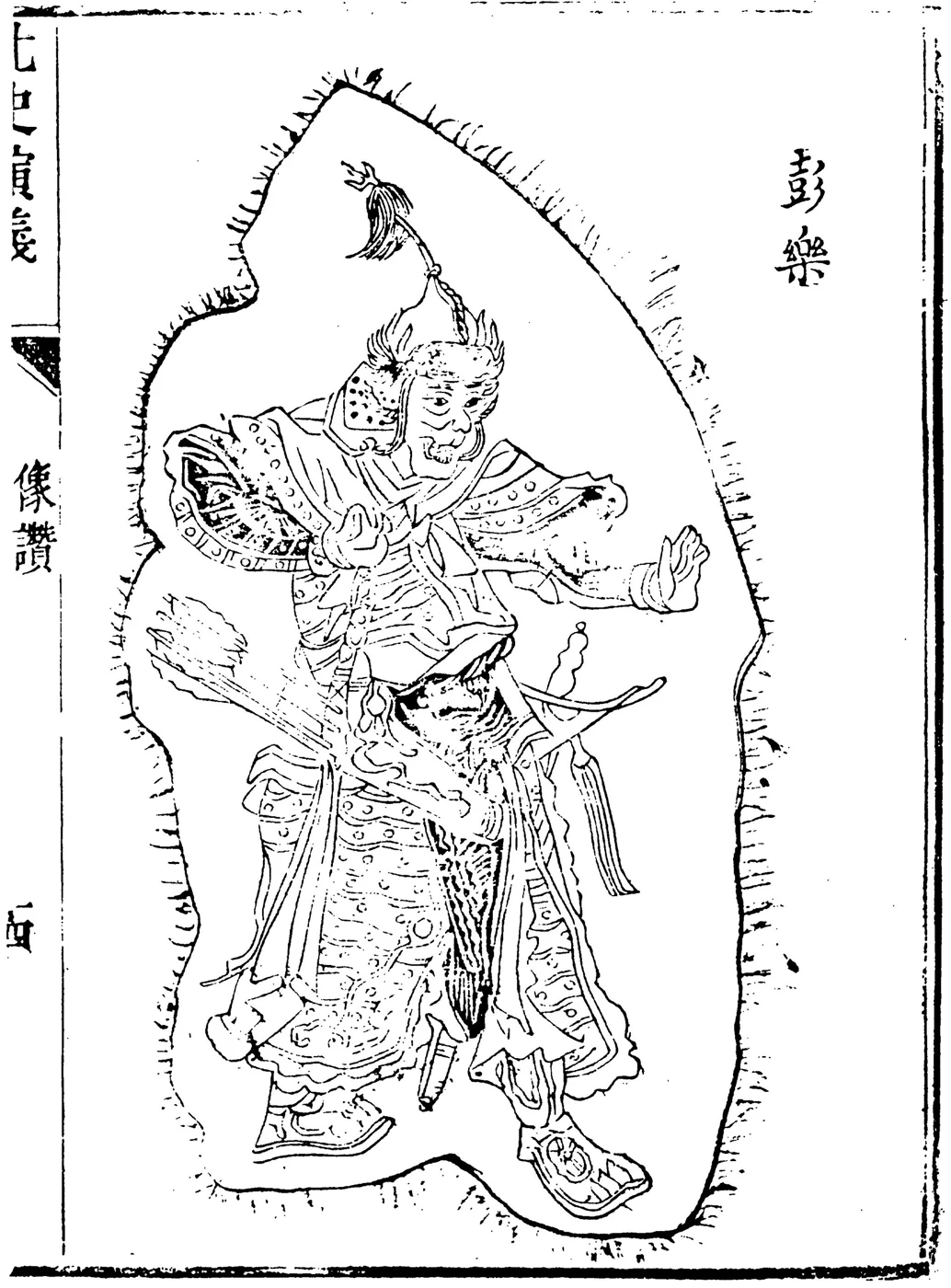
Peng Le
彭乐
Peng Le (c. 500 – 551 CE), courtesy name Zixing, a native of Gaoping in Anding (present-day Guyuan, Ningxia), was a celebrated fierce general during the Northern Wei, Eastern Wei, and Northern Qi dynasties. Endowed with extraordinary physical prowess and masterly horsemanship, he was famous for his fearless, tempestuous assault tactics on the battlefield. During his early years, he participated in northern frontier uprisings,…
–Northern Dynasties
PROFILE
Peng Le (c. 500 – 551 CE), courtesy name Zixing, a native of Gaoping in Anding (present-day Guyuan, Ningxia), was a celebrated fierce general during the Northern Wei, Eastern Wei, and Northern Qi dynasties. Endowed with extraordinary physical prowess and masterly horsemanship, he was famous for his fearless, tempestuous assault tactics on the battlefield. During his early years, he participated in northern frontier uprisings, serving successively under Du Luozhou, Erzhu Rong, and Han Lou before pledging lifelong loyalty to Gao Huan, under whom he rose to become Eastern Wei's foremost shock combat commander. At the decisive Battle of Hanling, Peng led the vanguard assault that routed Erzhu Zhao's forces; at the Battle of Shayuan, he sustained a mortal-level abdominal puncture, severed his own protruding entrails, and fought on relentlessly; at the Battle of Mount Mang, he spearheaded a cavalry charge deep into Western Wei's headquarters, capturing five imperial princes and forty-eight commanders while pursuing Yuwen Tai. Following the establishment of the Northern Qi dynasty, he was ennobled as Prince of Chenliu and appointed Minister of Education and Grand Commandant. In 551 CE, he was falsely accused of treason amidst superstitious omens and executed by Emperor Wenxuan (Gao Yang).
- Era
- Ancient times
- Dynasty
- Ancient times
- Identity
- Historical figure
- Date of Birth
- Not recorded in historical sources
- Date of Death
- March 10 551
- Ethnicity
- Han
- Ancestral Home
- Gaoping, Anding (present-day Yuanzhou District, Guyuan, Ningxia)
- Place of Birth
- Gaoping, Anding (present-day Yuanzhou District, Guyuan, Ningxia)
- Place of Death
- Unknown
- Lifespan
- Unknown
- Peerage
- Commandery Prince of Chenliu
LIFE TIMELINE
Youth | Joined the frontier rebellion led by Du Luozhou in the eighth Open
Youth | Joined the frontier rebellion led by Du Luozhou in the eighth month; realizing Du lacked strategic vision, surrendered to Grand General Erzhu Rong
Commander | In the tenth month, accompanied Commander Gao Huan and LefOpen
Commander | In the tenth month, accompanied Commander Gao Huan and Left Vice Director Yu Hui to crush rebel general Yang Kan at Xiaqiu
Rebel General | In the first month, led 2,000 elite cavalry to defect Open
Rebel General | In the first month, led 2,000 elite cavalry to defect to Han Lou in Youzhou, receiving the title Prince of Beiping; subsequently surrendered to Hou Yuan when Han Lou fell
Combat Commander | In the second month, followed Gao Huan in his uprisOpen
Combat Commander | In the second month, followed Gao Huan in his uprising at Xindu; in the sixth month, ambushed and captured Erzhu Yusheng, Inspector of Yinzhou
### Shifting Allegiances Amidst Chaos (525–531 CE) In the eighth monthOpen
### Shifting Allegiances Amidst Chaos (525–531 CE) In the eighth month of 525 CE | ### Shifting Allegiances Amidst Chaos (525–531 CE) In the eighth month of 525 CE, as northern frontier garrisons erupted in rebellion, Peng joined the insurgent forces of Du Luozhou from the Ruxuan garrison.
Inspector of Sizhou | In the leap third month, fought in the Battle ofOpen
Inspector of Sizhou | In the leap third month, fought in the Battle of Hanling, breaking the enemy front line and securing victory over Erzhu Zhao; ennobled Duke of Lecheng, later advanced to Duke of Miyang
Area Commander | In the tenth month, accompanied Gao Huan's western caOpen
Area Commander | In the tenth month, accompanied Gao Huan's western campaign at Shayuan; charged into enemy lines under intoxication, suffered an abdominal rupture, severed his intestines, and fought on
In October 537 CE | In October 537 CE, during the Battle of Shayuan agOpen
In October 537 CE | In October 537 CE, during the Battle of Shayuan against Western Wei leader Yuwen Tai, Gao Huan favored a cautious defensive posture.
Wing Commander | In the first month, commanded the right cavalry wing Open
Wing Commander | In the first month, commanded the right cavalry wing at the Battle of Mount Mang, capturing five Western Wei princes and forty-eight generals, and cornering Yuwen Tai
In February 543 CE | In February 543 CE, during the massive Battle of Open
In February 543 CE | In February 543 CE, during the massive Battle of Mount Mang, Peng Le commanded several thousand elite heavy cavalry on the Eastern Wei right wing.
### Serving Gao Huan as Eastern Wei's Paramount Shock Warrior (532–546Open
### Serving Gao Huan as Eastern Wei's Paramount Shock Warrior (532–546 CE) In May 532 CE ( | ### Serving Gao Huan as Eastern Wei's Paramount Shock Warrior (532–546 CE) In May 532 CE (leap third month of Zhongxing 2), Erzhu Zhao and his allied generals amassed massive forces from Bingzhou to crush Gao Huan, culminating in the Battle of Hanling.
General | In the third month, defeated Western Wei forces at Xincheng Open
General | In the third month, defeated Western Wei forces at Xincheng and captured General Pei Kuan; in the fourth month, garrisoned Heyang to sever relief lines to Yingchuan
On his deathbed in 546 CE | On his deathbed in 546 CE, Gao Huan warnedOpen
On his deathbed in 546 CE | On his deathbed in 546 CE, Gao Huan warned his heir Gao Cheng: "Peng Le's inner allegiance is difficult to secure; keep strict vigilance over him." ### Final Years, Ennoblement, and Tragic Fall (547–551 CE) In March 548 CE, Peng and Le Xun defeated Western Wei troops at Xincheng, capturing Chief of Staff Pei Kuan.
Minister of Education | Following Gao Cheng's assassination and Gao YaOpen
Minister of Education | Following Gao Cheng's assassination and Gao Yang's ascent, appointed Minister of Education (Situ) in the twelfth month
Promoted to Inspector of Bingzhou | Promoted to Inspector of Bingzhou,Open
Promoted to Inspector of Bingzhou | Promoted to Inspector of Bingzhou, Peng was appointed Minister of Education (Situ) in December 549 CE after Gao Yang assumed control.
Prince of Chenliu | In the sixth month, Gao Yang founded Northern Qi; Open
Prince of Chenliu | In the sixth month, Gao Yang founded Northern Qi; Peng was ennobled as Prince of Chenliu and appointed Grand Commandant (Taiwei)
Death | In the second month, falsely accused of conspiracy following aOpen
Death | In the second month, falsely accused of conspiracy following astrological omens, and executed by Emperor Wenxuan
In 551 CE | In 551 CE, he was falsely accused of treason amidst supersOpen
In 551 CE | In 551 CE, he was falsely accused of treason amidst superstitious omens and executed by Emperor Wenxuan (Gao Yang).
BIOGRAPHY
Major Activities
Decisive Vanguard at Hanling In 532 CE, Peng Le led the frontline assault against Erzhu Zhao at Hanling, shattering the superior Erzhu army and securing Gao Huan's dominance over northern China. ### Severing Intestines at Shayuan At the Battle of Shayuan in 537 CE, Peng sustained an abdominal puncture that caused his intestines to protrude; he severed the entrails with his sword and continued fighting furiously, creating an enduring legend of battlefield grit. ### Sweeping Triumph at Mount Mang At the Battle of Mount Mang in 543 CE, Peng spearheaded the right-wing breakthrough, captured five Western Wei princes and forty-eight generals, and routed Yuwen Tai's main army, securing Eastern Wei's greatest military victory. ### Field Capture of Pei Kuan At Xincheng in 548 CE, Peng smashed Western Wei forces and captured commander Pei Kuan, reinforcing Eastern Wei control over Henan.
Personal Relations
- Erzhu Rong: Northern Wei paramount general to whom Peng surrendered and served.
- Han Lou: Northern rebel under whom Peng temporarily accepted the title Prince of Beiping.
- Gao Huan: Paramount Eastern Wei general-ruler; served as Peng's primary commander, employing both severe discipline and lavish rewards.
- Gao Cheng: Gao Huan's heir and Eastern Wei prime minister.
- Gao Yang (Emperor Wenxuan): Founding emperor of Northern Qi; elevated Peng to Prince of Chenliu, but later executed him over treason allegations. ### Contemporary Generals and Colleagues - Gao Aocao: Renowned Eastern Wei warrior, regarded alongside Peng as the supreme martial champions of their era.
- Hou Jing: Senior general who dismissed Peng and Gao Aocao as reckless brawlers.
- Hulü Jin and Hulü Guang: Father and son generals; Peng accurately predicted Hulü Guang's future greatness.
- Kezhuhun Daoyuan: Eastern Wei commander who partnered with Peng to blockade Yingchuan. ### Opponents - Yuwen Tai: Paramount ruler of Western Wei, who talked his way out of capture when cornered by Peng at Mount Mang.
- Yuwen Hu: Western Wei general who clashed with Peng at Shayuan.
- Erzhu Zhao: Warlord crushed by Peng's vanguard charge at Hanling.
- Pei Kuan: Western Wei commander captured by Peng at Xincheng.
Historical Assessment
Contemporary and Medieval Evaluations - Gao Huan: "Le abandoned Han Lou for Erzhu Rong, abandoned the Erzhu clan to follow me, and later wavered toward the west. Does dynastic rise or fall depend on a single Le? It is simply the fickle nature of an opportunistic warrior." On his deathbed, he added: "Peng Le's inner allegiance is difficult to secure; keep strict vigilance over him."
- **Wei Shou, *Book of Northern Qi***: Grouped Peng Le alongside Liu Gui, Han Gui, and Pan Le as the premier founding warriors of the dynasty, praising him for "peerless martial daring and marksmanship that surpassed the entire army."
- **Li Yanshou, *History of the Northern Dynasties*: "Peng Le and other commanders carved their names on military records, braving extreme perils and rising to the highest ranks through sincere valor." ### Tang, Song, and Yuan Dynastic Historians - Zhu Jingze (Tang Dynasty)**: In his *Treatise on Emperor Gaozu of Northern Qi*, ranked Peng Le alongside Wei Jing, Duan Rong, Dou Tai, and Lou Zhao as the indispensable foundational pillars of Gao Huan's empire.
- **Li Kang, *Duyi Zhi***: Recorded the dramatic episode of Peng Le cutting his own intestines at the Battle of Shayuan, preserving his terrifying battlefield legend for later generations.
- **Sima Guang, *Zizhi Tongjian***: Preserved vivid accounts of Peng's battlefield exploits at Mount Mang and Shayuan, portraying him as the quintessential ferocious shock general of the Northern Dynasties. ### Modern Scholarly Perspective Modern military historians evaluate Peng Le as one of the most formidable frontline tactical cavalry commanders of the Northern and Southern Dynasties. His combat style was characterized by overwhelming aggression, absolute contempt for death, and lightning speed, repeatedly turning the tide in monumental engagements such as Hanling, Shayuan, and Mount Mang. However, his political naivety, erratic loyalties, and lack of strategic intellect left him vulnerable to court intrigue, ultimately leading to his tragic demise amidst the paranoid purges of early Northern Qi.
CONTEMPORARIES
Bibliography
- Book of Northern Qi*, Volume 15, Biography 7: "Biography of Peng Le"
- History of the Northern Dynasties*, Volume 53, Biography 41: "Biography of Peng Le"
- Cefu Yuangui*, Volume 400: "Section on Commanders"
- Duyi Zhi*, Volume 1
- Guizhai Wenji*, Volume 7