Life Story
Noble Heritage and Early Exploits in Guanzhong
Yang Kan traced his lineage to the illustrious Yang clan of Taishan, renowned throughout Chinese history through ancestors such as the austere Eastern Han governor Yang Xu and Western Jin grand strategist Yang Hu. His father, Yang Zhi, served the Northern Wei dynasty as General Who Pacifies the North and Inspector of Qinzhou, celebrated for martial courage. Immersed in this rigorous family tradition, Yang Kan reached a height of seven chi eight cun, possessing an imposing physical frame, brilliant strategic intellect, and an encyclopedic command of classical histories and the military treatises of Sunzi and Wuzi.
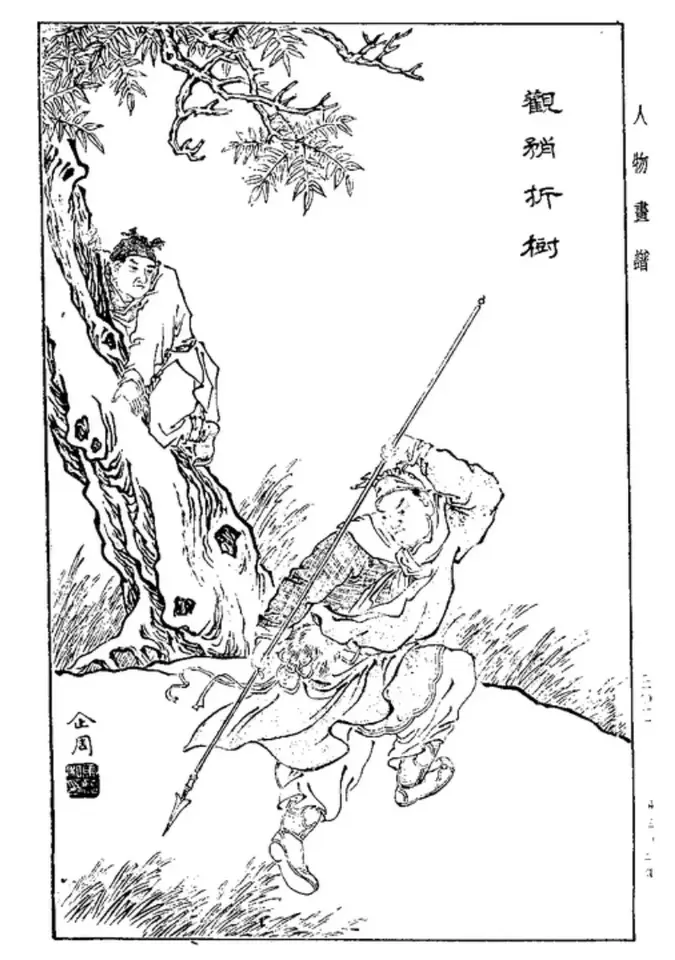
Remarkably, Yang Kan possessed extraordinary physical strength, able to draw an iron-backed war bow requiring fifteen dan of tension, releasing arrows with unerring accuracy with either hand while galloping across rough terrain. He was equally adept at casting heavy spears with pinpoint precision, earning renown throughout northern garrisons as a warrior of peerless talent. Reaching adulthood, he campaigned alongside his father in Hanzhong and Liangzhou, distinguishing himself in open combat and receiving appointments as Gentleman of the Masters of Writing and Attendant to the Crown Prince.
In 527, the Qiang tribal chieftain Mozhe Tiansheng launched a massive rebellion across Guanzhong, capturing cities and threatening the imperial capital of Luoyang. Northern Wei dispatched Grand Executive Xiao Baoyin to suppress the uprising, with Yang Kan serving as forward vanguard commander. During the decisive battle along the Black River, Yang Kan charged directly into the rebel center, slaying the enemy champion with a single arrow shot. The insurgent line collapsed into panic, allowing imperial forces to win a crushing victory. In recognition of the preeminent achievement of the campaign, Northern Wei promoted Yang Kan to General Who Conquers the East, Regional Commissioner of the Eastern Circuit, and Administrator of Taishan, ennobling him as Marquis of Juping.
The Uprising in Taishan and the Flight to the South
In the fourth month of 528, generalissimo Erzhu Rong orchestrated the horrific Heyin Massacre outside Luoyang, drowning the Empress Dowager and the young emperor while butchering over two thousand court aristocrats. Refusing to submit to barbarian military tyranny, Yang Kan resolved to mobilize his clan in Taishan and pledge allegiance to the Southern Liang dynasty.
Yang Kan dispatched emissaries to Jiankang while attempting to enlist his cousin Yang Dun, who commanded the fortress of Xiaqiu. However, Yang Dun clung to Northern Wei, closing his gates against Yang Kan. Yang Kan laid siege to Xiaqiu for several months, repelling multiple sorties. Northern Wei dispatched armies under Gao Huan and Yu Hui to encircle Taishan, while Erzhu Rong dispatched assassins who failed to penetrate Yang Kan's guard. When imperial emissaries arrived offering ducal patents to induce surrender, Yang Kan publicly burned the decrees and executed the envoys to declare unbending resolve.
Confronting overwhelming enemy forces and running out of provisions as southern relief forces stalled, Yang Kan executed a disciplined breakthrough. Slicing through Gao Huan's encirclement in narrow gorges, he led ten thousand soldiers and civilian followers on a fighting retreat toward the Yangtze. In late 528, he reached the southern capital of Jiankang. The eighty-six-year-old Emperor Wu of Liang received him warmly in the Hualin Garden, proclaiming that gaining Yang Kan was worth an army of a hundred thousand soldiers. Emperor Wu appointed him Gentleman of the Yellow Gate, Inspector of Xuzhou, and Marquis of Gaochang County.
Guarding the Metropolitan Palaces and National Emergency
In Southern Liang, Yang Kan quickly entered the inner circle of the imperial family. He possessed an elegant aristocratic demeanor, hosting lavish gatherings in his residence where he composed poetry alongside Emperor Wu and princes Xiao Gang and Xiao Yi, being renowned for creating novel musical melodies that captivated capital society.
Yet beneath his cultural elegance lay the discipline of a veteran commander. Serving successively as Left Marshall to the Chancellor, Left Commander of the Crown Prince's Bodyguard, General of the Cloud Banners, and Minister of Justice, Yang Kan eliminated corruption within the imperial guards. He conducted regular drills in waterborne and terrestrial combat, revitalizing palace defenses and winning the total confidence of Crown Prince Xiao Gang.
In the eighth month of 548, northern defector Hou Jing launched a catastrophic rebellion in Shouyang, crossing the Yangtze and storming the outer perimeter of Jiankang in the tenth month. The insurgent host laid siege to the inner citadel of Taicheng, trapping Emperor Wu and the entire court. As the court panicked, Emperor Wu summoned Yang Kan to the Wende Hall, took him by the hand, and appointed him Grand Commander of Military Affairs Inside the Citadel, entrusting the fate of the dynasty to his operational command.
Unyielding Defense and the Shot at His Son
Taking supreme command amidst catastrophe, Yang Kan organized the twenty thousand surviving defenders and tens of thousands of civilian refugees into an unbreachable defensive system. Incorporating ancient engineering principles from Sunzi and Mozi, he reinforced battlements, stockpiled rolling timbers and boulders, dismantled palace rafters to construct defensive weapons, and placed archery batteries across every palace angle.
Hou Jing deployed the most destructive siege weapons known to contemporary warfare. Insurgent engineers constructed massive wooden assault rams ten zhang long, draped in raw ox hides, advancing toward the walls to undermine the foundations. Unshaken, Yang Kan ordered heavy winches to hoist massive bundles of timber soaked in pine pitch, known as pheasant-tail torches, dropping them onto the assault rams. The wooden machines burst into roaring infernos, incinerating thousands of rebel sappers.
When Hou Jing erected colossal rolling siege towers dozens of zhang tall to rain arrows down upon palace courtyards, Yang Kan excavated subterranean listening galleries to detect enemy approaches, constructing giant catapults that hurled boulders weighing hundreds of pounds, smashing the enemy siege towers into fragments. When Hou Jing mobilized tens of thousands of pressed laborers to build two colossal earthen assault mounds overlooking the battlements, Yang Kan constructed internal crescent walls within the perimeter, trapping enemy assault columns within lethal kill zones where they were wiped out by crossfire.
Frustrated by continuous defeats, Hou Jing captured Yang Kan's fourth son, Yang Kun, who had remained in northern territories, binding him with ropes beneath the citadel walls. Rebel commanders shouted up to the ramparts, threatening to dismember the youth unless Yang Kan surrendered the gates. While defending troops wept, Yang Kan strode to the parapet, shouting down: 'I have dedicated my entire clan to defend my sovereign! Shall I spare a single son? How dare rebels attempt to move my loyal heart with familial affection!' He then drew his fifteen-dan bow and fired three consecutive arrows directly at his bound son, the shafts grazing Yang Kun's cheeks. Stunned by such terrifying loyalty, Hou Jing withdrew the youth. The defending garrison, inspired by their commander's supreme sacrifice, swore an oath to fight to the death.
The Passing of a Martyr and the Tragedy of Taicheng
Under Yang Kan's brilliant defense, Hou Jing's forces suffered catastrophic losses over months of siege, unable to gain a foothold on the walls. However, the thirty-thousand-strong relief coalition stationed across the Qinhuai River under Liu Zhongli remained passive, refusing to engage the enemy. Taicheng was cut off from all food supplies, descending into absolute famine.
Within the citadel, soldiers and civilians ate bark, weeds, and boiled armor leather. Yang Kan maintained relentless vigilance, inspecting the battlements day and night, dressing wounds of common soldiers, and distributing his personal grain rations to the injured. Worn down by severe winter conditions and unceasing labor, Yang Kan collapsed in his command post in the twelfth month of 548.
On his deathbed, Yang Kan summoned his officers and surviving sons, urging them to hold the walls to the end and never surrender to rebels. He passed away at the age of fifty-four.
Grief shook the besieged citadel upon news of his death. Emperor Wu beat his chest and wept in his bedchamber, lamenting that Heaven was destroying the Liang dynasty. The throne posthumously elevated Yang Kan to Palace Attendant, General of the Army of the Guard, and Opening of the Office with Ranks Equal to the Three Excellencies, granting the supreme posthumous name Zhuangxian. Following his death, the defense lost its guiding genius, leading to the fall of Taicheng in the third month of 549. His son Yang Kun survived captivity, bided his time, and ultimately helped slay Hou Jing, fulfilling his father's final mission.
Major Achievements
Defeating Mozhe Tiansheng in Guanzhong
During the massive western rebellion during the Xiaochang era, Yang Kan served as forward vanguard commander under Xiao Baoyin against Qiang insurgent Mozhe Tiansheng.
Charging solo through opposing lines, he drew his fifteen-dan war bow to kill the rebel vanguard commander at a range of over a hundred paces, sparking a general panic that crushed the rebel army.
This triumph pacified the northwestern territories and established his renown throughout China as a premier battlefield champion.
Leading the Loyalists South from Taishan
Following the Heyin Massacre, Yang Kan demonstrated sublime moral courage by defying the barbarian dictatorship of the Erzhu clan.
Governing Taishan, he led a courageous uprising to return to the legitimate Chinese court of Southern Liang, breaking through northern encirclements led by Gao Huan through valley ambushes and fighting retreats.
His successful migration delivered a premier northern military lineage to Southern Liang, celebrated as a triumph of Confucian loyalty.
Master of Citadel Defense During the Siege of Taicheng
During the defense of Taicheng in 548, Yang Kan elevated Chinese defensive siegecraft to unprecedented technical sophistication.
Confronting Hou Jing's colossal wooden rams, hundred-foot siege towers, and massive earthen mounds, he innovated tactics including pheasant-tail incendiary torches, underground listening galleries, counter-catapult bombardments, and internal crescent kill zones.
With only a small and starving garrison, he held off the main insurgent host for months, creating an enduring masterpiece of ancient urban siege defense.
The Legendary Shot at His Son for the State
When Hou Jing bound his fourth son Yang Kun beneath the battlements to force the surrender of Taicheng, Yang Kan demonstrated unforgettable dynastic devotion.
Placing the survival of the imperial house above personal kinship, he publicly denounced the rebels and released three consecutive arrows at his own son, shattering rebel blackmail.
This act of supreme sacrifice inspired the besieged garrison to fight to the last breath, creating an enduring symbol of selfless patriotism in Chinese history.
Embodying Martial Prowess and Cultural Refinement
Beyond his tactical genius, Yang Kan represented the finest synthesis of aristocratic cultural elegance and warrior strength.
He mastered classical histories, composed refined poetry, and created original musical compositions praised by Emperor Wu and imperial princes.
His balance of scholarly grace and battlefield ferocity established him as one of the most admired aristocratic commanders of the Northern and Southern Dynasties.