Gao Yang replaced Eastern Wei, founded Qi, established Northern Qi with its capital at Ye, and adopted the Tianbao era name.
550 CE–577 CE
Northern Qi
Concurrent polity北齐
Northern Qi (550–577) was a parallel regime of the Northern Dynasties founded by the Gao family and descended politically from Eastern Wei. In 550, the first year of the Tianbao era, Gao Yang, the second son of Eastern Wei strongman Gao Huan, forced Emperor Xiaojing Yuan Shanjian to abdicate and proclaimed himself emperor. He named the state “Qi,” adopted the Tianbao era name, established the capital at Ye (in the area of present-day Linzhang, Hebei), and maintained Jinyang as a secondary…
550 CE–577 CECapital · See entry
ERA OVERVIEW
Northern Qi (550–577) was a parallel regime of the Northern Dynasties founded by the Gao family and descended politically from Eastern Wei. In 550, the first year of the Tianbao era, Gao Yang, the second son of Eastern Wei strongman Gao Huan, forced Emperor Xiaojing Yuan Shanjian to abdicate and proclaimed himself emperor. He named the state “Qi,” adopted the Tianbao era name, established the capital at Ye (in the area of present-day Linzhang, Hebei), and maintained Jinyang as a secondary capital. Historians call the regime Northern Qi. Because it lay in the north and shared the name Qi with the Southern Qi of the Southern Dynasties, it was also called “Later Qi”; because its imperial house bore the surname Gao, it was also called “Gao Qi.” Northern Qi had six rulers—Emperor Wenxuan Gao Yang, the deposed emperor Gao Yin, Emperor Xiaozhao of Northern Qi, Gao Yan, Emperor Wucheng of Northern Qi, Gao Zhan, the Later Ruler Gao Wei, and the Young Ruler Gao Heng—and lasted twenty-seven years. It was destroyed by Northern Zhou in 577, the first year of the Chengguang era. Northern Qi controlled large parts of present-day Hebei, Henan, Shandong, and Shanxi as well as northern Jiangsu and northern Anhui. During the Tianbao era its influence once reached the Yangtze River. Contemporary historical sources including the Book of Sui describe it as the wealthiest of the states then confronting Northern Zhou and the Southern Dynasties. The early Gao rulers were often energetic in administration and military expansion, but later rulers became increasingly extravagant and violent and killed capable commanders. The state declined from strength to weakness and was ultimately annexed by Northern Zhou.
Time span550 CE–577 CE
CapitalSee entry
ERA TIMELINE
Gao Yang died suddenly; succession struggles followed and Gao Yin and Gao Yan were successively deposed and enthroned.
Emperor Xiaozhao of Northern Qi, Gao Yan launched a coup, deposed and killed Gao Yin, and took the throne.
Northern Qi reissued the Equal-field Edict and introduced a new military arrangement combining military service and agricultural production.
(fourth year of Heqing / first yea
565 (fourth year of Heqing / first year of Tiantong): Gao Zhan abdicated in favor of Crown Prince Gao Wei and became retired emperor; Gao Wei’s reign was increasingly disorderly.
(fifth year of Northern Qi’s Tiant
569 (fifth year of Northern Qi’s Tiantong era): Northern Qi campaigned against the Kumo Xi and Khitans, defeated the Rouran and Shanhu, and expanded south into Huainan; its territory reached the Yangtze and the state was at its height.
Gao Wei unjustly killed the general Hulü Guang.
Emperor Wu of Northern Zhou, Yuwen Yong, conquered Ye and destroyed Northern Qi, unifying northern China.
FULL ENTRY
Overview
Northern Qi (550–577) was a parallel regime of the Northern Dynasties founded by the Gao family and descended politically from Eastern Wei. In 550, the first year of the Tianbao era, Gao Yang, the second son of Eastern Wei strongman Gao Huan, forced Emperor Xiaojing Yuan Shanjian to abdicate and proclaimed himself emperor. He named the state “Qi,” adopted the Tianbao era name, established the capital at Ye (in the area of present-day Linzhang, Hebei), and maintained Jinyang as a secondary capital. Historians call the regime Northern Qi. Because it lay in the north and shared the name Qi with the Southern Qi of the Southern Dynasties, it was also called “Later Qi”; because its imperial house bore the surname Gao, it was also called “Gao Qi.” Northern Qi had six rulers—Emperor Wenxuan Gao Yang, the deposed emperor Gao Yin, Emperor Xiaozhao of Northern Qi, Gao Yan, Emperor Wucheng of Northern Qi, Gao Zhan, the Later Ruler Gao Wei, and the Young Ruler Gao Heng—and lasted twenty-seven years. It was destroyed by Northern Zhou in 577, the first year of the Chengguang era. Northern Qi controlled large parts of present-day Hebei, Henan, Shandong, and Shanxi as well as northern Jiangsu and northern Anhui. During the Tianbao era its influence once reached the Yangtze River. Contemporary historical sources including the Book of Sui describe it as the wealthiest of the states then confronting Northern Zhou and the Southern Dynasties. The early Gao rulers were often energetic in administration and military expansion, but later rulers became increasingly extravagant and violent and killed capable commanders. The state declined from strength to weakness and was ultimately annexed by Northern Zhou.
Historical Development
Foundation: Gao Huan and his son Gao Cheng had long dominated the Eastern Wei court. After Gao Huan’s death, Gao Cheng inherited control and planned to replace the Wei dynasty. In 549, the seventh year of Wuding, while secretly discussing acceptance of the throne at Ye with trusted associates, he was assassinated by the cook Lan Jing. His younger brother Gao Yang acted quickly, suppressed the rebels, took control of government, and was promoted as Prince of Qi, Chancellor of State, and chief overseer of the central administration. In the fifth lunar month of 550, Gao Yang followed the conventional abdication formula, replaced Eastern Wei, proclaimed himself emperor, named the state Qi, and adopted the Tianbao era name. The regime became known as Northern Qi. Other states existed alongside it: Western Wei in the Guanzhong-Longxi region, supported by Yuwen Tai and claiming the Northern Wei succession, later replaced by Northern Zhou; and the Southern Dynasties of Liang and Chen south of the Yangtze. Northern Qi, Northern Zhou, and the Southern Dynasties then remained in prolonged tripartite confrontation.
High point: In the early years after taking the throne, Gao Yang was cautious and controlled officials strictly by law, showing little indulgence even toward meritorious nobles and imperial relatives. Internal and external order was comparatively stable. Although he later became increasingly devoted to drinking and sensual pleasures, from 552, the third year of Tianbao, Northern Qi campaigned east against the Khitans, west against the Shanhu (described as a branch of the Xiongnu), north against the Rouran and Kumo Xi, and south into Huainan. Its territory and military influence extended to the Yangtze, and Northern Qi reached its greatest strength. Agriculture, salt and iron production, and ceramic manufacture were also developed, making it one of the wealthiest Northern Dynasties regimes.
Turning point: Gao Yang died suddenly in 559, the tenth year of Tianbao, after heavy drinking, and fierce struggles over succession followed. The deposed emperor Gao Yin ruled for less than a year. In 560, during the first year of the Huangjian era and the Qianming era, Gao Yan launched a coup, deposed Gao Yin, and later had him killed. Gao Yan governed energetically, reduced burdens, and tried to improve administration, but died after little more than a year and passed the throne to his younger brother Gao Zhan, Emperor Wucheng. Gao Zhan was portrayed as incompetent and self-indulgent, favored courtiers such as He Shikai, and allowed government corruption to deepen. His reign marked a major turn from strength to decline.
Decline: In 565, the first year of Tiantong, Gao Zhan abdicated in favor of Crown Prince Gao Wei while retaining power as retired emperor. Gao Wei, the Later Ruler, styled himself the “Carefree Son of Heaven,” pursued extravagant building and temple projects, and imposed numerous levies. Court favorites including Mu Tipo, Gao Anagong, and Lu Lingxuan dominated government, while internal political struggles intensified. Gao Wei also destroyed key military leadership. In 572, the third year of Wuping, he had the distinguished general Hulü Guang killed, and in 573, the fourth year of Wuping, ordered Gao Changgong, Prince of Lanling, to take poisoned wine. Northern Qi thereby lost two of its most capable commanders against Northern Zhou. During the same period, Southern Chen launched its Taijian northern campaigns and recovered territories north of the Yangtze and in Huainan.
Fall: Northern Zhou grew stronger under Emperor Wu, Yuwen Yong, while Northern Qi continued to decline. In 575, the sixth year of Wuping, Northern Zhou attacked Qi but withdrew because the emperor became ill. In the following year, 576, the first year of Longhua, Northern Zhou launched another major invasion, captured Pingyang, and then took Jinyang. Gao Wei retreated toward Ye and abdicated in favor of the eight-year-old Gao Heng. In the first lunar month of 577, the first year of Chengguang, Yuwen Yong besieged Ye, burned and captured the western gate, and took the city. Gao Wei and Gao Heng fled south intending to seek refuge with Chen but were captured by Northern Zhou forces at Nandeng Village in Qingzhou. In the second lunar month, Xindu fell and Prince Gao Jie of Rencheng and others were captured. Northern Qi ended. Northern Zhou unified northern China, and the later establishment of the Sui Dynasty ultimately led to the end of the wider Northern and Southern Dynasties division.
Politics and Institutions
Northern Qi politics was deeply influenced by Northern Wei and retained many of its court practices. The Gao rulers established a dual-capital arrangement centered on Ye and Jinyang. Ye functioned as the principal center of civil administration, while Jinyang in Bingzhou was the Gao family’s political base and a center for Xianbei military households of the Six Garrisons. A Bingzhou Department of State Affairs and a Ye Capital Department of State Affairs operated in parallel, with the relative weight of government shifting according to circumstances. The arrangement reflected a regime founded on military power but also dependent on civil administration. Local administration continued the three-level structure of provinces, commanderies, and counties, while imperial princes were enfeoffed and placed in strategic regions. Selection of officials continued to rely on the Nine-Rank Rectifying System and the recommendation system.
Northern Qi’s most notable institutional achievement was in law. Gao Yang ordered Feng Shu, Cui Xian, Li Yang, Wei Shou, and others to summarize legislative experience from the Han and Wei onward and compile the Northern Qi Code, consisting of twelve sections and 949 articles. Its organization combined the earlier categories of “Names of Punishments” and “Legal Principles” into a general “Names and Principles” section, established the “Ten Grave Crimes” that later contributed to the “Ten Abominations,” and systematized five principal punishments: death, exile, penal servitude, beating with the heavy stick, and flogging. The code was praised for clear rules and concise organization and influenced Sui and Tang law. Northern Qi also formally renamed the Court Commandant as the Court of Judicial Review. Under the Later Ruler, the wet nurse Lu Lingxuan and others gained power within the palace and intervened in government, producing problems likened to earlier dominance by imperial women at the Northern Wei court.
Military and Diplomacy
Northern Qi inherited military arrangements from Northern Wei. At the beginning of the regime, soldiers and ordinary households were substantially separated and Xianbei groups formed much of the army. Under Emperor Wenxuan, physically capable Han Chinese men were also selected for military service, but the distinction between soldiers and civilians and between Xianbei and Han was never fully eliminated. In 564, the third year of Heqing, a new arrangement combining military service with cultivation appeared and later influenced Emperor Wen of Sui’s reforms of the Fubing system. Northern Qi relied heavily on Six Garrisons Xianbei warriors and Han Chinese soldiers and maintained a strong martial culture, with cavalry and armored troops regarded as elite. It built sections of the Great Wall to strengthen northern defenses and to protect against Western Wei and Northern Zhou, including more than nine hundred li of walls from Youzhou to Hengzhou during the Tianbao era. It fought the Southern Dynasties to the south and defended against Khitans and other surrounding groups in the east and north. Under Gao Yang and Emperor Xiaozhao, armies repeatedly campaigned beyond the frontier and expanded the state. Hulü Guang, Gao Changgong, and other commanders won repeated victories against Northern Zhou over nearly twenty years. Diplomatically, Northern Qi maintained frequent contact with the Liang dynasty across the Yangtze, and cultural and artistic exchange also took place. In the later period, however, discipline weakened, rulers fell into conflict with commanders, and leading generals were killed, severely reducing military effectiveness and contributing to Northern Zhou’s conquest.
Economy and Commerce
Northern Qi controlled wealthy agricultural lands and economic centers along the middle and lower Yellow River. Agriculture, salt and iron production, and ceramic manufacture were all highly developed, making it the richest of the three major powers confronting Northern Zhou and Southern Chen. Economic institutions broadly followed Northern Wei. The equal-field system and rent-and-tax arrangements were continued with modifications. The earlier practice of granting additional doubled land was abolished. A married man and woman were allotted eighty and forty mu respectively of open field, while mulberry or hemp land was also granted as hereditary property. Land grants to slaves and grants associated with draft cattle were restricted according to official rank; the number of slaves eligible for land was capped between 300 and 60, and one draft ox could support an allotment of sixty mu, up to four oxen. Taxes and labor obligations were also specified in an effort to restrain powerful aristocratic households. Nevertheless, land concentration remained severe. Contemporary descriptions contrasted wealthy estates stretching over continuous tracts with poor households lacking even enough land to stand on, and the equal-field system achieved only limited results.
Ye was carefully planned and prosperous, reaching a high point under Northern Qi. Commerce was active and transportation convenient. Under Gao Wei, however, harsh levies multiplied and peasant uprisings occurred repeatedly, damaging the economy and living conditions. According to the Book of Zhou, when Northern Qi fell, Northern Zhou acquired fifty-five provinces, 162 commanderies, and 385 counties, with approximately 3.3 million registered households and twenty million registered people.
Culture and Society
Northern Qi was a strongly Xianbei-influenced regime of the later Northern Dynasties in which Han and non-Han traditions coexisted and blended. The Gao rulers used the Xianbei language at court and employed both Xianbei and Han elites. The ruling group drew heavily on Six Garrisons Xianbei and Hebei Han Chinese landholding families. Ethnic tensions rose and fell, but the regime also absorbed substantial Han Chinese culture.
In literature, Xing Shao and Wei Shou were leading figures of the Northern Qi literary world and influenced writers of the early Sui. Wei Shou directed the compilation of the Book of Wei. Buddhism and Buddhist scholarship flourished. Ye became a major Buddhist center in northern China, and prominent monks included Huiguang, Sengchou, and Lingyu. Buddhism approached the status of a state religion. Xiangtangshan and Tianlongshan caves are major surviving examples of Buddhist art of the period; Xiangtangshan in the Gushan area of present-day Fengfeng, Handan, is especially representative. Emperor Wenxuan also constructed the Wahuang Palace as a stopping place between Ye and Jinyang.
Buddhist, Indian, Central Asian, and West Asian influences continued to shape sculpture, painting, music, and dance. Northern Qi ceramics were known for multicolored glazes and white-bodied wares. The Xiangzhou-kiln celadon bull was praised as a progenitor of northern celadon. Green-glazed or celadon production at Xiangzhou and related kilns became important in the development of northern ceramics. Murals in the tombs of Lou Rui and Xu Xianxiu and copies of the Northern Qi Scholars Collating Texts depict a rounded, economical style with strong attention to movement. Northern Qi rulers were fond of non-Han music; Kucha and Sogdian traditions blended with Central Plains music, and the Book of Sui: Treatise on Music records the phrase “Kucha music of the Qi court.” The dynasty also produced forms of song-dance drama and comic performance that contributed to the early history of Chinese theater. The physician Xu Zhicai developed a month-by-month method for care during pregnancy, while the Medical Prescriptions Cave at Longmen preserves 118 complete prescriptions and thirty acupuncture prescriptions associated with the period. Clothing and social customs were strongly influenced by northern dress. Shen Kuo’s Dream Pool Essays later stated that Chinese dress had largely adopted northern clothing since Northern Qi. The regime also issued a prohibition on burning grasslands in order to protect vegetation.
Emperors and Governing Core
Gao Yang, Gao Yin, Gao Yan, Gao Zhan, Gao Wei, Gao Heng.
> This section describes each ruler’s place in the evolution of the regime; full personal biographies are carried by the corresponding person entities.
Historical Assessment and Legacy
Contemporary assessments: Northern Qi was criticized even in its own era for a contradiction summarized as disorder at the top but relative administrative competence below. Court officials and later compilers condemned the extravagance and violence of the Gao rulers, reliance on favorites, and killing of members of the imperial family and meritorious officials. Accounts in the Book of Northern Qi describe the Later Ruler’s destruction of his own military support and the distress this caused at court. Northern Qi became known in historical writing for exceptionally dark court politics and intense social and ethnic tensions.
Later assessments: Later historians often describe Northern Qi as a short-lived regime whose rulers were violent or self-indulgent and whose court favorites contributed to its destruction after only twenty-seven years. At the same time, its legal, military, cultural, and artistic achievements are also recognized. The Northern Qi Code is noted for its systematic structure, and the “Ten Grave Crimes” helped shape the later “Ten Abominations” of Sui and Tang law. Its military-agricultural arrangements influenced later reforms of the Fubing system. Its cave sculpture, murals, ceramics, and Buddhist culture form an important bridge between Northern Dynasties and Sui-Tang art and illustrate wider processes of cultural interaction.
Rulers
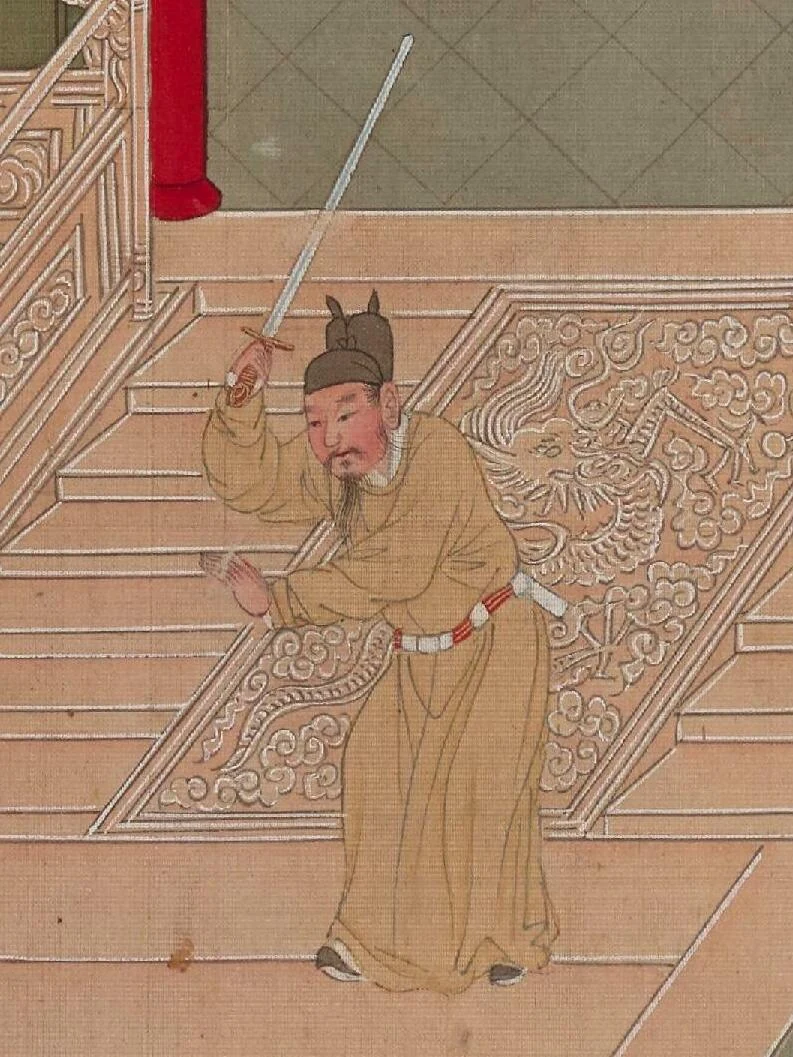 Northern Qi
Emperor
Gao Yang
Gao Yang (born 526, died 25 November 559), courtesy name Zijin and Xianbei name Hounigan, was a native of Tiao County in Bohai Commandery, born at Jinyang, and the founding emperor of Northern Qi. He was a son of Gao Huan and Lou Zhaojun. After his elder brother Gao Cheng was assassinated in 549(Wuding 7, Eastern Wei), Gao Yang took control of the Eastern Wei court. In 550(Wuding 8, Eastern Wei; Tianbao 1, Northern Q
Northern Qi
Emperor
Gao Yin
Gao Yin (545–561), courtesy name Zhengdao and childhood name Daoren, was a native of Tiao County in Bohai Commandery (present-day Jing County, Hebei). He was the second emperor of Northern Qi, reigning from 559 to 560, and the eldest legitimate son of Emperor Wenxuan Gao Yang. His mother was Empress Zhaoxin Li Zu'e. Gao Yin was precociously intelligent, generous and benevolent, mild and open in temperament, widely re
Northern Qi
Emperor
Gao Yan
Gao Yan (534–561), courtesy name Yan'an, was a native of Tiao County in Bohai Commandery, present-day Jing County, Hengshui, Hebei. He was the third emperor of Northern Qi, reigning from 560 to 561. He was the sixth son of the Eastern Wei strongman Gao Huan and Lady Lou Zhaojun, and a full brother of Gao Yang, Emperor Wenxuan. Skilled in political affairs, Gao Yan took part in government during the Tianbao era and be
Northern Qi
Emperor
Gao Zhan
Gao Zhan (537–January 13, 569), childhood name Buluoji, whose ancestral home was Tiao County in Bohai Commandery (present-day Jing County, Hebei), was the fourth emperor of Northern Qi. His posthumous title was Emperor Wucheng and his temple name was Shizu. He was the ninth son of Gao Huan, Emperor Shenwu, and his mother was Empress Wuming Lou Zhaojun. During the Eastern Wei Yuanxiang era he was enfeoffed as Duke of
Northern Qi
Emperor
Gao Wei
Gao Wei, courtesy name Rengang, was born on May 29, 556 (7th year of Tianbao, Northern Qi). He was the son of Gao Zhan, Emperor Wucheng of Northern Qi, and Empress Hu, and was the fifth emperor of Northern Qi. He was made Crown Prince in 562 (2nd year of Taining) and received the throne by abdication in 565 (4th year of Heqing). After Gao Zhan died in 569 (4th year of Tiantong), Gao Wei began personally handling stat
KEY PEOPLE
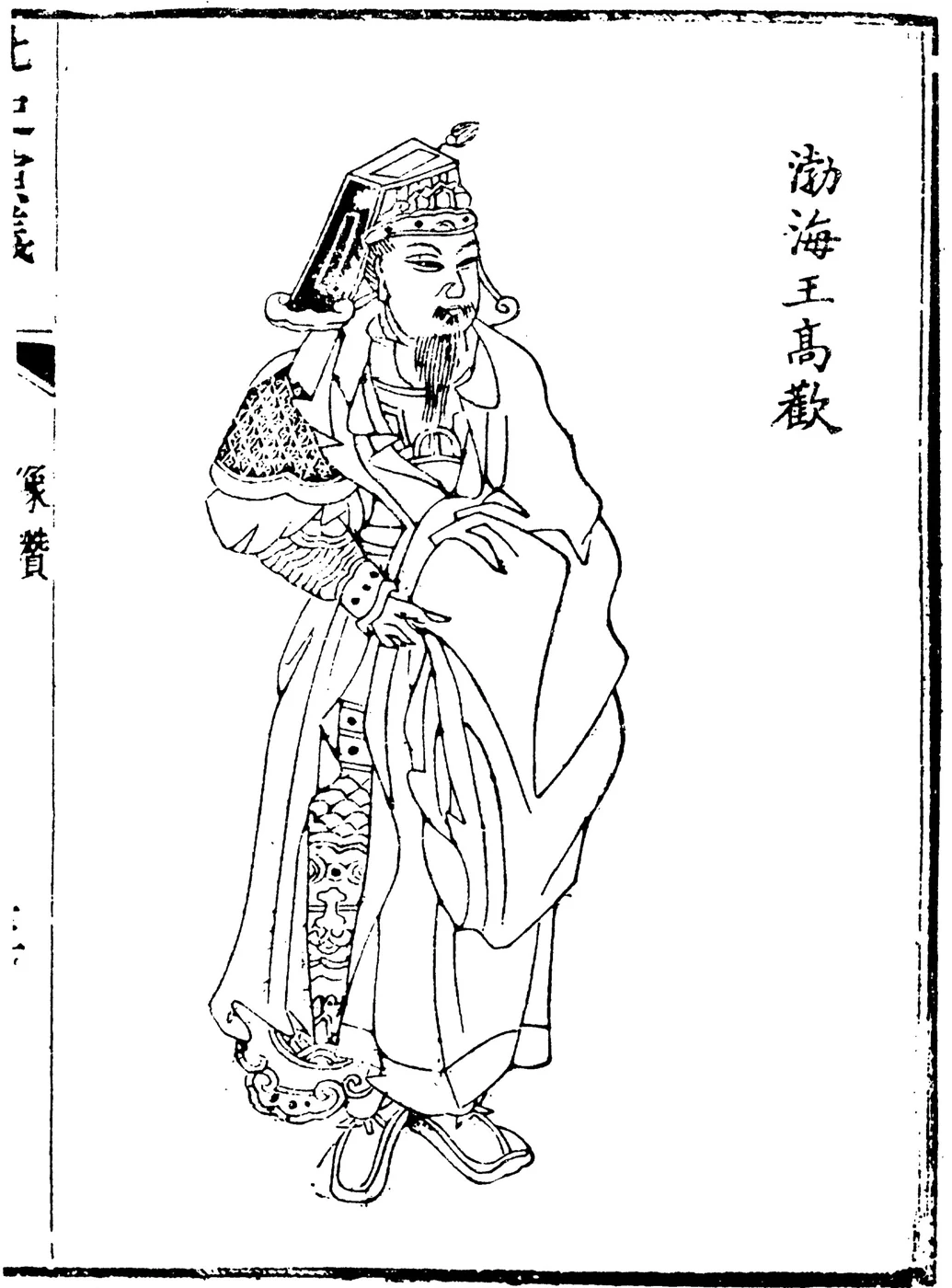 Northern Dynasties
Powerful minister of Eastern Wei
Gao Huan
Gao Huan (496–February 13, 547), whose Xianbei name was Helouhun, had his ancestral home in Tiao County, Bohai Commandery (present-day Jing County, Hebei) and was born at Huaishuo Garrison (present-day Guyang County, Inner Mongolia). He was the dominant minister of Eastern Wei during the Northern and Southern Dynasties and the founder of the political power later inherited by Northern Qi.
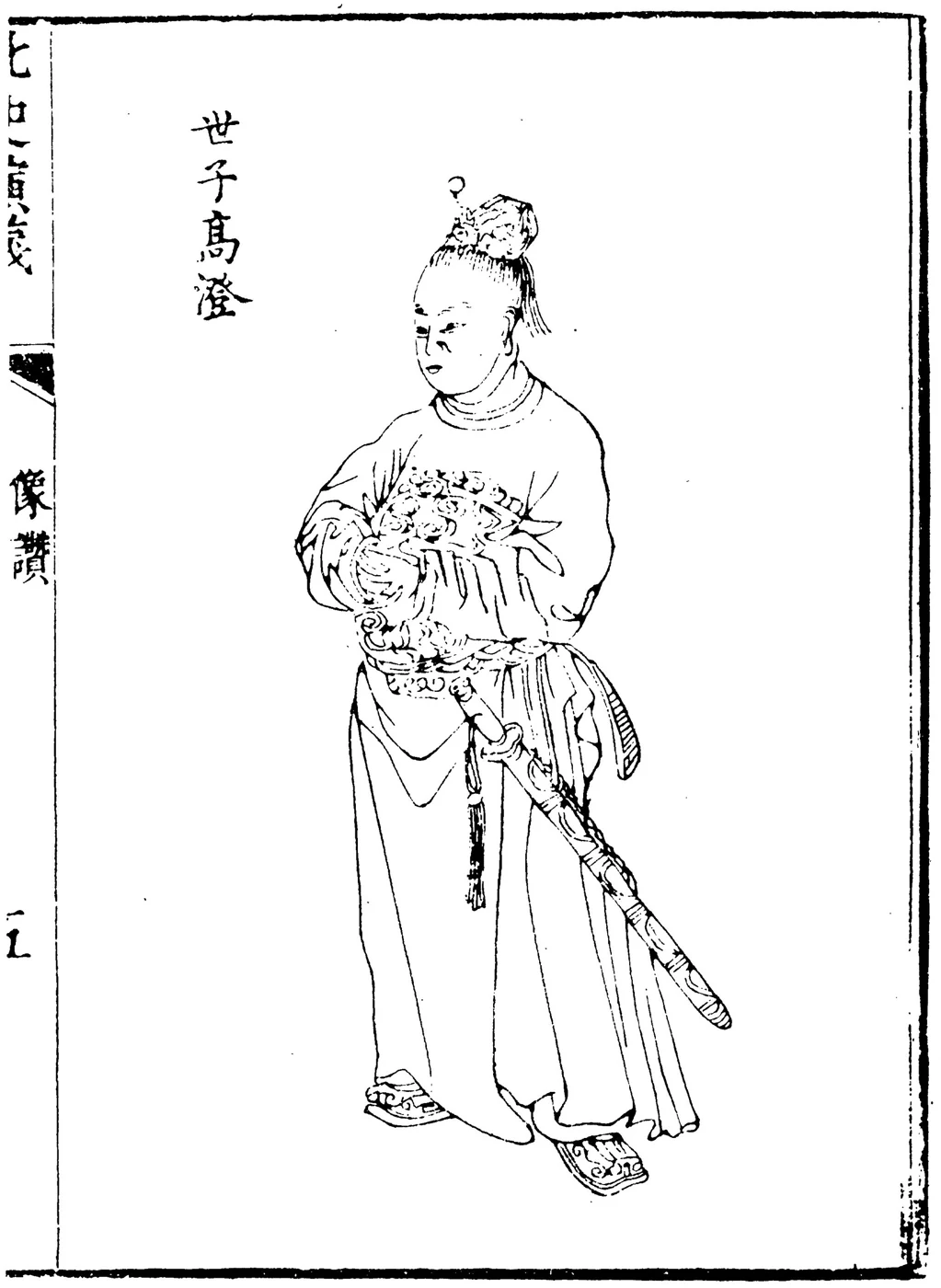 Northern Dynasties
Powerful minister of Eastern Wei
Gao Cheng
Gao Cheng (521–549), courtesy name Zihui, had his ancestral home in Tiao County, Bohai Commandery (present-day Jing County, Hebei) and was born at Huaishuo Garrison (present-day Guyang County, Inner Mongolia). He was a powerful minister, politician, and military leader of Eastern Wei and one of the founders of Northern Qi. He was the legitimate eldest son of Gao Huan, later honored as Emperor Shenwu, and Empress Wumi
Northern Wei
Military commander
Kezhuhun Yuan
Kezhuhun Yuan was a prominent Northern Qi general, an old follower of Gao Huan, and rose to the rank of Duke of Gaodu Commandery.
Northern Qi
Northern Qi general
Duan Shao
Duan Shao (d. October 18, 571), courtesy name Xiaoxian and childhood name Tiefa, was a native of Guzang County in Wuwei Commandery. He was a senior Northern Qi general and minister during the Northern and Southern Dynasties, the eldest son of Duan Rong, Marquis of Guzang, and a nephew of Empress Wuming Lou Zhaojun. From youth he was valued by Gao Huan, his uncle by marriage, and was appointed a trusted military comma
Northern Dynasties
Noted prince of the imperial house of Northern Qi in the Northern and Southern Dynasties
Gao Changgong
Gao Changgong (541–573 AD), named Su or Xiaoguan, courtesy name Changgong and widely known by his courtesy name, was a native of Tiao County, Bohai (modern Jing County, Hebei Province). He was an illustrious imperial prince, general, and cultural icon of the Northern Qi dynasty, the grandson of Emperor Shenwu Gao Huan and the fourth son of Emperor Wenxiang Gao Cheng. Enfeoffed as the Prince of Lanling, he was celebra
Northern Dynasties
Official
Zhao Yanshen
Zhao Yanshen (507–576 CE), original name Zhao Yin, courtesy name Yanshen, was a paramount chancellor and esteemed civil statesman of the Northern Qi dynasty. Hailing originally from Nanyang and raised in Pingyuan, he was noted in youth for exceptional filial piety and classical diligence. Initially serving Grand Chancellor Gao Huan as secretarial assistant handling sensitive state documents, he earned the deep confid
Northern Dynasties
Founding General of Northern Qi
Helian Meng
Helian Meng(?–577 CE), courtesy name Hualu, was a native of Changli(modern Yixian, Liaoning Province). He was a founding general and prominent military commander across the Eastern Wei and Northern Qi dynasties. Initially serving in the forces of the Erzhu clan, he submitted to Gao Huan in 532 CE and took part in crucial campaigns against the Erzhu remnants and Western Wei, distinguishing himself particularly at Moun
Related entries
Bibliography
- 《北齐书》
- 《魏书》
- 《周书》
- 《北史》
- 《资治通鉴》
- 《隋书》