Birth | Born at Huaishuo Garrison.
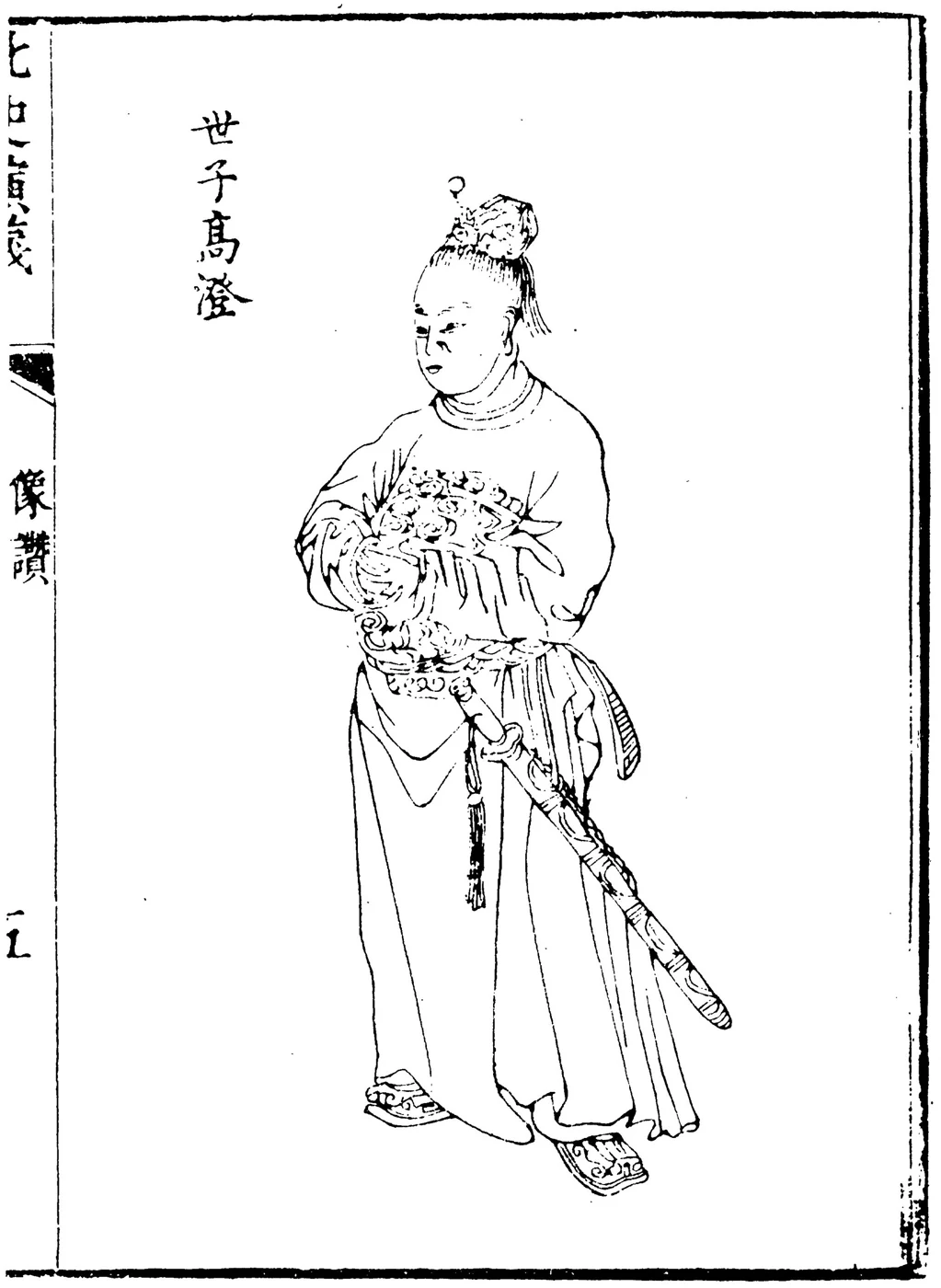
521 CE–549 CE
Powerful minister of Eastern Weione of the founders of Northern Qi
Gao Cheng
高澄
Gao Cheng (521–549), courtesy name Zihui, had his ancestral home in Tiao County, Bohai Commandery (present-day Jing County, Hebei) and was born at Huaishuo Garrison (present-day Guyang County, Inner Mongolia). He was a powerful minister, politician, and military leader of Eastern Wei and one of the founders of Northern Qi. He was the legitimate eldest son of Gao Huan, later honored as Emperor Shenwu, and Empress Wuming Lou…
521 CE–549 CENorthern Dynasties
PROFILE
Gao Cheng (521–549), courtesy name Zihui, had his ancestral home in Tiao County, Bohai Commandery (present-day Jing County, Hebei) and was born at Huaishuo Garrison (present-day Guyang County, Inner Mongolia). He was a powerful minister, politician, and military leader of Eastern Wei and one of the founders of Northern Qi. He was the legitimate eldest son of Gao Huan, later honored as Emperor Shenwu, and Empress Wuming Lou Zhaojun. Exceptionally intelligent from youth, strict in administration, and possessed of broad strategic ability, he was deeply favored by Gao Huan.
- Other name
- Gao Zihui
- Courtesy name
- Zihui
- Period
- Northern Dynasties · Northern Qi
- Date of Birth
- 521
- Date of Death
- 549
- Dynasty/State
- Northern Dynasties · Northern Qi
- Identity
- Powerful minister of Eastern Wei; one of the founders of Northern Qi
- Ethnicity/Group
- Not recorded in historical sources
- Native place
- Ancestral home in Tiao County, Bohai Commandery (present-day Jing County, Hebei)
- Place of birth
- Not recorded in historical sources
- Posthumous name
- Wenxiang
- Principal achievements
- Eldest son of Gao Huan; succeeded to control of Eastern Wei politics and was assassinated on the eve of a planned dynastic transfer.
LIFE TIMELINE
Age 10 | Age ten. Made heir apparent to the Prince of Bohai and personally persuaded the formidable general Gao Aocao to surrender.
Age 11 | Age eleven. Twice traveled to Luoyang as Gao Huan's special envoy to attend Emperor Xiaowu, Yuan Xiu.
Age 13 | Age thirteen. Appointed Bearer of the Imperial Tally, Director of the Department of State Affairs, Grand Commander of the Administrative Office, and Inspector of Bing Province; married Yuan Zhonghua, Princess Fengyi and sister of Emperor Xiaojing.
Age 15 | Age fifteen. Entered court to assist in government and additionally supervised the Left and Right Guards and served as Grand Commander of the Capital Region.
Age 17 | Age seventeen. Concurrently became Minister of Personnel and began rectifying the bureaucracy.
Age 19 | Age nineteen. Appointed Grand General and Director of the Palace Secretariat while continuing to act as Minister of Personnel.
Age 20 | Age twenty. Compiled the Linzhi Ge with officials at the Linzhi Pavilion and promulgated it throughout the realm; ordered one hundred furnaces to mint Yong'an Five-Zhu coins separately.
Age 23 | Age twenty-three. Employed Cui Xian, Song Youdao, and others to purge corrupt officials.
Age 25 | Age twenty-five. When Gao Huan became gravely ill during a western campaign, Gao Cheng hurried to the army and escorted him back to Jinyang.
Age 26 | Age twenty-six. Gao Huan died in the first month; the death was initially concealed. Mourning was announced in the sixth month, and in the seventh Gao Cheng became Grand Chancellor, Commander of All Military Forces Within and Without, and Prince of Bohai; he sent Murong Shaozong to defeat Hou Jing.
Age 27 | Age twenty-seven. Personally led troops south to Hulao and Luoyang in the third month and captured the Western Wei general Pei Kuan; reformed the currency and minted "Hanging-Scale Five-Zhu" coins; took advantage of the Hou Jing Rebellion to send Xin Shu south into the Huai River region.
Age 28 | Age twenty-eight. In the fourth month became Grand General and Chancellor of State, was enfeoffed as Prince of Qi, and received exceptional ceremonial privileges; in the eighth month he was assassinated at Dongbaitang in Ye by the kitchen slave Lan Jing, at age twenty-nine.
Northern Qi was established. His younger brother Gao Yang posthumously honored Gao Cheng a | Northern Qi was established. His younger brother Gao Yang posthumously honored Gao Cheng as Emperor Wenxiang, with the temple name Shizong; his mausoleum was Juncheng Mausoleum.
BIOGRAPHY
Biography
Family Background and Early Years
Gao Cheng came from a powerful family associated with the northern garrisons. His grandfather Gao Mi had been exiled to Huaishuo Garrison for an offense, while his father Gao Huan rose amid the Six Garrisons Rebellion at the end of Northern Wei and gradually took control of the Northern Wei court, becoming the immensely powerful Prince of Bohai. Gao Cheng was the eldest son of Gao Huan and Lou Zhaojun. From childhood he was extraordinarily intelligent, eloquent, and quick-witted, and Gao Huan favored him deeply.
At age ten, Gao Huan sent him alone to persuade the fierce commander Gao Aocao to submit. Gao Cheng succeeded, displaying courage and eloquence beyond his years. At eleven he twice went to Luoyang as Gao Huan's special envoy to pay court to Emperor Xiaowu, Yuan Xiu, and handled court ritual and the complex political situation with ease. At twelve he married Yuan Zhonghua, Princess Fengyi and sister of Emperor Xiaojing Yuan Shanjian. The Book of Northern Qi described him as having "a spirited and handsome bearing, already like an adult." Gao Huan frequently discussed current affairs and state business with him; Gao Cheng answered fluently and analyzed matters in detail, and thereafter participated in planning military and state affairs.
Assisting Government as a Youth
In 536, the third year of Tianping, the fifteen-year-old Gao Cheng asked to enter the Eastern Wei court to assist in government and was placed over the Left and Right Guards and made Grand Commander of the Capital Region. Court officials had heard that he was mature beyond his years but remained unconvinced when they saw only an adolescent. Yet when acting as chief minister, Gao Cheng heard cases rapidly, handled matters promptly and appropriately, and displayed courage and command of the overall situation. Court and public opinion alike came to respect him.
In 538, the first year of Yuanxiang, he concurrently became Minister of Personnel and began reforming the system of official selection. Since Cui Liang's time in Northern Wei, appointments had been based largely on seniority rather than ability. Gao Cheng abolished the old practice and insisted that selection should depend on finding capable people. He personally wrote to recruit men of learning and reputation from different regions. Men of good character and ability were promoted and employed; those for whom no suitable post was immediately available were summoned as guests and supported in his residence, where he often walked in the gardens and composed poetry with them so that each might find an appropriate place and use his talents.
Reform and Administrative Rectification
During his period of assisting government, Gao Cheng vigorously rectified official administration. After the Heyin Incident, Erzhu Rong had distributed offices and ranks indiscriminately in order to stabilize public sentiment, and posthumous honors and hereditary privileges had become disorderly. During the Wuding era, Gao Cheng corrected these abuses and made honorary awards more regular. He recommended the uncompromising Cui Xian as Censor-in-Chief and severely punished corrupt officials, especially powerful figures occupying high office. Many were brought to justice, and the atmosphere of officialdom improved markedly.
In 541, the third year of Xinghe, Gao Cheng and a group of officials compiled and deliberated the Linzhi Ge at Linzhi Pavilion and promulgated it throughout the realm. The code became a model for the Northern Qi Code and, according to the Chinese source, a direct precursor of Sui and Tang law. Gao Cheng also had his policies written on public notices and posted in the streets so that ordinary people could comment freely. Those who offered suggestions or criticism were treated generously, even if their claims were exaggerated or their language severe.
Gao Cheng also reformed the currency. Warfare at the end of Northern Wei had produced economic disorder, depreciation, and widespread private minting of counterfeit coins. Early in the Wuding era he ordered officials throughout the realm to collect copper suitable for minting and old coins for recasting, but illicit minting continued. In 548, the sixth year of Wuding, he carried out a new currency reform, issuing full-weight Yong'an Five-Zhu coins said to "weigh as their inscription stated." Two standard balances were hung at the market gates in each of the capital's two markets and in the markets of provinces, garrisons, commanderies, and counties throughout the realm to weigh coins entering circulation. These became known as "Hanging-Scale Five-Zhu" coins. The Chinese source presents this full-weight currency as a turning point from disorder toward stability in the monetary history of the Wei-Jin and Northern and Southern Dynasties and as a precursor of the later Kaihuang Five-Zhu coinage.
Gao Cheng also sent Gao Longzhi and others to conduct household registration in Hebei, registering people in Yan, Heng, Yun, Shuo, Xian, Wei, the two Xia provinces, Gaoping, and Pingliang for military service. Those who concealed households, as well as householders, local registration heads, and officials responsible for them, could be punished capitally and their property confiscated. Large numbers were registered. The household rolls increased, state tax revenue grew, and the power of local strongmen was reduced.
Inheriting Power and Defeating Hou Jing
In the eleventh month of 546, the fourth year of Wuding, Gao Huan became seriously ill during a campaign against Western Wei. After withdrawing, he urgently summoned Gao Cheng, who came to the army and escorted him back to Jinyang. At the time Hou Jing, Grand General and Grand Commander of Henan, had long harbored ambitions but had refrained from acting because of Gao Huan's prestige.
In the first month of 547, Gao Huan died. Gao Cheng initially concealed the death and moved quickly to consolidate power. Five days later Hou Jing openly rebelled, first turning to Western Wei and then to Southern Liang, whose Emperor Wu, Xiao Yan, made him Prince of Henan. Gao Cheng deployed commanders against him while closely monitoring the provinces within his own territory. He left his younger brother Gao Yang as Grand Commander of the Capital Region to guard Ye, while he returned to Jinyang in the sixth month to announce mourning for his father. In the seventh month Gao Cheng became Bearer of the Imperial Tally, Grand Chancellor, Commander of All Military Forces Within and Without, Recorder of the Department of State Affairs, Grand Commander of the Administrative Office, and Prince of Bohai. Gao Yang handled government affairs, leaving the Gao brothers firmly in control of Eastern Wei.
Gao Huan had instructed Gao Cheng before his death to make use of Murong Shaozong. Hou Jing's rebellion began with formidable forces, and armies led by Han Gui, Yuan Tan, Gao Yue, and others failed against him. Because Murong Shaozong had previously belonged to Erzhu Rong's faction, Gao Cheng initially hesitated to entrust him with great authority. After Chen Yuankang advised him, Gao Cheng appointed Murong Shaozong Left Director of the Department of State Affairs in the fifth month. Hearing that Murong was coming, Hou Jing reportedly struck his saddle in fear. Murong Shaozong led Liu Fengsheng, Duan Shao, Hulü Guang, and other generals, defeated the Southern Liang army at Hanshan, captured its commander Xiao Yuanming, and then routed Hou Jing at Woyang. By the end of 547 Hou Jing had withdrawn to Woyang; Murong defeated him decisively, destroying his army. Hou Jing escaped south into Liang with only eight hundred men.
Southern Expansion and Assassination before the Dynastic Transfer
After Hou Jing fled to Southern Liang, Gao Cheng asked the captured Xiao Yuanming to write Emperor Wu of Liang, Xiao Yan, proposing reconciliation. Xiao Yan replied favorably and the two states began exchanging envoys. Hou Jing became alarmed and forged a letter in Gao Cheng's name proposing to exchange Xiao Yuanming for Hou Jing. Xiao Yan replied that if Xiao Yuanming were returned in the morning, Hou Jing would be returned in the evening. Hou Jing intercepted the reply and resolved to rebel. In the eighth month of 548, the sixth year of Wuding, Hou crossed the Yangtze in revolt. By the eleventh month he reached Jiankang and besieged the palace city; Emperor Wu later died of starvation, and the Hou Jing Rebellion engulfed Liang.
Gao Cheng closely followed developments in Southern Liang. In the autumn of the sixth year of Wuding he sent the official Xin Shu into the Huai River region and took large areas of Liang territory while Liang was in turmoil. In less than a year Eastern Wei acquired twenty-three provinces, seized important strongholds south of the Huai, and extended its territory from north of the Huai toward the Yangtze.
In the fourth month of 549, the seventh year of Wuding, Gao Cheng became Grand General and Chancellor of State, was enfeoffed as Prince of Qi, and received extraordinary privileges: his name need not be spoken in formal obeisance, he need not hasten when entering court, and he could enter the palace wearing sword and shoes. His power had reached the summit possible for a subject. Gao Cheng and his closest associates began secretly discussing the formal seizure of the Yuan imperial throne.
In the eighth month, after returning victorious from the Yingchuan front, Gao Cheng met trusted ministers at Dongbaitang in the northern city to discuss the planned abdication and dynastic transfer. The kitchen slave Lan Jing pretended to enter carrying food. Gao Cheng thought his movements suspicious, ordered him out, and told those present that he had dreamed the previous night that this slave had cut him with a knife and that he should perhaps kill him. Lan Jing overheard this outside. He hid a knife beneath a tray and entered again with food. Gao Cheng angrily rebuked him. Lan Jing shouted, "I have come to kill you," and rushed at the bed. Yang Yin was the first to flee; Cui Jishu hid in a latrine; Chen Yuankang, a Regular Attendant of the Cavalier Service, shielded Gao Cheng with his body and was mortally wounded. Gao Cheng jumped from the bed but injured his foot and could not escape. He crawled under the large bed. Six of Lan Jing's accomplices arrived, overturned the bed, and killed Gao Cheng. Gao Yang soon arrived and had Lan Jing and the others executed, but Gao Cheng was already dead at only twenty-nine.
Taking Office Young, and Reforming the Administration
Gao Cheng was sharp and eloquent from childhood, and at ten rode out alone to bring an enemy force to submission. The History of Northern Qi records that "in the second year he was made attendant of the palace and kaifu with the same honours as the three excellencies, and married the princess of Fengyi, sister of Emperor Xiaojing, being then twelve, of a bright and gallant bearing, as if already a man." He was often summoned by Gao Huan to discuss current affairs and government, answering always without hesitation and analysing in detail, so that "when Shenwu tested him on the successes and failures of the day, his analysis was never wrong, and from that time he took part in all military and state planning." In 536 he asked to enter the court to assist in government and was given command of the guards and the metropolitan district as well: the ministers had heard of his maturity, bearing and insight, but thought him still a boy and were not convinced, "yet his strategy was strict and clear and no business was delayed, so that court and country were shaken into order" — seeing him handle matters at court with fluency and settle them promptly and aptly, they were all convinced. In 538 he was acting president of the board of personnel, and in 540 grand general and director of the secretariat, still acting in personnel.
His reform of the selection of officials was among the most important of the reign: since Cui Liang's time officials had been chosen by seniority rather than ability, and Gao Cheng abolished this system, "weighing and promoting only for the right man," himself writing to summon scholars of talent and repute from every quarter; men of good character and ability were promoted, and "such as could not at once be given a prominent post were brought into his household as retainers, and on excursions in hills and gardens they were always invited, shooting and writing verse, each to the full of his powers." He also corrected the abuse of indiscriminate posthumous honours, so that commendation and reward began to follow rules; and he recommended incorruptible men as censors, "especially against the powerful who usurped high place, many of whom were brought to justice," so that the tone of official life greatly improved. In 541 he and the ministers drafted and settled a code at the Linzhi pavilion, the direct ancestor of the Sui and Tang codes; and he "had the state's policies written on boards and posted publicly in the streets for the empire's people to comment on freely," treating those who offered proposals or criticism with generosity, and tolerating even exaggeration and vehemence. With the envoys of the Liang in the south, who vied with the Eastern Wei envoys in rhetoric and learning to display their "national dignity," he delighted in the contest, attending the banquets himself or sending subordinates, and so gathered about him a great body of men of letters.
Major Activities
Political Reform
After entering court to assist government, Gao Cheng carried out a series of political reforms. He abolished the seniority-based appointment practices inherited from Northern Wei and selected officials according to ability and reputation. He recommended Cui Xian as Censor-in-Chief and pursued corrupt officials vigorously. Powerful figures including Sima Ziru, Yuan Xian, Murong Xian, Yuan Tan, Kezhuhun Daoyuan, Sun Teng, Hou Jing, and Yuan Bi were all impeached. He corrected the indiscriminate granting of offices and titles that followed the Heyin Incident, making posthumous honors and commendations more regular. He publicly posted government policies in the streets and encouraged ordinary people to comment, widening channels for criticism.
Legal Development
In 541, the third year of Xinghe, Gao Cheng and his officials compiled the Linzhi Ge at Linzhi Pavilion and promulgated it throughout the realm. The Chinese source describes it as a model for the Northern Qi Code and a direct precursor of Sui and Tang law, giving it an important place in the history of Chinese law.
Economic Reform
Gao Cheng reformed the currency. In 548, the sixth year of Wuding, he issued full-weight Yong'an Five-Zhu coins, described as "weighing as their inscription stated," and had standard balances hung in markets to weigh coinage, producing the name "Hanging-Scale Five-Zhu". The Chinese source treats this as a shift from monetary disorder toward stability during the Wei-Jin and Northern and Southern Dynasties and as a precursor of the later Kaihuang Five-Zhu coinage.
He also sent Gao Longzhi and others to register previously concealed households in Hebei, bringing hidden population onto the state rolls, increasing tax revenue, and reducing the power of local magnates. He accepted a proposal from Minister of Revenue Cui Ang to close the state salt markets, allow private salt to be sold to the government, and levy only a modest salt tax, thereby balancing tensions between government and private salt interests.
Defeating Hou Jing
After Gao Huan's death, Hou Jing rebelled in Henan, first joining Western Wei and then Southern Liang. Gao Cheng overrode objections and entrusted Murong Shaozong with command. Murong defeated the Liang army at Hanshan, captured Xiao Yuanming, and routed Hou Jing at Woyang. Hou Jing's army collapsed and he escaped south with only eight hundred men. Gao Cheng then used counterintelligence to help push Hou Jing into rebellion against Liang, triggering the Hou Jing Rebellion. Gao Cheng took advantage of the turmoil by sending Xin Shu south into the Huai River region; within less than a year Eastern Wei gained twenty-three provinces and pushed its territorial reach toward the Yangtze.
Travels and Campaigns
Gao Cheng was long based at Jinyang and frequently traveled between Jinyang and Ye. In the third month of 548, the sixth year of Wuding, he personally led troops south to Hulao and Luoyang and captured the Western Wei general Pei Kuan at Xincheng. In 549, the seventh year of Wuding, he returned to Ye after a victorious campaign on the Yingchuan front.
Relations with Contemporaries
Gao Cheng recruited men of talent and maintained close relations with scholars. He gathered many literary men into his household as guests or recommended them for government office. Envoys from Eastern Wei and Southern Liang often competed at banquets in rhetoric and learning. Gao Cheng enjoyed such exchanges; whenever the Eastern Wei side produced an especially clever argument, he became excited and applauded. Cui Xian, Song Youdao, Lu Fei, Chen Yuankang, Cui Jishu, and Yang Yin were among his close associates and formed the core of his administrative circle.
Currency, Household Registration and Salt
The economic reforms are the key to his government. The wars at the end of Northern Wei had disordered the economy and debased the coinage, with much false coining among the people: in 541, when a sparrow dropped an Yongan five-zhu coin before Gao Huan's seat, Gao Cheng had a hundred furnaces cast that coin separately, known as the "hundred furnaces of the lord" money; early in Wuding he had copper and old coins gathered throughout the empire and recast, but private coining went on, so that in 548 he made a further reform, adopting the "hanging-scale" five-zhu, said to be "heavy as its inscription," a full-weight coin — its casting being regarded as the turning point from disorder to order in the monetary history of Wei, Jin and the Northern and Southern Dynasties, and the forerunner of full-weight coinage later. To promote its circulation he used strong measures; the Treatise on Food and Money records that "a hundred coins shall weigh one catty four ounces and twenty zhu, and all else reckoned accordingly; in the two markets of the capital and the markets of every prefecture, garrison, commandery and county two scales shall be set up hanging at the market gate, and the scales used by private persons shall all be fixed by the market scale." The Yongan five-zhu of 548 was thus hung at market gates as the standard for weighing coin brought to market.
As to households and military resources, since the end of Northern Wei many people had been driven from their homes and held by great families as slaves or private troops, these families paying no tax and reporting no slaves, so that Eastern Wei's households and revenue fell sharply. After taking office Gao Cheng sent men several times to search out households in Hebei, "and further searched out the people of Yan, Heng, Yun, Shuo, Xian, Yu and the two others to serve as soldiers, those who fled or hid, with their masters, the village heads and the prefects, to be punished capitally and their property confiscated, and so what was gained was very great": households increased, the people returned to the land and paid taxes, "and the state's revenue was thereby ample," while the great families broken in the process had their property confiscated for military funds and their slaves and private troops gave the state both men and resources. Against the great clans of Hebei, grown strong in the disorders, he acted one by one, degrading or permanently barring men such as Gao Shen. In salt, since private salt flooded the market and official salt could not keep up, the vice-president of the secretariat proposed greatly increasing the salt-boiling furnaces on the coast, but Gao Cheng followed another proposal: to close the salt market and let private salt be sold to the government with only a light tax, "which balanced the interests of government and private persons and profited both." After these reforms "the politics and economy of Eastern Wei began to come into order, the power of the favoured nobles was checked, and Gao Cheng's position as Gao Huan's heir was wholly secured."
The Succession, the Campaign against Hou Jing, and His Death
In the eleventh month of 546, Gao Huan fell ill on the western campaign and returned, summoning Gao Cheng at speed to escort him back to Jinyang. Hou Jing, then minister of education, grand general of Henan and commissioner of the grand administration, had long had designs of his own, "restrained only by Gao Huan's prestige and strength," and on hearing of his illness at once fortified himself with his troops in Henan. Gao Cheng, knowing the danger, "kept the death secret" when Gao Huan died in the first month of 547 and moved quickly to secure his power and position. Hou Jing then rose in Henan, went over to Western Wei and took several cities, and then went over to the Liang, being made prince of Henan by Emperor Wu; Gao Cheng on the one hand sent Han Kuang, minister of works, against him and watched the other provinces closely, and on the other had his brother Gao Yang made commander of the guards and the metropolitan district to hold the capital, while he himself received the emperor's edict as commissioner with the staff of authority, grand chancellor, commander of military affairs at home and abroad, keeper of the seals, commissioner of the grand administration and prince of Bohai. He memorialized declining the post and asking to give up the princely title, announced Gao Huan's testament asking that the fief be reduced and shared among the generals in due proportion, and for a time firmly refused the chancellorship; in the campaign against Hou Jing he trusted Murong Shaozong with command for his ability. It was on the eve of his southern expansion and of the abdication that he was assassinated, before he could complete the replacement of Wei by Qi, which his brother Gao Yang then carried out.
Personal Relations
- Father: Gao Huan (Emperor Shenwu)
- Mother: Lou Zhaojun (Empress Wuming)
- Wives: Yuan Zhonghua (Empress Wenxiangjing, sister of Emperor Xiaojing); the Rouran princess, a princess of Rouran and second wife of Gao Huan
- Consorts/concubines: Consort Wang, Lady Song, Lady Wang, Lady Chen, Lady Yan, Yuan Yuyi (Princess Langya)
- Younger brothers: Gao Yang (Emperor Wenxuan of Northern Qi), Gao Yan (Yǎn; Emperor Xiaozhao of Northern Qi), Gao Zhan (Emperor Wucheng of Northern Qi), Gao Jun, Gao Yan (Yān), Gao You, Gao Huan, Gao Yu, Gao Jie, Gao Shi, Gao Ji, Gao Ning, Gao Run, Gao Qia
- Sons: Gao Xiaoyu (Prince of Henan), Gao Xiaoheng (Prince of Guangning), Gao Changgong (Prince of Lanling), Gao Xiaowan (Prince of Hejian), Gao Yanzong (Prince of Ande), Gao Shaoxin (Prince of Yuyang)
- Cui Xian: Censor-in-Chief, employed by Gao Cheng to rectify official administration
- Chen Yuankang: Regular Attendant of the Cavalier Service; shielded Gao Cheng during the assassination and was killed
- Cui Jishu: Gentleman of the Palace Gate Secretariat, a trusted associate
- Yang Yin: trusted associate who escaped during the assassination
- Song Youdao and Lu Fei: important agents in Gao Cheng's anti-corruption campaigns
- Murong Shaozong: general whom Gao Huan instructed Gao Cheng to employ; used to defeat Hou Jing
- Gao Longzhi: directed household registration measures
- Emperor Xiaojing Yuan Shanjian: Gao Cheng dominated the emperor politically; relations between them were sharply antagonistic
- Emperor Wu of Liang Xiao Yan: Gao Cheng used counterintelligence to destabilize Southern Liang
- Hou Jing: rebel general defeated by Gao Cheng who later fled south and initiated the Hou Jing Rebellion
- Lan Jing: kitchen slave who assassinated Gao Cheng
- Xun Ji, Yuan Jin, Liu Siyi, and others: court officials who plotted to remove Gao Cheng and were boiled to death after the plot failed
Historical Assessment
Northern Qi and Contemporaries
- The Book of Northern Qi, "Imperial Annals, Chapter Three," stated that Gao Cheng was "strict and clear in strategy, with no affairs left obstructed; court and countryside were thereby shaken into order."
- The Book of Northern Qi described him as having "a spirited and handsome bearing, already like an adult," emphasizing his precocity.
- When Hou Jing heard that Murong Shaozong was coming against him, he reportedly exclaimed that "King Gao [Gao Huan] cannot truly be dead," indirectly reflecting the deterrent effect of Gao Cheng's leadership.
Sui and Tang Periods
- The History of the Northern Dynasties, "Annals of Qi, Part One, Chapter Six," credited Gao Cheng with inheriting hegemonic power, displaying military authority, eliminating internal rebels, expanding into the Huai region, rejecting corrupt officials, and valuing talented men, while also criticizing his severe laws and harsh control of subordinates. Its overall judgment was that the accumulation of good brought later blessings.
- The Tang historian Li Baiyao gave a detailed account of Gao Cheng in the Book of Northern Qi, approving his reforms and achievements while also recording his violent temperament and private moral failings.
Song through Qing Periods
- Sima Guang's Comprehensive Mirror in Aid of Governance records Gao Cheng's insult to Emperor Xiaojing with the phrase "I, I—dog-legged I," treating it as a typical example of the arrogance of a powerful minister.
- Ming and Qing scholars, often writing from an orthodox dynastic perspective, generally regarded Gao Cheng as a usurping minister, while still acknowledging his administrative ability and reform measures.
- The Qing scholar Zhao Yi discussed Northern Qi politics in Notes on the Twenty-Two Histories and gave some recognition to Gao Cheng's efforts in administrative rectification and institutional reform.
Modern Period
- Lü Simian, in his History of the Jin and Northern and Southern Dynasties, described Gao Cheng as an active and capable ruler, approving his political skill and reforms while noting his violent temperament and harshness toward subordinates.
- Qian Mu, in Outline of National History, discussed the institutional development of the Northern Dynasties and regarded the Linzhi Ge as directly influential on Sui and Tang law, assigning Gao Cheng an important role in legal development.
- Contemporary scholarship often evaluates Gao Cheng as a key founder of Northern Qi, emphasizing his role in the transition from Eastern Wei to Northern Qi and the way his reforms laid a foundation for the early strength of the Northern Qi state.
FIGURES ASSOCIATED WITH THIS DYNASTY
Bibliography
- Book of Northern Qi, vol. 3, "Imperial Annals, Chapter Three"
- History of the Northern Dynasties, vol. 6, "Annals of Qi, Part One, Chapter Six"
- Book of Wei, "Treatise on Food and Money"
- Lü Simian, History of the Jin and Northern and Southern Dynasties
- Qian Mu, Outline of National History