Birth | Born into an impoverished butcher family in Wan County, Nanyang; raised his younger siblings through the slaughter trade.
?–189 CE
Historical figure
He Jin
何进
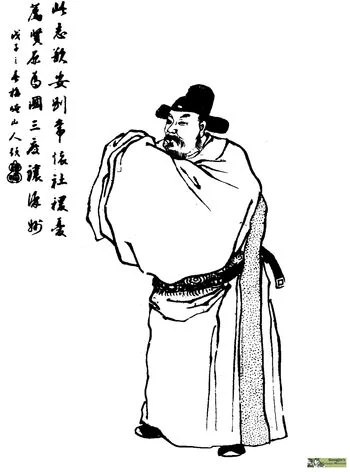
He Jin, courtesy name Suigao, a native of Wan County in Nanyang, was a paramount consort general and regent of the late Eastern Han Dynasty. Originating from a humble butchering family, He Jin rose to extraordinary imperial prominence after his younger half-sister was favored by Emperor Ling and elevated to Empress. In 184, upon the outbreak of the Yellow Turban Rebellion, He Jin exposed Ma Yuanyi's seditious plot in the…
?–189 CEEastern Han
PROFILE
He Jin, courtesy name Suigao, a native of Wan County in Nanyang, was a paramount consort general and regent of the late Eastern Han Dynasty. Originating from a humble butchering family, He Jin rose to extraordinary imperial prominence after his younger half-sister was favored by Emperor Ling and elevated to Empress. In 184, upon the outbreak of the Yellow Turban Rebellion, He Jin exposed Ma Yuanyi's seditious plot in the capital, for which he was commissioned General-in-Chief, Manager of Affairs of the Masters of Writing, and ennobled as Marquis of Shen. He commanded all imperial guards, established the Commandants of the Eight Passes of Luoyang to secure the capital, and recruited prominent Confucian elites across the empire. Following Emperor Ling's demise, He Jin crushed the eunuch commander Jian Shuo's coup, enthroning his young nephew Liu Bian (Emperor Shao) and governing as joint regent alongside Grand Tutor Yuan Wei. Determined to completely exterminate the corrupt Ten Attendants eunuch faction, He Jin followed Yuan Shao's advice, secretly summoning regional warlord Dong Zhuo and other frontier generals to march upon Luoyang to coerce Empress Dowager He. In August 189, the plot leaked, and He Jin rashly entered the palace alone, where he was ambushed and decapitated before the Jiade Hall of Changle Palace. This triggered a bloody purge of eunuchs in Luoyang, creating an imperial power vacuum that enabled Dong Zhuo to seize the capital, effectively sounding the death knell of the Han Dynasty.
- Courtesy / Art Name
- Suigao
- Era
- the late Eastern Han (135 CE—189 CE)
- Dynasty
- Eastern Han dynasty
- Identity
- Historical figure
- Date of Birth
- Not recorded in historical sources
- Date of Death
- September 22 189
- Ethnicity
- Han Chinese
- Ancestral Home
- Wan County, Nanyang Commandery (present-day Nanyang City, Henan Province)
- Place of Birth
- Wan county of Nanyang commandery, Jingzhou
- Place of Death
- Unknown
- Lifespan
- Unknown
- Major Offices
- Gentleman of the Interior、General of the Household Gentlemen of the Tiger Guards、Administrator of Yingchuan、Palace Attendant、Chief Architect of the Palace、General-in-Chief、Supervisor of the Department of State Affairs
- Peerage
- Marquis Shen
- Major Achievements
- He Jin came of a butcher's family and rose to prominence when his half-sister was favoured by Emperor Ling and made empress. When the Yellow Turban rebellion broke out in the first year of Zhongping (184) he won merit by exposing the plot of Ma Yuanyi, was appointed General-in-Chief and Supervisor of the Department of State Affairs, enfeoffed as Marquis of Shen, and given overall charge of the palace guards and of the campaign against the rebels; he established the Eight Pass Commandants of Luoyang and gathered the notable men of the realm about him.
LIFE TIMELINE
Court rain prayers | He took part in the court’s prayers for rain.
Age ~42 | His half-sister entered the imperial harem, receiving Emperor Ling's deep favor as Noble Consort; He Jin was appointed Gentleman of the Palace.
Age ~45 | Consort He gave birth to Prince Liu Bian; He Jin advanced to Rapid as Tigers Commander and Administrator of Yingchuan.
Age ~46 | Consort He was installed as Empress; He Jin was recalled to the capital as Palace Attendant and Minister of Works overseeing imperial guard works.
In December 180 | In December 180, Emperor Ling formally invested Consort He as Empress of the Han Empire.
Age ~50 | The Yellow Turban Rebellion erupted; He Jin uncovered and crushed Ma Yuanyi's secret coup in Luoyang, appointed General-in-Chief and Marquis of Shen.
Age ~50 | Petitioned to establish the Eight Passes of Luoyang, fortifying capital defense lines and sending Huangfu Song and Zhu Jun to suppress rebels.
Crushing Ma Yuanyi and Securing the Capital In February 184 (the first year of Zhongpi | ### Crushing Ma Yuanyi and Securing the Capital In February 184 (the first year of Zhongping), the massive Yellow Turban Rebellion orchestrated by Zhang Jue erupted across northern and central China.
His brother’s campaigns | His younger brother He Miao put down banditry at Xingyang and was appointed General of Chariots and Cavalry.
Age ~54 | Emperor Ling created the Eight Colonels of the Western Garden under eunuch Jian Shuo to divide He Jin's military power, intensifying court rivalries.
In 188 (the fifth year of Zhongping) | In 188 (the fifth year of Zhongping), seeking to curtail He Jin's command, Emperor Ling organized a grand military review at the Pingguan Terrace in western Luoyang, proclaiming himself "Supreme General," while relegating He Jin to secondary rank.
Age ~55 | Emperor Ling died; Jian Shuo plotted to ambush He Jin and crown Prince Liu Xie; warned by Pan Yin, He Jin fled, securing the throne for Prince Liu Bian.
Age ~55 | Empress Dowager He assumed regency; He Jin directed government as joint regent with Yuan Wei, executing Jian Shuo and annexing the Western Garden armies.
Age ~55 | Yuan Shao urged He Jin to exterminate the Ten Attendants eunuchs; Empress Dowager He and He Miao, bribed by eunuchs, adamantly blocked the purge.
Age ~55 | He Jin adopted Yuan Shao's fateful advice, summoning frontier warlord Dong Zhuo and Ding Yuan to march on Luoyang to coerce the Empress Dowager.
Age ~55 | The eunuchs forged an imperial decree summoning He Jin into the palace; ignoring warnings, he entered Jiade Gate and was decapitated by Qu Mu.
Aftermath | Yuan Shao and Yuan Shu stormed the palace, massacring 2,000 eunuchs; Dong Zhuo seized Luoyang, deposing the Emperor and inaugurating the Three Kingdoms era.
Death of Emperor Ling and the Succession Crisis In April 189 (the sixth year of Zhongp | ### Death of Emperor Ling and the Succession Crisis In April 189 (the sixth year of Zhongping), Emperor Ling fell terminally ill.
Death of Emperor Ling and the Succession Crisis In April 189 (the sixth year of Zhongp | ### Death of Emperor Ling and the Succession Crisis In April 189 (the sixth year of Zhongping), Emperor Ling fell terminally ill.
Death of Emperor Ling and the Succession Crisis In April 189 (the sixth year of Zhongp | ### Death of Emperor Ling and the Succession Crisis In April 189 (the sixth year of Zhongping), Emperor Ling fell terminally ill.
Death of Emperor Ling and the Succession Crisis In April 189 (the sixth year of Zhongp | ### Death of Emperor Ling and the Succession Crisis In April 189 (the sixth year of Zhongping), Emperor Ling fell terminally ill.
Death of Emperor Ling and the Succession Crisis In April 189 (the sixth year of Zhongp | ### Death of Emperor Ling and the Succession Crisis In April 189 (the sixth year of Zhongping), Emperor Ling fell terminally ill.
BIOGRAPHY
Biography
Humble Beginnings and Imperial Rise He Jin was born around 135 (the fourth year of Yangjia during the reign of Emperor Shun of Han) in Wan County, Nanyang Commandery (modern Nanyang, Henan). In the late Eastern Han Dynasty, when elite lineages and Confucian scholar-bureaucratic pedigrees dominated imperial governance, the He family possessed neither scholarly background nor ancestral nobility. For generations, they lived in the bustling marketplaces of Wan County, plying the trade of butchering pigs, sheep, and cattle—a profession universally classified as common labor. His father, He Zhen, was a plain-speaking butcher who died young, having fathered He Jin by his first wife, before remarrying the Lady of Wuyang and fathering two daughters and a stepson named He Miao (originally surnamed Zhu). Experiencing early hardship and losing his father in youth, He Jin worked tirelessly in the slaughterhouses to provide for his extended family. Possessing a generous and protective nature, he was deeply devoted to his younger half-sister. During the Xiping reign, imperial commissioners arrived in Nanyang to select maidens of good character for the imperial harem. A local fortune-teller in Wan County read the young girl's fortune, predicting she was destined to wear the imperial crown. Gathering all the humble family savings accumulated through their slaughter trade, He Jin heavily bribed the recruiting eunuchs and imperial messengers, securing her entrance into the inner palace. Endowed with tall stature, striking physical grace, and keen intelligence, Lady He quickly captivated Emperor Ling, eclipsing all other concubines to become an imperial favorite and receiving the exalted rank of Noble Consort (Guiren). In 179 (the second year of Guanghe), Consort He gave birth to Emperor Ling's eldest surviving son, Liu Bian. Because earlier imperial princes had died in infancy, the superstitious emperor sent Liu Bian to be raised in the household of Daoist priest Shi Zimiao, calling him "Marquis Shi." Consort He's imperial favor completely transformed the family's social and political standing. In accordance with Eastern Han dynastic customs, He Jin was appointed to imperial office, serving first as Gentleman of the Palace (Langzhong), before advancing to Rapid as Tigers Commander (Huben Zhonglangjiang), commanding elite palace shock troops. In 179, he was posted to the provinces as Administrator of Yingchuan, becoming a regional magistrate. In December 180, Emperor Ling formally invested Consort He as Empress of the Han Empire. Her deceased father He Zhen was posthumously ennobled as General of Chariots and Cavalry and Marquis of Wuyang, while He Jin was recalled to the capital as Palace Attendant and Minister of Works (Jiangzuo Dajiang), controlling palace architecture and capital guard security. Within a few short years, the humble butcher family transformed into the most powerful imperial consort house in the realm. ### Crushing Ma Yuanyi and Securing the Capital In February 184 (the first year of Zhongping), the massive Yellow Turban Rebellion orchestrated by Zhang Jue erupted across northern and central China. Hundreds of thousands of peasant rebels, donning yellow headbands, rose to overthrow the corrupt Han order. Zhang Jue had dispatched his paramount conspirator, Commander Ma Yuanyi, to infiltrate the capital of Luoyang. Ma Yuanyi spent months secretly subverting the palace eunuchs, bribing Regular Attendants Feng Xu and Xu Feng to launch a simultaneous palace coup scheduled for the fifth day of the third month. At this existential crisis for the dynasty, He Jin displayed extraordinary intelligence gathering and rapid military execution. When a Yellow Turban defector named Tang Zhou exposed the plot, He Jin, as commander of the capital guards, mobilized his palace units with ruthless precision. He tracked down Ma Yuanyi in the city markets, arrested him, and executed him by dismemberment (chelie) in public view, while arresting and executing over a thousand palace conspirators. He Jin's swift action shattered the enemy's master plan to decapitate the imperial government from within. With the capital saved, the rebellion erupted across the provinces, destroying commanderies and routing government garrisons. Confronted with dynastic collapse, Emperor Ling issued an emergency proclamation in March 184, granting general amnesties to proscribed Confucian scholars and appointing He Jin General-in-Chief (Dajiangjun), Manager of Affairs of the Masters of Writing (Lu Shangshu Shi), and ennobling him as Marquis of Shen. He Jin rose to the occasion with strategic organizational acumen. Recognizing that Luoyang was dangerously exposed to external assault, he petitioned Emperor Ling to establish the "Commandants of the Eight Passes of Luoyang"—heavily garrisoning the eight mountainous choke-points: Hangu, Yique, Guangcheng, Dagu, Huanyuan, Xuanmen, Mengjin, and Xiaopijin passes. This fortified ring insulated the capital from external surprise. Simultaneously, He Jin recommended capable battlefield commanders, dispatching Imperial Generals Lu Zhi, Huangfu Song, and Zhu Jun across Yingchuan, Nanyang, and Jizhou, ultimately crushing the main rebel armies within months. For his towering merit, He Jin's authority and prestige reached unprecedented heights. ### Patronage of Elites and Court Factionalism While the Yellow Turban Rebellion was quelled, the foundation of the Han state lay shattered. Power struggles between the consort clan, scholar-officials, and the entrenched eunuch factions escalated into open warfare. Since the late first century, imperial consort commanders had repeatedly clashed with palace eunuchs, with previous leaders like Dou Wu being slaughtered. He Jin understood his modest background was viewed with disdain by established aristocratic lineages. To counter the formidable eunuch cabal led by Zhang Rang and Zhao Zhong (the "Ten Attendants"), He Jin opened the gates of his General-in-Chief's headquarters, vigorously recruiting scholars who had suffered under the "Disaster of the Partisan Prohibitions." Luminaries such as Yuan Shao of Ru'nan, Cao Cao of Qiao, Xun You, Zheng Tai, Chen Lin, Wang Yun, and Feng Ji were enlisted as senior staff officers and strategic advisors. Consequently, the empire's intellectual elite rallied around He Jin, viewing his military muscle as the sole instrument capable of exterminating the eunuchs and cleansing the government. However, Emperor Ling deeply distrusted He Jin's burgeoning power. In 188 (the fifth year of Zhongping), seeking to curtail He Jin's command, Emperor Ling organized a grand military review at the Pingguan Terrace in western Luoyang, proclaiming himself "Supreme General," while relegating He Jin to secondary rank. Subsequently, Emperor Ling established the "Eight Colonels of the Western Garden," appointing his trusted eunuch confidant Jian Shuo as First Colonel-in-Chief (Shangjun Xiaowei), granting him supreme authority over all imperial guards and decreeing that even General-in-Chief He Jin must submit to Jian Shuo's orders. The rivalry between the inner palace and He Jin's military headquarters stood on the brink of civil war. ### Death of Emperor Ling and the Succession Crisis In April 189 (the sixth year of Zhongping), Emperor Ling fell terminally ill. The dying emperor favored his younger son, Prince Liu Xie (later Emperor Xian), born to Consort Wang, deeming him dignified and grave, whereas Empress He's son Liu Bian was regarded as frivolous. However, because Liu Bian was the eldest son and He Jin held supreme military command, altering the succession was perilous. On his deathbed in the Jiade Hall, Emperor Ling grasped Jian Shuo's hand, weeping: "After I depart, you must execute He Jin and enthrone Prince Xie!" On May 13, 189, Emperor Ling passed away in the Jiade Hall. Determined to fulfill the imperial deathbed commission, Jian Shuo deployed hundreds of hidden assassins inside the palace, dispatching urgent couriers to He Jin's mansion falsely claiming the Emperor was dying and urgently summoned the General-in-Chief for final instructions. Unaware of the deadly ambush, He Jin mounted his horse and rode toward the palace. Just as he was about to pass through the Jiade Gate, Pan Yin, an officer under Jian Shuo who shared an old friendship with He Jin from their native Nanyang, rushed forward and cast an urgent, warning glare at the General-in-Chief. Instantly sensing mortal danger, He Jin spun his horse around, galloped back to his fortified camp, barred the gates, and placed his troops on high alert. Having escaped the trap, He Jin seized the political initiative. Using his authority as General-in-Chief, he took control of the capital, entering the Southern Palace alongside the civil ministers to formally enthrone his nephew, fourteen-year-old Prince Liu Bian, as Emperor Shao. Empress He was elevated to Empress Dowager, assuming formal regency. An imperial edict appointed He Jin and Grand Tutor Yuan Wei as joint regents, managing the affairs of the Masters of Writing. Consolidating his dominance, He Jin turned to destroy his mortal enemy Jian Shuo. Partnering with court eunuch Guo Sheng, who was from He Jin's native commandery, He Jin isolated Jian Shuo. In June, He Jin arrested Jian Shuo, executing him in the market and absorbing the entire Western Garden army under his direct command. He Jin's military supremacy became total and unchallenged. ### The Plot to Purge the Eunuchs and Inviting Warlords With Jian Shuo executed, the remaining Ten Attendants, led by Zhang Rang and Duan Gui, fell into sheer terror. They recognized that with the armed forces entirely under He Jin's control, their destruction was imminent. Yuan Shao, serving as He Jin's chief strategist, urged him to seize this golden opportunity to purge the court: "The entire world has suffered under the eunuchs for generations! In the past, Dou Wu attempted to destroy them but failed because his plans leaked. Today, Your Excellency commands all military power, and the illustrious scholars of the empire serve your banners. This is the mandate of Heaven to cleanse the realm! If you strike now to exterminate the yellow-turbans of the palace, your merit will surpass the ancient sage regents Yi Yin and Duke of Zhou!" He Jin agreed, resolving to annihilate the eunuchs. However, He Jin encountered vehement opposition from his own family. Zhang Rang and Duan Gui, masters of palace survival, used immense treasures of gold and silk to bribe He Jin's stepmother, the Lady of Wuyang, and his half-brother, General of Chariots and Cavalry He Miao. Furthermore, Zhang Rang arranged for his adopted son to marry Empress Dowager He's younger sister, forging an intimate family tie. Both wept daily before Empress Dowager He, claiming: "The He clan was once impoverished; our glory is entirely owed to the senior eunuchs! Now that the late Emperor has died, the General-in-Chief seeks to slaughter his old retainers, which is ungrateful and treacherous!" He Miao even confronted He Jin directly: "We came together from Nanyang in destitution, attaining wealth and nobility solely through the inner palace. The affairs of state are fraught with peril; spilled water cannot be gathered again! You must reconsider deeply and preserve harmony with the inner court!" Empress Dowager He, who had spent her adult life served by eunuchs, flatly refused to sanction their execution, rejecting He Jin's repeated petitions. Hamstrung by his family, He Jin's fatal indecision paralyzed him. Observing this impasse, Yuan Shao devised a ruinous stratagem: "Since the Empress Dowager refuses, it is because she has not felt military terror. Your Excellency should secretly summon ferocious frontier commanders and provincial warlords to lead their armies to the gates of Luoyang! Faced with the terror of marching legions, the Empress Dowager will be compelled to order their execution!" When this scheme was proposed at headquarters, wise counselors recoiled in horror. Master of Records Chen Lin warned urgently: "The proverb says, 'Blindfolding oneself to catch sparrows'—if one cannot trick small birds, how can one deceive the empire? Your Excellency commands supreme imperial majesty; executing a handful of eunuchs is as simple as lighting a fire to burn dry grass! Why summon provincial warlords? Once the armies gather, the strongest will dominate, which is nothing less than summoning tigers for self-defense!" Cao Cao privately laughed in scorn: "The eunuch plague has existed throughout the ages; to punish them, execute only the ringleaders, and a single bailiff is sufficient! Why summon external troops? The one who destroys the empire will surely be He Jin!" Blinded by ambition and swayed by Yuan Shao's vision, He Jin dismissed all warnings. In July 189, he dispatched secret couriers summoning Dong Zhuo, Governor of Bingzhou, commanding tens of thousands of battle-hardened Liangzhou cavalry, to advance toward the capital. Simultaneously, he ordered Ding Yuan to march south to torch the Mengjin crossings, illuminating the capital with flames, and dispatched Wang Kuang and Qiao Mao to raise troops. Dark storm clouds gathered over the doomed capital. ### The Ambush at Jiade Hall and the Fall of Han Dong Zhuo's ferocious western legions marched to Mianchi, mere leagues from Luoyang, submitting memorials demanding the execution of Zhang Rang. Yuan Shao urged the armies forward to the Pingguan Terrace. Terrified, Empress Dowager He dismissed all palace eunuchs, expelling them from the forbidden city. Hundreds of weeping eunuchs prostrated before He Jin's gates, pleading for mercy. He Jin addressed them: "The realm is thrown into turmoil solely on your account. Now that Dong Zhuo approaches, why do you not quickly depart for your fiefs?" Yuan Shao passionately urged He Jin to execute them on the spot, repeating his pleas two and three times. But He Jin, displaying fatal hesitation, declined. Yuan Shao forged decrees to provincial authorities to arrest eunuch families. Desperate, Zhang Rang prostrated before his daughter-in-law (the Empress Dowager's sister), weeping: "I am guilty and ready to die. But having served the palace for generations, I beg only to enter the palace one last time to gaze upon the Empress Dowager and the young Emperor before I depart into the grave!" The sister pleaded with the Lady of Wuyang, who persuaded the Empress Dowager to permit the eunuchs back into the palace for night duty. On September 22, 189 (the twenty-eighth day of the eighth month), He Jin entered the Changle Palace, begging the Empress Dowager to consent to executing all chief eunuchs and replacing palace guards with civil cadets. Overhearing his words, the eunuchs were gripped by terror, crying: "The General-in-Chief feigned illness during the imperial mourning; now he enters to exterminate us like Dou Wu!" Zhang Rang, Duan Gui, and Bi Lan led dozens of armed men into hiding along the palace corridors. As He Jin exited the hall, the eunuchs forged an imperial decree claiming the Empress Dowager summoned him back. Unsuspecting, He Jin entered the Jiade Gate alone. The heavy gates slammed shut behind him. Zhang Rang and his assassins surrounded him with drawn daggers. Zhang Rang shouted fiercely: "The world is in chaos; is it all our fault? When the late Emperor was displeased with the Empress Dowager and nearly deposed her, we wept and pleaded, sacrificing millions in private wealth to appease His Majesty, solely to find protection under your He family! Today you turn upon us to exterminate our lineages! You call us foul and corrupt; where are your virtuous men now?" Paralyzed with terror and abandoned by his retinue, He Jin began to stammer, but Palace Armory Prefect Qu Mu stepped forward and severed He Jin's head with a single stroke! The severed head rolled down the blood-spattered steps of the Jiade Hall. He Jin perished at approximately fifty-five years of age. Zhang Rang forged decrees appointing Fan Ling as Colonel of the Capital and Xu Xiang as Governor of Henan. Suspicious, the Masters of Writing called out: "Let the General-in-Chief come forth to deliberate!" A eunuch hurled He Jin's bloody head over the palace balustrade, shouting: "He Jin committed treason and is dead!" Outside, He Jin's lieutenants Wu Kuang and Zhang Zhang wept in fury. Yuan Shu torched the palace gates, while Yuan Shao led troops into the palace, slaughtering over two thousand eunuchs and beardless men. Suspecting He Miao of complicity in He Jin's murder, Wu Kuang led troops to slaughter He Miao inside the palace grounds. Days later, Dong Zhuo led his ruthless Liangzhou shock cavalry into the burning capital. Exploiting the absolute power vacuum, Dong Zhuo deposed Emperor Shao, poisoned Empress Dowager He, slaughtered the Lady of Wuyang, placed Emperor Xian on the throne, declared himself Chancellor of State, and torched the ancient capital of Luoyang. The four-hundred-year-old Han Dynasty collapsed into bloody warlord fragmentation. The epic tragedy of the Three Kingdoms was thus inaugurated by the fatal folly and indecision of He Jin.
Major Activities
Crushing Ma Yuanyi and Capital Fortifications He Jin's primary military contribution was his rapid suppression of the Yellow Turban fifth column in Luoyang. In 184, he unmasked Ma Yuanyi's conspiracy, captured him, and executed him by dismemberment, extinguishing an internal insurrection before it could decapitate the Han government. Subsequently, he established the Commandants of the Eight Passes of Luoyang, heavily fortifying Hangu, Yique, and surrounding mountain gateways. This defense-in-depth network insulated the capital against regional incursions and became an enduring model for capital defense in subsequent dynasties. ### Elite Patronage and Formation of Political Coalitions Overcoming his lowborn social stigma, He Jin exploited his authority as General-in-Chief to recruit persecuted Confucian scholars. By enlisting figures such as Yuan Shao, Cao Cao, Xun You, and Chen Lin, He Jin transformed his military headquarters into the undisputed political hub for the empire's elite. This alliance broke the suffocating political atmosphere of the Partisan Prohibitions and created the intellectual and administrative talent pool that later formed the leadership core of the Three Kingdoms era. ### The Fatal Warlord Summons and Dynastic Destruction He Jin's historical infamy derives from his catastrophic mishandling of the eunuch question. In 189, having annihilated Jian Shuo and secured command over all imperial armed forces, he possessed overwhelming superiority to execute legal reforms. Paralyzed by family interference, he blindly accepted Yuan Shao's advice to summon provincial warlords, including Dong Zhuo, to threaten the Empress Dowager. This fatal blunder obliterated the institutional boundary between civil court politics and regional military warlordism, directly causing his own brutal assassination and unleashing the ferocious warlords who tore the Han Empire to pieces.
Personal Relations
- | Relationship | Name | Identity / Description |
- | :--- | :--- | :--- |
- | Father | He Zhen | Butcher of Wan County; posthumously ennobled as General of Chariots and Cavalry and Marquis of Wuyang |
- | Stepmother | Lady of Wuyang | He Jin's stepmother; bribed by eunuchs to block He Jin's purge; slain by Dong Zhuo's troops |
- | Half-Sister | Empress He (Empress Linsi) | Empress of Emperor Ling; mother of Emperor Shao; poisoned by Dong Zhuo |
- | Half-Sister | Lady He | Younger sister of Empress He; married Zhang Rang's adopted son; key intermediary for eunuch bribes |
- | Half-Brother | He Miao | Born surnamed Zhu; General of Chariots and Cavalry; opposed He Jin; slain by He Jin's lieutenant Wu Kuang |
- | Son | He Xian | Died early; his widow Lady Yin was later married by Cao Cao; father of He Yan |
- | Grandson | He Yan | Celebrated Neo-Daoist philosopher and Minister of Personnel in Cao Wei; executed by Sima Yi in 249 |
- | Nephew & Sovereign | Emperor Shao of Han (Liu Bian) | Eldest son of Emperor Ling; enthroned by He Jin; later deposed and poisoned by Dong Zhuo |
- | Political Partner | Yuan Wei | Grand Tutor; leader of the illustrious Ru'nan Yuan clan; co-regent with He Jin |
- | Chief Strategist | Yuan Shao | Colonel of the Capital; urged the total extermination of eunuchs and devised the plan to summon external armies |
- | Strategic Counselor | Cao Cao | Colonel of the Imperial Guard; presciently warned that He Jin's actions would bring ruin to the empire |
- | Loyal Admonisher | Chen Lin | Master of Records; famously cautioned He Jin against "blindfolding oneself to catch sparrows" |
- | Archenemy | Jian Shuo | Senior eunuch commander of the Western Garden; plotted to assassinate He Jin; executed by He Jin |
- | Archenemy | Zhang Rang | Regular Attendant and chief of the Ten Attendants; primary instigator of He Jin's assassination |
- | Executioner | Qu Mu | Prefect of the Palace Armory; directly decapitated He Jin at the Jiade Gate |
- | Invitee & Usurper | Dong Zhuo | Governor of Bingzhou; summoned to Luoyang by He Jin; usurped imperial power upon He Jin's death |
Historical Assessment
- Cao Cao: "The institution of eunuchs has existed since antiquity. The fault lies with sovereigns granting them excessive power. To punish their crimes, execute only the ringleaders, and a single bailiff would suffice! Why summon regional generals? The one who destroys the realm will surely be He Jin!"
- Chen Lin: "The proverb says, 'Blindfolding oneself to catch sparrows'—if one cannot deceive minor creatures, how can one deceive the empire? Your Excellency commands imperial majesty; destroying the eunuchs is like lighting a flame to burn dry grass! Why summon external troops? When armies combine, the strong will rule, which is nothing less than summoning tigers for self-defense!"
- Zheng Tai: "Dong Zhuo is a ravenous wolf, violent and unfeeling. If he is invited into the capital, he will bring catastrophic ruin upon the imperial shrines!"
- *Fan Ye (Book of the Later Han)*: "He Jin rose through consort connections, his authority shaking the realm. Yet he could not foresee the end, failing in caution and planning, swayed by women and eunuchs. In summoning tigers to ward off wolves, he invited his own doom. Radiating military authority externally, while fatally leaking clandestine plots internally, he died beneath the axe and his clan was obliterated. Alas!"
- *Sima Guang (Zizhi Tongjian)*: "He Jin was unlearned and short-sighted, relying purely on consort favor to wield supreme authority. Seducing the world with Yuan Shao's schemes, he summoned fierce generals to coerce the Empress Dowager. Alas! Inviting tigers into the house, he was decapitated and poisoned the realm, causing the fall of the Han. Great was the crime of He Jin!"
- Su Shi: "In the decline of the Han, consort clans and eunuchs destroyed each other. He Jin rose from humble slaughterhouses to the supreme regency, attempting to purge eunuchs while inviting Dong Zhuo. He wished to cleanse his reputation, but shattered the great order of the world."
- *Mao Zonggang (Romance of the Three Kingdoms commentary)*: "He Jin died at the hands of the eunuchs, but also by his own hand. His plots were known to all, yet he closed his ears to wise counsel. In summoning Dong Zhuo to destroy eunuchs, Dong Zhuo had not yet arrived before He Jin was slain. Those who invite wolves into their chambers are invariably devoured by wolves."
FIGURES ASSOCIATED WITH THIS DYNASTY
Bibliography
- Fan Ye, commentary by Li Xian et al. Book of the Later Han (Hou Han Shu), Volume 69, Biography 59: Biography of He Jin. Beijing: Zhonghua Book Company, 1965.
- Chen Shou, commentary by Pei Songzhi. Records of the Three Kingdoms (Sanguo Zhi), Volume 6: Book of Wei: Biographies of Dong, the Two Yuans, and Liu. Beijing: Zhonghua Book Company, 1959.
- Sima Guang, commentary by Hu Sanxing. Comprehensive Mirror in Aid of Governance (Zizhi Tongjian), Volumes 58–59: Annals of Han 50–51. Beijing: Zhonghua Book Company, 1956.
- Lü Simian. Historical Talks on the Three Kingdoms. Beijing: Zhonghua Book Company, 2009.
- Tian Yuqing. Explorations in Qin, Han, Wei, and Jin History. Beijing: Zhonghua Book Company, 2004.