TL;DR · Core Takeaways
- Medical Pathologies Rebranded as Aesthetics: The barefoot sprints, public nudity, and loose, torn clothes were not marks of free spirits. They were direct effects of chronic poisoning from Five Minerals Powder. This harsh mix of arsenic, sulfur, and heavy metals caused burning fevers, skin sores, and manic rushes.
- Selective Immunity Within the Bamboo Grove: The group shared fame in later art, but their real lives differed. Ji Kang died by public execution because he defied the Sima court and married into the Cao Wei royal house. In contrast, Wang Rong of the Langya Wang clan and loyalist Shan Tao rose to the rank of the Three Excellencies, gathering vast wealth and land.
- An Oligarchical Performance: Under the Nine-Rank System, wild drunken acts served as harmless pledges of loyalty to keep suspicious rulers at ease. For noble heirs, such behavior acted as an exclusive mark of rank. A low clerk who tried the same drunken antics faced quick arrest, hard labor, or death.
> Historical Context
> - Chinese Timeline: Ganlu era of Cao Wei to the Taiyuan era of the Eastern Jin (250–390 CE). Following the Sima clan's usurpation of the Wei throne to establish the Jin Dynasty, the state implemented the Nine-Rank System under the principle that "upper ranks claim no humble men, lower ranks house no noble kin." Aristocratic clan politics and manorial tenancy reached their absolute zenith.
> - Mediterranean / Western World Timeline: The Roman Empire endured the Crisis of the Third Century (235–284 CE), followed by Diocletian's Tetrarchy and decrees binding coloni to hereditary estate service. Senatorial aristocrats withdrew behind fortified rural villas—a striking parallel to the militarized, self-sufficient estates of Western Jin magnates.
Popular video games such as Total War: Three Kingdoms and museum silk displays often praise "Wei-Jin Grace" (fengdu). They present it as a golden age of free thought in China. In this view, scholars cast aside old rules to wander bamboo groves, play zithers before execution squads, and whistle into mountain winds like early rebels.
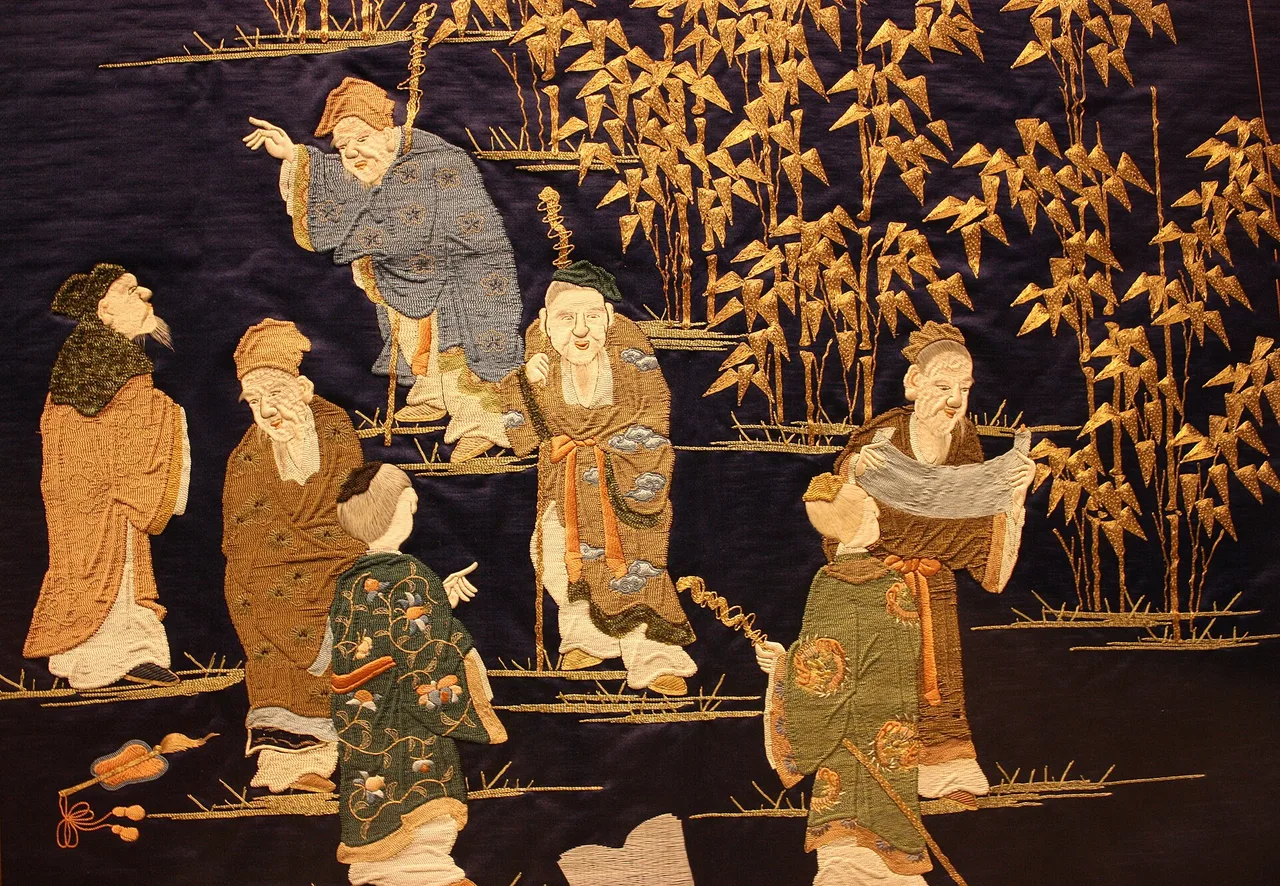
Old court records tell a much harder truth. Official texts like the Book of Jin and stories in Liu Yiqing's A New Account of the Tales of the World show a different picture. The famous wild acts of the third and fourth centuries were not pure soul searches. They were safe displays of legal immunity, powered by toxic drugs, large family estates, and bloody royal purges.
01. Memory Accumulation: How Later Eras Rewrote the Wei-Jin Myth
Later writers took more than a thousand years to turn anxious court survivors into calm, pure heroes.
| Popular Myth / Trope | Primary Chronicle & Archaeology | How the Myth Evolved Over Dynasties |
|---|---|---|
| A Unified Circle of Hermits: Popular novels and Qing stage plays present the Seven Sages as a tight-knit fellowship unified in their rejection of worldly power, rank, and wealth. | Sun Sheng's Spring and Autumn Annals of the House of Wei (cited in Pei Songzhi's annotations to Records of the Three Kingdoms) and the Book of Jin ("Biography of Wang Rong"): The group splintered violently along dynastic lines. Shan Tao and Wang Rong attained the rank of Minister of Education. Wang Rong accumulated vast real estate holdings and bored holes through his prized plums before selling them to prevent competitors from planting his seeds. | Song-Yuan Dramatic Shift: Following the Song imperial house's southward flight and the subsequent Mongol conquest, Han literati lost central bureaucratic standing. Disenfranchised scholars projected their alienation onto idealized third-century hermits, reimagining raw political factionalism as a noble withdrawal from worldly affairs. Later critics often linked these hermit ideals to new trends in Calligraphy and literati painting. |
| Flowing Silk Robes and Barefoot Wandering as Avant-Garde Fashion: Modern cultural revivals depict the loose tunics and casual demeanor of Jin scholars as deliberate statements of aesthetic independence. | Huangfu Mi's Discourse on Cold-Food Powder and Xu Zhicai's diagnostic notes in the Treatise on the Origin and Symptoms of Diseases: Consuming Five Minerals Powder created intolerable internal heat and left the skin paper-thin. Stiff, new garments chafed the flesh into bleeding sores, compelling users to wear loose, pre-washed garments and walk briskly in open clogs to disperse the toxins. | Late Ming Individualism: During the sixteenth century, Taizhou School radicals like Li Zhi championed the nonconformist anecdotes of A New Account of the Tales of the World. Divorced from the pharmacopeia of the third century, these thinkers reframed medical side effects as conscious philosophical protests against neo-Confucian orthodoxy. |
| Bohemian Excess as a Universal Awakening: Twentieth-century modernist essays claimed that Wei-Jin individualism represented an egalitarian awakening of the Chinese self against despotic tradition. | Book of Jin ("Biography of Liu Yi") and Book of Song ("Treatise on Imperial Favorites"): The Nine-Rank Rectifying System strictly protected hereditary privilege. Under codified Jin law, lowborn sub-officials who abandoned their posts or simulated drunken indifference faced immediate flogging or exile. | Early 20th-Century New Culture Movement: Thinkers such as Lu Xun and Zong Baihua analyzed Wei-Jin eccentricities to challenge rigid traditional hierarchies. While culturally impactful, their focus on personal autonomy downplayed the rigid aristocratic monopoly that made such lifestyles legally possible. |
02. Toxic Chemistry and Class Privilege: Deconstructing Scholar Demeanor
Old books praise the wild acts of Jin nobles as signs of divine grace. Modern medicine offers a much simpler reason. Most of these strange habits came directly from chronic metal poisoning.
The Toxicology of Five Minerals Powder
The trendy drug among third-century elites was Five Minerals Powder (Wushisan), also called Cold-Food Powder (Hanshisan). He Yan made it popular in late Three Kingdoms times. Volume 6 of Chao Yuanfang's Treatise on the Origin and Symptoms of Diseases lists its parts. The recipe crushed cinnabar, realgar, quartz, amethyst, and red clay into fine dust. These stones held arsenic, sulfur, and mercury.
Once swallowed, this toxic blend sped up the heart. It raised body heat and set nerve endings on fire with sharp pain and deep itch.
The physical results were plain:
- Discarding Tailored Attire: New, stiff cloth rubbed inflamed skin raw and opened bleeding sores. Men wore loose, thin robes that had been washed many times to keep them soft.
- The Mandatory Walk: The drug caused racing pulses and intense heat in the feet and hands. Tight boots caused terrible pain, so men wore open wooden shoes. They walked fast along dirt roads—a practice called "dispersing the powder" (xingsan)—to sweat out the poison before it burned their organs.
- Consuming Frigid Sustenance: High fever raged inside the body. Men drank cold wine, bathed in icy brooks, and ate chilled food. This habit gave the drug its second name, Cold-Food Powder.
When Liu Ling took off his clothes at home and drank for days, he laughed at shocked guests: "I take the world for my house and my rooms for my trousers! What brings you gentlemen inside my trousers?" Writers praised this scene in literary history as clever wit. Yet medical tests show it was acute delirium caused by mineral toxins and heavy drinking.
Toxic Minerals (Arsenic, Sulfur, Mercury) ──> Hyperthermia & Neuropathic Agony ──> Ulcerative Dermatitis ──> Loose, Worn Garments & Barefoot Walks
                                                                           │
                                                                           └──> Psychomotor Agitation & Public Nudity ──> Romanticized as "Spiritual Liberty"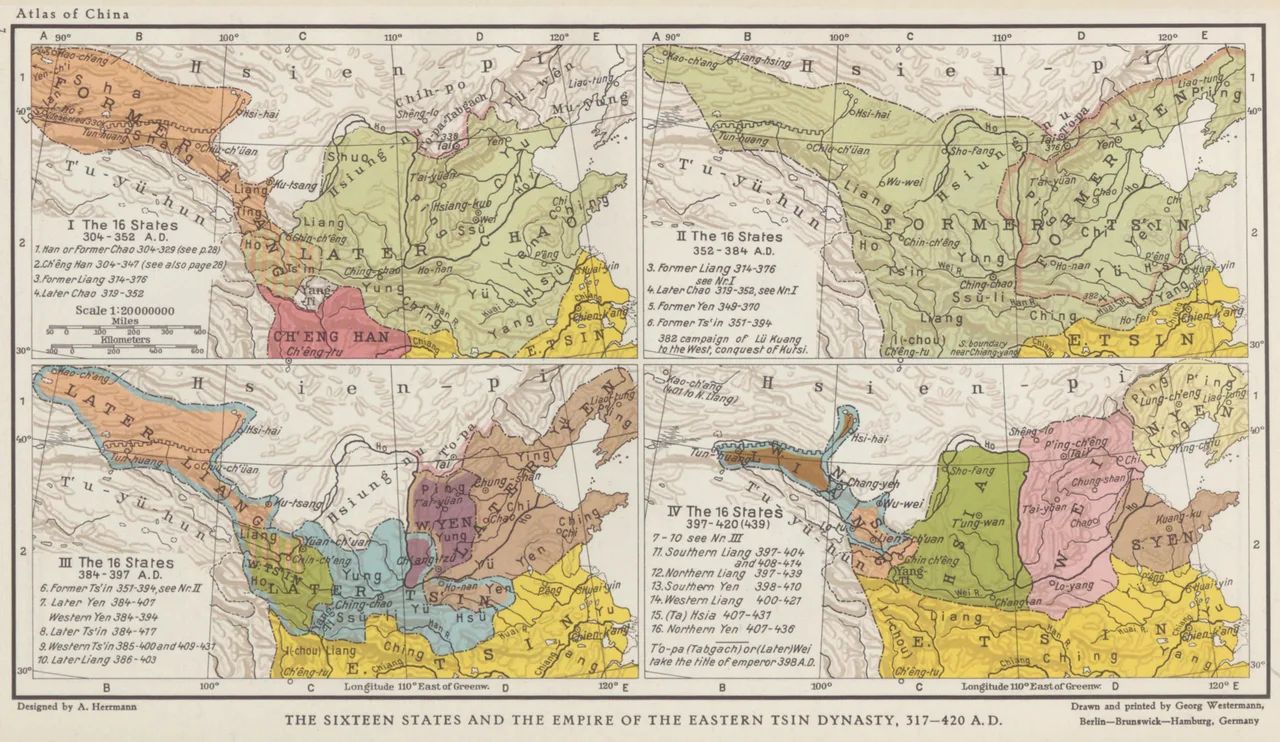
The Aristocratic Firewall
This toxic habit cost a great deal of money. Finding pure quartz, realgar, and cinnabar took vast wealth. High-ranking clans paid for these goods with profits from rural manors worked by hundreds of land-bound tenants.
A wide legal gap kept these nobles safe while commoners suffered. Suppose a low clerk copied Ruan Ji by staying drunk for months, ignoring court ledgers, or stripping bare in a public hall. The law stepped in fast. Judges convicted commoners of neglected duty and immoral acts, ordering lashings or hard border labor.
Under the Nine-Rank System, noble sons faced no such fears. State agents called Rectifiers picked men for jobs based on family bloodlines, not real skill. Young heirs of great clans took sweet posts like Gentleman of the Palace Library or Gentleman Compiler before they turned twenty, safe from common court punishments. Whether serving as a Military Adjutant under powerful commanders or drawing status from Imperial Affinal Relatives, these elites enjoyed unmatched protection. An established Grand Master had little in common with the ordinary subjects of the realm, wielding standing as entrenched as a Great Khan in the steppe or a Prince of Song in later courts.
03. The Imperial Board: Cynical Dissidence and Feigned Madness
The strange antics of Jin scholars were not a bold fight for freedom. They were a survival trick under the watchful eye of the Sima clan. Safety depended entirely on family blood and political usefulness to the court.
The Divergent Fates of the Bamboo Grove
Old records divide the Seven Sages into two distinct groups.
- The Fall of Ji Kang: Ji Kang married a granddaughter of Cao Cao, linking his name directly to the Wei royal line. When General-in-Chief Sima Zhao called him to take office, Ji Kang wrote a harsh letter cutting ties with his old friend Shan Tao. He chose to work as a roadside blacksmith near Luoyang and snubbed the court envoy, Zhong Hui. His proud stance questioned the legitimacy of the Sima family's coup. In 262 CE, Sima Zhao ordered his death in the public market of Luoyang.
- The Conformity of His Peers: Other members adapted with haste. After Ji Kang died, Xiang Xiu went to the capital to swear loyalty, assuring Sima Zhao that he sought no quiet hermit life. Ruan Xian held state jobs with great care. Meanwhile, Wang Rong of the Langya Wang house helped Sima Yan, took part in the conquest of Eastern Wu, and rose to Minister of Education. By the War of the Eight Princes, he spent his days buying up farms and showing off riches alongside oligarchs like Shi Chong.
Jin rulers kept a firm grip on power while praising filial piety. They smiled on Daoist debates and drunken leisure among high houses. As long as young lords avoided army posts, tax collection, and court factions, the throne gave them safe family seats through Hereditary Succession. Their wild play was not a real protest. It was an open promise that they held no royal ambitions.
How Successive Generations Reshaped the Narrative
The fall of the Western and Eastern Jin dynasties and the rise of civil exams broke the power of old great houses. Yet later dynasties found fresh uses for the old tales:
The Southern Dynasties: The Aesthetic Shift
During the Liang and Chen eras of the Southern Dynasties, scholars like Shen Yue blamed third-century figures for ruining the state. They said empty talk had left the north open to invasion. Still, royal courts praised their poetry, keeping their prose as classic models of style.
The Song and Yuan Dynasties: Hermetic Idealism
After northern lands fell, Han scholars lost high state posts. Writers stopped talking about Wang Rong's greed or Ji Kang's royal marriage. Instead, playwrights picked stories of drunken defiance from A New Account of the Tales of the World, staging plays to praise early thinkers who turned their backs on kings.
The Late Ming and Early Modern Eras: The Romanticized Rebel
Under the watchful eyes of the Eastern Depot and the Embroidered Uniform Guard, late Ming thinkers took Ruan Ji's tears and Liu Ling's naked walks as cries for personal liberty. Later scholars across the Yuanming transitions echoed these points. In Beijing salons, critics linked these tales to landscape painting and literati painting. They set aside medical facts about Five Minerals Powder, leaving a clean myth of social protest that lasted into the twentieth century. A Senior Compiler might praise their verse, while writers like Buqa and Yuzhi cited them in Historiography reviews. The tales became proud gems in literary history and historical sources.
04. Aristocratic Decadence: A Comparative Perspective
This mix of legal safety and toxic fun is familiar to students of old empires.
In late Roman times, as central rule crumbled in Gaul and Italy, senatorial nobles (Clarissimi) fled to walled country villas. They turned away from town work. They spent days polishing Greek speeches, hosting feasts, and debating old philosophy far from tenant strife. Their isolated parties matched the court antics at Versailles, where nobles gave up hard political rule for court fashion and polite games.
When dynastic rules stop commoners from rising, closed elites build costly, hard lifestyles. These habits build a high social wall that poor outsiders cannot climb.
Third-century China created fine work in Calligraphy, landscape painting, and verse. Yet calling this era an early victory for human freedom misreads the past. The strange antics of the age rested on the Nine-Rank System, drew life from tenant sweat, and ran on toxic dust, protected by a noble shield that common men could never share.
Primary Sources & Historical Bibliography
- *Fang Xuanling et al., Book of Jin (Jin Shu), Vol. 49, Liezhuan 19* (Zhonghua Book Company punctuated edition): The core biographical record for Ji Kang, Ruan Ji, Shan Tao, Xiang Xiu, Liu Ling, Ruan Xian, and Wang Rong, documenting the political fractures within the Bamboo Grove and Ji Kang's execution.
- *Liu Yiqing (comp.) and Liu Xiaobiao (comm.), A New Account of the Tales of the World (Shishuo Xinyu), Chapters "Free and Unrestrained" ("Rendan") and "Virtuous Conduct" ("Dexing")*: The foundational collection of anecdotes detailing the drinking habits, domestic nudity, and conversational wit of the third- and fourth-century elite.
- *Huangfu Mi, Discourse on Cold-Food Powder (Hanshisan Lun), preserved in Chao Yuanfang, Treatise on the Origin and Symptoms of Diseases (Zhubing Yuanhou Lun*), Vol. 6, "Symptoms Arising from Cold-Food Powder": The earliest clinical analysis of the mineral ingredients, neurological symptoms, and bodily complications caused by Five Minerals Powder.
- *Fang Xuanling et al., Book of Jin (Jin Shu), Vol. 45, Liezhuan 15, "Biography of Liu Yi"*: Contains Minister Liu Yi's formal memorial to the Jin throne denouncing the Nine-Rank System for barring lowborn men from high office.
- *Lu Xun, "The Wei-Jin Demeanor and Its Relationship to Literature, Drugs, and Wine" (Wei Jin Fengdu Ji Wenzhang Yu Yao Ji Jiu Zhi Guanxi), in And That's All (Eryi Ji*): The seminal modern lecture connecting the physical pathologies of mineral powders to the political factions and factional survival tactics of the Jin literati.
- *Tian Yuqing, Aristocratic Politics of the Eastern Jin (Dong Jin Menfa Zhengzhi)* (Peking University Press): The foundational modern study detailing the power-sharing arrangements between imperial houses and elite clans, tracing how estate monopolies reinforced class barriers.