TL;DR · Core Takeaways
- Stripping Away the Modern Lens: Wu Zetian did not seek female freedom. She arranged matches to bind political allies. She used weddings to lift upstart kin. She also used them to curb old Shandong clans.
- The Sole Shield Against Autocracy: Widows from great houses like the Fanyang Lu could not reject imperial orders on personal whims. Their only defense was strict adherence to Confucian ritual institutions. They sealed this defense with severe bodily harm.
- A Mutual Political Off-Ramp: The court declared it would "not overrule her moral resolve." This move saved face for both sides. It turned an ugly clash into a public display of imperial virtue.
Historical Context
- Chinese Chronology: The Shengli through Jiushi eras of the Wu Zhou dynasty (ca. 698–700 AD); Wu Zetian sets her capital at Luoyang, the Divine Capital. Marital strain between the throne and the Shandong aristocracy reaches its peak.
- Western / Mediterranean Chronology: The Twenty Years' Anarchy in the Byzantine Empire (695–717 AD); the era of the Merovingian "do-nothing kings" alongside the ascendant domestic rule of Pepin of Herstal in Frankish lands.
Popular games and historical novels often paint the Tang era in romantic colors. In these stories, noble women enjoy free choice in love. Modern tales even turn Wu Zetian (Wu Zhao), the only female Emperor in Chinese history, into an early feminist.
One famous event feeds this modern myth. A young widow from the elite Fanyang Lu clan refused a royal match. She cut off her hair and sliced off her ear. The sovereign then backed down, cancelled the order, and praised her devotion.
Modern readers often view this as proof of feminist solidarity. But newly found epitaphs and official dynastic records show a colder reality. The encounter was not born of sisterly pity. It was a high-stakes duel of cold statecraft.
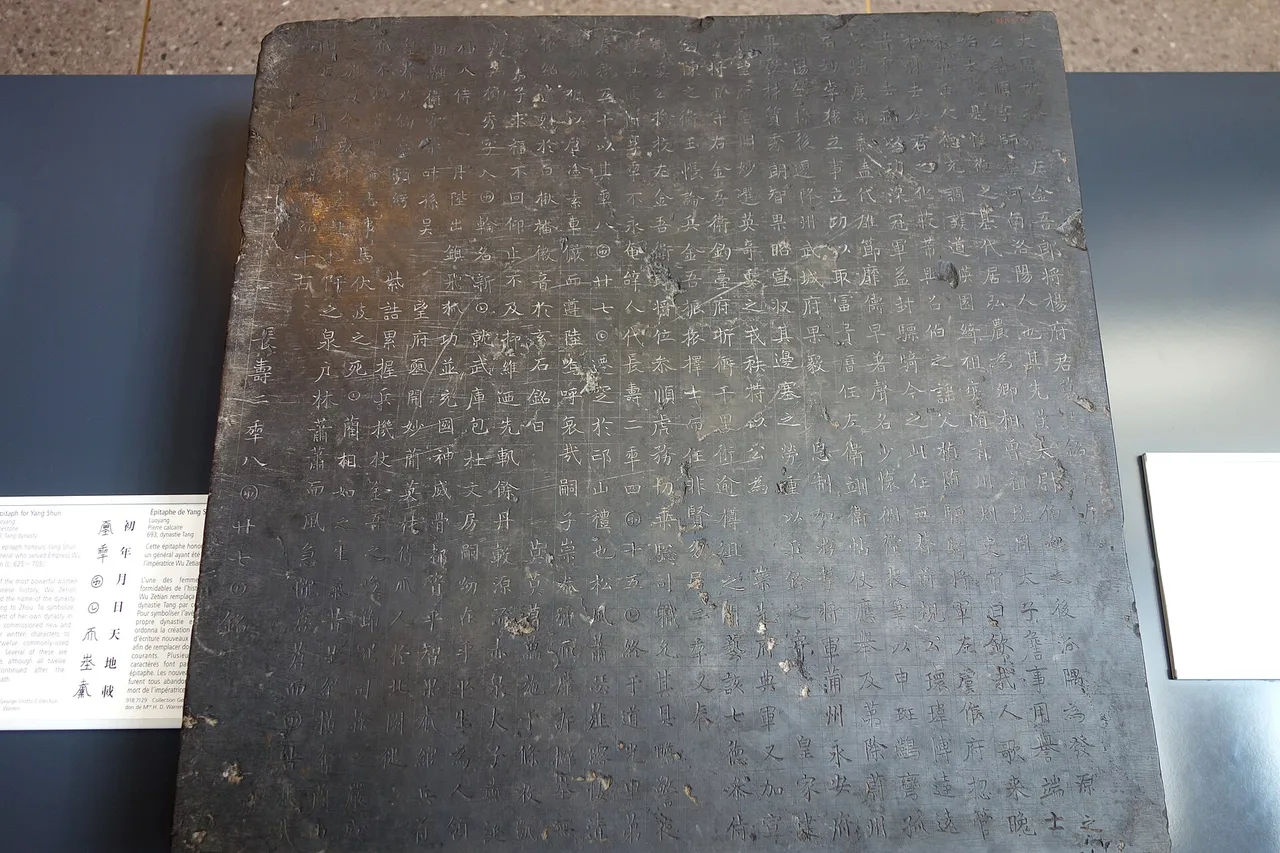
01. Memory Layers and Primary Records: The Romanticized Defiance
Sorting out this famous standoff requires comparing popular lore against primary dynastic records and tracing the centuries of shifting ideals that reshaped the tale.
| Popular Trope / Misconception | Earliest Primary Records | Evolution and Motives Behind the Shift |
|---|---|---|
| Wu Zetian championed female freedom, sympathizing with an elite young widow and revoking the forced match out of solidarity. | The New History of the Tang ("Biographies of Exemplary Women") records of Lady Lu: "Widowed young... Empress Wu summoned her, seeking to redirect her intent. Lu cut off her ear to swear an oath, whereupon an imperial decree pardoned her." The Old Book of Tang similarly emphasizes her blood oath. | Late twentieth-century and contemporary pop culture reframed raw dynastic realpolitik through modern gender discourses, converting an aristocratic crisis into an egalitarian fable. |
| Lady Lu resisted patriarchal oppression to assert personal autonomy and individual choice in marriage. | Lady Lu sought to preserve the prestige of the Fanyang Lu house and adhere to classical widow chastity. Her chosen instrument was severe bodily mutilation rather than a modern assertion of personal rights. | Neo-Confucian moralists in the Song and Yuan eras first canonized her as a paragon of sacrificial virtue. Modern media then inverted that image into a champion of personal liberation, twice severing her from Tang aristocratic realities. |
| Imperial betrothals served as benevolent boons that honored subjects and met universal gratitude. | Tang legal statutes and excavated mortuary records show that imperial matches functioned as coercive instruments designed to dismantle aristocratic barriers and bond new lineages to the throne, routinely meeting passive resistance. | Ming and Qing vernacular fiction flattened imperial decrees into stock romantic drama, obscuring the Wu Zhou court's anxieties over dynastic legitimacy and social engineering. |
The Historical Core: Survival Purchased Through Mutilation
Official historical sources state that the woman was the wife of Zheng Yifan. She lost her husband at a young age. After his death, Lady Lu focused entirely on raising her baby son.
Wu Zetian sought to widen her political base. She tried to marry noble widows to her kin and close aides. She summoned Lady Lu to the Imperial Court. There, the sovereign commanded her to marry again.
In an autocratic realm, refusing a royal command meant death. Lady Lu knew she could not simply say no. She pulled out a sharp blade, cut off her hair, and sliced off her ear. Standing covered in blood before the monarch, she swore never to wed again.
Faced with this graphic scene, Wu Zetian yielded. The ruler announced that the crown would "not overrule her moral resolve." This allowed the widow to stay in mourning. Lady Lu bought her safety with blood, not pleasant words.
How Later Storytellers Reshaped the Historical Core
Song historians writing the New History of the Tang, including a Senior Compiler on the project, placed Lady Lu among exemplary women. They used her to teach traditional female virtue. Later writers in the Ming and Qing eras stripped away the political tension. They turned the tale into a cozy domestic drama about wifely loyalty.
Modern storytellers went even further. They erased the blade, the blood, and the severed ear. Instead, they depicted Wu Zetian as a kind patron who felt pity for a widow. A desperate bid for survival under state pressure became a cheerful myth of personal liberty.
02. Imperial Matches as Social Warfare: The Wu Zhou Throne and the Great Clans
Why did Wu Zetian press an elite widow into a second marriage? The answer lies in the deep social rift that divided seventh-century aristocrats.
Aristocratic Pedigree and Upstart Parvenus
In early Tang times, seven northern houses held top prestige. These were the Fanyang Lu, Qinghe Cui, Boling Cui, Xingyang Zheng, Zhaojun Li, Longxi Li, and Taiyuan Wang. Together they formed the Seven Great Clans. Emperor Taizong of Tang (Li Shimin) had ordered the Treatise on Clans to humble them. Yet people still saw marriage into these houses as the highest social honor.
When Wu Zetian founded the Wu Zhou dynasty, she relied on Imperial Affinal Relatives. She also promoted newcomers via the Civil Service Examinations and her secret police network. Old clans looked down on the Wu family as vulgar parvenus from Bingzhou. The ancient houses married strictly among themselves. They shut out the new ruling line.
Wu Zetian used forced weddings to break this social boycott. She ordered unions between her nephews, like Wu Chengsi and Wu Sansi, and daughters from the proud clans. Forcing Lady Lu into a new match was a routine tool to break aristocratic insularity.
Lineage Pride Against Coercive Authority
For a daughter of the Fanyang Lu, marrying an upstart affine brought deep disgrace to her lineage. Aristocratic clans viewed unions with newly elevated families as a loss of caste.
Yet this drama took place during the secret police terror run by figures like Lai Junchen. An autocratic Imperial Court tolerated no refusal based on private feelings. Had Lady Lu claimed she simply disliked the groom, the court could have charged her with treason. Under collective guilt laws, her whole clan would suffer.
She had only one shield. She turned to the sacred rules of Confucian ritual institutions, which outranked the will of kings.
03. Reversing the Standoff: Why the Sovereign Stepped Back
By cutting herself inside the halls of Luoyang, Lady Lu flipped the trap onto the ruler. The monarch had absolute power, yet her own moral claims bound her hands.

The Problem of Imperial Legitimacy
Wu Zetian was the only female Emperor in Huaxia history. Because of this, conservative officials attacked her rule constantly. Critics argued that a woman on the throne ruined the cosmic balance. To silence them, she claimed devotion to the ancient sage-kings even more loudly than past male rulers.
She built the Bright Hall (Mingtang) in Luoyang. She issued decrees mixing Confucian, Daoist, and Buddhist ideas. She also showered gifts on dutiful sons and chaste widows. Her royal image depended on showing that she upheld the moral order.
Strategic Concession as Public Relations
Lady Lu struck this exact weak point. If she bled to death on the palace floor, rivals would claim the court drove a chaste widow to suicide. That outcome would hand dangerous ammunition to enemies across the Imperial Clan.
Executing a Grand Councilor or a high-ranking Grand Master was everyday business. But harming a woman who embodied classical virtue risked massive public outrage.
The monarch chose a swift retreat. Brute force would cause a public scandal, so she took the moral high ground instead. She canceled the order. Then she praised Lady Lu for her devotion and issued an official commendation.
The move gave both sides a clean exit:
- The ruler stepped back from brute force to pose as the supreme guardian of filial fidelity;
- The Fanyang Lu clan guarded its status without open defiance;
- Both parties accepted a calculated truce on the palace steps.
04. Comparative Perspectives: Feudal Marriage and Sacred Sanctuaries
Using holy vows to resist royal marriage orders was not unique to China. In medieval Europe, noblewomen used similar institutional shields against feudal lords.
Feudal Wards and Compulsory Unions
Across medieval Europe, kings and lords used forced matches to shift land. They treated widowed noblewomen and young heiresses as political prizes to reward loyal knights. In his 1100 AD charter, King Henry I of England had to limit royal abuse against noble widows. Kings routinely sold aristocratic brides to raise cash.
Personal feelings offered no defense. If an elite woman defied her feudal lord, she faced heavy fines, prison, or the loss of her estate.
Monastic Vows as Legal Sanctuaries
Noblewomen answered this threat by seeking the legal shelter of the Church. Medieval Christian law prized lifelong chastity and protected formal monastic vows. When an heiress took the veil in a convent before a secular match was signed, she fell under canon law.
Any feudal lord or king who abducted a nun risked papal excommunication. That put his crown in spiritual danger.
[Secular Autocratic Monarch / Feudal Sovereign]
       │
       │ (Imperial Match Decree / Feudal Wardship Assignment)
       ▼
[Elite Female Subject]
       │
       │ (Seeks Refuge: Personal Choice Invalid)
       ▼
[Supreme Sacred and Moral Defense Framework]
 ┌───────────────────────┴───────────────────────┐
 │                                               │
 [Tang and Wu Zhou China]                       [Medieval Western Europe]
 Confucian Ritual Codes (Marital Fidelity)      Ecclesiastical Law (Convent Vows / Consecrated Virgin)
 Physical Disfigurement (Severing Ear / Hair)   Taking the Veil (Entering Holy Orders)
 Imposes Moral Scandal on the Throne           Threatens Sovereign with Excommunication
 └───────────────────────┬───────────────────────┘
       │
       ▼
[Coerced Sovereign Grants Graceful Retreat]
(Wu Zetian Proclaims "Resolve Unbroken") / (Monarch Relinquishes Forced Match)
In the halls of Luoyang, the Divine Capital, just as in European castles, pre-modern women had no right to defy rulers on personal grounds. Survival required wrapping their bodies in sacred dogma. They used painful self-sacrifice to exploit the regime's fear of losing political legitimacy.
Primary Sources & Historical Bibliography
- *Song Qi and Ouyang Xiu, New History of the Tang, Vol. 205, "Biographies of Exemplary Women"*: Details the life of the wife of Zheng Yifan, recording her self-mutilation to resist Empress Wu's summons and the subsequent imperial pardon.
- *Liu Xu et al., Old Book of Tang, Vol. 193, "Biographies of Exemplary Women"*: Documents elite widows during the early Tang and Wu Zhou eras navigating aristocratic expectations and state pressure.
- *Sima Guang, Comprehensive Mirror to Aid in Government, Vol. 204, "Tang Annals 20"*: Covers the political context of the Shengli through Jiushi eras, outlining Wu Zetian's use of marriage politics to entrench affinal clans against regional aristocrats.
- *Wang Pu, Institutional History of Tang, Vol. 36, "Marriage"*: Outlines shifting state restrictions on the Seven Great Clans and royal marriage policies from Emperor Taizong through the Wu Zhou period.
- *Jack Goody, The Development of the Family and Marriage in Europe (Cambridge University Press)*: A classic comparative study of how Christian chastity vows and monastic systems limited secular feudal control over noble marriages.