Birth in Chenliu
Born in Weishi, Chenliu Commandery; his father Ruan Yu died when he was three, leaving him to be raised by his mother in poverty.
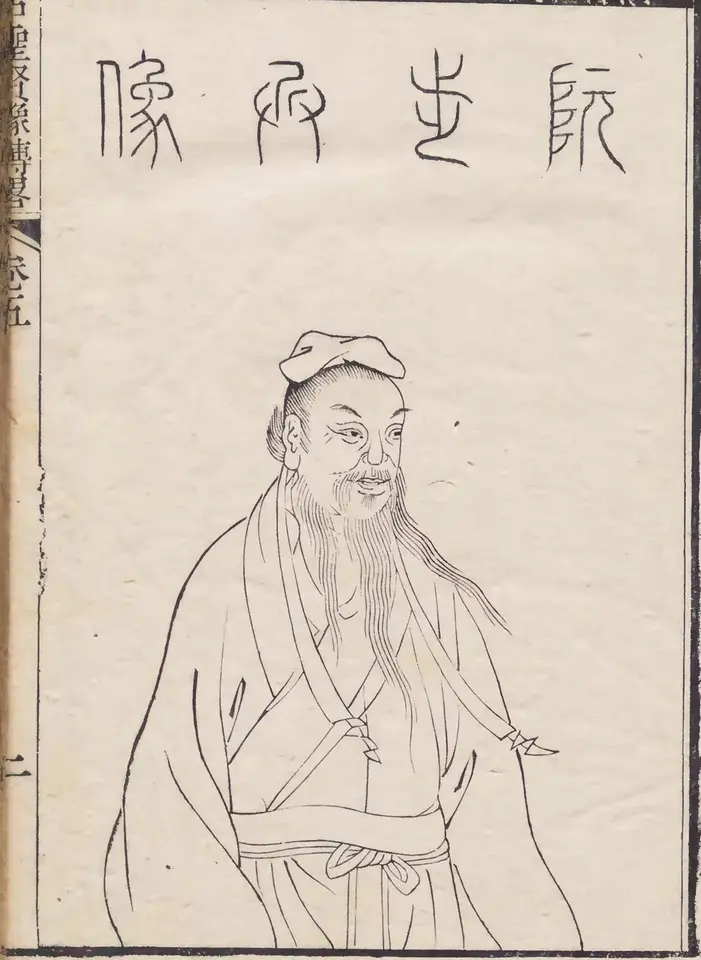
阮籍
Ruan Ji (阮籍, 210–263 CE), courtesy name Sizong (嗣宗), a native of Weishi in Chenliu Commandery, was a towering literary figure, philosopher, and the foremost representative of the Seven Sages of the Bamboo Grove during the Three Kingdoms period of Cao Wei. The son of Ruan Yu, one of the famed Seven Masters of the Jian'an Era, Ruan Ji lost his father at age three and was raised in poverty by his mother. Preternaturally gifted,…
Ruan Ji (阮籍, 210–263 CE), courtesy name Sizong (嗣宗), a native of Weishi in Chenliu Commandery, was a towering literary figure, philosopher, and the foremost representative of the Seven Sages of the Bamboo Grove during the Three Kingdoms period of Cao Wei. The son of Ruan Yu, one of the famed Seven Masters of the Jian'an Era, Ruan Ji lost his father at age three and was raised in poverty by his mother. Preternaturally gifted, he could compose essays at age eight, studied classical Confucian texts, practiced swordsmanship, and played the zither, harboring noble aspirations to bring peace to the realm. During the Zhengshi era, escalating factional strife between the imperial Cao clan and the ascendant Sima family destabilized the court. Perceiving the extreme dangers of public service, Ruan declined appointments under Grand Commandant Jiang Ji and Regent Cao Shuang. Following the Gaoping Tombs Incident of 249 CE, the Sima clan seized dictatorial control, ruthlessly eliminating political rivals. Deeply loyal to the Cao Wei house yet powerless to oppose the usurpers, Ruan adopted a strategy of self-preservation through deliberate eccentricities, seeking sanctuary in the countryside, conversing in mystical abstractions, and feigning perpetual intoxication. Alongside Ji Kang, Shan Tao, Xiang Xiu, Liu Ling, Ruan Xian, and Wang Rong, he gathered in Shanyang to form the celebrated cultural retreat known as the Seven Sages of the Bamboo Grove. To avoid political entanglements, Ruan remained drunk for sixty consecutive days to evade Sima Zhao's proposal of an imperial marriage between their children, and deflected interrogation by courtier Zhong Hui through abstruse metaphysical discourse. Craving wine stored in the infantry commissary, he requested appointment as Colonel of Infantry, earning the popular moniker Colonel Ruan. In 263 CE, compelled to draft a petition urging Sima Zhao to accept the title Duke of Jin and the Nine Bestowals, he composed the text under heavy intoxication and died of sorrowful illness shortly thereafter at age fifty-four. Ruan pioneered the monumental poetic cycle Eighty-Two Poems of My Heart, authored foundational Neo-Daoist treatises such as Discourse on Understanding Zhuangzi and Biography of Master Great Man, and remains an enduring symbol of spiritual autonomy and intellectual resistance in Chinese history.
Born in Weishi, Chenliu Commandery; his father Ruan Yu died when he was three, leaving him to be raised by his mother in poverty.
Accompanied his uncle to Dongjun and met Inspector Wang Chang; sat in total silence throughout the day, baffling his host.
Grand Commandant Jiang Ji sought to recruit him; Ruan submitted a formal note of decline and resigned shortly after being forced into service.
Served briefly as Gentleman of the Masters of Writing before resigning due to illness; firmly refused recruitment by regent Cao Shuang.
Sima Yi executed Cao Shuang; Ruan accepted a secretarial post under Sima Yi to protect his family while retreating into the Bamboo Grove.
Sima Shi distributed honors to conciliate the elite, appointing Ruan Regular Mounted Attendant and granting the title Secondary Marquess.
Requested appointment as Chancellor of Dongping under Sima Zhao; demolished bureaucratic screens and simplified local laws, returning within ten days.
Requested assignment as Colonel of Infantry to drink wine from the army commissary, earning the famous title Colonel Ruan.
Remained completely intoxicated for sixty consecutive days to derail Sima Zhao's plan to arrange an imperial marriage with his daughter.
Compelled to draft the formal petition urging Sima Zhao to assume the Nine Bestowals; passed away from illness in winter at age fifty-four.
Ruan Ji was born in the fifteenth year of the Jian'an era in Weishi County, Chenliu Commandery. His father, Ruan Yu, courtesy name Yuanyu, served as Military Advisory Libationer and Memorial Secretary under Cao Cao, achieving fame as one of the Seven Masters of the Jian'an Era. When Ruan Ji was three years old, his father died, plunging the household into severe economic distress. Amidst the chaos of the late Eastern Han and early Cao Wei eras, Ruan was reared entirely by his mother, learning self-discipline and rigorous scholarship within an impoverished home.
Poverty did not impede Ruan's innate brilliance. By age eight, he had demonstrated exceptional literary talent and spent his leisure hours playing the zither and practicing whistling. As a youth, he immersed himself in the Confucian Classics, venerating ancient sages who found joy in moral integrity despite poverty. Refusing to remain a secluded scholar, he also trained vigorously in martial arts, later recalling in his poetry that in his youth he mastered swordsmanship surpassing celebrated fencing masters, harboring expansive ambitions to bring order to a fractured empire.
Characterized by an aloof and independent demeanor, Ruan disliked superficial social pleasantries. Toward the end of the Huangchu era, around age sixteen, he accompanied his uncle on a journey through Dongjun. Wang Chang, the Inspector of Yanzhou, invited the youth to an audience. Throughout the lengthy interview, despite Wang Chang's repeated conversational overtures, Ruan sat in total silence, uttering not a single word. Afterward, Wang Chang sighed to his subordinates that he found the young man entirely unfathomable. This deep internal quietude became Ruan's primary defense mechanism against the lethal political currents of his adult life.
Following the death of Emperor Ming, the young Prince of Qi Cao Fang ascended the throne under the joint regency of Grand General Cao Shuang and Grand Commandant Sima Yi. The surface cordiality between the regents soon decayed into bitter covert warfare.
Around 242 CE, Grand Commandant Jiang Ji heard that Ruan possessed remarkable intellectual brilliance and high principles, determining to recruit him as an aide. Aware of Jiang Ji's immense factional power, Ruan had no desire to be sucked into factional rivalries. He composed a formal letter of decline, carried it personally to a post station outside Luoyang, and asked imperial couriers to deliver it. In the letter, Ruan stated that he wished only to farm in the eastern fields and pay grain taxes, begging to decline official recruitment. When Jiang Ji heard that Ruan had arrived at the post station, he assumed Ruan had accepted the post and dispatched carriages to welcome him, only to discover that Ruan had already departed for home. Outraged, Jiang Ji threatened the recommending officer Wang Mo, whose panic prompted Ruan's relatives to plead with him to yield. Ruan reluctantly assumed the post, but resigned after a few months citing ill health.
Around 247 CE, Ruan served briefly as a Gentleman of the Masters of Writing before resigning due to illness. When Cao Shuang sidelined Sima Yi and sought to assemble influential scholars, he issued an invitation summoning Ruan as a staff officer. Discerning that Cao Shuang was reckless, arrogant, and doomed to failure, Ruan firmly declined on grounds of chronic illness, shutting himself in his countryside villa. Contemporaries who viewed his refusal as a missed opportunity were soon silenced by unfolding events.
In January 249 CE, while Cao Shuang accompanied the young emperor to the Gaoping Tombs, Sima Yi executed a coup in Luoyang, massacring Cao Shuang, He Yan, and their entire kin groups. The massacre shocked the empire and initiated a bloody purge against anyone loyal to the Cao ruling house. Intellectual leaders like Xiahou Xuan and Li Feng were successively executed. Ruan was profoundly sympathetic to the Cao family and loathed the murderous despotism of the Sima clan, yet recognized that overt resistance meant instant destruction. To preserve himself and his clan, he withdrew from active politics, wandering among mountains, feigning drunken stupors, and maintaining silence on state affairs.
During this oppressive era, Ruan forged close bonds with six like-minded thinkers: Ji Kang, Shan Tao, Liu Ling, Xiang Xiu, Wang Rong, and his nephew Ruan Xian. Meeting frequently in the scenic bamboo groves of Shanyang, they played music, engaged in philosophical debate, and drank wine in open defiance of hypocritical court etiquette. Acclaimed as the Seven Sages of the Bamboo Grove, they championed individual spiritual autonomy and elevated Neo-Daoist thought to its peak, with Ruan revered as the foremost among them.
In April 249 CE, seeking to display administrative legitimacy, Sima Yi conscripted Ruan as an Attendant Officer. Realizing that defiance would bring immediate death, Ruan accepted. Following Sima Yi's death in 251 CE and the succession of Sima Shi, Ruan continued in this advisory capacity. When the Duke of Gaogui Village Cao Mao became emperor, Sima Shi awarded Ruan the title of Secondary Marquess and promoted him to Regular Mounted Attendant.
In 255 CE, Sima Shi died on campaign and Sima Zhao assumed control of the military government. Sensing danger in the capital, Ruan requested an appointment as Chancellor of Dongping. Sima Zhao granted the request. Riding a single donkey to his commandery, Ruan ordered the immediate demolition of bureaucratic partition walls in the government compound to ensure transparency, simplified administrative regulations, and returned to Luoyang after ten days. Satisfied that Ruan harbored no administrative ambitions, Sima Zhao reappointed him as an Attendant Officer.
In 256 CE, upon learning that the military kitchen of the infantry barracks possessed three hundred casks of superior wine, Ruan petitioned Sima Zhao to appoint him Colonel of Infantry. The post offered no actual troop command, kept him distant from palace conspiracies, and provided an inexhaustible supply of fine wine. Sima Zhao granted the post, and Ruan held the office for several years, becoming celebrated as Colonel Ruan.
Throughout these tense years, Sima Zhao's chief strategist Zhong Hui repeatedly tried to entrap Ruan by asking his opinions on sensitive political affairs. Ruan consistently evaded interrogation by speaking in impenetrable philosophical riddles or feigning unconscious drunken stupors. Sima Zhao also tested him repeatedly, concluding that Ruan was the most cautious man in the empire. When Sima Zhao proposed an alliance by marrying his daughter to Ruan's son, Ruan maintained a continuous drunken stupor for sixty days, rendering conversation impossible and forcing Sima Zhao to drop the proposal.
Despite his outward eccentricity, Ruan possessed profound patriotic anguish. Climbing the historic fortress at Guangwu where the Chu-Han Contention unfolded, he famously lamented that an era without true heroes allowed worthless scoundrels to attain power. Overlooking Luoyang from Mount Wulao, he wept bitterly and composed martial poetry lamenting the decline of the state.
Ruan lived by authentic personal feeling, scorning conventional decorum. When his sister-in-law returned to visit her parents, Ruan personally hosted a farewell banquet; mocked by conventionalists, he replied: "Were rituals created for people like me?" He frequently drank at a neighborhood tavern run by an attractive young woman, collapsing into drunken slumber beside her without suspicion from her husband. Hearing of the premature death of a talented maiden from a military household whom he had never met, Ruan walked to her funeral and wept inconsolably before departing. Often driving his carriage into the wilderness without choosing a road, he wept aloud when the path ran out before turning back.
When his mother passed away, Ruan was playing chess. Rejecting his opponent's plea to halt, he completed the match, drank two measures of wine, let out a piercing shriek, and vomited several pints of blood. At the funeral, he ate roast pork and drank heavily before collapsing in grief. At an imperial banquet, conservative minister He Zeng urged Sima Zhao to exile Ruan for violating filial mourning rites by consuming wine and meat. Sima Zhao defended Ruan, noting his emaciation and grief, while Ruan ate and drank with serene indifference.
In the winter of 263 CE, following the conquest of Shu Han, Sima Zhao prepared to usurp the throne, assuming the title Duke of Jin and the Nine Bestowals. Court ministers gathered to draft a petition of accession, designating Ruan Ji to compose the document. Tormented by the demand to praise a usurper, Ruan drank himself into oblivion. When messengers arrived at the infantry barracks, they found Ruan sleeping on his desk. Awakening under urgent pressure, Ruan seized a brush and dashed off the text across the desktop without correcting a single stroke. The prose was acclaimed for its majestic vigor, and no courtier dared alter a word. Crushed by political humiliation and grief, Ruan fell fatally ill, dying in the winter of 263 CE at the age of fifty-four.
Ruan Ji's primary literary legacy is his masterpiece Eighty-Two Poems of My Heart, which represents the earliest monumental cycle of five-character personal lyric poetry in Chinese literature.
Surpassing the earlier thematic limits of the Music Bureau and Nineteen Ancient Poems, Ruan integrated eighty-two poems into a unified artistic canvas. Through subtle metaphors, historical allusions, and intense personal confessions, he exposed the moral trauma, despair, and spiritual endurance of an intellectual living under autocratic terror. His poetry captured the existential anguish of human brevity and the tragic decay of ethical ideals.
Ruan's poetic style was acclaimed for its profound obscurity and expansive emotional resonance. Critic Zhong Rong placed Ruan in the highest rank in the Classification of Poetry, praising his ability to encapsulate immense cosmic sorrow within accessible language. Ruan's pioneering cycle directly inspired later major poetic achievements, including Tao Yuanming's Twenty Poems on Drinking Wine, Zuo Si's Eight Poems on History, and Tang masterworks by Chen Zi'ang and Li Bai.
Ruan was a central philosophical figure of the Zhengshi and Bamboo Grove eras, famously championing the doctrine of transcending moralism to follow nature alongside Ji Kang.
Ruan exposed how the Sima regime manipulated Confucian filial piety and moral codes as cynical tools of execution and political legitimation. To counter this hypocrisy, he authored foundational philosophical treatises, including Discourse on Understanding Zhuangzi, Discourse on Understanding Laozi, and Discourse on the Changes, culminating in the allegorical masterpiece Biography of Master Great Man.
In Biography of Master Great Man, Ruan introduced the figure of Master Great Man, who roamed the cosmos unfettered by mundane politics. He compared pedantic hypocrites who crawled inside rigid ritual codes to lice hiding inside clothing seams. By advocating a return to Daoist spontaneity and cosmic oneness, Ruan catalyzed a profound intellectual evolution toward ontological metaphysics and personal freedom, profoundly influencing Chinese aesthetic thought.
In music and cultural conduct, Ruan established enduring paradigms of aesthetic individualism.
A master musician, he is traditionally credited with composing the renowned zither piece Wine Madness, whose rolling rhythms depict erratic drunken steps concealing deep internal grief. In his Discourse on Music, he explored the psychological and social functions of harmony, asserting that authentic music harmonizes human sentiment and transcends artificial political manipulation.
Ruan was also legendary for his supernatural whistling. Visiting the reclusive master Sun Deng on Mount Sumen, Ruan received no answer to his philosophical questions; stepping outside, he let out a protracted, piercing whistle that echoed through the ravines. As he descended, Sun Deng whistled in response, producing celestial tones resembling the cries of the phoenix. Ruan's whistling, weeping at the end of roads, and expressive use of the pale eye and blue eye to signal contempt or respect became enduring symbols of the genuine scholar confronting an unjust world.
FIGURES ASSOCIATED WITH THIS DYNASTY