TL;DR · Core Takeaways
- Pathological obesity is a later myth: The High Tang loved firm vitality, round cheeks, wide frames, and active health, not soft obesity.
- Yang Guifei was an elite court dancer: Official dynastic records show Yang Yuhuan was an agile dancer who mastered the lyrical Rainbow Skirt and Feathered Robes Dance and the quick Sogdian Whirl; modern rumors that fix her weight at 69 kilograms have no historical basis.
- The "plump ideal" lasted barely six decades: Tang style changed across three centuries, moving from Early Tang slim willow waists to High Tang fullness, then shifting back to Late Tang slimness. Plumpness was just a short trend born from peace, wealth, and steppe cultural exchange.
Historical Context
- Chinese Timeline: Tang Dynasty, Kaiyuan to Tianbao eras (713–756 CE), marking the zenith of rule under Emperor Xuanzong of Tang before the catastrophic outbreak of the An Lushan Rebellion.
- Western / Mediterranean World Timeline: The Byzantine Empire under Leo III the Isaurian during the Iconoclastic Controversy (c. 726–787 CE); the Frankish realm under Charles Martel and Pepin the Short laying the foundations of the Carolingian dynasty.
Visit the British Museum or the Musee Guimet in Paris. You will see round clay statues in loose silk robes. Modern media turns these old statues into a broad claim. Many people think the Tang Dynasty loved extreme obesity. They claim Yang Guifei was dangerously heavy. Some blogs even make up exact body numbers. They claim she stood 164 centimeters tall and weighed 69 kilograms.
Old burial sites and dynastic records disprove this idea. Tang court culture drew a clear line between active health and clumsy weight.
| Myth / Popular Lore | Primary Chronicle & Archaeological Record | Evolution & Social Drivers of the Myth |
|---|---|---|
| Myth 1: Yang Guifei was a clumsy, heavy woman who spent her days sweating through her silks and panting from mere movement. | The Old Book of Tang describes her as gifted with "rich, radiant beauty, skilled in song and dance, and versed in musical theory"; the New History of the Tang confirms her skill in music. She danced both the fast Sogdian Whirl and the grand Rainbow Skirt and Feathered Robes Dance. | Five Dynasties and Song notebook literature (such as Unfinished Affairs of the Kaiyuan and Tianbao Eras and Private Biography of Yang Taizhen) blew up her physical traits into symbols of court sin to explain the dynastic fall; modern websites later invented fake metric stats. |
| Myth 2: Across all three centuries of the Tang Dynasty, elite society linked heavier body weight with higher noble status. | Early Tang tomb murals in Zhaoling and the Tomb of Imperial Princess Yongtai depict slender, willow-waisted women. Middle and Late Tang burials, as well as the Southern Tang masterpiece Night Revels of Han Xizai, demonstrate an aesthetic retreat to frail, delicate silhouettes. | Song and Yuanming storytellers took a brief mid-eighth-century trend out of its true time and spread it across the whole three-century dynasty. |
| Myth 3: Emperor Xuanzong of Tang forced this full-figured taste on everyone due to his personal habits. | Steppe styles swept Chang'an during the Kaiyuan and Tianbao eras. Elite women rode horses and played polo. Zhou Fang's Court Ladies Wearing Flowered Hairpins shows high rank and court luxury, not strange imperial habits. | Late imperial popular stories turned complex palace politics, nomadic foods, and riding culture into the simple sins of one ruler. |
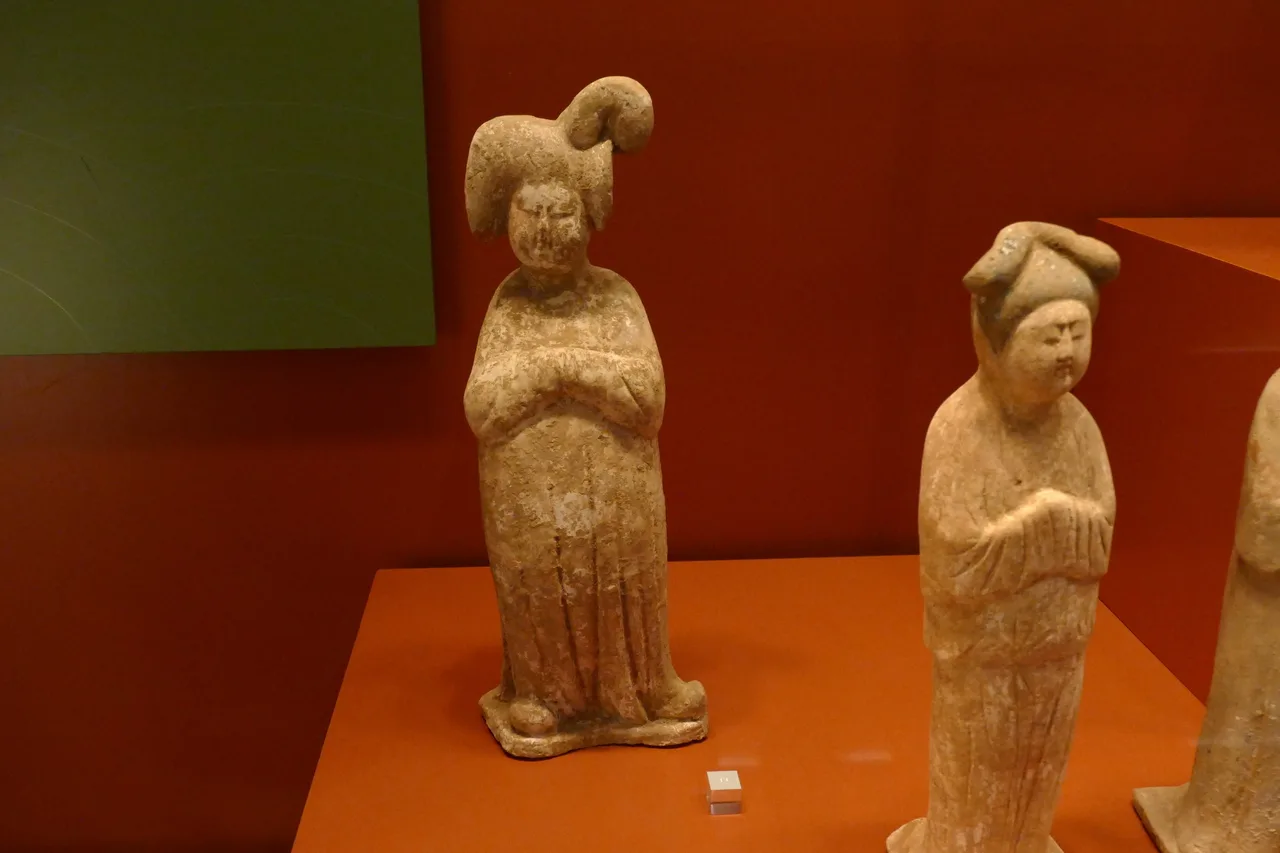
01. Yang Yuhuan the Dancer: How Moralists Reconstructed an Artist into a Symbol of Gluttony
Official dynastic records show no proof that Yang Yuhuan was an inactive invalid. The Old Book of Tang dates to the Later Jin. It describes her looks in four simple words: zi zhi feng yan. In English, this means "gifted with rich and radiant beauty." In eighth-century classical prose, feng meant strong bones, good posture, and blooming health. The word yan meant bright charm. The words praised real vitality, not sluggish bulk.
Before entering the inner palace, she lived as a Taoist nun under the name Taizhen. She built a strong bond with Emperor Xuanzong of Tang. This bond came from shared musical talent rather than mere physical looks. Both emperor and consort were skilled musicians.
The Historical Core: An Elite Performer Enduring Demanding Rotations
Palace records show Yang Yuhuan was a skilled stage dancer. She led the Rainbow Skirt and Feathered Robes Dance. Emperor Xuanzong of Tang wrote this piece himself. She also mastered the Sogdian Whirl (Huxuanwu). This rapid spinning dance came along the Silk Road. It came from Central Asian oasis cities like Samarkand and Chach.
The poet Bai Juyi described this rapid dance in his New Yuefu Poetry: "Turning left, whirling right, never tiring; spinning thousands of times without pause. Nothing in the world can match it: racing chariot wheels seem slow, whirlwinds sluggish." This style was demanding. The dancer stood on a small round rug and spun at top speed. It needed strong leg joints, deep core strength, and keen balance.
If Yang Yuhuan were dangerously heavy, her knees and heart would fail during these rapid spins. The Old Book of Tang offers a clear contrast in An Lushan. He served as the Military Commissioner over Fanyang, Pinglu, and Hedong. Court records note that his belly hung past his knees. He weighed over three hundred pounds. Yet he could still spin fast before Emperor Xuanzong of Tang. Historians wrote down An Lushan's strange spin because it looked odd. They treated it as an unusual court curiosity. This sharp contrast proves that normal dancers of the Sogdian Whirl kept lean, strong bodies. The dances Yang Yuhuan staged in the Southern Court were admired art. They were wholly unlike An Lushan's strange acts.
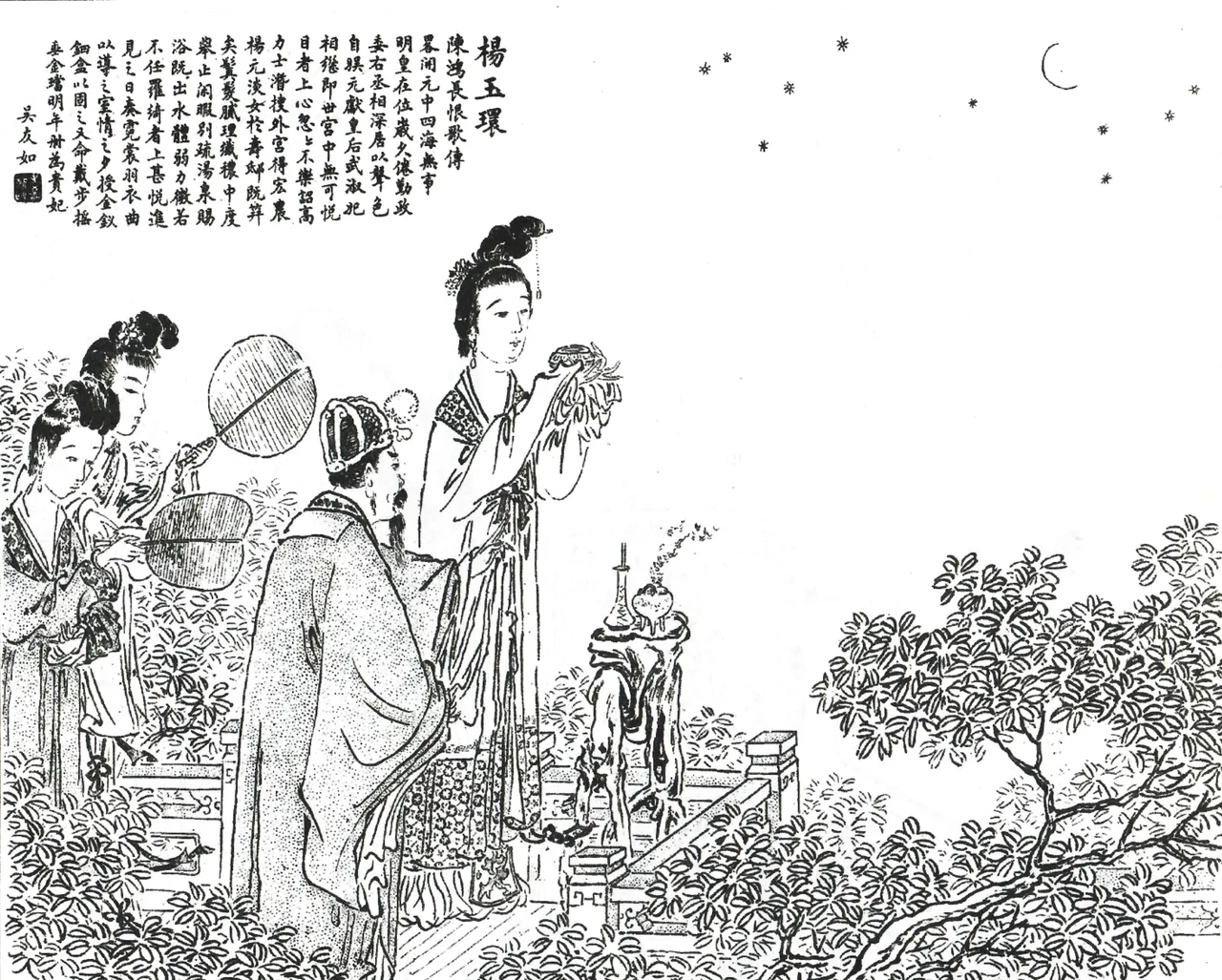
How Storytellers Rewrote History: Song Rationalism and Moral Parables
How did factual dynastic history give way to tales of a breathless consort? Why did stories say she rested on cool jade rings to ease her heat?
The change began with moral lessons written after the An Lushan Rebellion. Sima Qian compiled the Records of the Grand Historian. Ever since his work, Chinese annals tied moral lessons to dynastic falls. Bai Juyi wrote the Song of Everlasting Sorrow in the Middle Tang. He praised her glowing skin. He compared it to smooth jade washed in warm spring waters. Later Song writers took a harsher moral view. They looked for sins that caused the fall of the Kaiyuan golden age. They blamed female luxury for court decay.
During the Five Dynasties period, Wang Xun wrote Unfinished Affairs of the Kaiyuan and Tianbao Eras. He wrote that the consort struggled with summer warmth. She wore sheer silks. She had maids fan large blocks of ice. The Northern Song scholar Yue Shi went further. In his tale Private Biography of Yang Taizhen, he painted her as a lazy figure. She called for swift deliveries of fresh southern lychees. In Song political theory, the fall of a house needed a moral cause. Writers turned Yang Guifei into a symbol of physical greed. This justified the army mutiny at Mawei Courier Station. It also explained the political ruin of Emperor Xuanzong of Tang.
Later writers added even more drama to these tales. Bai Pu wrote the Yuan play Rain on the Wutong Tree. Hong Sheng wrote the Qing play The Palace of Eternal Youth. Over centuries, city folk tales made her figure heavier with each retelling. In the late twentieth century, popular writers applied modern Body Mass Index math to these folk tales. They made up her fake 69-kilogram weight. In doing so, they turned High Tang art into a modern joke.
02. The Sixty-Year Window: Steppe Habits and the Flourishing Tang Silhouette
Digs at Tang sites prove that the three-century Tang Dynasty (618–907 CE) never kept one single beauty standard. Modern digs and Song antiquarian scholarship both confirm this fact. Surviving wall art, clothes, and pottery tell a clear story. The full-figured look ruled female art for only five or six decades. This period ran from the Kaiyuan and Tianbao eras into the years just after the war.
[Evolution of Tang Female Aesthetics]
Early Tang (618–712)     Slender frames, narrow sleeves, tight bodices (Northern/Southern Dynasties legacy)
       │
High Tang (713–756)      Rounded cheeks, broad sleeves, athletic builds (Eurasian exchange, economic peak)
       │
Late Tang (757–907)      Delicate builds, subdued postures (fanzhen separatism, dynastic crisis)
Under Emperor Gaozu of Tang, Emperor Taizong of Tang, and Emperor Gaozong of Tang, as well as Wu Zetian, court art stayed slim. It kept the shapes of the Northern and Southern Dynasties. Emperor Taizong of Tang was buried at Zhaoling. Imperial Princess Yongtai was buried in 706 CE. Murals from these tombs show tall, slender women. They wear high-waisted skirts tied with narrow sashes. Tight sleeves frame their slim arms.
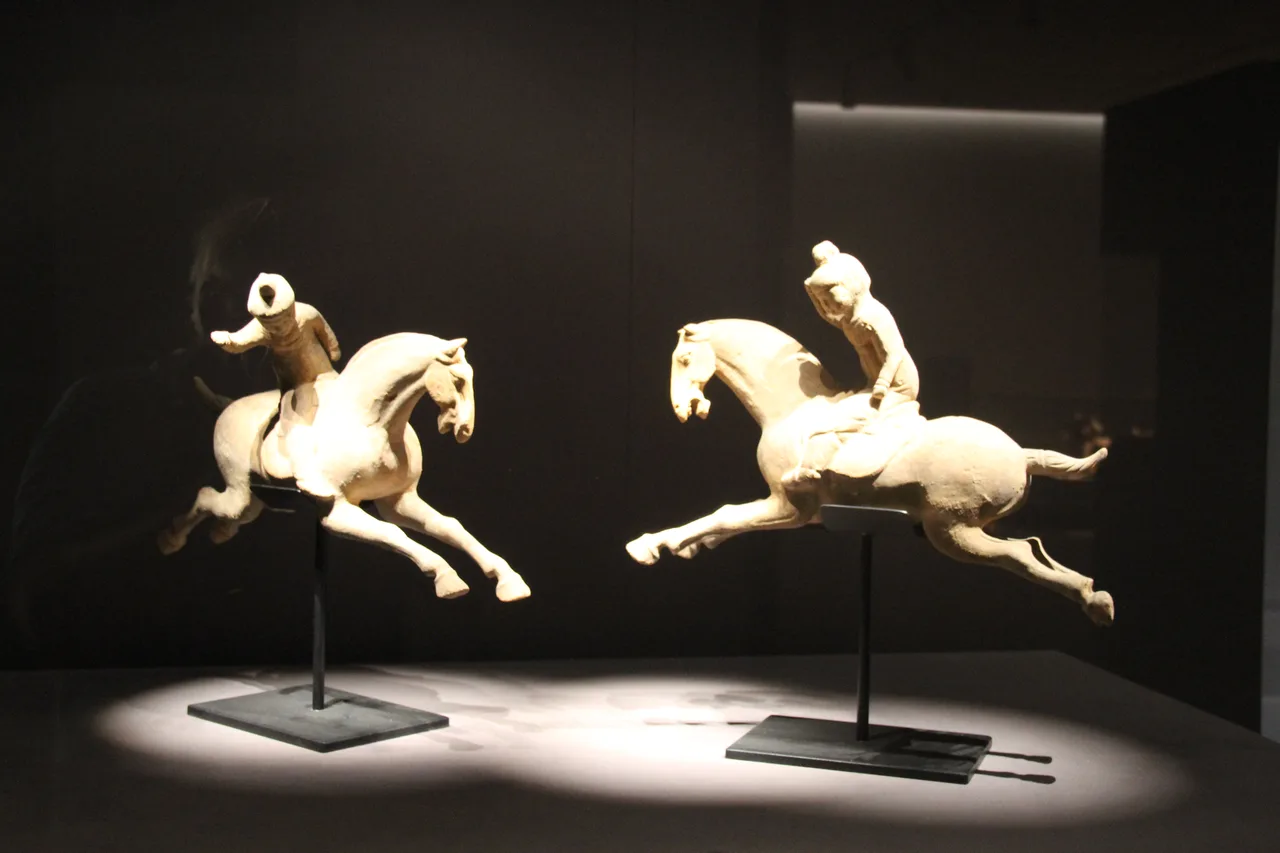
The shift toward fuller figures started during the reign of Emperor Xuanzong of Tang in the Kaiyuan era. Three clear historical trends shaped this change:
- Steppe Cultural Fusion: The Tang royal family came from ties between Northern Dynasties nobility and regional clans. The Prosperity of the Kaiyuan Era brought Sogdian traders, steppe envoys, and foreign musicians into Chang'an. Steppe foods such as roast meat, butter, and cheese entered city kitchens. Nomadic tastes for physical strength altered court fashion in Chang'an and Luoyang.
- Plentiful Food Supplies: Imperial granaries held record stores throughout Henan Prefecture and the capital region during the Tianbao era. High protein diets helped elite women move past the thin forms born of food shortages.
- Active Outdoor Sports: High Tang noblewomen rode horses without veils. They went on hunts and played polo games. Clay figurines show broad shoulders and round faces. These traits showed active muscle and glowing health won through sports, not a soft, idle life.
This court taste shares clear traits with European Baroque art. In the seventeenth century, painters depicted strong, full-figured women to show health and abundance. In older societies where famine was a constant risk, smooth skin and strong bodies served as clear visual signs of family wealth, safety, and health.
The An Lushan Rebellion broke out in 755 CE. This golden era ended. Tax revenue fell. Meanwhile, fanzhen separatism broke the country into pieces. Court art went back to slim forms. By the Five Dynasties period, the Southern Tang court under Li Yu praised small feet and fragile frames. In the Song Dynasty, literati painting also turned toward quiet, slender figures. The full-figured look was not an eternal Tang custom. It was a brief cultural phase born from Silk Road trade and imperial strength.
Primary Sources & Historical Bibliography
- Liu Xu et al., Old Book of Tang (Jiu Tang Shu), Vol. 51, "Biographies of Imperial Consorts: Consort Yang"; Vol. 200A, "Biographies: An Lushan." Beijing: Zhonghua Book Company. Official Chronological History of the dynasty.
- Ouyang Xiu and Song Qi, New History of the Tang (Xin Tang Shu), Vol. 76, "Biographies: Imperial Consorts." Beijing: Zhonghua Book Company. Chronological History compiled in the Northern Song.
- Bai Juyi, "The Sogdian Whirl" ("Huxuan Nü"), Baishi Changqing Ji, Vol. 3; "Song of Everlasting Sorrow" ("Chang Hen Ge"), Vol. 12; collected in Complete Tang Poems (Quan Tang Shi).
- Shen Congwen, Researches on Ancient Chinese Costumes (Zhongguo Gudai Fushi Yanjiu). Shanghai: Shanghai Bookstore Publishing House, 2011. Detailed material study tracing Tang dress cuts from early narrow lines to broad High Tang robes and the return to slender cuts in the Late Tang.
- Sun Ji, "Costumes and Facial Ornaments of Tang Dynasty Women," in The Holy Fire of China: Ancient Artifacts and Sino-Western Cultural Exchange (Zhongguo Shenghuo). Beijing: Liaoning Education Press, 1996. Study on Tang fashion changes and archaeological finds.