Birth in Poverty
Born into a modest family in Huai County, Henei Commandery; lost his father early and lived in frugal independence.
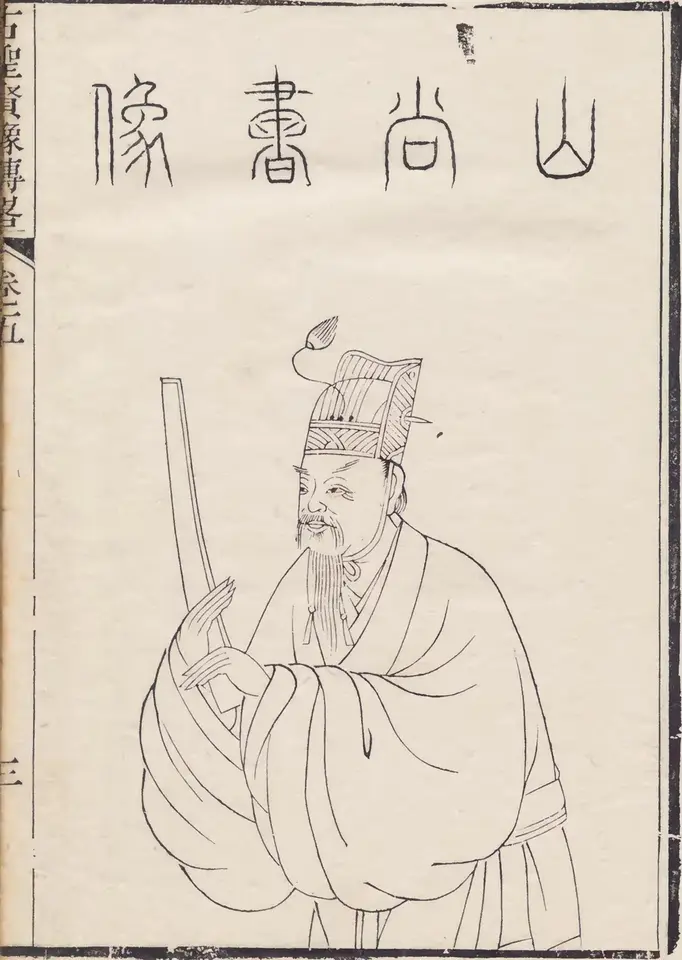
山涛
Shan Tao (205–283 CE), courtesy name Juyuan, was a native of Huai County, Henei Commandery. He was a distinguished statesman and intellectual during the Cao Wei and Western Jin dynasties, renowned as the eldest member among the Seven Sages of the Bamboo Grove. Born into poverty and orphaned young, he remained aloof from early official appointments through self-cultivation. In his forties, he entered administrative service and…
Shan Tao (205–283 CE), courtesy name Juyuan, was a native of Huai County, Henei Commandery. He was a distinguished statesman and intellectual during the Cao Wei and Western Jin dynasties, renowned as the eldest member among the Seven Sages of the Bamboo Grove. Born into poverty and orphaned young, he remained aloof from early official appointments through self-cultivation. In his forties, he entered administrative service and was appointed Inspector of Ji Province and later Minister of Personnel, where he established the famous system of ministerial recommendation records known as "Shan Gong's Inquiries." He possessed an extraordinary eye for identifying talent and served as a crucial bridge between metaphysical recluse circles and the imperial court. He consistently upheld integrity and prudence across decades of regime transition, successfully protecting the orphaned sons of Ji Kang. Elevated to Minister of Education and enfeoffed as Earl of Xinta in the Western Jin dynasty, he died in 283 CE at the age of seventy-nine and was posthumously honored as Marquis Kang.
Born into a modest family in Huai County, Henei Commandery; lost his father early and lived in frugal independence.
Nominated as Filial and Incorrupt at age forty, beginning public career in local commandery offices.
Sensed impending upheaval during Sima Yi's Gaopingling Coup; immediately resigned and entered seclusion for ten years.
Befriended Ji Kang and Ruan Ji; together with Liu Ling, Ruan Xian, Xiang Xiu, and Wang Rong, formed the Seven Sages of the Bamboo Grove.
Summoned by Sima Zhao; served as Grand Officer of the Center and Palace Attendant to assist in central governance.
Entrusted by Ji Kang prior to execution with his young family; later recommended Ji Kang's son Ji Shao to Emperor Wu of Jin.
Assisted Emperor Wu of Jin in establishing the dynasty; elevated to senior administrative posts and enfeoffed as Earl of Xinta.
Appointed Minister of Personnel; oversaw nationwide civil examinations and merit reviews, creating the famed Inquiries system.
Refused to accept illicit silk rolls from Prefect Yuan Yi, hanging them on the storehouse rafters until an official investigation cleared him.
Appointed Minister of Education; vigorously recommended demobilizing regional standing armies to restore agricultural prosperity.
Passed away on March 3, 283 CE at age seventy-nine; granted state funeral rites and honored with the posthumous title Marquis Kang.
Shan Tao was born into a modest gentry household in Huai County, Henei Commandery. His grandfather Shan Bao had served as Assistant Magistrate of Jiyin, while his father Shan Lin held the post of Libationer in the Household of the Minister of Works, yet passed away when Shan Tao was still a youth. Left in poverty, Shan Tao lived frugally with his mother, engaging in agriculture while reading extensively in the Confucian classics and Daoist treatises of Laozi and Zhuangzi. He was known for his broad-minded demeanor, emotional restraint, and deep magnanimity.
During the Zhengshi era of Cao Wei, Shan Tao formed profound intellectual friendships with Ji Kang and Ruan Ji. Although he was older than both men, their mutual appreciation transcended generational gaps. Joined by Xiang Xiu, Liu Ling, Ruan Xian, and Wang Rong, they gathered frequently in the bamboo groves of Shanyang, engaging in philosophical discourses, playing the zither, and drinking wine, becoming celebrated by contemporaries as the Seven Sages of the Bamboo Grove. Unlike Ji Kang's unyielding defiance and Ruan Ji's melancholic cynicism, Shan Tao blended Daoist naturalism with practical political wisdom.
In 244 CE, at the age of forty, Shan Tao was recommended as Filial and Incorrupt, being assigned to serve as Officer of Merit in the regional administration. When Sima Yi initiated the Gaopingling Coup in 249 CE and eradicated the faction of Cao Shuang, Shan Tao discerned the profound political perils facing Cao Wei. He promptly resigned his post under the pretext of illness and retreated into countryside seclusion, refusing to take sides during the bloody purges.
For nearly a decade, Shan Tao refrained from active court involvement, observing the shifting tides of the central administration while tending to family affairs and philosophical study. In 260 CE, after Sima Zhao consolidated sovereign control, Shan Tao accepted a summons to serve as Gentleman of the Yellow Gate and Grand Officer of the Center. He maintained an upright, conciliatory attitude, providing balanced counsel that eased factional antagonism between imperial loyalists and the rising Sima clan.
Following the establishment of the Western Jin dynasty in 265 CE, Emperor Wu of Jin held Shan Tao in high esteem for his political maturity and impartiality. In 270 CE, Shan Tao was appointed Minister of Personnel, tasked with administering civil selections and bureaucratic promotions. He diligently reviewed candidate credentials and composed detailed memoranda evaluating candidates' character, talents, and administrative experience, which were submitted directly to the throne as "Shan Gong's Inquiries." These memoranda earned universal acclaim for their fairness and accuracy.
Shan Tao's selections bridged the divide between the entrenched aristocratic clans and talented scholars from impoverished backgrounds. Even when imperial relatives attempted to influence appointments, he stood firm on statutory standards. Once, Emperor Wu commanded him to attend an official banquet and ordered imperial attendants to test his alcoholic tolerance by pressing him with endless wine cups; Shan Tao politely halted upon reaching his measured limit, demonstrating steadfast self-discipline even under imperial pressure.
Despite attaining supreme bureaucratic status, Shan Tao lived with remarkable simplicity. When the corrupt official Yuan Yi sent hundred-roll silk parcels to hundreds of court dignitaries to secure factional protection, Shan Tao refused to accept them secretly; instead, he hung the sealed silk parcels high upon the rafters of his storehouse. Years later, when Yuan Yi was arrested and an imperial inquiry inspected all recipient officials, only Shan Tao's silk rolls remained completely intact with unbroken seals and thick dust, earning public praise from Emperor Wu.
When Ji Kang was sentenced to death in 262 CE, he entrusted his young son Ji Shao to Shan Tao, saying that as long as Shan Tao lived, the boy would never be orphaned. Shan Tao faithfully honored this sacred commitment, raising Ji Shao as his own kin. In later years, Shan Tao recommended Ji Shao to Emperor Wu as Palace Gentleman, successfully preserving and restoring the scholarly lineage of his departed friend.
In 282 CE, Shan Tao was elevated to Minister of Education, joining the three highest councilors of state. Observing that regional governors and prefects maintained excessive standing garrisons that burdened the peasantry following the conquest of Eastern Wu, Shan Tao submitted memorials urging the central court to demobilize local garrison forces and allow soldiers to return to agricultural production. Although this demobilization policy later diminished local defense capability during the Rebellion of the Eight Princes, Shan Tao's intention was rooted in restoring post-war social economy and easing fiscal extractions.
Shan Tao repeatedly submitted petitions requesting retirement due to advancing age and failing health, but Emperor Wu consistently refused his requests, sending imperial physicians and dietary stipends to comfort him. On March 3, 283 CE, Shan Tao passed away at his official residence at the age of seventy-nine. Emperor Wu mourned him with deep sorrow, granting generous burial gifts and bestowing the posthumous title Marquis Kang.
Shan Tao served as Minister of Personnel for over a decade across multiple appointments. He pioneered the practice of submitting written analytical dossiers known as "Shan Gong's Inquiries" to the imperial throne, objectively recording the moral character, technical competence, and suitability of every prospective magistrate and minister. His impartial assessments enabled dozens of capable scholars from modest households to rise into high administrative ranks, significantly mitigating the corrupt practices of noble patronage that plagued the Western Jin bureaucracy.
As the eldest figure among the Seven Sages of the Bamboo Grove, Shan Tao occupied a unique historical role connecting the anti-establishment intellectual circles with central imperial power. While maintaining personal detachment and philosophical elevation, he skillfully utilized his administrative authority to protect vulnerable scholars, shelter dissidents, and integrate prominent intellectuals into state governance, ensuring cultural continuity during turbulent dynastic transitions.
Throughout his tenure in the highest central offices, Shan Tao remained an icon of administrative integrity and financial incorruptibility. By refusing illicit gifts, preserving unbroken seals on the controversial Yuan Yi silk rolls, and advocating for the demobilization of provincial military forces to relieve agricultural burdens, he demonstrated an unwavering commitment to fiscal austerity and welfare of the common populace.
FIGURES ASSOCIATED WITH THIS DYNASTY