Spatiotemporal Coordinates
- Chinese Historical Coordinate: Autumn 1449 CE (14th year of the Zhengtong reign). Emperor Taizu of Ming (Emperor Taizu of Ming) established the dynasty eighty-one years prior to this catastrophe, after which Zhu Di conducted five aggressive northern expeditions and the subsequent Reign of Ren and Xuan consolidated domestic prosperity, although centralized governance fractured with unprecedented swiftness during the fateful Tumu Crisis.
- Western / Mediterranean Coordinate: In Western Europe, the protracted Hundred Years' War approached its final chapters while the Ottoman Empire methodically encircled Constantinople, having already altered the continental balance of power five years earlier in 1444 CE through their decisive victory at the Battle of Varna.
- Paper Strength Versus Hollowed Ranks: Capital army books listed over 200,000 soldiers. Yet decades of rot had drained their real combat power. Officers pulled conscripts off the drill field to do private labor, leaving units weak and out of practice.
- Broken Guardrails: After senior ministers died, Grand Eunuch of the Directorate of Ceremonial Wang Zhen bent court rules to his own ends. He swayed Zhu Qizhen and pushed the Ministry of War aside, ordering a rushed march within two days.
- Chaotic Route Changes: Clumsy counter-orders meant to protect Wang Zhen's private farms stranded a parched army on a dry hilltop. Panic broke their defensive ranks, handing the emperor straight to enemy riders.
01. Paper Might and Structural Rot in the Wake of an Imperial Golden Age
In early autumn 1449 CE, official books still painted the Ming Dynasty dynasty as the top power in East Asia. Decades earlier, Zhu Di had led five bold cavalry raids deep into the steppe. Afterward, Zhu Gaochi and Zhu Zhanji brought calm farms and full vaults. Court writers praised this peaceful span as the Reign of Ren and Xuan, comparing it to the Rule of Wen and Jing and the Prosperity of the Kaiyuan Era.
Beijing held the empire's main field force in the Three Capital Garrisons. The Five Armies Camp drilled heavy foot soldiers with spears, shields, and bows. The Three Thousand Camp fielded fast scout riders, while the Divine Engine Camp hauled light carts armed with bronze guns. On paper, the Ministry of War could call up 200,000 capital soldiers. Since Esen led only 30,000 to 50,000 riders, court leaders assumed sheer numbers and cannon carts guaranteed an easy win.
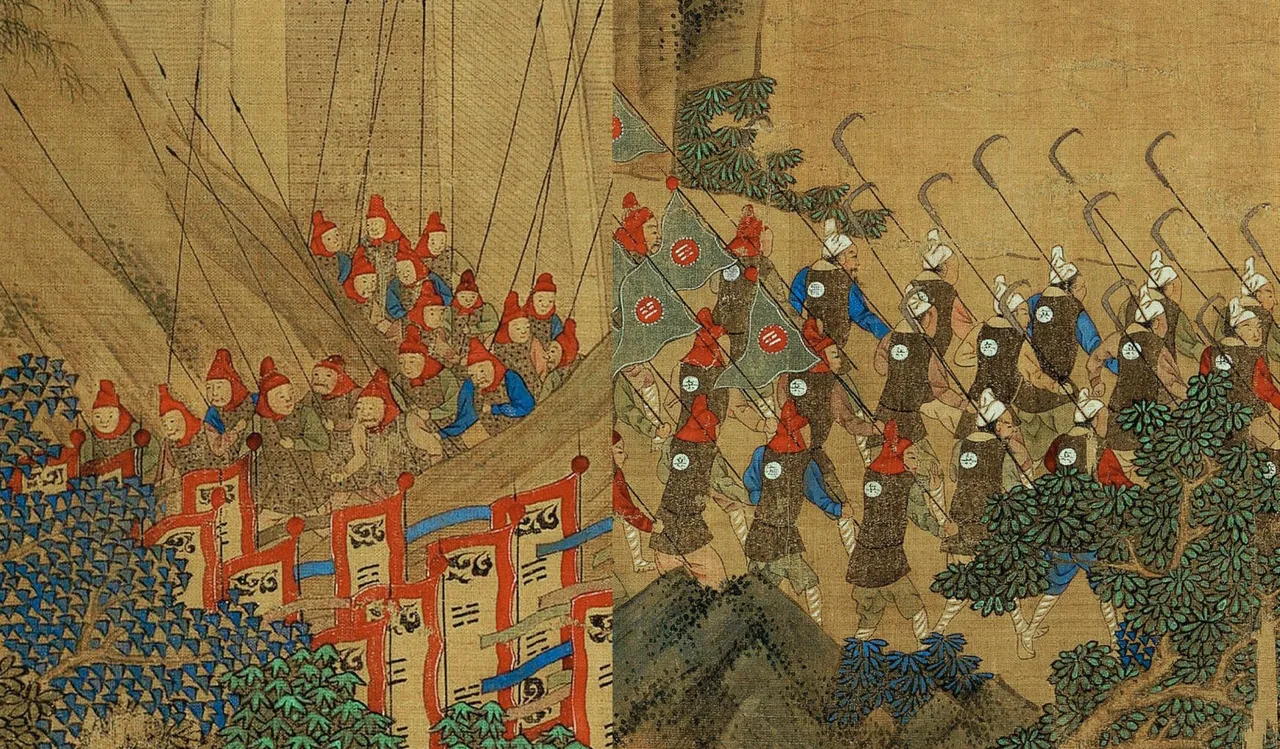
Behind this grand show, thirty years of peace had rotted the army from within. Earlier frontier troops held tough seasonal drills. Under the Zhengtong reign, corrupt officers used soldiers as unpaid builders to haul bricks for grand houses and dig city canals. Rich youths paid poor drifters to stand in at roll call. Real weapon drills stopped, and army warhorses starved inside neglected stables.
At the same time, the throne lost its key civilian checks. After Grand Empress Dowager Zhang and veteran statesmen like Yang Shiqi died, no strong minister stayed at court to hold back royal whims. Wang Zhen used his childhood bond with Zhu Qizhen to steer palace decrees and key posts. Hungry for war glory, the young emperor launched a rash march without listening to dissent.
| Assessment Category | Xuanzong Reign (1435 CE) | Zhengtong Reign Mobilization (July 1449 CE) | Oirat Host Under Esen (July 1449 CE) |
|---|---|---|---|
| Capital Field Strength | ~220,000 nominal; veteran officers; regular field drills | ~200,000 nominal; over half diverted to private labor; uncoordinated | 30,000–50,000 mobile cavalry; skilled in skirmishing and mounted archery |
| Firearms and Tactics | Integrated firearm carts, pikemen, and screening horsemen | Large inventory of bronze firearms; chaotic powder logistics | Few firearms; reliance on composite recurve bows, lances, and captured mail |
| Command System | Emperor guided by veteran civil ministers and field commanders | Grand Eunuch Wang Zhen wields absolute operational veto | Unified military command under Esen; seasoned frontier tacticians |
| Logistics and Supply Lines | Secured by North China granaries and transport canals | Two-day hasty muster; undefined supply depots; heavy luxury luggage | Pastoral foraging and remount strings; minimal supply line dependence |
02. Short-Circuiting Power: Factional Breakdown and the Lost Veto
When Emperor Taizu of Ming (Emperor Taizu of Ming) removed the chancellor's post, he built a three-way balance at court. The Grand Secretariat drafted decrees, the Six Ministries carried them out, and the Directorate of Ceremonial stamped palace papers. Yet this fragile balance broke down whenever a young emperor let a Palace Attendant rule above the law.
In July 1449 CE, frontier trade talks fell apart. Esen led swift horse raids across the border and overran outposts near Xuanfu and Datong. Sensing grave danger, Minister of War Kuang Ye and Minister of Revenue Wang Zuo urged the emperor to guard mountain forts and use a scorched-earth defence to starve the raiders. Wang Zhen shouted down these veteran officials. He used royal backing to crush court protests and push a sudden march north.
The table below shows how power fractured across court and army ranks:
| Power Group | Basis of Legitimacy | Military Command Authority | Fiscal and Logistical Control | Intelligence and Strategic Evaluation | Root Cause of Institutional Failure |
|---|---|---|---|---|---|
| Inner Court Axis (Zhu Qizhen / Wang Zhen) | Absolute sovereign authority; the Directorate of Ceremonial and Embroidered Uniform Guard | Bypassed the Five Chief Military Commissions and War Ministry to direct operations | Commandeered state transports; diverted army draft animals for private baggage | Relied on flattering eunuch couriers; suppressed reports of frontline defeats | Sovereign status shielded private eunuch whims; practical military warnings were treated as treason |
| Civil Bureaucracy (Minister of War Kuang Ye, Minister of Revenue Wang Zuo) | Confucian administrative mandate and codified state statutes | Maintained troop muster rolls; lacked battlefield operational authority | Oversaw the imperial granaries; powerless against erratic forced marches | Received official courier dispatches; understood frontier realities without access to the emperor | Lacked constitutional power to refuse imperial decrees; accompanied the army as silent captives |
| Hereditary Nobility (Duke of Ying Zhang Fu, Duke of Cheng Zhu Yong) | Hereditary Succession and martial rank from founding wars | Commander-in-chief and field titles stripped of real power by eunuchs | Controlled private landed estates; depended on regular field commissariat | Possessed seasoned combat instincts; recognized terrain traps but feared eunuch retaliation | Intimidated by the Inner Court; conditioned to total obedience, staying silent during crises |
| Frontier Garrisons (Datong and Xuanfu Regional Commanders) | Regional guard system holding defensive mountain passes | Stationed inside fixed garrisons; tactical mobility hindered by eunuch inspectors | Depended on annual grain shipments; local stocks consumed early in the raids | First to face the assault; courier lines choked off by retreat and eunuch censorship | Fragmented frontier commands; garrisons were destroyed one by one in isolation |
Wang Zhen forced senior officials and noble lords to join the royal train. Instead of a tight war machine, the host marched north like a slow, clumsy court parade.
03. Chronology of Collapse: From the Gates of Beijing to the Slaughter at Tumu
Four weeks of heavy rain, mixed orders, and broken grain lines shattered the Ming army before the main fight even began.
Phase One: Reckless Mobilization and Logistical Failure (July 17 – August 1, 1449)
- July 15: Urgent border riders reached Beijing with news of raids. Wang Zhen pushed Zhu Qizhen to lead an army north in person.
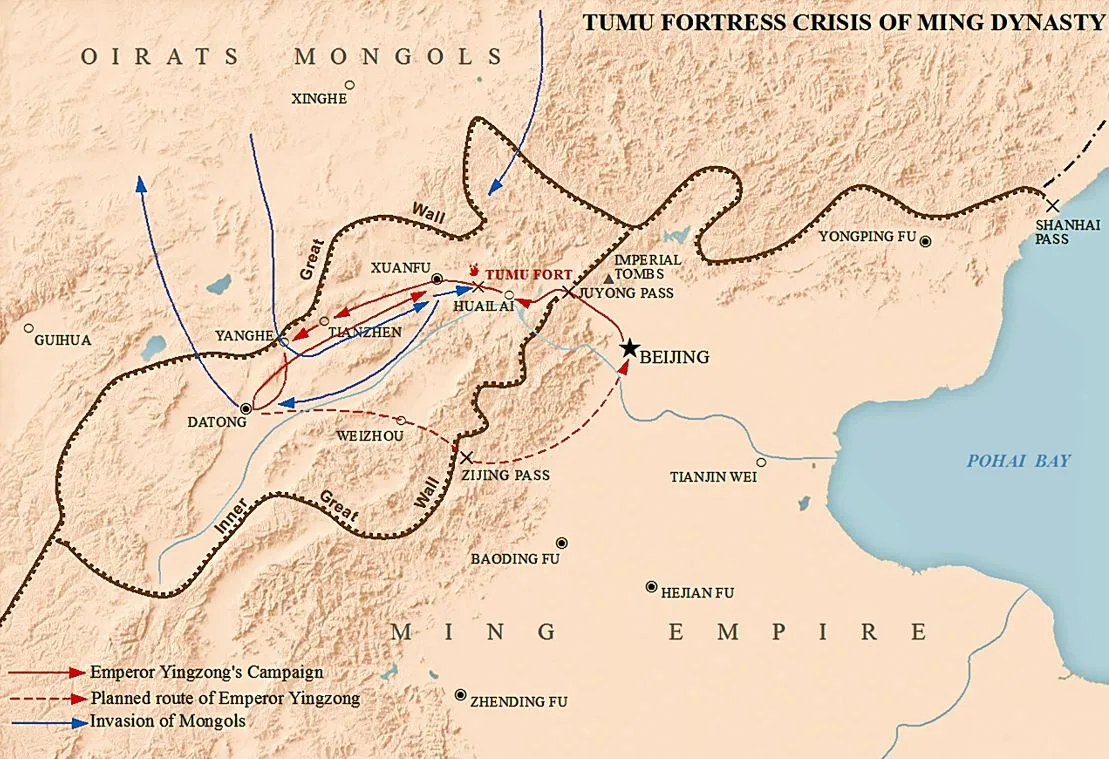
- July 17: The rushed column exited Juyong Pass barely two days after the edict. It carried no forward grain depots or scout screens, while Wang Zhen forced weeping ministers to kneel in cold mud.
- July 19–28: Heavy summer storms turned dirt roads into deep mud pits. Supply carts stalled, rations ran short, and hungry troops deserted long before spotting enemy riders.
- August 1: The host reached Datong past dead Ming scouts. Reports soon arrived that Deputy Regional Commander Song Ying and Zhu Mian had lost their troops at Yanghe, scaring Wang Zhen into ordering an immediate retreat.
Phase Two: Countermanded Routes and Rearguard Destruction (August 2 – August 13, 1449)
- August 2–3: Seasoned generals urged heading south through Zijing Pass along safe grain roads. Wang Zhen reversed that plan and marched 200,000 tired troops back toward Xuanfu so soldiers would not trample his private farms in Yuxian.
- August 10: Swift Oirat riders harried the flanks, cut off stragglers, and burned supply wagons. Starving imperial troops limped back into Xuanfu in broken order.
- August 13: Steppe horsemen wiped out the rear guard under General Wu Kezhong. The court then sent Duke of Cheng Zhu Yong and Xue Shou with 30,000 horsemen, who rode blind into an ambush at Yao'erling and fell to the last man.
Phase Three: The Waterless Plateau and the Panic at Tumu (August 14 – August 15, 1449)
- August 14: Unwilling to leave behind one thousand carts of private goods, Wang Zhen halted twenty miles short of Huailai. The parched army made camp on dry high ground at Tumu. Wells held no water, and enemy riders blocked the lone river two miles south.
- Dawn, August 15: Direct assaults against Ming cannon carts looked costly, so Esen pulled his riders back slightly. He sent fake peace envoys to lure imperial officers off their guard.
- Afternoon, August 15: Thinking the siege had lifted, Wang Zhen ordered thirsty soldiers to break camp and march toward the river. Men stampeded down the slope for water, letting Oirat cavalry charge through the open lines. Over fifty senior ministers fell in the slaughter, including Duke of Ying Zhang Fu, Kuang Ye, and Wang Zuo. General of the Guards Fan Zhong killed Wang Zhen with an iron mace before dying in battle, leaving Zhu Qizhen to surrender calmly amid the ruins.
04. Aftermath: Geopolitical Reorientation and Strategic Defensive Withdrawal
The capture of the Ming ruler echoed the shock at Manzikert in 1071 CE, when Romanos IV Diogenes fell into nomad hands after his ranks broke. At Tumu, the loss of the Three Capital Garrisons tore open northern defense, allowing Esen to ride straight toward Beijing.
Facing a siege, scared courtiers urged a southward relocation of the capital to the old Southern Capital at Nanjing. Left Vice Minister of War Yu Qian rejected retreat, warning that saving the dynasty outweighed any single monarch. The court raised Zhu Qiyu to the throne as the Jingtai Emperor and named Zhu Qizhen retired emperor. With Esen's hostage stripped of leverage, Yu Qian rallied fresh troops, lined Desheng Gate with bronze cannon, and beat back the siege.
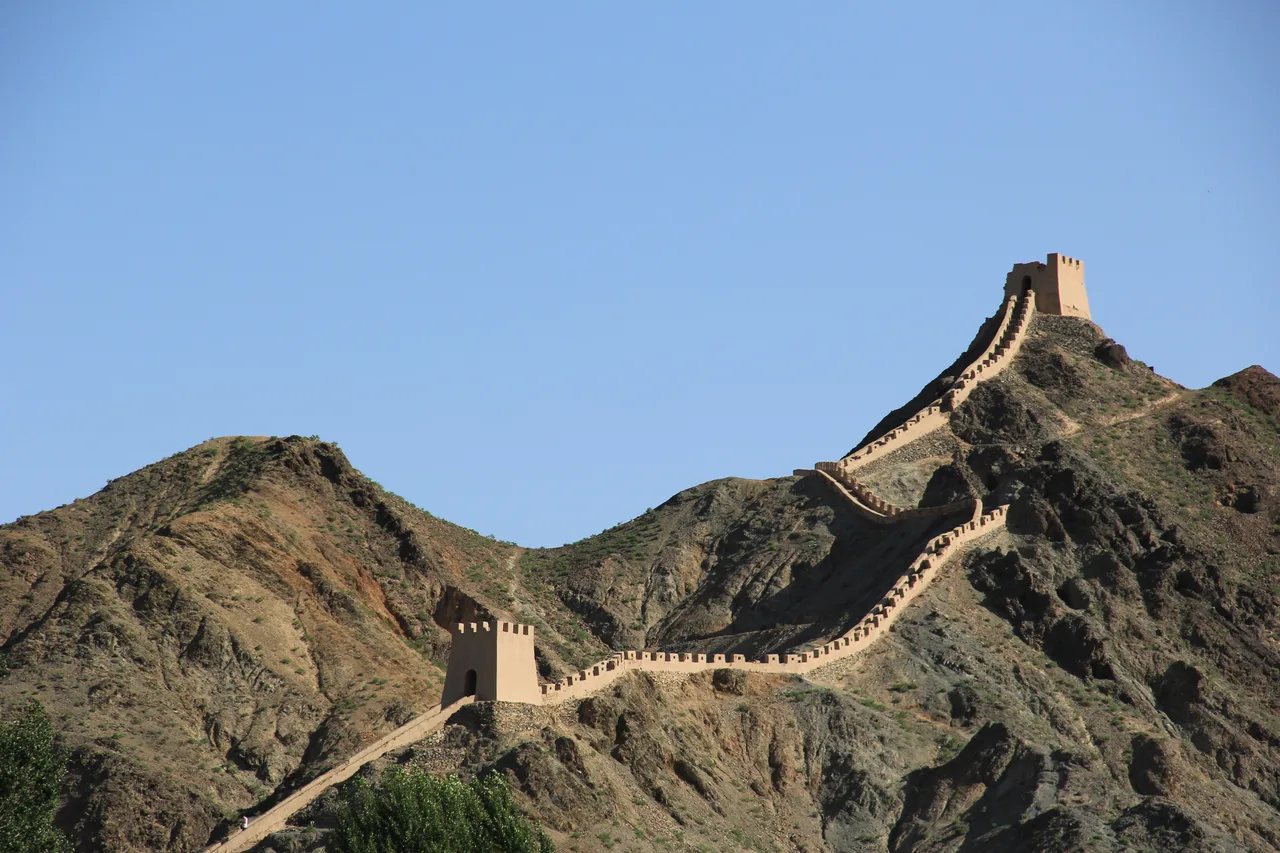
The shock of the Tumu Crisis reshaped Ming strategy for good. The court gave up deep steppe campaigns and poured state tax money into stone walls along northern mountain passes. To guard against future eunuch meddling, civil ministers took firm control of army planning and rebuilt the capital camps into unified Tuanying training corps.
In the end, this disaster proves a plain truth of state power. When royal favorites break legal checks and silence seasoned generals, neither huge numbers on paper nor modern guns can save an army from sudden ruin.
Primary Sources & Historical Bibliography
- *Zhang Tingyu et al., History of Ming (Ming Shi), Vol. 10 (Basic Annals: Emperor Yingzong I) and Vol. 170 (Biography of Yu Qian)*: Official documentation of the July–August 1449 imperial campaign, the Yao'erling ambush, and Yu Qian's defense of Beijing.
- *Imperial Compilers, Veritable Records of the Ming (Ming Shilu), Veritable Records of Emperor Yingzong, Vols. 180–182*: Daily logs of frontier dispatches, operational missteps under Wang Zhen, and casualty accounts from Tumu.
- *Liu Dingzhi, Fupi Lu (Record of Misfortune and Recovery); Yuan Bin, Beizheng Shiji (Affairs of the Northern Expedition)*: Eyewitness records from participants detailing the march, the water shortage, route reversals, and the emperor's capture.
- *Thomas Asbridge, The Crusades: The Authoritative History of the War for the Holy Land, 2010*: Comparative analysis of command collapse and imperial capture at the Battle of Manzikert (1071 CE).