Imperial Accession
Liu Heng is enthroned following the fall of the Lu clan, issuing amnesty decrees and rescinding collective guilt laws.
Western Han (西汉) · HISTORICAL EVENT
文景之治
The Rule of Wen and Jing (文景之治) was a celebrated golden age of tranquility and prosperity during the reigns of Emperor Wen (Liu Heng) and Emperor Jing (Liu Qi) of the Western Han Dynasty (180 BCE - 141 BCE). Following devastating turmoil during the Qin collapse and Chu-Han Contention, the Central Plains economy lay ruined with soaring inflation and rampant famine. To revitalize livelihood and secure dynastic stability, both monarchs strictly observed…
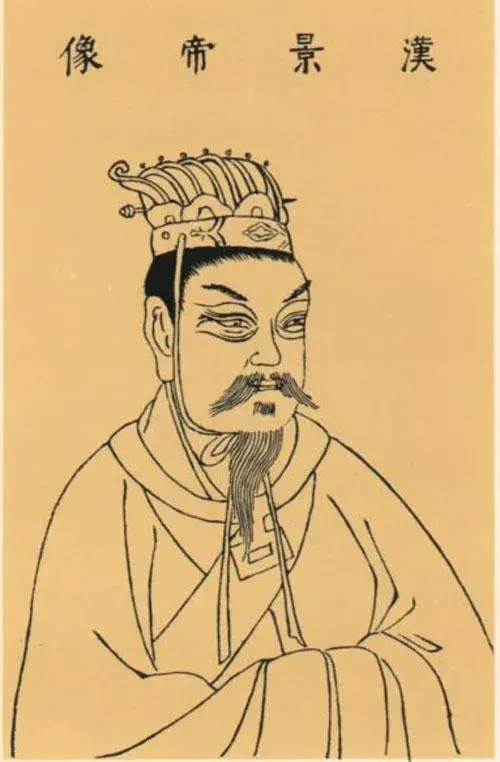
The Rule of Wen and Jing (文景之治) was a celebrated golden age of tranquility and prosperity during the reigns of Emperor Wen (Liu Heng) and Emperor Jing (Liu Qi) of the Western Han Dynasty (180 BCE - 141 BCE). Following devastating turmoil during the Qin collapse and Chu-Han Contention, the Central Plains economy lay ruined with soaring inflation and rampant famine. To revitalize livelihood and secure dynastic stability, both monarchs strictly observed Huang-Lao Daoist precepts of non-action (wuwei) and sustained recuperation. Economically, the court reduced agricultural taxes, institutionalized the lenient rate of one-thirtieth of the harvest, and lifted state prohibitions on mountains and lakes to stimulate private enterprise. Judicially, brutal corporal punishments, collective guilt, and speech repression were abolished in favor of leniency. Politically, Emperor Wen practiced strict personal frugality, while Emperor Jing enacted Chao Cuo's policy to weaken vassal feudatories and crushed the Rebellion of the Seven States through General Zhou Yafu, solidifying central imperial control. Spanning nearly four decades, this enlightened governance restored productivity, filled imperial granaries, and established an enduring paragon of benign monarchical rule that underwrote Emperor Wu's subsequent expansionist era.
Liu Heng is enthroned following the fall of the Lu clan, issuing amnesty decrees and rescinding collective guilt laws.
Emperor Wen performs the ceremonial plowing and decrees a fifty-percent reduction in nationwide field taxes.
Emperor Wen repeals the crime of slanderous speech, encouraging candid memorials from scholars and officials.
The court implements Chao Cuo's policy granting aristocratic ranks for grain deliveries, boosting frontier reserves.
Receiving Ti Ying's petition, Emperor Wen abolishes mutilating punishments and completely waives agricultural land taxes.
Emperor Wen dies leaving orders for simple burial; Crown Prince Liu Qi ascends as Emperor Jing.
Emperor Jing formally fixes the permanent field tax at one-thirtieth and curtails harsh bastinado strikes.
Seven vassal states rebel against containment; Grand Commandant Zhou Yafu crushes the coalition in three months.
Emperor Jing deprives vassal kings of political rule, appointing all regional magistrates from the central government.
Emperor Jing reduces bastinado strikes to one hundred, instituting strict rod dimensions to prevent fatal injuries.
Emperor Jing passes away with brimming imperial granaries; Crown Prince Liu Che ascends the throne as Emperor Wu.
The tyrannical collapse of the Qin Dynasty and the devastating Chu-Han Contention left China's socioeconomic landscape shattered. Fields lay fallow and populations dwindled drastically. When Emperor Gaozu (Liu Bang) established his capital at Chang'an, the imperial treasury was so impoverished that even four carriage horses of identical coat could not be found for the emperor, and ministers were compelled to ride in ox-drawn carts. Millions suffered in extreme destitution, with grain prices soaring to ten thousand coins per picul and famine driving populations to starvation.
Confronting this dire devastation, Emperor Gaozu adopted the guidance of seasoned counselors such as Zhang Liang and Cao Shen, inaugurating the national strategy of tranquil non-action and recuperation. In succeeding reigns under Emperor Hui and Empress Dowager Lu, the court upheld existing statutes, revoked the book prohibition decree, lightened corvee levies, and encouraged displaced refugees to return to agricultural labor. This approach granted a crucial respite that fostered the early seeds of agricultural recovery.
Nevertheless, beneath early economic recovery lay severe structural hazards: imperial in-laws meddled in governance, founding military veterans remained assertive, and regional Liu-clan vassal kings commanded private armies. Following Empress Lu's death in 180 BCE, imperial loyalists Zhou Bo and Chen Ping wiped out the Lu faction and enthroned Prince of Dai Liu Heng as Emperor Wen, terminating consort clan interference and stabilizing imperial continuity.
At Emperor Wen's accession, the empire faced severe perils at home and abroad. Domestically, veteran generals flaunted their contributions while regional kings ruled their fiefdoms with near-complete autonomy. Externally, the Xiongnu nomadic confederation launched recurrent cavalry incursions along the northern frontiers, setting beacon towers ablaze and driving border subjects into panic. At the grass-roots level, frequent droughts and locust swarms threatened fragile smallholder farming, while wealthy merchants monopolized lands and exploited peasants through usury.
At this critical historical juncture, young reformist scholars such as Jia Yi and Chao Cuo submitted famous policy memorials, notably the Discourse on Current Governance and Discourse on the Value of Grain. They pinpointed systemic crises: peasant vulnerability, the lack of national food reserves, and the perils of unruly vassal kingdoms. Moved by their strategic insights, Emperor Wen resolved to make agriculture the fundamental pillar of statecraft, inaugurating comprehensive recuperative policies centered on benevolence, fiscal frugality, and the suppression of unbridled exploitation.
In 180 BCE, Prince of Dai Liu Heng arrived in Chang'an from Jinyang. Facing influential founding military lords and intricate imperial politics, Emperor Wen displayed consummate political acumen. He first placed confidant Song Chang in charge of the imperial guards to secure palace security, subsequently ascending the throne in the Weiyang Palace. That same night, he proclaimed an empire-wide amnesty, distributed gifts of cloth and meat to the elderly and destitute, and exempted war-torn regions from annual taxes, rapidly winning over the hearts of the populace.
Toward meritorious statesmen like Zhou Bo, Chen Ping, and Guan Ying, Emperor Wen conferred generous enfeoffments while appointing Zhou Bo as Right Chancellor. As founding generals grew overbearing, Emperor Wen gently yet firmly resolved the tension. He encouraged feudatories to return to their private fiefs rather than lingering in the capital, leading by example by advising his own father-in-law to depart. Recognizing imperial resolve, Zhou Bo voluntarily surrendered his chancellor seal, allowing Emperor Wen to smoothly consolidate supreme political and military authority.
Toward regional vassal kings, Emperor Wen coupled generosity with decisive suppression. In 177 BCE, when Liu Xingju, the King of Jibei, rebelled during a northern border emergency, Emperor Wen deployed General Chai Wu to crush the uprising. In 174 BCE, when Liu Chang, the King of Huainan, conspired with external nomads, his plot was uncovered and he was banished to Shu. Despite crushing both insurrections, Emperor Wen exercised dynastic forbearance by re-enfeoffing their sons, demonstrating sovereign benevolence and securing imperial lineage solidarity.
Emperor Wen dismantled the oppressive legal legacy inherited from the Qin Dynasty. In 179 BCE, he issued a landmark decree repealing the ancient law of collective familial enslavement and execution. Under earlier statutes, an offender's parents, spouses, and extended relatives suffered enslavement or death. Emperor Wen declared that laws should guide virtue and suppress genuine guilt; once a perpetrator is condemned, innocent relatives should bear no punishment. This reform shielded countless innocents and laid the foundation for humane jurisprudence.
Simultaneously, Emperor Wen rescinded the tyrannical prohibition against slanderous speech. He noted that ancient sage kings erected critique pillars to welcome public guidance; forbidding free expression solely prevented rulers from learning of their failings. Rescinding this statute revitalized imperial political life, empowering scholars and officials to voice candid criticisms without fear of retribution.
To recruit capable administrative talents, Emperor Wen repeatedly commanded commanderies to recommend men of virtue, wisdom, and candid rectitude for personal imperial examinations. Celebrated thinkers like Jia Yi and Chao Cuo rose rapidly through these merit-based channels. Emperor Wen engaged in lengthy nocturnal discussions with Jia Yi in the Xuan Chamber, evaluating statecraft and transforming progressive ideas into official imperial policy.
Emperor Wen regarded farming as the essential bedrock of imperial prosperity, affirming that agriculture sustains all life. To instill widespread esteem for farming, he revived the ancient royal ceremonial plowing ritual in 178 BCE. Leading high ministers into the fields, Emperor Wen personally guided the plow while his empress tended the imperial sericulture, demonstrating absolute royal commitment to agrarian productivity.
Regarding fiscal burdens, Emperor Wen enacted the most generous tax reductions in imperial Chinese history. Western Han originally maintained a low tax rate of one-fifteenth of crop yields. In 178 BCE and 168 BCE, Emperor Wen halved this levy, reducing the land tax to a minimal one-thirtieth.
In 167 BCE, backed by swelling state reserves, Emperor Wen proclaimed a complete exemption from agricultural field taxes across the entire empire. This total tax exemption lasted for twelve consecutive years until the conclusion of his reign. Free from tributary burdens, peasant households retained their entire harvest, unleashing immense enthusiasm for land reclamation, intensive cultivation, and household capital accumulation.
In labor conscription, Emperor Wen reformed corvee demands from once every year to once every three years. This reduction allowed able-bodied laborers to remain on their homesteads during critical sowing and harvesting seasons, permanently eliminating the widespread abandonment of fertile farmland caused by relentless imperial mobilization.
During Emperor Wen's reign, reformist thinker Jia Yi presented his famous memorials on storage and statecraft, warning that abandoning agriculture for mercantile speculation would leave the empire vulnerable to unforeseen famines. Jia Yi urged the court to direct laborers back to agricultural cultivation to ensure abundant national grain reserves.
Subsequently, Chao Cuo presented the influential Discourse on the Value of Grain, proposing innovative economic incentives. He argued that precious metals cannot feed the hungry or clothe the shivering; only grain ensures dynastic survival. To resolve price swings and alleviate the financial strain of supplying distant garrisons, Chao Cuo advised selling honorary aristocratic titles and legal pardons in exchange for grain shipments.
Emperor Wen approved the policy, decreeing that commoners delivering designated quantities of grain to frontier granaries would receive official aristocratic titles up to Da Shu Zhang, while criminals could commute penalties with grain deliveries. This incentive system stimulated wealthy landowners to transport vast grain surpluses to border fortresses, instantly eliminating frontier logistical deficits and securing military provisions.
In 167 BCE, an event transformed imperial Chinese jurisprudence. Chunyu Yi, former director of the Qi granary and renowned physician, was accused of official malpractice and faced transfer to Chang'an to suffer bodily mutilation. Despairing that he had fathered five daughters but no sons to assist him, he lamented bitterly. His youngest daughter, Ti Ying, accompanied her father's transport cart across hundreds of miles to Chang'an, submitting an impassioned plea to Emperor Wen.
Ti Ying declared that once severed, a limb can never regrow, cutting off all pathways for an offender to reform and make amends. She offered to surrender herself into official servitude as a government bondservant to redeem her father's crime. Moved by her filial devotion and profound logic, Emperor Wen pardoned Chunyu Yi and decreed the total abolition of barbaric physical mutilations.
The emperor repealed ancient mutilating punishments: facial tattooing, nose-slitting, and foot-amputation. In their place, he instituted term penal servitude with hair-shaving and bastinado floggings. Although initial stroke allocations were overly harsh and caused accidental fatalities, this reform marked an epochal transition away from physical mutilation toward humane correctional labor and corporal discipline.
Emperor Wen practiced strict personal frugality throughout his twenty-three-year reign. He refused to enlarge palaces, expand imperial hunting parks, or purchase exotic beasts. When informed that constructing an observation terrace on Mount Li would cost one hundred pieces of gold—equivalent to the accumulated wealth of ten middle-class farming households—he cancelled the project immediately.
In daily life, Emperor Wen wore robes made of coarse silk and slept on simple bedding. His favored Consort Shen was forbidden from wearing floor-dragging gowns, and palace curtains lacked ornamental embroidery. On his deathbed, he issued a revolutionary last edict directing that his tomb at Baling be carved directly into the mountain without elevated mounds or precious metal funeral goods, while curtailing the national mourning duration to avoid disrupting agricultural labor and marital ceremonies.
In parallel with self-restraint, Emperor Wen pursued sweeping economic liberalization. He abolished imperial monopolies over mountains, waterways, and salt lakes, permitting ordinary commoners to enter state domains to cut timber, catch fish, burn charcoal, and extract minerals without punitive tolls.
Emperor Wen also suspended restrictions on private minting, allowing citizens to cast bronze coins freely to facilitate commerce. Although uncontrolled minting later caused inflation and monetary disparity, it stimulated liquidity during postwar recovery, fostering thriving artisan workshops and nationwide commercial networks.
Following Emperor Wen's death in 157 BCE, Crown Prince Liu Qi ascended the throne as Emperor Jing. Reverencing his mother Empress Dowager Dou, Emperor Jing preserved Huang-Lao non-action principles, maintaining stable state policies without abrupt disruptions. In 156 BCE, Emperor Jing formally re-established the agricultural field tax, permanently fixing the rate at one-thirtieth of the harvest. This exceptionally light tax became the enduring fiscal cornerstone of both Han Dynasties.
In penal reform, Emperor Jing remedied the unintended severity of Emperor Wen's flogging substitutes. In 156 BCE, he reduced bastinado strikes from five hundred to three hundred, and from three hundred to two hundred. In 144 BCE, he decreased the counts further to two hundred and one hundred strokes.
Furthermore, Emperor Jing promulgated the Statute on Rod Regulations, establishing strict standards for whipping implements: rods had to be five feet long and one inch wide with smooth edges. Blows were restricted strictly to the buttocks, barring hits to the back or vital organs, and floggers were prohibited from changing personnel mid-punishment. These humane measures transformed corporal punishment into a manageable penalty, preventing unnecessary deaths.
As economic prosperity peaked, regional vassal feudatories grew increasingly insubordinate. Liu Pi, the King of Wu, mined copper mountains, boiled sea brine for salt, and accumulated colossal private wealth while exempting his subjects from local taxes for decades. Kings of Chu and Zhao similarly maintained vast armies, directly threatening centralized imperial rule.
Recognizing the existential threat, Emperor Jing supported Imperial Censor Chao Cuo's strategic Memorial on Reducing the Feudatories, which argued that feudatories would revolt whether clipped or not, but immediate action would contain the destruction. In 154 BCE, Emperor Jing confiscated border commanderies from Zhao, Jiaoxi, and Chu. Led by Liu Pi, seven kingdoms revolted under the guise of executing Chao Cuo to purge the court, marching hundreds of thousands of troops westward toward Liang.
Emperor Jing initially executed Chao Cuo in a vain effort to appease the rebels, but Liu Pi proclaimed himself Eastern Emperor and pressed the siege of Suiyang. Realizing the rebellion aimed at imperial usurpation, Emperor Jing appointed Zhou Yafu as Grand Commandant to command the imperial relief expedition.
Zhou Yafu entrenched his army at Changyi behind unassailable ramparts, refusing direct confrontation while deploying mobile cavalry to sever the insurgent supply lines from Huainan. Starving and exhausted from futile assaults against Liang, the rebel coalition collapsed. Zhou Yafu unleashed a devastating counterstrike, routing the insurgent forces completely. Liu Pi was killed while fleeing to Dongyue, and the remaining six kings committed suicide or were executed, bringing the rebellion to a decisive close within three months.
Suppressing the Seven States provided the golden opportunity to permanently dismantle feudal autonomy. In 145 BCE, Emperor Jing issued an imperial decree stripping vassal kings of their civil, judicial, and fiscal administrative governance, ruling that kings could no longer manage their domains directly.
All regional magistrates and governors were henceforth appointed directly by the central imperial court. Feudal governmental structures were drastically downgraded, eliminating high offices modeled on the imperial bureaucracy, leaving only a centrally assigned chancellor to manage local affairs. Feudal kings were relegated to collecting designated tax dividends as private stipends, eliminating their capacity for regional armed secession.
Emperor Jing also partitioned large rebellious kingdoms into smaller commanderies directly controlled by the central government, permanently entrenching the centralized prefecture-and-county administrative system across the Chinese empire.
Toward the menacing northern Xiongnu nomadic confederation, Emperor Wen and Emperor Jing adopted a pragmatic defensive posture. Recognizing that Han cavalry lacked the equestrian resources for protracted steppe warfare, both rulers maintained marriage alliances (heqin), presenting gifts of silk, wine, and grain to deter devastating nomadic incursions.
Concurrently, defense preparations expanded steadily. Emperor Wen relocated inland settlers to Northern frontier outposts, providing farms, cattle, and tax exemptions so border households could farm in peace and defend strategic mountain passes during emergencies.
Emperor Jing prioritized breeding military warhorses, creating thirty-six state stud farms staffed by thirty thousand workers, raising over three hundred thousand horses across northern commanderies. Celebrated generals like Zhou Yafu, Li Guang, and Cheng Bushi guarded the frontier fortresses. These decades of strategic patience preserved domestic wealth and accumulated the vital resources required for Emperor Wu's subsequent offensives.
Toward the southern state of Nanyue, Emperor Wen pacified King Zhao Tuo through diplomatic finesse, repairing his ancestral shrines in the north and dispatching Lu Jia with imperial greetings. Touched by royal grace, Zhao Tuo renounced the title of emperor and declared fealty as a loyal vassal, securing prolonged peace along the southern borders.
Nearly forty years of recuperative administration fostered comprehensive socioeconomic prosperity. Agriculture thrived, granaries overflowed, and displaced refugees settled peacefully across reclaimed farmland. National finances became exceptionally buoyant: grain in state storehouses rotted from decade-long accumulation, while imperial coins numbered in the hundreds of millions, their carrying strings decaying under overwhelming weight. The subjugation of the Seven States eliminated feudal insubordination and solidified central governance.
The Rule of Wen and Jing established the foundational wealth and institutional maturity of the Western Han Dynasty. It completely overcame the widespread devastation following the Qin collapse, supplying inexhaustible financial and equestrian reserves that allowed Emperor Wu to wage expansive campaigns against the Xiongnu, open the Silk Road, and construct a robust centralized bureaucratic empire. The ideals of mild taxation, penal mercy, and sovereign frugality evolved into the eternal golden standard for enlightened Chinese statecraft.
Modern historians regard the Rule of Wen and Jing as an exemplary transformation from authoritarian Qin legalism to sustainable civilian statecraft. By limiting state exploitation and unleashing agrarian self-organization, the two monarchs unlocked tremendous societal productivity, formulating an enduring paradigm of stability that ushered Chinese civilization into the classical Han-Tang zenith.