Twenty-third day of the twelfth month, twenty-sixth year of the Zhizheng era of Yuan (February 3, 1366) | Age one | Born at Fenghuangtai, Yichun County, Yuanzhou, Jiangxi
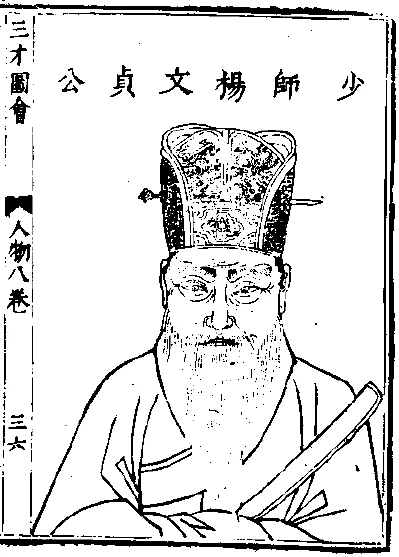
1366 CE–1444 CE
Senior Grand Secretary and politician of the Ming dynasty
Yang Shiqi
杨士奇
Yang Shiqi was regarded as the foremost of the “Three Yangs.” He served as a Grand Secretariat minister across five reigns from the Yongle Emperor through the early reign of Emperor Yingzong, helped sustain the Reign of the Ren and Xuan Emperors, recommended talented officials, and became an enduring example of a capable Ming chancellor-like statesman.
1366 CE–1444 CEMing Dynasty
PROFILE
Yang Shiqi was regarded as the foremost of the “Three Yangs.” He served as a Grand Secretariat minister across five reigns from the Yongle Emperor through the early reign of Emperor Yingzong, helped sustain the Reign of the Ren and Xuan Emperors, recommended talented officials, and became an enduring example of a capable Ming chancellor-like statesman.
- Other names
- Xiyang; Lord Yang the Junior Preceptor
- Courtesy name
- Shiqi
- Art name
- Dongli
- Period
- Ming
- Dynasty/Regime
- Ming
- Identity
- Senior Grand Secretary and politician of the Ming dynasty
- Ethnicity
- Not reliably established by historical sources
- Native place
- Taihe County, Ji'an Prefecture (present-day Chengjiang Town, Taihe County, Jiangxi)
- Date of birth
- 1365
- Place of birth
- Fenghuangtai, Yichun County, Yuanzhou, Jiangxi
- Date of death
- 1444
- Place of death
- Unknown
- Highest office
- See Biography and Major Activities
- Major achievements
- Foremost of the “Three Yangs”; served in the Grand Secretariat across five reigns from the Yongle Emperor to the Zhengtong Emperor; helped sustain the Reign of the Ren and Xuan Emperors, recommended capable officials, and became a model of conservative statecraft in the Ming.
LIFE TIMELINE
Age five | His father Yang Zijiang died; his mother Lady Chen remarried Luo Xing, assistant prefect of De'an, and Yang adopted the surname Luo with her
Age eight | During Luo family ancestral rites, made clay images to worship his Yang ancestors; Luo Xing praised his resolve and restored his surname Yang
Age twelve | His stepfather Luo Xing died while serving in exile on the Shaanxi frontier; Yang returned to De'an with his mother and began teaching to support her
Age nineteen | Traveled and studied in Hunan and Hubei, staying longest in Jiangxia; reportedly sat but failed the provincial examination
Age thirty-four | Recommended to court by Wang Shuying for historical talent and summoned as an instructor
Age thirty-five | Entered the Hanlin Academy as a compiler of the Veritable Records of the Hongwu Emperor; ranked first in a Ministry of Personnel examination and appointed deputy judicial officer in the household of the Prince of Wu
Age thirty-seven | After the Yongle Emperor took the throne, appointed Hanlin compiler; entered the Grand Secretariat within months and was promoted to Reader-in-waiting
Age thirty-nine | Selected as Left Companion of the Left Secretariat of the Heir Apparent and assigned to assist Crown Prince Zhu Gaochi
Age forty-two | Promoted to Left Expositor and concurrently Hanlin Reader-in-waiting; explained the gift-list affair involving Guangdong Provincial Commissioner Xu Qi, after which the emperor burned the list
Age forty-three | During the emperor’s northern tour, remained with Jian Yi and Huang Huai to assist the crown prince as regent
Age forty-six | When the emperor returned to Nanjing and asked about the regency, answered by emphasizing the crown prince’s filial devotion
Age forty-eight | Citing the precedent of Emperor Renzong of Song during a New Year’s Day eclipse, strongly urged cancellation of court congratulations; the emperor agreed
Age forty-nine | After the emperor returned from a northern campaign and the crown prince was late in greeting him, many East Palace officials were imprisoned; Yang initially escaped punishment but was then impeached and briefly imprisoned by the Embroidered Uniform Guard
Age fifty-one | Explained to the emperor the Prince of Han’s intentions in the succession struggle; the emperor removed two of the prince’s guard units
Age fifty-two | Promoted to Hanlin Academician while retaining previous duties
Age fifty-four | Made Grand Academician of the Left Secretariat of the Heir Apparent and concurrently Hanlin Academician
Age fifty-five | Imprisoned by the Embroidered Uniform Guard for shortcomings in assisting the crown prince; released after ten days
Age fifty-nine | After the Yongle Emperor died and Emperor Renzong ascended, promoted to Vice Minister of Rites and Grand Secretary of Huagai Hall; advanced to Junior Guardian and Junior Preceptor and granted the silver seal “Shengqian Jiumiu”
Age sixty | Concurrently Minister of War and entitled to three salaries, though he declined the war-ministry stipend; chief compiler of the Veritable Records of Emperor Taizong of Ming; when Renzong became gravely ill, ordered to draft the testamentary edict summoning the crown prince
Age sixty-one | After Emperor Xuanzong’s accession, chief compiler of the Veritable Records of Emperor Renzong of Ming; opposed attacking the Prince of Zhao and helped preserve Zhu Gaosui; advocated withdrawal from Jiaozhi, which Xuanzong accepted
Age sixty-three | Judged Minister of Personnel Guo Jin too lacking in prestige and effectively bypassed the ministry
Age sixty-five | During Xuanzong’s visit with the empress dowager to the imperial tombs, the empress dowager praised Yang for speaking frankly; according to tradition, Xuanzong once visited his home at night
Age seventy | Xuanzong died and the young Emperor Yingzong ascended; Yang, Yang Rong, and Yang Pu jointly assisted the child ruler, and Yang Shiqi was promoted to Junior Preceptor
Age seventy-three | Completion of the Veritable Records of the Xuande Emperor; promoted to Junior Preceptor and concurrently Minister of War
Age seventy-five | Yang Rong died; Yang Shiqi became the dominant figure in the Grand Secretariat
Age seventy-seven | Eunuch Wang Zhen increasingly monopolized power and Yang was unable to correct the situation; after the Grand Empress Dowager died, Wang’s influence grew further
Age seventy-nine | After his son Yang Ji’s offenses were exposed, Yang fell ill from grief and anger and died on the thirtieth day of the third month, April 2; posthumous name Wenzhen
BIOGRAPHY
Biography
Family Background and Early Life
Yang Shiqi was born on the twenty-third day of the twelfth month in the twenty-sixth year of the Yuan Zhizheng era, February 3, 1366, at Fenghuangtai in Yichun County, Yuanzhou, Jiangxi. His father Yang Zijiang died when he was one. His mother, Lady Chen, remarried Luo Xing, assistant prefect of De'an, and Yang took the surname Luo with her. As a child, during ancestral sacrifices in the Luo household, he made clay images and privately worshipped the ancestors of the Yang family. Luo Xing saw this and praised his determination, allowing him to restore the surname Yang. Luo Xing later offended powerful men, was exiled to frontier service in Shaanxi, and died there. Yang returned with his mother to De'an, where the household fell into poverty.
As a youth Yang began teaching students to support his mother. He traveled through Hunan and Hubei and stayed especially long in Jiangxia, present-day Wuhan, earning his livelihood through teaching while studying diligently. Scholars have inferred that he may have sat the provincial examination in 1384 and failed. The source presents this unsettled period as forming his habits of diligence, perseverance, tolerance, and careful judgment.
Entry into Government and the Yongle Reign
In 1399, the first year of Jianwen, Emperor Hui assembled scholars to compile the Veritable Records of the Hongwu Emperor. Wang Shuying recommended Yang for his historical learning. In the sixth month of the following year, Yang entered the Hanlin Academy as a compiler despite having no degree or previous official status. Minister of Personnel Zhang Dan examined the scholars of the historiography office and, after reading Yang’s paper, remarked, “此非经生言也.” He ranked Yang first and appointed him deputy judicial officer in the household of the Prince of Wu while retaining him in the compilation office.
In 1402 the Prince of Yan, Zhu Di, won the Jingnan Campaign and became the Yongle Emperor. Yang accepted the new regime, was appointed Hanlin compiler, entered the Grand Secretariat within several months to participate in confidential affairs, and was promoted to Hanlin Reader-in-waiting. In 1404 the Yongle Emperor selected officials for the Eastern Palace and appointed Yang as Left Companion of the Left Secretariat of the Heir Apparent to aid Crown Prince Zhu Gaochi. In 1407 Yang became Left Expositor while retaining his Hanlin post. He was skilled at explaining the Book of Changes and won the emperor’s appreciation.
Yang was extremely cautious in office and never discussed public business after returning home, not even with close relatives. Before the emperor he behaved respectfully, answered skillfully, and his advice often struck the point. When others made mistakes, he often tried to conceal or explain them. In the winter of 1407, Guangdong Provincial Commissioner Xu Qi came to the capital offering incense and brought local products for gifts to senior ministers. Inspecting officials discovered the gifts and presented a list of intended recipients. Seeing that Yang’s name was absent, the emperor summoned him privately. Yang explained that when Xu originally left for Guangdong, many officials had composed farewell poetry and prose, but Yang had been ill and had not participated. Therefore his name was absent; moreover, it was not even known whether the others had accepted the minor gifts, which likely carried no improper intent. The Yongle Emperor’s suspicion disappeared, and he ordered the list burned and ended the investigation.
In 1408 the emperor toured north and left Yang, Jian Yi, and Huang Huai in the capital to assist the crown prince in governing. Zhu Gaochi enjoyed literature, and the court lecturer Wang Ruyu taught him methods of poetry. Yang advised instead that the prince should devote attention to the Six Classics and, in leisure, read imperial edicts of the Former and Later Han, because poetry was only a minor art and not sufficient as serious learning. The prince agreed.
The Prince of Han and the Succession Struggle
During the Yongle Emperor’s uprising, the Prince of Han Zhu Gaoxu had fought with distinction, and the emperor had once promised to make him heir after victory. After the Jingnan Campaign, however, the eldest son Zhu Gaochi became crown prince. Zhu Gaoxu resented the decision. The emperor also favored his younger son Zhu Gaosui, Prince of Zhao, and the two princes joined in undermining the heir apparent. Yang, as an Eastern Palace official, stood at the center of the dispute and adopted a flexible but steady strategy.
In 1411 the Yongle Emperor returned to Nanjing and asked Yang about the crown prince’s regency. Rather than directly defend the prince on every disputed point, Yang emphasized his benevolence and filial devotion, saying that he personally inspected sacrificial offerings and vessels whenever ancestral rites were involved and adding that the prince was naturally intelligent, recognized his own faults, corrected them when known, cared for people, and would not betray the emperor’s trust. The emperor was pleased.
In 1414, after returning from a northern campaign, the emperor became furious because the crown prince was late in greeting him and imprisoned many East Palace officials, including Huang Huai. Yang arrived later and at first escaped punishment. Asked about the prince, he kowtowed and said that the prince remained as filial as before and that failures in the greeting arrangements were the fault of the officials serving him. The emperor’s anger eased. Other ministers then impeached Yang for being uniquely spared, and he was sent to the prison of the Embroidered Uniform Guard, though he was soon released.
In 1416, after the emperor learned of renewed succession ambitions by the Prince of Han, he first asked Jian Yi, who did not answer, and then Yang. Yang replied that he and Jian both served the Eastern Palace and outsiders therefore did not discuss the prince’s affairs with them, but noted that Zhu Gaoxu had twice been ordered to his fief and refused to go and now, on learning of the planned transfer of the capital, immediately asked to remain in Nanjing. Yang urged the emperor to consider the prince’s real intentions. Within days the emperor learned the details and removed two of the Prince of Han’s guard units, settling him at Le'an.
Yang was promoted to Hanlin Academician in 1417 and became Grand Academician of the Left Secretariat of the Heir Apparent in 1419 while retaining his Hanlin appointment. In 1420 he was again implicated for deficiencies in assisting the crown prince and imprisoned by the Embroidered Uniform Guard, but was released after ten days.
The Reign of the Ren and Xuan Emperors
In 1424 the Yongle Emperor died and Crown Prince Zhu Gaochi became Emperor Renzong. The new emperor immediately promoted Yang to Vice Minister of Rites and Grand Secretary of Huagai Hall. Renzong told Jian Yi and Xia Yuanji, “The new Grand Secretary of Huagai Hall has come; he will certainly have upright words. Let us hear them together.” Yang at once pointed out that only two days after an amnesty edict reducing annual contributions, the Office of Firewood had transmitted an order requisitioning eight hundred thousand jin of dates, contradicting the earlier edict. Renzong immediately reduced the demand by half.
When the twenty-seven-day mourning period for the Yongle Emperor ended, Lü Zhen proposed that Renzong change into auspicious dress. Yang firmly opposed him. Lü rebuked Yang loudly, while Jian Yi attempted a compromise. The next day Renzong still appeared in plain cap and hemp mourning clothes. Among the court officials, only Yang and Duke of Ying Zhang Fu remained dressed according to the original mourning rules. Renzong said to those around him that with the imperial coffin still unburied, changing clothes was not something a minister should bear to propose and that Yang’s position was correct. Yang was subsequently promoted to Junior Guardian. Together with Yang Rong and Jin Youzi he received the silver seal “绳愆纠缪,” which authorized sealed remonstrances, and was soon advanced to Junior Preceptor.
Yang repeatedly corrected government policy during Renzong’s brief reign. Minister Li Qing proposed assigning surplus army horses to government offices and requiring annual quotas of foals. Yang objected that the court selected worthy men for office yet would use them to herd horses, valuing livestock over the scholar-official class. Renzong initially accepted Li Qing’s proposal. Yang remonstrated again, and the emperor changed his mind, produced a memorial from Shaanxi Surveillance Commissioner Chen Zhi arguing that horse raising was impractical, and ordered Yang to draft an edict ending the policy.
Renzong once wished to punish Censor Shu Zhongcheng because of an old grievance. Yang warned that after accession the emperor had proclaimed amnesty for those who had offended imperial wishes; punishing Shu would make the edict untrustworthy and frighten the officials. Renzong abandoned the idea. When Yu Qian, head of the Court of Judicial Review, and deputy head Yi Qian were punished for speaking out, Yang defended both and helped save them. When another minister memorialized that the empire had entered an age of great peace and most officials agreed, Yang alone said that although imperial beneficence extended throughout the realm, people exiled because of the Jingnan conflict had not all returned, the damage of war had not been repaired, and common people still worried about food and clothing. Several more years of recuperation were needed before true great peace could be claimed. Renzong agreed and lamented that although he sincerely hoped his ministers would correct him, only Yang had submitted five memorials while the others had said nothing. In the fourth month the emperor sent Yang a sealed letter praising his virtue and loyalty.
In 1425, the first year of Hongxi, Renzong became gravely ill and summoned Yang Shiqi, Jian Yi, Huang Huai, and Yang Rong to the Gate of Beneficent Thought. He ordered Yang Shiqi to draft the testamentary edict summoning Crown Prince Zhu Zhanji from Nanjing to return and ascend the throne.
Xuande Reign and Later Career
After Emperor Xuanzong ascended, Yang served as chief compiler of the Veritable Records of Emperor Renzong of Ming. In 1426 the Prince of Han Zhu Gaoxu rebelled, and Xuanzong personally led the campaign that suppressed him. On the return march, Vice Minister of Revenue Chen Shan proposed using the momentum to strike Zhangde and arrest the Prince of Zhao, Zhu Gaosui. Yang Rong supported the proposal, but Yang Shiqi strongly opposed it, arguing that accusations of rebellion required evidence and should not deceive Heaven, Earth, spirits, and men. The Taizong Emperor had three sons and the current emperor only two uncles; the guilty could not be pardoned, but the innocent should be treated generously. Yang Pu agreed. Xuanzong accepted this view and preserved the Prince of Zhao, later telling Yang that the prince’s survival was entirely due to him.
In the same year, Ming’s war in Jiaozhi, present-day Vietnam, had reached an impasse. Lê Lợi asked, falsely according to the source’s wording, that a descendant of the Trần house be installed. Xuanzong was weary of war and wished to accept. Duke of Ying Zhang Fu, Jian Yi, and others opposed this as weakness. Yang Shiqi and Yang Rong argued that caring for the people was not an action without justification and cited the Han abandonment of Zhuya Commandery as a precedent praised by history rather than an act of weakness. Xuanzong decided to give up Jiaozhi and stop the war, reducing annual military expenditure by a very large amount.
In 1430 Xuanzong accompanied the empress dowager to visit the imperial tombs. She told Yang that when the previous emperor had been crown prince, Yang alone dared speak frankly and the prince could accept his words, which was why matters had not gone wrong. She also urged Xuanzong to accept direct criticism. Yang replied that these were words of the empress dowager’s great virtue and hoped the emperor would remember them.
The source also records a blemish in Yang’s administration. In 1428 he judged Minister of Personnel Guo Jin to lack prestige and in practice bypassed the Ministry of Personnel, thereby opening greater space for private approaches and recommendations.
In 1435 Xuanzong died and Zhu Qizhen, Emperor Yingzong, ascended at the age of nine. Yang Shiqi, Yang Rong, and Yang Pu jointly assisted the child emperor, and Yang Shiqi was promoted to Junior Preceptor. In the early Zhengtong years Grand Empress Dowager Zhang, Empress Renzong, exercised regency, and the three Yangs cooperated in government, which remained relatively orderly. In 1438, after completion of the Veritable Records of the Xuande Emperor, Yang was promoted to Junior Preceptor and concurrently Minister of War.
Final Years and Death
Yang Rong died in 1440, leaving Yang Shiqi dominant in the Grand Secretariat. Eunuch Wang Zhen then began to monopolize power. Yang was already old and could not correct the situation. After the Grand Empress Dowager died in 1442, Wang’s influence increased and government deteriorated.
The source regards Yang’s greatest moral failure in old age as his indulgence of his son Yang Ji. Relying on his father’s power, Yang Ji bullied local people, seized property, committed violence, and killed people. Censors repeatedly impeached him. In 1444 Yang Ji’s offenses were exposed and he was imprisoned. Yang Shiqi fell ill from grief and anger and died on the thirtieth day of the third month, April 2, at age seventy-nine. He received the posthumous name Wenzhen.
Major Activities
Political Contributions
Yang served through several reigns, and the source summarizes his principal political contributions in five areas.
Supporting the crown prince and stabilizing the succession. During the Yongle era, the Prince of Han repeatedly attacked Crown Prince Zhu Gaochi politically. As an Eastern Palace official, Yang repeatedly defused crises through cautious and tactful explanations and contributed materially to Zhu Gaochi’s eventual peaceful accession.
Correcting government and helping create the Reign of the Ren and Xuan Emperors. Under Renzong and Xuanzong, Yang repeatedly remonstrated against administrative errors, including the requisition of dates, horse quotas imposed on officials, punishment of outspoken officials, and premature claims of great peace. The source treats these interventions as direct contributions to the celebrated governance of the period.
Advocating withdrawal from Jiaozhi. During the Xuande era Yang strongly supported abandoning Jiaozhi and ending the war, reducing suffering and saving very large annual military expenses. This represented a major adjustment in Ming external strategy.
Preserving the Prince of Zhao. After the rebellion of the Prince of Han in the first Xuande year, Yang opposed extending military punishment to the Prince of Zhao without evidence and thereby prevented further bloodshed within the imperial family.
Recommending talented men and maintaining established government. Yang was considered adept at identifying officials and is credited with recommending capable men such as Yu Qian, Zhou Chen, and Kuang Zhong, strengthening the administrative base of the Reign of the Ren and Xuan Emperors.
Literary Achievement
Yang Shiqi was a representative writer of the early Ming “cabinet style.” Because he handled Grand Secretariat affairs for decades, many imperial edicts and court documents passed through his hands. His prose and poetry were orderly, elegant, relaxed, and harmonious, and the source credits him with helping establish the cabinet style that influenced early Ming literature. His works included Dongli Wenji, Dongli Shiji, Sanchao Shengyu Lu, and Lidai Mingchen Zouyi.
Historiographical Contribution
Yang participated in or supervised the compilation of the Veritable Records of the Hongwu Emperor, Veritable Records of Emperor Taizong of Ming, Veritable Records of Emperor Renzong of Ming, and Veritable Records of Emperor Xuanzong of Ming, making an important contribution to the organization and preservation of historical material from the early Ming.
Relations with Contemporaries
Yang Shiqi, Yang Rong, and Yang Pu were collectively known as the “Three Yangs.” All were senior Grand Secretariat ministers who assisted multiple reigns and worked closely together, despite occasional policy disagreements. Yang also cooperated over many years with Jian Yi, Huang Huai, Jin Youzi, and other officials. On mourning ritual questions he took the same position as Duke of Ying Zhang Fu. He was politically opposed to the Prince of Han Zhu Gaoxu but handled the rivalry cautiously and avoided direct personal confrontation.
Personal Relations
Family
- Father: Yang Zijiang — died early
- Mother: Lady Chen — remarried Luo Xing after her husband’s death
- Stepfather: Luo Xing — assistant prefect of De'an; died while serving in exile on the Shaanxi frontier
- Son: Yang Ji — abused power locally and was imprisoned after his crimes were exposed
Friends and Colleagues
- Wang Shuying — recommended Yang Shiqi to the Hanlin Academy
- Zhang Dan — Minister of Personnel who ranked Yang first in an examination of historiography scholars
- Jian Yi — long-term colleague who joined Yang in assisting the crown prince’s regency
- Huang Huai — colleague in assisting the crown prince
- Yang Rong — one of the “Three Yangs”; long-term collaborator with occasional policy differences, including the Prince of Zhao affair
- Yang Pu — one of the “Three Yangs”; long-term collaborator
- Jin Youzi — colleague who shared the silver “绳愆纠缪” seal privilege
- Zhang Fu — Duke of Ying; agreed with Yang on issues including mourning ritual
Ruler–Subject Relations
- Yongle Emperor, Zhu Di — trusted Yang substantially but also imprisoned him on occasion
- Emperor Renzong of Ming, Zhu Gaochi — Yang’s ruler and formerly the crown prince he had assisted for many years; their relationship was especially close
- Emperor Xuanzong of Ming, Zhu Zhanji — relied heavily on Yang
- Emperor Yingzong of Ming, Zhu Qizhen — ascended as a child and was assisted by Yang and the other senior ministers
Conflicts
- Zhu Gaoxu, Prince of Han — unsuccessful rival for the succession; Yang analyzed his intentions for the Yongle Emperor
- Lü Zhen — Minister of Rites who repeatedly disputed Yang over mourning clothes, music, and related ritual questions
- Li Qing — minister whose horse-raising quota proposal Yang opposed
- Wang Zhen — eunuch who monopolized power during the Zhengtong era; Yang was unable to restrain him
Historical Assessment
Ming / Contemporary
- Emperor Renzong of Ming: “新华盖学士来,必有谠言,试共听之。” (History of Ming, “Biography of Yang Shiqi”)
- Emperor Xuanzong of Ming: “赵王之所以得以保全,都是您的功劳。” (History of Ming, “Biography of Yang Shiqi”)
- Empress Dowager Zhang, Empress Chengxiao Zhaohuanghou: “先帝在青宫,只有您敢于直言,先帝能够听从,所以诸事得以不败。” (History of Ming, “Biography of Yang Shiqi”)
- Feng Menglong, commenting on the Xu Qi gift-list affair: “此单一焚,而逻者丧气,省缙绅中许多祸,且使人主无疑大臣之心。所全甚大。无智名,实大智也,岂唯厚道!” (Zhijing)
Ming–Qing Transition
- Zha Jizuo’s Zuiwei Lu: “士奇以儒雅重望,历事四朝,为时名相。”
- Tan Qian’s Guoque: “三杨之贤,士奇为最。”
- Gu Yingtai’s Mingshi Jishi Benmo, discussing the Reign of the Ren and Xuan Emperors: “明有仁宣,犹周有成康。三杨辅政,功不可没。”
Qing Period
- Zhang Tingyu and other compilers of the History of Ming wrote: “士奇奉职甚谨,私居不言公事,虽至亲厚不得闻。在帝前,举止恭慎,善应对,言事辄中。” On his later years they added: “士奇晚年,子稷横虐乡里,侵暴杀人,言官交章劾稷。士奇亦以老疾乞致仕。”
- The History of Ming summary states: “仁宣之际,政在辅臣。三杨济美,士奇为冠。”
Modern and Contemporary
- Meng Sen’s lectures on Ming history state: “明之贤相,前有蹇义、夏原吉,后有杨士奇、杨荣、杨溥,而士奇尤为矫矫。”
- Frederick W. Mote, as cited in the Chinese edition of The Cambridge History of China: The Ming Dynasty, is represented in the source as regarding Yang Shiqi as one of the most capable politicians of the early Ming whose long influence from Yongle through Zhengtong contributed to institutional stability and administrative effectiveness.
- Ray Huang’s 1587, A Year of No Significance does not directly assess Yang but is cited in the source as treating the era of the Three Yangs as an important stage in the maturation of Ming civil government.
FIGURES ASSOCIATED WITH THIS DYNASTY
Bibliography
- Zhang Tingyu et al., History of Ming, vol. 148, “杨士奇传,” Zhonghua Book Company punctuated edition
- 明太宗实录, 明仁宗实录, and 明宣宗实录, Academia Sinica Institute of History and Philology edition
- Gu Yingtai, History of Ming纪事本末, Zhonghua Book Company
- Meng Sen, History of Ming讲义, Zhonghua Book Company
- Frederick W. Mote and Denis Twitchett, eds., The Cambridge History of China: The Ming Dynasty, Chinese edition published by China Social Sciences Press