Imperial Birth
Born on November 29 in Kunning Palace as the eldest son of Emperor Xuanzong; invested as crown prince the following February.
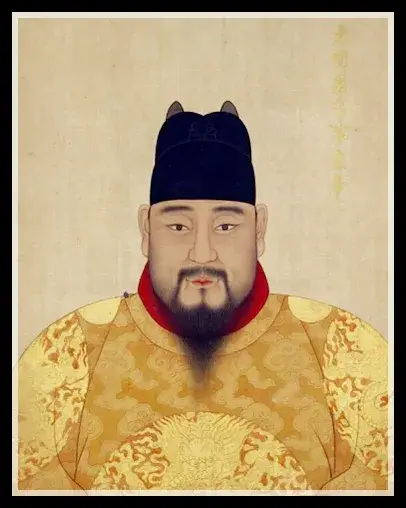
1427 CE–1464 CE
朱祁镇
Zhu Qizhen (朱祁镇, 1427–1464), the eldest son of Emperor Xuanzong (Zhu Zhanji) and Empress Xiaogongzhang (Empress Sun), was the sixth (reigned 1435–1449) and eighth (reigned 1457–1464) emperor of the Ming Dynasty. Invested as crown prince in infancy, he ascended the throne at age nine in 1435, adopting the era name Zhengtong. During his early minority, administrative authority rested with Grand Empress Dowager Zhang and the…
Zhu Qizhen (朱祁镇, 1427–1464), the eldest son of Emperor Xuanzong (Zhu Zhanji) and Empress Xiaogongzhang (Empress Sun), was the sixth (reigned 1435–1449) and eighth (reigned 1457–1464) emperor of the Ming Dynasty. Invested as crown prince in infancy, he ascended the throne at age nine in 1435, adopting the era name Zhengtong. During his early minority, administrative authority rested with Grand Empress Dowager Zhang and the Three Yangs (Yang Shiqi, Yang Rong, and Yang Pu), maintaining stability and prosperous governance. Following their deaths, Yingzong came under the influence of eunuch Wang Zhen, initiating an era of eunuch intervention in central affairs. In 1449, when the Oirat leader Esen invaded the northern frontier, Yingzong embarked on a poorly organized personal military campaign, suffering a catastrophic rout at Tumu Fortress where he was captured, an event known as the Tumu Crisis. The Ming court elevated his younger brother Zhu Qiyu (Emperor Daizong) to the throne and honored Yingzong as Retired Emperor. In captivity, Yingzong maintained imperial dignity and earned the respect of his captors. Repatriated in 1450 through diplomatic negotiations led by Yang Shan, he was placed under house arrest by Daizong in the Southern Palace for nearly seven years. In January 1457, general Shi Heng, scholar Xu Youzhen, and eunuch Cao Jixiang staged the Gate-Forcing Coup, restoring Yingzong to the throne under the era name Tianshun. Early in his second reign, he executed upright minister Yu Qian under the sway of conspirators, but subsequently purged the seditious cabals of Shi Heng and Cao Jixiang, placing full trust in grand secretary Li Xian to restore civil administration. He reorganized the capital garrison into the Twelve Integrated Camps, released Emperor Jianwen's long-imprisoned son Prince Jian, and on his deathbed officially abolished the brutal tradition of burying concubines alive with deceased emperors. Reigning for a cumulative twenty-two years, he passed away at age thirty-eight, receiving the temple name Yingzong and being interred at Yuling Mausoleum.
Born on November 29 in Kunning Palace as the eldest son of Emperor Xuanzong; invested as crown prince the following February.
Succeeded to the throne at age nine in January; governed under the regency of Grand Empress Dowager Zhang and the Three Yangs.
Formally abolished the temporary designation Xingzai for Beijing offices, establishing Beijing as the sole formal imperial capital.
Grand Empress Dowager Zhang passed away; the Three Yangs retired, leading to Yingzong's personal rule and eunuch Wang Zhen's rise.
Embarked on personal expedition in July; routed and captured at Tumu Fortress on September 1; Zhu Qiyu enthroned in Beijing.
Escorted back to Beijing in August following Yang Shan's diplomacy; immediately confined inside the Southern Palace by Daizong for seven years.
Daizong bribed ministers to depose Yingzong's eldest son Zhu Jianshen as heir, cutting down all trees in the Southern Palace.
Restored to the throne on January 17 following the coup led by Shi Heng; adopted era name Tianshun; executed Yu Qian.
Purged military leader Shi Heng; suppressed eunuch Cao Jixiang's palace insurrection; entrusted governance to virtuous Chancellor Li Xian.
Issued deathbed decree on February 22 permanently abolishing the human sacrifice of concubines; passed away at age thirty-eight.
Zhu Qizhen was born on November 29, 1427 in Kunning Palace within the Forbidden City of Beijing, the eldest son of Emperor Xuanzong and Empress Xiaogongzhang (then Noble Consort Sun). Born with an expansive brow and robust physical build, he was deeply cherished by his imperial father. In February 1428, when barely three months old, he was formally invested as Crown Prince, becoming the earliest confirmed heir apparent in Ming history. Emperor Xuanzong personally appointed Confucian scholars and palace attendants to initiate the young prince in foundational classical texts.
Among the attendants assigned to the Eastern Palace was eunuch Wang Zhen, who cultivated profound psychological influence over the young prince. Originally a minor Confucian instructor in Weizhou, Wang Zhen had voluntarily undergone castration to enter the palace, earning the respectful sobriquet "Teacher Wang" for his literacy. Xuanzong tasked him with overseeing the heir's daily education. Young Zhu Qizhen developed immense reverence for this solemn and articulate attendant, addressing him strictly as "Teacher" and cementing a bond that would later produce disastrous consequences for imperial governance.
On January 31, 1435, Emperor Xuanzong passed away unexpectedly in the Qianqing Palace at the age of thirty-eight, leaving a deathbed decree naming nine-year-old Zhu Qizhen as his successor, with instructions that all major state affairs should be reported to Empress Dowager Zhang. Due to the new sovereign's tender age, rumors circulated through the capital that senior ministers intended to enthrone the adult Prince of Xiang, Zhu Zhanshan, creating widespread political unease across the court.
Empress Dowager Zhang acted decisively to extinguish the crisis. On February 4, she dispatched eunuchs to secure the palace gates with military talismans, personally leading the nine-year-old prince into the Qianqing Palace. In the presence of Grand Secretaries Yang Shiqi, Yang Rong, and Yang Pu, alongside Duke of Yingguo Zhang Fu, she wept and announced: "This is your new sovereign!" The assembled ministers prostrated themselves in tears, shouting longevity acclamations and permanently extinguishing succession rumors.
On February 8, 1435, Zhu Qizhen ascended the imperial throne in the Hall of Fengtian, proclaiming the era name Zhengtong for the following year. Incapable of managing routine administration, the young monarch relied on the guidance of Grand Empress Dowager Zhang, who refused formal regency status and entrusted executive affairs to the seasoned Grand Secretaries known collectively as the "Three Yangs." Under their guidance, the Ming government maintained the fiscal restraint, agricultural recovery, and administrative clarity that had characterized the preceding Xuande era.
To accommodate the child emperor's stamina, the Three Yangs instituted a rule limiting morning audience business to eight urgent memorials, drafting preliminary recommendations for the Grand Empress Dowager's final review. Supported by veteran ministers such as Minister of Rites Hu Ying and Duke Zhang Fu, the court functioned smoothly. Meanwhile, Wang Zhen was appointed director of the Directorate of Ceremonial, cautiously observing court protocol under the watchful eye of the matriarch while quietly catering to the young emperor's appetite for martial spectacles and hunting exercises.
Grand Empress Dowager Zhang remained vigilant against eunuch aggrandizement. In 1437, she summoned the Three Yangs, Duke Zhang Fu, and Minister Hu Ying to her palace, instructing the boy emperor to obey these elder statesmen. She then summoned Wang Zhen, ordering female attendants to press swords against his throat while severely reproaching him for meddling in civil governance and threatening execution. Only after Emperor Xuan and the ministers knelt in earnest pleading did she spare his life, issuing a stern warning against future infractions.
However, moral admonitions failed to halt Wang Zhen's steady accumulation of influence. Exploiting Zhu Qizhen's personal devotion, Wang Zhen began intervening in administrative disputes. When Grand Secretaries Yang Shiqi and Yang Pu clashed over a legal case in Fujian, Wang Zhen presented a compromise to the Empress Dowager, winning her praise for efficiency. Gradually, whenever ministers faced deadlocked deliberations, they consulted Wang Zhen, enabling the Directorate of Ceremonial to penetrate the cabinet's confidential operations.
In 1440, senior Grand Secretary Yang Rong passed away during an inspection tour, weakening the cabinet's collective resolve. In November 1441, reconstruction of the three main palace halls was completed, and fourteen-year-old Emperor Xuan received congratulations in the Fengtian Hall, marking his formal assumption of personal rule. At the celebration banquet, Wang Zhen sat brazenly at the head of civil officials, comparing himself to the Duke of Zhou, while intimidated courtiers offered no opposition.
In October 1442, Grand Empress Dowager Zhang died. Shortly thereafter, Yang Shiqi retired following family scandals, and Yang Pu became incapacitated by advanced age. Deprived of seasoned mentors, sixteen-year-old Emperor Xuan assumed unconstrained power, allowing his reliance on Wang Zhen to expand unchecked. Wang Zhen persuaded the emperor that strict penal measures were essential to prevent scholar-officials from deceiving the throne, instigating purges against upright officials such as Hanlin Chancellor Li Shimian, Judicial Reviewer Xue Xuan, and Provincial Coordinator Yu Qian.
Encouraged by Wang Zhen, Emperor Xuan developed an obsession with military glory, seeking to emulate the conquests of Taizu and Chengzu. He ordered civil and military officials to attend archery reviews outside Chaoyang Gate, fostering an aggressive foreign policy. By the mid-1440s, the alliance between palace eunuchs and the Embroidered Uniform Guard created the first full-fledged eunuch dictatorship in Ming history, subverting the civil bureaucracy.
In May 1442, Emperor Xuan married Lady Qian, daughter of military officer Qian Gui. Empress Qian was gentle, frugal, and devoted, earning the sovereign's lifelong respect. Yet marital harmony could not arrest the decay of central authority, as the young monarch remained blind to mounting military crises along the northern frontier.
Beneath the apparent prosperity of the Zhengtong era, the Ming military system was fracturing. The hereditary garrison system (weisuo) established under Taizu suffered from meager rations, embezzlement by commanders, and rampant corruption. Senior officers converted regular troops into personal domestic servants, while abandoning weapons drills and military farming. Facing starvation, garrison soldiers deserted en masse, leaving coastal and inland units severely depleted.
In February 1445, Imperial Censor Wang Xian reported that coastal garrison officers embezzled rations, forcing soldiers into banditry and salt smuggling. Rather than reforming the system, the throne issued punitive decrees that accelerated flight, reducing the three elite capital training divisions and northern border garrisons to hollow shells.
Simultaneously, agrarian crises worsened as imperial princes, nobles, and eunuchs expropriated peasant lands, creating expansive private estates. Taxable acreage dropped by nearly half compared to the Hongwu era. Compounded by frequent droughts and floods, millions of dispossessed peasants were driven into vagrancy, stoking peasant rebellions across southeastern provinces.
In the southwest, Wang Zhen embroiled the empire in the protracted Luchuan Campaigns against rebellious chieftain Si Renfa. Between 1441 and 1449, Minister of War Wang Ji led three massive expeditions that exhausted the southern treasuries and resulted in tens of thousands of casualties. Although Si Renfa was defeated, the campaigns drained national reserves and stripped northern borders of mobile strike units.
Taking advantage of Ming overextension, the Oirat Mongols under Taishi Esen consolidated power across the northern steppe, absorbing the eastern Mongols and expanding toward the Liaodong and Gansu frontiers. Faced with this resurgent nomadic confederation, the Ming court adopted passive defensive measures, neglecting strategic preparations.
In December 1448, Esen dispatched an embassy of 2,500 horsemen to Beijing to present horses, falsely reporting 3,500 delegates to claim inflated gifts. Infuriated by the deception, Wang Zhen slashed horse valuations and rejected a proposed imperial marriage alliance. Feeling insulted, Esen launched a full-scale invasion of the northern frontier the following summer.
On July 11, 1449, Oirat forces invaded along multiple axes. Esen besieged Datong, while allied detachments pressed toward Xuanfu, Liaodong, and Gansu. Ming frontier forces under Song Ying were annihilated at Yanghe, and Datong faced imminent capture. Reports of the disaster sparked widespread terror across Beijing.
Urged on by Wang Zhen, twenty-two-year-old Emperor Xuan decided to personally lead a punitive expedition. Senior ministers, including Minister of Personnel Wang Zhi and Vice Minister of War Yu Qian, knelt before the throne to warn against abandoning central governance, but the headstrong emperor disregarded their appeals, appointing his younger brother Zhu Qiyu as regent and ordering an immediate march.
On July 16, without adequate strategic planning or logistical preparations, Emperor Xuan marched out of Desheng Gate at the head of two hundred thousand soldiers from the capital garrisons, accompanied by Wang Zhen, Duke Zhang Fu, and dozens of high-ranking ministers. Deprived of grain and marching along uncoordinated routes dictated by the militarily illiterate Wang Zhen, the vast army fell into confusion within days.
Torrential rains and muddy roads battered the troops after passing Juyong Pass, devastating morale. Upon reaching Datong on August 1, the army was confronted by fields strewn with the unburied corpses of Ming soldiers from the Yanghe defeat. Terrified by reports of Oirat cavalry strength, Wang Zhen abruptly ordered a general retreat.
Datong Vice Commander Guo Deng urged the emperor to withdraw through Zijing Pass to avoid pursuers along the Xuanfu route. Wang Zhen initially planned to divert the army through his hometown of Weizhou to display his grandeur, but fearing that hundreds of thousands of horses would trample his family crops, he reversed course and ordered the troops toward Xuanfu, squandering critical days.
Esen's cavalry pursued relentlessly. On August 7, Oirat rear-guards ambushed Ming forces near Xuanfu. Minister of War Kuang Ye begged the emperor to enter the pass with elite cavalry while infantry held the rear, but Wang Zhen suppressed the memorial. Successive detachments under Duke Zhu Yong and Marquis Xue Shou were ambushed and annihilated at Yao'erling, shattering the army's rear defenses.
On the evening of August 13, 1449, the exhausted Ming host reached Tumu Fortress, barely twenty li from the walled city of Huailai. Kuang Ye urged an immediate night march into Huailai, but Wang Zhen halted the entire army on the exposed plateau to await his personal baggage train of more than a thousand carts of treasure.
Tumu Fortress occupied a dry, elevated ridge devoid of water sources. Troops dug twenty feet into the earth without finding a single spring. Parched and surrounded under scorching heat, the army disintegrated over two days. On August 14, twenty thousand Oirat cavalry severed access to the nearby river, blockading the garrison in an inescapable death trap.
On the morning of August 15, Esen feigned a withdrawal and offered deceptive peace terms. Desperate for water, Ming soldiers broke formation and rushed down the ridge in utter chaos. The command structure collapsed entirely under the stampede.
Lying in ambush, Oirat cavalry charged the disordered ranks, slaughtering hundreds of thousands of defenseless troops. Duke Zhang Fu, Minister Kuang Ye, Minister Wang Zuo, and Grand Secretaries Cao Nai and Zhang Yi perished in the carnage. In the confusion, imperial bodyguard Fan Zhong struck Wang Zhen in the skull with an iron mace, ending the eunuch's life.
Realizing that escape was impossible, Emperor Xuan dismounted, straightened his robes, and sat serenely on a mound facing south. Intimidated by his majestic composure and ornate golden armor, Oirat soldiers refrained from harming him, taking him captive alive.
Esen was ecstatic, envisioning the restoration of Mongol supremacy. While several chieftains demanded the emperor's execution, Esen's younger brother Bayan Temür urged that the captive monarch be preserved as a political hostage to demand ransoms and force open frontier passes. Esen agreed, placing Emperor Xuan under Bayan Temür's honorable custody.
The Tumu Crisis destroyed the flower of the Ming military, wiping out two hundred thousand soldiers and dozens of senior ministers. The reigning Son of Heaven was captured, marking the pivotal turning point that ended the early Ming golden era and ushered in a century of defensive frontier warfare.
Throughout his captivity, Emperor Xuan was attended by two loyal companions: Embroidered Uniform Guard officer Yuan Bin and translator Ha Ming. Yuan Bin tended to the emperor through bitter steppe winters, warming his frozen feet with his own body and preserving imperial dignity in the harshest adversity.
News of the disaster plunged Beijing into panic, with some officials urging a retreat to Nanjing. Vice Minister of War Yu Qian denounced the proposal, rallying the court to defend the capital. On September 20, 1449, Regent Zhu Qiyu ascended the throne as Emperor Daizong (era name Jingtai), while Emperor Xuan was elevated to the honorific status of Retired Emperor, neutralizing Esen's leverage.
Esen escorted the captive emperor to Datong and Xuanfu, attempting to demand entrance. However, garrison commanders weeping on the ramparts refused entry, while Emperor Xuan secretly instructed defenders to hold their posts, refusing to compromise dynastic territory.
Frustrated, Esen invaded the capital in October, breaching Zijing Pass and encamping northwest of Beijing. Demanding enormous ransoms, Esen confronted Yu Qian's newly organized armies, who deployed heavy firearms outside the nine gates to shatter the Oirat assault. Defeated, Esen retreated to the northern steppe.
During the retreat, treacherous Ming eunuch Xi Ning urged Esen to install Emperor Xuan as a rival monarch in the northwest. Rejecting the treasonous scheme, Emperor Xuan coordinated with loyalists to arrange Xi Ning's capture and execution, removing a persistent danger.
Held in captivity at Black Mountain, Emperor Xuan impressed his captors with dignified serenity. His refined demeanor earned the deep affection of Bayan Temür, who supplied him with sheep and wine while fiercely shielding him from assassination plots. Even Esen's mother treated the emperor with maternal warmth.
By the spring of 1450, realizing that the captive emperor yielded no diplomatic concessions, Esen consented to peace negotiations. Despite Daizong's reluctance to welcome his predecessor home, Yu Qian insisted that dynastic honor required the emperor's repatriation, dispatching envoy Yang Shan to secure his return.
In August 1450, Ming envoy Yang Shan reached Esen's encampment, employing brilliant eloquence without official ransom funds to persuade Esen to release the Retired Emperor unconditionally. On August 28, Esen hosted a banquet and escorted Emperor Xuan southward, presenting him with a bow and armor, while Bayan Temür wept at their parting.
Reaching Beijing, Emperor Xuan entered without formal ceremonial reception, greeting Daizong in a private hall and declaring his intention to withdraw permanently from public affairs. However, Daizong promptly confined his elder brother inside the remote Southern Palace, locking the gates and maintaining round-the-clock surveillance by secret police.
Daizong treated his captive brother harshly, cutting palace provisions and forbidding court visits. Empress Qian, who had blinded one eye and injured her leg through continuous prayers for her husband's return, took up embroidery with palace ladies to sell for firewood and food.
In May 1452, Daizong bribed ministers to depose Emperor Xuan's son Zhu Jianshen as crown prince, elevating his own son Zhu Jianji. To prevent signaling, Daizong ordered all shade trees in the Southern Palace felled, leaving the compound exposed to scorching sun. When Zhu Jianji died shortly thereafter, succession tensions reached a boiling point.
In January 1457, as Daizong lay dying without an heir, conspirators led by general Shi Heng, scholar Xu Youzhen, and eunuch Cao Jixiang resolved to stage a coup. On the night of February 11, Shi Heng led armed retainers into the Forbidden City, ramming open the gates of the Southern Palace to escort Emperor Xuan to the throne.
At dawn on February 12, civil and military officials gathered for morning audience in the Fengtian Gate, stunned to find Emperor Xuan seated on the imperial throne. The sovereign declared his restoration, and ministers shouted longevity acclamations. The event was designated the Gate-Forcing Coup (Duomen zhi Bian), inaugurating the Tianshun era. Daizong was deposed and died shortly thereafter, being buried with princely rites at Jinshan.
To consolidate power, conspirators urged the execution of upright minister Yu Qian on trumped-up charges of plotting treason. Although Emperor Xuan initially hesitated, noting that "Yu Qian indeed rendered meritorious service," Xu Youzhen insisted that "without executing Yu Qian, the restoration lacks legitimacy," prompting the emperor to approve his public execution on February 16, 1457, leaving an indelible stain upon his historical legacy.
Following their success, the coup leaders turned on one another. Xu Youzhen was exiled, and Emperor Xuan banned references to the term "Gate-Forcing." In 1460, Shi Heng was arrested for corruption and died in prison. In July 1461, Cao Jixiang launched a desperate palace rebellion, which was crushed by imperial guards, leading to the execution of his entire clan.
Following the purge of conspirators, Emperor Xuan placed full trust in Grand Secretary Li Xian to manage civil administration. The emperor rose at dawn to review memorials, held daily audiences, and discussed policy intimately with Li Xian in the Wenhua Hall, revitalizing central governance.
He reformed the capital military structure, creating the Twelve Integrated Camps (Tuanying) from elite garrison troops to ensure continuous tactical training and mobile combat readiness under unified civil and military supervision.
He demonstrated personal compassion by releasing Prince Jian (Zhu Wengui), son of the deposed Emperor Jianwen, who had been imprisoned in Fengyang for fifty-five years since infancy, granting him private estates and freedom.
In fiscal administration, Emperor Xuan granted extensive tax remissions to drought- and flood-stricken provinces along the Yellow and Huai rivers, resettling displaced vagrants on public lands with farming implements and draft oxen.
He instituted periodic judicial reviews every five years, dispatching censors to re-examine capital sentences across the provinces, resulting in the pardoning of thousands of wrongfully convicted individuals.
Along the northern border, the emperor reinforced frontier fortresses and took advantage of Esen's death to rebuild defense barriers, restoring peaceful border trade across Datong and Xuanfu.
On February 22, 1464, lying fatally ill in Qianqing Palace, Emperor Xuan issued a historic decree abolishing the ancient practice of sacrificing concubines upon an emperor's death, declaring: "To sacrifice living human beings is something I cannot bear; this practice must end with me!"
This decree permanently ended centuries of horrific palace sacrifices in China. Emperor Xuan passed away the following day at age thirty-eight, receiving the temple name Yingzong and being interred at Yuling Mausoleum.
In 1441, Emperor Xuan officially abolished the temporary label Xingzai ("temporary imperial residence") from all Beijing administrative ministries, designating Beijing as the sole formal imperial capital and relegating Nanjing to auxiliary secondary status, completing the dynastic relocation initiated by Emperor Chengzu.
He prioritized the hydraulic maintenance of the Grand Canal, clearing silting along the Huitong River in Shandong to guarantee the annual transport of millions of bushels of southern grain to the capital garrisons.
He standardized imperial clan stipends, punished noble lawlessness, and patronized Confucian institutions, refurbishing the Confucius Temple at Qufu to strengthen cultural cohesion.
Zhu Qizhen's life reflected a complex sovereign torn between personal virtue and political adversity. Deeply devoted to his empress, loyal to his faithful guards, and humane enough to abolish funeral sacrifices, he was nevertheless guilty of trusting corrupt eunuchs in his youth and executing upright ministers upon his restoration, embodying the tragic paradox of imperial power.
FIGURES ASSOCIATED WITH THIS DYNASTY