TL;DR · Core Takeaways
- The Imperial Control Balance: Ming and Qing rulers did not hate incoming silver. Instead, they feared lawless coasts that fed local gangs and escaped palace checks. Channeling trade through one official hub helped the court tax merchants safely.
- Yuegang Cut Enforcement Costs: Harsh bans under the Jiajing Emperor triggered coastal wars and pushed up military expenditure. Opening Crescent Port / Yuegang in 1567 legalized outward trade, taxed cargo, and brought in foreign bullion for Zhang Juzheng's Single Whip Law.
- The Thirteen Factories as Palace Cash Siphons: Keeping Western ships at Guangzhou kept foreign guns away from key grain routes. The Imperial Household Department used the Superintendent of Maritime Customs to steer trade duties and gifts into the emperor's private purse.
Historical Coordinates at a Glance
- Chinese Coordinates: The Longqing Emperor of the Ming Dynasty opened Crescent Port / Yuegang in Zhangzhou to licensed merchant ships in 1567 (Longqing Opening). Emperor Gaozong of Qing set up the Single-Port Trade Policy at Guangzhou in 1757, which lasted until the 1842 Treaty of Nanking ended the Cohong monopoly.
- Western Coordinates: Spain opened the Manila Galleon trade route across the Pacific in 1565. The English East India Company won its royal charter in 1600 and expanded its reach in South Asia after 1757.
01. The False Paradox of Imperial Maritime Bans: Nominal Edicts Versus Licensed Enclaves
Ming and Qing dynastic laws seem to clash on the surface. Early emperors issued strict bans. They decreed that no private boat could enter the sea, and they punished secret shipbuilders as pirates. Yet large ships carrying silver ingots, spices, silk, and tea still docked at Crescent Port / Yuegang, Macao, and the Thirteen Factories of Guangzhou.
Many writers view this gap as a swing between total isolation and weak compromise. Looked at through state finance, however, the throne never rejected silver gains. It rejected lawless shorelines where people traded without paying taxes, gathered outside official rolls, and bought foreign guns.
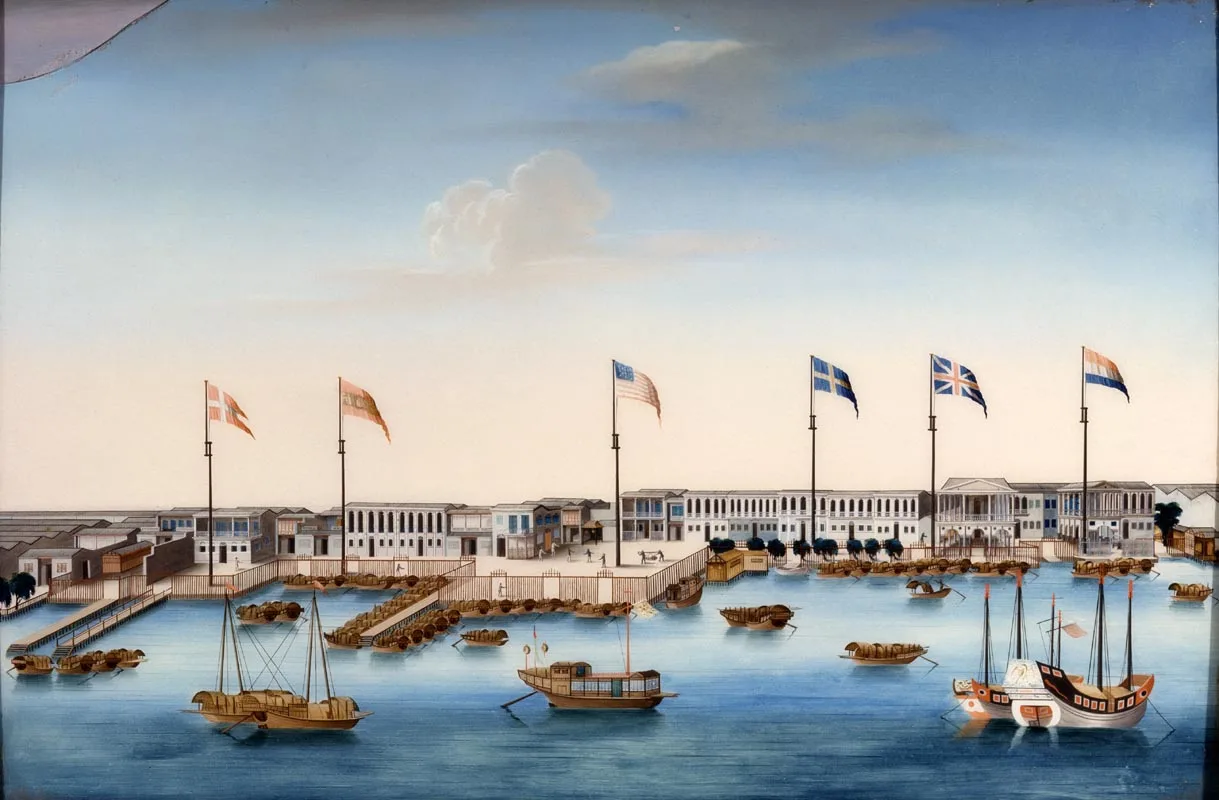
Strict paper bans and small open ports worked together. Emperors and the Ministry of Revenue wanted one safe gate. Soldiers could guard it, local geography could wall it off, and imperial inspectors could check it directly.
02. The Longqing Opening: Replacing Smugglers with Licensed Shippers
Household Budgets and Smuggling Networks
Coastal Fujian and Zhejiang feature steep hills and poor soil. In Zhangzhou and Quanzhou, farming alone could not feed the population, so families took to the sea.
Zhu Yuanzhang banned private maritime trade early on, allowing foreign trade only through tributary visits. This ban created huge price gaps across the water. Fishermen and small traders quickly turned into armed smugglers. During the Jiajing reign, merchant leaders like Wang Zhi joined forces with Wa sailors and local kin groups to run armed fleets. Costly coastal defense ate up the state budget, but harsh raids by the local official only made things worse. When Censor-in-chief and Grand Coordinator Zhu Wan blocked harbors and killed smugglers, rich local families drove him to take his own life. The sea bans backfired, naval costs drained provincial funds, and tax income fell away.
Total maritime ban cuts off local coastal livelihoods
  -> Border price gulf creates lucrative armed smuggling rings
  -> Imperial military expenditure surges while coastal garrisons falter
  -> Grand Coordinators advocate licensing over blanket prohibition
  -> Yuegang opens to issue official permits and collect local duties
Central Treasury Pressures and the Silver Inflow
Stopping coastal unrest cost the state millions of silver taels in the mid-sixteenth century. In 1567, Fujian Grand Coordinator Tu Zemin asked the throne to lift the ban on merchant sailings from Crescent Port / Yuegang in Haicheng County. The court placed the port under an Associate Administrator for Coastal Defense, replacing total bans with a quota system.
Officials gave out a set number of sea permits each year. They collected fees for permits and gathered customs taxes when ships returned. Officers checked ship size to collect hull fees and charged percentage duties on incoming goods.
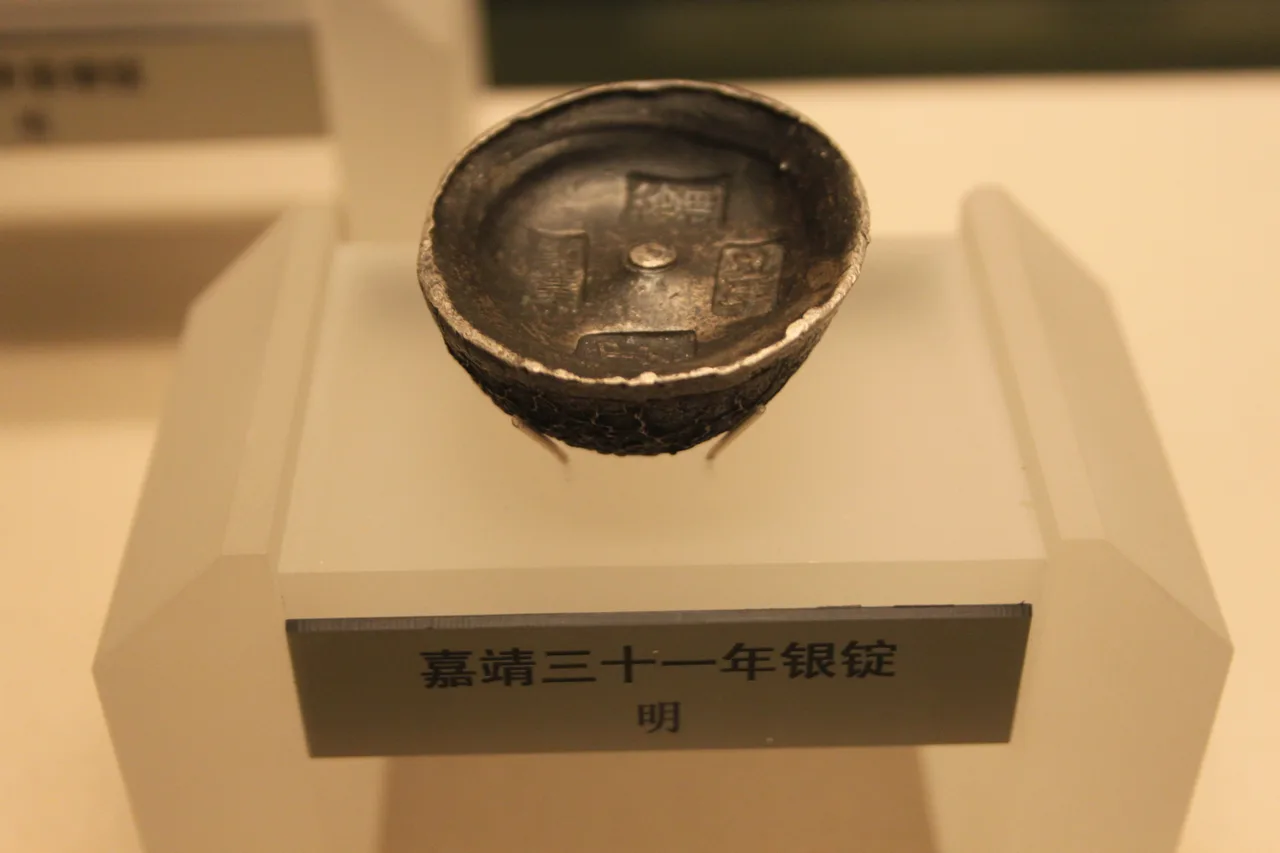
Crescent Port / Yuegang brought in tens of thousands of silver taels each year for Fujian. This money paid for local military expenditure. Chinese silk and dishes sailed from Yuegang to Manila, drawing in big flows of silver from mines in the Americas and Japan. This silver boosted local tax bases and gave Grand Secretary Zhang Juzheng the cash reserve he needed to roll out the Single Whip Law across the empire.
03. The Single-Port Trade Policy: Strategic Security and the Emperor's Funnel
After taking Taiwan in 1683, the Qing court ended coastal evacuation rules. In 1684, it opened four customs stations: Guangzhou, Xiamen, Ningbo, and Shanghai (Jianghai Customs House).
This policy shifted in 1755. James Flint, an East India Company agent, sailed north to Dinghai to buy silk closer to its source, and he even delivered a petition near Tianjin. The court felt threatened. In 1757, Emperor Gaozong of Qing banned Western ships from Ningbo and moved all Western maritime trade to the Thirteen Factories of Guangzhou under the Single-Port Trade Policy.
Institutional Mechanisms and Fiscal Flows
| Policy & Era | Ports & Administrative Oversight | Primary Tax Base & Assessment Method | Fiscal & Strategic Yields | Systemic Leakage & Deadweight Losses |
|---|---|---|---|---|
| Ming: Longqing Opening (1567–1644) | Crescent Port / Yuegang, Haicheng County; managed by Associate Administrator for Coastal Defense and Zhangzhou prefectural authorities. | Outward Chinese merchants: annual sail permits, vessel tonnage fees on return, and ad valorem cargo levies. | Yielded tens of thousands of silver taels for regional defense; channeled overseas silver into the domestic economy. | Direct voyages to Wa remained prohibited, preserving illicit routes; local officials underreported revenues. |
| Early Qing: Four Customs Ports (1684–1757) | Guangzhou, Xiamen, Ningbo, and Shanghai (Jianghai Customs House); supervised by provincial maritime customs controllers. | Inbound foreign and domestic vessels: hull measurement fees, itemized duties, and free merchant clearance. | Rebuilt coastal commerce after regional wars; supplied provincial treasuries with land and maritime tax revenues. | British armed merchantmen probed river routes near the Beijing-Hangzhou Grand Canal, heightening coastal risks. |
| High Qing: Single-Port Trade Policy (1757–1842) | Concentrated at Thirteen Factories of Guangzhou; audited by the Imperial Household Department's Superintendent of Maritime Customs. | Foreign ships restricted to licensed Cohong security merchants; regular maritime customs, meltage fees, and forced contributions. | Delivered over one million taels annually to palace coffers; Humen fortifications kept foreign arms at a safe distance. | Monopolistic pricing fueled friction; foreign firms introduced contraband opium along the coast to offset trade imbalances. |
Micro-Ledgers: Cohong Wealth and Institutional Liabilities
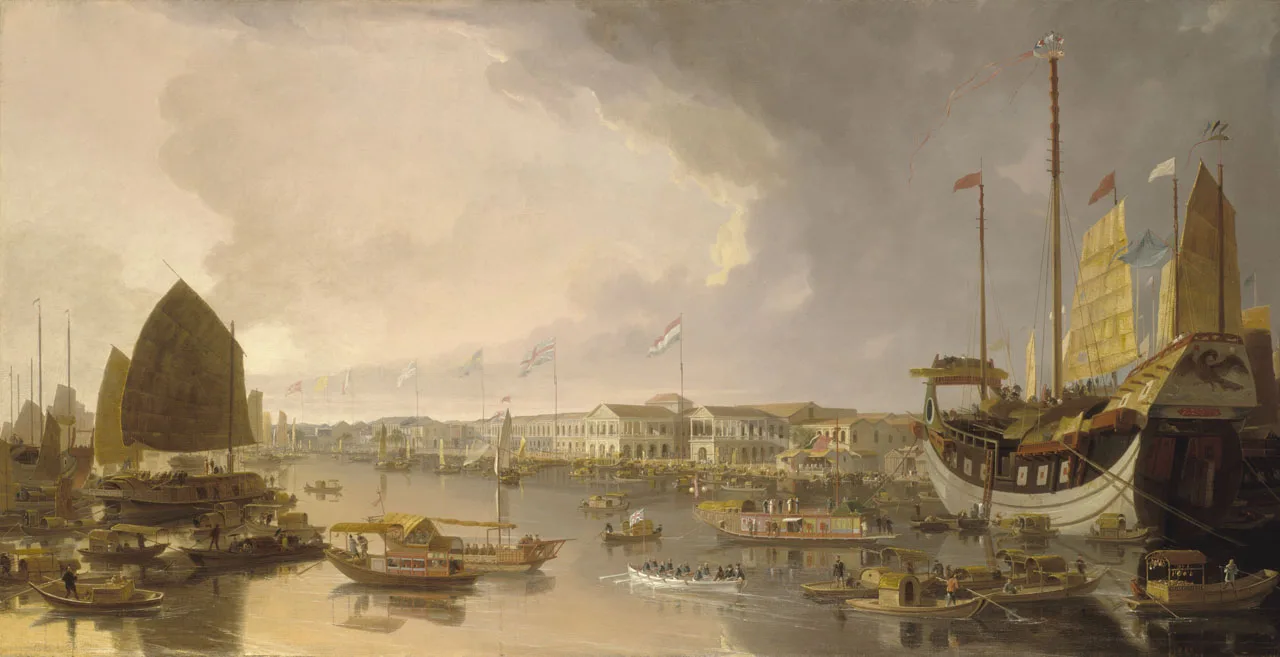
Licensed merchants in the Thirteen Factories of Guangzhou—such as Howqua of the Ewo Hong—held the sole right to deal with European traders. They bought export tea and raw silk, and they sold imported European cloth and metals. Big price margins helped these merchants build fortunes worth millions of taels.
Yet these merchants carried heavy legal risks. They served as a buffer between imperial judges and foreign crews, and they had to pay for bad debts, trade bankruptcies, and ship crimes. When the Ministry of Revenue or the palace needed funds for war, river repairs, or building projects, it forced the Cohong to pay large levies. Some merchants went broke under these heavy demands.
Macro-Ledgers: The Palace's Private Collection Pipeline
At the top level, the Guangzhou system served as a private cash pipeline for the crown:
- Shielding the Economic Heartlands: Big British East India Company ships had deep hulls and carried heavy guns. Letting them dock near Ningbo, Songjiang, or Haikou put armed foreign crews too close to rich grain stores, the city of Nanning, and the Beijing-Hangzhou Grand Canal. Holding trade in Lingnan at Guangzhou let sea forts block foreign ships and kept defense costs down.
- Dedicated Royal Revenues: The court picked trusted Manchu officers as the Superintendent of Maritime Customs, keeping the post outside the rule of the local Grand Coordinator. Regular trade taxes went to the Ministry of Revenue, while extra fees, ship measurement funds, and merchant gifts went straight to Beijing. These sums fed the imperial purse without regular bureaucratic checks.
04. Comparative Imperial Institutions: The Cohong and the East India Company
Relying on a few licensed agents to manage sea trade was a common tool for early modern empires. The Thirteen Factories of Guangzhou and the English East India Company shared clear roots: both were trade monopolies created by a royal crown.
Queen Elizabeth I gave the East India Company its charter in 1600, granting it trade rights east of the Cape of Good Hope. By 1711, the British Treasury used company renewals to handle state debt. Both empires used monopoly charters to bridge long distances, handle news delays, and pay for fleet defense.
Yet their legal setups and long-term paths moved apart:
The East India Company grew through parliamentary laws and corporate rules. It turned its trading charter into a permanent joint-stock firm that could recruit troops, collect land taxes in Bengal, and trade shares in open markets. These trade profits turned into solid capital assets protected by common law courts, building up English sea power and government debt systems.
The Thirteen Factories worked as tax-collecting agents for an absolute ruler. Cohong merchants had no corporate legal shelter, held no official administrative rank, and had no shield against arbitrary imperial fees. Instead of turning profits into permanent commercial funds, factory merchants saw their silver drained away by royal calls for cash and dike repairs. The phrase describing their trade glory was often just an allusive expression of imperial favor. When the 1842 Treaty of Nanking ended the factory monopoly, the administrative rent system behind it broke down completely.
05. Conclusion: A Tollgate at the Empire's Edge
From the Ming shift at Crescent Port / Yuegang to the Qing setup at Guangzhou, imperial maritime policy kept a steady path.
Unified dynasties faced high costs to police long shorelines. When open anchorages threatened to bring riots or breed corrupt deals with the local official, the imperial court turned to bans. Yet when domestic silver shortages hurt trade and coastal armies drained the treasury, opening one fortified port provided a workable middle ground. Yuegang and the Thirteen Factories were not built for free trade. They were official tollgates designed to bring in world silver while keeping tight imperial control.
Primary Sources & Historical Bibliography
- Yan Congjian, Shuyu Zhouzi Lu, Vol. 9, "Wa," Wanli reign blockprint edition (1574). Details the failures of the mid-Ming maritime ban and talks with armed merchant networks.
- Tu Zemin et al., Memorial on coastal trade licensing, recorded in historical sources of the Ming court, Longqing Year 1, Month 5. Documents the opening of Crescent Port / Yuegang in Haicheng County.
- Liang Tingnan (comp.), Treatise on the Maritime Customs of Guangdong, Vol. 25 and Vol. 28, Daoguang reign edition (1835). Institutional records detailing the Thirteen Factories of Guangzhou, merchant rules, and customs duties.
- Zhuang Guotu, "On the Longqing Opening," Historical Research, no. 6 (2005). Analyzes Crescent Port trade routes and the flow of Spanish silver.
- Peng Zeyi (ed.), Historical Materials on the Thirteen Factories of Guangzhou in the Early Qing Dynasty, 1985. Compiles imperial household records, merchant ledgers, and official tribute documentation.