TL;DR · Core Takeaways
- The Split Ledger: Popular lore treats Zheng He's maritime expeditions as a bottomless fiscal sinkhole driven by imperial vanity. In reality, the Inner Court monopolized massive profits from imported Southeast Asian spices and gemstones, even substituting pepper for official cash stipends. The true fiscal devastation fell upon common households burdened by uncompensated corvée labor and the depleted reserves of the Ministry of Revenue.
- Institutional Rupture: Ship timber, rope, iron, and military provisions were forcibly requisitioned through extra-statutory levies on local prefectures by the Ministry of Revenue and the Ministry of Works. The resulting trade windfalls flowed entirely into sovereign privy vaults managed by palace eunuchs, creating a predatory mechanism where the general populace bore the costs while the palace hoarded the profits.
- Geopolitical Reorientation: When nomadic Oirats staged existential threats along the northern frontier, an oceanic fleet lacking institutional self-financing and public fiscal utility became the first program targeted for elimination by civil scholar-officials.
Historical Context
- Chinese timeline: 1405–1433 (reigns of the Yongle Emperor through Emperor Xuanzong of Ming), marked by the relocation of the capital to Beijing, construction of the Forbidden City, and five massive northern campaigns into the Mongolian steppe.
- Global timeline: King John I of Portugal captures Ceuta (1415), Prince Henry the Navigator launches Atlantic expeditions along West Africa, and the Byzantine Empire approaches its final collapse.
Popular stories say the seven voyages of Zheng He during the early Ming Dynasty ruined the empire. They claim twenty-seven thousand sailors spent vast sums of cash just to gather exotic gifts. Later court scholars repeated this claim. They argued that the Yongle Emperor wrecked the finances of the realm with these voyages.
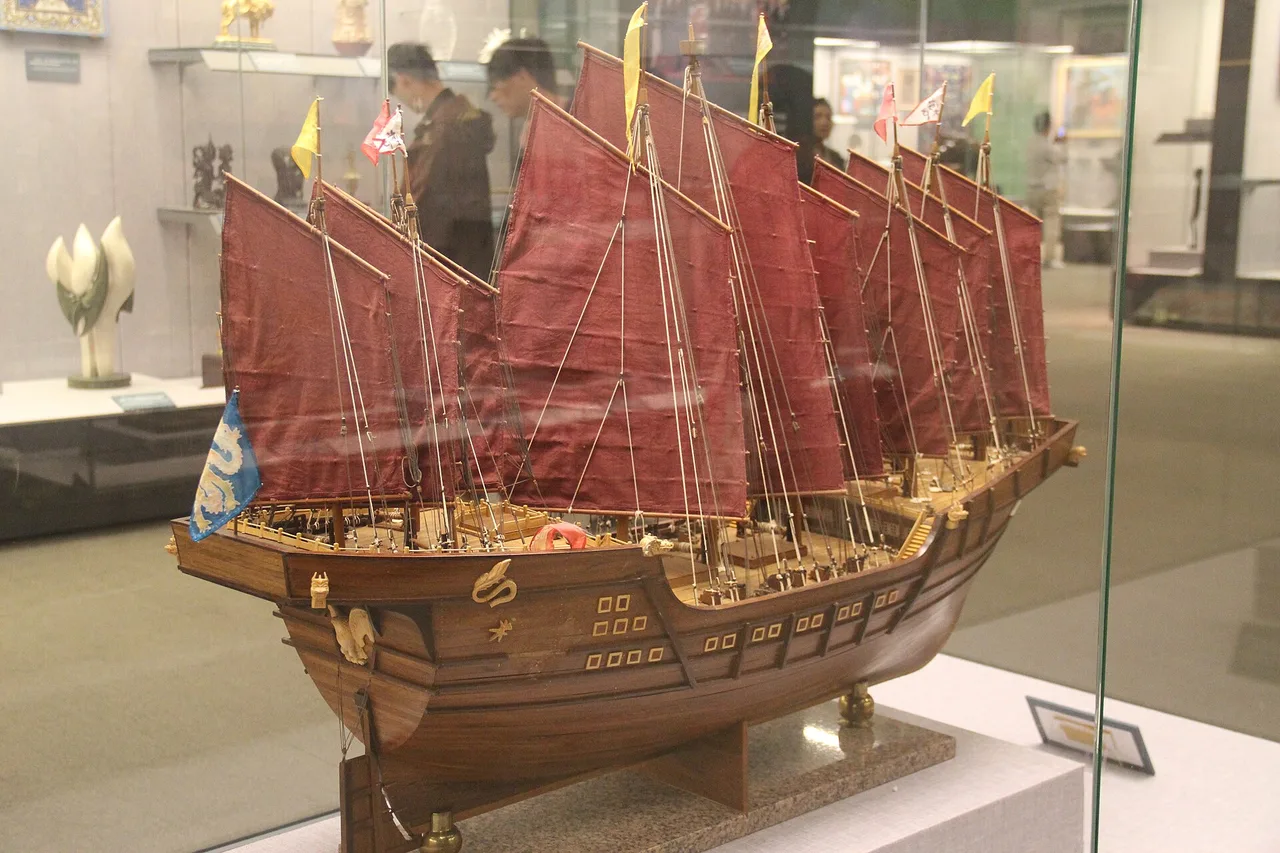
A closer review of historical sources like the Veritable Records of the Ming reveals a different picture. Official grain taxes held steady near thirty million shi. Yet actual rule depended on heavy extra levies. The fleet did not return empty-handed. It brought back vast piles of Southeast Asian spices. The court then used these spices as forced currency. The crisis was not simple debt. It was a structural split between the private vaults of the monarch and the civil budget.
01. The Imperial Balance Sheet: Household Extractions Versus Imperial Reserves
To trace the real cost of the voyages, we must look at two balance sheets. One was the unpaid labor taken from farming villages and artisans. The other was the flow of funds between the Forbidden City and the state ministries.
The Household Ledger: Uncompensated Corvée and Forced Requisitions
Early Ming society rested on strict household registers. Families listed as artisans had to give unpaid labor rotations to the state. Building the treasure fleet did not rely on open-market buying. It relied on state force.
To build the great hulls at Longjiang Shipyard near the Southern Capital and at Fujian yards, imperial agents went deep into the forests of Jiangxi, Huguang, and Sichuan. They felled ancient trees. Drafted work gangs dragged massive logs across cliffs. Many workers died from sickness and accidents. Prefectures from Dai to Haizhou and along transport waterways paid for food, tools, draft cattle, and river boats out of their own pockets. Farmers paid their grain taxes while also handing over iron nails, hemp ropes, tung oil, lime, and reed mats for free.
Old-growth timber felled in mountain ranges -> Hereditary artisans draft-built hulls -> Coastal prefectures furnished materials -> Guard garrison troops conscripted -> Village economies reach breaking point
This system shifted huge shipbuilding costs away from central ledgers and onto common farmers. Local leaders gave harsh supply quotas to wealthy homes and forced poor villagers to work. The central court did not pass an official maritime tax. Even so, forced supplies drained the coastal provinces.
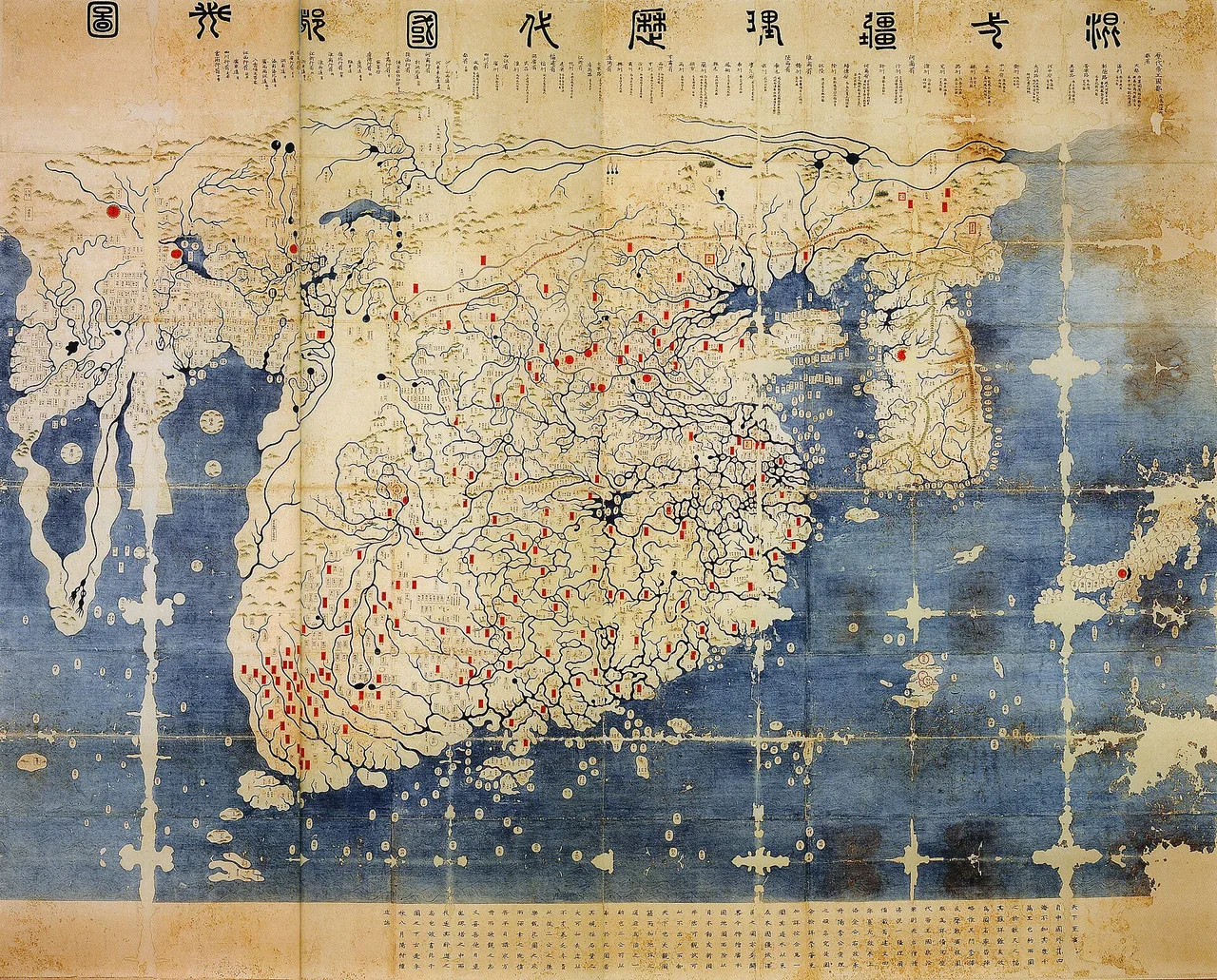
The Imperial Ledger: Hoarded Surpluses and Crushed Bureaucratic Salaries
At court, the voyages hit the Ministry of Revenue hard. Grain for tens of thousands of sailors came from state granaries near the Southern Capital. Outbound ships carried silk and fine dishes. These goods were made cheaply in state workshops and imperial kilns in Jingdezhen.
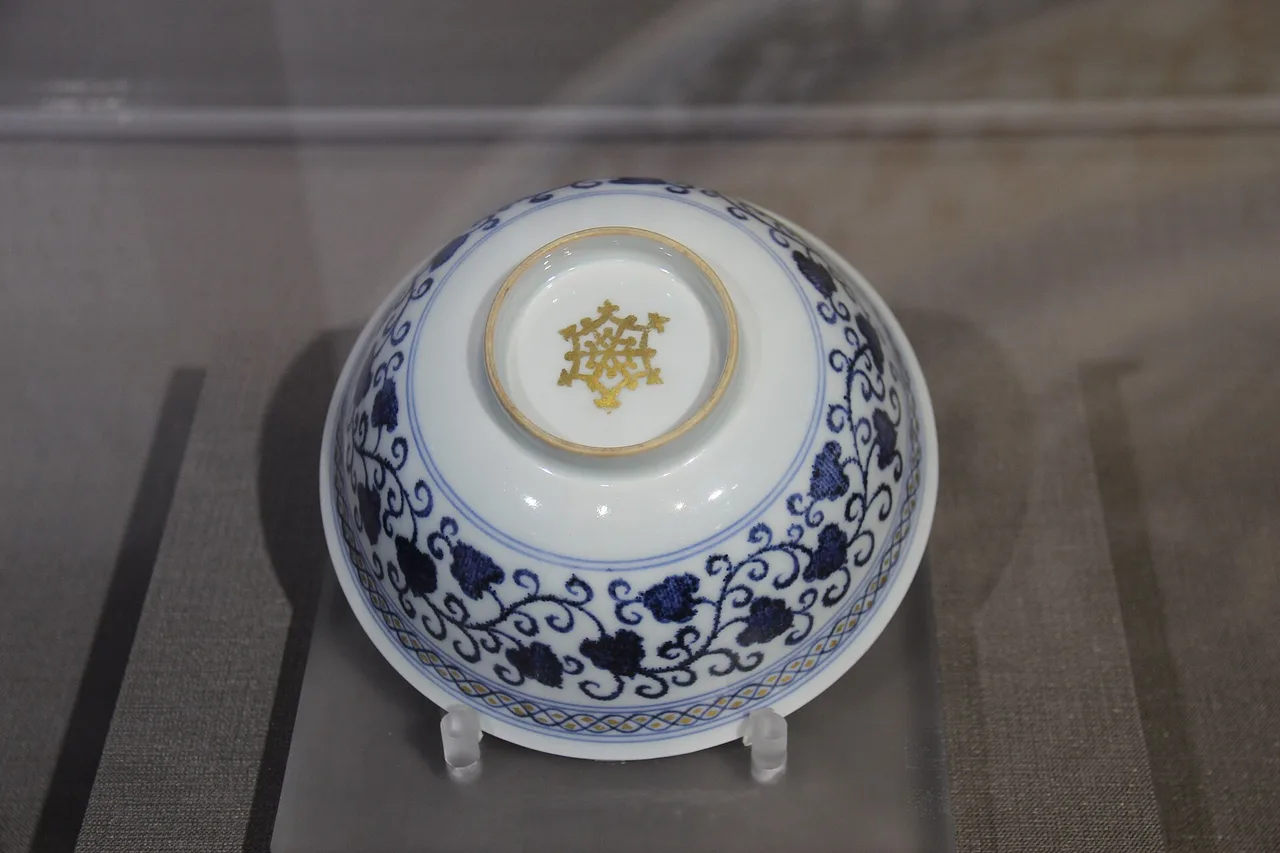
Trade across the Southern Seas yielded huge profits. At ports like Sumatra and Calicut, envoys traded silk and coins for black pepper, sappanwood, and gems.
In Sumatra, one hundred catties of black pepper cost about one tael of silver. Back home, court clerks priced one catty at one tael of silver. That was a hundredfold markup. Yet these riches did not go to the Ministry of Revenue. Instead, each Palace Eunuch stacked the spices and gems inside the private vaults of the Inner Court.
By the late Yongle era, five campaigns into the northern steppe, canal repairs, and building Beijing drained state reserves. The court then cut wages. It paid civil officials like a Grand Master and military officers like a Commander-general with stockpiled pepper and sappanwood instead of cash or grain.
Officials received goods they could not eat or sell easily without losing money. The Ministry of Revenue paid for ships and grain. Meanwhile, the Inner Court used spice stockpiles to slash civil payrolls.
| Institutional Metric | Zheng He's Expeditions (Ming China, 1405–1433) | Portuguese Carreira da Índia (Manuel I, c. 1495–1521) |
|---|---|---|
| Capital Mobilization | Command quotas, hereditary artisan corvée, state kiln requisition | Crown monopoly concession (Casa da Índia) and merchant syndicates |
| Local Cost Burden | Uncompensated timber felling, naval conscription, regional grain requisitions | Wage-earning sailors, overseas factory networks financed via merchant debt |
| Revenue Destination | Surpluses diverted to Inner Court eunuch treasuries, external ministries received devalued pepper salaries | Spice revenues entered royal treasuries, directly funding naval yards and fortified outposts |
| Civil Fiscal Impact | Depleted the Ministry of Revenue; provoked bureaucratic revolt | Generated a substantial share of royal revenues; spurred commercial credit |
| Program Longevity | Tied directly to personal imperial whim; abruptly shuttered under strategic shifts | Maintained through commercial self-sufficiency across multiple centuries |
02. Divergent Treasuries and the Steppe Threat: Why the Fleet Was Scuttled
The fleet was ended during the reign of Emperor Xuanzong of Ming. The decision came from broken fiscal administration and new land-based threats.
Civil leaders, backed by the Ministry of War, fought against maritime trade. The voyages placed heavy costs on the public while giving profits only to court eunuchs. Confucian scholars believed these journeys harmed tax income, wasted grain transport by waterways, and brought back useless trinkets. Above all, they feared inner-court intervention in governance.
When leaders like Liu Daxia later hid Zheng He's sailing records, they acted to protect civil control. By hiding the charts, officials kept the crown from bypassing normal state budgets again.
At the same time, defense priorities turned back toward the northern Great Wall. The Yongle Emperor led huge armies into the northern desert. These campaigns took hundreds of thousands of troops and vast supplies of military provisions. They stretched transport lines to the limit.
Monarch hoards spice revenues -> Ministry of Revenue absorbs ship and grain costs -> Bureaucrats suffer pepper salary cuts -> Steppe warfare consumes military budgets -> Ocean fleet cancelled permanently
The defeat at the Tumu Crisis in 1449 fixed this focus. With an Emperor captured by the Oirats and Beijing under attack, all grain and silver had to protect the Nine Border Garrisons. A fleet that cost so much silver and offered no defense against steppe riders was quickly abandoned.
In the same era, Manuel I of Portugal ran a spice network with a different design. Portuguese trade profits went into royal accounts to build forts and armed fleets. Without broad agricultural lands, Portugal made ocean trade the base of state revenue. Ming China was a continental farming power. Its tax base came from millions of small family farms. Next to costly northern frontier defenses, spice trade profits were minor funds for the monarch's private quarters, unlike the great wealth stored since the days of Zhenjin.
The ships of Zheng He were not stopped by ocean storms. They were halted by the split between the private purse of the palace and the public state treasury.
Primary Sources & Historical Bibliography
- Standard Dynastic Histories & Records:
- History of Ming (Ming Shi), Treatises on Food and Money, Vol. 77 and Vol. 81. Detailed records of early Ming land tax adjustments, Longjiang Shipyard allocations, and the mechanics of the pepper salary deduction system.
- History of Ming (Ming Shi), Biographies, Vol. 304 (Biography of Zheng He). Narrative coverage of fleet recruitment, maritime diplomacy, and imperial rewards across the seven voyages.
- Veritable Records of Emperor Xuanzong of Ming (Ming Xuanzong Shilu), Vol. 24 and Vol. 61. Court debates regarding the termination of overseas procurement and the relief of coastal corvée burdens.
- Modern Scholarship:
- Liang Fangzhong, Historical Statistics of China's Household Registration, Cultivated Land, and Land Taxation (Shanghai: Shanghai People's Publishing House, 1980). Exhaustive statistical compilations of early Ming grain receipts and commutation quotas.
- Ray Huang, Taxation and Governmental Finance in Sixteenth-Century Ming China (Cambridge: Cambridge University Press, 1974). Foundational institutional analysis detailing the fiscal divide between the Inner Court and the Ministry of Revenue.
- Quan Hansheng, Collected Essays on Chinese Economic History, Vol. 3 (Hong Kong: New Asia Research Institute, 1972). Specialized archival studies examining how Southeast Asian spice inflows impacted Ming bureaucratic salaries.