Chinese Coordinates
—
Western / Mediterranean Coordinates
Late reign of Justinian I to early Heraclian Dynasty in the Byzantine Empire (Eastern Roman Empire), where Mediterranean municipal grain distributions and provincial agrarian tax logistics faced fiscal restructuring and barbarian pressures.
TL;DR · Core Takeaways
- Deep Grain Storage: The Hanjia Granary in Luoyang and the Luokou Granary (Xingluo Granary) in Gongxian stored millions of bushels of grain in dry underground pits. Tang soldiers still ate this grain twenty years after the Sui dynasty fell. The grain was meant for war, not for feeding starving people.
- Lost Village Stores: At first, villages ran their own charity granaries to help families through bad crop years. In 595 CE, the central state took them over. Local food reserves quickly became royal property.
- Harsh Rules for Officials: The court rewarded any local official who collected extra grain. It punished any official who gave out grain without asking first. Even with full granaries nearby, ordinary people starved during bad harvests.
- Rebels Open the Silos: In 617 CE, rebel leader Li Mi took the Luokou Granary and opened its doors. Hundreds of thousands of hungry peasants joined his ranks. The grain stores built to keep power ended up funding the fall of the empire.
> Spatiotemporal Coordinates
> - Chinese Historical Coordinates: Early Kaihuang era of Emperor Wen of Sui to late Daye era of Emperor Yang of Sui (581–618 CE). The Sui Dynasty reunified China after centuries of division across the Northern and Southern Dynasties, constructed the Eastern Capital at Luoyang, excavated the Grand Canal of the Sui and Tang Dynasties, and built mega-granary networks including the Hanjia Granary and Luokou Granary.
01. Engineering Wonders vs. Ground-Level Realities
On paper, the Kaihuang era offered light corvée and taxes. The Sui Dynasty kept and improved the Equal-Field System (Juntian Zhi) from the Northern Qi and Northern Dynasties. In 583 CE, Emperor Wen of Sui raised the adult tax age to twenty-one. He cut the textile tax in half. He dropped corvée labor from thirty days a year down to twenty days per adult male. He also waived statutory land tax obligations many times. Official records showed a small levy of only three shi of grain per man each year. This was one of the lowest tax rates in imperial Chinese history.
Yet under this light rate ran a harsh tax engine. The Imperial Court used demographic sweeps known as the Grand Inspection and the Standardized Household Registration. Chancellor Gao Jiong set up these audits in 583 CE.
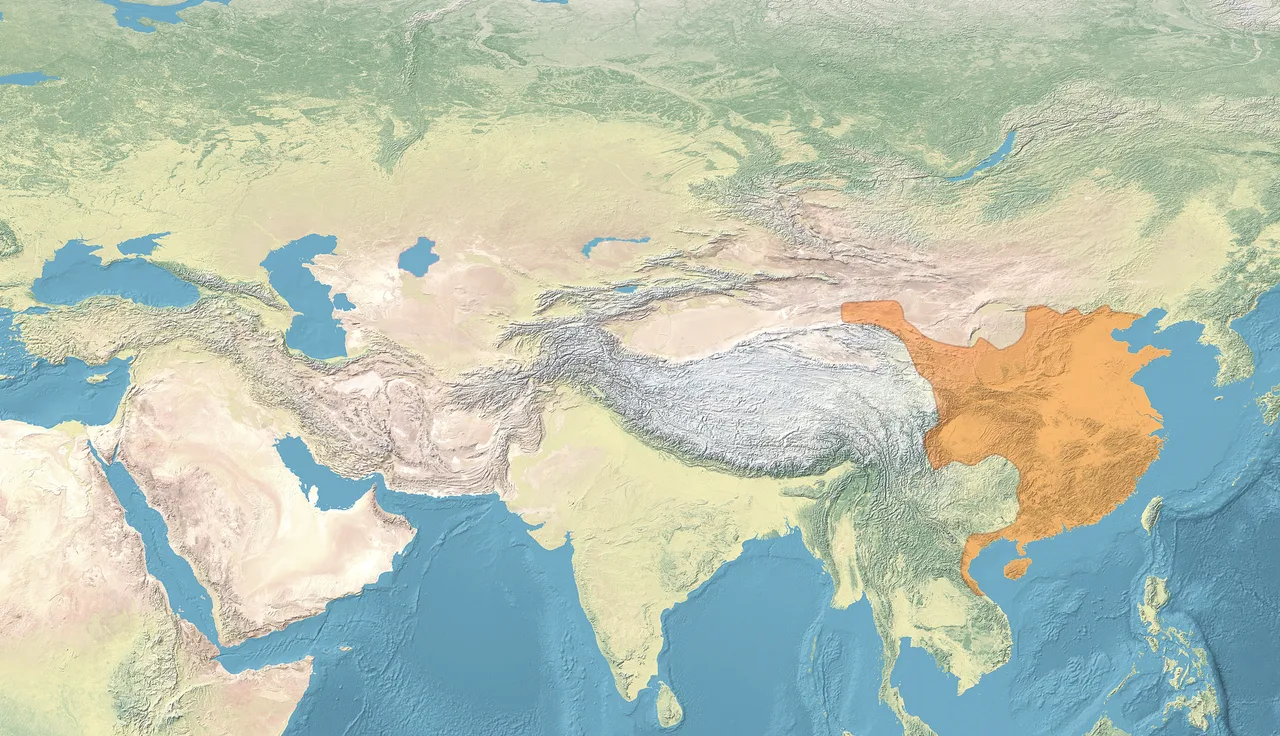
During the Northern and Southern Dynasties, thousands of families fled to private estates to escape tax lists. Emperor Wen sent out inspectors to check people across all counties. They matched faces to recorded ages. They sorted homes into nine tax tiers under the Standardized Household Registration. In twenty years, registered homes jumped from under four million to almost nine million. The Imperial Court did not spend less. It found hidden farmers and turned them into direct taxpayers.
Large granaries were built to hold the new grain. These included the Hanjia Granary, Luokou Granary (Xingluo Granary), Liyang Granary, and Heyang Granary. Digs at the Hanjia Granary in Luoyang show a site with hundreds of underground pits. Each pit held over ten thousand bushels of grain, sufficient to sustain a military garrison under a Commander of Ten Thousand. Workers baked the pit walls with fire. They lined them with wood ash, timber planks, and dry rice husks. Then they sealed them with thick dirt to keep air out. By late Kaihuang times, the silos held tens of millions of bushels. As the historian Ma Zhou later recalled in the Essentials of the Zhenguan Reign: "For fourteen years in the Western Capital and twenty-eight years in the Eastern Capital, the reserves accumulated by the house of Sui seemed without end."
Yet the farmers who grew the grain owned none of it.
02. The Dual Balance Sheet: Micro Depletion vs. Macro Expansion
To see why farmers starved next to full granaries, one must look at two ledgers: the village home and the Imperial Court. The grain in imperial stores was not extra crop yield. It was food taken by force from farm families.
Institutional Transmission Chain:
Community granaries absorbed by county -> Grand Canal funnels grain inward -> Bureaucratic review delays emergency relief -> Peasants lose grain entitlements -> Silos become armed bases for rebellion
The Household and Local Balance Sheet
In 585 CE, Minister of Works Changsun Ping suggested setting up charity granaries (yicang). Small villages gathered autumn grain based on family wealth. Rich homes gave up to one shi, while poor homes gave a few pecks. Villages kept the food in local bins and opened them when crops died. For ten years, these bins worked as local safety nets.
That system ended in 595 CE. Claiming that village leaders mismanaged grain, Emperor Wen moved all stores to county towns. Later, during the Daye era, Emperor Yang ordered charity grain hauled straight to Luoyang.
This shift took away the village safety net:
- Long-Distance Hauling: Farmers paid their statutory land tax, paid their charity grain share, performed exhausting corvée labor, and used their own oxen and carts to haul it across long distances to state depots.
- No Local Relief: Once grain went to state depots, villages could not touch it during droughts or floods. Even when people starved outside the Hanjia Granary, the food inside belonged to the throne. Opening a granary without orders counted as treason.
For a District Magistrate, keeping his post meant following every rule. Higher offices judged each official on full grain tax quotas. Giving out grain without approval took months of paperwork moving through the Department of State Affairs to the emperor. Because the emperor moved often between cities and border posts, answers took too long. A local official who opened silos on his own faced an audit from the Investigating Censor, risking prison, exile, or death.
The Imperial Treasury Balance Sheet
At Daxing City and Luoyang, the Imperial Court spent its wealth on grand projects and wars instead of local relief:
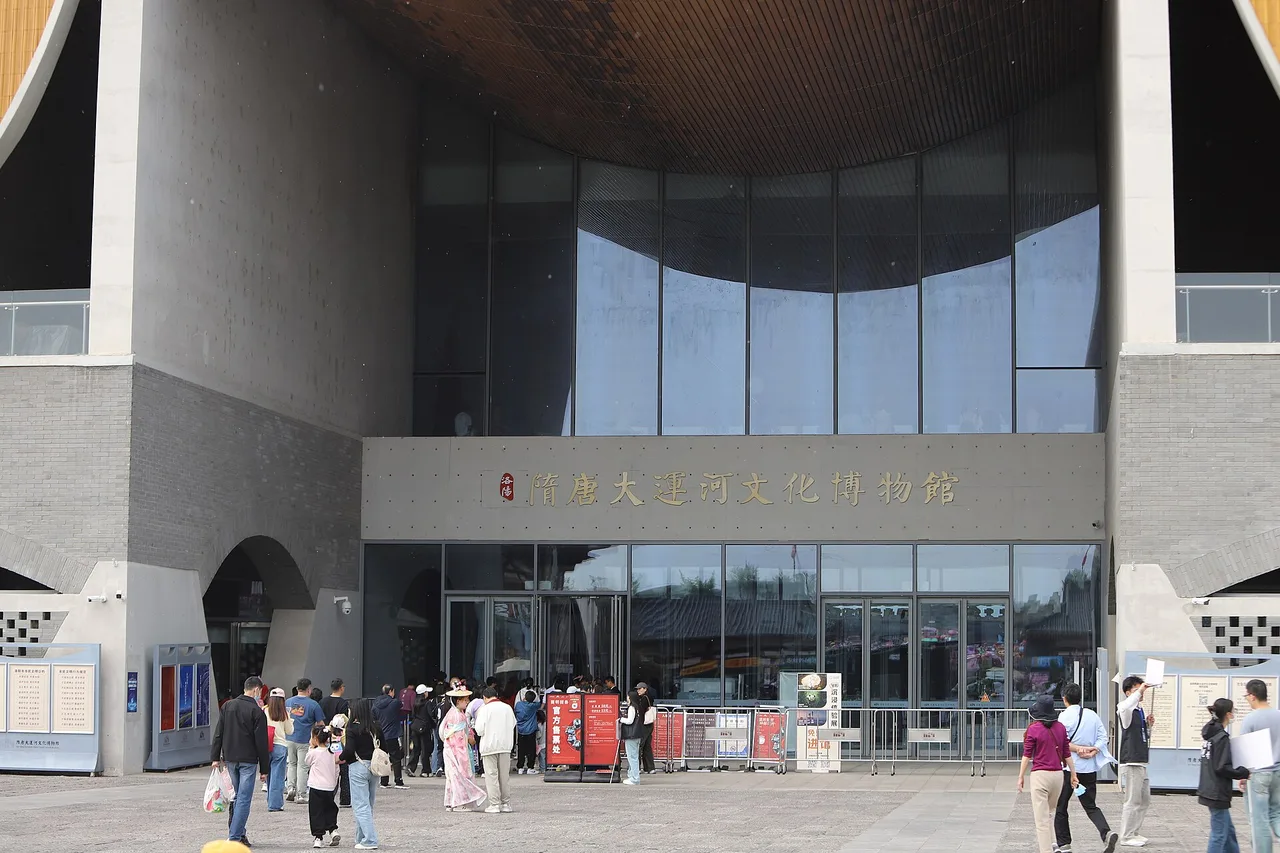
Building the new Eastern Capital at Luoyang took up to two million forced workers each month under heavy corvée labor duties. Digging the Grand Canal took millions more across Henan, Hebei, and the Huai River basin. Between 612 and 614 CE, three huge wars against Goguryeo pulled in over one million soldiers and millions of civilian carriers.
On the imperial balance sheet:
- Assets: Millions of bushels in the Hanjia, Luokou, and Liyang granaries served as military provisions for northern wars, not as food aid.
- Liabilities: Lost labor and missed farm seasons never showed up as debts on state tax rolls. The Imperial Court saw floods along the Yellow River and starvation across Shandong as seasonal matters. It refused to spend war grain on starving civilians.
The gap between tax collection and food distribution is clear:
| Institutional Dimension | Inflow Mechanics (Extraction and Haulage) | Outflow Mechanics (Relief and Allocation) |
|---|---|---|
| Institutional Purpose | Supply capital construction, canal logistics, and military provisions for campaigns against Goguryeo | Community mutual aid transformed into state property under the Court of the Imperial Granaries |
| Bureaucratic Incentives | Exceeding statutory land tax and granary transfer targets secured top appraisal marks and capital promotions | Famine relief carried zero career advancement; unauthorized distribution triggered capital charges |
| Administrative Clearances | Grain moved along canal routes directly into storage managed by the Manager of Agriculture | Mandatory three-tier reporting through county, prefecture, and Department of State Affairs to the throne |
| Famine Realities (611–617 CE) | Luokou held over twenty million bushels across thousands of pits; Liyang held millions more | Starvation and cannibalism gripped Shandong and Hebei; garrisons barred silo gates to the death |
03. Bureaucratic Lock-in and Entitlement Failure
Economist Amartya Sen showed that famines rarely happen from a simple lack of food. They happen because specific groups lose the legal power—their entitlement—to get food. The collapse of the late Daye era proves this idea.
In 611 CE, floods hit Shandong and locusts hit Hebei. Yet the empire still held enough grain to feed its people for years. But poor farmers had no money to buy food at high market prices. State rules had stripped their right to draw from local bins. The grain they grew sat locked behind thick walls guarded by soldiers under a Commander of Ten Thousand.
[Peasant Yield / Quotas] ---> [Demographic Audit] ---> [Charity Grain Surrendered] ---> [Canal Moves Grain Away]
                                                                                                  |
                                                                                                  v
[Famine / Cannibalism]   <--- [Unauthorized Relief Punished] <--- [Slow Approvals]   <--- [Hanjia Silos Locked]
When laws reward hoarding and punish aid with death, the system freezes. A local official watched people die outside his gate, but kept the locks tight to save his own life. At the same time, Emperor Yang traveled far away. He got polished reports and ordered more grain sent north for the army.
This rigid system led to a clear result: the granaries did not save the empire; they fed the armies that brought it down.
In 617 CE, Wagang Army leaders Li Mi and Zhai Rang struck Gongxian and took the Luokou Granary, the largest depot in the land.
Li Mi made a simple move. He opened the doors and told the crowd to take what they needed.
Thousands of starving people rushed in. For these peasants, following the state meant starvation outside closed gates. Joining the revolt meant food and life that same day. Within weeks, the Wagang Army signed up hundreds of thousands of men with Luokou grain. Soon after, Dou Jiande took the Liyang Granary and drew one hundred thousand northern followers by opening its pits.
The grain gathered through thirty years of hard corvée labor fed the rebellion that crushed the Sui state.
04. Comparative Empire: Rome's Grain Supply Network (Cura Annonae)
Across the sea, the Roman Empire built its own system to feed a capital city.
To feed over one million people in Rome (and later Constantinople), the Roman Principate turned emergency grain gifts into a permanent office called the Cura Annonae. This office ran the grain tax (annona) from Egypt, North Africa, and Sicily. It used commercial ships to move millions of modii of grain every year to Ostia and Portus along the Tiber River.
Institutional Parallels
Both empires used state power to pull grain from rich farming lands—the lower Yangtze and Hebei for the Sui, and the Nile Valley and North Africa for Rome. Both moved food along water routes—the Grand Canal of the Sui and Tang Dynasties and the Mediterranean Sea—into fortified state storehouses. Both used large administrative offices, standard grain measures, and dry pits to stop rot and theft.
Divergent Operations and Collapse Mechanics
While both moved grain in large amounts, they gave it out for very different reasons:
- Civic Contracts vs. Patrimonial Reserves: Rome gave free grain to about two hundred thousand adult male citizens through the grain dole. Roman rulers saw this as a basic duty to keep urban peace. In 22 CE, Emperor Tiberius told the Senate that stopping the grain flow would bring down the state. Under the Sui, granary stores belonged to the Imperial Court and army. No law forced the emperor to open stores for hungry farmers during crop failures.
- Crisis Response and Bureaucratic Metrics: When storms or bad harvests delayed ships, the grain prefect (praefectus annonae) had to calm market prices, hire ships, and open public stores to stop riots. In late Sui China, local leaders faced no blame if farmers died. Their only job was to guard the silos and ship grain to the imperial army.
- Paths to Systemic Failure: Rome's grain network broke from outside attacks when it lost sea power and Vandals took North Africa in the fifth century CE. By contrast, the Sui Dynasty fell from within while its silos were still full. Rigid rules cut ordinary people off from their food, creating a hungry populace that took the granaries and destroyed the dynasty.
A granary that locks its doors against starving people does not keep an empire safe. It stores food for the next revolt.
Primary Sources & Historical Bibliography
- Wei Zheng et al. Book of Sui (Sui Shu). Vol. 24, "Treatise on Food and Money"; Vol. 44, "Biographies of Changsun Ping." Beijing: Zhonghua Book Company, 1973.
Documents the establishment of charity granaries, the implementation of demographic inspections and standardized household surveys, and the 595 CE decree moving local stores under county control.
- Sima Guang, ed. Comprehensive Mirror to Aid in Government (Zizhi Tongjian), with commentary by Hu Sanxing. Vols. 181–183, "Sui Records V: Years 7 to 13 of Daye." Beijing: Zhonghua Book Company, 1956.
Provides detailed chronological accounts of Shandong floods, northern military logistics, the fall of the Luokou and Liyang granaries, and the rapid enlistment of famine refugees by Li Mi.
- Luoyang Cultural Relics Work Team. "Excavation of the Sui and Tang Hanjia Granary in Luoyang" (Luoyang Sui Tang Hanjia Cang de Fajue). Cultural Relics (Wenwu), no. 3 (1972): 49–62.
Presents archaeological field data on subterranean pit volumes, heat-treated anti-moisture wall treatments, inscribed bricks, and grain remnants consumed decades into the Tang era.
- Rickman, Geoffrey. The Corn Supply of Ancient Rome. Oxford: Clarendon Press, 1980.
Examines the administrative, financial, and logistical machinery of the Roman Cura Annonae, tracing the flow of grain from provincial tributum to the warehouse districts of Ostia.
- Sen, Amartya. Poverty and Famines: An Essay on Entitlement and Deprivation. Oxford: Oxford University Press, 1981.
Establishes the entitlement approach to starvation, analyzing how legal, economic, and institutional systems trigger famine despite vast food supplies.