Birth | Born in Luoyang, Henan; grandson of Zhangsun Si, Northern Zhou Commander Unequalled in Honor, and son of Zhangsun Cheng, Sui You Xiaowei Jiangjun.
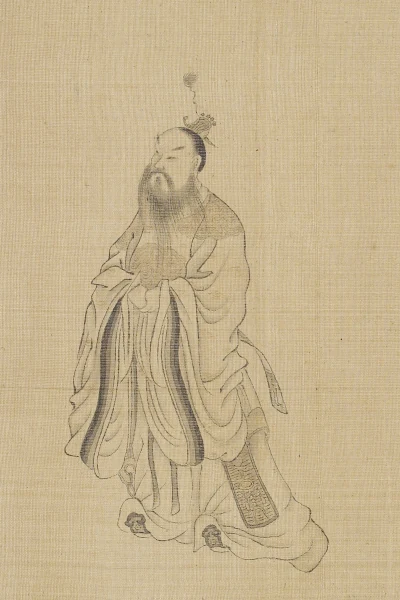
594 CE–659 CE
General
Zhangsun Wuji
长孙无忌
Zhangsun Wuji (594?–659), courtesy name Fuji, was from Luoyang County in Henan Commandery, east of present-day Luoyang in Henan. An early-Tang statesman and imperial relative, he was enfeoffed as Duke of Qi and later Duke of Zhao and ranked first among the Twenty-four Meritorious Officials of Lingyan Pavilion. He was the elder brother of Empress Zhangsun, wife of Emperor Taizong of Tang, and maternal uncle of Emperor Gaozong.…
594 CE–659 CETang Dynasty
PROFILE
Zhangsun Wuji (594?–659), courtesy name Fuji, was from Luoyang County in Henan Commandery, east of present-day Luoyang in Henan. An early-Tang statesman and imperial relative, he was enfeoffed as Duke of Qi and later Duke of Zhao and ranked first among the Twenty-four Meritorious Officials of Lingyan Pavilion. He was the elder brother of Empress Zhangsun, wife of Emperor Taizong of Tang, and maternal uncle of Emperor Gaozong. Learned and strategically capable, Zhangsun Wuji became a close friend of Li Shimin while still young, and his sister later married Li Shimin. He helped Li Shimin plan and carry out the Xuanwu Gate Incident and became one of Emperor Taizong's most trusted ministers. On Taizong's deathbed, Zhangsun Wuji and Chu Suiliang were jointly entrusted with assisting the heir. After Emperor Gaozong took the throne, Zhangsun Wuji wielded great influence, but he gradually lost power after opposing the elevation of Consort Wu as empress. In 659, the fourth year of Xianqing, Xu Jingzong falsely accused him of rebellion. He was stripped of rank, exiled to Qian Prefecture, and compelled to take his own life. He was posthumously rehabilitated during the Shangyuan era.
- Other name
- Duke of Zhao
- Courtesy name
- Fuji
- Period
- Tang
- Date of Birth
- 594
- Date of Death
- 659
- Dynasty / polity
- Tang
- Identity
- General
- Ethnicity / people
- Not recorded in historical sources
- Native place
- Luoyang County, Henan Commandery, east of present-day Luoyang, Henan
- Place of birth
- Not recorded in historical sources
- Major achievements
- Veteran statesman of three reigns in the early Tang; entrusted by Emperor Taizong with assisting the succeeding emperor; forced to commit suicide after opposing the elevation of Empress Wu.
LIFE TIMELINE
Age fifteen | His father Zhangsun Cheng died; he and his full sister were expelled from the household by a half-brother and raised by their maternal uncle Gao Shilian.
Age twenty-three | After Li Yuan rose at Taiyuan, Zhangsun Wuji met Li Yuan and Li Shimin at Changchun Palace and was appointed Weibei Xingjun Dianqian; from then on he served Li Shimin.
Age twenty-four | The Tang dynasty was established and Li Shimin became Prince of Qin; Zhangsun Wuji accompanied his campaigns, rose to Bibu Langzhong, and was enfeoffed as Duke of Shangdang County.
Age thirty-two | Helped plan and launch the Xuanwu Gate Incident, enabling Li Shimin to seize the throne; ranked first in merit and was made Duke of Qi.
Age thirty-three | Promoted to Right Vice Director of the Department of State Affairs, becoming the leading chancellor.
Age thirty-four | Resigned as Right Vice Director because of the excessive power concentrated in his hands and was appointed Commander Unequalled in Honor.
Age thirty-nine | Appointed Minister of Works; repeatedly declined, but Emperor Taizong insisted and presented him with Weifeng Fu.
Age forty-three | Transferred to the title Duke of Zhao and ordered to work with Fang Xuanling and others on the Zhenguan Code.
Age forty-eight | Promoted to Minister of Education.
Age forty-nine | Ranked first among the Twenty-four Meritorious Officials of Lingyan Pavilion; strongly supported Li Zhi, Prince of Jin, as crown prince; appointed Grand Preceptor of the Heir Apparent and Tong Zhongshu Menxia Sanpin.
Age fifty-one | Accompanied Emperor Taizong on the eastern campaign against Goguryeo, concurrently serving as Palace Attendant and playing an important role in the campaign.
Age fifty-four | Appointed acting Secretariat Director and Zhi Shangshu Menxiasheng Shi, effectively overseeing the three central departments.
Age fifty-five | As Taizong lay dying, Zhangsun Wuji and Chu Suiliang were entrusted with assisting the heir; after Taizong's death and Gaozong's accession, Zhangsun Wuji became Defender-in-chief and Tong Zhongshu Menxia Sanpin.
Age fifty-seven | Presided over compilation of the thirty-scroll Tang Code with Commentary.
Age fifty-nine | Presided over the investigation of the Fang Yi'ai treason case and used it to remove political rivals, leading to the forced death of Li Ke, Prince of Wu.
Age sixty-one | Opposed Emperor Gaozong's deposition of Empress Wang and elevation of Consort Wu but failed to prevent it.
Age sixty-five | Falsely accused of rebellion by Xu Jingzong, stripped of rank, exiled to Qian Prefecture, and forced to commit suicide.
Posthumous restoration | Emperor Gaozong rehabilitated Zhangsun Wuji and restored his offices and titles.
BIOGRAPHY
Biography
Family Background and Early Life
Zhangsun Wuji came from a collateral branch of the Northern Wei imperial family. The Chinese source identifies his ancestors as the Xianbei Baba clan, one of the ten imperial clans of Northern Wei. During Emperor Xiaowen's Sinicizing reforms, the clan changed its surname to Zhangsun and thereafter remained prominent in the Northern Wei elite. Zhangsun Wuji's grandfather Zhangsun Si held Commander Unequalled in Honor under Northern Zhou and was Marquis of Pingyuan County. His father Zhangsun Cheng was a You Xiaowei Jiangjun of Sui and a noted military and diplomatic figure famous for the story of shooting two eagles with one arrow. His uncle Zhangsun Chi was an important member of the Guanzhong-Longxi political and military elite. Zhangsun Wuji's mother, Lady Gao, was a daughter of Gao Jingde and came from Northern Qi imperial kin. Zhangsun Wuji had at least three elder brothers: Zhangsun Xingbu, Zhangsun Heng'an, and Zhangsun Anye. Zhangsun Xingbu was killed in 604 while resisting the rebellion of Yang Liang, Prince of Han. Empress Zhangsun was also a child of Lady Gao and was Zhangsun Wuji's full sister.
Zhangsun Wuji's birth year is not explicitly recorded in the historical sources, but he was older than his sister Empress Zhangsun, who was born in 601. In 609, the fifth year of Daye, Zhangsun Cheng died. Their half-brother Zhangsun Anye expelled Zhangsun Wuji, his sister, and their mother Lady Gao from the family household. Their maternal uncle Gao Shilian took them in and raised them as his own children. In 613 he also arranged the marriage of Empress Zhangsun to Li Shimin. Zhangsun Wuji had already become a close friend of Li Shimin in youth, and the marriage made the two men relatives by marriage as well.
Zhangsun Wuji was widely learned, versed in the classics and histories, and possessed strategic ability. As the Sui dynasty collapsed into warfare, Li Yuan rose at Taiyuan in 617. Zhangsun Wuji met Li Yuan and Li Shimin at Changchun Palace and was appointed Weibei Xingjun Dianqian, becoming a member of Li Shimin's staff and beginning his long political career at Li Shimin's side.
The Wude Era
After Li Yuan occupied Chang'an, he founded the Tang dynasty in 618 and became Emperor Gaozu of Tang. Li Shimin was enfeoffed as Prince of Qin and became one of his father's principal commanders in the wars of unification. Zhangsun Wuji followed Li Shimin in campaigns across the realm. For his service he eventually advanced to Bibu Langzhong and was made Duke of Shangdang County.
During the Wude era, the struggle over succession between Li Shimin and Crown Prince Li Jiancheng, supported by Li Yuanji, Prince of Qi, became increasingly intense. Li Jiancheng and Li Yuanji pushed Li Shimin's advisers out of the capital, including Fang Xuanling, Du Ruhui, Yuchi Jingde, and Cheng Yaojin. Among Li Shimin's closest supporters who remained were Zhangsun Wuji, Gao Shilian, Hou Junji, and Yuchi Jingde, and they advocated acting first. Zhangsun Wuji, Fang Xuanling, and Du Ruhui helped formulate the ambush plan. In the sixth month of 626, Li Shimin ambushed and killed Li Jiancheng and Li Yuanji at Xuanwu Gate, forced Emperor Gaozu to make him crown prince, and received the throne two months later as Emperor Taizong. Zhangsun Wuji, ranked first in merit for his part in the Xuanwu Gate Incident, successively held Left Assistant to the Crown Prince, Zuo Wuhou Da Jiangjun, and Minister of Personnel, was permitted free access to the inner court, and was made Duke of Qi.
The Zhenguan Era
In the spring of 627, the first year of Zhenguan, Li Yi rebelled in Bin Prefecture. Emperor Taizong sent Zhangsun Wuji to command an army against him, but Li Yi was killed by his own followers before Zhangsun Wuji arrived. In the autumn of the same year, Taizong promoted Zhangsun Wuji to Right Vice Director of the Department of State Affairs, making him the senior chancellor. Empress Zhangsun opposed the appointment on the grounds that an imperial relative should not stand at the very top of the bureaucracy, but Taizong insisted.
Early in Zhenguan, Tang and the Eastern Göktürks concluded the Weishui Alliance under Illig Qaghan. As internal disputes spread among the Eastern Göktürks, many Tang officials advocated attacking them. Emperor Taizong asked Xiao Yu and Zhangsun Wuji for advice. Xiao Yu favored war, whereas Zhangsun Wuji argued that Tang should wait until the other side broke the agreement rather than violate it first. Taizong accepted Zhangsun Wuji's advice, although Tang destroyed the Eastern Göktürk regime several years later.
Because Zhangsun Wuji held great power, some officials urged that his influence be restrained, but Taizong continued to trust him. Zhangsun Wuji himself feared becoming the focus of resentment and repeatedly asked, either personally or through Empress Zhangsun, to resign as Right Vice Director of the Department of State Affairs. In the spring of 628, Taizong accepted the resignation and made him Commander Unequalled in Honor. In 633, Taizong appointed him Minister of Works and placed him in charge of affairs of the Chancellery. Zhangsun Wuji declined, and Gao Shilian likewise argued that an imperial in-law should not hold one of the highest Three Excellency posts. Taizong nevertheless insisted and composed Weifeng Fu in praise of Zhangsun Wuji's service.
In 637, the eleventh year of Zhenguan, Taizong attempted to institute hereditary governorships and regional commands for princes and meritorious officials. Zhangsun Wuji was transferred to the title Duke of Zhao and appointed governor of Zhao Prefecture, with the office intended to pass to his descendants. Many officials opposed the program, and Zhangsun Wuji strongly resisted it as well, even asking his daughter-in-law Princess Changle, Taizong's daughter, to raise objections on his behalf. The emperor ultimately abandoned the plan. In the same year Zhangsun Wuji was ordered to work with Fang Xuanling and others on the Zhenguan Code. The code contained 500 statutes and divided punishments into twenty grades: five of beating with the light stick, five with the heavy stick, five of penal servitude, three of exile, and two of death; more than 1,590 administrative regulations were also formulated.
In 642, the sixteenth year of Zhenguan, Zhangsun Wuji became Minister of Education. In 643, Emperor Taizong ordered portraits of the Twenty-four Meritorious Officials to be painted in Lingyan Pavilion, and Zhangsun Wuji ranked first.
The Deposition and Appointment of Crown Princes
In 643, Crown Prince Li Chengqian and his younger brother Li Tai, Prince of Wei, became locked in a succession struggle. Li Chengqian was accused of plotting rebellion. Taizong ordered Zhangsun Wuji, Fang Xuanling, Xiao Yu, Li Shiji, and officials of the Court of Judicial Review, Secretariat, and Chancellery to investigate. They determined that Li Chengqian had indeed conspired to rebel, and he was deposed. Li Tai was favored by Taizong and was almost immediately promised the succession, with chancellors Cen Wenben and Liu Ji supporting him. Zhangsun Wuji opposed Li Tai, however, and recommended Li Zhi, Prince of Jin and a son of Empress Zhangsun. Chu Suiliang supported the same choice. During questioning, Li Chengqian admitted guilt but argued that Li Tai's efforts to seize the succession had made him fear for his own security and had driven him to conspiracy. Taizong eventually accepted Zhangsun Wuji's recommendation, made Li Zhi crown prince, exiled Li Chengqian, and demoted Li Tai. Zhangsun Wuji was then appointed Grand Preceptor of the Heir Apparent and Tong Zhongshu Menxia Sanpin.
The Chinese source reports a later claim that Zhangsun Wuji preferred Li Zhi because he believed him easier to control than Li Tai. Taizong later judged Li Zhi to be kind but weak and discussed with Zhangsun Wuji whether Li Ke, Prince of Wu and son of Consort Yang, daughter of Emperor Yang of Sui, might be a better heir. Li Ke was older and considered more capable, but Zhangsun Wuji opposed the change and Taizong did not pursue it. Zhangsun Wuji also frequently praised Li Zhi's kindness. From this disagreement Zhangsun Wuji and Li Ke became enemies.
The Eastern Campaign against Goguryeo
In 644, the eighteenth year of Zhenguan, when Emperor Taizong discussed the strengths and weaknesses of his major ministers, he said that Zhangsun Wuji was good at avoiding suspicion and was quick and decisive, qualities comparable to those of famous men of antiquity, but that commanding armies was not his strength.
In 645, the nineteenth year of Zhenguan, Taizong personally campaigned against Goguryeo. Zhangsun Wuji concurrently served as Palace Attendant and accompanied the army with Cen Wenben and Yang Shidao. In summer the main Goguryeo army under Go Yeonsu and Go Hyejin confronted Tang forces. Taizong ordered Li Shiji to lead 15,000 men as bait. When the Goguryeo army attacked Li Shiji, Zhangsun Wuji led 11,000 soldiers against its rear, helping defeat the force and compel Go Yeonsu and Go Hyejin to surrender. During the prolonged siege of Ansi, many officers advised bypassing the fortress, taking Ogol, and then advancing directly toward Pyongyang. Zhangsun Wuji opposed the plan as too risky and argued that Ansi and Geonan should first be secured. Taizong continued the siege but made no progress, and the Tang army withdrew as winter approached. In his commentary on the Comprehensive Mirror in Aid of Governance, Hu Sanxing later argued that Taizong's excessive caution cost him an opportunity and criticized Zhangsun Wuji's opposition to the direct advance on Pyongyang. During the retreat, Zhangsun Wuji supervised construction of a temporary bridge over the Liao River so the army could cross. After returning home, he resigned from the post of Grand Tutor to the Heir Apparent.
Emperor Taizong's Final Years
In 647, the twenty-first year of Zhenguan, Gao Shilian died. Taizong, only recently recovered from illness, wanted to attend the mourning rites, but Zhangsun Wuji intercepted him on the road and argued that the emperor, who had been taking mineral elixirs, should not expose himself to the strain of a funeral. Taizong returned. That summer Zhangsun Wuji was appointed Yangzhou Dudu in a nominal capacity without taking up the post. In autumn, a commoner named Duan Zhichong memorialized Taizong asking him to abdicate in favor of Li Zhi. Li Zhi feared that his father would suspect him of inspiring the petition, and Zhangsun Wuji asked that Duan be executed. Taizong instead exiled him.
In the spring of 648, Zhangsun Wuji became acting Secretariat Director and Zhi Shangshu Menxiasheng Shi, effectively giving him oversight of the three central departments. In summer 649, as Emperor Taizong lay critically ill at Cuiwei Palace, he entrusted Zhangsun Wuji and Chu Suiliang with assisting the heir. After Taizong died, Zhangsun Wuji initially kept the death secret until the imperial coffin and Crown Prince Li Zhi had returned to Chang'an. Li Zhi then ascended the throne as Emperor Gaozong.
The Reign of Emperor Gaozong
After Gaozong's accession, Zhangsun Wuji was appointed Defender-in-chief and Tong Zhongshu Menxia Sanpin and also nominally Yangzhou Dudu, becoming the dominant figure in government. Songtsen Gampo, ruler of Tibet, wrote to Zhangsun Wuji stating that if any officials were disloyal to the newly enthroned emperor, he would lead troops to the capital to destroy them. In 650, the first year of Yonghui, Li Hongtai accused Zhangsun Wuji of rebellion. Gaozong immediately had Li Hongtai executed. In 651, the second year of Yonghui, Zhangsun Wuji presided over the compilation of the thirty-scroll Tang Code with Commentary, which Gaozong promulgated.
In 652, the third year of Yonghui, Empress Wang had no sons. Her maternal uncle, chancellor Liu Shi, advised her to request that Gaozong's eldest son Li Zhong be made crown prince. Li Zhong's mother Lady Liu was of low status, and Liu Shi reasoned that the prince would therefore be grateful to the empress. Liu Shi also persuaded Zhangsun Wuji to support the proposal before the emperor. Gaozong agreed and made Li Zhong crown prince in the seventh month.
In 653, the fourth year of Yonghui, conflict broke out between Fang Xuanling's eldest son Fang Yizhi and his younger brother Fang Yi'ai and Fang Yi'ai's wife Princess Gaoyang. Princess Gaoyang accused Fang Yizhi of treating her disrespectfully, and an investigation revealed Fang Yi'ai's involvement in a conspiracy. Gaozong ordered Zhangsun Wuji to investigate. He found that Fang Yi'ai, Princess Gaoyang, Xue Wanche, and Chai Lingwu had considered supporting Li Yuanjing, Prince of Jing and Emperor Taizong's younger brother, for the throne. Knowing Zhangsun Wuji regarded Li Ke, Prince of Wu, as a threat to Gaozong, Fang Yi'ai falsely implicated Li Ke in hopes that Zhangsun Wuji would spare him. Zhangsun Wuji used the case to secure Gaozong's throne and eliminate opponents. In spring 653 he persuaded Gaozong to order the executions of Fang Yi'ai, Xue Wanche, and Chai Lingwu, and to compel Li Yuanjing, Li Ke, Princess Gaoyang, and Princess Baling, wife of Chai Lingwu, to commit suicide. Chancellor Yuwen Jie, Li Daozong, Zhishi Sili, Xue Wanbei, and Li Ke's full brother Li Yin, Prince of Shu, were also reduced to commoner status and exiled. The Old Book of Tang later commented that Zhangsun Wuji's own false accusation could be seen as retribution.
In 655, the sixth year of Yonghui, Gaozong wanted to depose Empress Wang and make Consort Wu empress. Zhangsun Wuji firmly opposed the change, as did Chu Suiliang. Gaozong ignored their objections and eventually installed Wu as empress. Because Zhangsun Wuji had not supported the emperor's decision, he gradually lost favor with his nephew and his power declined. In 659, the fourth year of Xianqing, Xu Jingzong, an ally of Empress Wu, falsely accused Zhangsun Wuji of rebellion. Gaozong ordered him exiled to Qian Prefecture. Xu Jingzong sent the official Yuan Gongyu there, and Zhangsun Wuji was forced to commit suicide while in exile. In 674, the first year of Shangyuan, Emperor Gaozong rehabilitated him and restored his offices and titles.
Zhangsun Wuji was the elder brother of Emperor Taizong's Empress Zhangsun and one of Li Shimin's principal advisers in his early years. He did much in the coup at the Xuanwu gate, and after Taizong's accession held the posts of minister of personnel and right vice director of the Secretariat, taking part in government over many years; in the Zhenguan years he shared the conduct of affairs with Fang Xuanling, being among the emperor's most relied-on ministers. In 643, when Taizong had the founders' portraits painted in the Lingyan Pavilion, he stood first.
In his last years Taizong entrusted the heir to him, and he served Emperor Gaozong as grand tutor and concurrently a chancellor. In the Yonghui years he governed with Chu Suiliang and others and directed the compilation of the Tang Code with Commentary, the great compendium of commentary on Chinese law. He afterward opposed Gaozong's making Wu Zetian empress, falling into conflict with the emperor and Wu. In 659 Xu Jingzong accused him of treason; he was exiled to Qianzhou and took his own life the same year.
Major Activities
Political Activity
Zhangsun Wuji was a veteran of three reigns in the early Tang and served for many years as a chancellor under both Taizong and Gaozong. He became Right Vice Director of the Department of State Affairs in 627, Palace Attendant in 645, and acting Secretariat Director with responsibility for affairs of the central departments in 648. After Gaozong's accession he became Defender-in-chief and Tong Zhongshu Menxia Sanpin and directed government. He participated in nearly every major political decision of the early Tang, including policy toward the Eastern Göktürks, revision of the Zhenguan legal code, and disputes over the succession.
Xuanwu Gate Incident
In 626, the ninth year of Wude, Zhangsun Wuji worked with Fang Xuanling and Du Ruhui to help Li Shimin formulate the ambush that became the Xuanwu Gate Incident. Li Jiancheng, the crown prince, and Li Yuanji, Prince of Qi, were killed, enabling Li Shimin to secure the succession and later become emperor. Zhangsun Wuji ranked first in merit, became Duke of Qi, and later ranked first among the Twenty-four Meritorious Officials of Lingyan Pavilion.
Compilation of the Tang Code with Commentary
In 651, the second year of Yonghui, Zhangsun Wuji presided over the compilation of the thirty-scroll Tang Code with Commentary, which Emperor Gaozong promulgated. The Chinese source describes it as the earliest and most complete surviving traditional Chinese code and emphasizes its major influence on later law.
Crown-Prince Successions
In 643, the seventeenth year of Zhenguan, Zhangsun Wuji strongly supported making Li Zhi, Prince of Jin, crown prince and opposed the appointment of Li Tai, Prince of Wei. Li Zhi was ultimately chosen. Later in Taizong's reign, when the emperor considered Li Ke, Prince of Wu, Zhangsun Wuji firmly opposed him and thereby became Li Ke's enemy. In 653 Zhangsun Wuji used the Fang Yi'ai treason investigation to force Li Ke's death and remove political rivals.
Military Activity
In 627, Emperor Taizong sent Zhangsun Wuji against Li Yi's rebellion in Bin Prefecture, though Li Yi was killed by his own followers before Zhangsun Wuji arrived. In 645 he accompanied Taizong on the campaign against Goguryeo, led troops in an attack on the rear of the main Goguryeo army, and helped force Go Yeonsu and Go Hyejin to surrender. During the siege of Ansi he opposed a risky direct thrust on Pyongyang and favored a more cautious advance.
Travels and Residences
Zhangsun Wuji campaigned widely with Li Shimin in his early career and later spent most of his political life at Chang'an. In 645 he accompanied Taizong to Goguryeo and supervised a temporary bridge across the Liao River during the Tang withdrawal. In 659 he was exiled to Qian Prefecture and died by suicide while in exile.
Contemporary Associations
Zhangsun Wuji became Li Shimin's friend in youth and later his relative by marriage when Zhangsun's sister married Li Shimin. Together with Chu Suiliang, he was entrusted by Taizong with assisting the heir. He worked closely with Fang Xuanling and Du Ruhui under Taizong. His opposition to the elevation of Empress Wu made him an enemy of Wu Zetian and her ally Xu Jingzong. His support for Li Zhi and later role in Li Ke's death made Li Ke another political opponent.
Personal Relations
- Grandfather: Zhangsun Si, Northern Zhou Commander Unequalled in Honor and Marquis of Pingyuan County.
- Father: Zhangsun Cheng, Sui You Xiaowei Jiangjun.
- Mother: Lady Gao, daughter of Gao Jingde.
- Full sister: Empress Zhangsun, posthumously Empress Wende, empress of Emperor Taizong of Tang.
- Half-brother: Zhangsun Anye.
- Elder brothers: Zhangsun Xingbu and Zhangsun Heng'an.
- Maternal uncle: Gao Shilian, who raised Zhangsun Wuji and his sister.
- Wife: not recorded in detail in the Chinese source.
- Son: Zhangsun Chong, who married Princess Changle, daughter of Emperor Taizong.
- Li Shimin: friend from youth, later sovereign and minister.
- Gao Shilian: maternal uncle and guardian.
- Fang Xuanling: colleague and fellow adviser to Emperor Taizong.
- Du Ruhui: colleague and fellow adviser to Emperor Taizong.
- Chu Suiliang: colleague and joint regent entrusted by Taizong.
- Li Yuan, Emperor Gaozu of Tang: early sovereign.
- Li Shimin, Emperor Taizong of Tang: sovereign and close friend.
- Li Zhi, Emperor Gaozong of Tang: sovereign and nephew.
- Wu Zetian: political opponent; Zhangsun Wuji lost power after opposing her elevation as empress.
- Li Jiancheng and Li Yuanji: political opponents killed in the Xuanwu Gate Incident.
- Li Chengqian: deposed for rebellion after an investigation in which Zhangsun Wuji participated.
- Li Tai: rival succession candidate whom Zhangsun Wuji opposed.
- Li Ke: opposed as heir and later forced to die.
- Xu Jingzong: political enemy who falsely accused Zhangsun Wuji of rebellion.
- Liu Shi: had earlier persuaded Zhangsun Wuji to support Li Zhong as crown prince; later fell in political struggle.
Historical Assessment
Tang and Contemporary Assessments
- Li Shimin, Emperor Taizong of Tang: according to the Comprehensive Mirror in Aid of Governance, praised Zhangsun Wuji for avoiding suspicion and being quick and decisive, while judging military command not to be his strongest ability.
- Old Book of Tang: praised his aristocratic background and exceptional ability and attributed his final disaster to Xu Jingzong's accusations and Emperor Gaozong's susceptibility to favored associates.
- New Book of Tang: recognized him as an imperial relative who rose to control government and became a major Tang minister, while regretting that he failed to correct policy by principle and eventually fell victim to slander.
Song and Yuan Periods
- Hu Sanxing argued that Zhangsun Wuji's cautious strategy at Ansi sought to prevent the Tang army from aging in the field and being attacked from behind, but judged a direct advance on Ogol and Pyongyang potentially faster.
- Sima Guang in the Comprehensive Mirror in Aid of Governance connected the deaths of Zhangsun Wuji and Chu Suiliang to Empress Wu's hostility, while also criticizing Zhangsun Wuji for acting from personal motives in succession politics and in the death of Li Ke.
- Fan Zuyu in Tang Jian argued that Zhangsun Wuji's role in choosing Gaozong contributed to the later rise of the Wu clan and therefore carried serious political responsibility.
Ming and Qing Periods
- Wang Fuzhi argued that Zhangsun Wuji's support for Gaozong served his own interests rather than the long-term interests of the Tang and saw his later destruction by the Wu faction as partly self-incurred.
- Zhao Yi noted that Zhangsun Wuji, as imperial uncle and entrusted regent, reached the highest ministerial rank but was ultimately killed by Empress Wu; he also criticized Zhangsun Wuji for failing in his duty as a senior minister during the change of empress.
- Wang Mingsheng regarded his destruction through Xu Jingzong's false accusation as linked morally to his earlier role in forcing Li Ke's death.
Modern Assessments
- Cen Zhongmian called Zhangsun Wuji one of the most important ministers of the early Tang, emphasizing his service under Taizong and Gaozong and his contribution to compilation of the Tang Code with Commentary and to early-Tang political and legal institutions.
- Chen Yinke interpreted Zhangsun Wuji's support for Gaozong and opposition to Empress Wu in the context of the interests of the Guanzhong-Longxi political group.
- Huang Yongnian emphasized the extraordinary trust placed in Zhangsun Wuji by Taizong, including the deathbed regency, while also judging his excessive concentration of power and role in Li Ke's death as factors in his eventual disaster.
FIGURES ASSOCIATED WITH THIS DYNASTY
Bibliography
- Old Book of Tang, "Biography of Zhangsun Wuji"
- New Book of Tang, "Biography of Zhangsun Wuji"
- Cen Zhongmian, History of the Sui and Tang, Zhonghua Book Company, 1982
- Chen Yinke, Draft Discussion of Tang Political History, Shanghai Classics Publishing House, 1997
- Huang Yongnian, Twelve Lectures on Tang History, Zhonghua Book Company, 2007