Aristocratic Birth
Born in Chang'an into the prestigious Zhangsun clan as the daughter of Zhangsun Sheng.
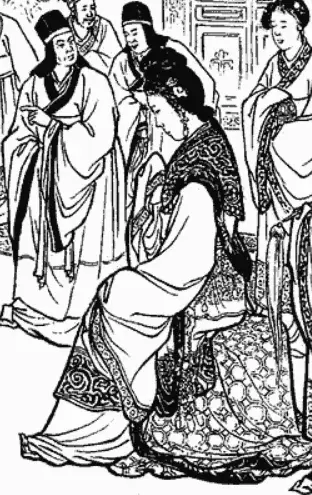
601 CE–636 CE
长孙氏(唐太宗皇后)
Empress Zhangsun (March 15, 601 – July 28, 636), posthumously honored as Empress Wende Shunsheng (文德顺圣皇后), was the celebrated empress consort of Emperor Taizong of Tang (Li Shimin) and the biological mother of Emperor Gaozong (Li Zhi), universally venerated throughout Chinese imperial history as the quintessential paragon of maternal virtue, intellectual refinement, and constructive political counsel. Born into an illustrious…
Empress Zhangsun (March 15, 601 – July 28, 636), posthumously honored as Empress Wende Shunsheng (文德顺圣皇后), was the celebrated empress consort of Emperor Taizong of Tang (Li Shimin) and the biological mother of Emperor Gaozong (Li Zhi), universally venerated throughout Chinese imperial history as the quintessential paragon of maternal virtue, intellectual refinement, and constructive political counsel. Born into an illustrious Xianbei-Han aristocratic military house, she was the daughter of famed Sui general Zhangsun Sheng and the younger sister of Chancellor Zhangsun Wuji. Marrying Li Shimin at age thirteen in 613, she stood steadfastly beside him through the tumultuous founding wars of the Tang dynasty. During the fateful Xuanwu Gate Incident of 626, she personally inspected and inspired the palace guards in full armor. Following Taizong's ascension, she managed the imperial harem with exquisite fairness and thrift, wearing recycled silks and refusing luxuries. Acting as Taizong's trusted "domestic counselor," she adroitly restrained the political ambitions of her own maternal relatives to prevent dynastic decay, while courageously interceding to protect upright remonstrating ministers like Wei Zheng from imperial fury. An accomplished scholar, she authored the celebrated thirty-volume moral treatise Female Exemplars (Nuze) and composed profound poetry. She died of illness in 636 at the age of thirty-five, inspiring Taizong's lifelong devotion and inaugurating the grand mountain-tomb tradition at Zhaoling.
Born in Chang'an into the prestigious Zhangsun clan as the daughter of Zhangsun Sheng.
Father passed away; expelled alongside her mother and brother Zhangsun Wuji by half-brothers, sheltered by uncle Gao Shilian.
Wed the fifteen-year-old Li Shimin at age thirteen in Chang'an, forming an enduring partnership.
Returned to her uncle's home in Yongxing Ward where auspicious omens were observed.
Accompanied the Li household to Taiyuan, managing domestic affairs with filial devotion.
Supported the family during the Taiyuan uprising and the capture of Chang'an.
Gave birth to Li Tai as Li Shimin was created General of Heavenly Strategy.
Contracted severe respiratory illness while accompanying Emperor Taizong at Jiucheng Palace.
Created Princess Consort of Qin upon the founding of the Tang dynasty, tending to imperial elders.
Personally exhorted palace soldiers before the Xuanwu Gate Incident; created Crown Princess and subsequently Empress.
Donned ceremonial imperial robes to congratulate Taizong on possessing an honest critic, saving Wei Zheng's life.
Resolutely urged Taizong to limit the aristocratic peerages and political offices of her brother Zhangsun Wuji.
Passed away in the Lizheng Hall on July 28; interred in the Zhaoling mountain mausoleum.
Empress Zhangsun traced her lineage to the imperial Tuoba clan of Northern Wei, which had adopted the surname Zhangsun during the Taihe Sinicization reforms. Her father, Zhangsun Sheng, was an extraordinary strategist and diplomat under Emperor Wen of Sui who divided and neutralized the Gokturk Khaganate through brilliant frontier alliances. Following her father's premature death in 609, her elder half-brothers cruelly expelled nine-year-old Lady Zhangsun, her brother Zhangsun Wuji, and their mother Lady Gao from the family residence. They found refuge with their maternal uncle Gao Shilian, who recognized the girl's extraordinary intellect, sweet disposition, and deep love for reading. Arranging her betrothal to the promising second son of Li Yuan, Gao Shilian celebrated the marriage between the thirteen-year-old Lady Zhangsun and fifteen-year-old Li Shimin in the autumn of 613.
Throughout the chaotic civil wars that accompanied the collapse of the Sui dynasty, Princess Consort Zhangsun served as Li Shimin's most devoted domestic companion. While Li Shimin campaigned across the empire, she remained in the capital, tending to Emperor Gaozu with consummate filial devotion and skillfully smoothing over factional friction caused by rival consorts in the imperial harem. In 626, when the political conflict between Li Shimin and Crown Prince Li Jiancheng reached a mortal crisis, Princess Zhangsun stood firmly by her husband. On the fateful dawn of the Xuanwu Gate Incident, as Li Shimin's small band of loyal retainers assembled in nervous anticipation, Princess Zhangsun personally walked among the heavily armed warriors, checking their armor, offering words of calm comfort, and steeling their resolve. Following the successful coup and Emperor Taizong's ascension in the autumn of 626, she was formally enthroned as Empress of the Tang Empire.
As Empress, Lady Zhangsun rejected every manifestation of imperial extravagance. Her living quarters were unadorned, her meals simple, and her dresses made from coarse, unembroidered silk. Despite presiding over an imperial harem filled with noble daughters, she treated every consort with maternal gentleness, nurturing motherless imperial princes alongside her own children. Deeply conscious of the historical catastrophes wrought by foreign consort clans (waiqi) in the Han and Jin dynasties, Empress Zhangsun waged a continuous campaign to curb the advancement of her own family. When Emperor Taizong repeatedly insisted on appointing her brilliant brother Zhangsun Wuji to the supreme civilian post of Right Grand Chancellor, Empress Zhangsun persistently petitioned against the appointment, reminding her husband that dynastic safety required keeping imperial in-laws away from monopolistic political authority. Yielding to her wisdom, Zhangsun Wuji voluntarily resigned his executive posting.
Empress Zhangsun's most enduring historical contribution was her courageous protection of honest court officials. In 628, when Emperor Taizong returned to his private chambers from an audience fuming with rage and shouting that he would execute the stubborn "country bumpkin" Wei Zheng, Empress Zhangsun quietly withdrew. Moments later, she emerged wearing her formal imperial coronation robes, performing the full ceremonial prostration before the astonished emperor. When Taizong asked the reason, she serenely smiled and said, "I have heard that only an enlightened sage ruler possesses ministers courageous enough to speak honestly. Wei Zheng dares to remonstrate because Your Majesty is an enlightened sovereign; how could I not offer my congratulations?" Taizong's fury dissolved into laughter and profound shame, ensuring that Wei Zheng remained the conscience of the Zhenguan reign. In her leisure hours, she compiled the thirty-volume treatise Female Exemplars (Nuze), synthesizing the moral wisdom of historical women. In 636, she fell gravely ill. On her deathbed, she commanded that her burial involve no lavish gold, jade, or earth mounds, requesting to be interred inside a natural cavern within Mount Jiuzong to avoid burdening the common people. She died on July 28, 636, at the age of thirty-five. Devastated by her loss, Emperor Taizong constructed a high observation tower in the palace to gaze daily toward Mount Jiuzong, grieving his beloved empress until his own death thirteen years later.
Empress Zhangsun established the supreme classical paradigm of the "Wise and Virtuous Empress" in Chinese civilization. Her personal modesty, rejection of palace factionalism, and promotion of thrift created a serene domestic environment that directly nurtured the golden age of the Zhenguan reign.
Her psychological agility and political courage in shielding fearless critics like Wei Zheng preserved the vibrant culture of administrative remonstrance that defined early Tang governance. Her intervention ensured that Emperor Taizong's autocracy remained restrained by ethical accountability.
Her scholarly magnum opus, Female Exemplars (Nuze), stood as a landmark work of moral philosophy and female ethics. Combining classical Confucian historiography with personal administrative reflection, it became standard pedagogical reading for imperial households across East Asia.
Born in Luoyang in 601 to Sui general Zhangsun Sheng and Lady Gao, young Lady Zhangsun was foretold by diviners to possess boundless nobility.
After Zhangsun Sheng died in 609, her half-brother Zhangsun Anye drove her, her mother, and Zhangsun Wuji from the ancestral estate, yet she later interceded as Empress to reward Anye rather than punish him.
From 616 to 626, she cared for Emperor Gaozu's consorts to ease tensions between the Eastern Palace and the Prince of Qin's Mansion.
When Consort Yin and Consort Zhang slandered Li Shimin before Emperor Gaozu, Princess Zhangsun waited upon the palace ladies with unfailing humility.
Invested as Empress in late 626, she wore plain robes, practiced strict frugality, and declined to interfere in court appointments.
When Crown Prince Li Chengqian proposed a general amnesty and Daoist prayers during her 634 illness at Jiucheng Palace, Empress Zhangsun firmly forbade using state law or heterodox rites for her personal health.
On her deathbed in 636, she urged Taizong to restore Chancellor Fang Xuanling, who had been dismissed over a minor fault.
She died in Lizheng Hall in the sixth month of 636 at age thirty-six (thirty-five sui) and received the posthumous title Empress Wende.
Buried inside Mount Jiuzong according to her frugal testament, her tomb was watched daily by Taizong from a viewing tower in the palace until Wei Zheng reminded him of his filial duties at Xianling.
Her surviving poem Spring Outing Song (Chunyou Qu) and personal artifacts were treasured by Emperor Taizong and recorded in Tang miscellanies.
She bore three sons—Crown Prince Li Chengqian, Prince of Wei Li Tai, and Prince of Jin Li Zhi (Emperor Gaozong)—alongside Princesses Changle, Chengyang, and Jinyang.
In 648, Crown Prince Li Zhi founded Daci'en Temple in Chang'an to honor his late mother Empress Wende.
Votive sutras discovered at Dunhuang preserve Tang court prayers dedicated to the spirit of Empress Wende.
Descended from the Northern Wei royal clan, the Zhangsun house linked the Sui-Tang military aristocracy through marriages with the Gao and Li clans.
Tang and Song commentators cited her restraint as the benchmark for empresses in dynastic histories.
Whenever Taizong asked her opinion on state punishments or awards, she replied that a hen should not crow at dawn.
Her interment at Zhaoling inaugurated the Tang mountain-tomb tradition, surrounded by over one hundred accompanying tombs of founding statesmen and generals.
Following her death, Taizong composed moving elegies and personally revised her biography in the court records.
Her progression from Duchess of State to Princess of Qin, Crown Princess, and Empress mirrored the founding of the Tang empire.
Throughout her decade as Empress (626–636), no palace attendant was unjustly executed under her supervision.
While refusing routine political power, she intervened at decisive moments to protect upright officials and restrain her own kin.
She accompanied Emperor Taizong on summer progresses to Jiucheng Palace in Linyou, where she first fell gravely ill in 634.
She enforced strict frugality on Crown Prince Li Chengqian's household and instructed Princess Changle to respect her husband's elders.
Her thirty-volume Examples for Women (Nuze) critiqued earlier empresses, including Empress Ma of Han for failing to curb her brothers completely before her death.
During the Wude era, her personal visits to Emperor Gaozu's harem repeatedly defused political crises aimed at Li Shimin.
As Li Jiancheng and Li Yuanji sought to dismantle the Prince of Qin's Mansion in 626, she steadied the household in Chang'an.
When Wei Zheng opposed marrying Princess Changle with rituals exceeding those of the Emperor's sister, Empress Zhangsun praised Wei Zheng's defense of ritual hierarchy.
She consistently upheld the dignity of third-rank court ministers against palace arrogance.
In Nuze, she argued that preventing consort clan overreach required barring relatives from chancellery power from the outset.
Her example of coarse silk robes and simple carriages set the moral tone for early Tang noblewomen.
By repeatedly begging Taizong not to appoint Zhangsun Wuji as chancellor, she sought to spare her family the fate of the Han Lu and Huo clans.
She established strict inner-palace rules forbidding eunuchs and maids from relaying outer-court rumors.
Ceremonial liturgical music (Guangda Zhi Wu) was composed for her spirit tablet in the imperial temple.
Courtiers Liu Ji and Chu Suiliang frequently invoked Empress Wende's teachings when advising Taizong on educating the princes.
Her deeds were recorded in the Veritable Records of Taizong, Zhenguan Zhengyao, Old Book of Tang, and New Book of Tang.
Epigraphic records such as the Shanji Temple stele preserve accounts of her charitable endowments during epidemics.
Statesmen including Wei Zheng, Fang Xuanling, and Li Jing were granted accompanying burials around Zhaoling.
She consistently urged Taizong to trust Fang Xuanling's long service and Wei Zheng's candor.
She supported the selection of Confucian scholars from the Hongwen Institute to instruct the Eastern Palace.
She favored upright scholars such as Yu Shinan and Kong Yingda as mentors to the imperial princes.
Spanning twenty thousand hectares on Mount Jiuzong, Zhaoling became the grandest imperial mausoleum complex of the Tang dynasty.
Across Tang, Song-Yuan, Ming-Qing, and modern historiography, Empress Zhangsun is universally acclaimed as the exemplar of imperial consort virtue.
Her Nuze and biographical model influenced courtly literature across China, Korea, and Japan.
FIGURES ASSOCIATED WITH THIS DYNASTY