Birth | Born in Duling, Jingzhao.
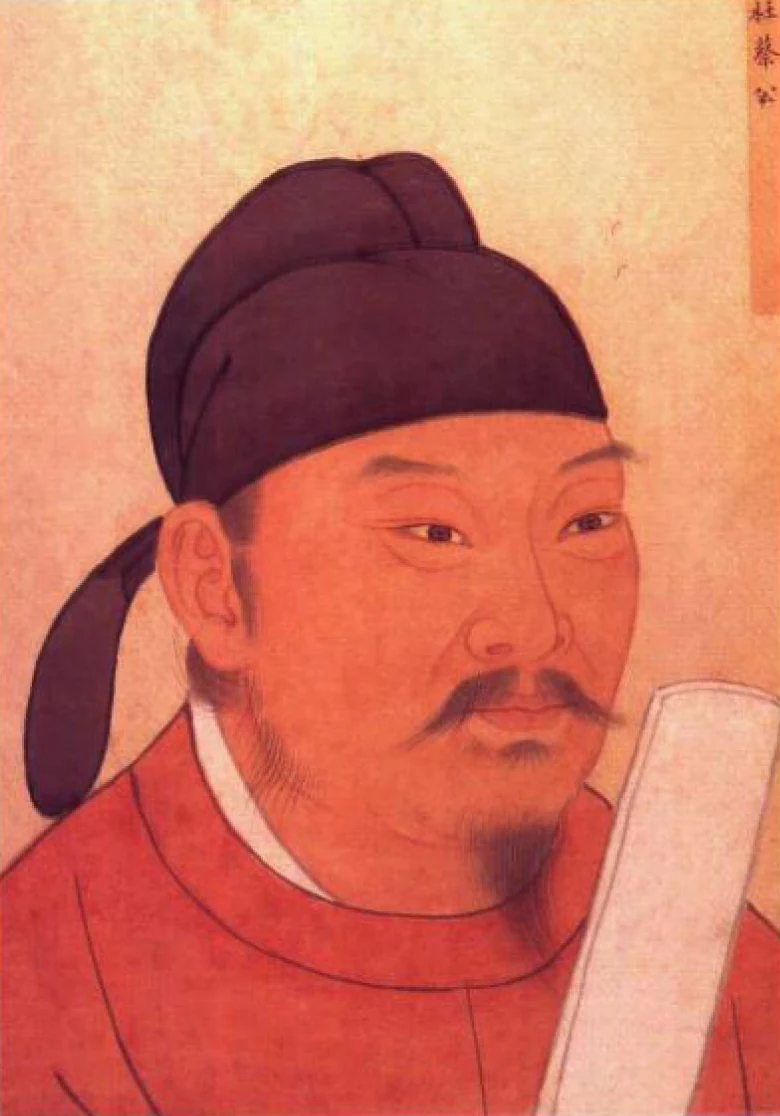
585 CE–630 CE
Tang grand councilorstatesman
Du Ruhui
杜如晦
Du Ruhui (585–630), courtesy name Keming, was a native of Duling in Jingzhao, southeast of present-day Xi'an. He was a leading grand councilor of the early Tang and ranked third among the Twenty-four Meritorious Officials of Lingyan Pavilion. Born into the Jingzhao Du clan, he served briefly as commandant of Fuyang late in the Sui before resigning. After Li Yuan and his sons entered Chang'an, Li Shimin recruited Du Ruhui into…
585 CE–630 CETang Dynasty
PROFILE
Du Ruhui (585–630), courtesy name Keming, was a native of Duling in Jingzhao, southeast of present-day Xi'an. He was a leading grand councilor of the early Tang and ranked third among the Twenty-four Meritorious Officials of Lingyan Pavilion. Born into the Jingzhao Du clan, he served briefly as commandant of Fuyang late in the Sui before resigning. After Li Yuan and his sons entered Chang'an, Li Shimin recruited Du Ruhui into the Prince of Qin's staff. Recommended by Fang Xuanling, he became a trusted adviser and accompanied Li Shimin in campaigns against Xue Rengao, Liu Wuzhou, Wang Shichong, Dou Jiande, and other regional powers. In 626, he helped plan the Xuanwu Gate Incident. Afterward he became Minister of War and Duke of Cai. During the Zhenguan era he governed jointly with Fang Xuanling; the pair became famous in the phrase “Fang plans, Du decides” and helped establish the political foundations of Zhenguan-era good government. Du Ruhui died of illness in 630 at the age of forty-six. Emperor Taizong mourned him deeply and suspended court for three days.
- Also known as
- Duke of Lai
- Courtesy name
- Keming
- Period
- Tang
- Date of Birth
- 585
- Date of Death
- May 6 630
- Dynasty/Regime
- Tang Dynasty
- Identity
- Tang grand councilor, statesman
- Ethnicity
- Not recorded in historical sources
- Ancestral home
- Duling, Jingzhao (southeast of present-day Xi'an, Shaanxi)
- Place of birth
- Not recorded in historical sources
- Place of death
- Not recorded in historical sources
- Highest office
- See Biography and Major Deeds
- Major achievements
- Leading Zhenguan-era grand councilor noted for decisive judgment; died young and was deeply mourned by Emperor Taizong.
LIFE TIMELINE
Youth | Entered the pool of prospective officials; on the recommendation of Gao Xiaochi, Vice Minister of Personnel, became commandant of Fuyang, but soon resigned.
Age thirty-three | After Li Yuan and his sons entered Chang'an, Li Shimin recruited him as a judicial officer in the Prince of Qin's establishment.
Age thirty-four | Accompanied Li Shimin against Xue Ju and Xue Rengao and advised on military affairs.
Age thirty-five | Accompanied Li Shimin against Liu Wuzhou and Song Jingang.
Age thirty-six | Accompanied Li Shimin against Wang Shichong and Dou Jiande.
Age thirty-seven | Served as an official in the Tiance establishment and ranked first among the Eighteen Scholars.
Age forty-two | Helped plan the Xuanwu Gate Incident; afterward appointed Left Assistant to the Crown Prince, then Minister of War and Duke of Cai.
Age forty-four | Served provisionally as Palace Attendant while concurrently Minister of Personnel and supervising the military forces of the Eastern Palace.
Age forty-five | Replaced Zhangsun Wuji as Right Vice Director of the Department of State Affairs and governed jointly with Fang Xuanling.
Age forty-six | Died of illness; posthumously appointed Minister of Works, transferred in title to Duke of Lai, and given the posthumous name Cheng.
Posthumous | Ranked third among the Twenty-four Meritorious Officials of Lingyan Pavilion.
BIOGRAPHY
Biography
Family Background and Early Years
Du Ruhui belonged to the Jingzhao Du clan, one of the prominent aristocratic lineages of the Guanzhong region. His great-great-grandfather Du Xiu was a General Who Supports the State under Northern Wei and was posthumously made Inspector of Yuzhou. His great-grandfather Du Jiao served Northern Zhou at the Yitong Sansi rank and as governor of Wudu Commandery. His grandfather Du Hui was chief secretary of Huaizhou under the Sui and Marquis of Fengxiang County. His father Du Zha served as chief secretary of Changzhou under the Sui. Raised in a long-established official family with a strong scholarly tradition, Du Ruhui was intelligent from childhood and enjoyed discussing history and literature.
During the Daye era of the Sui (605–618), Du Ruhui was selected as a prospective official. Gao Xiaochi, Vice Minister of Personnel, valued him highly, saying that he possessed the talent to respond to changing circumstances and could become a pillar of the state. Gao advised him to preserve his virtues and begin with a modest office, appointing him commandant of Fuyang County. Du Ruhui was dissatisfied with the position and soon resigned and returned home. Later, when Emperor Yang of Sui traveled to Jiangdu, Du Ruhui briefly handled affairs on behalf of an official surnamed Wang who remained behind, but he did not hold the post for long.
Entering the Prince of Qin's Staff and Campaigning Across the Realm
In 617 Li Yuan, then based in Taiyuan, and his sons raised troops and entered Chang'an. After the capital was secured, Li Shimin recruited Du Ruhui as a judicial officer in the Prince of Qin's establishment. Li Shimin had many talented men, and a number were being transferred to local office. Du Ruhui himself was scheduled to become chief secretary of the Shanzhou Area Command. Fang Xuanling, record keeper in the Prince of Qin's staff, told Li Shimin that most transferred staff members could be spared, but Du Ruhui alone had the intelligence to understand affairs and the talent to assist a ruler. If the prince intended only to remain in one region he might not need him, Fang said, but if he intended to manage the realm, Du Ruhui was indispensable. Li Shimin accepted the advice and petitioned Li Yuan to keep Du Ruhui on his staff.
Du Ruhui thereafter accompanied Li Shimin on repeated campaigns. In 618 Xue Ju of Longxi attacked Jingzhou. Li Shimin's first campaign went badly, but after Xue Ju died and his son Xue Rengao succeeded him, Li Shimin campaigned again with Du Ruhui advising on military affairs and defeated Xue Rengao. In 619 Liu Wuzhou and Song Jingang occupied Taiyuan, and Du Ruhui accompanied Li Shimin in driving Liu Wuzhou back. In 620 Li Shimin attacked Wang Shichong at Luoyang; when Wang allied with Dou Jiande, Du Ruhui joined the campaign in which Dou was defeated first and Wang afterward. During the suppression of regional rivals, Du Ruhui helped assess military situations and plan operations, and Li Shimin acted on his judgments in eliminating competing forces.
First among the Eighteen Scholars of the Tiance Establishment
In 621 Li Shimin was given the title Grand General of the Heavenly Strategy and established a literary academy. Du Ruhui served as an official in the Tiance establishment and ranked first among its Eighteen Scholars. Li Shimin frequently visited the academy to discuss the classics with Du Ruhui and the others, sometimes continuing late into the night. Du Ruhui thus served not only as a military adviser but also as a participant in political planning.
Crown Prince Li Jiancheng, however, saw the concentration of talent in the Prince of Qin's establishment as a threat and joined Prince Li Yuanji of Qi in seeking to remove its officials. Li Jiancheng reportedly told Li Yuanji that among the Prince of Qin's men, only Du Ruhui and Fang Xuanling truly needed to be feared. He persuaded Li Yuan to expel both men from the capital. Du Ruhui had to leave the Prince of Qin's staff, although his contact with Li Shimin continued.
The Xuanwu Gate Incident
In 626 Crown Prince Li Jiancheng attempted to win over Yuchi Jingde and, after being refused, allegedly sent men to assassinate him. Li Jiancheng then persuaded Li Yuan to imprison Yuchi. After Li Shimin secured Yuchi's release, Yuchi learned that Li Jiancheng and Li Yuanji planned to harm Li Shimin at Kunming Pool and informed Zhangsun Wuji. Li Shimin remained hesitant despite constant urging from Yuchi Jingde and Hou Junji. He then remembered Fang Xuanling and Du Ruhui and secretly sent Zhangsun Wuji to summon them. Because Li Yuan had expelled them from the capital, returning without permission could bring a death sentence. Li Shimin gave his own sword to Yuchi Jingde, who brought Fang and Du into the Prince of Qin's residence disguised as Daoist priests. After consulting them, Li Shimin resolved to act and launched the Xuanwu Gate Incident on the fourth day of the sixth lunar month, killing Li Jiancheng and Li Yuanji.
Li Shimin was then named crown prince. Du Ruhui was appointed Left Assistant to the Crown Prince. In the tenth month, Li Shimin distributed rewards, appointed Du Minister of War, advanced him to Duke of Cai, and granted him a taxed estate of 1,300 households.
Zhenguan Government and Death
In 628 Li Shimin appointed Du Ruhui provisionally as Palace Attendant while concurrently Minister of Personnel and left him responsible for the military forces of the Eastern Palace. He performed effectively in these roles. In 629, during a severe drought, Li Shimin sent Fang Xuanling, Du Ruhui, and others to famous mountains and rivers to pray for rain. That year Du replaced Zhangsun Wuji as Right Vice Director of the Department of State Affairs and governed jointly with Fang Xuanling, the Left Vice Director. Together they helped establish early Tang central institutions and regulations and oversaw the selection of capable officials. Contemporary discussion of good grand councilors placed Fang and Du foremost.
In 630 Du Ruhui became ill and requested retirement. Li Shimin continued paying him according to his former office and repeatedly sent envoys and physicians; visitors to the Du residence were said to follow one another along the road. Du nevertheless died at forty-six. Li Shimin wept and did not hold court for three days. Du was posthumously made Minister of Works, transferred in title to Duke of Lai, and given the posthumous name Cheng.
Du Ruhui was clever and quick from childhood and fond of history and letters, and in the Daye years of the Sui he was taken as a candidate for office. The examiner Gao Xiaoji thought highly of him, saying he had the capacity to deal with affairs and should be a pillar of the state, and made him assistant magistrate of Fuyang for want of a better salary; he resigned and went home before long. In 617, when Li Yuan and his sons rose at Taiyuan and entered Chang'an, Du was called into the household of the Prince of Qin, Li Shimin, as a judicial officer and thereafter treated as a confidant. The heir apparent Li Jiancheng, seeing how many able men the Qin household held, proposed to Emperor Gaozu that its officials be posted elsewhere; many were transferred and Li Shimin was much troubled. Fang Xuanling, then recording officer of the household, told him that though many of the staff had gone there was nothing to regret but that Du Ruhui alone was clear-sighted and understood affairs, a talent fit to assist a king: useless if one only wished to hold a region, indispensable if one meant to order the realm. Li Shimin saw it at once and memorialized to keep Du with him.
Thereafter Du Ruhui helped direct Li Shimin's campaigns. When Xue Ju invaded Jingzhou, Li Shimin marched against him and was beaten; Xue Ju then died and Li Shimin attacked his son Xue Rengao with Du in support, and Xue Rengao surrendered and was beheaded. When Liu Wuzhou raided south, Du accompanied the campaign that drove him back. In 620 Li Shimin attacked Luoyang, where Wang Shichong had joined with Dou Jiande, and with Du at his side beat Dou first and then Wang. Against Xue Ju, Liu Wuzhou, Wang Shichong and Dou Jiande alike, Du planned within the tent and judged the state of the armies, and Li Shimin struck as he advised, destroying each power in turn.
As Li Shimin's prestige grew, Li Jiancheng and Li Yuanji grew jealous and plotted with the emperor's consorts against him. Riding past the residence of Yin Ashu, father of Consort Yin, Du was pulled from his horse and beaten by the household servants, who shouted that he dared pass the gate without dismounting; the affair was then reported through Consort Yin as an outrage committed by Li Shimin's man, and Gaozu would not believe Li Shimin's explanations. In 621 Li Shimin was made generalissimo of heavenlyassessment and founded the Literary Institute, with Du Ruhui as master of attendants and first of the eighteen scholars, the prince often discussing the classics with him there until deep into the night. Li Jiancheng feared this greatly and told Li Yuanji that only Fang Xuanling and Du Ruhui in the Qin household were to be worried about, and had the emperor expel both from the capital. In the coup at the Xuanwu gate in 626 the two contrived to enter the Qin household and take part in the planning; afterward both became chancellors, Du quick to decide where Fang was good at planning, so that the age spoke of "Fang's plans and Du's decisions." In 629 he became right vice director of the Secretariat and shared the government with Fang Xuanling; he died the next year at only forty-six, and Taizong wept bitterly, granting him posthumously the rank of opened office of the three excellencies and the title Duke of Lai, his portrait later hung in the Lingyan Pavilion.
After the coup at the Xuanwu gate Du Ruhui and Fang Xuanling were chancellors together, and the government of the early Zhenguan years was largely debated between them. As right vice director of the Secretariat he worked beside Fang as left vice director, and their division — "Fang's plans and Du's decisions" — was praised by their contemporaries. When he fell gravely ill in 630 Taizong sent repeated inquiries and visited him in person; after his death the emperor wept bitterly and granted him posthumously the rank of opened office of the three excellencies and the title Duke of Lai. It is recorded that Taizong later gave Fang Xuanling a belt of yellow silver and, saying that Du had merited the same as Fang, had a gold belt sent to Du's household, weeping as he spoke of former days. In 643, when Taizong had the portraits of meritorious ministers painted in the Lingyan Pavilion, Du Ruhui stood third after Zhangsun Wuji and Li Xiaogong, a measure of his standing in the Zhenguan court. His son Du He married Taizong's daughter, the Princess Chengyang, but was later executed for implication in the affair of the heir apparent Li Chengqian, and the family's fortunes declined.
At the coup at the Xuanwu gate in the sixth month of 626 Fang Xuanling and Du Ruhui entered the household of the Prince of Qin in disguise to join the plotting, and after its success both were promoted. In the first years of Taizong's reign they were chancellors together, sharing the government with Zhangsun Wuji, Yuchi Jingde and others, and the institutions of the court were largely framed with their participation, the division of duties among the departments and the rules for selecting officials proving especially influential. Du was strong in decision where Fang was strong in planning, and whenever Taizong and Fang could not settle a plan it awaited Du's judgment — hence the phrase "Fang's plans and Du's decisions." Their joint conduct of government in the early Zhenguan years is reckoned a chief cause of the prosperity of that reign.
From the Zhenguan era onward, discussions of worthy Tang chancellors have generally named Fang and Du together.
He and Fang Xuanling are named together as the most celebrated partnership among the ministers of Zhenguan.
Major Activities
Political Contributions
Du Ruhui was one of the important architects of Zhenguan-era good government. After becoming Right Vice Director of the Department of State Affairs in 629, he governed with Fang Xuanling, helped shape the central institutions and legal-administrative framework, and participated in selecting capable officials. Historical records state that the structure of the central offices and the evaluation of persons were decided by Fang and Du. Their complementary talents were summarized in the saying “Fang plans, Du decides”: Fang excelled in strategy, while Du excelled in decision. Li Shimin placed the two at the head of the civil officials and compared them to Xiao He of the Han.
Military Strategy
Although a civil official, Du Ruhui played a major advisory role in Li Shimin's conquest of rival regimes. From the first through third years of Wude he accompanied campaigns against Xue Rengao, Liu Wuzhou, Wang Shichong, Dou Jiande, and others, analyzing military situations and contributing to planning.
Planning the Xuanwu Gate Incident
Du Ruhui was one of the principal planners of the Xuanwu Gate Incident. In 626 (the ninth year of Wude), Li Jiancheng and Li Yuanji were plotting against Li Shimin. Even after Du Ruhui and Fang Xuanling had been expelled from the capital, they maintained secret contact with Li Shimin. When Li Shimin hesitated, the two disguised themselves as Daoist priests, entered the Prince of Qin's residence, and took part in the planning that persuaded him to launch the coup. After the coup succeeded, Du Ruhui was appointed Left Assistant to the Crown Prince and later Minister of War.
Repaying Gao Xiaochi's Recognition
Du Ruhui remembered Gao Xiaochi's early recognition of his abilities. After becoming prominent, he erected a stele praising Gao's virtue in gratitude for having been identified as a man of talent and appointed to his first office.
Forgiving His Uncle
Du Ruhui's uncle Du Yan had served Wang Shichong and had once advised that Du Ruhui's elder brother be killed; Du Ruhui's younger brother Du Chuke had also been imprisoned. After Li Shimin captured Luoyang, Du Yan was taken prisoner and faced execution. Du Ruhui at first wanted him put to death, but Du Chuke urged him not to kill an uncle out of private resentment. Du Ruhui relented and interceded for Du Yan, who was spared.
Personal Relations
- Great-great-grandfather: Du Xiu, Northern Wei General Who Supports the State, posthumously Inspector of Yuzhou.
- Great-grandfather: Du Jiao, Northern Zhou official of the Yitong Sansi rank and governor of Wudu Commandery.
- Grandfather: Du Hui, Sui chief secretary of Huaizhou and Marquis of Fengxiang County.
- Father: Du Zha, Sui chief secretary of Changzhou.
- Uncle: Du Yan, Duke of Anji Commandery.
- Younger brother: Du Chuke, later chief secretary in Prince Li Tai's establishment and Minister of Works.
- Sons: Du Gou, who inherited the title Duke of Lai; Du He, who married Princess Chengyang, daughter of Emperor Taizong of Tang.
- Gao Xiaochi: Sui Vice Minister of Personnel who recognized Du Ruhui's abilities and helped him enter official service.
- Fang Xuanling: Close colleague and friend who recommended Du to Li Shimin; the pair governed together and became associated with the saying “Fang plans, Du decides.”
- Li Shimin: Du Ruhui's ruler, who relied heavily on him and deeply mourned his death.
- Li Yuan: Emperor Gaozu of Tang, who once accepted Crown Prince Li Jiancheng's accusations and expelled Du Ruhui from the capital.
- Li Jiancheng: Crown prince who regarded Du Ruhui as a major threat and had him expelled from the capital.
- Li Yuanji: Prince of Qi who joined Li Jiancheng in opposing the Prince of Qin's staff.
- Du Yan: Uncle who had been at odds with Du Ruhui's brothers and was later forgiven by him.
Historical Assessment
Tang and Contemporary Assessments
- Li Shimin said that his bond with Du Ruhui had been deep and that Du's death left him grieving as he recalled his former services, according to an imperial edict quoted in the Old Book of Tang.
- The Old Book of Tang also records Li Shimin telling Fang Xuanling that Fang and Du had once assisted him together; because Du could no longer receive rewards, the emperor gave Fang an additional gold belt to place in Du Ruhui's spirit chamber.
- Chu Liang's encomium on the Eighteen Scholars of the Tiance Establishment praised Du for refinement, loyalty, righteousness, and a name made illustrious through service.
- Chang Gun grouped Du Ruhui with Wei Zheng, Wang Gui, Li Jing, Li Ji, and Fang Xuanling as men who supported the Tang's great enterprise and labored diligently for the ruling house.
Song and Yuan Periods
- Liu Xu praised Fang Xuanling and Du Ruhui as extraordinary talents who met an enlightened ruler, whose plans accorded with the needs of the age, and compared them to Xiao He and Cao Shen of the Han; his eulogy also presented Fang and Du as complementary voices working in harmony.
- Song Qi called Du a famous grand councilor. He argued that after the disorder at the end of Sui, Fang and Du helped restore institutions, regulations, and administrative order so effectively that later generations continued to benefit; although Du served for only a short period, Song Qi judged from Fang's reliance on him and Emperor Taizong's confidence that his strategic ability greatly exceeded that of ordinary men.
- Sima Guang wrote that among Tang grand councilors, Fang and Du were foremost in the earlier period, while Yao Chong and Song Jing were foremost later, with few others comparable.
- Hong Mai, in Spontaneous Essays of the Studio of Forbearance, ranked Xiao He, Cao Shen, Bing Ji, Wei Xiang, Fang Xuanling, Du Ruhui, Yao Chong, and Song Jing among the great ministers of Han and Tang, and repeated the saying that Fang Xuanling would not settle an important matter without Du Ruhui's judgment.
Ming and Qing Periods
- Sun Cheng'en praised Du's intelligence, clarity, decisiveness, and his work in assisting a true ruler to suppress disorder and restore peace.
- Gui Youguang included Du Ruhui, together with Liu Hongji and Li Jing, among those whose achievements helped Li Shimin suppress the disorder following the Sui.
- Li Tingji wrote that after the realm had been pacified, the emperor singled out Fang and Du even though they did not boast of their merit.
- Zeng Guofan listed figures such as Xiao He, Cao Shen, Fang Xuanling, Du Ruhui, Guo Ziyi, Li Guangbi, Han Shizhong, and Yue Fei as rare examples of men who established enduring achievement.
Modern Period
- Liu Houbin argued that Fang Xuanling and Du Ruhui rose to the highest ministerial rank in life and left lasting reputations after death; having both an understanding ruler and a trusted colleague, they helped Emperor Taizong inaugurate Zhenguan-era good government and contributed to institutional changes that completed a long transformation stretching from the Han through the Six Dynasties.
- Modern historians commonly regard the Fang-Du partnership as a model of Tang grand-councilor government, with “Fang plans, Du decides” becoming a classic description of complementary ministerial talent.
FIGURES ASSOCIATED WITH THIS DYNASTY
Bibliography
- Old Book of Tang, et al.
- New Book of Tang, et al.
- A Draft Discussion of Tang Political History