Born into the aristocratic Dai Commandery Zhangsun clan | Son of Northern Zhou Opener of the Office Zhangsun Kai and clan brother of Sui military strategist Zhangsun Sheng
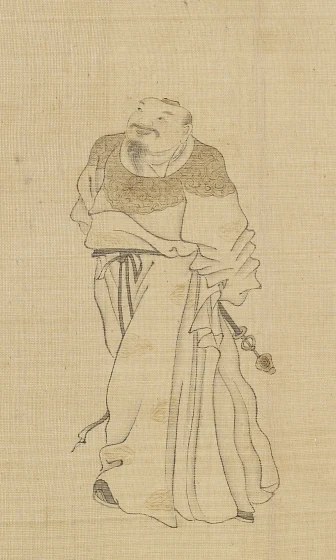
unknown
Empress Zhangsun of Emperor Taizong of Tang
Zhangsun Shunde
长孙顺德
Zhangsun Shunde (c. 565–631), a native of Luoyang, Henan, was a prominent founding commander of the Tang dynasty and one of the twenty-four meritorious statesmen commemorated in Lingyan Pavilion. Born into the eminent Xianbei aristocratic clan of Dai Commandery, he served as a palace bodyguard during the Sui dynasty. To evade disastrous military drafts for the Goguryeo campaigns, he fled to Taiyuan alongside Liu Hongji,…
unknownTang Dynasty
PROFILE
Zhangsun Shunde (c. 565–631), a native of Luoyang, Henan, was a prominent founding commander of the Tang dynasty and one of the twenty-four meritorious statesmen commemorated in Lingyan Pavilion. Born into the eminent Xianbei aristocratic clan of Dai Commandery, he served as a palace bodyguard during the Sui dynasty. To evade disastrous military drafts for the Goguryeo campaigns, he fled to Taiyuan alongside Liu Hongji, receiving shelter from Li Yuan and Li Shimin. In 617, under Li Shimin's direction, Zhangsun Shunde recruited over 10,000 men and assisted in eliminating the Sui vice-regents Wang Wei and Gao Junya, securing the launch of the Taiyuan Uprising. He subsequently participated in the conquest of Chang'an and captured the renowned Sui general Qutu Tong at Taolin, being appointed Grand General of the Left Xiaowei and created Duke of Xue. During the Zhenguan era, Emperor Taizong famously shamed his bribery by publicly presenting him with bolts of silk ("Gifting Silk to Shame"), prompting Zhangsun Shunde to deeply repent. Dispatched as Prefect of Zezhou, he rigorously curbed tyrannical clans and relieved the impoverished, earning renown as an exemplary provincial administrator. In 643, he was posthumously depicted in Lingyan Pavilion, ranked fifteenth.
- Courtesy / Art Name
- Unknown
- Era
- Ancient times
- Dynasty
- Ancient times
- Identity
- Empress Zhangsun of Emperor Taizong of Tang
- Date of Birth
- Not recorded in historical sources
- Date of Death
- Not recorded in historical sources
- Ethnicity
- Han
- Native place / family origin
- Luoyang, Henan (present-day Luoyang, Henan), ancestrally of Dai commandery
- Place of Birth
- Unconfirmed; the source gives a native place, not an explicit birthplace
- Place of Death
- Unknown
- Lifespan
- Unknown
- Highest Office
- Grand General of the Left Agile Guards, Grand General of the Left Martial Guards, Inspector of Zezhou, Duke of Xue; posthumously granted the title Commander of Jingzhou, posthumous name Xiang; his portrait was placed in the Lingyan Pavilion in the seventeenth year of Zhenguan
- Major Offices
- Grand General of the Left Agile Guards, Grand General of the Left Martial Guards, Inspector of Zezhou, Duke of Xue; posthumously granted the title Commander of Jingzhou, posthumous name Xiang; his portrait was placed in the Lingyan Pavilion in the seventeenth year of Zhenguan
- Peerage
- Duke of Xue
- Posthumous Name
- Xiang
- Major Achievements
- Secretly recruited over 10,000 insurgent troops in Taiyuan prior to the 617 uprising; captured Sui vice-commanders Wang Wei and Gao Junya; spearheaded the victory at Huoyi and pacified Guanzhong; ambushed and captured the veteran Sui general Qutu Tong at Taolin; reformed himself after receiving silk from Taizong and governed Zezhou with legendary integrity
LIFE TIMELINE
Following Li Yuan's enthronement as Emperor Gaozu of Tang in 618 | Following Li Yuan's enthronement as Emperor Gaozu of Tang in 618, Zhangsun Shunde was created Duke of Xue and appointed Grand General of the Left Xiaowei.
Enters official service as Imperial Escort Guard around age twenty-five | Trained in equestrian archery and heavy arms, serving in the imperial bodyguard
Following Li Yuan's enthronement as Emperor Gaozu of Tang in 618 | Following Li Yuan's enthronement as Emperor Gaozu of Tang in 618, Zhangsun Shunde was created Duke of Xue and appointed Grand General of the Left Xiaowei.
Evades the Goguryeo draft and takes refuge in Taiyuan | Avoided the perilous Liaodong conscription by fleeing to Taiyuan with Liu Hongji, sheltered by Duke of Tang Li Yuan
Recruits troops secretly and captures Wang Wei and Gao Junya | Recruited 10,000 shock troops under Li Shimin's direction, capturing Sui vice-commanders to launch the Taiyuan Uprising
Advances south through Huoyi and takes Daxing City (Chang'an) | Led shock cavalry in routing Song Laosheng at Huoyi, crossed the Yellow River first, and stormed the imperial capital
The Secret Recruitment and the Uprising of 617 By early 617 | ### The Secret Recruitment and the Uprising of 617 By early 617, rebellions raged throughout the empire, and warlord Liu Wuzhou invaded from Mayi with backing from the Eastern Turks.
Outmaneuvers and captures Sui Commander Qutu Tong at Taolin | Cut supply lines across the Shanzhou defiles alongside Liu Wenjing, capturing Qutu Tong and securing the eastern approaches
Following Li Yuan's enthronement as Emperor Gaozu of Tang in 618 | Following Li Yuan's enthronement as Emperor Gaozu of Tang in 618, Zhangsun Shunde was created Duke of Xue and appointed Grand General of the Left Xiaowei.
Secures the imperial palace during the Xuanwu Gate Incident | Guarded palace precincts during Li Shimin's accession, elevated to Duke of Xue with a fief of 1,000 households
Moral Reformation through the Gift of Silk In 626 | ### Moral Reformation through the Gift of Silk In 626, Zhangsun Shunde actively mobilized forces during the Xuanwu Gate Incident to support Li Shimin's accession, for which he was granted 1,000 households as an imperial fief.
Moral Reformation through the Gift of Silk In 626 | ### Moral Reformation through the Gift of Silk In 626, Zhangsun Shunde actively mobilized forces during the Xuanwu Gate Incident to support Li Shimin's accession, for which he was granted 1,000 households as an imperial fief.
Shamed by Emperor Taizong for accepting bribes of silk | Publicly presented with dozens of silk rolls in full court by Taizong to awaken his conscience, prompting deep moral reform
Briefly removed from rank following the Li Xiaochang conspiracy | Stripped of nobility due to correspondence with Li Xiaochang, but swiftly pardoned and appointed Prefect of Zezhou
Governs Zezhou with exceptional rectitude and curbs crime | Suppressed predatory local elites, protected impoverished widows, and achieved exemplary administrative governance
Dies of illness in Chang'an after defending Fang Xuanling | Stricken with grief following his dismissal for vigorously defending Fang Xuanling; posthumously named Commander of Jingzhou
Posthumously painted in Lingyan Pavilion | Honored as the 15th meritorious statesman on Emperor Taizong's iconic portrait gallery
Additional honour | He was additionally granted the title of Equal to the Three Excellencies with the opening of an office.
BIOGRAPHY
Biography
Ancestry and Sanctuary in Taiyuan Zhangsun Shunde belonged to the illustrious Xianbei nobility of Dai Commandery, whose ancestors had intermarried with Northern Wei emperors and held paramount military posts across the northern dynasties. His father, Zhangsun Kai, served as Opener of the Office with Equal Honors (Kaifu Yitong Sansi) under the Northern Zhou and Grand General under the Sui. Endowed with natural chivalry and skilled in archery and horsemanship, Zhangsun Shunde was renowned for bold generosity alongside his cousin Zhangsun Sheng (the father of Empress Wende). He commenced official service as an Imperial Escort Guard (You Xunwei) in Chang'an. During the late Daye reign of Emperor Yang, the realm was exhausted by relentless conscription for three consecutive disastrous invasions of the Korean kingdom of Goguryeo. In 612, facing imminent deployment to Liaodong where hundreds of thousands perished, Zhangsun Shunde resolved to defect. Together with his intimate companion Liu Hongji, he fled south and took sanctuary in the northern military stronghold of Taiyuan. At Taiyuan, the regional commander Li Yuan, Duke of Tang, and his second son Li Shimin recognized the profound strategic value of the Zhangsun lineage. Because the Li and Zhangsun families enjoyed enduring aristocratic and marital ties, Li Yuan sheltered the two fugitives in his private estate, treating them as brothers and confidants while secretly discussing plans for imperial restoration. ### The Secret Recruitment and the Uprising of 617 By early 617, rebellions raged throughout the empire, and warlord Liu Wuzhou invaded from Mayi with backing from the Eastern Turks. Recognizing that the mandate of Sui had ended, Li Shimin urged his father to act. To neutralize the suspicious Sui vice-commanders Wang Wei and Gao Junya who had been appointed by Emperor Yang to keep watch over Li Yuan, Li Shimin instructed Zhangsun Shunde and Liu Hongji to recruit volunteers under the pretext of defending against Turkic raids. Relying on his personal charisma and aristocratic pedigree, Zhangsun Shunde dispersed his private fortune among martial adventurers and fugitives, assembling over 10,000 disciplined warriors within a single month. Sensing treason, Wang Wei and Gao Junya planned to assassinate Li Yuan during a rain-praying ceremony at Jinci. Learning of the conspiracy, Li Shimin struck first on the morning of June 18, 617. As the magistrates convened, Zhangsun Shunde and Liu Hongji led a detachment of heavily armored commandos into the hall, seized Wang Wei and Gao Junya on the spot, and imprisoned them. Days later, Li Yuan executed the two officials on charges of colluding with the Turks, removing the final obstacle to the uprising. In July, Li Yuan unfurled the banner of revolt, appointing Zhangsun Shunde as Vanguard Commander. ### Campaigning to Chang'an and the Fall of Qutu Tong In the autumn of 617, Li Yuan marched his 30,000 troops south. At Huoyi (modern Huozhou, Shanxi), veteran Sui commander Song Laosheng barred the mountain passes with 20,000 elite troops. When the Tang army launched its decisive assault, Zhangsun Shunde spearheaded the cavalry charge, smashing through Song's core line. Tang soldiers decapitated Song Laosheng and routed his force. Following the victory at Huoyi, Zhangsun Shunde hastened south, becoming the first commander to force a crossing over the Yellow River at Hancheng. Advancing swiftly through Sanyuan, he joined Liu Hongji in surrounding the western gates of Chang'an (Daxing City). On December 12, 617, his forces scaled the battlements, capturing the imperial capital and elevating Prince Yang You to the throne. Following Li Yuan's enthronement as Emperor Gaozu of Tang in 618, Zhangsun Shunde was created Duke of Xue and appointed Grand General of the Left Xiaowei. Meanwhile, the formidable Sui general Qutu Tong held Luoyang and the strategic passes of Shanzhou with 100,000 veteran soldiers, threatening the Tang capital from the east. Emperor Gaozu dispatched Liu Wenjing and Zhangsun Shunde to subjugate Qutu Tong. Facing a fortified stalement at Taolin near Tongguan, Zhangsun Shunde led light cavalry through rugged ravines to sever Qutu Tong's supply convoys, simultaneously routing the vanguard forces of Sang Xianhe. Deprived of grain, Qutu Tong attempted a fighting retreat eastward, but Zhangsun Shunde and Liu Hongji pursued him over hundreds of li, surrounding and capturing Qutu Tong alive at Chousang relay station. The surrender of Qutu Tong's entire army secured the eastern approaches of the Guanzhong plain for the infant Tang Empire. ### Moral Reformation through the Gift of Silk In 626, Zhangsun Shunde actively mobilized forces during the Xuanwu Gate Incident to support Li Shimin's accession, for which he was granted 1,000 households as an imperial fief. However, accustomed to luxury, Zhangsun Shunde gradually succumbed to bribery. In 627 (Zhenguan 1), an informant reported that he had accepted dozens of rolls of fine silk as an illicit payoff. Under the strict laws of Tang, taking bribes was punishable by severe corporal punishment and stripping of official rank. Emperor Taizong, loath to execute a founding hero who had saved his life and empire, devised a profound psychological corrective. Taizong summoned all high officials to the main hall, had dozens of heavy rolls of silk brought from the imperial treasury, and announced: "Shunde must be lacking in clothing to have accepted bribes. I hereby bestow these silk rolls upon him, and he must carry them out of the palace upon his own back!" Shamed to his core, Zhangsun Shunde bent under the heavy burden of the silk and staggered out of the hall before the silent court. This famous episode, known in history as "Gifting Silk to Shame," worked a total transformation upon him; he closed his doors and resolved never to touch illicit wealth again. In 628, following the treason conspiracy of Li Xiaochang, Zhangsun Shunde was implicated due to past correspondence and temporarily stripped of his titles. Recognizing his loyalty, Taizong soon appointed him Prefect of Zezhou. Arriving in Zezhou, Zhangsun Shunde governed with ferocious integrity and compassion. He dismantled entrenched local criminal syndicates, overturned unjust convictions, and personally provisioned impoverished orphans and widows. Under his firm governance, public order was completely restored, and crime vanished from the roads. Hearing of his transformation, Emperor Taizong celebrated his achievements in open court, restored his dukedom, and composed a personal poem praising his administrative virtue. ### Demise and Lingyan Pavilion Honor In 631, Senior Chancellor Fang Xuanling was dismissed over a minor court dispute. Deeply loyal to his comrades, Zhangsun Shunde vigorously petitioned the throne on Fang's behalf, arguing so vehemently that he incurred Taizong's temporary wrath and was recalled to Chang'an. Worn out by decades of martial exertion and political distress, he took ill in his capital residence and died in late 631 at the age of approximately sixty-seven. Emperor Taizong mourned him bitterly, attended his funeral rites, and posthumously promoted him to Commander-in-Chief of Jingzhou with the posthumous title "Xiang" (Martial and Merit). In 643, when Taizong commissioned the famous court artist Yan Liben to paint the portraits of the twenty-four supreme founders of the dynasty in the Lingyan Pavilion, Zhangsun Shunde was placed fifteenth, commemorated for all time alongside Qin Qiong and Yuchi Jingde. Birthplace clarification: the Any such birthplace assertion retained in the existing narrative remains unconfirmed.
Major Activities
Uprising at Taiyuan Recruited over 10,000 shock troops under the pretext of defending against Turkic incursions, and assisted in capturing Sui vice-commanders Wang Wei and Gao Junya to secure the launching of the 617 Taiyuan Uprising. ### Breakthrough at Huoyi and Crossing the Yellow River Led vanguard cavalry in crushing Song Laosheng at Huoyi, spearheaded the river crossing at Hancheng, and helped storm the western gates of Chang'an to establish Tang's capital base. ### Capture of Qutu Tong at Taolin Severed supply corridors through mountainous trails at Taolin, defeating Sang Xianhe and capturing the veteran Sui general Qutu Tong alive at Chousang. ### Reformation and Exemplary Governance in Zezhou Overcame the disgrace of the "Gifting Silk" incident to become an incorruptible and effective provincial governor in Zezhou, eradicating banditry and protecting vulnerable subjects. ### Commemoration in Lingyan Pavilion Enshrined as the fifteenth meritorious founder of the Tang dynasty in the Lingyan Pavilion in 643.
Personal Relations
- Cousin: Zhangsun Sheng, eminent military diplomat under Sui; father of Empress Wende.
- Kinswoman: Empress Zhangsun (Empress Wende), wife of Emperor Taizong.
- Nephew: Zhangsun Wuji, chief advisor to Emperor Taizong and first ranked statesman in Lingyan Pavilion. ### Sovereigns - Emperor Gaozu (Li Yuan): Sheltered Zhangsun Shunde in Taiyuan; granted him supreme generalships upon founding the Tang.
- Emperor Taizong (Li Shimin): Lifelong military commander and sovereign who shamed his corruption through silk and commemorated him in Lingyan Pavilion. ### Military Comrades - Liu Hongji: Inseparable companion who shared exile in Taiyuan, the recruitment of troops, and the capture of Qutu Tong.
- Liu Wenjing: Key strategist of the Taiyuan Uprising and co-commander during the Shanzhou campaign.
- Qutu Tong: Formidable opponent captured by Zhangsun Shunde who subsequently became a fellow Tang general.
- Fang Xuanling: Chief chancellor whose defense led to Zhangsun Shunde's final political dispute.
Historical Assessment
Tang Dynasty Evaluations - Emperor Gaozu (Li Yuan): "Shunde and Hongji recruited veteran fighters and initiated our righteous rising, pacifying the passes and securing the altars of state; their merit towers over our time."
- Emperor Taizong (Li Shimin): "Zhangsun Shunde performed grand service for me. Although he took a small bribe of silk, he possessed the capacity for shame. I gifted him silk to awaken his conscience, and he indeed transformed shame into valor, governing Zezhou with absolute purity. He was truly an exemplary governor!"
- *Liu Xu (Old Book of Tang): "Zhangsun Shunde rose in arms at Taiyuan and fought through a hundred battles as the trusted arm of Taizu. Though flawed by greed, he was moved by Taizong's gift of silk, emerging as a celebrated provincial governor. He was truly a man capable of moral reformation." ### Later Historiographical Critiques - Sima Guang (Zizhi Tongjian)*: "Taizong gifted silk to shame his heart, and Shunde cleansed his mind and thoughts. Arriving in Zezhou, he eliminated major oppressors and pitied the weak, establishing total discipline. Ancient ministers held that knowing shame is near to courage; Shunde truly exemplified this."
- *Wang Fuzhi (On the Zizhi Tongjian)*: "Shunde was an energetic servant of the Taiyuan rising who aided Shimin in pacifying the empire; his deeds cannot be eclipsed. The episode of the gifted silk was an exceptional art of sovereign leadership, and Shunde ultimately did not disappoint Taizong's generous grace."
FIGURES ASSOCIATED WITH THIS DYNASTY
Bibliography
- Old Book of Tang*, Volume 58, Biography 8: Biography of Zhangsun Shunde
- New Book of Tang*, Volume 105, Biography 30: Biography of Zhangsun Shunde
- Zizhi Tongjian*, Volumes 183–194: Tang Annals
- Cefu Yuangui*, Volume 345: Section on Generals: Military Merit
- Essentials of Governance of the Zhenguan Era*, Volume 6: On Reprimand and Discipline