Birth | Born in Zouping, Shandong; her father Sun Zhong served as registrar of Yongcheng County
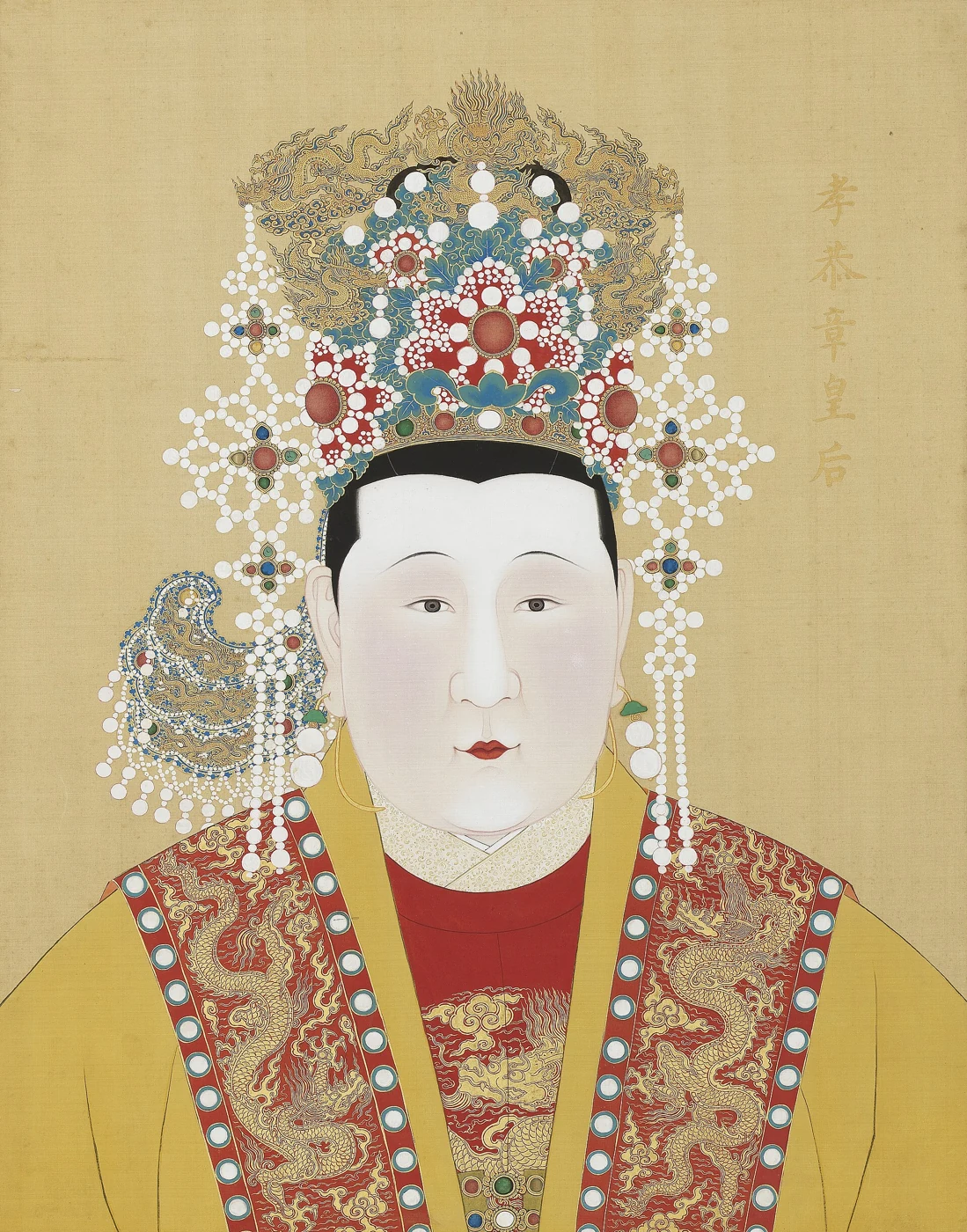
1399 CE–1462 CE
Empress Dowager
Empress Sun
孙氏(明宣宗皇后)
Empress Xiaogongzhang, née Sun (1401, the third year of the Jianwen era – 1462, the sixth year of the Tianshun era), was a native of Zouping County in Jinan Prefecture, Shandong (present-day Zouping, Shandong). She was the second empress of the Ming Xuande Emperor Zhu Zhanji, the biological mother of the Yingzong Emperor Zhu Qizhen according to one account and his adoptive mother according to another, and the daughter of Sun…
1399 CE–1462 CEMing Dynasty
PROFILE
Empress Xiaogongzhang, née Sun (1401, the third year of the Jianwen era – 1462, the sixth year of the Tianshun era), was a native of Zouping County in Jinan Prefecture, Shandong (present-day Zouping, Shandong). She was the second empress of the Ming Xuande Emperor Zhu Zhanji, the biological mother of the Yingzong Emperor Zhu Qizhen according to one account and his adoptive mother according to another, and the daughter of Sun Zhong, registrar of Yongcheng County. Lady Sun lived through the Yongle, Hongxi, Xuande, Zhengtong, Jingtai, and Tianshun reigns. She played a key role in the two major political crises of the Tumu Crisis and the Duomen Coup and made important contributions, as described in the source, to maintaining Ming rule and political stability.
- Other names
- Empress Sun; Empress Dowager Sun; Empress Xiaogongzhang, née Sun
- Period
- Ming
- Date of Birth
- 1401 CE(3rd year of the Jianwen era)
- Date of Death
- 1462 CE(6th year of the Tianshun era)
- Dynasty/Regime
- Ming
- Identity
- Empress Dowager
- Ethnicity/Ethnic affiliation
- Not recorded in historical sources
- Ancestral home
- Zouping County, Jinan Prefecture, Shandong (present-day Zouping, Shandong)
- Place of birth
- Not recorded in historical sources
- Posthumous title
- Not recorded in historical sources
- Major achievements
- Empress of the Xuande Emperor and mother of the Yingzong Emperor; empress dowager during the Zhengtong, Jingtai, and Tianshun reigns; lived through the Tumu Crisis.
LIFE TIMELINE
Age ten | Entered the palace on the recommendation of the wife of the Earl of Pengcheng and was raised by Crown Princess Zhang, later Empress Chengxiao
Age seventeen | At Zhu Zhanji's marriage, Lady Hu was invested as imperial grandson's consort and Lady Sun as a concubine
Age twenty-four | Gave birth to Princess Changde
Age twenty-five | After Zhu Zhanji ascended the throne, Lady Sun was invested as Noble Consort
Age twenty-six | The Xuande Emperor specially bestowed a gold seal on Noble Consort Sun, breaking the precedent that noble consorts did not possess seals
Age twenty-seven | Gave birth to the emperor's eldest son Zhu Qizhen; according to one account, she took a palace woman's son as her own
Age twenty-eight | Empress Hu was deposed and Lady Sun was made empress
Age thirty-five | The Xuande Emperor died; the Yingzong Emperor succeeded, and Lady Sun was honored as Empress Dowager
Age forty-nine | During the Tumu Crisis the Yingzong Emperor was captured; she ordered the Prince of Cheng to act as regent, approved his accession as the Jingtai Emperor, and was honored as Empress Dowager Shangsheng
Age fifty-seven | Supported the Duomen Coup; after the Yingzong Emperor was restored, she received the honorific title Empress Dowager Shenglie Cishou
Age sixty-two | Died on the fourth day of the ninth month; received the posthumous title Empress Xiaogong Yixian Ciren Zhuanglie Qitian Peisheng Zhang, was jointly buried in Jingling with the Xuande Emperor, and enshrined in the Imperial Ancestral Temple
BIOGRAPHY
Biography
Family Background and Early Years
Lady Sun's ancestral home was Zouping in Shandong. Her father Sun Zhong rose from being an Imperial University student to become registrar of Yongcheng County. Lady Sun was described from childhood as “fair-complexioned and intelligent” and noted for her beauty. The turning point in her life came through the recommendation of the wife of the Earl of Pengcheng, a fellow native. The countess was the mother of Empress Zhang, wife of the Ming Renzong Emperor, and, like Sun Zhong, was associated with Yongcheng. She frequently entered the palace and praised Lady Sun's virtue to Empress Zhang.
In 1410, the eighth year of the Yongle era, the Yongle Emperor Zhu Di was considering a marriage for his imperial grandson Zhu Zhanji. After Empress Zhang relayed the countess's recommendation, Zhu Di ordered Lady Sun, then only ten, to enter the palace and be raised by Crown Princess Zhang, later Empress Chengxiao.
However, when Zhu Zhanji formally married in 1417, the fifteenth year of Yongle, Lady Hu of Jining was ultimately chosen as his principal consort while Lady Sun was made only a concubine. According to the Shengchao Tongshi Shiyi Ji, the wife of the Earl of Pengcheng was quite dissatisfied and frequently complained to Empress Zhang, but the empress, regarded as virtuous, declined to pass judgment.
Period as Noble Consort
In 1424, the twenty-second year of Yongle, Lady Sun gave birth to Princess Changde. In 1425, the first year of Hongxi, Zhu Zhanji ascended the throne and Lady Sun was made Noble Consort.
In the fifth month of 1426, the first year of Xuande, the Xuande Emperor Zhu Zhanji cited Noble Consort Sun's “reverence and strict propriety, conduct in accordance with ritual, and utmost filial devotion in serving the empress dowager” when he proposed to the Ministry of Rites that she be granted a gold seal. Under early Ming palace regulations, an empress received a gold investiture tablet and gold seal, while noble consorts and ranks below her received an investiture tablet but no seal. The Xuande Emperor made a special exception for Lady Sun. After consulting Empress Dowager Zhang, he had a gold seal made for her. The practice of noble consorts possessing seals was said to begin with this case.
On the eleventh day of the eleventh month of 1427, the second year of Xuande, Noble Consort Sun gave birth to the emperor's eldest son Zhu Qizhen; according to another account, she took a palace woman's son as her own. The Xuande Emperor was nearing thirty before obtaining an eldest son, and his favor toward Noble Consort Sun deepened further.
Becoming Empress and the Deposition Dispute
In 1428, the third year of Xuande, the Xuande Emperor summoned senior ministers including Zhang Fu, Jian Yi, Yang Rong, Xia Yuanji, and Yang Shiqi to discuss deposing Empress Hu on the grounds that she had no son. The emperor listed Empress Hu's faults. Yang Rong supported deposition, citing Emperor Renzong of Song's deposition of Empress Guo as precedent, while Yang Shiqi firmly opposed it, arguing that “a minister serves emperor and empress as a son serves father and mother” and that one should not lightly speak of deposing a mother.
Empress Hu herself submitted a memorial yielding her position and asking that the foundation of the state be settled promptly. Noble Consort Sun made a show of declining, saying, “When the empress recovers, she will certainly bear a prince. How could my son be placed ahead of the empress's son?” On the first day of the third month of 1428, Empress Hu was deposed and retired to Chang'an Palace under the title Master Jingci, while Lady Sun was invested as empress.
Empress Dowager Zhang pitied the deposed Empress Hu. At court banquets within the palace, she ordered Lady Hu to sit above Empress Sun, which displeased Empress Sun.
As Empress Dowager and the Tumu Crisis
On the third day of the first month of 1435, the tenth year of Xuande, the Xuande Emperor died. Empress Dowager Zhang installed Crown Prince Zhu Qizhen as emperor, the Yingzong Emperor. She herself became Grand Empress Dowager, while Empress Sun became Empress Dowager.
In 1449, the fourteenth year of Zhengtong, the Oirats launched a major invasion. The Yingzong Emperor personally led an expedition but suffered a catastrophic defeat at Tumu Fort. The source states that five hundred thousand elite troops were lost and that the emperor was captured, an event known as the Tumu Crisis. News of the disaster threw the capital into panic. Empress Dowager Sun and Empress Qian immediately gathered valuables as ransom and sent them to the Oirats, but the Oirats did not release the emperor after receiving them.
On the eighteenth day of the eighth month, Empress Dowager Sun ordered Zhu Qiyu, Prince of Cheng, to act as regent. She promoted Yu Qian to Minister of War and entrusted him with preparing the defense against the enemy. Early in the ninth month, court officials asked the empress dowager to allow the Prince of Cheng to become emperor to stabilize public confidence, and she approved the proposal. After repeatedly declining, the prince ascended the throne as the Jingtai Emperor, while Empress Dowager Sun was honored as Empress Dowager Shangsheng.
While the Yingzong Emperor remained captive north of the steppe frontier, Empress Dowager Sun repeatedly sent him winter clothing. After he returned to the Ming realm and was confined in the Southern Palace by the Jingtai Emperor, she visited him there on multiple occasions.
The Duomen Coup and Later Years
In the first month of 1457, the eighth year of Jingtai, the Jingtai Emperor became seriously ill and the imperial succession entered a crisis. Generals including Shi Heng and Xu Youzhen secretly planned the Duomen Coup to restore the Yingzong Emperor. They first reported their plan privately to Empress Dowager Sun and obtained her approval. On the twelfth day of the first month, the Yingzong Emperor was restored and the Jingtai Emperor was reduced to Prince of Cheng. The restored emperor granted Empress Dowager Sun the honorific title “Empress Dowager Shenglie Cishou.”
On the fourth day of the ninth month of 1462, the sixth year of Tianshun, Empress Dowager Sun died at the age of sixty-two. She was granted the full posthumous title Empress Xiaogong Yixian Ciren Zhuanglie Qitian Peisheng Zhang, jointly buried with the Xuande Emperor at Jingling, and enshrined in the Imperial Ancestral Temple.
Lady Sun was a native of Zouping in Shandong, born in 1401, her father Sun Zhong a registrary clerk of Yongcheng. Beautiful from girlhood, she was taken into the palace at about ten by order of Emperor Chengzu and raised by the Empress Chengxiao, Lady Zhang. In 1410 Chengzu held that the imperial grandson by descent was grown and should be matched, and the Countess of Pengcheng, mother of Empress Zhang and a native of Yongcheng, who often came to the palace, praised the girl's virtue; through Empress Zhang it reached Chengzu, and Lady Sun was brought into the palace at ten to be raised by the empress.
At the imperial wedding an edict called for the choosing of consorts, but because of what the astrologers reported the Lady Hu of Jining was made princess consort and Lady Sun only a concubine. When Renzong came to the throne and she was given her rank, he granted her the dress of a princess consort as a special favor. On Xuanzong's accession she was made a noble consort. By the old rule an empress received gold tablets and a gold seal while noble consorts and below had tablets but no seal; Xuanzong made an exception for Lady Sun, asking the empress dowager Zhang in the fifth month of 1426 for leave to have a gold seal made for her, the first noble consort to have one. Empress Hu bore only a daughter, and in the eleventh month of 1427 word went about the palace that the noble consort had borne the emperor's eldest son, which raised her in his favor. In the third month of the following year he proposed to depose the empress for childlessness, first summoning Zhang Fu, Jian Yi, Yang Rong, Xia Yuanji and Yang Shiqi; some were silent, some said she could be deposed, and Yang Shiqi argued that a subject stands to his emperor and empress as a son to his parents and cited the Song precedent of Renzong's deposition of Empress Guo as a warning. In the end Empress Hu offered to yield, was given the title of the Daoist nun of serene compassion and retired to the Chang'an Palace. On the first day of the third month Lady Sun was made empress. The empress dowager Zhang pitied the deposed empress, often had her to live nearby and ordered her to take precedence over the new empress, which Lady Sun resented.
On the birth of Yingzong the History of Ming has a striking entry: that Lady Sun herself being childless, she secretly took the son of a palace woman as her own, that son being the future Yingzong — a story current in the Ming but hard to verify, and historians have differed over it. Xuanzong died on the third day of the first month of 1435 and Yingzong took the throne in the second month, the empress dowager Zhang being honored as grand empress dowager and Lady Sun as empress dowager. In 1449, when Yingzong went in person against the Oirats, she ordered the Prince of Cheng, Zhu Qiyu, to act as regent, and after the emperor's capture at Tumu she at once gathered treasures as ransom and agreed to the Prince of Cheng's accession with Yu Qian in charge of the defense; on the fourth day of the twelfth month the new emperor added to her the honorific "Supreme Sage Empress Dowager."
When Yingzong was restored in 1457 she took part in the affair, and in 1458 received the honorific "Sagely and Glorious Compassionate and Long-Lived Empress Dowager." She died on the fourth day of the ninth month of 1462 and was buried with Xuanzong at Jingling, receiving the posthumous title Xiaogong Yixian Ciren Zhuanglie Qitian Peisheng Zhang Huanghou with her tablet placed in the ancestral temple. From concubine to noble consort to empress, from empress dowager to grand empress dowager, she passed through six reigns from Yongle to Tianshun, one of the women who spanned several reigns in the palace politics of the early Ming.
The fate of the deposed Empress Hu and the later restoration of her title form another thread of this palace history. After her deposition she retired to the Chang'an Palace with the title of the Daoist nun of serene compassion and died in 1443, first buried with concubine rites at Jinshan before her imperial rank was restored. The History of Ming records that the empress dowager Zhang often had her lodged in the Qingning Palace and gave her precedence over the empress Sun at feasts, to the latter's lasting resentment — evidence that the order of precedence between the deposed and the new empress was still contested after Xuanzong's death.
The Tumu disaster and Yingzong's restoration are the two occasions on which Empress Dowager Sun figures most prominently in politics. In 1449, when Yingzong went on campaign, she ordered the Prince of Cheng to act as regent and agreed to his accession, keeping the central government intact in a national crisis, and was given the honorific "Supreme Sage Empress Dowager." When Yingzong was restored in 1457, the authors of the coup, Shi Heng and Xu Youzhen, first reported to her, and afterward the emperor added the honorific "Sagely and Glorious Compassionate and Long-Lived Empress Dowager." She died in 1462 and was buried with Xuanzong at Jingling with the posthumous title Xiaogong Yixian Ciren Zhuanglie Qitian Peisheng Zhang Huanghou. Her honorifics and posthumous names accumulated during her lifetime, and the complete record, with exact dates, is preserved in the veritable records and in the Yanshan Hall Miscellany, making her a full case in the study of Ming empress titulature.
That Lady Sun received a gold seal as a noble consort marks a change in Ming palace practice. Previously only empresses had seals, noble consorts receiving tablets only; Xuanzong made an exception and had a seal made for her, and once the precedent was set the gradations among palace ranks loosened somewhat, a point clearly recorded in the History of Ming and noted in Ming memoirs.
The coup of 1457 is said to have proceeded after Shi Heng, Xu Youzhen and Cao Jixiang reported to Empress Dowager Sun. With Emperor Jing gravely ill and his son dead young, the succession hung unsettled and the conspirators restored Yingzong. Her part in it has been judged variously, but the honorific "Sagely and Glorious Compassionate and Long-Lived Empress Dowager" conferred by the restored emperor shows where she stood. As for the History of Ming's statement that she secretly took a palace woman's son as her own, that son being Yingzong, the Ming sources differ, some holding that Yingzong was in fact born to a palace woman and raised by her, others treating her as his mother, and matters within the palace are hard to establish. After her death in 1462 she was buried with Xuanzong at Jingling, her tablet placed in the ancestral temple, and her posthumous name settled after repeated discussion as Xiaogong Yixian Ciren Zhuanglie Qitian Peisheng Zhang Huanghou.
Major Activities
Political Activity: Decisions during the Tumu Crisis
After the Tumu Crisis of 1449, the Ming state faced an unprecedented emergency. The capital was gripped by fear, and some officials advocated moving south. Empress Dowager Sun decisively rejected flight and accepted the views of the pro-resistance faction led by Vice Minister of War Yu Qian. The source attributes to her a series of decisions: ordering Zhu Qiyu, Prince of Cheng, to act as regent; promoting Yu Qian to Minister of War; establishing Zhu Jianshen, son of the captive Yingzong Emperor, as crown prince; and approving Zhu Qiyu's accession as the Jingtai Emperor. These decisions stabilized public confidence and laid the groundwork, according to the source, for victory in the Defense of Beijing.
Political Activity: Choice during the Duomen Coup
In 1457, the eighth year of Jingtai, the Jingtai Emperor became seriously ill and rejected officials' memorials asking that a crown prince again be appointed, creating a succession crisis. Shi Heng and other generals plotted to restore the Yingzong Emperor and first secretly reported their plan to Empress Dowager Sun, receiving her approval. Her support is described as one of the key factors in the coup's success. The History of Ming records that “Shi Heng planned to seize the gate, secretly reported it to the empress dowager, and she permitted it,” directly indicating her role.
Palace Life and Family
After entering the palace, Lady Sun was raised by Empress Zhang and grew up alongside Zhu Zhanji. After he became emperor, she rose from concubine to noble consort and then to empress and remained favored throughout. Her relationship with Empress Dowager Zhang was complex: Zhang was both her guardian and a counterweight during the process by which Empress Hu was deposed. While Empress Dowager Zhang was alive, the deposed Empress Hu was frequently summoned to Qingning Palace and placed above Empress Sun at palace banquets, which displeased Empress Sun.
Controversy: The Question of the Yingzong Emperor's Mother
There are two accounts concerning the biological mother of the Ming Yingzong Emperor Zhu Qizhen. The Veritable Records of the Yingzong Emperor explicitly identifies his mother as “Empress Xiaogong Yixian Ciren Zhuanglie Qitian Peisheng Zhang,” meaning Lady Sun was his biological mother. The History of Ming: Biographies of Empresses and Consorts, however, states that “the consort also had no son and secretly took a palace woman's son as her own; this was the Yingzong Emperor,” claiming Lady Sun was not his biological mother. The source states that many modern scholars consider the “stolen child” account difficult to sustain: Lady Sun was only a noble consort at the time and, with Empress Dowager Zhang still alive, could hardly have concealed such a substitution from both emperor and empress dowager; she had also already borne Princess Changde and therefore did not necessarily need to take such a risk. The question remains unresolved and, according to the source, awaits further archaeological evidence.
Personal Relations
- Father: Sun Zhong, registrar of Yongcheng County, enfeoffed as Earl of Huichang
- Elder brother: Sun Jizong
- Younger brother: Sun Xianzong
- Husband: Zhu Zhanji, the Ming Xuande Emperor
- Son: Zhu Qizhen, the Ming Yingzong Emperor; according to one account, her adopted son
- Daughter: Princess Changde
- Father-in-law: Zhu Gaochi, the Ming Renzong Emperor
- Mother-in-law: Empress Chengxiao Zhang
- Stepdaughters: Princess Shunde and Princess Yongqing, daughters of Empress Hu
- Zhu Di, the Ming Yongle Emperor: selected Lady Sun to enter the palace
- Zhu Zhanji, the Ming Xuande Emperor: husband who made her empress
- Zhu Qizhen, the Ming Yingzong Emperor: son, according to one account adopted son; honored her as Empress Dowager
- Zhu Qiyu, the Jingtai Emperor: younger brother of her husband; she approved his accession
- Yu Qian: Minister of War promoted and relied upon after the Tumu Crisis
- Empress Hu: the deposed former empress, with whom there was a dispute over precedence
- Jingtai Emperor: confined the Yingzong Emperor and changed the succession; Empress Dowager Sun waited for circumstances to change
Historical Assessment
Ming / Contemporary
- Veritable Records of the Xuande Emperor: the Xuande Emperor praised Noble Consort Sun for “the flourishing of her virtue and righteousness, foremost in the inner palace,” and for reverence, strict propriety, ritual conduct, and filial devotion.
- History of Ming: Biographies of Empresses and Consorts: records that Lady Sun “was beautiful from childhood” and was favored after entering the palace, but also preserves the claim that “the consort also had no son and secretly took a palace woman's son as her own.”
- Ming official historical works generally assessed positively Empress Dowager Sun's decisions during the Tumu Crisis and the Duomen Coup, describing her as having “turned back the tide and managed two upheavals.”
Early to Mid-Qing
- Qing historians compiling the History of Ming used a number of disparaging descriptions of Lady Sun; the story that she “stole a son and seized the empress's position” appears in the History of Ming.
- Cai Dongfan's Romance of Ming History described Noble Consort Sun as “seductive in figure, cunning in temperament, naturally precocious in calculation,” and claimed she used every means to please the emperor and manipulated him, a negative assessment.
Late Qing and Republican Period
- Republican-era scholars generally inherited Qing evaluations and criticized Lady Sun's role in the deposition of Empress Hu, while also acknowledging aspects of her decision-making during the Tumu Crisis.
Modern Period
- Professor Lin Yanqing argues that Empress Sun disrupted palace politics during the Xuande reign in disputes over the gold seal and the deposition of the first empress; obstructed the Prince of Cheng's accession after the Tumu Crisis and affected preparations against the Oirats; and played a negative role in the Duomen Coup, thereby bearing some responsibility for the Ming dynasty's transition from strength toward decline.
- Scholar Zheng Caiyun disagrees with Lin Yanqing's assessment. Zheng argues that after entering the central palace as empress, Lady Sun remained within the proper role of an empress and did not directly disrupt palace politics. Instead, at several critical moments she played a positive role: after the Tumu Crisis she accepted Yu Qian and other advocates of resistance, rejected moving south, approved Zhu Qiyu's accession, and actively arranged forces to defend Beijing, thereby resolving the crisis; when the Jingtai Emperor became seriously ill yet refused to appoint a crown prince, she supported the Duomen Coup and removed another political crisis for the Ming state.
FIGURES ASSOCIATED WITH THIS DYNASTY
Bibliography
- History of Ming, Lie ZhuanDiYi·Hou Fei
- Veritable Records of Emperor Yingzong of Ming