September 11, 1428 CE(3rd year of the Xuande era, Ming, 8th month, 3rd day) | Born in Beijing | Born in Beijing
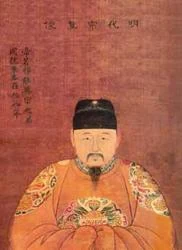
Seventh emperor of the Ming Dynasty (Emperor Jingtai / Ming Daizong)
Zhu Qiyu
朱祁钰
Zhu Qiyu (September 11, 1428 – March 14, 1457) was the seventh emperor of the Ming Dynasty. He was the second son of the Xuande Emperor Zhu Zhanji, younger brother of the Emperor Yingzong Zhu Qizhen, with Consort Xianfei Wu as his birth mother. Born in Beijing in 1428, he was made Prince of Cheng after his brother's accession. In the fourteenth year of Zhengtong (1449), the eighth month and fifteenth day, Emperor Yingzong was…
Ming Dynasty
PROFILE
Zhu Qiyu (September 11, 1428 – March 14, 1457) was the seventh emperor of the Ming Dynasty. He was the second son of the Xuande Emperor Zhu Zhanji, younger brother of the Emperor Yingzong Zhu Qizhen, with Consort Xianfei Wu as his birth mother. Born in Beijing in 1428, he was made Prince of Cheng after his brother's accession. In the fourteenth year of Zhengtong (1449), the eighth month and fifteenth day, Emperor Yingzong was captured by the Oirat Mongols at Tumu, in what became known as the "Tumu Crisis." Zhu Qiyu was called upon to serve as regent and then ascended the throne with the era name Jingtai, honoring Zhu Qizhen as Grand Emperor. After his accession, he employed capable ministers, worked diligently, stabilized the chaotic situation, organized the Defense of Beijing which turned the Ming Dynasty from crisis to safety, and then developed the economy, provided disaster relief, resettled refugees, and stabilized society. In the eighth year of Jingtai (1457), the Duomen Coup occurred, Yingzong was restored, and Zhu Qiyu was demoted to Prince of Cheng. On the nineteenth day of the second month, Zhu Qiyu died at Xiyuan at age thirty.
- Period
- Ming Dynasty
- Ethnicity
- Han
- Role
- Seventh emperor of the Ming Dynasty (Emperor Jingtai / Ming Daizong)
- Date of Birth
- September 11, 1428 CE(3rd day of the 8th month, 3rd year of Xuande, Ming;one account gives September 21)
- Place of birth
- Beijing
- Reign
- 1449–1457
- Era name
- Jingtai
- Temple name
- Daizong (conferred by Southern Ming Hongguang Emperor)
- Posthumous name
- Gongren Kangding Jing Huangdi (conferred by Emperor Xianzong); Futian Jiandao Gongren Kangding Longwen Buwu Xiande Chongxiao Jing Huangdi (Southern Ming additional title)
- Burial place
- Jingtai Mausoleum, Western Hills, Beijing
- Predecessor
- Zhu Qizhen (Emperor Yingzong, Zhengtong era)
- Successor
- Zhu Qizhen (Emperor Yingzong, Tianshuo restoration)
- Father
- Zhu Zhanji (Xuande Emperor)
- Mother
- Consort Xianfei Wu
- Elder brother
- Zhu Qizhen (Emperor Yingzong)
- Major achievements
- Organized the Defense of Beijing; stabilized the Ming Dynasty after the Tumu Crisis; commissioned the Comprehensive Gazetteer of the Realm; Jingtai blue (cloisonné) enamel craftsmanship flourished during his reign
- Date of Death
- March 14, 1457 CE(1st year of the Tianshun era, Ming, 2nd month, 19th day)
LIFE TIMELINE
Tumu Crisis | Tumu Crisis; Emperor Yingzong captured by Oirat Mongols
September 22, 1449 CE(14th year of the Zhengtong era, Ming, 9th month, 6th day) | Zhu Qiyu installed as regent then emperor | Zhu Qiyu installed as regent then emperor; era name Jingtai
Organized the Defense of Beijing | Organized the Defense of Beijing; repelled Oirat invasion
Deposed crown prince Zhu Jianshen | Deposed crown prince Zhu Jianshen; installed his own son Zhu Jianji
Duomen Coup | Duomen Coup; Yingzong restored; Zhu Qiyu demoted to Prince of Cheng
Died at Xiyuan at age thirty | Died at Xiyuan at age thirty
Restoration of Emperor Yingzong | After the Duomen coup Emperor Yingzong was restored.
Death | Zhu Qiyu died and was later buried in the Jingtai Mausoleum.
Posthumous restoration | Emperor Xianzong restored his imperial status and granted him the posthumous name Emperor Jing.
Southern Ming honours | The Southern Ming court granted him the temple name Daizong and a longer posthumous title.
BIOGRAPHY
Biography
Called to Service During Crisis
Zhu Qiyu was born in Beijing in 1428. After Emperor Yingzong Zhu Qizhen ascended the throne, Zhu Qiyu was granted the title Prince of Cheng. In the fourteenth year of Zhengtong (1449), Emperor Yingzong, at the urging of eunuch Wang Zhen, decided to lead a personal military campaign against the Oirat Mongols. On the fifteenth day of the eighth month (September 1), the Tumu Crisis erupted, and Emperor Yingzong was captured. When news reached the capital that night, the court and country were shocked. Some wealthy households prepared to transfer their property, and individual ministers wanted to send their children to Nanjing.
The Defense of Beijing
Zhu Qiyu, on the advice of Yu Qian, Vice Minister of War, declined proposals to move the capital south. Instead, he organized the Defense of Beijing, summoning troops from surrounding provinces, appointing Yu Qian to command the defense, and coordinating with border garrisons. The Oirat forces under Esen attacked Beijing but were repelled. This victory stabilized the Ming Dynasty and prevented its collapse.
Governance During the Jingtai Era
After the defense was secured, Zhu Qiyu worked to restore order. He developed the economy, provided disaster relief, resettled refugees, and stabilized society. He commissioned the compilation of the Comprehensive Gazetteer of the Realm, a comprehensive geographic survey of the empire. The cloisonné enamel craft known as "Jingtai Blue" flourished during this period and has been passed down through generations.
The Duomen Coup and Death
Zhu Qiyu did not treat Emperor Yingzeng well during his captivity, causing friction between the brothers. He deposed the crown prince Zhu Jianshen and installed his own son Zhu Jianji, who died young. In the first month of the eighth year of Jingtai (1457), Shi Heng, Xu Youzhen, and others launched the Duomen Coup, restoring Yingzong to the throne and demoting Zhu Qiyu to Prince of Cheng. Zhu Qiyu died at Xiyuan on the nineteenth day of the second month at age thirty.
Posthumous Treatment
Emperor Yingzong gave him the pejorative posthumous name "Li", styling him "Prince Cheng Li" and burying him with princely rites at the Jingtai Mausoleum in the Western Hills of Beijing. He was the only Ming emperor after the capital's move to Beijing who was not buried in the imperial mausoleums. When Emperor Xianzong Zhu Jianshen ascended, he acknowledged Zhu Qiyu's imperial title and conferred the posthumous name Gongren Kangding Jing Huangdi. During the Southern Ming Hongguang era, the temple name Daizong was conferred with the additional posthumous name Futian Jiandao Gongren Kangding Longwen Buwu Xiande Chongxiao Jing Huangdi.
His Family and Birth
Zhu Qiyu was the second son of Emperor Xuanzong of Ming and younger brother of Emperor Yingzong, born on the third day of the eighth month of the third year of Xuande, 1428. His mother lady Wu was by origin a woman of Dantu county in Zhenjiang prefecture; and by the epitaph of the virtuous consort Rongsi, the consort, whose surname was Wu, was "gentle and quiet from birth" and was chosen into the palace on the second day of the eighth month of the tenth year of Yongle at sixteen, "serving the Xuanzong emperor in the eastern palace," bearing Zhu Qiyu in the third year of Xuande and being afterwards advanced to be virtuous consort; and the History of Ming also records that Wu An was of Dantu, whose father Wu Yanming had a daughter who served Xuanzong in the eastern palace and bore the Jing emperor, being made virtuous consort in the third year of Xuande. In the second month of the tenth year of Xuande, 1435, Xuanzong dying and Yingzong succeeding, his younger brother Qiyu was enfeoffed as prince of Cheng, the patent saying that the many sons of the Son of Heaven must be enfeoffed as princes, to hand on from generation to generation and screen the imperial house, which was the great law of kings ancient and modern, and that he should be diligent in loyalty and filial piety, love the worthy and the people, and ever firmly support the throne. On the second day of the fourth month of the second year of Zhengtong, 6 May 1437, Zhu Qiyu, then only ten, was capped; the capping of the prince of Cheng was announced in the ancestral temple, with the grand preceptor and duke of Ying, Zhang Fu, holding the tally to perform the rite, the junior preceptor and minister of war and grand secretary of the Hall of Reverent Conduct, Yang Rong, as his assistant, and gifts of paper money and silk to Zhang Fu and the rest in due degrees.
The Tumu Disaster and His Accession
In the fourteenth year of Zhengtong, 1449, the Mongolian Oirats raiding deep into China, Emperor Yingzong, at the urging of the eunuch Wang Zhen, resolved to go out in person against them and left the prince of Cheng, Zhu Qiyu, to hold the capital. On the fifteenth day of the eighth month, 1 September, the disaster of Tumu followed, Yingzong being taken and the Oirats pressing hard; and the news reaching the capital that night, the court and the country were shaken and every man in the capital feared for himself, so that some rich households prepared to move their property away and some ministers meant to send their children to Nanjing. The expositor Xu Youzhen, on the evidence of the stars, was the first to propose moving the capital to Nanjing to avoid the sword, and many ministers supported it, while the vice-minister of war Yu Qian insisted on holding the capital. At Yu Qian's request Zhu Qiyu ordered the reserve troops of the two capitals and Henan, the anti-pirate troops of Shandong and the Nanjing coast, and the grain-transport troops of Jiangbei and the prefectures about Beijing to come to the capital at once, so that men's minds were somewhat quieted, and Yu Qian was presently made minister of war. On the eighteenth day, 4 September, the Sun empress dowager, Yingzong's mother, held a conference before the throne, making the prince of Cheng regent to "take charge of the hundred officials for the time" and consider what should be done; and on the twenty-second, 8 September, she further decreed the setting up of Yingzong's eldest son, Zhu Jianshen, as heir apparent. Wang Zhen having been trusted and any minister opposed to him killed or degraded, now that the emperor was taken and Wang Zhen killed the ministers raised their heads, kneeling outside the Meridian gate to demand that the regent punish the remnants of Wang Zhen's party; and when Wang Zhen's close associate came out to stop them he was beaten to death by the angry ministers on the spot, and Wang Zhen's kinsman and nephew Wang Shan was beaten to death in the court as well. Yu Qian, seizing Zhu Qiyu's sleeve, said that Wang Zhen deserved the destruction of his kin for his crimes and that Ma Shun and the rest deserved death and should not be pursued; and so Zhu Qiyu decreed that Ma Shun and the others had deserved their fate and that the ministers were guiltless. The ministers further memorialised him to take thought for the altars of state above all and succeed to the throne, the heir apparent Zhu Jianshen being then but two years old; and to prevent doubt from a young sovereign, Yu Qian, Wang Zhi and other ministers jointly memorialised the empress dowager, so that on the sixth day of the ninth month, 22 September, Zhu Qiyu was set up as emperor and Yingzong was honoured from afar as retired emperor. After his accession Zhu Qiyu decreed that the frontier commanders should not credit the Oirats' pretexts, so that their design of using Yingzong's name to extort goods and open the gates failed.
The Defence of Beijing and the Return of Yingzong
The Oirats in fury sent troops against Beijing, and Zhu Qiyu, employing Yu Qian and others, ordered the defence, tightened the government, gathered the armies and steadied men's minds, and in the eleventh month of that year drove the Oirats back and won the battle for Beijing. Having come to the throne so suddenly and holding power, Zhu Qiyu was unwilling to let it go. After the defence of Beijing the Ming armies beat the Oirats several times, and their leader Esen, finding no profit, wished to release Yingzong and so sue for peace; he wished to release him, but Zhu Qiyu was unwilling to receive him. When the ministers advised him to welcome Yingzong back he was displeased and said that he had not wanted to be emperor and that they had forced him to it; and then Yu Qian said that the throne was settled and would not be changed, so that he ought to bring him back at once; and Zhu Qiyu, seeing his ablest minister say so, answered that he would do as he said, and sent envoys one after another, afterwards giving the order for Yingzong's reception to the Oirat envoy Batuo and sending Yang Shan to bring him home. In the eighth month of the first year of Jingtai, 1450, Yingzong, a year in captivity, reached Beijing and entered by the Anding gate, afterwards changing to the imperial carriage and entering the Dong'an gate, where Zhu Qiyu came out to meet him and made his salutation, and Yingzong returned it, and taking each other's hands they wept so that their garments were wet, refusing and yielding to one another for a long while. Yet having brought his brother back to Beijing, Zhu Qiyu at once shut him up in the southern palace, and there he was locked for seven years; for Zhu Qiyu in his heart did not wish Yingzong to return, and to prevent his communicating with the old ministers he watched his every movement, and on the eunuch Gao Ping's advice had all the trees about the southern palace cut down lest any should climb the wall to reach him.
The Change of the Heir and the Coup of the Seized Gate
Zhu Qiyu was not content: he wished not only to be emperor himself but to make his own son Zhu Jianji the lawful heir, and to this end he bribed the ministers. At the time of the Tumu disaster the Sun empress dowager had first set up Yingzong's son Zhu Jianshen as heir, her meaning being plain that the realm was still Yingzong's and that Zhu Qiyu was but acting for him; and since the heir had been set up by the empress dowager Zhu Qiyu had to be cautious. He first sounded the senior eunuch Jin Ying by saying that the second day of the seventh month was the birthday of the heir of the eastern palace, and Jin Ying at once answered that the heir's birthday was the second day of the eleventh month — the former being Zhu Jianji's birthday and the latter the heir Zhu Jianshen's. The first sounding having failed of its aim, Zhu Qiyu bided his time, but he went on sounding and even bribing the ministers to take his side on the succession, and at last won their tacit consent; while the empress Wang, Zhu Jianji not being her son, would not agree to her husband's course, and arguing boldly was deposed and confined. So on the second day of the fifth month of the third year of Jingtai, 20 May 1452, Zhu Qiyu deposed his nephew Zhu Jianshen as prince of Yi and set up his own son Zhu Jianji as heir; but in the next year Zhu Jianji, after little more than a year as heir, died, which struck Zhu Qiyu a heavy blow in spirit. The Ming held to legitimacy, thinking the throne belonged to Yingzong's line, and the investigating censor of the Guizhou circuit, Zhong Tong, memorialised for the restoration of the heir and set out all the abuses of the government, at which Zhu Qiyu in anger had him thrown into prison and beaten to death. Zhu Qiyu being in his prime, the question of an heir did not then seem pressing; but in the first month of the eighth year of Jingtai, 1457, he suddenly fell gravely ill and the succession came up again, the ministers debating without settling it. On the sixteenth day, 10 February, word came from the inner palace that he was better, and the ministers meant to discuss the succession at court the next day; but that night the coup of the seized gate broke out. Shi Heng, having seen the emperor's condition and judging that he would not rise again, secretly planned with Xu Youzhen to restore Yingzong, and the two informed the Sun empress dowager and obtained her decree; and Shi Heng and the rest with troops opened the Chang'an gate and hurried to the southern palace to ask Yingzong to take the throne again. Reaching the Donghua gate, when the guards shouted to stop them Yingzong cried that he was the retired emperor, and the gate opened at the word; and Yingzong walked openly into the great hall. At the fifth watch, while the hundred officials waited in the court rooms outside the Meridian gate for Zhu Qiyu to hold court, they suddenly heard the bells and drums of the palace sound together and the gates open, and Xu Youzhen came out announcing that the retired emperor had resumed the throne; and the astonished ministers, at his urging, hastily formed up and went in to offer their congratulations. Zhu Qiyu, hearing the bells, asked those about him whether it was Yu Qian, and being told that it was the retired emperor, said that his elder brother's being emperor was good, good, good. On the day of his restoration Yingzong arrested the minister of war Yu Qian, the grand secretary Wang Wen and a number of ministers and eunuchs; and on the twenty-first day of the first month, 15 February, he decreed the change of the eighth year of Jingtai to the first year of Tianshun, and the next day Yu Qian and the rest were put to death on a false charge of treason.
His Deposition, Death and Posthumous Restoration
On the first day of the second month of the first year of Tianshun, 24 February 1457, Yingzong deposed Zhu Qiyu as prince of Cheng and confined him in the Yong'an palace of the western palace; and it is said that two or three days after his restoration Yingzong told the ministers at court that his brother was much better and could eat gruel, at which all were silent. On the nineteenth day of the second month, 14 March, Zhu Qiyu died at thirty. After his restoration Yingzong decreed that Zhu Qiyu had been unfilial, unbrotherly, unkind and unjust, his foul virtue made known and gods and men alike indignant, abolished his imperial title and gave him the posthumous name Li, calling him the prince Li of Cheng, a name of evil meaning that he had done evil all his life. He was the only Ming emperor after the removal of the capital to Beijing not buried in an imperial tomb: the Shou tomb he had built at Changping was ordered destroyed and he was buried at Jinshan, adjoining the graves of the young princesses; and Yingzong gave red silk and had Zhu Qiyu's consorts, lady Tang and others, buried with him alive, only the consort Wang surviving because she had been deposed by Zhu Qiyu. Yet in the Chenghua period some ministers began to hold it unjust that Zhu Qiyu, who had taken up office in the hour of danger, put down disorder and let the people live in peace, should be given the name Li; and some asked how, without his accession, the Oirats could have been driven off and Yingzong brought home. Emperor Xianzong, though Zhu Qiyu had deposed him as heir, understood his uncle's merit, and after much difficulty in the twelfth month of the eleventh year of Chenghua, 1475, decreed the restoration of his imperial title with the posthumous name of the reverent, benevolent, tranquil and settled Jing emperor and ordered his tomb repaired to imperial measure, thus acknowledging his merit in part; but he did not wholly rehabilitate him, the posthumous name given having only five characters where those of other Ming emperors had seventeen, so that Zhu Qiyu ranked lower than the rest, and he had no temple name. Only a hundred and eighty-seven years after his death, in the autumn of the first year of Hongguang, 1644, when the Chongzhen emperor had already hanged himself on Meishan, did the Hongguang government, on the fourth day of the seventh month, add the temple name Daizong and extend his posthumous name to seventeen characters. As for the Jingtai tomb: in the eleventh year of Chenghua Xianzong had it repaired and its sacrifices equal to those of the other imperial tombs, but though somewhat adorned it had no treasured wall and no bright tower, and its site was narrow and its situation poor, its tiles remaining green as for a princely tomb and its stele set east of the gate after the princely rule, so that it had the name of an imperial tomb but in truth the measure of a prince's; under Jiajing the tomb at Jinshan was further altered and the green tiles changed for the yellow glaze used only by emperors, but Zhu Qiyu's body was never moved into the Shou tomb built for him among the thirteen imperial tombs.
Major Activities
Stabilizing the State
After the Tumu Crisis, Zhu Qiyu faced the greatest crisis since the Ming's founding. He decisively employed Yu Qian and the pro-war faction, rejected proposals to move the capital south, and successfully organized the Defense of Beijing.
Jingtai Blue Craftsmanship
Cloisonné enamel, known as "Jingtai Blue", reached its peak during this period and became a representative traditional Chinese art form.
His Government, His Use of Men, His Military and Economic Measures
With years of war and Oirat plunder and floods within the land, disasters and famine everywhere, Zhu Qiyu took vigorous measures to secure the Ming. In politics he opened the way for remonstrance, sought the worthy, cleared out the eunuch faction, steadied the situation and employed Yu Qian and other good ministers, so that the administration was renewed. In military matters, against the Oirat advance he held to resistance to the end, gathering grain and drilling troops with Yu Qian's help and reorganising the garrisons: Yu Qian first chose a hundred thousand men from the remaining troops into five training camps, and in the third year of Jingtai, 1452, the garrison was increased by fifty thousand and reorganised into ten camps; and in raising them Yu Qian wholly reorganised the command of the capital garrison, where the control had been divided between nobles and palace eunuchs and each camp had been wholly independent, trained separately and commanded by its own field officer, so that when men of different camps had to fight together there was great confusion in the field. Under Yu Qian's plan each camp was commanded by one field officer and the whole garrison by a field commander chosen from among the officers, and the supervision of the garrison, till then the eunuchs' business, was extended to the officials of the capital. In short, Zhu Qiyu established a unified command and strengthened the supervision of the garrison by the officers of the capital. In the second year of Jingtai, 1451, he sent civil officials of the censorate to supervise the reopening of the military farms in Xuanfu, Datong and Jizhou; in the third year Yu Qian proposed the method of checking the rolls, by which the board of war and the censorate jointly verified twice a year the numbers of the camps to prevent officers from drawing pay for absent men; in the seventh year he had the arsenal office of the board of war establish a standard pattern, so that the making and issuing of weapons was subject to a standard, and a number of officers who had broken the law were also cleared out. In economy he took a lenient course, remitting taxes in varying degrees in the hard-hit regions of Shandong, Henan and Shanxi and relieving the starving and settling the wandering; he practised frugality, reduced palace expenditure and stopped all kinds of purchasing, and decreed that the grand coordinators throughout the realm should attend to farming and sericulture in their provinces, doing all he could to develop the economy.
The Pacification of the Risings in the Southwest
The basic problem of Zhu Qiyu's time was the recovery of stability. The reform of the army had restored peace on the frontier, but in the 1450s a series of risings of the minority peoples broke out in the inner provinces: from the first year of Jingtai, 1450, various regions suffered natural disasters which reduced the harvest, and with the extortions of corrupt officials there were risings in the southwest, and Zhu Qiyu employed Wang Ao as governor-general of the two Guangs to put them down. In Guangdong and Guangxi, long troubled by banditry and the unrest of the non-Chinese inhabitants, a unified command under Wang Ao was first established, he having before that strengthened the defences of the northeastern frontier and afterwards becoming minister of personnel; in the fourteenth year of Zhengtong, 1449, and the first year of Jingtai, 1450, a great rising broke out in Guizhou, and from the first to the third year of Jingtai the Yao and Miao of Guizhou and Huguang were suppressed, while in the fifth year of Jingtai, 1454, there was a rising in southern Sichuan and in the seventh year, 1456, one of the Miao of Huguang. Such disturbances were for the most part confined to the native regions of the south. On the frontier, after Esen was killed and the Oirats fell to quarrelling they were no longer a threat to the Ming; and in the Jingtai period the general Shi Heng proposed moving the camps and forts of the Yansui route along the old Qin road, moving Fugu fort to the old Chai pass, Gushan and Dongcun to Yelu river, Shenmu to Yangjia city, Bolin and Gaojia to Shiluo ravine, Shuangshan to Zhixi shoal, Yulin to Hualinbaijian shoal, Xiangshui and Boluo to Baitouyao, Tumen to Baila peak, Datuque to Lanchai pass, Longzhou to the northern city, Saimen to the old kiln and Qingbian camp to Kuai river, to face Anbian and Dingbian directly; but the change being deemed burdensome it was not carried out.
Letters and Cloisonne
In letters Zhu Qiyu sent men to every part of the realm to gather geographical and historical matter and had Chen Xun, Gao Gu and Wang Wen direct the compilation of the General Record of the World; but in the second year of Tianshun, 1458, Yingzong, not wishing Zhu Qiyu to have the credit of the compilation, condemned it as unbalanced in detail and wrong in selection and had Li Xian and others make the Comprehensive Record of the Great Ming for posterity, and when that was finished in the fourth month of the fifth year of Tianshun, 1462, the blocks of the earlier work were destroyed, so that few copies survive, until Zheng Zhenduo included it in a collectanea printed in 1947. Moreover, Zhu Qiyu fixed his era name as Jingtai, and cloisonne, or copper-bodied wire-inlaid enamel, a distinctive craft combining porcelain and copper whose history goes back further, was most in vogue in the Jingtai years, 1450 to 1456; and today the word jingtai in the craft's name has long outgrown its narrow sense of the Ming era and carries meanings of harmony, friendship, peace, prosperity, elegance and wisdom, while the "blue" in it refers not only to blue glaze but to all glazes, from which come the trade terms for filling, mending and firing; and after several centuries the craft still keeps its traditional wholly hand-made manner.
Personal Relations
- Zhu Zhanji**: Father, Xuande Emperor
- Zhu Qizhen**: Elder brother, Emperor Yingzong
- Yu Qian**: Minister of War, organized the Defense of Beijing
- Zhu Jianshen**: Nephew, later Emperor Xianzong
Historical Assessment
Zhu Qiyu was a capable ruler who served as a bridge between the preceding and succeeding eras, contributing to the welfare of the state and people. However, his failure to treat Emperor Yingzong well during captivity led to friction between the brothers and ultimately the Duomen Coup. His changes to the succession and the deposition of his empress were also criticized. Despite these personal failings, his role in saving the Ming Dynasty from collapse was significant.
FIGURES ASSOCIATED WITH THIS DYNASTY
Bibliography
- History of Ming, vol. 11, "Annals of Emperor Jingtai"
- Record of Events in Ming History, vols. 33–35
- Veritable Records of the Jingtai Era