Birth into a Military Family
Born in the dingwei year in Shuntian Prefecture into the Wang family, which held the hereditary office of Commander of the Jinwu Left Guard under her grandfather Wang Quan and father Wang Ying.
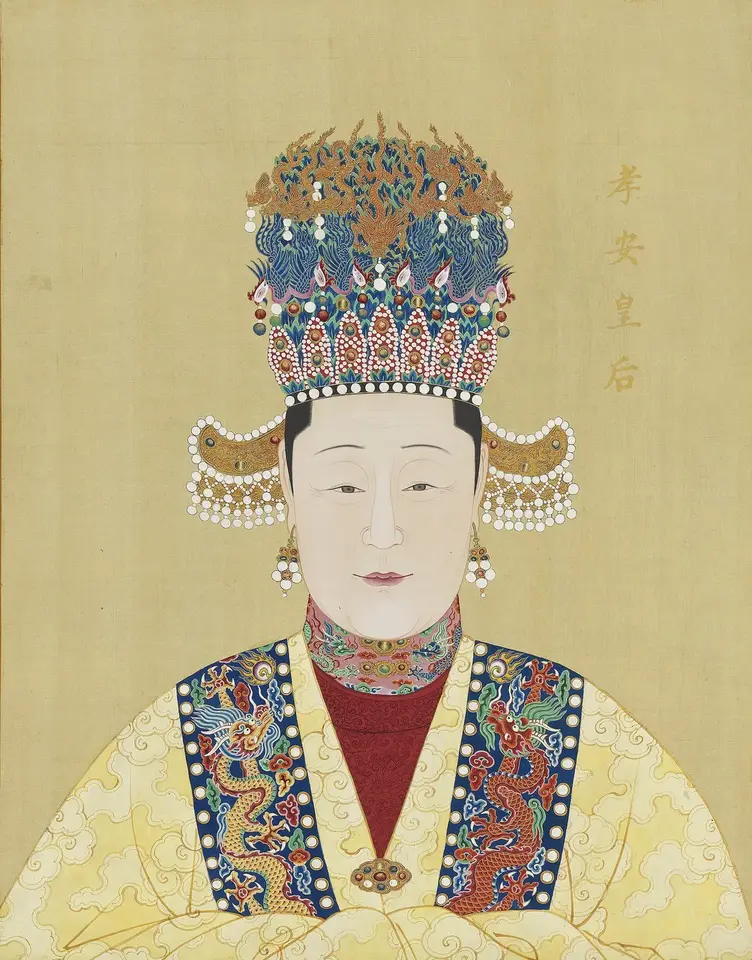
1427 CE–1506 CE
汪氏(明代宗废后)
Empress Wang (Jingtai Emperor) (汪氏, 1427–1506), historically known as Deposed Empress Wang, a native of Shuntian Prefecture (modern Beijing) and daughter of Wang Ying, Commander of the Jinwu Left Guard, was the principal empress of Emperor Daizong of Ming (Zhu Qiyu, the Jingtai Emperor). Invested as Principal Consort of the Prince of Cheng in the eighth month of the tenth year of the Zhengtong era (1445), she was elevated to…
Empress Wang (Jingtai Emperor) (汪氏, 1427–1506), historically known as Deposed Empress Wang, a native of Shuntian Prefecture (modern Beijing) and daughter of Wang Ying, Commander of the Jinwu Left Guard, was the principal empress of Emperor Daizong of Ming (Zhu Qiyu, the Jingtai Emperor). Invested as Principal Consort of the Prince of Cheng in the eighth month of the tenth year of the Zhengtong era (1445), she was elevated to Empress after Zhu Qiyu ascended the throne following the Tumu Crisis in the fourteenth year of the Zhengtong era (1449). Resolute in character and benevolent at heart, she issued an edict in the second month of the first year of the Jingtai era (1450) ordering imperial guards to bury more than 5,800 skeletons of soldiers and civilians killed during the defense of Beijing, and frequently consoled Empress Qian, who grieved day and night for the captive Emperor Yingzong. In the fifth month of the third year of the Jingtai era (1452), when the Jingtai Emperor sought to depose Emperor Yingzong's eldest son Zhu Jianshen (Emperor Xianzong) as Crown Prince and replace him with his own son Zhu Jianji (born to Consort Hang), Empress Wang firmly opposed the move, incurring the emperor's wrath and resulting in her deposition. After Emperor Yingzong's restoration in the first year of the Tianshun era (1457), she reverted to the title of Consort of the Prince of Cheng, was spared from immolation upon the Jingtai Emperor's death through the intercession of Grand Secretary Li Xian, and moved back to the princely residence; when Emperor Yingzong demanded a perforated jade belt that had belonged to her husband, she indignantly threw it down a well, exclaiming "Could a seven-year Son of Heaven not enjoy these few pieces of jade?", which led to the confiscation of the property she had brought out of the palace. After Emperor Xianzong ascended the throne, he treated her with deep filial respect in gratitude for her defense of his position as heir apparent. Dying in the twelfth month of the first year of the Zhengde era (1506) at the age of eighty, she was buried with the Jingtai Emperor at the Jingtai Mausoleum on Mount Jinshan and given the posthumous title Empress Zhenhui Anhe Jing, later expanded under the Southern Ming to Empress Xiaoyuan Suyi Zhenhui Anhe Futian Gongsheng Jing.
Born in the dingwei year in Shuntian Prefecture into the Wang family, which held the hereditary office of Commander of the Jinwu Left Guard under her grandfather Wang Quan and father Wang Ying.
Invested in the eighth month as Principal Consort of Zhu Qiyu, Prince of Cheng.
After Emperor Yingzong was captured at Tumu in winter, Zhu Qiyu ascended the throne and invested Lady Wang as Empress; she bore him two daughters, including Princess Gu'an.
Moved by compassion for the soldiers and elderly or weak civilians whose bones lay exposed after the defense of Beijing, issued an edict in the second month ordering officers to bury more than 5,800 sets of remains.
Steadfastly opposed the Jingtai Emperor's plan in the fifth month to depose Crown Prince Zhu Jianshen in favor of Consort Hang's son Zhu Jianji, and was consequently deposed and confined within the palace.
Reverted to Consort of the Prince of Cheng upon Emperor Yingzong's restoration in the first month, was spared from immolation after the Jingtai Emperor's death in the second month on Li Xian's advice, moved to the outer princely residence, and had her property confiscated after throwing a jade belt demanded by Yingzong into a well.
Honored with deep filial devotion by Emperor Xianzong (Zhu Jianshen) upon his accession in gratitude for her earlier defense of his status as Crown Prince, frequently visiting the palace to dine with Empress Dowager Zhou as family; in 1469 Emperor Xianzong arranged the marriage of her eldest daughter Princess Gu'an to Wang Xian.
Died in the twelfth month at the age of eighty, was buried with the Jingtai Emperor at the Jingtai Mausoleum on Mount Jinshan according to Grand Secretary Wang Ao's formula "buried as a consort, sacrificed to as an empress," and received the posthumous title Empress Zhenhui Anhe Jing in 1507.
Empress Wang (Jingtai Emperor) was a native of Shuntian Prefecture (modern Beijing), born into a hereditary capital military family whose grandfather Wang Quan and father Wang Ying served successively as Commander of the Jinwu Left Guard. In the eighth month of the tenth year of the Zhengtong era (1445), the nineteen-year-old Lady Wang was invested as the Principal Consort of Emperor Yingzong's younger half-brother Zhu Qiyu, Prince of Cheng. In the autumn of the fourteenth year of the Zhengtong era (1449), Emperor Yingzong was captured by the Oirats during the Tumu Crisis; Zhu Qiyu assumed the regency by order of Empress Dowager Sun, ascended the throne in the ninth month (with the following year proclaimed the first year of Jingtai), invested Lady Wang as Empress, and promoted her father Wang Ying to Commissioner-in-Chief. Empress Wang bore the Jingtai Emperor two daughters—the elder being Princess Gu'an and the younger of unrecorded title—but had no sons.
Upright, resolute, and compassionate by nature, Empress Wang was deeply moved in the second month of the first year of the Jingtai era (1450) by the plight of the soldiers who had died defending the capital and the elderly and weak civilians slaughtered in the suburbs whose bones lay unburied in the open fields; she issued a special edict ordering Embroidered Uniform Guard officers to gather and bury more than 5,800 sets of remains. While the captive Emperor Emeritus Yingzong was held in the north and his wife Empress Qian wept day and night in the palace, Empress Wang frequently visited her and comforted her with warm sympathy.
At the time of the Tumu Crisis, before entrusting the regency to the Prince of Cheng, Empress Dowager Sun had installed Emperor Yingzong's two-year-old eldest son Zhu Jianshen (later Emperor Xianzong) as Crown Prince. By the fifth month of the third year of the Jingtai era (1452), having consolidated his hold on the throne, the Jingtai Emperor wished to depose his nephew Zhu Jianshen and install his own son Zhu Jianji, born to his favored Consort Hang, as Crown Prince.
When the Jingtai Emperor consulted Empress Wang on changing the heir apparent, she firmly refused to consent, remonstrating that his elevation from regent prince to the imperial throne was already a great fortune and that after his lifetime the throne should be returned to his imperial nephew. Furious at her opposition, the Jingtai Emperor issued an edict deposing Empress Wang, confining her in the palace, and elevating Consort Hang to Empress. In the eleventh month of the following year (1453), however, the newly installed Crown Prince Zhu Jianji died prematurely, and in the seventh year of the Jingtai era (1456) Empress Hang also died of illness, receiving the posthumous title Empress Suxiao.
In the first month of the eighth year of the Jingtai era (1457), Emperor Yingzong reclaimed the throne in the Wresting the Gate Coup, changed the era name to Tianshun, demoted the critically ill Jingtai Emperor back to Prince of Cheng, stripped the late Empress Hang of her posthumous title and demolished her tomb, and restored Deposed Empress Wang to the title of Consort of the Prince of Cheng. When the Jingtai Emperor died in the second month of that year, Emperor Yingzong ordered Noble Consort Tang and other consorts of his rear palace to be immolated as funerary sacrifices, and the court deliberated whether Lady Wang should also be forced to die. Grand Secretary Li Xian spoke up at court: "The Consort was already deposed and confined, and moreover her two daughters are still young—she is especially to be pitied." Emperor Yingzong relented, sparing her life. Reinstated as Crown Prince, Zhu Jianshen knew well that Lady Wang had been deposed for defending his position as heir; treating her with great respect, he interceded with his father on her behalf and, with Empress Qian's support, enabled Lady Wang to move out of the palace into the former residence of the Prince of Cheng, taking with her all her palace possessions and attendants.
Possessing an unyielding temper, Lady Wang soon clashed with Emperor Yingzong. One day, remembering a perforated jade belt (Yulinglong) he had once owned, Emperor Yingzong asked the eunuch Liu Huan where it was; told that it was in the possession of Consort Wang, the emperor sent an envoy to demand its return. Learning of the demand, Lady Wang threw the jade belt into a well in anger, told the envoy she did not have it, and declared to those around her: "Could a seven-year Son of Heaven not bear to enjoy these few pieces of jade!" When her words were reported to Emperor Yingzong, he was incensed; after informants reported that she had carried vast wealth out of the palace, the emperor sent officers to inspect her residence and confiscate all the treasure she had brought out.
After Crown Prince Zhu Jianshen ascended the throne as Emperor Xianzong in 1464, he honored his aunt with exceptional filial devotion, and she maintained warm relations with Emperor Xianzong's birth mother Empress Dowager Zhou, entering the palace on festive occasions to share family banquets. Her two daughters observed vegetarian fasts alongside their mother and resolved not to marry; in the fifth year of the Chenghua era (1469), when her elder daughter Princess Gu'an reached the age of twenty-one, Emperor Xianzong personally arranged her marriage to Wang Xian, while her second daughter remained unmarried and vegetarian for life. Although her father Wang Ying was demoted to Commander of the Wardens' Office at the beginning of the Tianshun era, he was soon promoted to Assistant Commander of the Embroidered Uniform Guard, and her family remained safe throughout her lifetime. Having lived through six reigns under five emperors, she died in the twelfth month of the first year of the Zhengde era (1506) at the age of eighty. Adopting Grand Secretary Wang Ao's recommendation that she be "buried as a consort and sacrificed to as an empress," the court buried her alongside the Jingtai Emperor at the Jingtai Mausoleum on Mount Jinshan. In the second year of the Zhengde era (1507), Emperor Wuzong conferred upon her the posthumous title "Empress Zhenhui Anhe Jing," which Emperor Anzong of the Southern Ming expanded in the first year of the Hongguang era (1645) to "Empress Xiaoyuan Suyi Zhenhui Anhe Futian Gongsheng Jing."
FIGURES ASSOCIATED WITH THIS DYNASTY