Born into a hereditary military family in Haizhou | Daughter of Qian Gui, raised with classical rectitude
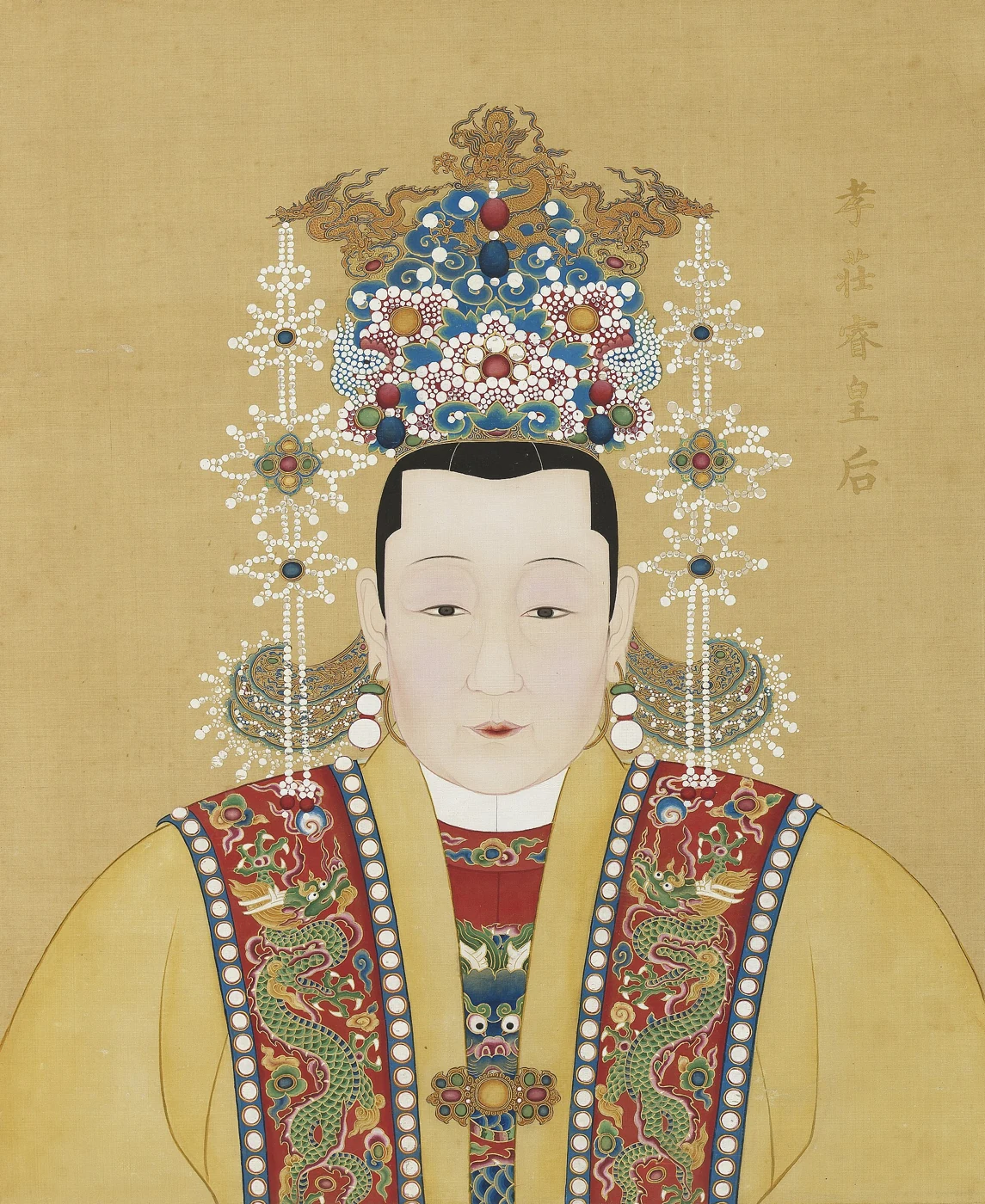
1426 CE–1468 CE
Empress
Empress Qian
钱氏(明英宗皇后)
Empress Qian (1426–1468), posthumously honored as Empress Xiaozhuangrui, was the primary consort of Emperor Yingzong (Zhu Qizhen) of the Ming dynasty. Selected as empress in 1442 under Grand Empress Dowager Zhang, she was renowned for virtue and filial piety. Following the Tumu Crisis of 1449 where Yingzong was captured by the Oirats, Empress Qian donated her personal assets to ransom him and prayed weeping day and night,…
1426 CE–1468 CEMing Dynasty
PROFILE
Empress Qian (1426–1468), posthumously honored as Empress Xiaozhuangrui, was the primary consort of Emperor Yingzong (Zhu Qizhen) of the Ming dynasty. Selected as empress in 1442 under Grand Empress Dowager Zhang, she was renowned for virtue and filial piety. Following the Tumu Crisis of 1449 where Yingzong was captured by the Oirats, Empress Qian donated her personal assets to ransom him and prayed weeping day and night, resulting in the blindness of one eye and lameness in one leg. During their seven-year house arrest in the Southern Palace, she supported the household by embroidering textiles for sale. After Yingzong was restored in the Duomen Coup of 1457, he reaffirmed her status as Empress. On his deathbed in 1464, Yingzong decreed that she must be buried with him in the Yuling Mausoleum and formally abolished the practice of human sacrificial burial for imperial consorts. Under Emperor Xianzong, she was honored as Empress Dowager Ciyi. She died in 1468 at the age of forty-three.
- Other Names
- Empress Qian; Empress Xiaozhuangrui Qian
- Period
- Ming
- Date of Birth
- Not recorded in historical sources
- Date of Death
- Not recorded in historical sources
- Dynasty/Polity
- Ming
- Identity
- Empress
- Ethnicity/People
- Han Chinese
- Native Place
- Haizhou, Huai'an Prefecture, Southern Zhili (present-day Lianyungang, Jiangsu)
- Place of Birth
- Unknown
- Tenure as Empress
- Not reliably established in the source materials
- Posthumous Name
- Empress Xiaozhuang Xianmu Honghui Xianren Gongtian Qinsheng Rui
- Principal Achievement
- Principal empress of Emperor Yingzong; after his capture she wept until she lost sight in one eye, remained his devoted companion, and was never displaced from the position of empress.
- Courtesy / Art Name
- Not recorded
- Era
- Ming dynasty
- Dynasty
- Ming Dynasty
- Ethnicity
- Han
- Ancestral Home
- Haizhou (modern Lianyungang, Jiangsu Province)
- Place of Death
- Place of death unknown
- Lifespan
- 1426–1468
- Highest Office
- See Biography below
- Major Offices
- See Biography below
- Peerage
- Empress, Empress Dowager Ciyi, Empress Xiaozhuang Rui, Count of Anchang
- Major Achievements
- Sacrificed eyesight and mobility praying for captured emperor, sustained household during seven years in Southern Palace, inspired the abolition of imperial human sacrificial burial
LIFE TIMELINE
Selected as Empress of the Ming Empire | Chosen by Grand Empress Dowager Zhang for high moral character
Declined hereditary noble titles for her kinsmen | Opposed consort favoritism, earning praise from ministers
Tumu Crisis and capture of Emperor Yingzong | Emptied personal treasuries; weeping prayers resulted in blindness and lameness
Yingzong returned and was interned in the Southern Palace | Maintained the household by weaving and embroidering fabrics
Restoration of Emperor Yingzong in Duomen Coup | Reinstated as Empress despite her physical disabilities
Emperor Yingzong's deathbed decree | Ordered that she be buried with him in Yuling and abolished human sacrificial burial
Elevated to Empress Dowager Ciyi | Retained primary ancestral precedence supported by court officials
Passed away and interred in Yuling Mausoleum | Posthumously honored as Empress Xiaozhuangrui
In January 1464 | In January 1464, as Yingzong lay dying, deeply aware that Empress Qian was childless and fearing that Consort Zhou (mother of Crown Prince Zhu Jianshen) would mistreat or force her into sacrificial burial, he summoned the Crown Prince and Grand Secretariat officials, issuing a solemn testamentary edict: "Empress Qian has shared boundless tribulations with me; after her death, she must be buried with me in the Yuling Mausoleum in the same chamber.
Aged fifty-nine | Emperor Xianzong honoured her as Empress Dowager Ciyi and granted her an honorific title.
Empress Qian (1426–1468) | Empress Qian (1426–1468), posthumously honored as Empress Xiaozhuangrui, was the primary consort of Emperor Yingzong (Zhu Qizhen) of the Ming dynasty.
BIOGRAPHY
Biography
Lineage and Marriage to the Sovereign
Empress Qian descended from a distinguished military family based in Haizhou (modern Lianyungang, Jiangsu Province). Her grandfather Qian Zheng and father Qian Gui served with valor in the early Ming armies, earning positions in the Central Military Commission. Endowed with grace, modesty, and deep moral integrity, she was chosen in 1442 by Grand Empress Dowager Zhang (wife of Emperor Renzong) to become the primary consort of the young Emperor Yingzong. Throughout her early years in the Kunning Palace, Empress Qian was noted for her aversion to extravagance and strict compliance with Confucian decorum. When Emperor Yingzong proposed bestowing high hereditary peerages on her brothers and uncles, she repeatedly petitioned him to refrain, arguing that maternal relatives must not be favored without military merit. ### The Tumu Calamity and Physical Sacrifices In the autumn of 1449, Emperor Yingzong launched an ill-fated personal expedition against Esen Taishi of the Oirat Mongols, culminating in the catastrophic Battle of Tumu, where the imperial army was annihilated and Yingzong captured. The court in Beijing was thrown into chaos. Confronted by the sudden loss of her husband, Empress Qian gathered all her personal gold, pearls, and jewelry and surrendered them to the ministry to be sent north as ransom. Day and night, she knelt on the icy stone floors of the palace, weeping and entreating Heaven for Yingzong's safe deliverance. Due to unceasing crying and exposure to winter cold, she lost sight in one eye, and one of her legs withered into lameness, leaving her permanently disabled at the age of twenty-four. ### Seven Years of Internment in the Southern Palace In 1450, following complex diplomatic negotiations and the enthronement of Emperor Jingtai, Yingzong was returned to Beijing. Rather than resuming imperial status, Yingzong and Empress Qian were immediately escorted to the secluded Southern Palace (Nangong) and placed under rigorous house arrest. During seven long years of isolation, with trees cut down and supplies deliberately restricted by Jingtai's guards, the imperial couple suffered severe poverty. Empress Qian, despite her lameness and partial blindness, led the palace maidens in spinning silk yarn and crafting fine needlework daily, having trusted eunuchs secretly sell the embroidery in the Beijing marketplace to purchase food and firewood, steadfastly comforting and sustaining Yingzong through their darkest years. ### Restoration and the Abolition of Sacrificial Burial In 1457, loyalist officers launched the Duomen Coup, overthrowing Emperor Jingtai and restoring Yingzong to the throne. Court opportunists and ambitious concubines suggested that Empress Qian's physical disability rendered her unfit to occupy the central throne, but Yingzong angrily dismissed them, reaffirming her supreme standing as Empress of the realm. Yingzong never forgot her devotion during his captivity. In January 1464, as Yingzong lay dying, deeply aware that Empress Qian was childless and fearing that Consort Zhou (mother of Crown Prince Zhu Jianshen) would mistreat or force her into sacrificial burial, he summoned the Crown Prince and Grand Secretariat officials, issuing a solemn testamentary edict: "Empress Qian has shared boundless tribulations with me; after her death, she must be buried with me in the Yuling Mausoleum in the same chamber. Let no one dare alter this!" Furthermore, Yingzong decreed the absolute abolition of human sacrificial burial (xunzang) of concubines, liberating hundreds of palace women from immolation. ### Dowager Years and Peaceful Passing Following Emperor Xianzong's accession, despite vigorous attempts by Consort Dowager Zhou to usurp the primary title, the grand ministers and censors insisted on Confucian protocol, elevating Empress Qian as Empress Dowager Ciyi. She lived peacefully in the inner palace until her death in June 1468 at the age of forty-three. She was formally entombed with Emperor Yingzong in Yuling.
Major Activities
Sacrificing Health and Wealth for the Sovereign
During the Tumu Crisis of 1449, Empress Qian donated all her personal assets for Yingzong's ransom and wept in prayer until she lost vision in one eye and crippled a leg, embodying supreme wifely loyalty. ### Enduring Seven Years in the Southern Palace Under severe internment and deprivation in the Southern Palace from 1450 to 1457, Empress Qian sustained Emperor Yingzong by organizing needlework and textile production to barter for basic sustenance. ### Rebuffing Consort Family Aggrandizement Empress Qian consistently refused to allow Emperor Yingzong to confer undeserved noble peerages and estates upon her kinsmen, preventing the growth of consort corruption. ### Inspiring the End of Human Sacrificial Burial Her devotion deeply touched Emperor Yingzong, directly motivating his historic deathbed decree that banned the barbarous practice of burying concubines alive with deceased emperors.
Personal Relations
- Husband: Emperor Yingzong of Ming (Zhu Qizhen)
- Father: Qian Gui (Grand Commander of Central Military Commission, posthumously created Count of Anchang)
- Adoptive Son / Sovereign: Emperor Xianzong of Ming (Zhu Jianshen, who honored her as primary Dowager)
- Palace Rival: Empress Xiaosu (Consort Zhou, biological mother of Emperor Xianzong)
- Mother-in-Law: Empress Dowager Sun (wife of Emperor Xuande)
Historical Assessment
- Emperor Yingzong: 'The Empress shared every misfortune and sorrow with me; my survival during the lowest depths was entirely sustained by her virtue.'
- History of Ming (Ming Shi): 'Empress Xiaozhuangrui Qian was pure, reverent, and extraordinarily virtuous... Her fortitude in adversity and wifely loyalty remain unsurpassed.'
- Grand Secretary Li Xian: 'The Empress Dowager served as a model for the realm for over two decades; her selfless devotion is an eternal exemplar for all women.'
FIGURES ASSOCIATED WITH THIS DYNASTY
Bibliography
- History of Ming, Volume 113, Biographies of Empresses and Consorts, Biography of Empress Xiaozhuangrui
- Ming Yingzong Shilu (Veritable Records of Emperor Yingzong)
- Ming Xianzong Shilu (Veritable Records of Emperor Xianzong)