Birth | Born in Zhuo County, Zhuo Commandery, modern Zhuozhou in Hebei
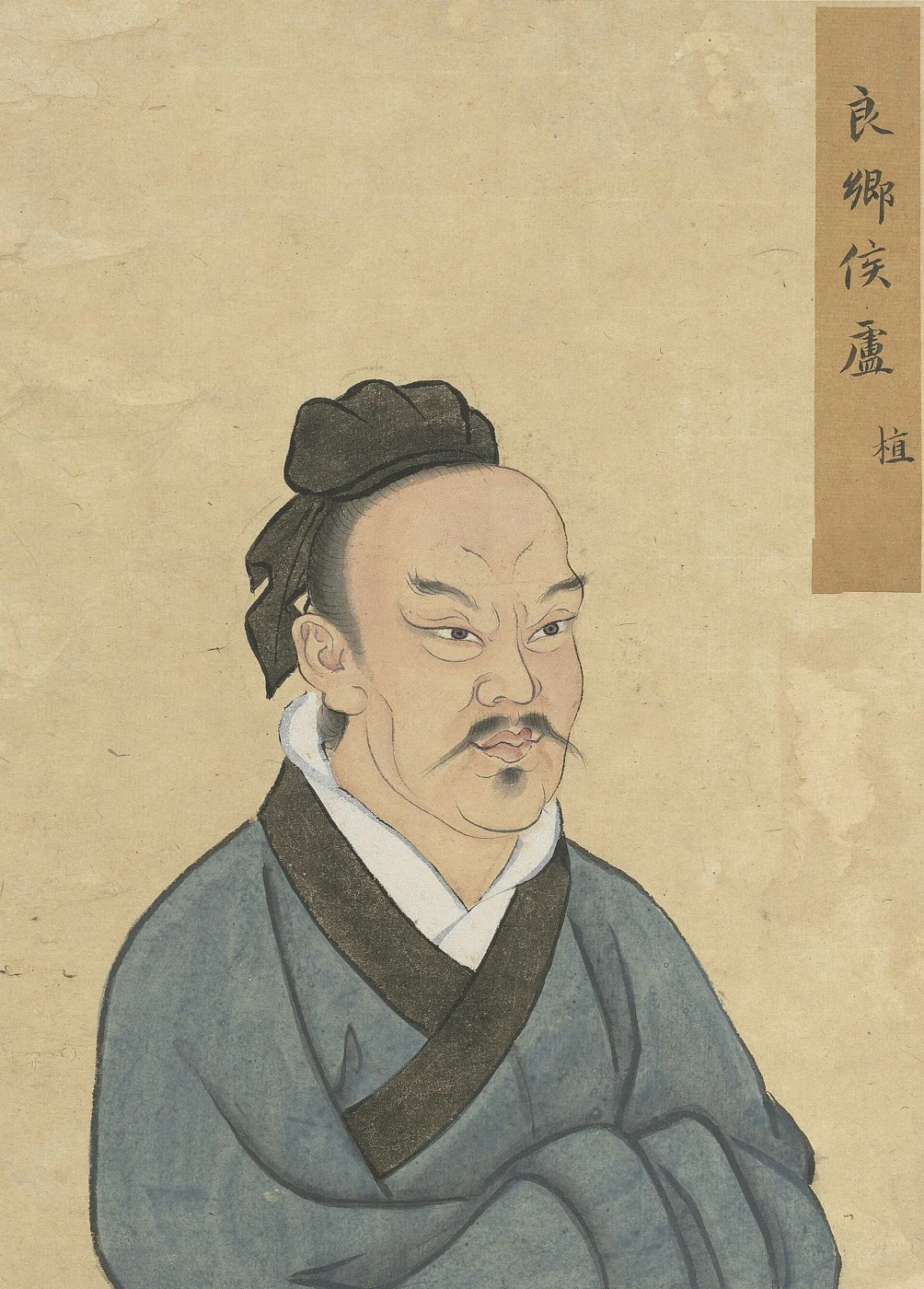
?–192 CE
Classical scholargeneral
Lu Zhi
卢植
Lu Zhi was an Eastern Han classical scholar, well versed in ancient and contemporary learning and the Five Classics. A student of Ma Rong, he later became a prominent general and senior official in the final decades of the Han dynasty.
?–192 CEEastern Han
PROFILE
Lu Zhi was an Eastern Han classical scholar, well versed in ancient and contemporary learning and the Five Classics. A student of Ma Rong, he later became a prominent general and senior official in the final decades of the Han dynasty.
- Other names
- Lu Zigan; courtesy name Zigan
- Courtesy name
- Zigan
- Period
- Eastern Han
- Date of Birth
- Not recorded in historical sources
- Date of Death
- 192
- Dynasty/Polity
- Eastern Han
- Identity
- Classical scholar; general
- Ethnicity/People
- Not recorded in historical sources
- Native place
- Zhuo County, Zhuo Commandery, modern Zhuozhou, Hebei
- Place of birth
- Not recorded in historical sources
- Place of death
- Not recorded in historical sources
- Highest office
- See Biography and Major Activities
- Major achievements
- Eastern Han classical scholar versed in ancient and contemporary learning and the Five Classics; student of Ma Rong; later a prominent general and official at the end of the Han.
LIFE TIMELINE
Youth | Studied under the great scholar Ma Rong together with Zheng Xuan; returned home to teach after completing his studies
Private citizen | Submitted a memorial to General-in-Chief Dou Wu urging him to decline additional enfeoffment; Dou Wu did not listen
About forty | Summoned as a Erudite, beginning his official career
About forty-five | Appointed Administrator of Jiujiang; suppressed a local uprising and resigned because of illness
About forty-five | Memorialized to participate in collating the Five Classics; later worked with Cai Yong and others at the Eastern Lodge on continuing the Dongguan Hanji
About forty-seven | Served as Administrator of Lujiang, governing with simplicity; later recalled as a Court Consultant
About forty-eight | Used a solar eclipse as the occasion to submit eight proposals on government; they were not adopted
About fifty-four | Yellow Turban Rebellion broke out; appointed Northern General of the Household and led troops against Zhang Jue, defeating him and besieging Guangzong
About fifty-four | Refused to bribe the eunuch Zuo Feng, was falsely accused and imprisoned, with his death sentence commuted by one degree
About fifty-four | Huangfu Song defended him in a memorial; restored to office and appointed to the Secretariat
About fifty-nine | Opposed He Jin's plan to summon Dong Zhuo to the capital; after He Jin was killed, took up a spear to rescue Empress Dowager He and pursued the eunuchs
About fifty-nine | Alone opposed Dong Zhuo's proposal to depose the young emperor; narrowly escaped execution, resigned, and withdrew to Shanggu Commandery
About sixty | Appointed military adviser by Yuan Shao
About sixty-one | Died; requested a simple burial and to be interred wearing only a single garment
BIOGRAPHY
Biography
Family Background and Early Life
Lu Zhi was from Zhuo County in Zhuo Commandery, now Zhuozhou in Hebei. His exact birth year is unknown. The source describes him as eight chi and two cun tall, roughly 1.9 meters by its conversion, with a voice like a great bell, a resolute temperament, a desire to aid the world, and a habit of speaking directly without currying favor. In his youth he studied under the renowned scholar Ma Rong and introduced Zheng Xuan into the same scholarly circle. Ma Rong belonged to a wealthy and influential family and often had female entertainers perform music and dance at home. Lu Zhi studied there for years without turning his attention toward them, earning Ma Rong's respect. He was broadly learned in ancient and contemporary knowledge and studied the Confucian classics without confining himself to inherited line-by-line exegesis. After finishing his studies, he returned to Zhuo to teach and repeatedly declined recruitment by local authorities. His students included Liu Bei, Liu Deran, Gongsun Zan, and Gao You.
Entering Official Service
In 168, the first year of Jianning, General-in-Chief Dou Wu dominated court politics after helping enthrone Emperor Ling, and the court proposed granting him additional honors. Though still a private citizen, Lu Zhi memorialized Dou Wu with arguments drawn from the classics and urged him to decline excessive rewards in order to preserve his reputation and safety. Dou Wu did not accept the advice. Lu Zhi continued to refuse repeated local recruitment until he was summoned as an Erudite sometime during the Jianning era, formally beginning his official career.
In 175, unrest broke out among local peoples in Jiujiang Commandery in Yangzhou. Because the court regarded Lu Zhi as capable in both civil and military affairs, he was appointed Administrator of Jiujiang. He quickly suppressed the uprising but resigned because of illness. In the same year, when Cai Yong and others undertook the collation of the Confucian classics, Lu Zhi volunteered by memorial and participated in the scholarly work associated with the Xiping Stone Classics. Later, disturbances occurred in Lujiang and the court appointed him Administrator there because of the good reputation he had established in Jiujiang. He governed simply and quietly, emphasizing broad principles rather than intrusive administration. After more than a year he was recalled as a Court Consultant and worked at the Eastern Lodge with Ma Ridi, Yang Biao, Han Yue, and others to collate records and commentaries on the Five Classics and to continue the Dongguan Hanji. Emperor Ling later judged historical compilation less urgent and transferred him to posts including Palace Attendant and the Secretariat.
Direct Remonstrance and Suppression of the Yellow Turbans
In the second month of 178, a solar eclipse occurred. Lu Zhi used the event to submit a memorial on government and proposed eight measures concerning the employment of worthy men, easing prohibitions, responding to epidemics, preparing against enemies, restoring proper conduct, honoring sage models, governing subordinates, and distributing benefits. Emperor Ling did not adopt them.
In 184 the Yellow Turban Rebellion erupted under Zhang Jue and spread across eight provinces. The major offices recommended Lu Zhi, and Emperor Ling appointed him Northern General of the Household, gave him imperial authority, and assigned the Protector of the Wuhuan General of the Household Zong Yuan as his deputy. Lu Zhi led the Northern Army's five regiments and troops from various commanderies against the rebels. He won repeated battles, forced Zhang Jue back into Guangzong, surrounded the city, dug trenches, and prepared scaling equipment for an assault.
Emperor Ling then sent the lesser eunuch Zuo Feng to inspect the army. Others urged Lu Zhi to bribe him, but Lu refused. Zuo Feng retaliated by falsely accusing Lu of remaining behind fortified works and ceasing operations while waiting for divine intervention. Emperor Ling was furious, had Lu transported back to Luoyang in a prison cart, and sentenced him to death with the punishment reduced by one degree. Dong Zhuo, who replaced him, was defeated at Xiaquyang and punished. In the eighth month, after Huangfu Song suppressed the Yellow Turbans in Ji Province, he memorialized the court praising Lu Zhi's original campaign strategy. Lu was restored to office and again served in the Secretariat.
Later Years and Death
In 189 Emperor Ling died and the young emperor Liu Bian took the throne, with General-in-Chief He Jin controlling the court. He Jin accepted Yuan Shao's advice to eliminate the eunuchs and summoned Dong Zhuo, Governor of Bing Province, to the capital to pressure the empress dowager. Lu Zhi understood that Dong Zhuo was violent and difficult to control and strongly opposed the plan, but He Jin ignored him.
In the eighth month He Jin was killed, and Yuan Shu and others attacked the palace gates. Zhang Rang, Duan Gui, and other eunuchs abducted Empress Dowager He, the young emperor, and Liu Xie, Prince of Chenliu, and fled. Lu Zhi stood armed with a spear at a raised passage and angrily confronted Duan Gui, causing the eunuchs to release Empress Dowager He. Lu then rode in pursuit through the night with Min Gong. They caught up with Zhang Rang and the others, killed several, and the remaining eunuchs threw themselves into the river.
After Dong Zhuo entered the capital and seized control, he proposed deposing the young emperor and summoned the officials to discuss it. No one else dared object, but Lu Zhi argued alone against the deposition, citing the Spring and Autumn Annals. Dong Zhuo was enraged and wanted him killed. Cai Yong and Court Consultant Peng Bo intervened, saving Lu's life, though he was dismissed from office. Pleading age and illness, Lu asked to return home. Fearing Dong Zhuo, he took a lesser road through Huanyuan; Dong Zhuo indeed sent pursuers, but they reached Huai County too late and turned back. Lu withdrew to Jundu Mountain in Shanggu Commandery and avoided social contact. In 191 Yuan Shao appointed him military adviser. Lu Zhi died in 192. Before his death he requested a simple burial, wrapped only in a single garment without an elaborate coffin, and his son followed his wishes.
Lu Zhi, courtesy name Zigan, was a native of Zhuo in Zhuo commandery. Eight feet two inches tall with a voice like a bell, he was firm in temper and lofty in character, always harboring the ambition to set the times right and succor the world; he would not trim to please others, spoke bluntly, disliked writing rhapsodies, and could drink a whole shi of wine without losing his composure. As a youth he studied under Ma Rong together with Zheng Xuan, mastering ancient and modern learning and examining the classics without being bound by earlier chapter divisions. Ma Rong came of a consort family and kept singing girls performing before him; Lu Zhi studied under him for years without ever glancing at them, so that Ma Rong held him in high regard.
When his studies were done he returned home, shut his door and taught, declining invitations from the provinces. In the Jianning years he was summoned as a court scholar and made governor of Jiujiang and Lujiang, governing with quiet and largeness of view; he resigned on grounds of illness and was then made an attendant counselor, working in the Eastern Pavilion with Cai Yong and Yang Biao to continue the Han records. When the Yellow Turbans rose he was made a general of the northern army, defeated Zhang Jiao repeatedly and besieged Guangzong; refusing to bribe the eunuch sent to inspect him, he was accused and imprisoned, and only Huangfu Song's memorial on his services cleared him and restored his office.
He afterward served as a minister and advised against He Jin's summoning of outside troops to the capital, advice He Jin ignored, bringing Dong Zhuo to Luoyang. After Dong Zhuo took power Lu Zhi was dismissed for contradicting him to his face in council and withdrew to Shanggu. He died in 192, instructing his son to bury him plainly in a single garment and an earthen grave, which his son did. A man of both scholarly standing and political integrity at the end of the Eastern Han, he numbered Liu Bei and Gongsun Zan among his pupils, and his refusal to trim to others is often cited by later ages.
His campaign against the Yellow Turbans is an instance of how war and politics intertwined at the end of the Eastern Han: commanders in the field were constrained by eunuchs behind them, and success or failure depended on more than military matters. His false accusation and imprisonment provoked the resentment of upright officials at the time, and Huangfu Song's memorial shows his recognition of Lu Zhi's ability.
His refusal to be bound by chapter divisions relates to a change in scholarly fashion in the later Eastern Han: some students then sought the larger meaning rather than the family's established readings, and both Lu Zhi and Zheng Xuan belonged to that tendency, their approach influencing the transformation of classical study at the Han-Wei transition.
His two famous pupils, Liu Bei and Gongsun Zan, went on to their own careers in the politics of the late Eastern Han, his learning and character leaving a mark on both.
The Han Record of the Eastern Pavilion he helped revise was the dynasty's official history of its own age, compiled over decades by scholars of note.
His retirement at Shanggu was brief; he died as Dong Zhuo's misrule was bringing the realm to chaos, and his instruction for a plain burial is often read as the last expression of his frugal character.
His contradicting Dong Zhuo in council is recorded as occurring during the discussion of deposing an emperor, his bluntness forcing him to abandon office and flee — an episode later ages regard as representative of the integrity of late Eastern Han scholars.
His character and scholarship commanded wide respect among the scholars of the late Eastern Han, his indifference to advantage and preference for the larger view contrasting with contemporaries eager for fame and profit.
The post of general of the northern army was a command set up ad hoc for the campaign, with subordinate officers such as the colonel protecting the Wuhuan, its theater chiefly the region of present-day Hebei.
Most of his writings are lost, only a few memorials and discussions surviving, their treatment of frontier defense and recruitment providing material on late Eastern Han political thought.
He and Zheng Xuan studied together but differed in manner: Zheng is known for annotating the classics broadly and reconciling the old and new text traditions, while Lu Zhi was noted for blunt counsel and grasp of the larger meaning, each holding a place in the scholarship of the late Eastern Han.
Later ages remember him chiefly for scholarship and integrity; his military activity, though not the most conspicuous of the late Eastern Han campaigns, is a part of his life not to be overlooked.
Several of his pupils left their names in politics and scholarship at the Han-Wei turn, his teaching thus reaching into later ages.
His biography in the History of the Later Han shares a chapter with Wu You, Yan Du and others, an arrangement reflecting how the historians placed him in learning and character.
His life spans the whole passage of the Eastern Han from decline to chaos, his scholarly and political activity bearing the clear marks of that age.
In the History of the Later Han he appears in the chapter with Wu, Yan, Shi, Lu and Zhao, alongside the scholars of his day, his biography stressing learning and integrity.
As governor of Lujiang he faced a rising of the local peoples and dealt with it chiefly by confidence and kindness rather than harsh measures, in keeping with his preference for quiet government. He was afterward sent to settle disorders about Jiujiang, resolving them with comparatively little fighting.
After the Yellow Turbans were put down the central authority of the Eastern Han was gravely weakened and local forces swelled quickly, his own career rising and falling with the times. His advice against He Jin's summoning of outside troops rested on his reading of the situation.
His work with Cai Yong and Yang Biao in the Eastern Pavilion was part of the official scholarship of the late Eastern Han. The books and archives kept there were largely lost in Dong Zhuo's disorders, so that the work he took part in cannot now be seen whole.
His character and learning were esteemed by contemporaries, as Ma Rong's regard and Huangfu Song's recommendation show; the Shu-Han founded later by his pupil Liu Bei also carried on certain traditions of the Eastern Han in institutions and culture.
In his time scholars had to choose between pure criticism and advancement in office; Lu Zhi neither withdrew from the world nor went along with the powerful, a manner of conduct fairly representative of the late Eastern Han.
At the end of the Eastern Han classical learning was generally handed down within family traditions, and the practice of Lu Zhi, Zheng Xuan and others in going beyond them to the meaning of the texts opened a new path in later classical study — a change whose significance scholars often stress.
His bluntness in discussion and dislike of rhapsody set him somewhat apart from the literary fashion of the day, and for that very reason his writing is classed by later ages as plain and solid.
His sons buried him plainly as he had directed, a thing rare at the end of the Eastern Han, when lavish burial was the fashion.
His record in the Yellow Turban campaign was assessed variously at the time, his dismissal coming directly from a eunuch's failed demand for a bribe, so that rewards and punishments to commanders carried a clear political color.
His career shows that scholars in the last years of the Eastern Han had to deal at once with eunuchs, consort kin and the rise of local forces, their choices often deciding their fate.
Though his retirement at Shanggu was brief, the choice matched what many scholars of the time did in disorder, keeping to a safe distance without either serving the new power or openly opposing it.
The year of his death is recorded in the History of the Later Han, his life roughly coinciding with the last great internal upheaval of the dynasty.
His manner in discussing government was more severe than that of such contemporaries as Cai Yong, a difference scholars often use to compare types of late Eastern Han scholars.
His life offers a usable example for later discussion of how a scholar should conduct himself in a time of disorder.
His name appears with Zheng Xuan and Ma Rong in accounts of Eastern Han scholarship.
His experience in both scholarship and government gives him a comparatively complete figure among the scholars of the late Eastern Han.
The main materials on his life are his biography in the History of the Later Han and the Han annals of the Comprehensive Mirror.
His career is also recorded in such annalistic works as the Chronicle of the Later Han.
Major Activities
Scholarly Contribution
Lu Zhi was a prominent late Eastern Han classical scholar. A student of Ma Rong, he was learned in both ancient and contemporary traditions and was particularly skilled in the Book of Documents and the Three Rites. He wrote exegetical works on the Book of Documents and the Three Rites and took part in collating the Five Classics, providing scholarly support for the Xiping Stone Classics. He also memorialized that official Erudite posts should be established for the Mao Poetry, Zuo Commentary, and Rites of Zhou in order to broaden imperial learning. In addition, he participated in continuing the Dongguan Hanji and worked with Cai Yong, Ma Ridi, Yang Biao, and others in the collation of texts. The source credits his scholarship with important influence on later classical learning.
Political Activity
Lu Zhi was known for direct remonstrance. In 168, while still a private citizen, he urged General-in-Chief Dou Wu to decline further enfeoffment, demonstrating concern for the state even though the advice was rejected. In 178 he used a solar eclipse to submit eight proposals to Emperor Ling, touching on official appointments, easing political prohibitions, treatment of the family of Empress Song, the handling of princes and marquises, recruitment of worthy men, evaluation of officials, elimination of favoritism, and distribution of benefits, but Emperor Ling did not act on them. In 189 Lu opposed He Jin's decision to summon Dong Zhuo, predicting that Dong would create future disaster. When Dong Zhuo later proposed deposing the emperor, Lu alone resisted, nearly losing his life and demonstrating the firmness for which he was later praised.
Travels and Career Locations
Lu Zhi's career took him through many places. He first taught in his home county of Zhuo, then entered the capital as an Erudite. In 175 he served as Administrator of Jiujiang and suppressed unrest; he later governed Lujiang simply and effectively. He returned to the capital as Court Consultant, Palace Attendant, and Secretariat official. During the Yellow Turban Rebellion he campaigned in Ji Province and besieged Zhang Jue at Guangzong. In his later years he withdrew to Jundu Mountain in Shanggu Commandery and ultimately died in the Hebei region.
Contemporaries and Associates
Lu Zhi and Zheng Xuan were fellow students under Ma Rong and maintained a close scholarly relationship. His students included Liu Bei, Gongsun Zan, Liu Deran, and Gao You. He worked at the Eastern Lodge with Cai Yong, Ma Ridi, Yang Biao, and others in textual collation. Huangfu Song defended him after suppressing the Yellow Turbans. Yuan Shao later appointed him military adviser. His relationship with Dong Zhuo was hostile because Lu opposed the deposition of the emperor.
Personal Relations
- Lu Zhi had four sons; two died during warfare. His youngest son Lu Yu served Wei and rose to Palace Attendant and Minister of Personnel.
- His grandchildren included Lu Qin, later a Director of the Secretariat under Western Jin; Lu Ting, Administrator of Taishan under Cao Wei; and a granddaughter of the Lu family who married Hua Yi, son of Hua Biao.
- Great-grandsons included Lu Fan, Lu Fu, Lu Hao, and Lu Zhi.
- A later descendant was Lu Chen.
- Studied under Ma Rong and was a fellow student and friend of Zheng Xuan.
- Colleague of Cai Yong, Ma Ridi, Yang Biao, and others at the Eastern Lodge.
- Students included Liu Bei, Gongsun Zan, Liu Deran, and Gao You.
- Emperor Ling of Han: Lu served in the Secretariat; he was imprisoned after refusing a bribe but later restored to office.
- He Jin: Lu warned against summoning Dong Zhuo, but He Jin ignored him.
- Dong Zhuo: Lu opposed the proposed imperial deposition and nearly lost his life.
- Yuan Shao: appointed Lu Zhi as military adviser.
- Eunuch Zuo Feng: falsely accused Lu after Lu refused to bribe him, resulting in imprisonment.
- Eunuchs Zhang Rang and Duan Gui: Lu confronted and pursued them during the palace crisis.
- Dong Zhuo: conflict over the imperial deposition nearly led to Lu's execution.
Historical Assessment
Eastern Han and Contemporary Assessments
- Ma Rong respected Lu Zhi's character after observing that he remained completely indifferent to the female entertainers in Ma's household.
- Huangfu Song praised Lu's campaign plans and attributed earlier success against the Yellow Turbans to him.
- Court Consultant Peng Bo reportedly said, "Secretariat official Lu is a great Confucian scholar known throughout the realm, a man to whom people look," in arguing that Dong Zhuo should not kill him.
- During the Jian'an era, while campaigning north toward Liucheng, Cao Cao ordered Lu Zhi's grave repaired and praised the former Northern General of the Household as renowned throughout the realm, a leading Confucian scholar, a model for scholars, and a pillar of the state.
Wei, Jin, and Northern and Southern Dynasties
- Chen Shou's Records of the Three Kingdoms, citing the Continuation of the Book of Han, records Lu Zhi as firm and principled, with the ambition to aid the world.
- Fan Ye's Book of Later Han comments that just as frost distinguishes the nature of plants, danger and disorder reveal the integrity of the loyal and good, and that Lu's heart could therefore be understood through the crises he faced.
Song, Yuan, Ming, and Qing Periods
- Sima Guang's Comprehensive Mirror in Aid of Governance records Lu's actions and gives positive treatment to his direct remonstrance and military achievements.
- Ming and Qing scholars often praised Lu as a broadly learned Confucian scholar whose learning and moral integrity were equally notable.
Modern Assessments
- Modern scholars regard Lu Zhi as an important late Eastern Han classical scholar and general whose scholarship and political integrity had lasting influence.
- He is revered as an ancestral figure of the Fan'yang Lu clan, whose descendants produced many prominent officials during the Northern and Southern Dynasties and the Sui and Tang periods, including Lu Qin and Lu Zhi.
FIGURES ASSOCIATED WITH THIS DYNASTY
Bibliography
- Book of Later Han, juan 64, "Biographies of Wu, Yan, Shi, Lu, and Zhao"
- Book of Later Han, juan 8, "Annals of Emperor Ling"
- Book of Later Han, juan 69, "Biographies of Dou and He"
- Book of Later Han, juan 72, "Biography of Dong Zhuo"
- Records of the Three Kingdoms, juan 32, Book of Shu 2, "Biography of the Former Lord"
- Records of the Three Kingdoms, juan 22, Book of Wei 22, "Biographies of Huan, the Two Chens, Xu, Wei, and Lu"
- Fan Ye, Book of Later Han
- Chen Shou, Records of the Three Kingdoms