Birth | Born at Huaishuo Garrison in Northern Wei; described as a Xianbei-assimilated Jie.
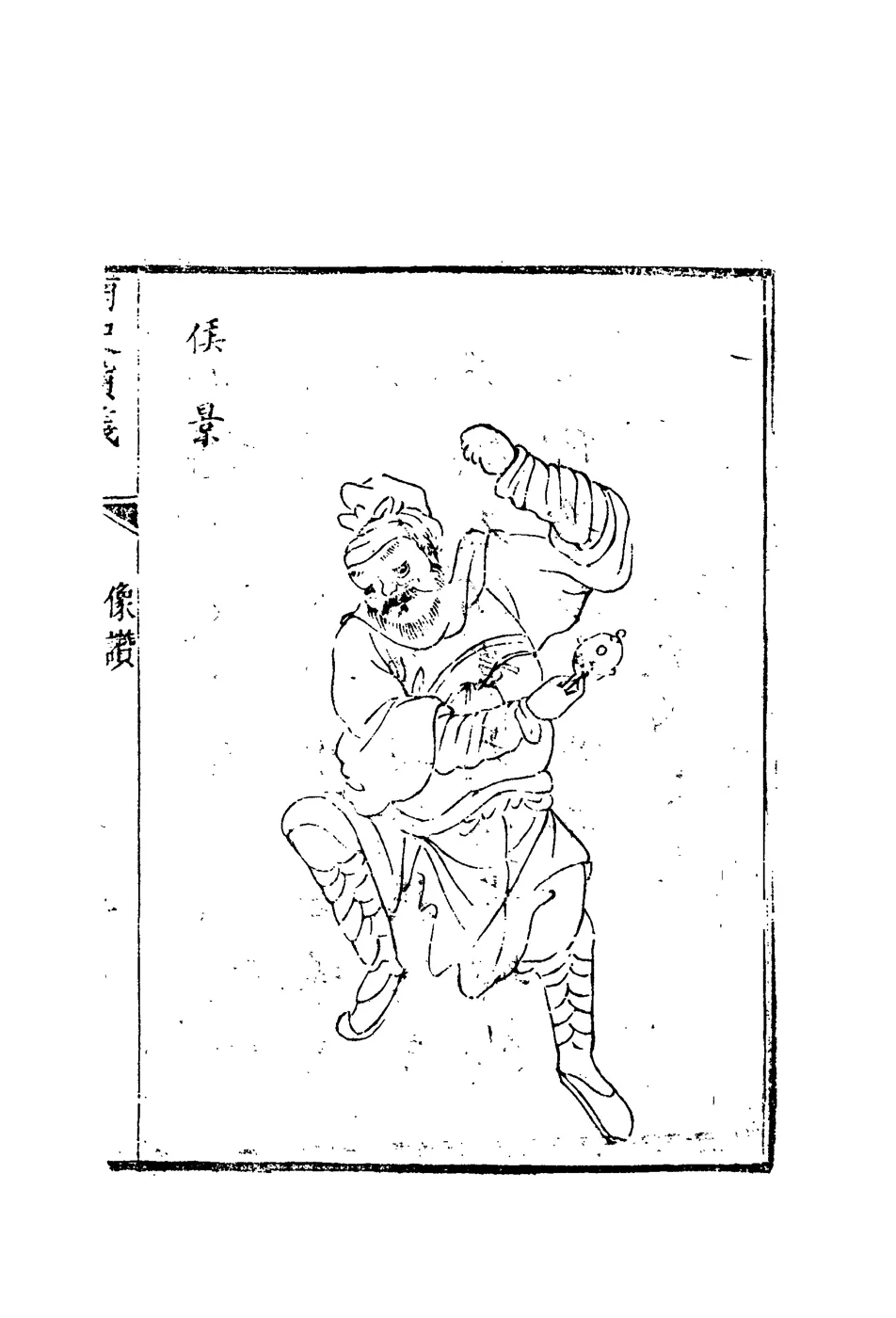
503 CE–552 CE
Military commander
Hou Jing
侯景
Hou Jing (502–552), courtesy name Wanjing, originally surnamed Hougu, was from Huaishuo Garrison in present-day Baotou, Inner Mongolia. He was described as a Jie who had become culturally Xianbei and was a warlord of the Northern and Southern Dynasties period. In his early years he served under Erzhu Rong of Northern Wei, and later joined Gao Huan of Eastern Wei, commanding an army of 100,000 and exercising autonomous control…
503 CE–552 CENorthern Wei
PROFILE
Hou Jing (502–552), courtesy name Wanjing, originally surnamed Hougu, was from Huaishuo Garrison in present-day Baotou, Inner Mongolia. He was described as a Jie who had become culturally Xianbei and was a warlord of the Northern and Southern Dynasties period. In his early years he served under Erzhu Rong of Northern Wei, and later joined Gao Huan of Eastern Wei, commanding an army of 100,000 and exercising autonomous control over the Henan region. After Gao Huan’s death he rebelled against Eastern Wei. An attempted alignment with Western Wei failed, and in 547, the first year of the Taiqing era, he defected south to the Liang dynasty and was enfeoffed as Prince of Henan. In 548, the second year of Taiqing, after Emperor Wu of Liang sought to exchange Hou Jing for Xiao Yuanming, who had been captured by Eastern Wei, Hou Jing rose in rebellion against Liang, an event known as the Hou Jing Rebellion. After capturing Jiankang, he caused Emperor Wu of Liang, Xiao Yan, to die of starvation, deposed and installed the emperors Xiao Gang and Xiao Dong, and styled himself “General-in-Chief of the Universe.” In 551, the second year of the Dabao era, he ascended the throne, adopted Han as the state name, and changed the era name to Taishi. In 552, the first year of the Chengsheng era, he was defeated by Chen Baxian and Wang Sengbian and was killed by his subordinate Yang Kun while fleeing. The Hou Jing Rebellion caused devastating destruction in Jiangnan and dealt a severe blow to the southern aristocratic clans.
- Other name
- Hou Wanjing
- Courtesy name
- Wanjing
- Period
- Southern Dynasties · Liang dynasty
- Date of Birth
- 502 CE(3rd year of the Jingming era, Northern Wei)
- Date of Death
- 552 CE(1st year of the Liangchengsheng era)
- Dynasty/State
- Southern Dynasties · Liang dynasty
- Identity
- Military commander
- Ethnicity/Group
- Not reliably established in existing sources
- Ancestral origin
- Huaishuo Garrison, in present-day Baotou, Inner Mongolia
- Place of birth
- Unknown
- Major significance
- A rebel general of Northern Wei who defected south to the Liang dynasty; later rose in revolt from Huainan, causing the Hou Jing Rebellion, and briefly proclaimed himself emperor of Han.
- Courtesy / Art Name
- Wanjing
- Era
- Northern and Southern Dynasties
- Dynasty
- Northern Wei, Eastern Wei, Liang Dynasty
- Ethnicity
- Jie or Xianbei
- Ancestral Home
- Huaishuo Garrison, Shuofang (modern Baotou, Inner Mongolia)
- Place of Birth
- Huaishuo Garrison
- Place of Death
- Baisha, Wuhu (modern Anhui)
- Lifespan
- Unconfirmed
- Highest Office
- Chancellor (Xiangguo), General-in-Chief, Self-proclaimed Emperor of Han
- Major Offices
- Minister over the Masses, Grand Commander of Henan, Imperial Commissioner
- Peerage
- Prince of Henan
- Major Achievements
- Leading Northern Wei cavalry units, governing Henan under Gao Huan, instigating catastrophic Hou Jing Rebellion, capturing Jiankang and devasting Southern dynasties
LIFE TIMELINE
Activity | Followed Erzhu Rong at the Battle of Fukou and captured Ge Rong; promoted for his service to Inspector of Ding Province.
Activity | After Gao Huan destroyed the Erzhu clan, Hou Jing led his followers in submitting to Gao Huan.
Activity | Led an army against Liang and was defeated by Chen Qingzhi on the Huai River.
Activity | Advanced south from Sanya to attack Western Wei and was repelled by forces sent by Yuwen Tai.
Activity | Gao Huan died; unwilling to submit to Gao Cheng, Hou Jing rebelled, defected south to Liang, and was enfeoffed as Prince of Henan.
Activity | Learned that Emperor Wu of Liang intended to exchange him for Xiao Yuanming; rose at Shouyang in the eighth month and crossed the Yangtze in the tenth month to attack Jiankang.
Activity | Captured Taicheng, caused Emperor Wu of Liang, Xiao Yan, to die of starvation, installed Xiao Gang as emperor, and made himself chief commander.
Activity | Styled himself “General-in-Chief of the Universe” and was further enfeoffed as Prince of Han.
Activity | Deposed Xiao Gang, installed Xiao Dong, forced Xiao Dong to abdicate, proclaimed himself emperor, named the state Han, and changed the era name to Taishi.
Activity | Defeated by Chen Baxian and Wang Sengbian and killed by his subordinate Yang Kun while fleeing.
BIOGRAPHY
Biography
Family Background and Early Life Hou Jing, courtesy name Wanjing, originally bore the surname Hougu and traced his ancestral home to Huaishuo Garrison in present-day Baotou, Inner Mongolia. His grandfather was recorded as Yiyu Zhou, also called Hou Zhou, and his father as Hou Biao; both belonged to military households of the northern frontier garrisons. Hou Jing grew up in the frontier environment of Northern Wei, where Hu and Han populations lived together and martial culture was strong. According to the “Biography of Hou Jing” in the History of the Southern Dynasties, he was unruly in youth and served as an administrative officer in the garrison. From an early age he was shaped by the fierce martial culture of the frontier, became skilled at riding and archery, and was known for courage and aggressiveness. In the final years of Northern Wei, the Rebellion of the Six Garrisons threw the north into turmoil. Hou Jing led his troops to join Erzhu Rong and was appointed to the vanguard. He initially asked Erzhu Rong’s general Murong Shaozong for instruction in military methods. Before long, however, Murong Shaozong was said to have begun consulting Hou Jing on military questions, an indication in the source of Hou Jing’s aptitude for strategy. ### Service under Northern Wei and Eastern Wei In the eighth month of 528, the second year of the Liang Datong era as given in the source, Erzhu Rong fought Ge Rong at Fukou. Hou Jing captured the rebel leader Ge Rong in battle, after which the uprising was suppressed. Hou Jing was promoted for his service to Inspector of Ding Province. After Gao Huan destroyed the Erzhu clan, Hou Jing relied on old ties with Gao Huan: both had served as soldiers at Huaishuo Garrison and both had participated in the Rebellion of the Six Garrisons. He led his followers in surrendering to Gao Huan. Gao Huan promoted him to Minister of Personnel, and not long afterward he was enfeoffed as Duke of Puyang Commandery. Hou Jing was dissatisfied with civil office and once lamented, “When will I be able to leave this place and turn away from old papers?” Gao Huan then appointed him Minister over the Masses while allowing him to continue concurrently as Inspector of Ding Province. Hou Jing commanded 100,000 troops and controlled the Henan region. Hou Jing had legs of unequal length from birth, with the right leg slightly shorter, and was not personally skilled in martial arts, yet he was brave in battle and highly capable in strategy. He treated his troops with great severity and cruelty but won many victories. Gao Huan recognized Hou Jing’s cunning and unpredictability, but with Yuwen Tai a powerful enemy nearby, he needed capable commanders and did not curtail Hou Jing’s power. In 540, the sixth year of the Datong era, Hou Jing, serving as Grand Administrative Commander of Eastern Wei, advanced south from Sanya in an attempt to recover Jing Province. Grand Councilor Yuwen Tai of Western Wei sent Li Bi and Dugu Xin, each with five thousand cavalry, out through Wuguan, and Hou Jing withdrew. Before his death, Gao Huan specifically warned his son Gao Cheng to be cautious of Hou Jing. According to the Book of Northern Qi, Gao Huan told Gao Cheng that Hou Jing had exercised autonomous control over Henan for fourteen years and had long harbored overbearing ambitions; Gao Huan could keep him in service, but Gao Cheng would not be able to control him. He added that among those capable of opposing Hou Jing, Murong Shaozong stood out, and that he had deliberately kept Murong Shaozong from overly high rank so that Gao Cheng could later employ him with exceptional favor. Hou Jing in turn had long looked down on Gao Cheng and once told Sima Ziru that while Gao Huan lived he would not dare harbor disloyalty, but after Gao Huan’s death he could not serve together with “that Xianbei boy.” ### Rebellion against Eastern Wei and Defection to Liang Gao Huan died in 547, the fifth year of the Wuding era. Gao Cheng summoned Hou Jing by a letter issued in Gao Huan’s name. Hou Jing and Gao Huan had previously agreed that a genuine summons would bear a small black mark on the reverse. This letter lacked the mark, so Hou Jing did not respond. After hearing that Gao Huan was gravely ill, he consolidated his troops and formally broke with Eastern Wei. Hou Jing first sought support from Yuwen Tai of Western Wei, but Yuwen Tai distrusted him. With no better option, in 547, the first year of the Liang Taiqing era, Hou Jing led his forces to defect to the Southern Dynasties state of Liang. Emperor Wu of Liang, Xiao Yan, hoped to use Hou Jing’s forces to achieve success in a northern expedition and accepted his surrender with generous treatment. By imperial decree Hou Jing was enfeoffed as Prince of Henan and appointed General-in-Chief, Bearer of Credentials, commander over military affairs north and south of Henan, and Grand Administrative Commander. Gao Cheng sent Murong Shaozong to attack Hou Jing. Liang dispatched the Prince of Zhenyang, Xiao Yuanming, in support, but the Liang army suffered a severe defeat and Xiao Yuanming was captured. Murong Shaozong then turned back to attack Hou Jing at Woyang. The two sides confronted each other for several months in the Battle of Woyang, until Hou Jing’s supplies were exhausted and his subordinates began to surrender, leading to a total collapse. Hou Jing and a handful of trusted followers crossed the Huai River on horseback at Xiashi, gathered some scattered troops, and recovered about eight hundred infantry and cavalry. Hou Jing sent a message to Murong Shaozong: “If Hou Jing is captured, what use will you still have?” Murong Shaozong then allowed him to escape. ### Revolt against Liang and the Capture of Jiankang During his retreat, Hou Jing was mocked by the defenders of a small city. Enraged, he stormed the city and killed its inhabitants, then seized Shouyang, which was under Liang control. Emperor Wu of Liang appointed him Governor of Southern Yu Province, effectively tolerating his autonomous rule in Shouyang in return for nominal submission. At this point Eastern Wei proposed reconciliation. Emperor Wu, unaware of Hou Jing’s anxiety, continued negotiations. Hou Jing forged a letter in Gao Cheng’s name proposing an exchange of Xiao Yuanming for Hou Jing, and Emperor Wu unexpectedly agreed. Hou Jing angrily remarked that he now understood the old southerner’s fickle heart, and resolved to rebel. Hou Jing exploited the internal contradictions of the Liang dynasty. As governor of Southern Yu Province at Shouyang, he abolished market taxes and land rents that had burdened the population, drawing civilians into the rebel camp. He also distributed the children of local families among his troops, turning Shouyang into a vast military camp. Xiao Zhengde, Prince of Linhe and a former adopted son of Emperor Wu of Liang, had long harbored ambitions of his own and entered into alliance with Hou Jing. On the tenth day of the eighth month in 548, identified in this passage as the first year of the Liang Taiqing era, Hou Jing raised troops at Shouyang on the pretext of executing Zhu Yi, Xu Lin, Lu Yan, Zhou Shizhen, and other officials. His force numbered about eight thousand, formally beginning the Hou Jing Rebellion. Knowing that Liang forces were moving against him, Hou Jing chose to seize the initiative. He abandoned Huainan and led light cavalry in a surprise attack on Jiankang. In the tenth month, his eight thousand troops crossed the Yangtze from Hengjiang, seized Caishi, then divided forces to take Gushu, while the main body advanced to Cihu, throwing Jiankang into alarm. On the twenty-fourth day of the tenth month, Hou Jing’s army reached Zhuque Bridge. With Xiao Zhengde acting as an internal collaborator, Hou Jing quickly broke through Zhuque Gate. Xiao Zhengde opened Xuanyang Gate and admitted Hou Jing’s troops into the city. On the twenty-fifth day, Hou Jing began the siege of Taicheng, the palace city. Yang Kan’s stubborn defense prevented an immediate breakthrough, so Hou Jing constructed extended siege lines to cut communications between Taicheng and the outside. On the first day of the eleventh month in 548, the second year of the Taiqing era, Xiao Zhengde proclaimed himself emperor, adopted the era name Zhengping, and appointed Hou Jing Grand Councilor. ### Usurpation, Imperial Proclamation, and Defeat In 549, the third year of the Liang Taiqing era, Hou Jing captured Taicheng and caused Emperor Wu of Liang, Xiao Yan, to die of starvation. He then installed Crown Prince Xiao Gang as emperor, Emperor Jianwen of Liang, and appointed himself chief commander. He forced the beautiful Imperial Princess Liyang to marry him and later compelled the emperor to grant him the title “General-in-Chief of the Universe, Commander of All Military Affairs under Heaven.” During the prolonged siege of Taicheng, food supplies were cut off, disease spread widely, and the source states that eight or nine out of ten died. After entering Jiankang, Hou Jing drove out the civil and military officials of the court, stripped them, and ordered his soldiers to kill them; three thousand were said to have been slain. He then allowed widespread killing and plunder, leaving corpses along the roads. His armies later carried out extensive burning, killing, and looting throughout the Three Wu region. In 551, the second year of the Liang Dabao era, Hou Jing deposed Xiao Gang and installed Xiao Dong, Prince of Yuzhang, as emperor, changing the era name to Tianzheng. Later that year he forced Xiao Dong to abdicate, ascended the throne himself, named the state Han, and adopted the era name Taishi. He posthumously honored the Han Minister over the Masses Hou Ba as dynastic founder and the Jin recluse Hou Jin as a seventh-generation ancestor. He further honored his grandfather Hou Zhou as Grand Councilor and his father Hou Biao as Emperor Yuan. In 552, the first year of the Chengsheng era, Hou Jing was defeated by Chen Baxian and Wang Sengbian. While attempting to flee, he was killed at Hudouzhou, in present-day Nantong, Jiangsu, by his subordinate and former Crown Prince’s attendant Yang Kun. Wang Sengbian cut off Hou Jing’s hands and sent them to Gao Yang, sent his head to Jiangling, and exposed his corpse in the streets of Jiankang. The source states that local people consumed his corpse, that even his wife Imperial Princess Liyang ate his flesh, and that after his bones were burned to ash some people mixed the ashes with wine and drank them. Emperor Yuan of Liang, Xiao Yi, ordered Hou Jing’s head to be hung in the market of Jiangling for public display, then boiled, lacquered, and stored in the arsenal, in a treatment compared with that given to Wang Mang, usurper of the Western Han.
Major Activities
Military Activity Hou Jing spent his life in warfare. In his early years he followed Erzhu Rong in suppressing Ge Rong’s uprising, captured Ge Rong, and was promoted for his service to Inspector of Ding Province. After submitting to Gao Huan he commanded 100,000 troops and exercised autonomous control over Henan for fourteen years, becoming one of Eastern Wei’s most important military commanders. In 536, the second year of the Datong era, he led seventy thousand troops against Liang’s Chu Province and was defeated by Chen Qingzhi on the Huai River. In 540 he advanced south from Sanya against Western Wei and was repelled by forces dispatched by Yuwen Tai. After rebelling against Eastern Wei, Hou Jing confronted Murong Shaozong for several months at the Battle of Woyang. Although he ultimately collapsed, he was at one point said to have badly defeated Murong Shaozong’s army and caused Murong to fall from his horse, illustrating the military ability attributed to Hou Jing. After rising against Liang, Hou Jing made a long-distance advance on Jiankang with only eight thousand troops and used Xiao Zhengde’s internal cooperation to break rapidly into Taicheng, displaying considerable strategic judgment and command ability. ### Hou Jing Rebellion The Hou Jing Rebellion was the central event associated with Hou Jing and dealt a devastating blow to the Southern Dynasties. In the eighth month of 548, the second year of the Taiqing era, he raised troops at Shouyang with a force of about eight thousand on the pretext of executing Zhu Yi and other officials. He crossed the Yangtze in the tenth month and captured Jiankang. In 549, the third year of Taiqing, he took Taicheng and caused Emperor Wu of Liang, Xiao Yan, to die of starvation. After occupying Jiankang, Hou Jing allowed his troops to kill and plunder, massacred three thousand civil and military officials, and sent armies through the Three Wu region to burn, kill, and loot. Yan Zhitui’s own note to his Rhapsody on Contemplating My Life stated that of the great Central Plains families who had crossed the Yangtze with the Jin, nearly all those then living in the capital were wiped out. Jiankang, the ancient capital of the Six Dynasties, was described as a place where for a thousand li smoke had vanished, human traces were rare, and white bones lay piled like mounds. The rebellion devastated the aristocratic clans of Jiangnan, including leading Wang and Xie lineages. ### Proclaiming Himself Emperor In 551, the second year of the Dabao era, Hou Jing forced Xiao Dong to abdicate, proclaimed himself emperor, named the state Han, and changed the era name to Taishi. He posthumously honored Hou Ba as dynastic founder, Hou Jin as a seventh-generation ancestor, his grandfather Hou Zhou as Grand Councilor, and his father Hou Biao as Emperor Yuan. He replaced Liang law with Han law, renamed several offices, and created scores of holders of the Three Ducal Offices and numerous officials with equivalent ceremonial rank, some of whom were said to have to ride alone while holding their own reins. He appointed Song Zixian, Guo Yuanjian, Zhang Huaren, and Ren Yue as founding meritorious supporters and also elevated them to the Three Ducal Offices, while Wang Wei and Suo Chaoshi served as principal strategists. ### Relations with Contemporaries Hou Jing had a complicated relationship with Gao Huan. Both came from the military community of Huaishuo Garrison and had participated in the Rebellion of the Six Garrisons, giving them long-standing ties. Gao Huan used Hou Jing heavily but warned Gao Cheng before his death to guard against him. Hou Jing looked down on Gao Cheng and called him a “Xianbei boy.” When Hou Jing defected to Emperor Wu of Liang, he asked to arrange a marriage with either the Wang clan of Langya or the Xie clan of Chen Commandery. Emperor Wu believed that the social standing of the Wang and Xie lineages was too high and refused, suggesting that Hou Jing seek a match from clans such as Zhu or Zhang instead. Hou Jing angrily replied, “What noble status? I will make them my household slaves.” After he entered Jiankang, members of the Wang and Xie lineages suffered especially severe humiliation. After capturing Jiankang, Hou Jing went fully armed to meet Emperor Wu of Liang. Emperor Wu remained composed and asked him whether his long service in war had not been exhausting. Several questions in succession left Hou Jing unable to answer, so Ren Yue replied for him. Hou Jing later told his followers that when mounted in battle under arrows and stones he had never been afraid, but seeing Lord Xiao filled him with fear.
Personal Relations
- Father: Hou Biao, posthumously honored by Hou Jing as Emperor Yuan.
- Wives: an unnamed woman killed by Gao Cheng; a woman of the Xiao clan, daughter of Xiao Zhengde; and Imperial Princess Liyang, daughter of Emperor Jianwen of Liang, Xiao Gang.
- Concubine: a woman of the Yang clan, daughter of the Liang general Yang Kan.
- Sons: eldest son Hou He, executed by Gao Cheng; four sons executed during the reign of Emperor Wenxuan of Northern Qi; and two sons born in Liang whom Hou Jing pushed into the water. ### Teachers, Associates, and Rulers - Erzhu Rong: Northern Wei powerholder whom Hou Jing first joined; appointed him to the vanguard.
- Murong Shaozong: Hou Jing initially learned military methods from him; later became an opponent and defeated Hou Jing at the Battle of Woyang.
- Gao Huan: Eastern Wei powerholder, Hou Jing’s old associate and lord; warned his son to guard against Hou Jing.
- Gao Cheng: son of Gao Huan, whom Hou Jing despised and against whom he rebelled.
- Emperor Wu of Liang, Xiao Yan: accepted Hou Jing’s surrender; later died of starvation after Hou Jing’s capture of Taicheng.
- Xiao Zhengde: former adopted son of Emperor Wu of Liang; acted as Hou Jing’s internal collaborator and was later killed.
- Xiao Gang: Emperor Jianwen of Liang; installed by Hou Jing and later deposed and killed.
- Xiao Dong: Prince of Yuzhang; installed as emperor by Hou Jing and later forced to abdicate.
- Chen Baxian and Wang Sengbian: Liang commanders who defeated Hou Jing.
- Yang Kun: Hou Jing’s subordinate who ultimately killed him.
- Wang Wei: Hou Jing’s principal strategist. ### Adversaries - Yuwen Tai: Grand Councilor of Western Wei, who distrusted Hou Jing and refused to accept him.
- Chen Qingzhi: famed Liang commander who defeated Hou Jing on the Huai River in 536, the second year of the Datong era.
- Yang Kan: Liang official who defended Taicheng and prevented Hou Jing from taking it quickly.
Historical Assessment
Northern and Southern Dynasties / Contemporary - Gao Huan: “Hou Jing is cunning and full of schemes, and his reversals are hard to predict. After I die, he certainly will not serve you.” (Book of Liang, “Biography of Hou Jing.”)
- Gao Huan: “Jing has exercised autonomous control over Henan for fourteen years and has long harbored soaring and overbearing ambitions. I can keep him, but how could you control him?” (Book of Northern Qi, “Shenwu, Part Two.”)
- When Emperor Wu of Liang first met Hou Jing, he remained entirely composed, leaving Hou Jing afraid; the account treats this as evidence of Xiao Yan’s disdain for him.
- Murong Shaozong was said to have remarked that he had fought many battles but had never seen a rebel as difficult to defeat as Hou Jing and challenged others to try fighting him themselves. (History of the Northern Dynasties.) ### Sui and Tang Periods - Yu Xin’s Rhapsody Lamenting Jiangnan condemned the flourishing of treason and rebellion and used images of monstrous creatures and predatory beasts to characterize the violence and disorder associated with Hou Jing.
- Lu Sidao accused Hou Jing of betraying favor and righteousness, turning upon the Ru and Ying regions, breaking faith, rejoicing in disaster, and gathering followers like ants around Peng and Bian.
- Li Yanshou’s History of the Southern Dynasties described Hou Jing as rising from the frontier, enduring many dangers, moving from north to south, and repeatedly relying on cunning calculations, while also criticizing the weakened defenses and political failures of Emperor Wu’s Liang court. ### Song and Yuan Periods - Sima Guang’s Comprehensive Mirror in Aid of Governance treated the Hou Jing Rebellion as a critical event in the decline of Liang and gave detailed accounts of both Emperor Wu’s failures and Hou Jing’s cruelty, carrying an implicit criticism of both.
- Hu Sansheng, in his commentary on the Comprehensive Mirror in Aid of Governance, repeatedly lamented the destruction of Jiangnan during the Hou Jing Rebellion and regarded it as a catastrophe for the southern elite. ### Ming, Qing, and Modern Periods - Wang Fuzhi, in Du Tongjian Lun, argued that Emperor Wu’s acceptance of Hou Jing amounted to nurturing a tiger and leaving future disaster, and that the rebellion was an inevitable result of Liang political corruption.
- Zhao Yi, in Notes on the Twenty-Two Histories, used the Hou Jing Rebellion to criticize the weakness and decadence of the Southern Dynasties aristocracy.
- Modern historians generally regard the Hou Jing Rebellion as a major turning point in Southern Dynasties history. It shattered the power of the southern aristocratic clans and helped create conditions for the later establishment of the Chen dynasty and the Sui reunification of the south. Hou Jing himself is also often described as one of the most brutal warlords in Chinese history.
FIGURES ASSOCIATED WITH THIS DYNASTY
Bibliography
- Book of Liang*, “Biography of Hou Jing.”
- History of the Southern Dynasties*, “Biography of Hou Jing.”
- Book of Northern Qi*, “Shenwu, Part Two.”
- History of the Northern Dynasties*, “Basic Annals of Qi, Part One, no. 6.”
- Sima Guang, compiled; Zhang Dake, annotated, Comprehensive Mirror in Aid of Governance: Complete Text with New Annotations, Wuhan: Huazhong University of Science and Technology Press, 2023.