Birth
Born into a prominent family in Haining, Xin'an; exhibited great strength, agility, and military acumen
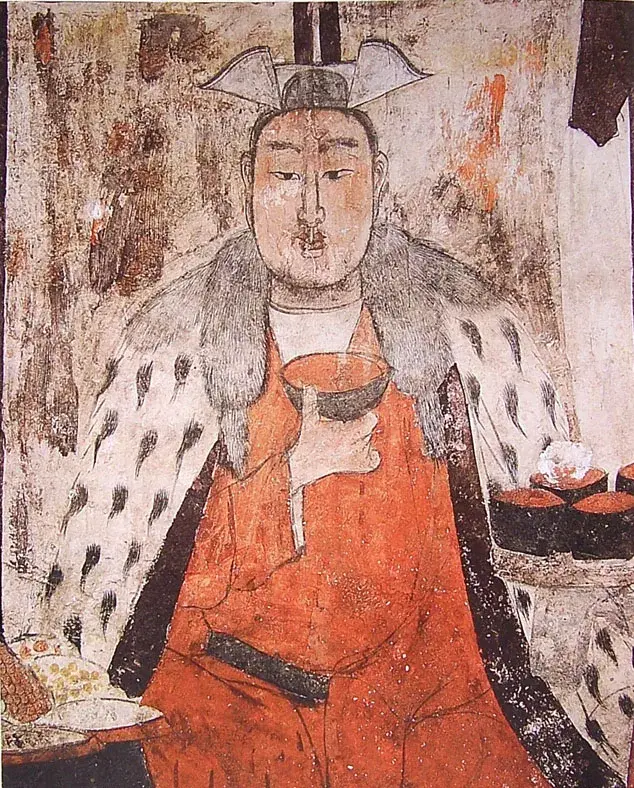
514 CE–578 CE
程灵洗
Cheng Lingxi, 514–568 (程灵洗), courtesy name Xuandi (玄涤), was a prominent general and founding dignitary of the Southern Chen dynasty hailing from Haining County, Xin'an Commandery (modern Xiuning, Anhui). Renowned in his youth for formidable physical prowess, endurance capable of traversing over two hundred li on foot in a single day, equestrian skill, and mastery of amphibious and mountainous warfare, he emerged as a crucial…
Cheng Lingxi, 514–568 (程灵洗), courtesy name Xuandi (玄涤), was a prominent general and founding dignitary of the Southern Chen dynasty hailing from Haining County, Xin'an Commandery (modern Xiuning, Anhui). Renowned in his youth for formidable physical prowess, endurance capable of traversing over two hundred li on foot in a single day, equestrian skill, and mastery of amphibious and mountainous warfare, he emerged as a crucial regional defender during the apocalyptic upheaval of the Hou Jing rebellion. While the Jiangnan heartland fell into ruin, Cheng Lingxi mobilized local militia to fortify the rugged passes of She and Yi counties, sheltering the displaced Liang imperial kinsman Xiao Yin as alliance leader and securing Xin'an from devastation. During the Chengsheng era, Cheng Lingxi was summoned to Jiankang to reinforce the defense forces under Minister of Works Wang Sengbian. In 555, when Chen Baxian launched a surprise strike to execute Wang Sengbian and seize supreme power, Cheng Lingxi rushed to the capital's Stone Citadel, waging a fierce night battle to avenge his patron until his forces were surrounded and exhausted. Moved by his unyielding fidelity, Chen Baxian pardoned him and entrusted him with the vital defense of Jingkou. Cheng Lingxi subsequently rendered outstanding service in repelling the invasion of Xu Sihui and Northern Qi armies, establishing himself as a pillar of the emerging Chen dynasty. Following the founding of Southern Chen, Cheng Lingxi played an indispensable role in safeguarding the Yangtze basin. He ambushed Wang Lin's eastern assault at Nanling, capturing more than ten heavily armed war vessels; traversed rugged cliffs from Poyang to annihilate the entrenched mountain rebel Zhou Di; and during the Guangda era, defended the besieged stronghold of Yingzhou against Hua Jiao and a twenty-thousand-strong Northern Qi and Northern Zhou army. After breaking the siege, he severed enemy retreat routes to capture the Northern Zhou commander Yuan Ding, subsequently utilizing river gunboats fitted with devastating catapult-rigs to storm Mianzhou and capture Inspector Pei Kuan. Elevated to General Who Pacifies the West and Duke of Chong'an County, he died at his post in 568 at the age of fifty-five. He was posthumously honored as General Who Guards the West, Specially Advanced with Dignity Equal to the Three Excellencies, bestowed the posthumous title Zhongzhuang, and granted enshrinement in the ancestral temple of Emperor Wu of Chen.
Born into a prominent family in Haining, Xin'an; exhibited great strength, agility, and military acumen
Hou Jing rebelled; Cheng Lingxi mobilized local militia to garrison She and Yi counties, honoring Xiao Yin as alliance leader
Cooperated with Liu Shenmao to retake Xin'an; commissioned as Regional Inspector of Qiaozhou and enfeoffed as Marquis of Baqiu
Resisted rebel incursions, drove out Lü Zirong, and captured rebel commander Zhao Sangqian in Jiande
Led elite troops to Jiankang to reinforce Wang Sengbian; later dispatched toward Jiangling before the capital fell to Western Wei
Fought desperately at Stone Citadel following Wang Sengbian's death; won Chen Baxian's deep respect and was assigned to defend Jingkou
Assisted in repulsing Xu Sihui and Northern Qi forces; created Marquis of Sui'an and garrisoned Caishi
Participated in the campaign against Wang Lin; captured alongside Hou Andu after naval defeat at Dunkou and placed in heavy irons
Broke his fetters and escaped through rugged wilderness back to Jiankang; assigned to garrison Nanling and promoted to Crown Prince Left Commandant
Ambushed Wang Lin's forward armada at Nanling, capturing over ten Qinglong heavy war vessels; appointed Regional Inspector of Nanyuzhou
Occupied the fortified garrison of Lushan after Northern Qi forces fled; recalled to the central court as Left Guard General
Marched through inaccessible mountain trails from Poyang to crush the elusive insurgent Zhou Di; promoted to Central Army Protector
Appointed Commissioner Bearing Credentials, Commander of Military Affairs in Ying, Ba, and Wu Provinces, and Regional Inspector of Yingzhou
Withstood siege by Northern Zhou forces, captured general Yuan Ding at the river crossings, and stormed Mianzhou using ship-mounted catapults
Promoted to General Who Pacifies the West and Duke of Chong'an; died at his post in Yingzhou at age fifty-five; later enshrined in Emperor Wu's imperial temple
Cheng Lingxi, courtesy name Xuandi, was a native of Haining County in Xin'an Commandery. His family was an eminent regional gentry lineage whose genealogical records traced ancestry back to Cheng Bo Xiufu of the Western Zhou, the righteous hero Cheng Ying of the State of Jin during the Spring and Autumn Period, and Grand Administrator Cheng Yantan of the Eastern Jin. His sixth-generation ancestor Cheng Tianzuo served as Commandery Governor of Shanyang under the Liu Song, his great-grandfather Cheng Mao was Administrative Director of Yingzhou under the Southern Qi, his grandfather Cheng Cha served as Vice Director of the Palace Library under the Southern Liang, and his father Cheng Bao was an official in Xin'an Commandery. Although hailing from an established lineage, the social order had severely deteriorated by the late Liang dynasty, prompting Cheng Lingxi to establish himself through martial vigor.
In his youth, Cheng Lingxi gained immense fame throughout his home region for his extraordinary strength, intrepid resolve, and athletic endurance. Official histories record that he could travel more than two hundred li on foot in a single day, excelled in riding and swimming, and possessed deep practical mastery over mountainous navigation and naval combat. During the waning years of the Liang dynasty, widespread brigandage erupted in the rugged border ranges linking Xin'an, Xuancheng, and Poyang. Local magistrates, unable to maintain order, routinely relied upon Cheng Lingxi to recruit robust village youths and command militia task forces. Through these counter-insurgency operations, he accumulated rich tactical experience and earned the unwavering devotion of his men.
In 548, rebel commander Hou Jing launched his catastrophic insurrection, crossing the Yangtze and capturing the imperial palace at Jiankang. With administrative order collapsing and marauding forces devastating Jiangnan, Cheng Lingxi gathered several hundred elite local fighters to construct sturdy wooden and stone fortifications across the precipitous mountain passes of She and Yi counties, resolutely barring rebel penetration into his native region.
When Hou Jing's forces took the Xin'an commandery seat, the magistrate and Liang royal scion Xiao Yin fled into the mountains to seek shelter with Cheng Lingxi. Upholding proper imperial protocol, Cheng Lingxi formally elevated Xiao Yin as alliance leader, rallying resistance forces under the recognized banner of the Liang dynasty. In 551, when Liu Shenmao rebelled against Hou Jing in Dongyang, Cheng Lingxi launched a swift counter-offensive, recapturing the Xin'an commandery administrative seat. Emperor Yuan of Liang, exercising imperial prerogatives from Jiangling, praised his fidelity and appointed him Regional Inspector of Qiaozhou and Grand Administrator of Xin'an, conferring the noble title of Marquis of Baqiu County.
In 552, Hou Jing's general Lü Zirong led a large counter-attack against Xin'an. Outnumbered and lacking exterior support, Cheng Lingxi prudently withdrew his main force into the mountain redoubts of She and Yi, inflicting heavy casualties on the invaders and holding the passes. Following Hou Jing's ultimate downfall, Lü Zirong abandoned the siege, allowing Cheng Lingxi to sweep forward, liberate the entire commandery, and capture rebel ringleader Zhao Sangqian in Jiande.
In 554, Emperor Yuan summoned Cheng Lingxi and his veteran troops to Jiankang to reinforce the central defense apparatus under Minister of Works Wang Sengbian. Soon after, he was appointed Grand Administrator of Wuxing, but before he could assume office, Western Wei forces surrounded Jiangling. Cheng Lingxi marched westward as a vanguard commander under Hou Tian to relieve the besieged emperor; however, Jiangling fell and Emperor Yuan was murdered before they could arrive, forcing the relief army to withdraw to Jiankang.
In 555, Wang Sengbian yielded to Northern Qi pressure by installing Xiao Yuanming as puppet emperor, sparking fierce internal opposition among Liang loyalists. Regional Inspector Chen Baxian staged a surprise dawn attack from Jingkou, stormed Jiankang, and executed Wang Sengbian. Deeply grateful for Wang Sengbian's past mentorship and patronage, Cheng Lingxi was overcome with indignation and resolved to fulfill his feudal duty, racing at the head of his troops directly toward Stone Citadel.
Arriving that night, Cheng Lingxi threw his contingent against Chen Baxian's veteran units outside the West Gate of Stone Citadel in a desperate hand-to-hand engagement. Cheng Lingxi charged into the thickest ranks, but severely outnumbered, his warriors were gradually hemmed in. Observing from the battlements, Chen Baxian admired his peerless courage and marveled that he remained willing to die for a fallen master.
Refusing to annihilate him, Chen Baxian dispatched envoys three times with magnanimous terms of safe-conduct. Only when his soldiers were depleted and Wang Sengbian's death was indisputably confirmed did Cheng Lingxi finally lay down his weapons. Chen Baxian descended the palace steps to personally welcome him, harboring zero suspicion and appointing him Grand Administrator of Lanling, charged with guarding the strategic base of Jingkou. Cheng Lingxi was deeply moved by Chen Baxian's magnanimity and committed his loyalty entirely to the Chen leadership.
In 556, the defector Xu Sihui guided massive Northern Qi armies across the river to threaten Jiankang and Jingkou. Cheng Lingxi repeatedly ambushed and broke enemy columns along key transport corridors, earning promotion to Grand Administrator of South Danyang, elevation to Marquis of Sui'an County, and commanding the garrison at the critical river fortress of Caishi.
In 557, Chen Baxian accepted the abdication of Liang to establish the Southern Chen dynasty as Emperor Wu. However, former Liang general Wang Lin refused submission, mobilizing forces across Hunan and Hubei while backing Xiao Zhuang as rival claimant. Emperor Wu dispatched generals Hou Andu and Zhou Wenyu to conduct a western offensive, with Cheng Lingxi leading his amphibious units in the campaign.
The opposing fleets engaged in a major naval clash at Dunkou on the Yangtze. Aided by favorable currents, Wang Lin's aggressive assault coincided with gale-force winds that scattered the Chen formation. Hou Andu, Zhou Wenyu, and Cheng Lingxi were surrounded and captured. Wang Lin confined the three captured commanders under heavy surveillance, securing them with massive iron chains.
During his captivity, Cheng Lingxi preserved his composure, feigning acquiescence while cultivating ties with guard soldiers. In the autumn of 558, noting slackening vigilance in the rebel encampment, Cheng Lingxi and Hou Andu secretly filed through their heavy shackles, eluded enemy patrols, and traversed hundreds of li of rugged mountain wilderness before returning safely to Jiankang. Overjoyed by their return, Emperor Wu bestowed command over Danyang, appointed Cheng Lingxi Grand Administrator of Gaotang and Taiyuan, and stationed him at the crucial river stronghold of Nanling as Crown Prince Left Commandant.
In 559, following the death of Emperor Wu and accession of Emperor Wen, Wang Lin mobilized his entire naval host down the Yangtze, aiming to crush the infant dynasty. At Nanling, Cheng Lingxi concealed his strike forces along the cliffs and reed-lined channels. As Wang Lin's vanguard entered the kill zone, Cheng Lingxi struck both flanks simultaneously, shattering the enemy fleet, capturing thousands of troops, and seizing more than ten heavily armored Qinglong assault craft.
In 560, the Chen main force shattered Wang Lin at Zhakou, forcing him to flee to Northern Qi. The Northern Qi garrison holding Lushan Fortress panicked and fled northward by night, allowing Cheng Lingxi to seize the intact stronghold. Following his triumphal return to Jiankang, Emperor Wen appointed him Left Guard General, commanding the imperial bodyguard.
In 564, the volatile warlord Zhou Di broke out from the deep ranges of Jiangxi, rallying over ten thousand mountain tribesmen to overrun Dongxing and menace Linchuan. Zhou Di relied on inaccessible terrain to evade regular government armies. Recognizing Cheng Lingxi's unparalleled familiarity with irregular mountain warfare, Emperor Wen appointed him Commander-in-Chief and dispatched him with elite troops across the cliffs of Poyang along hidden defiles.
Cheng Lingxi personally braved arrows and stones, leading his troops through pathless ravines to cut off Zhou Di's line of retreat, encircling the rebel host and destroying their main forces. Zhou Di barely escaped alone into the sheer wilderness. In recognition of this feat, Cheng Lingxi was elevated to Central Army Protector in the eleventh month of 564. In late 565, amid mounting tensions along the middle Yangtze, he was appointed Commissioner Bearing Credentials, Commander of Military Affairs in Ying, Ba, and Wu Provinces, and Regional Inspector of Yingzhou, establishing his headquarters at Xiakou.
In 567, Regional Inspector of Xiangzhou Hua Jiao allied with Northern Zhou and Western Liang to launch a massive rebellion. Recognizing Xiakou as the linchpin of the middle river, Hua Jiao dispatched envoys with lavish bribes to induce Cheng Lingxi's defection. Cheng Lingxi executed the envoy on the spot and dispatched the treasonous letters directly to the court. The regent Chen Xu praised his unshakable fidelity, rewarding him with an imperial ceremonial orchestra and dispatching his eldest son Cheng Wenji with reinforcements.
Shortly thereafter, Northern Zhou dispatched general Yuan Ding with twenty thousand elite cavalry and infantry to join Hua Jiao in besieging Yingzhou. Surrounded by overwhelming forces, Cheng Lingxi held the city gates firmly, repulsing round-the-clock assaults. After the main Chen navy destroyed Hua Jiao's armada at Baling, Yuan Ding's army abandoned the siege and attempted to retreat northward. Cheng Lingxi immediately led a sally, preemptively seizing the Yangtze crossing points. Deprived of food and trapped against the river, Yuan Ding surrendered his entire command.
Without pausing, Cheng Lingxi sailed his fleet northward to strike the Northern Zhou stronghold of Mianzhou. Persistent autumn downpours had swollen the Han and Yangtze rivers until the waters lapped against the city walls. Cheng Lingxi brought hundreds of tower ships directly beneath the ramparts, deploying shipboard siege-catapults to pulverize the battlements. After thirty days of continuous amphibious assault, Cheng Lingxi scaled the breach, subduing defender Pei Kuan in vicious street fighting and clearing Northern Zhou forces from the middle Yangtze.
In 568, the court elevated Cheng Lingxi to General Who Pacifies the West and created him Duke of Chong'an County, expanding his fief to two thousand households. However, decades of relentless campaigning had worn down his health, and he died at his post in Yingzhou later that year at the age of fifty-five. Emperor Fei issued an imperial rescript granting him the posthumous title Zhongzhuang and posthumous offices of General Who Guards the West and Specially Advanced with Dignity Equal to the Three Excellencies. His eldest son Cheng Wenji inherited the ducal title and command of his forces. In 572, Emperor Xuan decreed that Cheng Lingxi be permanently enshrined in the imperial ancestral temple of Emperor Wu of Chen.
Cheng Lingxi was celebrated for his strict discipline and exemplary fairness. He demanded absolute compliance from subordinates, punishing minor infractions severely; yet in combat he always led from the front, sharing hardships with the lowest soldiers and distributing all spoils and rewards without personal enrichment. He also possessed a remarkable devotion to agriculture, personally cultivating fields during intervals between campaigns and demonstrating expert knowledge of soils, seasons, and farming techniques.
Following his death, the people of Xin'an established shrines throughout the valleys to commemorate his preservation of their homeland. During the Jiading era of the Southern Song, the court constructed the Shizhong Temple and conferred ten successive rounds of imperial titles upon Cheng Lingxi to inspire patriotic resistance against northern invaders. Under the Yuan dynasty, he was honored as King of Loyal Valor. Ming scholars including Huang Daozhou ranked him among China's greatest classical commanders. He remains celebrated as the foremost ancestral patriarch of the Xin'an Cheng lineage.
During the devastating Hou Jing rebellion, Cheng Lingxi mobilized rural militia to fortify the strategic passes of She and Yi counties, shielding Xin'an from annihilation. By rallying behind royal kinsman Xiao Yin, recapturing the commandery seat, and capturing rebel leader Zhao Sangqian, he preserved a secure economic and demographic bastion for the Southern Dynasties.
Following Chen Baxian's execution of Wang Sengbian in 555, Cheng Lingxi upheld his moral duty by launching a daring night assault against Stone Citadel, surrendering only when completely exhausted. Welcomed with trust by Chen Baxian, he discarded all factional resentment to decisively repel Northern Qi invasions at Caishi.
After escaping heavy imprisonment following the defeat at Dunkou, Cheng Lingxi established an ambush at the river defiles of Nanling. He shattered Wang Lin's vanguard fleet, captured over ten Qinglong assault craft, and thwarted the rebel attempt to crush the Chen dynasty in its infancy.
Faced with Zhou Di's entrenched guerrilla resistance in the inaccessible ranges of Jiangxi, Cheng Lingxi led a task force over untracked cliffs from Poyang, surprising the insurgents from the rear and permanently eliminating a chronic threat to the state.
Surrounded by twenty thousand Northern Zhou soldiers under Yuan Ding, Cheng Lingxi executed treasonous envoys and held Yingzhou. Once the siege broke, he trapped and captured Yuan Ding's entire army at the river crossings, followed immediately by using ship-mounted catapults to storm Mianzhou and capture Northern Zhou inspector Pei Kuan.
Cheng Lingxi combined iron discipline with shared sacrifice, winning the profound devotion of his men. Despite reaching the pinnacle of military command, he remained devoted to farming, personally tilling the land and managing household weaving, standing out as a rare agrarian military commander in early medieval China.
FIGURES ASSOCIATED WITH THIS DYNASTY