(first year of the Dengguo era of
386 (first year of the Dengguo era of Northern Wei): Tuoba Gui established Northern Wei, marking the beginning of the period.
386 CE–581 CE
北朝
The Northern Dynasties refers collectively to a succession of dynasties that ruled northern China during the Northern and Southern Dynasties period. It is conventionally dated from the establishment of the Northern Wei regime by Emperor Daowu of Northern Wei, Tuoba Gui, to the abdication of the last Northern Zhou emperor and the founding of the Sui Dynasty. It was not a single state name, but a historical continuum consisting of Northern Wei and, after its division, Eastern Wei and Western Wei,…
The Northern Dynasties refers collectively to a succession of dynasties that ruled northern China during the Northern and Southern Dynasties period. It is conventionally dated from the establishment of the Northern Wei regime by Emperor Daowu of Northern Wei, Tuoba Gui, to the abdication of the last Northern Zhou emperor and the founding of the Sui Dynasty. It was not a single state name, but a historical continuum consisting of Northern Wei and, after its division, Eastern Wei and Western Wei, followed by Northern Qi and Northern Zhou. Northern Dynasties politics originated in Xianbei military groups, which over the course of long rule continually absorbed bureaucratic, ritual, legal, and fiscal institutions from the Chinese heartland. Northern society also underwent ethnic restructuring, population migration, and institutional experiments such as the equal-field system of land distribution and taxation and the Fubing system, laying important foundations for the unified Sui-Tang state.
386 (first year of the Dengguo era of Northern Wei): Tuoba Gui established Northern Wei, marking the beginning of the period.
439 (fifth year of the Taiyan era of Northern Wei): Northern Wei destroyed Northern Liang and unified northern China.
471 (first year of the Yanxing era of Northern Wei): Yuan Hong ascended the throne, and reforms gradually unfolded.
493 (seventeenth year of the Taihe era of Northern Wei): Northern Wei moved its capital to Luoyang.
523 (fourth year of the Zhengguang era of Northern Wei): the Rebellion of the Six Garrisons broke out.
534 (third year of the Yongxi era of Northern Wei): Northern Wei split into Eastern Wei and Western Wei.
550 (first year of the Tianbao era of Northern Qi): Gao Yang established Northern Qi.
557 (first year of the reign of Emperor Xiaomin of Northern Zhou): Yuwen Jue established Northern Zhou.
577 (sixth year of the Jiande era of Northern Zhou): Northern Zhou destroyed Northern Qi.
581 (first year of the Dading era of Northern Zhou and first year of the Kaihuang era of Sui): Yang Jian replaced Northern Zhou and established the Sui Dynasty, ending the Northern Dynasties.
The Northern Dynasties refers collectively to a succession of dynasties that ruled northern China during the Northern and Southern Dynasties period. It is conventionally dated from the establishment of the Northern Wei regime by Emperor Daowu of Northern Wei, Tuoba Gui, to the abdication of the last Northern Zhou emperor and the founding of the Sui Dynasty. It was not a single state name, but a historical continuum consisting of Northern Wei and, after its division, Eastern Wei and Western Wei, followed by Northern Qi and Northern Zhou. Northern Dynasties politics originated in Xianbei military groups, which over the course of long rule continually absorbed bureaucratic, ritual, legal, and fiscal institutions from the Chinese heartland. Northern society also underwent ethnic restructuring, population migration, and institutional experiments such as the equal-field system of land distribution and taxation and the Fubing system, laying important foundations for the unified Sui-Tang state.
Northern Wei rose after Tuoba Gui rebuilt the political foundations of the state of Dai. Under Tuoba Tao, it destroyed Northern Liang and unified northern China in 439, the fifth year of the Taiyan era. Emperor Xiaowen, Yuan Hong, moved the capital to Luoyang and carried out reforms in institutions and social customs, bringing Northern Wei more deeply into the political traditions of the Central Plains while also intensifying tensions between the old military-garrison groups and the Luoyang bureaucracy. After the Rebellion of the Six Garrisons, the Northern Wei central government rapidly lost control. In 534, the third year of the Yongxi era, Northern Wei split into Eastern Wei, controlled by Gao Huan, and Western Wei, controlled by Yuwen Tai. Eastern Wei was later replaced by Northern Qi under the Gao family, while Western Wei was replaced by Northern Zhou under the Yuwen family. Northern Qi declined because of dynastic politics and internal conflict. Northern Zhou, after being consolidated by Yuwen Tai and reorganized by Emperor Wu, destroyed Northern Qi in 577, the sixth year of the Jiande era. In 581, the first year of the Dading era, Yang Jian replaced Northern Zhou and founded the Sui Dynasty, bringing the Northern Dynasties to an end. Its experience in military administration and ethnic integration was carried into the institutions of the Sui and Tang dynasties.
Early Northern Wei retained features of tribal military rule while establishing bureaucratic institutions modeled on those of the Central Plains. Emperor Xiaowen’s reforms strengthened systems for salaries, household registration, ritual, and central administration. After the formation of Eastern and Western Wei, military and political power was concentrated respectively in the Gao and Yuwen groups. Western Wei and Northern Zhou developed a military-political structure centered on the Pillar of State office and the Fubing system, and used a Rites of Zhou-style official system to shape political legitimacy. Relations among provinces, commanderies, counties, powerful lineages, military garrisons, and registered households ran through the entire period.
The Northern Dynasties long faced northern powers such as the Rouran and the Göktürks, while repeatedly contesting the Southern Dynasties over the Huai River, Han River, and Sichuan regions. Northern Wei cavalry and the military-garrison system supported the unification of northern China, but differences in the treatment of garrison populations also contributed to the Rebellion of the Six Garrisons. Eastern Wei, Western Wei, Northern Qi, and Northern Zhou remained in prolonged confrontation over Hedong, Henan, and the Guanzhong-Longxi region. After Northern Zhou destroyed Northern Qi, it controlled the Yellow River basin, creating conditions for Sui to conquer Chen.
After the warfare of the Sixteen Kingdoms period sharply reduced the population of northern China, Northern Wei restored its tax and labor base through migration, household registration, military-agricultural colonies, and the equal-field system. In 485, the ninth year of the Taihe era, the equal-field system of land distribution and taxation was promulgated, together with the three-heads system and the rent-and-tax system, in an attempt to reconnect landholding, household registration, and state taxation and labor service. Agriculture and cities such as Luoyang, Ye, and Chang'an gradually recovered, although disasters, warfare, and hidden households controlled by powerful lineages continued to limit the effectiveness of these policies.
Northern Dynasties culture reflected the interaction of Xianbei, Han Chinese, and Central Asian elements. Buddhism spread widely, and the Yungang and Longmen cave complexes and temple networks left major artistic legacies. Luoyang became a multiethnic metropolis. Works such as Essential Techniques for the Welfare of the People and Commentary on the Water Classic were produced in this period. Changes in burial practice, clothing, surnames, and marriage systems reflected the continuing reorganization of social traditions.
Northern Wei (Tuoba Gui, Tuoba Tao, Yuan Hong, and others), Eastern Wei (Yuan Shanjian; with Gao Huan and Gao Cheng governing), Western Wei (Yuan Baoju and others; with Yuwen Tai governing), Northern Qi (Gao Yang, Gao Yan, Gao Zhan, and others), and Northern Zhou (Yuwen Jue, Yuwen Yong, and others).
The Northern Dynasties reorganized the military, household-registration, land, and bureaucratic resources of northern China after a long period of division. The period contained intense dynastic change and ethnic conflict, but it also developed institutional elements such as the equal-field system, three-heads system, and Fubing system that influenced the Sui Dynasty and Tang. Modern scholarship places greater emphasis on state formation, ethnic interaction, and Eurasian exchange. In overview, Northern Wei through Northern Zhou should be treated as a continuous historical development while preserving the differences among the individual regimes.
Emperor
Tuoba Gui (August 4, 371–November 6, 409), also known as Tuoba Kai, Tuoba Shegui, Tuoba Yigui, and Tuoba Shiyigui, courtesy name Shegui, was a Xianbei from Shengle, present-day Horinger County in Inner Mongolia. He was the founding emperor, military commander, and political leader of Northern Wei, a grandson of Tuoba Shiyiqian, Emperor Zhaocheng, and the posthumous son of Tuoba Shi, Emperor Xianming. Born north of Ca
Emperor
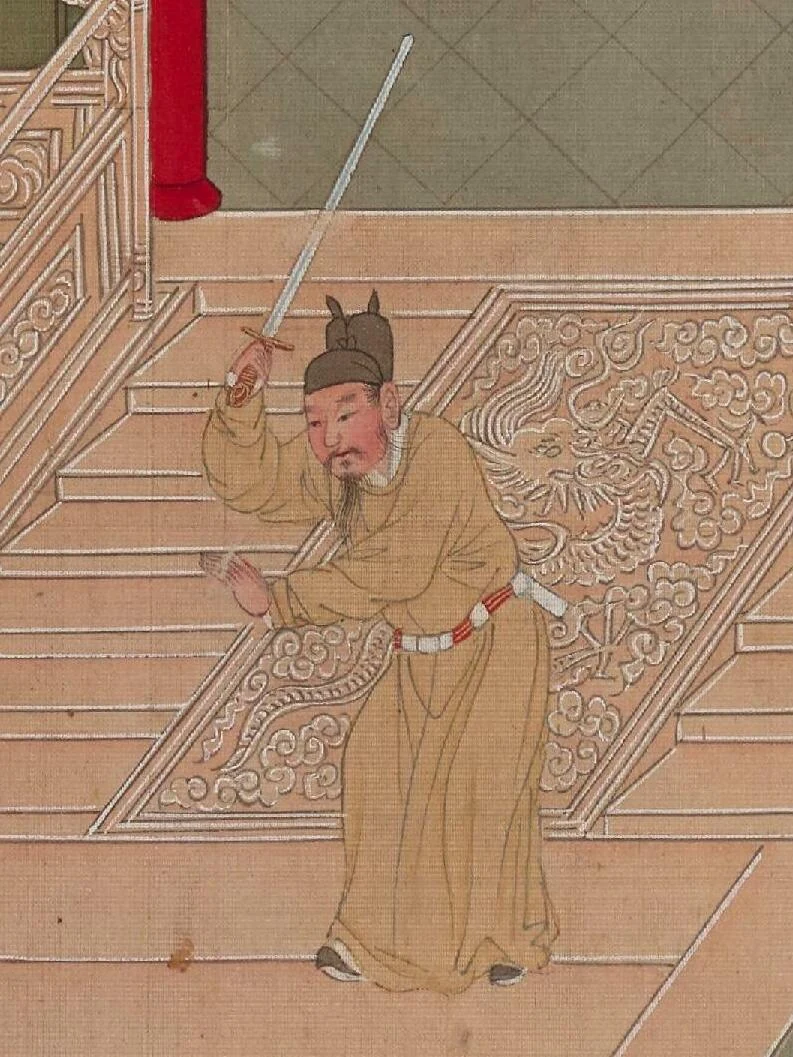
Yuwen Jue (542, the 8th year of the Datong era–557, first year of Emperor Xiaomin of Northern Zhou), courtesy name Tuoluoni, was a native of Wuchuan in Dai Commandery, now Wuchuan County in Inner Mongolia. He was the third son of Yuwen Tai, the powerful minister of Western Wei, and his mother was Empress Yuan, formerly Princess Fengyi. Yuwen Jue was the founding ruler of Northern Zhou, but in practice he was enthrone
 Northern Qi
Emperor
Gao Yang (born 526, died 25 November 559), courtesy name Zijin and Xianbei name Hounigan, was a native of Tiao County in Bohai Commandery, born at Jinyang, and the founding emperor of Northern Qi. He was a son of Gao Huan and Lou Zhaojun. After his elder brother Gao Cheng was assassinated in 549(Wuding 7, Eastern Wei), Gao Yang took control of the Eastern Wei court. In 550(Wuding 8, Eastern Wei; Tianbao 1, Northern Q
Emperor
Yuan Shanjian (524–January 21, 552), a native of Luoyang in Henan (present-day Luoyang, Henan), was a Xianbei member of the Northern Wei imperial clan. He was a great-grandson of Emperor Xiaowen of Northern Wei, Yuan Hong, and the son of Yuan Dan, Prince Wenxuan of Qinghe; his mother was Hu Zhi, Princess Consort of Qinghe. Yuan Shanjian was the sole emperor of Eastern Wei during the Northern and Southern Dynasties pe
Emperor
Yuan Baoju (507–March 28, 551), courtesy name Ziming according to one uncertain account, was Xianbei. He was a grandson of Yuan Hong, Emperor Xiaowen of Northern Wei, the third son of Yuan Yu, Prince of Jingzhao, and the son of Consort Yang Ao. He was the founding emperor of Western Wei during the Northern and Southern Dynasties, reigning from 535, the first year of Datong, to 551, the seventeenth year of Datong. As
Emperor
Tuoba Tao (408–March 11, 452), whose childhood names included Foli and Folifa, was a Xianbei ruler and the third emperor of Northern Wei, reigning from December 27, 423 to March 11, 452. He was the eldest son of Tuoba Si, Emperor Mingyuan, the eldest legitimate grandson of Tuoba Gui, Emperor Daowu, and the son of Lady Du, posthumously Empress Mi of Mingyuan. Tuoba Tao took the throne at sixteen and ruled for twenty-e
 Northern Zhou
Emperor
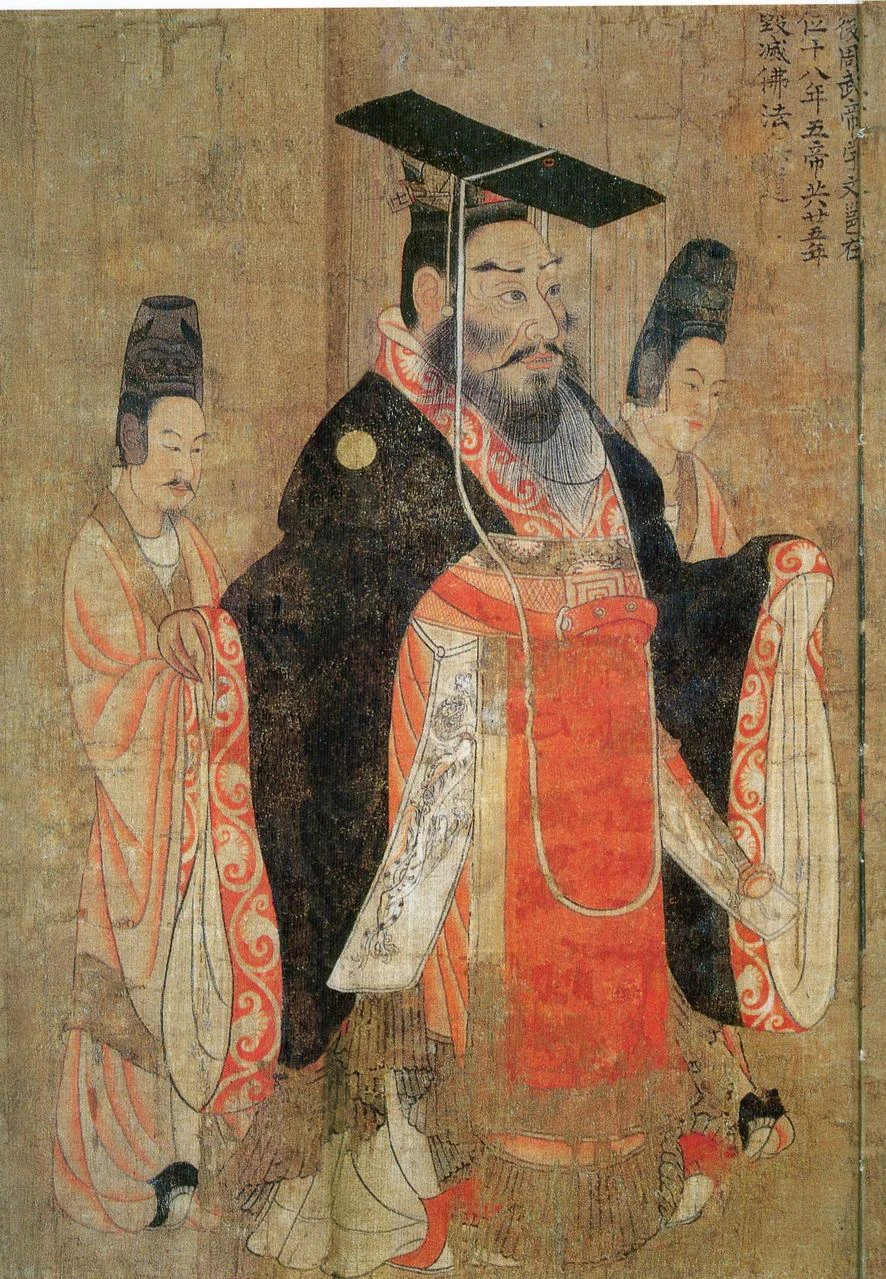
Yuwen Yong (543–June 21, 578), courtesy name Miluotu, was a Xianbei ruler whose ancestral home was Wuchuan in Dai Commandery, west of present-day Wuchuan in Inner Mongolia. He was born in Tongzhou, present-day Dali, Shaanxi, and was the third emperor of Northern Zhou, known to history as Emperor Wu of Northern Zhou. Early in his reign he concealed his intentions while power remained in the hands of Yuwen Hu. In 572,
Emperor
Gao Wei, courtesy name Rengang, was born on May 29, 556 (7th year of Tianbao, Northern Qi). He was the son of Gao Zhan, Emperor Wucheng of Northern Qi, and Empress Hu, and was the fifth emperor of Northern Qi. He was made Crown Prince in 562 (2nd year of Taining) and received the throne by abdication in 565 (4th year of Heqing). After Gao Zhan died in 569 (4th year of Tiantong), Gao Wei began personally handling stat
Emperor
Tuoba Si (392–December 24, 423), courtesy name Mumo, was a Xianbei ruler and the second emperor of Northern Wei. He was the eldest son of Tuoba Gui, the Daowu Emperor, and his mother was Lady Liu, posthumously honored as Empress Xuanmu. In 409 (Tianci 6), after suppressing the rebellion of his younger brother Tuoba Shao, Prince of Qinghe, he ascended the throne. His era names were Yongxing, Shenrui, and Taichang. He
Emperor
Gao Yan (534–561), courtesy name Yan'an, was a native of Tiao County in Bohai Commandery, present-day Jing County, Hengshui, Hebei. He was the third emperor of Northern Qi, reigning from 560 to 561. He was the sixth son of the Eastern Wei strongman Gao Huan and Lady Lou Zhaojun, and a full brother of Gao Yang, Emperor Wenxuan. Skilled in political affairs, Gao Yan took part in government during the Tianbao era and be
Emperor
Yuwen Yu (534–May 30, 560), whose childhood name was Tongwantu, was a native of Wuchuan Garrison in Dai Commandery (present-day Wuchuan County, Hohhot, Inner Mongolia). He was the second ruler of Northern Zhou and reigned from 557 to 560. He was the eldest son by a concubine of Yuwen Tai, Grand Preceptor of Western Wei; his mother was Lady Yao. In the ninth month of 557, after the powerful minister Yuwen Hu deposed a
Emperor
Yuan Qin (525–554), a native of Luoyang County in Henan Commandery (east of present-day Luoyang, Henan), was the eldest son of Yuan Baoju, Emperor Wen of Western Wei, and Empress Yifu. He was the second emperor of Western Wei. Yuan Qin was made crown prince in 535, the first year of the Datong era, and ascended the throne in 551, the seventeenth year of Datong, reigning for about three years. After his plot to remove