Academic Honors
Composed the Inscription for Bagongshan Shrine, placed top in imperial examinations, and appointed Court Attendant
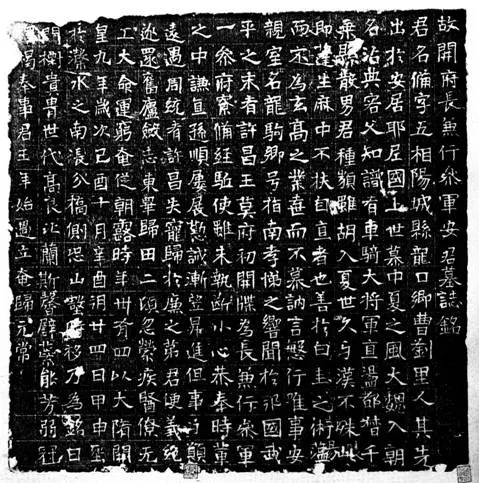
?–525 CE
裴邃
Pei Sui, ?–525 (裴邃), courtesy name Yuanming (渊明), was an illustrious military commander, strategist, and provincial administrator of the Southern Liang dynasty hailing from Wenxi County, Hedong Commandery (modern Wenxi, Shanxi), with residence in Shouchun, Huainan (modern Shou County, Anhui). Descended from the prominent Hedong Pei lineage—his ancestor Pei Chuo served as Regional Inspector of Xiangzhou in Cao Wei—Pei Sui was…
Pei Sui, ?–525 (裴邃), courtesy name Yuanming (渊明), was an illustrious military commander, strategist, and provincial administrator of the Southern Liang dynasty hailing from Wenxi County, Hedong Commandery (modern Wenxi, Shanxi), with residence in Shouchun, Huainan (modern Shou County, Anhui). Descended from the prominent Hedong Pei lineage—his ancestor Pei Chuo served as Regional Inspector of Xiangzhou in Cao Wei—Pei Sui was gifted in literary composition from age ten and deeply versed in the Zuo Zhuan. He initially served the Southern Qi as Court Attendant. Following the defection of Regional Inspector Pei Shuye to Northern Wei in 500, Pei Sui was swept northward. Emperor Xuanwu of Northern Wei held him in high esteem, appointing him Staff Officer to the Minister of Works, Secretariat Drafter, and Grand Administrator of Weijun. Yearning for the southern dynastic realm, Pei Sui accompanied Wang Su to Shouchun and staged a daring escape southward to the newly founded Liang court in 502. Upon returning to the south, Pei Sui requested border duty rather than bureaucratic sinecures, taking office as Grand Administrator of Lujiang, where he crushed a fifty-thousand-strong Northern Wei army under Lü Po. During the monumental Battle of Zhongli in 507, he coordinated with Wei Rui and Cao Jingzong, secretly inventing the fortified Submerged Ramming Battleship. When torrential floods raised the Huai River by over seven zhang, Pei Sui personally led his ships to ram and burn Northern Wei's dual pontoon bridges at Shaoyang Island, severing the enemy's escape lines and precipitating a historic victory that destroyed nearly three hundred thousand Northern Wei invaders. In regional administration across Jingling, Beiliangzhou, and Xizhou, he established official cattle markets to assist peasant agriculture and reclaimed thousands of qing of border agricultural colonies. In 521, he led a thousand-li surprise cavalry dash to recapture Yizhou and take Northern Wei inspector Feng Shou captive. In 524, Emperor Wu launched a major northern offensive, elevating Pei Sui to Commander-in-Chief of the Northern Expedition over the Huai river theater. Wearing a brilliant yellow coat at the head of his Yellow-Robed Cavalry, he launched a daring night assault against Shouchun and engaged enemy forces nine times in a single day. At the strategic depot of Lijiang, he regrouped his forces, seized outer satellite bastions, and mobilized military artisans to rebuild the legendary Quebei reservoir. In 525, he deployed the classic Four-Wing Battle Formation, feigning retreat to draw out fifty thousand elite Northern Wei troops under Prince Yuan Chen and Changsun Zhi, encircling them and decapitating over ten thousand enemy soldiers. In the fifth month of 525, exhausted by constant campaigning, Pei Sui died in his forward encampment. Emperor Wu posthumously promoted him to Cavalier Regular Attendant and General of the Left Guard, advanced his title to Marquis of Yiling, and conferred the martial posthumous name Lie.
Composed the Inscription for Bagongshan Shrine, placed top in imperial examinations, and appointed Court Attendant
Appointed military aide under Xiao Yaoguang, Regional Inspector of Yangzhou
Escaped the capital after Xiao Yaoguang fell; forced northward following Pei Shuye's defection
Appointed Secretariat Drafter and Administrator of Weijun by Emperor Xuanwu; accompanied Wang Su to Shouchun while plotting escape
Escaped to Southern Liang; appointed Administrator of Lujiang and routed fifty thousand Wei troops under Lü Po
Assisted Wei Rui in taking Xiaoxian, Yangshi, and Huoqiou; preserved his army intact following Xiao Hong's panic at Luokou
Built earthen redoubts against enemy pontoon bridges, deployed Submerged Ramming Battleship, and burned bridges amid river floods
Governed Jingling, establishing state-supervised cattle markets; opened agricultural colonies across Beiliangzhou and Xizhou
Launched a long-range cavalry surprise attack to recapture Yizhou and capture Wei inspector Feng Shou; created Baron of Yiling
Commissioned as Commander-in-Chief, assaulted Shouchun, organized Yellow-Robed Cavalry, and restored the ancient Quebei reservoir
Trapped Yuan Chen and Changsun Zhi in the Four-Wing Battle Formation, slaying ten thousand; died of exhaustion in camp and honored as Marquis Lie
Pei Sui, courtesy name Yuanming, was a native of Wenxi County, Hedong Commandery. He belonged to the prestigious Hedong Pei lineage whose ancestry traced back to Pei Chuo, Regional Inspector of Xiangzhou during the Cao Wei dynasty. Following the southern migration of the Jin court, one branch of the family settled in Xiangyang, and his grandfather Pei Shousun later took up residence in Shouchun, Huainan, serving as Senior Forward Army Adjutant under Liu Yu, Founding Emperor Wu of Liu Song. His father Pei Zhongmu entered official service through military merit, rising to Fierce Cavalry General under the Liu Song and Southern Qi.
Pei Sui displayed extraordinary intellectual brilliance from early childhood. Official annals record that he was capable of composing sophisticated literary essays at age ten and made an exhaustive study of the Zuo Zhuan. In 494, Xiao Yaochang, Regional Inspector of Yuzhou, invited the youthful scholar to serve as headquarters secretary. Shouchun possessed the historic Bagongshan Shrine, and Xiao Yaochang commissioned Pei Sui to compose the formal commemorative stone inscription. Pei Sui produced a monumentally elegant composition that earned universal praise. Soon after, he was recommended as an imperial scholar and excelled in the civil examinations, taking his first government appointment as Court Attendant. In 498, Xiao Yaoguang, Prince of Shi'an and Regional Inspector of Yangzhou, recruited him as military aide.
In 499, Xiao Yaoguang launched an abortive rebellion in Jiankang and was executed. Having taken no part in the conspiracy, Pei Sui fled back to Shouchun. However, regional politics descended into turmoil when Regional Inspector of Yuzhou Pei Shuye, fearing imperial execution, surrendered Shouchun to Northern Wei in 500. The prominent families and commoners of the commandery were forcibly evacuated northward, and Pei Sui was caught in the relocation.
Upon his arrival in the northern capitals of Pingcheng and Luoyang, Emperor Xuanwu of Northern Wei, deeply impressed by his literary and administrative pedigree, appointed him Staff Officer to the Minister of Works, Secretariat Drafter, and Grand Administrator of the pivotal Weijun Commandery. Despite receiving high honors from the northern regime, Pei Sui remained unswervingly devoted to the southern dynasty. When the Northern Wei court dispatched Wang Su, a former southern dignitary, to garrison Shouchun, Pei Sui requested permission to join his staff, privately laying plans to escape south across the frontier.
In 502, Xiao Yan ascended the throne as Emperor Wu, establishing the Southern Liang dynasty. Seizing the opportunity amid shifting frontier conditions, Pei Sui broke free from Northern Wei surveillance and escaped to Jiankang. Emperor Wu was delighted to welcome such an accomplished scholar-commander, appointing him Rear Military Consultant. However, Pei Sui possessed an ardent desire to distinguish himself on the battlefield rather than languish in capital administrative bureaus. He submitted a memorial requesting border service. Emperor Wu gladly approved, naming him General of Martial Support and Grand Administrator of Lujiang to secure the western Huai corridor.
Upon arriving at Lujiang, Pei Sui immediately restored the dilapidated city walls and moats, stocked arrow arsenals, and intensively drilled the local militia. Within months, Northern Wei veteran commander Lü Po led fifty thousand infantry and cavalry in a sudden assault upon Lujiang. Outnumbered more than five to one, Pei Sui remained completely unperturbed. After surveying the enemy deployment from the battlements, he concealed elite detachments in adjacent defiles and led several thousand troops out through the city gates. Feigning retreat after a brief skirmish, he lured the overconfident Northern Wei vanguard into the narrow defile. At his signal, concealed archers and cavalry slammed into the enemy's flanks and rear, routing Lü Po's host and cutting down thousands. The victory established Pei Sui's martial fame, earning him promotion to General of the Right Army.
In 506, Emperor Wu ordered a large-scale northern offensive, directing Regional Inspector of Yuzhou Wei Rui to assault Hefei, with Pei Sui serving under his banner. Pei Sui assisted in capturing the fortress of Xiaoxian and encircled Hefei. On the eighteenth day of the fifth month, he spearheaded the storming of Yangshi Fortress, killing the Wei commander Yuan Kang; three days later, he captured Huoqiou, executing commander Ning Yongren.
However, the supreme commander of the northern expedition, Emperor Wu's younger brother Xiao Hong, Prince of Linchuan, proved cowardly and incompetent. When the main army reached Luokou, rumors of approaching Northern Wei forces threw Xiao Hong into panic. Calling a council of war, senior general Lü Sengzhen recommended withdrawal, which Xiao Hong enthusiastically endorsed. Pei Sui jumped to his feet, gripping his sword and exclaiming that the very purpose of the expedition was to seek out the enemy, asking why they should retreat before striking a blow. Xiao Hong rejected his advice and threatened execution for anyone advocating advance. That night, a sudden gale and thunderstorm struck Luokou. Mistaking the storm for an enemy raid, Xiao Hong fled on horseback with a handful of retainers. The leaderless army dissolved into panicked flight, leaving over fifty thousand dead in the stampede. Amid the catastrophe, Pei Sui maintained iron discipline, calmly organizing his units and bringing his entire command back to safety without loss.
In 507, Northern Wei amassed several hundred thousand troops under Prince of Zhongshan Yuan Ying and general Yang Dayan to besiege the isolated fortress of Zhongli on the Huai River. Inside, defender Chang Yizhi held out desperately with three thousand men. Emperor Wu dispatched Cao Jingzong and Wei Rui with two hundred thousand troops to Shaoyang Island in the middle of the river. To cut off Liang naval reinforcements, the Wei armies constructed two immense wooden pontoon bridges across the northern and southern channels of the Huai, securing them with iron chains and flanking redoubts.
Pei Sui was assigned to front-line assault duty in the joint amphibious headquarters. He led assault detachments right up against the bridge abutments, throwing up earthworks under heavy missile fire. Simultaneously, he supervised the construction of specialized Submerged Ramming Battleship units—sturdy, deep-draught vessels heavily armored with iron plates and seasoned timbers designed to ram obstacles. In late spring, continuous torrential downpours triggered a massive mountain flood, raising the Huai River by more than seven zhang. Wei Rui gave the signal for total attack. Pei Sui personally led his Submerged Ramming Battleship fleet down the raging current, crashing into the pontoon bridges and unleashing fire rafts and incendiary rockets.
The gale winds fanned the flames across the bridges and stockades, incinerating the spans and cutting off Northern Wei's communications. Liang naval and ground forces attacked from all sides, triggering a catastrophic rout. Over one hundred thousand Wei soldiers drowned, another hundred thousand were slain in the encirclement, and fifty thousand were captured. For his decisive role in destroying the bridges, Pei Sui was enfeoffed as Baron of Yiling County with a fief of three hundred households.
Following the victory, Pei Sui served successively as Grand Administrator of Guangling and Shi'an. At Guangling, a bustling transit hub plagued by rampant litigation and official corruption, he personally investigated backlogged cases, resolving months of grievances and pacifying the populace. At Shi'an in the far south, he eliminated irregular corvée labor, winning the devotion of indigenous tribes. Later, as Grand Administrator of Jingling, he tackled exploitation in livestock commerce by establishing an official municipal cattle market that standardized contracts and prices, greatly assisting peasant reclamation. Recalled to the capital as Traveling Cavalry General, he was soon dispatched to govern Beiliangzhou and Xizhou. Across these frontier provinces, he reclaimed several thousand qing of wasteland for military farming, building granaries that stabilized the borders. When grateful local gentry presented him with a thousand bolts of fine silk, Pei Sui took only two bolts to acknowledge their goodwill, returning the rest to the donors.
In 521, Liang Regional Inspector of Yizhou Wen Sengming defected to Northern Wei, which sent Feng Shou to occupy the province. Emperor Wu commissioned Pei Sui to quell the rebellion. Executing a rapid cavalry sweep across mountainous trails, Pei Sui appeared unexpectedly beneath the walls of Yizhou, storming the gates and capturing Feng Shou. For this feat, he was promoted to General of the Right Guard.
In 524, capitalizing on the chaos of the Six Frontier Garrisons rebellion across Northern Wei, Emperor Wu ordered a comprehensive northern campaign, commissioning Pei Sui as Commander-in-Chief of the Northern Expedition over the Huai theater. Determined to liberate his old home of Shouchun, Pei Sui launched a surprise night attack with three thousand cavalry, breaching the outer defenses. The Wei defender, veteran commander Changsun Zhi, fought desperately, engaging Pei Sui's forces nine times in a single day. When the rear relief column under Cai Xiucheng lost its way in the dark, Pei Sui prudently withdrew his force to Lijiang.
At Lijiang, Pei Sui reorganized his divisions with distinct colored pennants to prevent confusion in combat. He dressed himself in a brilliant yellow coat, riding at the head of what became known as the Yellow-Robed Cavalry. Under his energetic leadership, the Liang forces captured Diqiu and Bicheng, clearing Wei garrisons surrounding Shouchun. In the midst of campaigning, Pei Sui directed engineering troops to restore the historic Quebei reservoir, repairing embankments and sluice gates to irrigate thousands of qing of farmland while improving waterborne military transport.
In the spring of 525, Pei Sui pushed westward, taking Xincai and Zhengcheng. Alarmed by his progress, Northern Wei dispatched Prince of Hejian Yuan Chen with fifty thousand troops to reinforce Shouchun. Disregarding Changsun Zhi's cautions, Yuan Chen marched out to challenge the Liang forces. Observing the terrain, Pei Sui deployed the tactical Four-Wing Battle Formation. He concealed heavy crossbowmen, shock infantry, and cavalry in ravines on four sides, while dispatching Palace Attendant Li Zulin with light cavalry to feign retreat.
Convinced that the Liang army was fleeing, Yuan Chen and Changsun Zhi drove their columns into reckless pursuit. Once the Wei army entered the trap, Pei Sui signaled the ambush. Heavy missile fire erupted from four directions, followed by devastating flank charges from the armored cavalry. The Northern Wei formation shattered, suffering over ten thousand casualties. Yuan Chen barely escaped into the fortress, while Changsun Zhi bolted the gates, refusing further battle. The recovery of Shouchun was within reach, but years of unrelenting physical exertion had destroyed Pei Sui's constitution. In the fifth month of 525, the great general died in his military tent.
The news of his death plunged the army into grief, with commoners across the Huai and Fei river valleys weeping in the streets. Both court officials and soldiers lamented that had Pei Sui lived, Luoyang itself could have been conquered. Emperor Wu posthumously honored him as Cavalier Regular Attendant and General of the Left Guard, advanced his fief to Marquis of Yiling, and bestowed the posthumous title Lie.
In the early Tianjian era, Pei Sui held the isolated bastion of Lujiang against fifty thousand Northern Wei troops under Lü Po, proving his operational caliber. During the Battle of Zhongli in 507, he demonstrated remarkable tactical insight by designing the armored Submerged Ramming Battleship. When summer floodwaters crested, he led the naval assault to incinerate the pontoon bridges across the Huai, trapping the massive Wei host and securing a historic victory that destroyed nearly three hundred thousand enemy soldiers.
During the 506 northern campaign at Luokou, when Prince Xiao Hong and general Lü Sengzhen advocated retreat before superior Wei armies, Pei Sui vehemently protested that an army should seek combat rather than avoid difficulty. When Xiao Hong fled and the army collapsed, Pei Sui maintained iron cohesion, bringing his entire division back intact.
In 521, following the defection of Yizhou to Northern Wei, Pei Sui executed a brilliant long-range flanking cavalry advance across mountain passes, catching Northern Wei inspector Feng Shou completely unprepared, capturing him, and reclaiming the commandery without collateral destruction.
Leading the 524 northern campaign, Pei Sui created the celebrated Yellow-Robed Cavalry and battered the satellite defenses of Shouchun. Facing fifty thousand Wei troops under Yuan Chen and Changsun Zhi in 525, he designed the tactical Four-Wing Battle Formation, feigning retreat to draw the enemy into a four-sided encirclement, decapitating over ten thousand enemy troops and sealing Northern Wei within the city.
Pei Sui was a rare commander who blended martial genius with visionary civic administration. He created state-supervised cattle markets in Jingling to protect peasant commerce, opened thousands of qing of frontier military colonies in Beiliangzhou, and rebuilt the ancient Quebei reservoir during military operations, permanently securing irrigation for vast agricultural acreage.
Throughout his provincial postings, Pei Sui governed with mildness, swift justice, and incorruptibility. When local elders presented him with a thousand bolts of fine silk in gratitude for his administration, he graciously accepted only two bolts to avoid scorning their goodwill while returning the rest, exemplifying classical bureaucratic virtue.
FIGURES ASSOCIATED WITH THIS DYNASTY