Born in Jiankang
Born in the Qingxi residence in Jiankang as the eldest son of Xiao Daocheng and Lady Liu Zhirong.
440 CE–493 CE
萧赜
Xiao Ze (440 – August 27, 493), courtesy name Xuanyuan and childhood name Long'er, was a native of Lanling in Donghai. He was the eldest son of Emperor Gao (Xiao Daocheng) and the second emperor of Southern Qi (reigned 482–493), known by his temple name Shizu and posthumous title Emperor Wu. Born in 440 during the Liu Song dynasty, Xiao Ze exhibited exceptional military leadership in his youth. In 466, he raised loyalist…
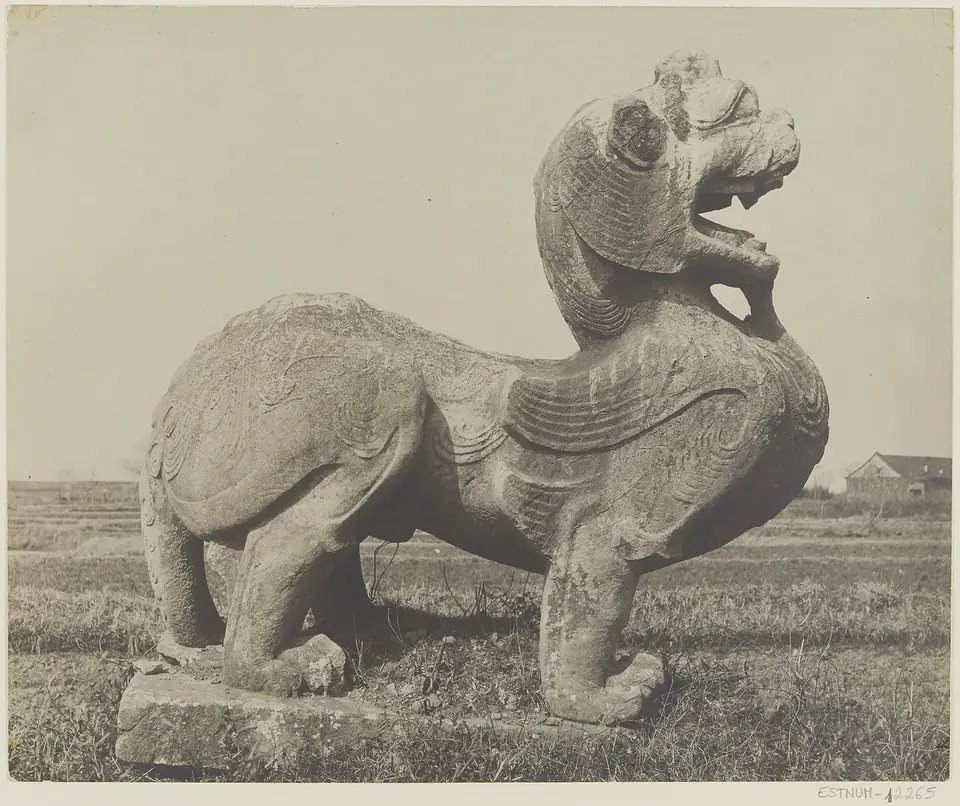
Xiao Ze (440 – August 27, 493), courtesy name Xuanyuan and childhood name Long'er, was a native of Lanling in Donghai. He was the eldest son of Emperor Gao (Xiao Daocheng) and the second emperor of Southern Qi (reigned 482–493), known by his temple name Shizu and posthumous title Emperor Wu. Born in 440 during the Liu Song dynasty, Xiao Ze exhibited exceptional military leadership in his youth. In 466, he raised loyalist forces in Nankang to suppress the rebellion of Liu Zixun. In 477, when Shen Youzhi revolted, Xiao Ze seized the strategic stronghold of Penkou without awaiting court orders, cutting off rebel transport and ensuring the defense of Jiankang. In 479, upon the establishment of Southern Qi, Xiao Ze was installed as Crown Prince, actively steering civil and military administration. Ascending the imperial throne in 482 upon his father demise, he adopted the era name Yongming. Over his eleven-year reign, Emperor Wu displayed exemplary statecraft: he practiced rigorous personal frugality, eradicated bureaucratic corruption, eased tax burdens, founded the Zongming Academy to foster scholarship, and patronized poets who developed the innovative Yongming poetic style. Diplomatically, he normalized relations with Emperor Xiaowen of Northern Wei, securing a decade of peace across the Huai River border. His reign witnessed rapid economic recovery and cultural brilliance across Jiangnan, an era celebrated as the Reign of Yongming. However, harsh household register audits triggered the Tang Yuzhi peasant rebellion, while his decision to appoint Xiao Zhaoye as successor and entrust regency to his ruthless cousin Xiao Luan inadvertently precipitated devastating family bloodshed after his death. He passed away in Jiankang in 493 at the age of fifty-four and was buried in the Jingxian Mausoleum.
Born in the Qingxi residence in Jiankang as the eldest son of Xiao Daocheng and Lady Liu Zhirong.
Mobilized loyalist troops in Nankang against rebel prince Liu Zixun, scoring major battlefield victories.
Seized the key fortress of Penkou during Shen Youzhi revolt, severing rebel lines and saving the capital.
Following Xiao Daocheng ascension as founding emperor of Southern Qi, officially invested as Crown Prince.
Ascended the imperial throne in the Taiji Hall after Emperor Gao death; proclaimed Yongming the next year.
Dispatched imperial envoys to Pingcheng to establish peaceful diplomatic relations with Northern Wei.
Strict household audits provoked the large-scale Tang Yuzhi insurrection, swiftly suppressed by the imperial army.
Summoned Xiao Luan to receive testamentary mandate; died in Yanchang Hall at age fifty-four.
Xiao Ze was born in 440 AD during the reign of Emperor Wen of Liu Song. Throughout his youth, he accompanied his father Xiao Daocheng on various administrative and frontier military postings, developing outstanding martial courage and administrative capability. In 466 AD, Liu Zixun, Inspector of Jiangzhou, rose in armed rebellion against Emperor Ming. Shen Suzhi, Administrator of Nankang, aligned with the rebels and cast Xiao Ze into the commandery prison when he refused to join. His kinsman Xiao Xinzu and retainer Huan Kang executed a nighttime raid to rescue him, whereupon Xiao Ze routed hundreds of pursuers and captured Shen Suzhi, openly raising the loyalist standard.
Confronted by superior rebel forces, Xiao Ze withdrew into Jieyang Mountain, rapidly recruiting more than three thousand battle-ready fighters. When rebel commander Dai Kaizhi fortified Nankang with several thousand elite troops, Xiao Ze led a day-long frontal assault under heavy arrow fire, storming the ramparts and executing rebel magistrate Tao Chongzhi. He then dispatched forward detachments toward Yuzhang, prompting enemy commanders to retreat in panic. Following the complete suppression of the rebellion, the imperial court rewarded Xiao Ze with aristocratic titles and military appointments, cementing his reputation as an astute field commander across the middle Yangtze region.
In 477 AD, Shen Youzhi, Inspector of Jingzhou, launched a massive eastward offensive with more than one hundred thousand troops, menacing the court at Jiankang. Recognizing the strategic terrain, Xiao Ze occupied the vital river fortress of Penkou on his own initiative, fortifying the heights to blockade the Yangtze waterway. Delighted by his son bold initiative, Xiao Daocheng praised his generalship. Xiao Ze held the fortress resolutely, severed the rebel supply lines, and sent relief detachments to Yingcheng, ultimately starving Shen Youzhi grand army into total collapse and securing the political supremacy of the Xiao family.
In 479 AD, Emperor Shun of Song conferred upon Xiao Daocheng the nine bestowals and created him Prince of Qi, whereupon Xiao Ze was named Crown Prince of Qi, taking up residence in the Shitou Palace to direct military and state affairs. In the fourth month of that year, Xiao Daocheng accepted the abdication of Liu Song and founded the Southern Qi dynasty, officially installing Xiao Ze as Crown Prince. During his years in the Eastern Palace, Xiao Ze reorganized ministerial departments, dismissed superfluous officials, and reviewed administrative memorials, winning wide praise for his seasoned administrative skill.
On April 11, 482 AD, Emperor Gao passed away in the Linguang Palace. Before dying, the founding sovereign admonished Xiao Ze to practice frugality and strictly avoid internal dynastic bloodshed. Xiao Ze ascended the imperial throne in the Taiji Hall as Emperor Wu. He immediately decreed that military garrisons and provincial governors should mourn for only three days at their respective posts without abandoning their commands to travel to the capital, ensuring a seamless and tranquil transition of dynastic power across the realm.
Upon taking power, Emperor Wu issued a general amnesty, abolished harsh penal codes inherited from the late Liu Song, and implemented tax reductions to alleviate agrarian hardship. In the following year, he formally inaugurated the Yongming era and invested his eldest son Xiao Changmao as Crown Prince. Aspiring to build an era of peace and cultural prosperity, Xiao Ze enlisted upright statesmen such as Wang Jian and his second son Xiao Ziliang, Prince of Jingling, embarking upon an eleven-year period of stable governance.
In domestic governance, Emperor Wu championed rigorous frugality. Conscious of the collapse of past dynasties brought about by unrestrained luxury, he issued multiple edicts curbing palace expenditures and forbidding provincial authorities from presenting exotic treasures or costly tribute. He personally reviewed naval maneuvers on Xuanwu Lake and traveled in plain carriages to inspect local living conditions. By repeatedly remitting taxes and corvée duties for drought-stricken regions across the lower Yangtze, he allowed the peasantry to recover, filling state granaries and invigorating urban commerce.
Emperor Wu placed great importance on cultural and academic revitalization. He established the Zongming Academy in Jiankang, assembling foremost scholars of classical texts and historical studies to lecture and compile encyclopedic treatises. Under the patronage of his son Xiao Ziliang and literary luminaries like Shen Yue and Xie Tiao, poetic theory flourished, giving birth to the Yongming style characterized by strict tonal meters and four-tone prosody. This artistic renaissance, coupled with equitable civil administration, earned historical acclaim as the Reign of Yongming.
In external affairs, Emperor Wu reversed the costly tradition of launching aggressive northern expeditions. In 484 AD, he dispatched imperial ambassadors to Pingcheng to establish diplomatic relations with Emperor Xiaowen of Northern Wei. Over the following decade, diplomatic missions and commercial caravans traveled freely across the borders, terminating protracted border skirmishes along the Huai River. This peaceful foreign policy secured a precious decade of prosperity for southern agrarian society and provided a stable external environment for Northern Wei Sinicization reforms.
Despite his notable achievements, Emperor Wu middle reign was marred by major domestic miscalculations. Seeking to eliminate widespread tax evasion by aristocratic landlords who forged household registers, Xiao Ze launched a rigorous empire-wide audit. However, overzealous and corrupt inspectors framed thousands of legitimate commoners as fraudulent registrants, forcing freeholders into bonded servitude. In 485 AD, Tang Yuzhi marshaled tens of thousands of enraged peasants in Fuyang, capturing several prefectures and declaring an independent kingdom.
Although imperial armies ruthlessly crushed the rebellion by 486 AD, the uprising severely unsettled Jiangnan society. Realizing the devastating social unrest caused by the audits, Emperor Wu demonstrated administrative pragmatism by issuing an imperial decree in 490 AD that entirely abolished the harsh registration decrees, restoring original registry status to aggrieved households and rapidly restoring domestic stability.
In early 493 AD, Crown Prince Xiao Changmao died prematurely, plunging the aging emperor into profound grief and aggravating his chronic ailments. In the fourth month, Xiao Ze invested his grandson Xiao Zhaoye as Crown Grandson to secure imperial succession. In the seventh month, as his condition worsened, he elevated his shrewd cousin Xiao Luan to Director of the Imperial Secretariat, delegating supreme military and political command into his hands. On August 27, 493 AD, Emperor Wu died in Yanchang Hall at age fifty-four. Tragically, Xiao Luan boundless ambition and Xiao Zhaoye subsequent decadence swiftly ignited ferocious purges, wiping out Emperor Wu direct descendants.
When Emperor Wu ascended the throne, Southern Qi had newly emerged from dynastic transition, and state treasuries were depleted. Utilizing remarkable administrative insight, Xiao Ze established clean governance, strictly curbing official bribery and severely punishing magistrates who exploited commoners. Practicing rigorous frugality, he cancelled non-essential construction and remitted taxes for distressed commanderies, providing an environment where agrarian communities could flourish. Throughout his eleven-year reign, southern China enjoyed abundant harvests and brisk commerce, representing one of the golden ages of the Southern Dynasties.
In institutional and fiscal statecraft, Emperor Wu enhanced the coordinating authority of the Imperial Secretariat, balancing power between regional princes and central ministries. By overhauling coinage and salt-and-iron state monopolies, he ensured ample fiscal revenue, maintaining well-equipped armies and fully stocked storehouses. The material prosperity accumulated during the Yongming era laid the economic and infrastructural foundations for the subsequent flourishing of the Liang dynasty.
In foreign relations, Emperor Wu demonstrated visionary statesmanship. Recognizing that reckless northern campaigns would deplete Jiangnan wealth, he pursued diplomatic accommodation with Northern Wei. By maintaining regular ambassadorial exchanges with Emperor Xiaowen, he secured a decade of tranquil borders, sparing millions from devastation and encouraging commercial and cultural interaction between north and south.
In cultural administration, he founded the Zongming Academy, fostering an intellectual climate that nurtured the birth of the Yongming poetic style. This revolution in poetic tonal prosody bridged ancient verse and regulated poetry, exerting an enduring formative influence on the magnificent poetic flowering of the Tang dynasty. The harmonious coexistence of cultural brilliance and economic stability testified to Emperor Wu enlightened rule.
The aggressive household register audit was the most conspicuous domestic misstep of Xiao Ze reign. While aimed at curbing aristocratic tax evasion, reckless bureaucratic enforcement converted it into state-sponsored extortion, sparking the formidable Tang Yuzhi insurrection. Though Emperor Wu possessed the political wisdom to retract the policy and pacify public anger, the episode damaged court prestige and highlighted structural weaknesses within the Southern Dynasties bureaucracy.
The catastrophic flaw of his political legacy lay in his succession arrangements. Following the untimely death of Prince Xiao Changmao, he hastily designated the frivolous grandson Xiao Zhaoye without establishing an effective institutional check, while placing unchecked military command into the hands of his ruthless cousin Xiao Luan. This disastrous misjudgment resulted in the systematic slaughter of his own children and grandchildren, causing his hard-won Yongming legacy to be swiftly engulfed in blood and dynastic ruin.
FIGURES ASSOCIATED WITH THIS DYNASTY