TL;DR · Core Takeaways
- Official records show almost no duels: Across a century of war in Records of the Three Kingdoms, only one fight—between Lü Bu and Guo Si in 192 CE—saw enemy commanders duel alone. Even then, guards stepped in within moments, and regular lines clashed again.
- Slaying enemy leaders took swift cavalry charges: The strike by Guan Yu on Yan Liang at Baima was no duel. Fast horsemen found an open path, charged straight at the command tent, and cut down the leader.
- Stage limits shrank huge wars down to small fights: Much like Western knight tales turned cavalry charges into jousts, Romance of the Three Kingdoms turned grand troop maneuvers into single fights to fit city stages and small plays.
Historical Context
- Chinese Horizon: From the sixth year of the Zhongping era of the Eastern Han (189 CE) and the collapse of imperial rule—marked by the coalition of eighteen regional lords (
[Eighteen Regional Warlords Coalition](https://www.chistoryhub.com/events/guan-dong-lian-jun-tao-dong)) rising against Dong Zhuo—to the first year of the Taikang era of the Western Jin (280 CE) when Jin took Wu, shifting the realm from warlord clans through the Sixteen Kingdoms period and the Northern Dynasties to brief unity. Later regimes like Northern Liang Dynasty (Northern Liang) and those in the History of Ming looked back on these tactics. - Western/Mediterranean Horizon: From the Severan dynasty of Rome (193–235 CE) through the Crisis of the Third Century (235–284 CE), as Roman legions faced Gothic raids, Persian attacks, and civil wars between rival commanders.
Video games show commanders dueling based on stat points. Modern games even stop marching troops so champions can duel in slow motion. Today, many people believe this picture of ancient war. They picture two armies stopping in place while commanders ride out, call out their names, and duel with long spears until one dies and an army flees.
People looking at Eastern Han pottery figures often expect this same myth. They look for signs of the great Martial Sage. Yet the real Records of the Three Kingdoms, written by Chen Shou and noted by Pei Songzhi (Pei Songzhi) under the Southern Dynasties (Southern Dynasties), shows an entirely different world, unlike the tales in the Records of the Grand Historian.
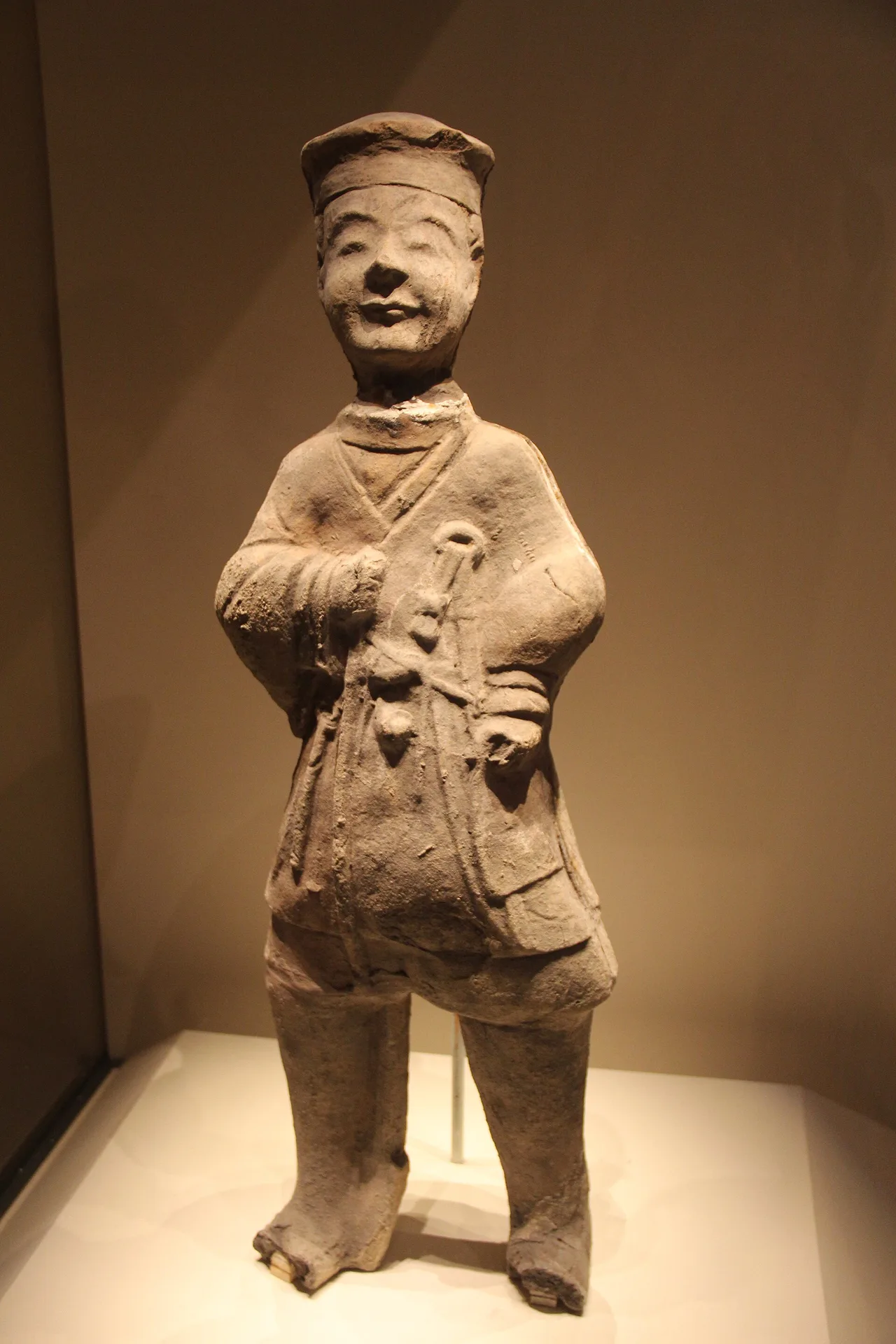
01. Myth vs. Chronicle: Three-Column Source Breakdown
We can separate myth from fact by comparing popular tales with official chronicles:
| Popular Fiction & Misconceptions | Earliest Historical & Archaeological Records | Social & Chronological Drivers of Mythmaking |
|---|---|---|
| Mounted champions dueling for 300 rounds: Opposing generals ride out, shout names, and fight for hours while foot soldiers watch in silence. | **Records of the Three Kingdoms, Book of Wei, Biography of Lü Bu, citing the Records of Heroes**: Only Lü Bu's clash with Guo Si in 192 CE fits this idea. Lü Bu wounded Guo Si with a lance. Guo's guards rushed in to save him, and both lines joined battle at once. | Rise of Song-Yuan storytellers and Yuanming to early Ming theater: City crowds wanted quick action and clear heroes. Storytellers had little time on small stages, so they turned large battle plans into personal duels. |
| Guan Yu slays Hua Xiong before his wine cools: Allied leaders sit helpless until Guan Yu steps out, slays Hua Xiong, and walks back before his warm wine turns cold. | **Records of the Three Kingdoms, Book of Wu, Biography of Sun Jian**: Sun Jian led troops to beat Dong Zhuo's army at Yangren and slew Hua Xiong. Guan Yu served with Liu Bei under Gongsun Zan (Gongsun Zan) in the north and was never at Yangren. | *The Pinghua tradition through Luo Guanzhong (Luo Guanzhong)'s Romance of the Three Kingdoms***: To praise Liu Bei's house and honor Guan Yu, Ming writers gave Sun Jian's victory to Guan Yu to build drama. |
| The solo challenge against Yan Liang: Guan Yu rides Red Hare into the open, swings his heavy blade, takes Yan Liang's head in one blow, and rides away clean. | **Records of the Three Kingdoms, Book of Shu, Biography of Guan Yu**: "Guan Yu spotted Yan Liang's command canopy, spurred his horse forward, pierced Liang amidst the massed host, and returned with his severed head; none of Yuan Shao's officers could withstand him." This was an armored charge on a command post, not a duel. | Ming popular novels and Qing operatic conventions: Fast cavalry charges turned into stage fights. Writers replaced Han lances and sabers with heavy weapons made long after in the Northern Song. |
02. Historical Reality: Isolated Brawls and Shock Break-ins
In the wars of Records of the Three Kingdoms, close fights between generals never looked like sports games. Real historical sources point to two main kinds of combat.
The Lone Exception: Desperation at the Gates of Chang'an
Only one recorded fight in the late Eastern Han looks like a duel between two armies: the battle outside Chang'an in the third year of Chuping (192 CE).
After Dong Zhuo died, his officers Li Jue and Guo Si marched on Chang'an with one hundred thousand cavalrymen from the west. Pei Songzhi quotes Wang Can's Records of Heroes:
> "Guo Si was stationed north of the city. Lü Bu swung open the city gates, led troops toward Guo Si, and shouted: 'Order your men back, and let us settle this between ourselves.' Guo Si accepted and fought Lü Bu. Lü Bu thrust his lance into Guo Si. Guo Si's rear cavalry galloped forward to rescue him, whereupon both Lü Bu and Guo Si broke off."
This duel happened for special reasons. Both leaders had served Dong Zhuo, and their men from Liangzhou and Bingzhou knew each other well. Faced with huge odds, Lü Bu tried to frighten the besiegers. But the fight had no courtly rules. Both men used simple cavalry lances. The moment Lü Bu wounded Guo Si, Guo's guards charged in, saved their leader, and pulled him back. The army kept up the siege, broke into Chang'an days later, and drove Lü Bu away.
This proves a key rule of war: winning a duel could not beat large armies, bad terrain, or low supplies.
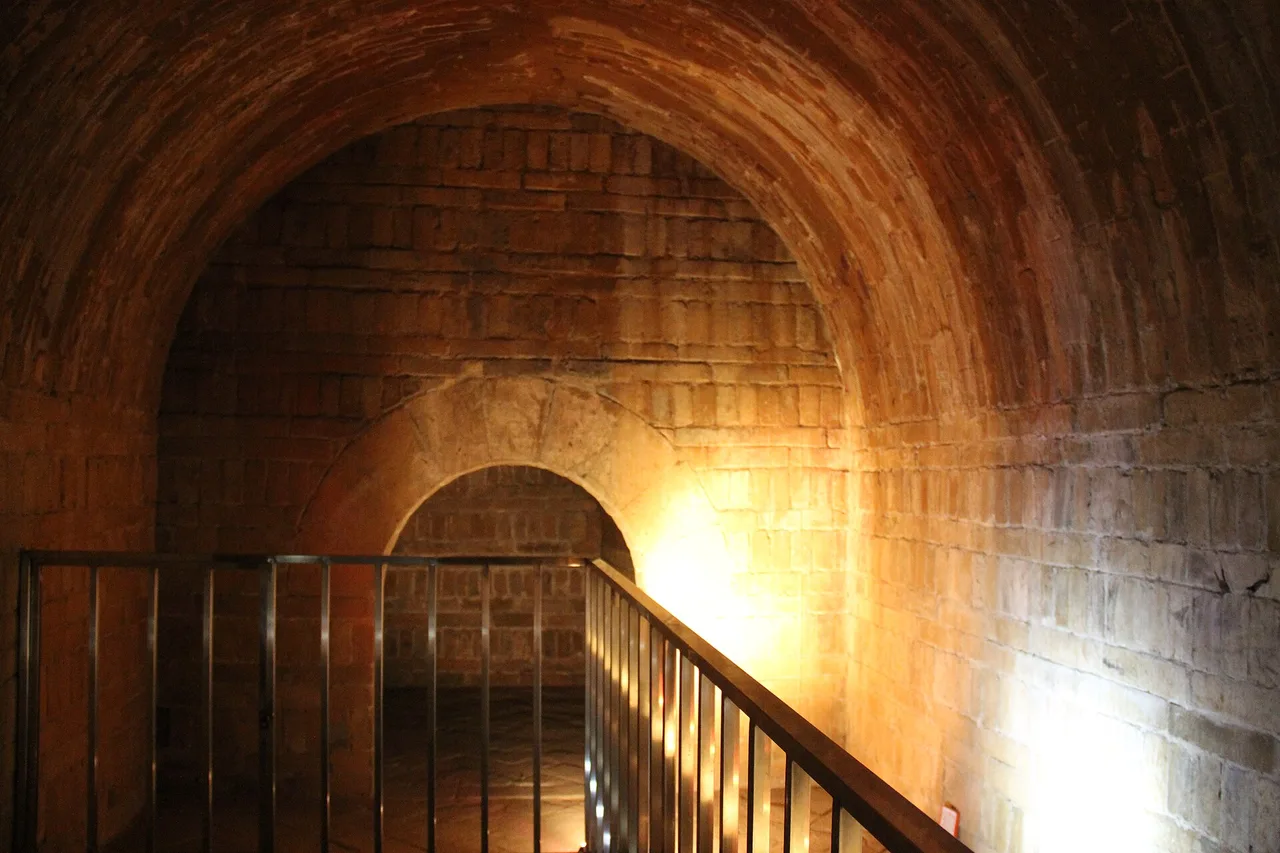
Baima and Shenting Ridge: Deep Spearheads and Scout Skirmishes
Fiction often treats Guan Yu's strike on Yan Liang and Sun Ce's brawl with Taishi Ci as staged duels. But both battles used very different tactics.
At the Battle of Baima in the fifth year of Jian'an (200 CE), Cao Cao feinted across the river and sent fast units to help the garrison. Yan Liang tried to set his lines in a hurry. The text says: "Guan Yu spotted Yan Liang's command canopy, spurred his horse forward, pierced Liang amidst the massed host, and returned with his severed head."
This was a fast charge on a command post. Yan Liang sat under a large umbrella that showed where he was on flat ground. Guan Yu and Zhang Liao led the front group. They drove through the gaps, ran a spear through the enemy general, took his head, and rode out before enemy foot soldiers could box them in. Yan Liang died without trading words.
The fight at Shenting Ridge in the second year of Xingping (195 CE) was an accidental scout fight. Sun Ce rode up the ridge with thirteen scouts to view enemy camps. Taishi Ci, patrolling with just one horseman, met them on a narrow path. With no lines of troops present, the two men had a brief, rough fight until their cavalry patrols came to pull them out. Calling this a formal duel hides the true nature of ancient warfare.
03. How Memory Shifted: From Ancient Front Lines to Ming Stages
Why did real squad battles turn into duels in popular memory? The change came from new media and the tastes of city crowds.
Urban Storytelling and the Pressures of the Playstage
From the story booths of Bianjing in the Northern Song to the entertainment spots of Lin'an in the Southern Song, historical tales became public fun. Books like Wulin Old Matters and tales of the Eastern Capital show large crowds listening to stories of the Three Kingdoms.
Regular people did not care about supply lines, crossbow lines, or unit moves. Long stories about camp sieges bored the crowd. Turning a huge battle into a clash between two heroes kept people listening. Complex flanking moves turned into simple fights of "fifty passes" or "three hundred passes."
When plays grew popular in the Yuan and Ming eras, small stages made this even more common. A stage only a few feet wide could not hold armies. Two flags had to stand for ten thousand men. Sword fights and verbal challenges became the primary way to show war on stage.
[Han-Wei Chronicles]    ---> [Song Washi Tales]   ---> [Yuan Stage Dramas] ---> [Ming-Qing Novels]
Rigid line defense           Vernacular tailoring      Physical stage limits     Formulaic duels
Crossbow/cavalry charges     Aggrandized champions     Two-actor fight scenes    300-round combats
Anachronistic Weaponry and Layered Legend
Plays also brought in the wrong weapons for the period. In real historical sources, generals like Guan Yu, Zhang Liao, and Lü Bu used cavalry spears, lances, and halberds.
The famous Green Dragon Crescent Blade of Guan Yu could not exist in Han times. Heavy broad-blade polearms first showed up centuries later in the Song book Wujing Zongyao, where guards and wall troops used them for defense or for Imperial Court honor guards. Later storytellers gave these modern weapons to older heroes to make the tales sound grand.
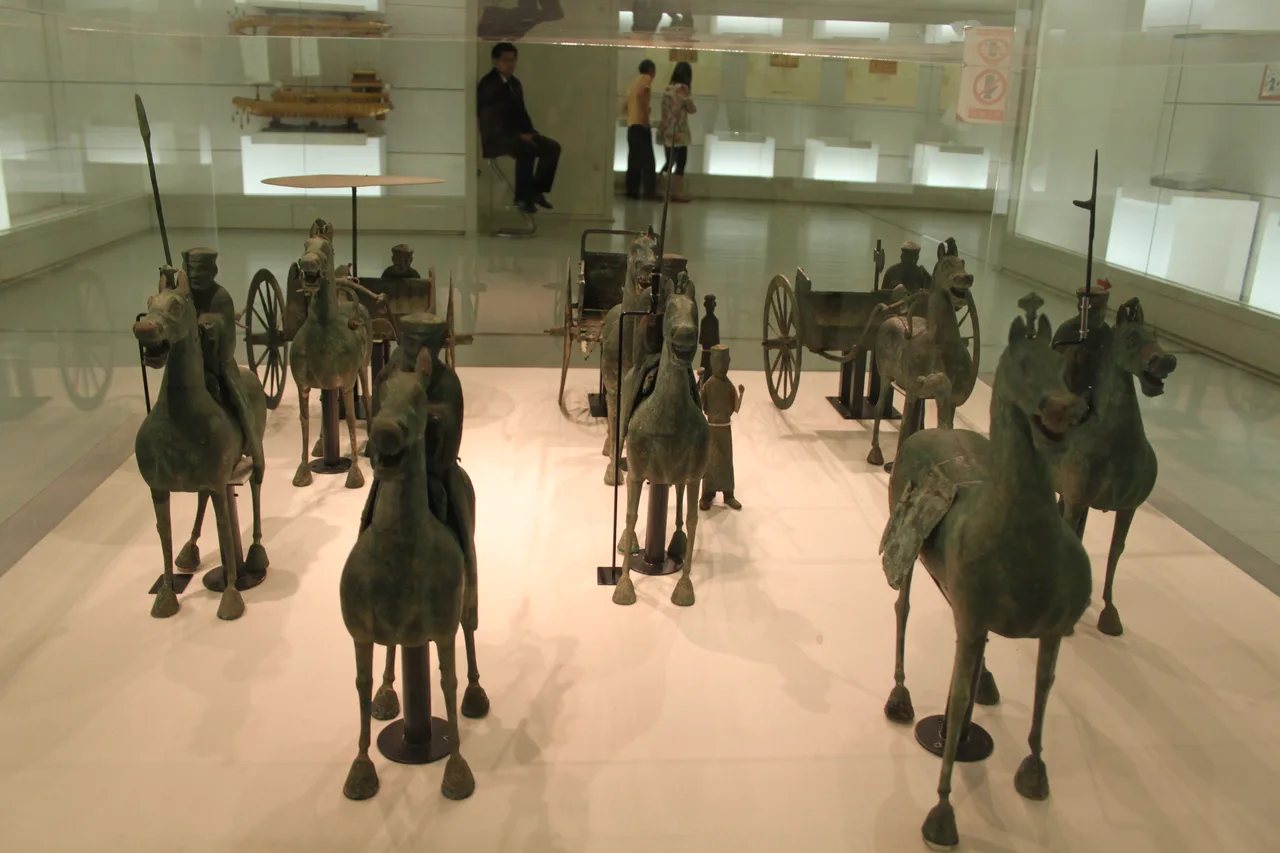
04. Command Structures and Parallel European Romance
In real third-century war, a general riding out alone to fight was a foolish act.
The Vulnerable Command Node and Missile Kill Zones
Armies of the late Eastern Han and Three Kingdoms used clear ranks and squads. A warlord stayed in the center. His job was to guide units with flags, drums, and horns.
If a general rode out to duel an enemy officer, his unit had no leader. Han armies had massed crossbows and pikes. The Book of the Later Han says arrows fell like heavy rain. Any lone rider between the armies faced deadly arrow fire.
       [Hostile Front Line]
      ▲ ▲ ▲ ▲ ▲  Crossbow Kill Zone (150–200 paces lethal range)
      ---------
      | Open  |  <--- Anyone trading personal challenges here
      ---------       faces deadly crossfire and cavalry interception
      ▲ ▲ ▲ ▲ ▲
       [Own Central Division] (General's Signal Core: if he leaves, the line breaks)
If a leader fell from his horse during an unplanned duel, his entire force might break and run. Good officers did not risk thousands of men on a wild street fight.
Cross-Cultural Mirrors: The Myth of the Knightly Tournament
This habit of turning team war into solo duels happened in Europe too. Knightly jousts moved from practical practice to storybook fun in the same way.
In real medieval war, heavy horsemen gained power from tight charges with lances, breaking infantry lines through sheer mass. Late medieval fights relied on wagons, bowmen, and horsemen working together.
Yet romances from the twelfth to fourteenth centuries skipped the grind of large armies. Readers wanted to hear about two knights charging across a field to break lances in single combat. Over time, jousts became court shows rather than real war.
Just as French tales turned group combat into tests of skill for knights, Romance of the Three Kingdoms turned Han maneuvers into duels for Guan Yu and Zhang Fei. Both cultures liked tales where heroes settle the fate of kings with a single stroke.
Primary Sources & Historical Bibliography
- Chen Shou, with annotations by Pei Songzhi (Pei Songzhi): Records of the Three Kingdoms (Beijing: Zhonghua Book Company, 2011 punctuated edition).
- Book of Wei, Vol. 7: Biographies of Lü Bu, Zhang Miao, and Zang Hong (incorporating Wang Can's Records of Heroes for the Chang'an duel).
- Book of Shu, Vol. 6: Biographies of Guan Yu, Zhang Fei, Ma Chao, Huang Zhong, and Zhao Yun (documenting the breakthrough charge at Baima).
- Book of Wu, Vol. 1: Biographies of Sun Jian and Sun Ce (covering the Battle of Yangren and the skirmish at Shenting Ridge).
- Fan Ye, with annotations by Li Xian: Book of the Later Han (Beijing: Zhonghua Book Company).
- Vol. 72: Biography of Dong Zhuo (tactical systems of Liangzhou cavalry and the evolution of retainer forces).
- Zeng Gongliang, Ding Du, et al.: Wujing Zongyao (Military Compendium, Part 1, Vol. 13: Weapon Illustrations) (for the appearance of heavy crescent sabers and polearms compared to Han lances).
- Lao Kan: Studies on the Han Military System and War Patterns of the Han and Wei Dynasties (Institute of History and Philology, Academia Sinica) (analyzing retainer organization, pike-and-crossbow formations, and signal networks).