Chinese Coordinates
—
Western / Mediterranean Coordinates
Western / Mediterranean Coordinates: Severan Dynasty of the Roman Empire (193–235 CE, legionary close-combat reforms) to the transition between High and Late Medieval Western Europe
TL;DR · Core Takeaways
- Tombs yield zero broad polearms: Excavations at Luoyang and Xuzhou show that Eastern Han horsemen used four-meter lances and ring-pommel sabers. The famous eighty-two-catty crescent blade never appears in early tombs or records.
- Song manuals first showed the crescent blade and twin halberd: The Wujing Zongyao, printed in 1044 CE under the Song dynasty, first drew both weapons. They served the Imperial Court as parade gear and exam test tools in the Song dynasty and Ming Dynasty, not as frontline cavalry arms.
- A shared storytelling habit: Storytellers and novelists dressed old champions in the armor and arms of their own day. This matches European artists who painted Roman guards in fifteenth-century Milanese plate armor.
> Chinese Chronology Coordinates: Late Eastern Han, Jian'an era (196–220 CE, covering the Battle of Baima and the Battle of Guandu) to the Northern Song, Qingli fourth year (1044 CE, completion of the Wujing Zongyao)
Popular video games give each warrior a famous weapon. Guan Yu charges with a giant crescent blade. Zhang Fei swings a wavy snake spear. Lü Bu spins a halberd with twin side blades.
Yet real tombs tell a different story. Digs at the Mausoleum of the Prince of Chu at Xuzhou and the old ruins of Luoyang reveal plain iron points, straight ring-pommel sabers, and halberds with a single spur. Heavy curved blades do not appear at all.
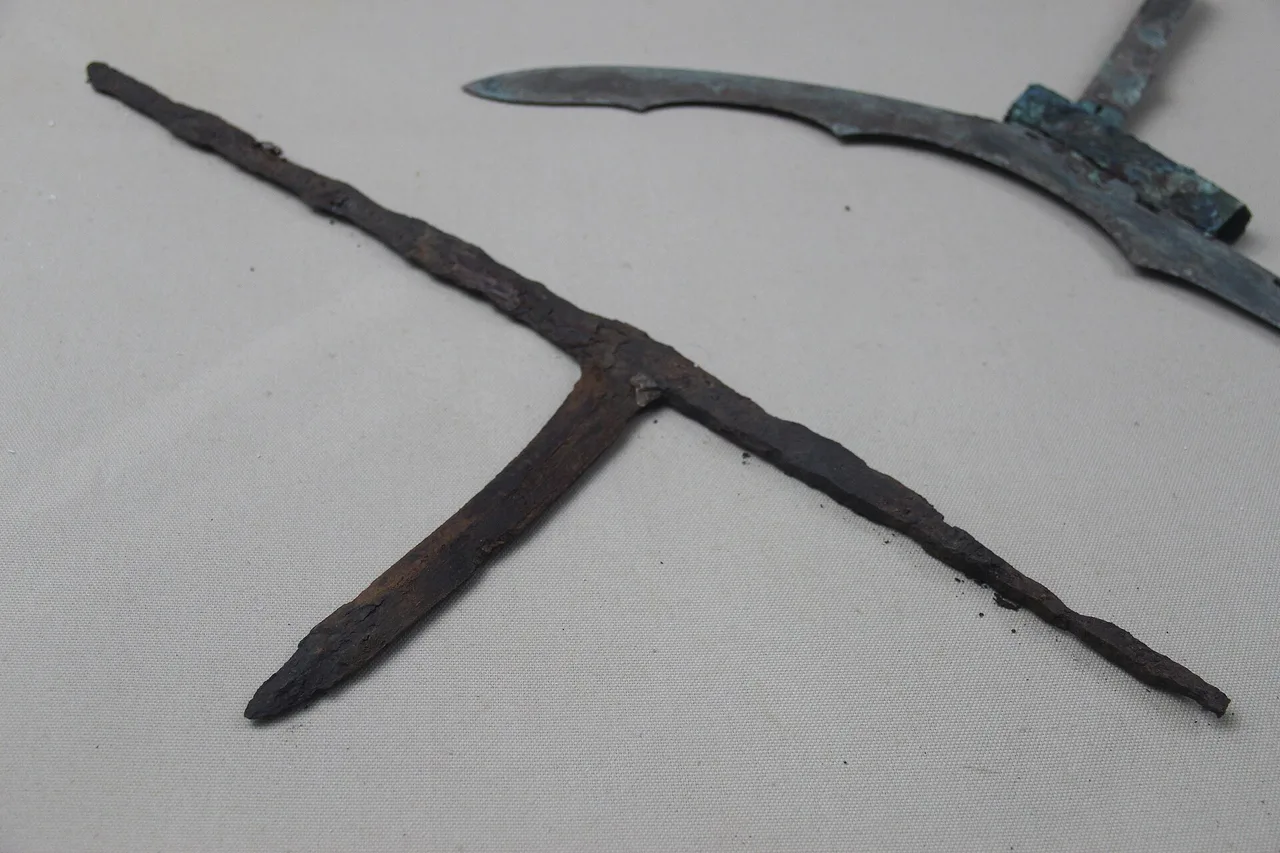
This gap spans eight centuries. Handing these fantasy weapons to soldiers at the Battle of Guandu in 200 CE would confuse the cavalry of Cao Cao. In Chinese Historiography, from the Records of the Grand Historian down to modern digs, real finds often correct stage legends.
01. The Historical Reality of Late Han Generals vs. Song-Ming Romantic Accretion
We can trace this shift by checking old chronicles, tools, and military books. The table below shows how Han battle gear became later stage props:
| Popular Romance / Misconception | Primary Chronicle & Archaeological Record | Era and Societal Drivers of Myth Evolution |
|---|---|---|
| Guan Yu carries an eighty-two-catty Green Dragon Crescent Blade, chopping foes in half from horseback. | Records of the Three Kingdoms says Guan Yu galloped forward, stabbed Liang amid the ranks, and brought back his head. Han cavalry used a four-meter straight lance and a one-handed ring-pommel saber. | The Northern Song Wujing Zongyao (1044 CE), made in the Renzong reign, first drew the crescent blade. Song plays and Luo Guanzhong's Ming book gave this guard weapon to Guan Yu to praise him as a Martial Sage. |
| Zhang Fei attacks with an eighteen-foot spear that has a wavy, snakelike blade. | Records of the Three Kingdoms says Zhang Fei stood on the bridge and leveled his spear. Digs show that Han and Jin spearheads had straight, sharp edges to pierce through armor. | In the Han and Jin eras, "snake spear" meant a shaft as long as a serpent body, as noted in the Book of Jin. Later Song plays and Ming printers misread this line, drawing the iron head like a wavy snake. |
| Lü Bu rides Red Hare and fights with a halberd that has crescent blades on both sides. | Records of the Three Kingdoms says Lü Bu shot the small side branch of a halberd set by the gate. Real Han halberds only had one side spur, shaped like the character bu. | Halberds left the battlefield during the Tang and Song eras, surviving only in royal parades. The Song Wujing Zongyao drew the twin-bladed halberd, which storytellers gave to famous fighters for visual flair. |
02. Archaeological Prototypes: Standard Military Hardware of Han Cavalry
The Tactical Reality: The Thrust-and-Sever Pairing of Lance and Saber
In event.《-san-guo-zhi-》-cheng-shu|Records of the Three Kingdoms, the author gives a clear report on the fight at Baima. Guan Yu rode into the enemy ranks, stabbed Yan Liang, and severed his head.
These words record two steps. Guan Yu first stabbed, then severed. In those days, riders lacked high saddles and dual stirrups. A horseman squeezed his mount with his knees. He drove his long lance into the enemy using the horse's full forward speed. The lance point pierced armor. The rider then let go of the long shaft, drew his straight ring-pommel saber, and cut off the target's head.
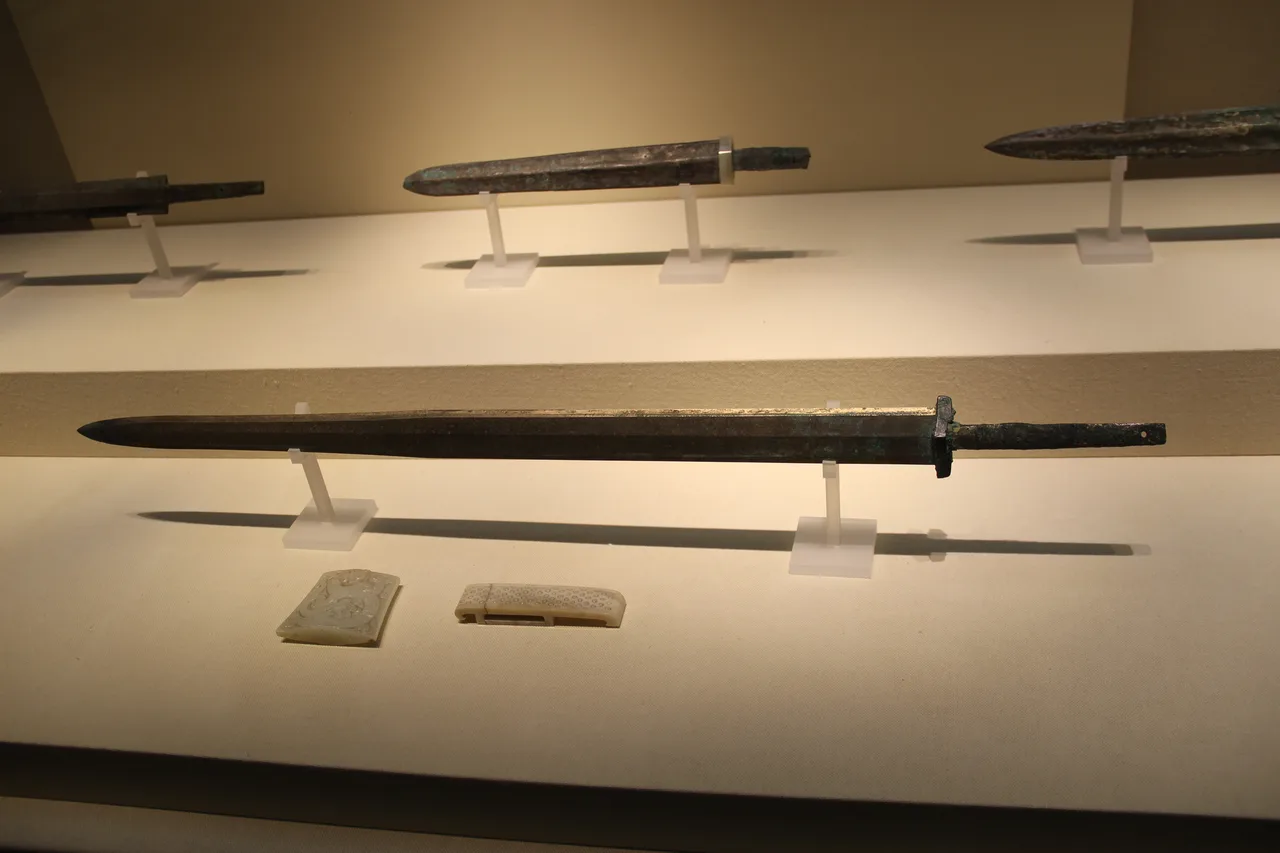
From the mid-Western Han onward, straight single-edged iron sabers replaced older bronze and iron double-edged swords. Excavations from Eastern Han sites reveal straight blades with ring pommels. Han armies did not mount heavy cleavers on long poles. Forged steel was costly, and a giant iron head made the pole too heavy to control on a galloping horse.
The Bu-Character Iron Halberd: The Mechanics of Single-Spur Weapons
The polearm carried by Lü Bu matches real finds. Arms found at the Mausoleum of the Prince of Chu at Xuzhou show a single forward point and one side spur. This side branch could hook shields or pull riders down.
When Lü Bu showed off his archery at his camp gate, he hit this single side branch. The weapon was light and fast. The twin-bladed halberd seen in modern Beijing plays did not exist on Han battlefields. Two side blades added dead weight, threw off the rider's balance, and got stuck in armor plates during close combat.
03. Ritualization and Theater: How Song, Yuan, and Ming Storytellers Rewrote History
Why did later stories replace practical Han arms with giant blades and twin halberds? The shift came from real changes in war and society.
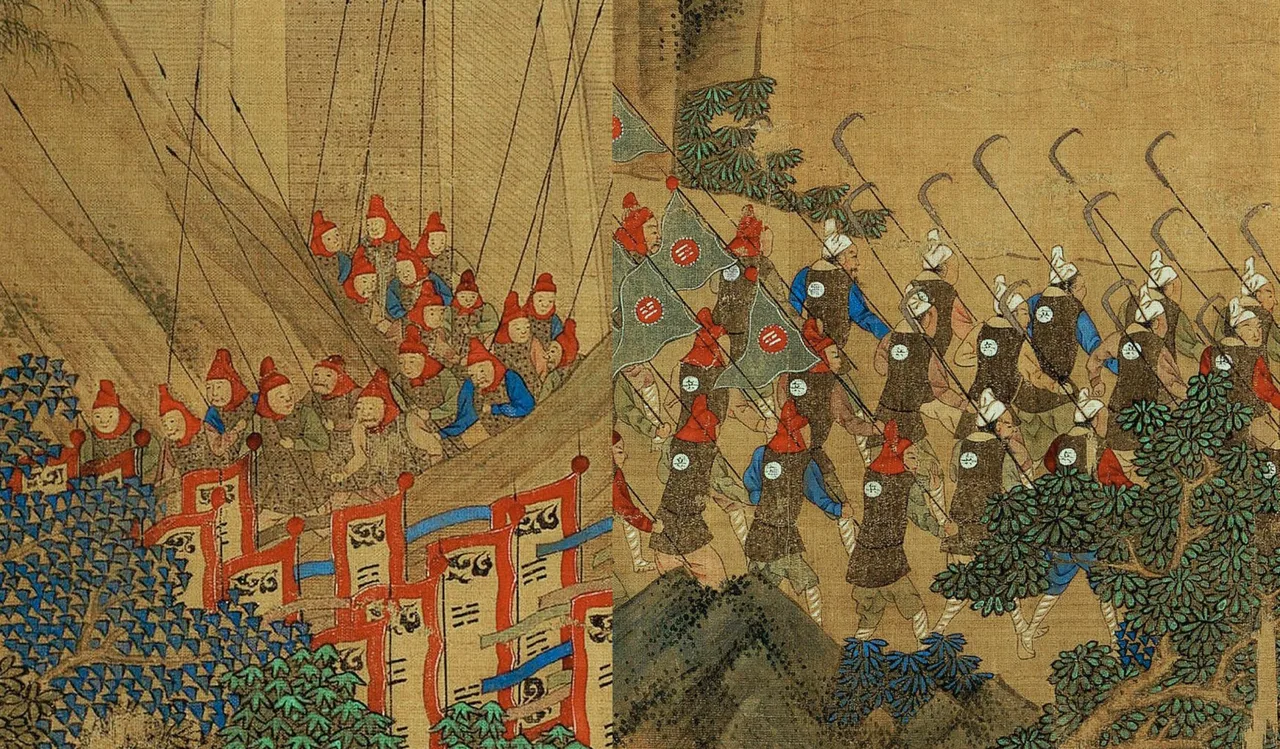
How Oral Storytelling, Opera, and Imperial Politics Reshaped Material Memory
Polearm design changed between the late Tang and the Song dynasty. Better steel and armored cavalry brought wide blades into use. The Wujing Zongyao, compiled in the Northern Song, cataloged eight saber shapes, including the crescent blade.
Yet these blades were not carried into field cavalry battles. In the Song dynasty, they served two main roles. Guards held them in the Imperial Court to show imperial power. Men also lifted heavy versions in military tests to prove their arm strength. The History of Ming notes that test blades weighed up to one hundred and twenty catties. These heavy slabs were too slow for real combat.
City theater grew rapidly across the Song, Yuan, and Ming eras. Everyday crowds in Yuanming towns knew little about ancient army ranks. Storytellers used bright, dramatic props to keep them watching. A huge blade showed Guan Yu's peerless might, honor, and Loyalty and Righteousness.
Yuan stage plays gave the big blade to Guan Yu. When Luo Guanzhong wrote the Romance of the Three Kingdoms in the Ming Dynasty, he drew on test gear and guard parade arms from his own lifetime. Even an Instructor Second-class in a local school would recognize these exam tools. At the same time, woodblock publishing shops cut wavy spearheads for Zhang Fei and gave Lü Bu a twin-bladed parade weapon.
04. Cross-Civilization Mirrors: Renaissance Plate Armor Anachronisms
Projecting everyday gear onto ancient heroes happened in Europe as well.
Italian artists did the same thing. When Paolo Uccello painted The Battle of San Romano, he showed the armor of his own day. When other artists painted scenes of ancient Rome or biblical soldiers, they drew Roman guards in shiny Milanese plate armor and gave them giant two-handed swords.
Real Roman foot soldiers threw heavy javelins and fought up close with short swords behind wide shields. Their tactics worked much like the Han lance and saber pairing. But Renaissance painters knew nothing of real Han or Roman gear.
Before modern antiquarian scholarship, writers and painters only knew the weapons around them. They looked at city guards, royal escorts, and practice yards. When Song city folk praised Guan Yu and Ming books retold his deeds, writers gave him the most impressive arms of their own era.
Primary Sources & Historical Bibliography
- Official Chronicles:
- Chen Shou (Jin), annot. Pei Songzhi (Song), Records of the Three Kingdoms, Shushu 6: Biographies of Guan, Zhang, Ma, Huang, and Zhao (Beijing: Zhonghua Book Company punctuated edition).
- Chen Shou (Jin), annot. Pei Songzhi (Song), Records of the Three Kingdoms, Weishu 7: Biographies of Lü Bu and Zang Hong (Beijing: Zhonghua Book Company punctuated edition).
- Fang Xuanling et al. (Tang), Book of Jin, Vol. 103, Chronicle 3: Liu Yao (Beijing: Zhonghua Book Company punctuated edition; documenting early textual usages of the "eighteen-foot snake spear").
- Official Military Treatises:
- Zeng Gongliang, Ding Du, et al. (Song), Wujing Zongyao, Qianji [Part I], Vol. 13: Weapon Illustrations, facsimile of the 40th year of the Jiajing reign (Ming) Jinling Tang edition (documenting the morphology of the yanyuedao and the Eight Saber Varieties).
- Archaeological Studies and Cold Weapon Monograph Collections:
- Yang Hong, Collected Essays on Ancient Chinese Weapons (Revised Edition), Cultural Relics Publishing House, 1986 (essential study on Han iron armaments, the bu-character halberd, and the evolution of the cavalry lance through the Northern and Southern Dynasties).
- Institute of Archaeology, Chinese Academy of Social Sciences, Archaeological Discoveries and Researches in New China, Cultural Relics Publishing House, 1984 (field excavation reports on armaments from Western and Eastern Han princely tombs).